
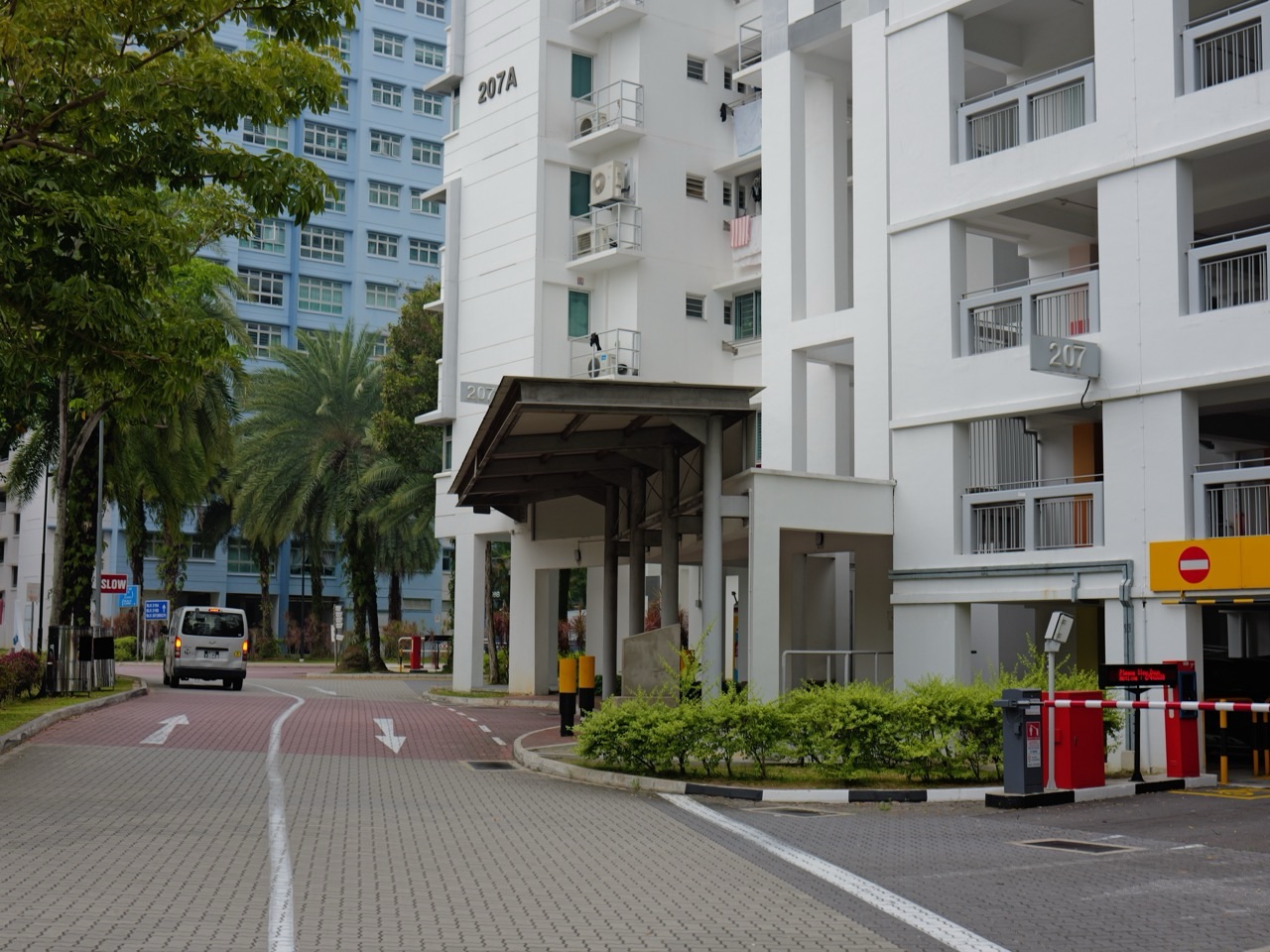
Quick answer: A Punggol service road, loading bay, passenger drop-off point and fire-engine accessway may look like similar stretches of paving, but they are not interchangeable. Service roads are designed around operational access; loading bays are for appropriate loading and unloading under their posted conditions; passenger drop-offs are designed to manage people arriving and leaving; and emergency accessways must stay clear. The exact rules depend on signs, road markings and the managing authority, not on how long a driver expects to stop.

A driver pulls in with groceries. A delivery rider waits for an order. A parent stops to collect a child. A mover needs time to unload a sofa. A refuse vehicle needs a clear route to a collection point. All five people might want to use the same short road between buildings, but their purposes and legal or operational permissions differ. When the layout is understood, everyone has a better chance of completing the task without blocking another person or creating a hazard.
This guide explains the practical functions of Punggol’s service roads, loading bays, drop-off loops, taxi and private-hire stopping areas, residential parking and emergency vehicle routes. It draws on LTA development-design guidance, HDB’s published parking policies, SCDF’s Fire Code and OneService’s reporting procedures. It does not designate a particular Punggol bay as legally available, promise a free grace period or replace the current signs and instructions at a site.
Five similar-looking places with different purposes
| Place | Primary function | What to verify |
|---|---|---|
| Service road | Access for servicing, refuse, deliveries and some other traffic | Signs, access conditions, clear passage |
| Loading/unloading bay | Handling goods under site conditions | Permitted activity, duration and pricing |
| Passenger drop-off | Safe transfer between vehicle and walkway | Designated stopping lane and circulation |
| Taxi/private-hire pick-up point | Collection under operator and road rules | Exact permitted collection point |
| Fire engine accessway | Unobstructed firefighting and rescue access | SCDF markings; no unauthorised parking |
1. Why a residential estate needs service roads
A housing precinct is more than front doors and car parks. It requires refuse collection, deliveries, maintenance, emergency response and sometimes access to substations or other utilities. LTA’s street-design guidance recognises service roads as corridors that accommodate such servicing functions, including access to bin centres and loading or unloading. These operational needs explain why some roads sit behind buildings and are less visible to casual visitors.
Calling every service road a parking place would undermine its purpose. A vehicle waiting at a narrow bend can block a refuse lorry or delivery truck that needs a wider turning movement. The road may appear quiet for most of the day, but that does not mean it is redundant. Some services occur at specific times, while others require access at short notice.
Residents do not need to memorise the road’s technical cross section to use it responsibly. Read the access signs, avoid waiting where vehicles need to turn and keep any service-only areas clear. A space designed to accommodate trucks is not a safe play area simply because the traffic is infrequent.
Punggol example
A family sees a quiet road behind an HDB precinct and considers parking briefly while visiting. Before stopping, they check the markings and whether the road serves a bin centre. An empty service route may still need to remain available.
2. A loading bay is not automatically a parking lot
A designated loading and unloading bay provides space for handling goods. Its purpose is different from long-term parking, and rules may limit what a motorist can do there. HDB publishes differential pricing for selected loading and unloading bays with electronic parking systems where demand is high. Its policy is designed to encourage turnover. This is an official example of why a loading bay’s operating conditions matter.
The existence of such pricing at selected locations does not establish a universal free fifteen-minute entitlement in Punggol. HDB’s page lists the locations to which its particular differential charges apply. Other sites may have different arrangements, and private developments may set their own access rules. Read the actual tariff and signs instead of copying a citywide example to a bay not on the list.
A loading area is also not automatically a suitable place to wait for a friend who has not arrived. Goods delivery, furniture handling and ordinary passenger transfer create different demands on space. Staying longer than necessary can deny access to the next person even when the motorist is willing to pay.
Punggol example
A mover plans to unload boxes at a Punggol block. They check with the building’s manager or posted instructions before arriving and coordinate the unloading, rather than assuming any empty road shoulder is a permitted loading bay.
3. Passenger drop-off points are designed around movement
A drop-off point needs to let passengers reach a safe walking route while vehicles circulate. LTA’s design guide considers access locations, traffic queueing and arrangements that allow vehicles to pass stopped cars. It also recommends orienting some drop-offs so passengers can alight on a suitable side. These design details address the risks created when a passenger opens a door next to moving traffic.
At a school, transport interchange or community facility, arrivals can cluster at particular times. A drop-off that works in quiet conditions may experience queues during school dismissal or an event. Motorists should use the intended route, obey any marshal and avoid improvising an exit through a pedestrian area. A few saved seconds for one family can create a bottleneck for many others.
The exact configuration differs among HDB precincts, malls and private developments. Some have sheltered kerbs, marked bays or dedicated car park access; others do not. You should not assume an entrance driveway is a legal drop-off point simply because a passenger can physically step onto the footpath there.
Punggol example
A grandparent is arriving at One Punggol by taxi. The family checks the current designated drop-off rather than telling the driver to stop at the nearest doorway regardless of signs. Convenience is useful only when the transfer remains safe.
4. A service road must continue serving the site
Service access works only when vehicles can reach the equipment or loading location for which the road was designed. LTA’s guidance identifies service roads for functions such as refuse, loading or unloading and utility servicing. A driver who blocks access to a bin centre can interfere with collection, even if no pedestrian immediately complains. This effect is easy to miss when a person only looks at the empty road at one moment.
Delivery traffic may also involve large turning radii. A place where a small car fits comfortably may be needed for a truck’s rear swing. Residents should not treat the width of the unused lane as an invitation to position furniture, construction material or unattended scooters. Site design has to accommodate intended vehicle movements, not only the apparent free space visible in a photograph.
Access signs and management instructions can change when developments open or works occur. A previously available path may become restricted or vice versa. Always prefer the current site conditions over a memory of where a relative parked last year.
Punggol example
A food-service delivery arrives just before a refuse vehicle. If parked cars block the service entrance, the problem can affect cleaning and food logistics. Keeping the access route open benefits more residents than any one short-term parking convenience.
5. Fire engine accessways are a separate safety category
SCDF’s Fire Code requires fire engine access roads and accessways appropriate to a building’s design. These are spaces reserved so emergency vehicles can reach and operate near a building. The current Fire Code says these routes must remain clear of obstruction and should be marked appropriately. A broad paved strip along a residential block may have an emergency function even when there is little daily traffic.
An important Fire Code restriction is that fire engine accessways and roads must not be converted to uses such as car parking lots, including loading and unloading. This is not a small matter of etiquette. Emergency vehicles may need space for manoeuvring and equipment deployment. A motorist’s promise to move when an ambulance or fire engine appears cannot replace a clear route that responders can rely on immediately.
Do not use a red or yellow marking as a universal decoder without looking at the specific sign and layout. SCDF publishes detailed requirements, and managers may have additional site instructions. The correct household behaviour is straightforward: never obstruct a clearly designated emergency route, however short the planned stop.
Punggol example
A driver wants to unload a cupboard at a sheltered accessway marked for fire engines. The family should locate a permitted loading arrangement instead. A large item requiring effort to move should never be left in an emergency lane.
6. Road markings matter even when no attendant is present
LTA’s OneMotoring driving guide explains Singapore’s standard road markings and restrictions. For instance, unbroken double yellow lines generally prohibit parking, subject to the stated immediate pick-up and drop-off exception. Other markings, signs and traffic situations have separate rules. It would be unsafe to turn one summary of double-yellow-line restrictions into blanket permission to stop wherever double lines appear.
A no-stopping area, road junction, crossing or bus stop zone may have restrictions more specific than the general concept of short passenger transfer. The full situation and current signs must be read together. A driver should not select a place solely because several other vehicles are stopping there. Others may be violating the rule or creating a hazard.
Residents can learn the common markings, but the legal and practical test is site-specific. A parent dropping off a student must preserve visibility and clear access, even if doing so means using a designated point farther away and walking a short distance.
Punggol example
A family sees a convenient corner beside a zebra crossing. They should not stop there because the child would have fewer steps to school. Use the approved drop-off route and keep sightlines and pedestrian movement clear.
7. School peaks are predictable but still difficult
Morning arrival and dismissal concentrate families into narrow time windows. Punggol has several schools within residential neighbourhoods, and temporary congestion can arise when many vehicles converge at once. Schools often publish their own arrangements for gates and collection, while LTA sets broader road-safety rules. A parent’s memory from another school does not necessarily apply to the current school.
Children’s safety depends on predictable movement. A child should not be instructed to dart across a service lane because a car is waiting on the opposite side. Vehicles should not block a marked crossing or a school service entrance. If a pick-up area is crowded, the safe solution may involve waiting in a permitted area or returning at the designated time, not mounting a kerb.
Parents should review school communications, current road signs and any temporary works notices. School access can change as development or security arrangements evolve. A photograph captured years ago cannot establish the correct gate today.
Punggol example
At Edgefield Secondary School, a family verifies the school’s current dismissal instructions rather than treating a nearby car-park photograph as proof of an official stopping place. They agree on a safe pedestrian meeting point.
8. Food delivery riders have their own circulation needs
Food delivery may involve motorcycles, bicycles and people collecting orders from a mall or building. A design guide by LTA recognises the need to consider dedicated holding or parking arrangements for delivery riders where appropriate. Such provisions are meant to reduce conflict with ordinary passenger drop-offs and vehicle traffic. Not every development offers the same facility.
Leaving a motorcycle in a pedestrian link can obstruct wheelchairs, prams and emergency access. Stopping at the nearest lift or doorway may be faster for one order but create a problem for everyone using the route. Riders should follow designated parking and collection instructions and respect the people moving through shared areas.
Residents can help by giving delivery instructions that identify an appropriate entrance or collection point rather than directing riders to restricted service spaces. Some deliveries may be better completed at a lobby collection zone than at an individual unit, depending on building rules. Safety and clear navigation reduce missed or delayed handovers.
Punggol example
A family ordering dinner sends the correct block and legal access instructions, not ‘come through the fire engine lane’. The delivery rider can find a safe route without improvising a shortcut.
9. Moving house needs a logistics plan
A move involves multiple bulky objects, a vehicle that may need longer standing time and repeated trips between the bay and lift. Such a task cannot be treated like a thirty-second passenger alight. The manager may have arrangements for lift protection, loading points, scheduling and use of shared areas. Residents should verify them before booking movers or sending the lorry.
Moving a sofa through a lobby has implications for access and property protection. Doorways and lift paths may need to stay clear for other users, while goods must not be piled in a fire escape route. If a bay has time or pricing conditions, the mover needs to plan around them rather than expecting an unofficial exemption because the household is new.
The practical preparation is to measure the largest objects, identify the allowed stopping point, check lift and building access and coordinate a sensible timing with the moving company. A good plan is more likely to protect both property and neighbours than a last-minute argument with security or an estate manager.
Punggol example
A family moving into Northshore arranges the approved loading location and confirms access instructions in writing. They do not assume the nearest kerb can hold a lorry for several hours.
10. Elderly passengers and wheelchair users need continuity
The safest drop-off is not necessarily the one closest in straight-line distance to the destination. A passenger using a wheelchair, walking frame or pram may need a step-free route between the vehicle and entrance. The path should not cross active loading activity or force the person to negotiate a high kerb. A sheltered entrance is helpful, but only if the entire approach is usable.
LTA’s development-design guidance highlights vehicle circulation and appropriate drop-off arrangements. Residents should apply these principles practically: use a designated safe point, allow enough time for a person to alight and avoid creating a queue behind a vehicle that remains stopped beyond its permitted use. If extra assistance is needed, coordinate at a suitable place rather than improvising in an unsafe lane.
Do not assume the presence of a wheelchair symbol means a facility is available at the present moment. Temporary closures, blocked ramps or lift outages can affect the journey. Prepare a fallback route when the visit is time-sensitive or the person has limited mobility.
Punggol example
A grandparent with a walking frame is visiting a clinic. The family checks the legal drop-off and the step-free route beforehand. They avoid a closer but unsuitable kerb where the passenger would need to step into moving traffic.
11. Why a loop may separate drop-off from parking
Developments often need to accommodate vehicles that stop briefly and vehicles that park for much longer. LTA’s drop-off guide discusses separating drop-off points from car park entrances and exits and providing enough circulation space for vehicles to pass. This helps reduce queue spillback and conflict at the junction between the development and the public road.
When a motorist stops to wait in a narrow drop-off lane, the intended short-stop circulation can become a temporary parking queue. Vehicles behind may be forced to overtake dangerously or block the road. A driver should plan for the passenger to be ready and move on promptly rather than treating the lane as a free waiting room.
Residents sometimes mistake a circular driveway as an invitation to circle repeatedly until someone appears. In a crowded development that can add traffic and uncertainty. Use the official parking or pick-up arrangement and communicate the meeting point clearly.
Punggol example
A shopper at Waterway Point is still paying for groceries while a driver waits at the kerb. A better plan is for the shopper to reach the permitted pick-up point before the vehicle approaches, or for the driver to use lawful parking.
12. Taxis and private-hire vehicles may have designated points
Malls, transport facilities and larger developments can provide specific taxi stands or private-hire pick-up points. Their layout and operator instructions may differ. A taxi stand is not necessarily a general-purpose loading bay, and the nearest door to a mall may not be where the ride-hailing service expects the passenger.
Visitors should check the current pick-up location in the relevant service or site directory. A named mall can have several entrance sides or levels, and a vague instruction such as ‘outside Punggol’ may not be adequate. Giving the exact level and landmark can save time without encouraging unsafe stopping.
Drivers should not rely on a phone screen alone while negotiating pedestrians and service traffic. Pull in where permitted, complete the transfer safely and exit according to the marked circulation. Passenger convenience cannot override emergency access or crossing sightlines.
Punggol example
Two friends arrange a ride from a Punggol mall. They verify the current designated point and send its name or location label rather than instructing the driver to stop on the nearest road bend.
13. Parking charges and loading rules are not the same everywhere
HDB’s published parking information includes specific differential rates for selected electronic-system loading bays. That is a useful illustration of operational demand management, but not a universal rule. A private development may apply another pricing method, require permission or restrict certain vehicles. A residential car park may have separate short-term parking arrangements.
Before assuming a grace period, read the rate board and any posted conditions at the exact location. This is especially important for commercial deliveries or longer unloading. A motorist who remembers a free period from another district can be surprised when the current bay has different rules. Similarly, a free period does not automatically allow waiting beyond the bay’s actual authorised purpose.
Public information can change, and a blog article should not promise a permanent price. It is more useful to teach the verification method: identify the car park or bay, check the operator and read the current fee and conditions. Where accessible, save the official source rather than an undated screenshot.
Punggol example
A parent plans to collect furniture and assumes fifteen minutes are always free. Before driving, they check the site-specific HDB or private car-park conditions. The price and permitted use are separate questions.
14. Why waiting by a bin centre can block essential work
Refuse collection points need service vehicle access and room for bins or equipment. LTA explicitly lists bin-centre servicing among the uses of service roads. A car stopped directly outside a gate may prevent a large collection vehicle from approaching, even if a smaller vehicle can squeeze past. This affects more than one household because waste services operate on shared schedules.
Collection vehicles may need to reverse or turn. Pedestrians should give them appropriate clearance and avoid walking behind a manoeuvring truck. Residents should not place chairs, bulky waste or delivery crates in the route unless the responsible party has approved the arrangement. Equipment doors and gates must remain usable for staff.
A service point should not become a place for children to wait during school pickup. Its traffic is irregular and can include vehicles with limited visibility. The right waiting location is a designated pedestrian area away from service movement.
Punggol example
A family uses the road beside a refuse facility as a familiar waiting spot. After understanding its function, they choose a safer pedestrian meeting point and allow collection vehicles the access they need.
15. Fire and ambulance access requires more than an empty lane
Emergency response depends on the ability to reach, manoeuvre and operate at a building. SCDF’s Fire Code distinguishes access roads and accessways, with technical requirements for widths, loads and proximity to buildings. Residents do not need to reproduce these engineering specifications to respect their purpose. A marked firefighting route is not extra parking space waiting to be used.
The restriction is not only about vehicles. Furniture, skips, potted plants or other objects can obstruct emergency movement. A lorry that is ‘just unloading’ may still be difficult to shift instantly if equipment or a large item is in the way. The Fire Code’s restrictions on using accessways for other activities reflect this operational reality.
Keep authorised exits and designated fire routes clear and report recurring dangerous obstruction through appropriate management or enforcement channels. Do not confront a driver aggressively or move another person’s vehicle or goods yourself. The objective is restoring reliable emergency access.
Punggol example
A mover proposes stacking cartons on a marked fire-engine route for a few minutes. The family insists on a suitable approved staging area instead. Convenience does not change the route’s emergency function.
16. Temporary works can alter access
New developments and road maintenance sometimes require temporary changes to driveways, pedestrian paths and service routes. A familiar drop-off point may move or be closed. The appropriate source is the current work notice or operating instruction, not a route preserved from an old map or social-media post. Drivers should follow the actual signs and avoid entering a cordoned work zone.
Temporary arrangements may be less convenient for deliveries or elderly passengers. If a signed alternative is not safely accessible, residents can report the specific concern through the project or municipal channel. That is preferable to moving a barrier or creating an unofficial entrance through the works.
Traffic marshals may be present during busy periods. Their instructions are intended to coordinate movement within the work conditions. A vehicle should not use a construction access as a convenient shortcut to a normal drop-off. The same applies to pedestrians trying to cross an active delivery path.
Punggol example
A school-side drop-off has moved during roadworks. Parents update their route and agreed meeting spot after reading the actual notice. They do not direct children through the construction entrance to save a short walk.
17. Good handover planning reduces road conflict
Many problems begin before a driver arrives. A passenger who has not reached the pickup point, a parcel that is not packed or furniture not ready to be moved can convert a short stop into a long wait. A small amount of communication can reduce congestion and the temptation to park illegally.
Agree on the exact building, entrance or level and the time people should be ready. For a delivery, identify the building’s preferred collection process. For a passenger with mobility needs, include the accessible approach. Do not promise the driver that a restriction will be ignored or that a road is empty simply because it was quiet on your previous visit.
The wider point is that a service area is shared infrastructure. Turnover matters because other residents, workers and emergency services need it. A predictable handover serves both personal convenience and the town’s operating needs.
Punggol example
A family receiving a new washing machine ensures someone is available at the approved loading access and knows which lift can be used. The vehicle does not need to wait while residents search for a key or building contact.
18. Report parking problems without escalating them
OneService’s June 2026 app guidance describes an illegal-parking reporting category using live photographs for certain public-road and HDB or URA car park cases. It has specific requirements, including recent in-app photographs and submission timing. These conditions are intended to help enforcement teams verify a current situation, not to encourage confrontations or residents to chase vehicles.
Before reporting, establish the correct location and whether the vehicle is actually breaching a posted or legal restriction. Avoid exposing yourself to traffic to obtain a photograph. A passenger transfer that appears unusual is not necessarily illegal, and a private development may have its own enforcement arrangement. If there is immediate danger or blocked emergency access, use an urgent suitable channel.
Reports should focus on verifiable details: location, affected access, date and present condition. Do not share a driver’s face or personal allegations in neighbourhood groups. Official case handling can address the physical concern without inviting harassment.
Punggol example
A motorist repeatedly blocks a marked HDB service gate. A resident uses the correct reporting channel and safe evidence rather than confronting the driver at close range or posting personal accusations online.
19. Children need a simple model of vehicle movement
Children often understand roads as the space where cars travel and footpaths as the space where they walk. Residential developments add more complicated areas: slow driveways, loading spots, service entrances and crossing points. Parents can explain that a quiet road may still contain reversing vehicles, and that a convenient shortcut between cars is not a safe route.
Choose one visible pedestrian path and one permitted crossing when walking from a drop-off to a building. Teach children to wait until the vehicle has stopped at the correct place before opening the door and to look for movement before crossing a driveway. Do not encourage them to step off the kerb because a driver gestures without first checking the full traffic situation.
Older students can use Punggol’s built environment to study the logic of separation. Why do delivery trucks use a service road? Why do some loops have through lanes? Why does an emergency accessway need space when it is not being used? These are questions about how infrastructure serves competing demands.
Punggol example
A student observes that a Punggol mall has a loading access and a separate passenger entrance. The family discusses what could happen if delivery trucks and taxis had to use exactly the same narrow spot.
20. A practical decision tree for every visit
Start with the purpose: are you parking, unloading goods, dropping a person off or responding to an emergency? Next find the facility designated for that task. Then check current signs, charges, access conditions and whether someone will be ready to complete the transfer. Avoid treating an empty lane as permission. This simple sequence prevents many wrong turns and stressful arguments.
If a particular site is unfamiliar, consult its official directory or management contact ahead of time. Building operators may publish dedicated pickup and service instructions, while LTA, HDB and SCDF provide broader standards and rules. The relevant source changes with the question. A pricing page cannot tell you whether a private building’s loading door is open tonight; a photograph cannot grant permission to wait in a fire accessway.
The lasting principle is that space beside a building is not spare space. It may be reserved for pedestrians, service vehicles, emergency appliances or safe passenger transfer. Punggol works better when residents recognise these purposes and use each facility as intended.
Punggol example
Before driving to a new Punggol destination, decide whether you need an authorised passenger drop-off, legal short-term parking or a goods-loading arrangement. Each leads to a different plan, and that is the point.
Four practical scenarios
The family moving day
A family moving into a new Punggol flat assumes it can keep the lorry at the closest covered entrance. They discover that the location is an emergency accessway and the approved loading point is on another side. A reliable moving plan would have checked the loading arrangements, any lift protection requirements, timing and route before the vehicle arrived. The family redirects the mover to the allowed point rather than arguing that the unloading will take only a few minutes. This protects other residents and makes the job more predictable.
The school afternoon queue
A parent is delayed at work while a child waits for pickup. The parent considers stopping at a nearby crossing because the official loop is congested. Instead, they follow the school’s current pickup instructions and use a safe agreed pedestrian meeting point. A short distance of extra walking is better than obscuring a crossing or creating another road obstruction. This case demonstrates that road safety is a collective task involving the driver, the student and the school’s access arrangement.
The food delivery meeting point
A household orders dinner to a large mixed-use development. The app suggests the mall’s address but does not distinguish the loading bay from the resident lobby. The family checks the site’s delivery instructions and shares the intended entrance, avoiding a service-only gate and a crowded taxi lane. The rider can complete the order without placing a bicycle or motorcycle in the accessible path. A clear set of instructions does more than a vague message saying ‘come behind the building’.
The urgent access obstruction
A vehicle blocks a clearly marked fire-engine route, and moving equipment has been set down around it. A resident avoids confrontation, notes the exact location and uses the proper urgent or estate-management channel. They do not try to shift another person’s vehicle or put themselves in danger to photograph its driver. The issue is not simply an unpaid parking fee: it affects the emergency use for which the route exists. The official response can focus on restoring clear access.
Frequently asked questions
1. Can I park in any service road if it is empty?
No. Service roads have designated purposes and may carry restrictions. Read site signs and road rules.
2. Are loading bays free for fifteen minutes everywhere?
No. HDB publishes differential pricing for selected bays; conditions vary by specific site.
3. Can I wait in a passenger drop-off lane?
Follow the location’s conditions and traffic rules. A drop-off is designed for passenger transfer, not automatic long-term waiting.
4. Can I unload a sofa on a fire-engine accessway?
No. SCDF’s Fire Code prohibits converting fire access routes into loading or parking areas.
5. Is a taxi stand also a delivery-truck bay?
Do not assume so. Follow the site’s designated functions and access rules.
6. What if a school pickup area is full?
Follow the school’s current arrangement and legal alternative, not a crossing or restricted lane.
7. Why are drop-offs sometimes far from the main road junction?
LTA’s design guidance considers safe access, traffic circulation and separation from junctions and other facilities.
8. Where can delivery riders wait?
Use the designated legal holding or parking spaces under the development’s instructions.
9. Who manages a service road?
Ownership and management differ by site; verify through signs, building management or the relevant road authority.
10. How can I report illegal parking?
OneService provides a category with live-photo requirements for eligible public road and HDB or URA car park cases.
11. Can I move an illegally parked vehicle or someone’s goods myself?
Do not take matters into your own hands. Use the relevant management or enforcement channel.
12. What information should a visitor receive?
The exact legal pickup or loading point, entrance or level and accessible route when needed.
Primary official sources
LTA: Designing Safe Drop-Offs in Developments
LTA: Road Safety and Vehicle Rules
HDB: Short-Term Parking Charges and Selected Loading Bays
SCDF: Fire Code 2023, Fire Engine Access Roads and Accessways
OneService: Reporting Illegal Parking and Case Details
LTA: Road Design Guidance for Service Roads
Related eduKatePunggol articles
Taxi Stands and Ride-Hail Pick-Up Points in Punggol
Waterway Point Pickup, Drop-Off and Taxi Stand
Things to Know About Punggol | Construction Hoardings and Pedestrian Diversions
Things to Know About Punggol | Void Decks and Shared HDB Spaces
The next time you see a paved bay beside a Punggol building, ask what the space is reserved to do. The answer could be passenger transfer, goods servicing, parking or emergency access. Distinguishing those functions helps the town move safely even at its busiest moments.


