
The Punggol Kaizen course and why its deadline matters
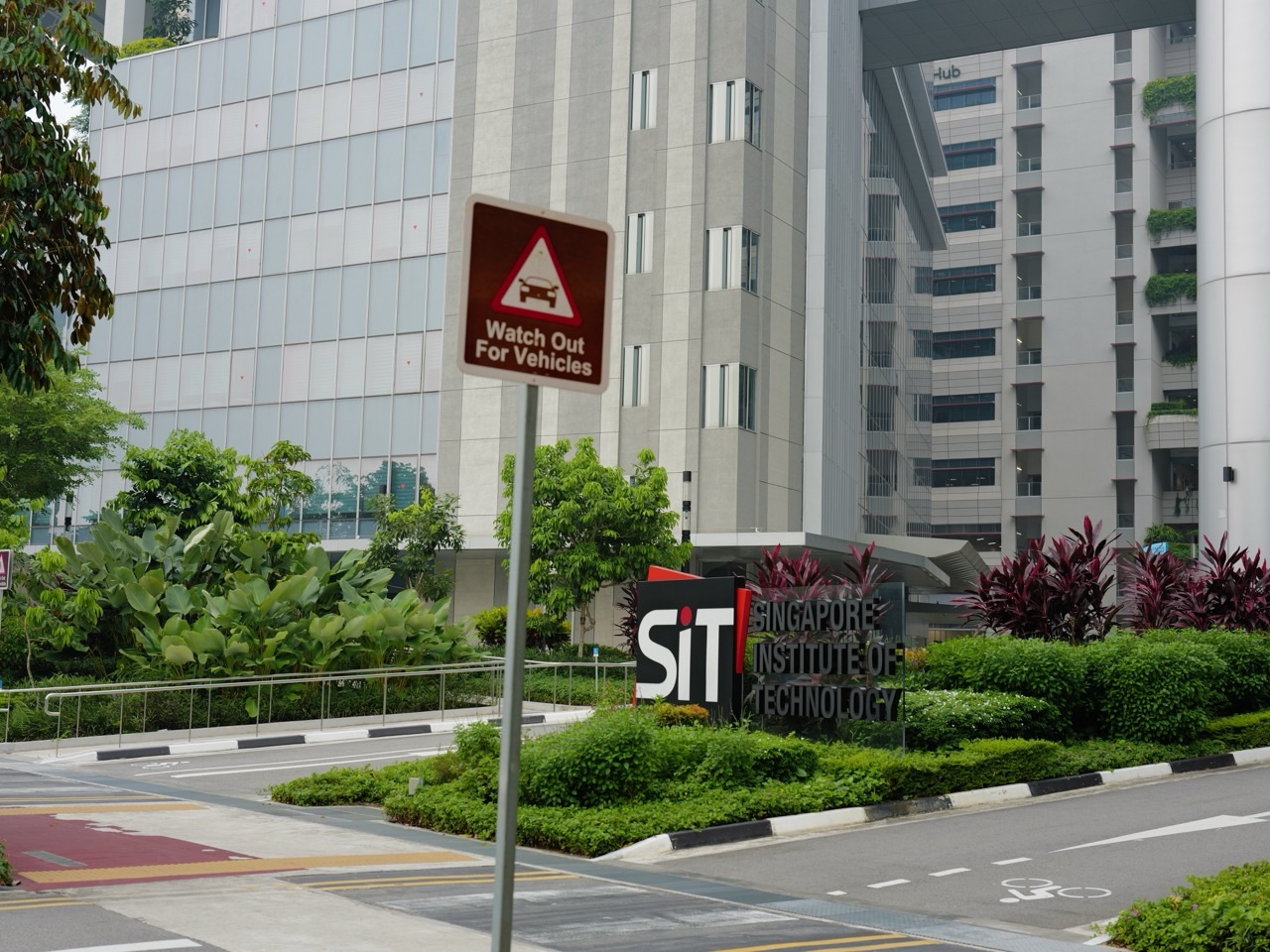
Quick answer, verified 23 October 2026. Singapore Institute of Technology’s SITLEARN lists a one-day Kaizen Essentials course at SIT Punggol Campus, 1 Punggol Coast Road on Friday, 27 November 2026. The published application deadline is 6 November 2026 at 11.59 pm. The programme teaches foundational Lean and Kaizen thinking for management and frontline personnel involved in business operations, across industries. It is professional continuing education, not a new MOE school subject or a promise that every Punggol business participating will become more productive.
The university’s official Kaizen Essentials course page lists a full fee of S$1,308 including GST and category-based after-funding illustrations for eligible learners. It identifies learning goals around Lean fundamentals, problem-solving methodology and the culture of continuous improvement. Attendance and a passed non-credit-bearing assessment determine whether a learner receives a Certificate of Attainment. For enrolment and the exact daily timetable, check SIT’s current written instructions and the official application link rather than treating this independent guide as a booking.
For Punggol families, the news demonstrates another dimension of the digital district’s education opportunities: learning is not limited to advanced AI or semiconductor engineering. Ordinary workplace problems—avoidable waiting, repeated errors, unclear handovers and inefficient processes—also deserve skilled attention. Those questions relate to Mathematics, careful observation, communication and cooperation, which children can practise safely in school long before entering a professional course.
Confirmed details to note before applying
Course: Kaizen Essentials. Provider: Singapore Institute of Technology’s SITLEARN, associated with its workplace-learning expertise. Date: 27 November 2026, one in-person day. Venue: SIT Punggol Campus, 1 Punggol Coast Road, Singapore 828608. Deadline: 6 November 2026, 23:59. Audience: management and line personnel involved in business operations; the university says the content applies across industries.
Learning goals: greater understanding of Lean fundamentals, applying Lean problem-solving to operations and cultivating continuous improvement. Certificate: attendance of at least 75% plus passing a non-credit-bearing assessment for a Certificate of Attainment; those meeting attendance but not passing may receive a Certificate of Participation. Funding: SIT lists possible SkillsFuture subsidies, subject to eligibility and the current approved fee.
A one-day session can introduce tools and structured ways of thinking. It is not a substitute for the expertise needed to redesign a regulated operation, nor does the course page claim that a participant receives a full university degree. Its value should be judged against the learner’s present role and the problems they can responsibly investigate afterward.
What is Kaizen in plain English?
Kaizen is commonly used to describe continual improvement through careful attention to how work is performed. Instead of assuming every problem requires a dramatic new system or major expenditure, people examine whether smaller, well-understood changes could remove friction and improve outcomes. The method encourages observing actual work and including the people who understand it.
Suppose a school administrative team handles a fictional queue for collecting permission forms. Families repeatedly return because a requirement was unclear. The team could hire more staff for one afternoon, but might first investigate whether the form and instructions can be made easier to understand. The problem may be the process, not the effort of people working within it.
Kaizen is not a licence to pressure employees to work continuously faster or skip breaks. A responsible improvement aims to make work better for customers and staff while respecting quality, safety and fair conditions. A change that looks faster but introduces errors or worker fatigue is not automatically a success.
Lean and Kaizen: connected, not identical terms
Lean thinking emphasises delivering value while identifying unnecessary waste and improving the flow of work. Kaizen describes an orientation toward ongoing improvement and participation. The terms overlap in practice, and SIT’s course presents them together. But the university’s public page does not promise detailed instruction in every technique associated with Lean; the additional examples in this article are offered as independently authored introductions.
A student may hear terms such as process map, root-cause analysis or Plan–Do–Check–Act (PDCA) in wider Lean literature. These are useful ways to reason about change. They become meaningful only when applied to a specific process with a clearly described problem and appropriate evidence. Memorising vocabulary is not a replacement for understanding.
The broad aim is to improve outcomes over time. Doing something differently does not automatically make it better. A proposed change should answer who benefits, what becomes more reliable, whether costs shift elsewhere and how the effect will be evaluated.
Start by identifying value for the real user
A process can be efficient at completing internal steps yet inconvenient for the person receiving the service. For example, a fictional centre might mark a family enquiry as resolved after forwarding it to another inbox. From the staff dashboard, the case appears closed. From the parent’s perspective, no useful answer has arrived. A method that ignores the user’s experience can optimise the wrong result.
The first question in improvement is therefore, ‘What outcome matters to the person this work serves?’ It could be accurate information, safe delivery, timely support or fewer avoidable steps. Different processes require different measures, but they should be linked to the real purpose rather than the easiest number to count.
The same principle helps children with schoolwork. Completing thirty questions is an activity; being able to solve a new problem and explain the reasoning is a learning outcome. A parent who counts completed pages but never checks understanding may be measuring the wrong thing.
Waste is more than material thrown in a bin
In Lean discussions, waste can include waiting, unnecessary movement, repeated handling, defects, overproduction and processes that add little value. The precise categories depend on the framework used, but the everyday logic is accessible. A person’s effort can be genuine while the work environment still creates avoidable steps. Improvement should examine the system rather than shame individuals.
Consider a fictional small business printing customer orders. Staff repeatedly walk across a room because the most frequently used supplies are stored far away. Moving relevant supplies closer might improve flow, provided the layout remains safe and accessible. By contrast, placing stock in a narrow emergency passage would be unacceptable even if it reduced walking distance.
A useful classroom exercise is to draw a sequence of simple steps and mark where someone waits, repeats an action or corrects a mistake. The class should distinguish necessary steps from unnecessary ones without pretending that every pause is waste. Safety checks and rest periods can have legitimate purposes.
The difference between speed and quality
A fast process that frequently produces the wrong result may create extra work downstream. An apparently slower step that prevents errors could reduce total completion time. A team should examine the full service, not just the part easiest to measure. This can be called viewing the whole flow rather than optimising an isolated local task.
Imagine a fictional homework submission process. Students upload their files in ten seconds, but half use confusing file names. A teacher then spends time identifying the correct work. A brief clear naming instruction might add a few seconds to upload while saving a larger amount of review time. The total effort, not only the first stage, should be compared.
A professional learner should also ask about fairness and accessibility. A new electronic form might speed up processing for some users but make it harder for people who cannot navigate it easily. An effective improvement should consider who may be disadvantaged and whether alternatives are necessary.
A basic process map parents can understand
A process map shows stages of work in the order and relationships in which they occur. Start with a clear beginning and end: ‘family submits an enquiry’ through ‘family receives a useful answer’. Then identify the major steps and where information or approval is required. The map is not a performance report by itself; it is a way to organise observations.
A parent can draw a safe fictional example with five boxes: prepare form, check information, submit, receive acknowledgement, receive answer. Ask where mistakes could arise and whether each step has a clearly responsible party. A misplaced form might reflect unclear instructions rather than carelessness.
For a real organisation, the map should be checked with staff who perform the work. Management diagrams can miss unofficial steps people take to keep a service functioning. Kaizen requires learning from real practice instead of assuming one person’s recollection describes the entire process.
A worked example: waiting time and processing time
Suppose a fictional application takes 10 minutes of active work but spends another 40 minutes waiting between departments. The total elapsed time is 50 minutes. Active work accounts for 10 ÷ 50 × 100 = 20% of that period. The calculation suggests that waiting dominates this simplified example, but it does not prove all waiting is unnecessary.
Some wait time may be necessary for lawful review, safety, accurate scheduling or coordination. Before removing a step, a team should find out why it exists. Improving a process can mean reducing unpredictable delay while retaining appropriate safeguards, not simply deleting every check.
Students can practise distinguishing two definitions: how long someone works on a task and how long the customer waits from start to finish. Similar distinctions arise in public transport transfers, school administration and supply-chain systems.
A second example: defect rates and denominators
A fictional workshop produces 200 labelled packages and finds 12 with incorrect information. The defect fraction is 12 ÷ 200 = 0.06, or 6%. After a proposed change, a second fictional batch has 5 errors in 100 packages, or 5%. The raw count declined more sharply, but the rate declined by one percentage point.
This difference matters because comparing unequal batch sizes using error counts alone can mislead. The process might have improved, but the calculation does not prove the cause. The two batches could have different difficulty, equipment or inspection standards. The team needs additional comparable evidence before presenting a guaranteed gain.
A Secondary student who can explain both the denominator and the causal limitation is applying Mathematics at the level needed for sound improvement work. The lesson is more durable than memorising a Lean acronym.
Root causes: asking ‘why’ with care
People often apply a chain of ‘why’ questions to understand an observed problem. The goal is to identify plausible causes that can be investigated, not to force a simplistic answer by repeatedly blaming the nearest employee. A missing document may arise because instructions were unclear, systems were unavailable, permissions were confusing or responsibilities overlapped.
Suppose a fictional class repeatedly forgets to bring materials for an activity. A teacher might discover that the instructions were buried in a long message. Making the materials list clearer could address one contributor. But another student may face access or financial difficulties requiring a different kind of support. The same symptom need not have one universal explanation.
Improvement is more credible when staff and users are allowed to describe the actual problem without fear. A workplace culture that punishes every disclosed mistake can distort the data because people stop reporting problems.
PDCA: a small cycle of disciplined change
Plan–Do–Check–Act is a familiar approach to iterative improvement. First define a problem, propose a bounded change and decide how its effect will be measured. Then carry out an appropriately authorised trial. Examine the results, including unintended consequences. Decide whether to retain, revise or abandon the approach.
For a harmless family example, consider a recurring delay in leaving for school. The family could plan a new packing routine, test it for a week, record whether departures became more predictable and decide whether to adjust. Avoid turning this into punishment or constant surveillance of a child. The experiment is about creating a workable routine together.
A team should be wary of declaring victory after one favourable result. Normal variation can make a short pilot look unusually good. Continued observation under comparable conditions is often needed, particularly where safety, fairness or cost could be affected.
5S and workplace organisation—use the principle responsibly
The 5S framework is frequently associated with Lean workplace organisation. In general terms, it encourages sorting necessary items, arranging them sensibly, cleaning and checking the environment, standardising useful practices and sustaining them. These ideas can help workers locate tools and notice problems, but the exact application depends on the workplace.
A school example might involve organising a shared drawer of art supplies so everyone knows where materials belong and can identify what needs replenishment. The improvement should respect accessibility and avoid discarding another person’s belongings without permission. Clarity and consistency are more valuable than making a photo look perfectly tidy.
Do not assume the SIT’s one-day course necessarily teaches every 5S step in a particular sequence. The official page emphasises Lean fundamentals and problem-solving, while this section offers an optional explanatory connection from wider Lean practice.
A bottleneck can determine the whole process
A team might have three sequential steps that can handle 30, 20 and 25 units per hour respectively. In a simplified stable system with no special buffering effects, the middle stage’s capacity of 20 units per hour can constrain total throughput. Increasing the first stage from 30 to 40 does not automatically raise the end-to-end capacity above 20.
This fictional numerical example illustrates why local speed improvements can be ineffective when another stage remains the constraint. Real processes involve variability, batching, demand, quality and downtime, so the mathematical simplification should not be used as an operational plan without appropriate study.
For students, the insight is intuitive: in a relay of connected tasks, making the already-fast step faster may not shorten total waiting. The correct next question is which step is currently limiting the result and what change can be made safely.
Why frontline people need a voice
A manager may see reports showing high overtime while frontline staff know that a particular approval creates repeated rework. Both perspectives matter. Lean improvement is strongest when decision-makers examine the actual work and listen to those who do it. Staff need the freedom to describe defects or cumbersome procedures without fearing that the observation will be used to assign blame automatically.
Professional participation does not mean every suggestion should be implemented. A proposal must still be tested for safety, effectiveness, cost and fairness. The culture becomes constructive when ideas can be discussed and revised with evidence rather than accepted or rejected solely because of job title.
Children can practise this in group projects: invite different members to explain where tasks become confusing, test a change, then review whether responsibilities remain fairly distributed. Learning to improve a process respectfully is a social skill as well as a mathematical one.
Why Punggol’s growing workplaces make this relevant
Punggol Digital District brings a university campus, technology organisations and supporting services into a common area. Businesses in such environments still face ordinary operational challenges: handovers, scheduling, facilities, communication and coordination. Some tasks may involve advanced technology, while others may improve through simpler changes and clearer processes.
This does not establish that the Kaizen course is being delivered to every district tenant or that any specific organisation has achieved a particular productivity gain. The course is a public continuing-education option based at the SIT campus. The relevance to the district is the type of professional learning it makes locally accessible.
A useful town-level observation is that education ecosystems need both specialised technical expertise and the ability to improve how work is organised. One without the other can leave services less effective than their technology might suggest.
How this differs from the other SIT courses in this series
The December Systems Thinking Habits course concerns interdependencies and organisational leadership across three days. The January–April Operations Excellence micro-credential is a substantially longer competency-based, credit-bearing programme. Kaizen Essentials is different: a 27 November one-day introduction focused on Lean fundamentals and everyday improvement.
These are not interchangeable credentials. Attendance at the one-day programme does not automatically give credit towards the longer micro-credential or waive its assessments. Prospective learners should compare course level, intended outcomes, assessment and fee before concluding that a similar theme means equivalent qualification.
The goal of this article is to help a reader make that distinction and respond to the specific 6 November application deadline, rather than repeat a general essay about lifelong learning in Punggol.
The actual course fees and SkillsFuture conditions
SIT lists a S$1,308 full fee inclusive of GST. The table illustrates a payable amount of S$392.40 for eligible Singapore Citizens under 40 and eligible PR/LTVP+ holders, and S$152.40 for eligible Singapore Citizens aged 40 and above under enhanced funding. It lists S$1,308 for non-funded participants in the stated category.
These are published funding illustrations, not guarantees that every Singaporean can enrol at the lowest amount. Eligibility, approval and the course’s current rules determine the actual charge. Learners should obtain a provider quotation, check whether SkillsFuture Credit can be used, and ask their employer if sponsorship or time off is available.
A household budget should also recognise transport, lost work time if applicable and any other confirmed commitments. Do not treat an attractive subsidy percentage as a promise of job placement or immediate return on the course fee.
Assessment: what the certificate does and does not mean
The university states that a Certificate of Attainment requires at least 75% attendance and passing a non-credit-bearing assessment. A learner who meets attendance but does not pass may receive a Certificate of Participation. The details of the actual assessment should be obtained from SIT’s joining or course instructions.
The certificate provides evidence of a defined learning outcome within this programme; it is not a degree, professional licence or guarantee of promotion. A leader can benefit from the skills without a credential automatically altering their professional authority. Actual workplace process changes may require management approval, technical review or consultation with affected staff.
The strongest learning outcome is that someone can explain a real problem more accurately, identify a plausible and safe test, and acknowledge where further information is needed.
A short preparation plan for the 27 November class
First, write down one recurring operational problem you are permitted to discuss. Identify the current process and what a better outcome would look like. Avoid bringing confidential personnel records or customer details into an external training setting without authorisation. A fictionalised or properly approved example may be more appropriate.
Second, practise one simple measure: turnaround time, error rate or number of handovers, clearly defined and with units. Third, ask where the data come from and which observations remain uncertain. Fourth, identify who would need to approve any experiment at work. Preparation should build intellectual readiness, not involve starting an unauthorised workplace trial.
Finally, confirm the accepted course place, address, exact reporting time and payment arrangements. The application deadline is 6 November at 23:59; the actual training date is 27 November. They are different dates serving different purposes.
A family learning exercise: reduce unnecessary steps
Choose a harmless process at home, such as preparing a library bag for a weekend outing. Let a child list the steps, identify where items are repeatedly forgotten and propose one easier routine. Together, test the change on the next outing and observe whether it worked. The learner should not be blamed if the first idea is ineffective.
The aim is to practise evidence rather than speed. Did the improvement make things easier for everyone or merely transfer work to a parent? Was an important safety or accessibility step lost? These questions show that responsible improvement includes people’s needs, not just completing a task in the fewest seconds.
The eduKate Secondary 1 Mathematics teaching example offers a parallel learning method: identify the precise step where reasoning fails, fix it and check the result on a new problem. Improvement becomes meaningful when a different situation can be handled independently.
What Primary and Secondary students should take away
Primary students can practise sequencing, comparing quantities and explaining a repeated problem without blaming a classmate. Lower-secondary learners can add rates, averages and accurate graphs. Upper-secondary students can explore bottlenecks, proportional reasoning, error rates and fair testing, connecting Mathematics with Science and everyday service questions.
A Secondary student might design a fictional school library borrowing process and calculate where a queue forms. They should distinguish the number of transactions from the time a reader waits and avoid pretending that an invented rate measures an actual Punggol library. Good school projects use clearly labelled hypothetical data unless public real-world data can be used lawfully.
Students should also learn ethical boundaries. They cannot film staff, collect other pupils’ private information or interfere with a public service simply to improve a classroom model. Responsible inquiry respects consent, rules and the difference between observation and authority.
Frequently asked questions from Punggol readers
When is SIT Kaizen Essentials? Friday, 27 November 2026, at SIT Punggol Campus. When must applications be submitted? The public page says 6 November 2026 at 23:59. Check current registration status with SIT. Is it only for engineers? No; SIT describes managers and line personnel in operations across industries.
Is it a university degree? No. It is a one-day course with a non-credit-bearing assessment and stated certificate conditions. Will every adult aged 40-plus pay S$152.40? Not necessarily; funding eligibility and approval determine actual fees. Will the certificate guarantee a better job? No hiring or promotion is promised.
Can my Primary-school child join? The target audience is workplace personnel, not children. Families can use safe everyday process examples to discuss the underlying ideas at a suitable level.
An improvement must have a clear baseline
Before testing a change, record what the current process actually does under comparable conditions. If a service completes most requests within a day, it would be misleading to select only its three worst cases and claim that a new method improved everything. A fair baseline defines the time period, measurement method and relevant variation. It also records which people and circumstances may have affected performance. Reliable baseline evidence helps an organisation distinguish a genuinely effective change from ordinary fluctuation.
Standardisation without rigidity
Once an improvement has been tested, a team may want to document the useful new method so that others can apply it consistently. Yet a standard should support legitimate judgement and allow appropriate exceptions. If a rigid procedure prevents staff from responding to an urgent safety concern, the organisation must follow its safety obligations instead of treating the efficiency checklist as absolute. A good process document explains its purpose and escalation boundaries, not just the steps to copy.
The cost of rework
In a fictional office, an error takes four minutes to correct and occurs 25 times in a month. The recorded correction work totals 4 × 25 = 100 minutes. If a new process reduces these errors to ten cases under comparable conditions, the direct correction time becomes 40 minutes. That suggests 60 minutes less rework on these narrow assumptions, not an audited organisational saving. A real evaluation must include the cost of implementing the change, other effects and whether the underlying error types stayed comparable.
When a smaller change is better
A large redesign may be necessary when a service is fundamentally unsafe or inadequate. But some problems can be improved by small, reversible changes that staff can test promptly. A clearer form instruction, better placement of approved materials or one less unnecessary handover might improve outcomes without replacing the whole system. Kaizen encourages learning through such observations where appropriate. The key is not the physical size of the change but whether it solves the real problem responsibly.
Feedback should include the people affected
A team may report improved throughput while users still experience confusion or staff absorb new burdens. Ask both groups about the change using respectful, appropriate channels. A good review listens for unintended consequences, including accessibility problems and new opportunities for error. It does not assume everyone will like a proposed improvement, and it should not pressure workers to give only positive feedback. Openness to criticism makes a process more likely to remain useful over time.
How to sustain learning after a short course
Within the first week after training, a participant can write a short reflection on one method they understood and one question that remains unresolved. They can then discuss with their authorised manager whether a bounded pilot is appropriate. After several weeks, review what happened and whether the change should continue. That is better than promising a complete transformation on the strength of one training day. The evidence of learning lies in thoughtful, safe application.
Why this is useful even without fashionable technology
Not all future skills involve sophisticated artificial intelligence. A process may fail because responsibilities are unclear or necessary information arrives too late. A new digital platform cannot automatically repair those weaknesses if the underlying workflow remains confusing. Kaizen reminds learners to examine the purpose, sequence and real conditions of work. Modern technology can support improvement, but people still need the ability to define the problem and evaluate whether the change actually helps.
Official sources and related guides
- SITLEARN — Kaizen Essentials, 27 November 2026 run, fee and application deadline
- SITLEARN — current continuing-education course information
- eduKatePunggol — Systems Thinking leadership course, December 2026
- eduKatePunggol — Operations Excellence micro-credential, January 2027
- JTC — the Punggol Digital District ecosystem
Editorial note: checked 23 October 2026. Programme date, audience, funding categories, certificate and deadline derive from SIT’s official page. Process diagrams, calculations and family examples are independent fictional educational exercises, not measured outcomes of a real business or additions to SIT’s promised syllabus.


