
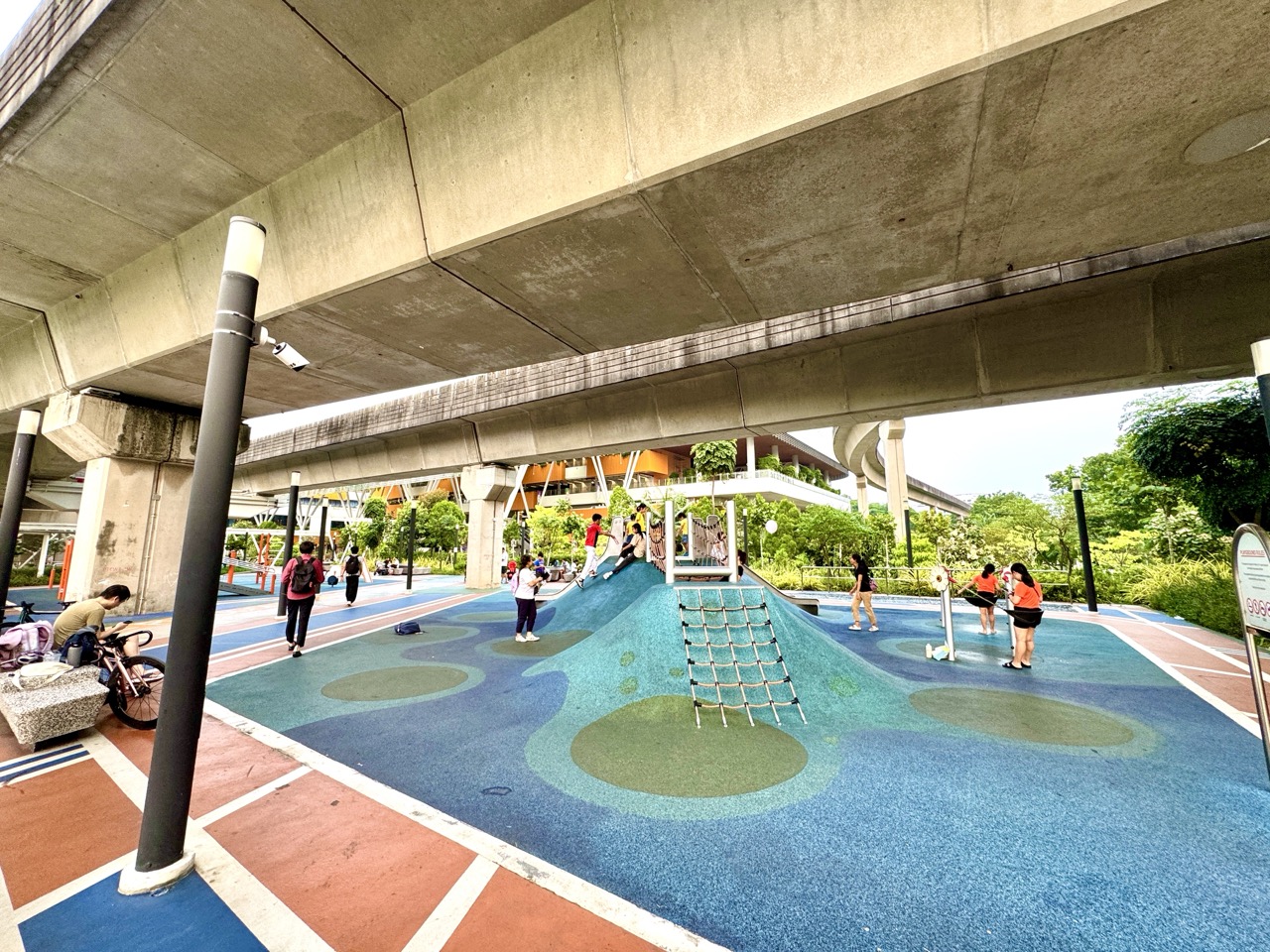
What movement skills should young children practise in Punggol before joining a sport? Give them safe, playful chances to move from place to place, control objects and maintain balance. Sport Singapore calls these fundamental movement skills: locomotor skills such as running or hopping; object-control skills such as rolling, catching and kicking; and stability skills such as turning and balancing. A child does not need a competitive football team, an expensive gymnastics class or adult-style fitness targets to begin learning them.
This 2026 Punggol fundamental movement skills guide for families uses the Punggol Waterway, age-suitable playgrounds, HDB living spaces and supervised ball games as contexts for safe playful learning. It explains SportSG’s three movement categories, how to recognise a concept gap without labelling a child lazy, ways to adapt a game for children of different abilities, safety and a practical four-stage family exploration. The existing Active Play in Punggol for Primary-School Children covers weekly activity, PE, sleep and screens; this article focuses on the underlying movements that later sports use.
Fundamental movement skills in Punggol: quick answers
| Family question | Simple answer | Important boundary |
|---|---|---|
| What are the three categories? | Locomotor, object control and stability. | Do not assess a child with an adult fitness test. |
| What is locomotor movement? | Travel through space: walking, running, skipping, hopping and related skills. | Choose age-appropriate surfaces and supervision. |
| What is object control? | Manipulating objects through throwing, catching, kicking, rolling or bouncing. | Avoid hard projectiles and crowded public paths. |
| What is stability? | Balanced position and controlled turning, bending or weight transfer. | Don’t force narrow or elevated balancing challenges. |
| Are skills only for preschoolers? | Early childhood is important, but suitable practice can continue later. | Learning speed and ability vary. |
| Must I buy sports equipment? | No. Safe soft balls and ordinary age-appropriate play may be enough. | Avoid unsafe improvised apparatus. |
| Where should we play? | A permitted clear space, suitable playground or supervised programme. | Never obstruct Waterway shared paths or HDB exits. |
| What if my child is nervous? | Simplify the activity and offer choice. | No shame, comparisons or coercion. |
| What if ability is significantly different? | Ask about suitable adapted activity or professional assessment when warranted. | Do not diagnose motor conditions from a checklist. |
| How much youth activity? | For ages 7–17, Singapore guidelines describe an average of 60 moderate-to-vigorous minutes daily across the week. | Preschool guidance is distinct and depends on age. |
SportSG’s Fundamental Movement Skills page and Nurture Kids programme are the primary reference points. They describe a foundation for later sport and daily movement, but they do not imply that any Punggol park offers an official Nurture Kids class. That programme works through eligible preschools and partnerships; parents should verify actual participation routes.
1. Why the skill beneath the game matters
A child who finds it hard to catch a ball may be told to practise harder. But “catch better” is a result, not an explanation. Does the child see the ball clearly? Is the throw too fast? Is the distance too great? Are they anxious that a hard ball will hurt? Does the child know how to position their hands? A careful adult asks what part of the movement is difficult and changes the task accordingly. That is more useful than repeating the same discouraging challenge.
Fundamental movement skills are the building blocks that later sport routines combine. Running and dodging may contribute to football, balance helps riding a bicycle, and catching or throwing contributes to a range of games. But a child who prefers reading, art or music can still enjoy learning useful movement without being required to join a sports team. The goal is physical confidence and varied play, not selecting a competition pathway at age five.
The strength of a first-principles approach is that adults can recognise the earliest uncertain idea. If throwing across a long distance is too hard, begin with an easier controlled roll or a closer gentle exchange in a safe space. If balancing on a narrow edge feels unsafe, practise suitable stability at ground level. Make the activity achievable enough for a child to discover that movement is interesting rather than frightening.
2. The three movement categories explained without jargon
Locomotor skills describe moving the whole body from one place to another. SportSG includes walking, running, hopping, galloping, skipping, leaping and related patterns. These appear naturally in playground games. A child walking around a safe marked area, changing direction on a signal or hopping during an appropriately supervised game practises different versions of moving through space. The important point is control appropriate to age and surroundings.
Object-control skills involve an object: rolling, throwing, catching, kicking, striking, bouncing or dribbling. A small child may find a slow rolling ball easier than an airborne catch. A larger soft ball may be easier to see or manage than a tiny fast one. SportSG’s Nurture Kids examples include many forms of object control, rather than focusing only on a football or basketball drill.
Stability skills are about balance, posture and controlled changes in body position. They include static and moving balance, bending, turning and shifting weight. A child might practise standing comfortably, walking along a suitable flat marked line or turning without falling. These are not invitations to balance on railings, wall edges or unsafe elevated equipment. The right environment permits the skill to develop without unnecessary risk.
3. Choose a Punggol setting that matches the child
Punggol has HDB playgrounds, the landscaped Waterway Park, estate paths and organised sport facilities. But not all spaces are suitable for every kind of game. A shared Waterway connector is used by cyclists, runners, pedestrians and people with mobility aids. It is a good place for a supervised nature walk; it is not automatically a safe venue to throw hard balls across the full path. A quiet family game needs enough room and must comply with actual park and estate rules.
An age-appropriate playground may provide chances for climbing, stepping and balance within the equipment’s designed use. Always read posted age recommendations and supervise as required. Do not invent obstacle routes over railings or ask children to jump off high structures. A child may prefer a nearby block playground to a distant famous destination, particularly on a school day. Convenience and appropriate equipment matter more than spectacular photographs.
For a short family walking game, Punggol Waterway Park’s public paths can support noticing landmarks, stopping at a suitable place and walking at the child’s pace. But the child should not chase a ball toward a water edge, run across cycling traffic or treat pedestrian crossings as part of a speed contest. The local Best Playgrounds in Punggol guide helps readers discover real facilities; this article helps them choose an appropriate activity once a safe place is found.
4. Locomotor skill games without a paid class
A useful first movement game can be as simple as walking between two visible safe points, then changing the pattern to a gentle side-step or age-appropriate skip. The adult makes the distance small enough to manage and does not reward speed alone. If the surface is wet, crowded or uneven, adjust or move elsewhere. The child should be able to pause and choose a lower-effort option. A game becomes more enjoyable when it adapts to confidence and skill.
SportSG’s preschool resource materials distinguish jumping for height, jumping for distance and hopping as different movement themes. That is helpful conceptually but does not mean an adult should set up a high-jump challenge at a park. Learning movement can include safe ground-level play, simple markers in a permitted clear space and observing how the body moves. Formal athletic jumps need appropriate environments and coaching, particularly when landing forces are involved.
A child may move more fluidly in a familiar classroom or play area than in a crowded public park. That is normal contextual change. If a movement becomes uncertain in a new environment, return to a comfortable setting and rebuild familiarity. Avoid treating reluctance as disobedience. Their task is learning to coordinate movement; the adult’s task is making the experience safe enough to try.
5. Object-control games: from rolling to throwing and catching
For a child who has never learnt ball games, rolling a soft appropriate ball to a nearby adult can be less intimidating than receiving a high fast throw. The child can see the object move along the ground and practise directing it. Once the movement is comfortable, an instructor or parent may introduce a different gentle object-control challenge suited to age and ability. The objective is predictability rather than power or an impressive score.
SportSG’s object-control category includes kicking, catching, dribbling and different ways of throwing. Those skills are not interchangeable. A child who can roll a ball accurately may still need practice anticipating an airborne object. This is not evidence of failure; it identifies the next skill to explore. Use a suitably light ball or safe soft object and leave enough room so a missed catch cannot hit another person or enter a road.
Competitive scoring can wait. Cooperative games, where the adult helps the child succeed through manageable movement, may provide better learning. If a child wants to quit after a few tries, consider whether the object is too hard, the distance is too great or the adult is giving too many instructions. Learning to throw and catch is not a race to ten successful attempts.
6. Balance and stability without risky stunts
Balance develops through many everyday movements: stepping onto a safe flat area, turning, bending to collect an appropriate object and adjusting weight while remaining comfortable. A child need not stand on a narrow wall or one leg for a long period to show that they are learning. In fact, forcing unsupported challenges can create fear or injury. Suitable age-appropriate playground equipment is designed for certain uses; follow its posted instructions and provide supervision.
SportSG’s stability skills include static and dynamic balance, transferring weight and controlled twisting or turning. Adults can help children notice how the body responds to movement in ordinary safe contexts. A gentle walking line on a flat permitted surface may be useful for some children, while another child with mobility restrictions needs adapted movement. The appropriate version belongs to the child, not to a universal “balance test” copied from a video.
If there are recurrent falls, marked developmental concerns or symptoms, seek advice from appropriate healthcare or child-development professionals rather than diagnosing through an internet game checklist. Some children have disabilities or conditions that change how they move. Inclusion means giving them appropriate opportunities and choice, not demanding the exact same physical task from everyone.
7. Preschoolers and primary-school children are not one uniform group
A three-year-old beginning to coordinate jumps, a six-year-old learning ball games and a Primary 4 student enjoying badminton have different developmental needs and preferences. SportSG’s resources emphasise early movement foundations, but they are not a fixed exam syllabus in which every child must achieve the same movement by the same week. Adjust activities for physical ability, maturity, attention, comfort and the demands of the environment.
SportSG’s Nurture Kids programme supports preschool physical literacy in participating educational settings. The Active Parent, My First Coach guidance also encourages family role-modelling and playful learning. Parents do not need to become professional sport trainers. Their useful contribution is showing willingness to move, providing safe opportunities and celebrating confidence rather than comparing one child with a sibling.
Primary-school children may already practise locomotor and object-control skills through school PE and active play. When a child wants an organised sport, those fundamentals can make later learning more comfortable. The Active Play for Primary-School Children article covers how this fits school, CCA, sleep and screens without adding another compulsory enrichment timetable.
8. A practical game matrix for Punggol households
Think of the table below as a menu, not a weekly prescription. A family should select only games that fit the child’s age, physical abilities, safety and available space. A household in a small HDB flat may prefer quiet low-impact play, while a supervised group in an appropriate open area can use larger movements. Sound, neighbour comfort and shared paths matter. The simplest successful game is the one people genuinely want to repeat.
Notice how each game targets an underlying movement rather than a particular competitive sport. A ball can help with object control without requiring a football match. Walking between agreed safe points can teach changes of direction without timing sprints. A child enjoying a quiet nature observation walk still develops confidence in a public environment. Match the learning purpose to the actual space rather than trying to force one activity into every location.
| Skill category | Illustrative suitable activity | Where it may fit | Avoid |
|---|---|---|---|
| Locomotor | Comfortable walking and direction changes. | Suitable clear permitted path or activity area. | Running into cyclists or traffic. |
| Locomotor | Age-appropriate hopping or skipping game. | Safe flat surface with supervision. | High ledges or slippery ground. |
| Object control | Gentle underarm roll of a soft ball. | A clear private or permitted practice area. | Hard fast throws in shared paths. |
| Object control | Cooperative soft-ball catching. | Supervised space with adequate room. | Throwing at faces or frightening a learner. |
| Object control | Controlled kicking to a suitable target. | Authorised sport or play area. | Kicking near roads or water edges. |
| Stability | Simple ground-level weight shifting. | Stable uncluttered floor. | Unsafe balancing apparatus. |
| Stability | Slow turns or suitable marked-line walking. | Appropriate level dry area. | Forcing a dizzy child to continue. |
| Combined play | Short child-selected movement sequence. | Suitable indoor or outdoor permitted space. | Turning every action into performance testing. |
9. Worked example: a child who cannot catch a small ball
A fictional Primary 1 child enjoys moving around the park but misses nearly every small ball thrown by an enthusiastic parent. The parent initially says, “Just concentrate.” That instruction does not identify the difficulty. The ball may be too fast, the throw distance too great, or the child may be anxious about being hit. A better assessment is to observe the conditions and make the task more manageable. The child is not less motivated just because a particular object-control skill is not secure yet.
The parent could discuss with an appropriate educator how to begin with a gentle soft-ball exchange, ensuring the child can see the object and feels safe. The objective becomes controlled tracking and a successful comfortable return, not a high catch count. When the child becomes more confident, the challenge can change gradually. This is the first-principles teaching approach: repair the earliest unstable link before demanding the finished performance.
The skill also transfers to new situations. Catching a soft large ball does not automatically make a child confident with a shuttlecock or a smaller faster ball. The adult should acknowledge what has been learned and introduce the next object thoughtfully. It would be a mistake to declare that all throwing sports are now mastered or to punish a child when a new context feels different.
10. Worked example: a preschooler afraid of a balance obstacle
At a neighbourhood playground, a child refuses to walk on a narrow elevated beam while older children move across it. An adult might pressure the child to prove courage or compare them with a sibling. That would be a poor learning decision. The activity may be beyond the child’s present balance confidence or outside its appropriate age and safety range. Respecting hesitation can prevent an unpleasant or unsafe experience.
An alternative is to practise comfortable balance and stepping in an age-appropriate ground-level context or another suitable supervised activity. No one needs to turn it into an assessment. The child can learn how the body shifts without the fear of falling from height. The adult’s role is to observe, offer a manageable option and follow the equipment’s posted rules rather than invent new uses.
Later, the child may choose to revisit a different challenge. Or they may prefer running and rolling games. Learning opportunities are varied, and development is not measured by one playground apparatus. If concerns are persistent or significant across daily life, seek professional guidance rather than relying on a parent’s improvised diagnosis.
11. Worked example: a sporty child with very little free time
A Primary 5 child already attends school PE, has an active CCA and participates in several enrichment programmes. The parent reads about fundamental movement skills and considers adding another paid sports class. But the child’s week is already crowded, and evenings are tiring. The best next step may be to notice where relevant skills are already practised, protect sleep and give space for enjoyable unstructured play. More classes do not automatically create better development.
A quiet weekend may involve a gentle ball game with family or no formal sport at all. If a coach identifies a particular skill gap worth addressing, a suitable focused activity may help. But the parent should distinguish a genuine learning need from marketing pressure to add another programme. Childhood wellbeing includes food, friendship, school, rest and the ability to choose interests.
The principle transfers to adults too: find the constraint before prescribing more work. If the problem is insufficient time, a complicated timetable is unlikely to solve it. A small repeatable play opportunity may be more effective.
12. Punggol HDB home play: safety, space and neighbours
A compact flat can support certain quiet movement games, but it is not a sports hall. Before doing anything, clear a safe private area and remove trailing cords, fragile objects and unstable furniture. Avoid repeated jumping that creates strong noise or vibration through floors, particularly during evening quiet hours. Common corridors, lift lobbies and stairwells must not become private obstacle courses that block access or exits.
A soft object-control game may be possible in an appropriate space, but ball size and risk of hitting windows or people still matter. Some families may prefer to go to a permitted playground for active running while keeping indoor play gentle. The Healthy HDB Home in Punggol guide covers safety and walkways in more depth. The same household principle applies to children’s games: solving inactivity should not create a new home hazard.
For families with older relatives or toddlers, the space must serve different people. An activity appropriate for a Primary 3 child may be unsuitable when a crawling baby is nearby. Adults can arrange different play times, adjust the equipment or select a safer location. Children can help learn the respect shown by returning equipment to storage and leaving paths clear after use.
13. Weather, haze and heat affect age-appropriate play
Punggol is warm and humid, and outdoor play can expose children to heat stress. The Meteorological Service publishes WBGT-based heat guidance for prolonged outdoor exertion. Parents should pay attention to current conditions, child’s symptoms, rest opportunities and appropriate hydration. A playground in full sun can be unsuitable even when the child still wants to race. Outdoor activity is a choice to be managed, not a daily test of perseverance.
Haze brings a separate air-quality issue; use official Singapore haze guidance. Poor air quality can make outdoor exertion inappropriate, particularly for those with certain health conditions. A family can choose safe indoor play, an appropriate managed facility or rest rather than forcing a ball game near the Waterway. The Rainy-Day Exercise in Punggol article provides wider small-space considerations.
Lightning is different again. Check MSS lightning information and stop outdoor activity when storm risk is present. Avoid play beneath trees or open-sided structures during lightning hazards. A child can practise naming a movement skill indoors on a rainy day without needing to demonstrate it physically. The health value of play includes the judgement to change plans.
14. A four-visit family movement exploration
The first visit is observation. Choose a familiar suitable playground or indoor area and let the child show which movements they enjoy. Notice locomotor, object-control and stability actions without scoring them. The adult can join in appropriately to model enjoyment. The second visit selects one safe simple skill that the child wants to practise, perhaps comfortable rolling or walking. Keep the task manageable and respond to questions.
The third visit is a gentle variation. If a movement has become comfortable, change one feature such as object size, direction or suitable surface while preserving safety. This tests whether the child can adapt in a new context. If confidence decreases, return to the familiar option instead of pushing. The fourth visit is a review: which game was enjoyable, what kind of movement did it involve and would the child like to repeat it?
These are planning stages, not four-week milestones or a standardised developmental screening tool. A child with a disability may need adaptations or professional support; a very young toddler may not be ready for the same movements as a schoolchild. The point is to strengthen enjoyment and understanding, not obtain a score.
| Visit | Core category | Parent’s learning question | Sensible outcome |
|---|---|---|---|
| 1 — Discover | All categories | What does the child already enjoy? | A safe enjoyable play experience. |
| 2 — Practise | One chosen skill | What simple controlled action feels possible? | Increased willingness to try. |
| 3 — Transfer | A suitable variation | Can the child adapt without stress? | Confidence in a slightly different context. |
| 4 — Reflect | Varied activity | What would the child choose again? | An accessible family routine. |
15. How this connects to educational development without exaggerated claims
Movement skills can support participation in play, daily physical tasks and later sports. SportSG describes fundamental movement skills as a foundation for more complex physical activity. That is a valuable educational rationale on its own. It does not require claiming that hopping games automatically increase Mathematics marks or cure attention difficulties. Such claims would overstate what a local leisure article can establish.
Punggol families can connect movement with careful observation and reasoning in modest ways. A child can name the difference between rolling and throwing, identify which direction they travelled, or explain how a new object changed their game. Those conversations develop vocabulary and reflection around physical experiences. But play should remain play; not every outing needs a worksheet, target score or formal teaching assessment.
For the Punggol education ecosystem, see Waterway Park and Student Life and the existing Healthy Teenage Life in Punggol guide for how activity relates to later schooling. The bridge is honest: foundational movement can open choices, but academic and health outcomes depend on many factors.
16. Common mistakes when adults try to teach movement
- Starting with a full competitive game: learn basic movements first.
- Telling a child to try harder without diagnosing the gap: check object speed, distance and comfort.
- Comparing siblings: individuals develop different movement skills at different rates.
- Choosing unsafe obstacles for bravery: prefer age-appropriate designed equipment.
- Throwing hard balls across paths: keep other park users safe.
- Making every movement timed: allow cooperative unscored play.
- Assuming more paid classes are always better: respect school, sleep and free time.
- Ignoring a child’s preference: let children help choose the game.
- Using common corridors as private sports halls: preserve safe public access.
- Forcing outdoor sessions through storms or high heat: change plans.
- Treating unusual movement as an online diagnosis: seek proper advice for significant concerns.
- Calling every SportSG resource a bookable local class: verify actual provider and programme.
17. Frequently asked questions
What are fundamental movement skills?
Basic locomotor, object-control and stability skills that support daily movement and later sports.
What is locomotor movement?
Movement from place to place, such as walking, running, hopping and skipping.
What is object control?
Controlling an object through rolling, catching, throwing, kicking or related actions.
What is stability?
Maintaining and adjusting balance while standing or moving.
At what age should children start?
Early childhood provides many useful opportunities, but appropriate learning can continue as children develop.
Do I need paid sports classes?
Not necessarily. Suitable safe play can develop movement confidence in everyday life.
Does Punggol offer an official Nurture Kids class at every park?
No such claim is made. SportSG’s programme works through preschools and relevant partners.
Can a three-year-old play catch?
Choose a developmentally appropriate safe version, such as a gentle soft-object activity, with suitable supervision.
What if my child cannot catch a ball?
Simplify the task and observe the actual problem; seek professional advice if there are persistent significant concerns.
What if my child dislikes football?
Movement can be explored through non-competitive walking, balance, dance or other activities.
Should I use a park connector for ball practice?
Not when it obstructs walkers or cyclists; use a permitted safe activity area.
Is a high playground beam required for balance?
No. Ground-level age-appropriate activity can develop useful balance.
Are hard footballs essential?
No. Suitable soft equipment may be better for early object-control confidence.
Can a Primary 5 child still practise basics?
Yes, when the activity suits their ability and interest.
Does practising movement guarantee academic improvements?
No. Movement skills support physical participation but cannot guarantee school results.
Can a child with disability participate?
Appropriate adapted play may be possible; ask qualified providers about personal suitability.
How do we respect HDB neighbours?
Choose quiet indoor movements and suitable outdoor spaces; do not block corridors or create unnecessary noise.
What if outdoor weather is unsafe?
Postpone or adapt with a safe indoor option; follow official heat, haze and lightning advice.
Do movement games replace sleep?
No. Adequate age-appropriate sleep and normal family routines remain essential.
What is a good first success?
The child enjoys a controlled appropriate movement and wants to try again.
Connected reading in eduKate Punggol’s lifestyle and learning library
- Life in Punggol 2026 — Master Guide
- Active Play for Primary-School Children in Punggol
- Best Playgrounds in Punggol
- Things to Do in Punggol With Kids
- Family Life in Punggol
- Healthy Teenage Life in Punggol
- Low-Cost Fitness in Punggol
- Learn to Cycle as an Adult in Punggol
- 10,000 Steps versus Brisk Walking in Punggol
- How to Choose a Beginner Sport in Punggol
- eduKateSG — Waterway and Student Life
- eduKateSG — School CCAs and LEAPS 2.0
Primary references and editorial note
- SportSG — Fundamental Movement Skills
- SportSG — Nurture Kids
- SportSG — Active Parent, First Coach
- SportSG — Active Play and Skills
- SportSG — Preschool FMS Activity Resources
- NParks — Punggol Waterway Park
- HPB — Age-Appropriate Physical Activity Guidelines
- MSS — Heat Stress
- MSS — Lightning
- Singapore Official Haze Advice
Reviewed 23 October 2026. This is general educational family play information, not a developmental screening tool, medical advice or a bookable local sports class. Skill development varies. Choose age-appropriate safe play and seek professional guidance for persistent concerns or individual health conditions. Worked child examples are fictional.


