
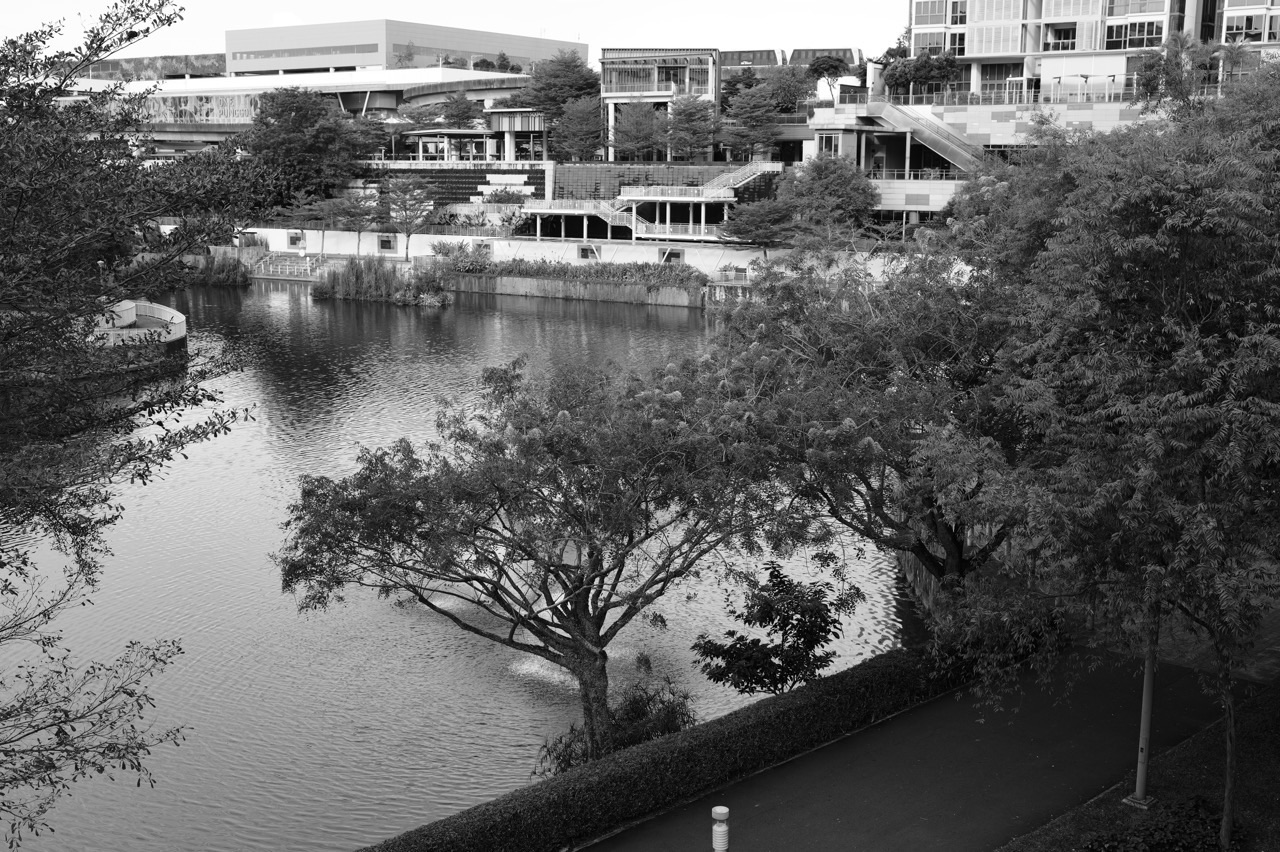
Can you barbecue at Punggol Waterway Park during haze? Do not assume that the park has a bookable BBQ pit. NParks’ Waterway Park listing does not advertise designated pits, and Singapore public-park fires require the appropriate authorised location and permit. NParks confirms bookable pits at Pasir Ris Park, while its 2026 public BBQ rules set pit booking and use conditions. For a hazy event, also check one-hour PM2.5, guest health and food safety rather than treating a booked pit as permission to ignore exposure.
This Punggol family guide distinguishes Waterway Park from Punggol Park in Hougang, explains 2026 NParks permits and BBQ hours, looks at charcoal smoke and local food safety, and provides a workable indoor birthday or picnic Plan B without inventing refunds or park closures.

Quick section route: Can I barbecue at Punggol Waterway Park during haze? · Charcoal, gas cylinders and portable grills are not interchangeable · Older relatives and people with heart or lung conditions · Rain and lightning can cancel an otherwise clear-air BBQ · How to change a booking without inventing refund rules · Worked example: a condo terrace looks ‘covered’
Can I barbecue at Punggol Waterway Park during haze?
Do not assume that a picnic spot at Punggol Waterway Park is a permitted BBQ pit. The current NParks park listing identifies walking, cycling, photography and family activities, but does not advertise bookable public barbecue pits there. In Singapore’s public parks, barbecue fires are restricted to areas lawfully set aside and covered by the relevant permit or authorisation. A scenic bridge, grassy bank or waterfront seat does not grant permission to light charcoal. If you are searching specifically for a pit, use NParks’ current official BBQ booking service rather than an old social post.
During haze, legal access is only the first question. An outdoor BBQ exposes people to regional smoke and may add local cooking smoke, so consult NEA’s one-hour PM2.5 and MOH’s health guidance for the intended time, effort and vulnerable guests. If a group has children, seniors or people with chronic heart or lung disease, a long exposed evening may be unsuitable. A useful Plan B is an authorised indoor meal or a different date—not lighting a portable charcoal stove under a residential block when the original park plan cannot proceed.
Where can Punggol families book a real public BBQ pit?
NParks currently lists 65 bookable pits at Pasir Ris Park, across Areas 1 to 4, at S$20 per pit per day. This is a documented park option in Singapore’s east, not a statement that a pit is available for any particular date or that travel from every part of Punggol is brief. Booking is still required, and the final booking portal and relevant park notices determine which specific pit can be reserved.
Changi Beach Park and East Coast Park are other authorised choices with their own pit listings, fees and transport considerations. Families should avoid confusing the name Punggol Park with Punggol Waterway Park: NParks places Punggol Park in Hougang, at Hougang Avenues 8 and 10, not in the Punggol town centre. Older regulations reference Punggol Park BBQ permits, but current availability must be confirmed in the live NParks service and actual park rules. Do not invent a Punggol Waterway pit number from an unrelated park map.
How NParks’ booking system works in 2026
The 23 September 2026 NParks BBQ page says pit permits can be applied for up to two months ahead, on a first-come-first-served basis, online through the designated Singpass process or at applicable AXS stations. Published daily fees range from S$12 to S$20 depending on the location. NParks specifies a barbecue-use window of 12 noon to 10.30pm on the booked date, and says that permitted time cannot be changed.
A booking confirmation is important: bring a printed or digital copy for verification. Do not assume a temporary haze concern automatically extends the hours, moves a reservation to another date or guarantees a refund. Check the actual terms and contact the operator through official channels before cancelling or rescheduling. Families using commercial chalets, condominium BBQ decks or private event spaces may face completely different booking agreements, which need to be read separately.
The park rule about open fires is not optional
Singapore’s Parks and Trees Regulations restrict lighting a fire or holding a barbecue within a public park unless the activity is authorised, a valid permit is held where required and the activity takes place in the designated area. NParks’ park etiquette page asks visitors to book approved pits. A group that moves its charcoal barbecue from a booked park to a random Punggol Waterway grass patch has not retained permission by moving the same equipment.
The rules also protect the park’s vegetation, wildlife, water quality and other visitors. Never light an open fire under a bridge, beside a bicycle path, near exposed tree roots or on a timber boardwalk. If there is uncertainty about whether a particular facility is an authorised pit, ask NParks instead of testing whether anybody will stop the group. The park’s role as a public nature and family space should not be displaced by an improvised barbecue.
Charcoal, gas cylinders and portable grills are not interchangeable
NParks’ current barbecue etiquette prohibits starting open fires outside the authorised pit. It also prohibits using LPG cylinders, refillable gas cylinders, portable stoves or generators for its public park barbecue activity. Families familiar with camping equipment may assume a portable gas grill is allowed whenever there is a picnic table, but a park permit does not necessarily permit equipment contrary to the site’s rules. Bring only items allowed under the current booking conditions.
If the weather or haze makes the booked pit unsuitable, do not move the fire to a void deck or enclosed balcony. Charcoal and fuel-burning devices can create dangerous smoke and carbon monoxide, particularly in enclosed or inadequately ventilated spaces. A household needs actual safe cooking arrangements under building and fire rules, not an improvised indoor replacement for an outdoor grill. The Punggol fire-versus-haze guide explains why a regional smoke episode and a local combustion emergency are different hazards.
Why adding BBQ smoke during haze matters
A charcoal barbecue is a local combustion source. It can generate particulate emissions and gases near people preparing and eating food. Regional haze adds airborne fine particles from farther away, so guests may experience both sources rather than one. MOH’s advice about reducing unnecessary exposure applies to the overall outdoor activity, including long periods sitting by a grill or walking from a bus stop with supplies.
It would be unsupported to promise a numerical increase in PM2.5 at every barbecue or claim one grill caused Punggol’s regional haze. Actual concentrations depend on the fuel, cooking process, wind and distance, among other variables. The practical choice is to avoid creating unnecessary smoke in unsuitable conditions and not use an N95 mask as permission for a vulnerable person to spend hours supervising a smoky charcoal fire.
One-hour PM2.5 versus tomorrow’s forecast for a party
A family reserving a BBQ pit two months ahead cannot know the exact PM2.5 on the future evening. As the date approaches, use the forecast 24-hour PSI and MOH’s outdoor activity advisory to plan whether the event may need changing. On the day, check the newest one-hour PM2.5 reading for immediate activity decisions. Healthy people and vulnerable groups receive different advice when exposure becomes elevated, high or very high.
A BBQ is not necessarily strenuous like a football match, but guests may spend several continuous hours outside, children may run around, and cooks may carry heavy supplies or work over a hot grill. Duration, heat and exertion all matter. Do not label a four-hour party ‘no exposure’ because the adults are seated. Where relevant, a more comfortable indoor meal or postponement may suit the group better than attempting to meet an arbitrary health threshold from a forwarded PSI screenshot.
Children’s barbecue gatherings need extra planning
Children may enjoy a family cookout as much for the games as for the food. But a poorly ventilated smoke plume can be uncomfortable, and hot charcoal, sharp utensils and moving bicycles present direct safety hazards. Adults should keep children away from hot surfaces and cooking equipment, provide appropriate age-specific supervision and avoid running games in a crowded pit area.
When the public haze advisory discourages outdoor activity, a child does not need to prove resilience by playing for hours beside the grill. An indoor alternative can include a shared meal, low-key games, a story or a cooking-themed activity without open flame. The child still experiences the family connection. If someone has asthma, follow their clinician-directed plan and current MOH advice rather than assuming a disposable mask makes the outdoor event safe.
Older relatives and people with heart or lung conditions
MOH’s current 2026 haze guidance is more cautious for people with chronic heart or lung disease, pregnant people and older adults. A grandparent may be happy to attend a birthday barbecue, yet a long outdoor period with charcoal smoke can be a different exposure from a short necessary commute. Invite them to help choose a suitable time and place instead of treating their attendance as a question of willingness or social loyalty.
If a family member develops unusual breathlessness, chest discomfort or another worrying symptom, seek medical advice, urgently for serious signs. A well-fitted respirator can reduce certain particle exposures where appropriate but may be difficult to tolerate for people with severe heart or lung problems. Replacing a long charcoal outing with a calmer indoor meal can protect wellbeing without excluding the person from the celebration.
Food hygiene stays important during a smoke episode
Singapore Food Agency’s safe food practices stress separating raw from cooked foods, keeping utensils clean and cooking meat and seafood thoroughly. SFA says cooking above 75°C helps kill harmful bacteria and recommends keeping hot food above 60°C until serving. These are ordinary food-safety requirements, not changes to the rules because the skyline appears smoky. An adult should not focus so intensely on PSI screenshots that they leave raw chicken beside a cooked salad for hours.
Use separate tools or clean appropriately between raw and ready-to-eat food, maintain suitable cold storage and follow the actual SFA advice. Avoid partially cooking meat and leaving it to finish much later at ambient temperature. If the family postpones the barbecue after buying ingredients, refrigerate or freeze them safely rather than trying to salvage a cancelled outdoor plan by leaving food in a hot car. Food poisoning is a different preventable risk from respiratory haze exposure.
Does a smoky smell mean the food is contaminated?
The presence of ambient haze does not by itself establish that every food item or outdoor meal is unsafe to consume. Nor does a food item looking attractive prove it has been stored at a safe temperature or cooked thoroughly. A family should keep food clean, covered as appropriate and handled according to SFA guidance rather than making unsupported chemical-contamination claims about every vegetable exposed to Punggol’s air.
If ash, debris or visible contamination falls onto food, the responsible cook should assess whether the item can be safely used, avoiding unnecessary risk. For ordinary outdoor cooking, washing hands, separating raw ingredients and preventing temperature abuse are much more reliable than guessing the concentration of wildfire compounds on a bread roll. Anyone with symptoms of foodborne illness needs appropriate healthcare rather than attributing every stomach complaint to haze.
A hot charcoal pit is also a heat-stress environment
Singapore’s warm and humid conditions can make standing over a grill uncomfortable even when the air is Normal. Haze and heat are separate environmental hazards; a cool coastal breeze may help comfort but is not an air purifier. A person carrying coolers and tending hot coals in the sun may be working more strenuously than a guest who sits quietly in shade.
Use realistic breaks, appropriate water and food, sun protection and safe supervision. Do not create a large enclosed tent around a public NParks pit to escape sunlight or smoke; NParks’ barbecue rules prohibit erecting structures such as tents and tables around the pit and specifically do not permit tentage even if it rains. When the weather becomes unsafe or lightning is near, pause or cancel the outdoor gathering rather than trying to improvise shelter around fire.
Rain and lightning can cancel an otherwise clear-air BBQ
An outdoor booking may be affected by thunderstorms, rain, strong wind or wet conditions even when air quality is relatively good. Lightning is a distinct danger at parks and open coastal spaces. A booking time does not override actual weather-safety requirements or permit a family to shelter beneath a tree while the barbecue continues. Check Meteorological Service Singapore’s weather information, local signs and the event organiser’s instructions.
If a group chooses to leave, extinguish and handle charcoal according to the pit and safety rules rather than depositing hot embers into an ordinary park bin. Inform guests calmly and preserve receipts if you intend to ask about an applicable booking change. Our Punggol haze, rain and lightning guide explains how a clearer sky after a shower can still coexist with weather hazards. Outdoor memories are not worth a fire, injury or an unsafe evacuation.
What NParks says about protecting the park
NParks asks barbecue users to take care of the pit and surroundings, clear litter responsibly and avoid obstructing paths. It specifically prohibits placing hot charcoal in rubbish bins, lighting fires outside the pit, using gas cylinders or portable stoves, blocking access, disturbing others with sound systems and attaching items to trees or park structures. These expectations apply on every booked day, regardless of haze.
Punggol families visiting Pasir Ris Park should remember that beachside vegetation and wildlife are part of a public environment shared by many people. Loose food packaging, skewers and hot coals can endanger birds and other visitors. A group should leave the area in good condition and comply with its permit, not assume the park cleaning team will remove ash and rubbish from an abandoned cookout after a haze warning.
Condominium BBQ pits have different rules
Some Punggol condominiums and executive condominiums offer private barbecue or gathering areas managed by the MCST or appointed operator. These are not NParks public park pits. Rules may cover booking priority, fees, deposit, permitted equipment, guest numbers, safety supervision and cancellation. No one should claim that the NParks 12pm–10.30pm permit window automatically applies to a private condominium deck.
During haze, ask the actual managing agent how facility use and outdoor exposure are handled, and whether a booking can be deferred. A sheltered condominium grilling area can still be open to outdoor air and local charcoal smoke; a roof does not guarantee filtered ventilation. Follow the building’s fire-safety and common-area rules, and avoid leaving heat sources or fuel near adjacent residences. The person’s medical needs remain relevant independently of the facility’s management notice.
What about a barbecue in an HDB courtyard or balcony?
An HDB common corridor, void deck or landscaped space is not an automatic public barbecue area. Fires, hot charcoal, gas cylinders and smoky cooking can create risks for neighbours and damage to common property. Residents should follow current HDB, town council and SCDF restrictions rather than transplanting an NParks permit to an unrelated HDB common area. A charcoal barbecue should never be improvised inside a flat or an enclosed balcony, especially when haze prompts windows to remain closed.
For a family gathering at home, choose an appropriate indoor meal prepared using installed safe cooking facilities, with suitable ventilation and food hygiene. An electric appliance also requires appropriate electrical safety and correct manufacturer instructions; it should not be treated as a universal licence to grill anywhere. Reducing smoke is helpful, but the bigger win may simply be sharing a delicious familiar dinner without a hazardous improvised fire.
How to change a booking without inventing refund rules
The availability of a pit and the operator’s cancellation or modification policy are separate from air-health recommendations. NParks publishes standard permit rules and fees, while commercial venues may apply different contracts. A family’s voluntary decision to postpone an event under a health advisory may or may not qualify for a refund. Do not tell guests every park booking is automatically refundable because the forecast PSI is Unhealthy.
Before the event, note the booking reference and confirmation, check any available cancellation deadline and ask the actual operator about the relevant options. If a venue closes or issues its own instructions, preserve that dated notice. A fair group message should say what is confirmed and what is a family decision. That avoids frustration when a rumour circulates that ‘NParks has cancelled all barbecues’ without an official park-level announcement.
Hosting a birthday celebration without a smoky grill
A Punggol parent may have booked a family barbecue to celebrate a child’s birthday. If outdoor air becomes unsuitable, a good alternative could be a prearranged indoor meal at home, a permissible private function space or a suitable restaurant, subject to actual capacity and bookings. A child’s enjoyment can come from a favourite meal, games, a cake and time with friends, without a charcoal fire being essential.
Do not spontaneously crowd a public library or mall corridor with a private party or assume a random community venue accepts large groups. Check admission, fees and facility rules first. A short pleasant indoor programme often works better than an exhausting drive to an unconfirmed outdoor replacement pit. The Punggol haze birthday and event planner provides a wider approach; this guide focuses on BBQ permits, smoke and food hygiene.
A practical invitation message when the plan changes
For example: ‘Our Saturday park barbecue will not go ahead as planned because we are reassessing the outdoor air and weather for the children and older relatives. The original NParks pit booking is being handled through the official process. We will meet for an indoor meal at the confirmed venue instead; details to follow.’ This is a family decision, not a claim that a government agency cancelled every booking.
If a venue confirms its own cancellation, include the operator’s date and relevant reservation details without exposing private payment information. Avoid spreading a screenshot from an unrelated 2015 haze closure. The aim is to give guests enough information to adjust transport and meals, while keeping scientific air readings and administrative booking status in their proper roles.
Worked example: a Punggol family considers Pasir Ris Park
Imagine a Punggol household wants an outdoor dinner and checks NParks. It finds that Punggol Waterway Park does not advertise bookable barbecue pits, so the family does not plan to carry charcoal to a bridge there. It locates an official Pasir Ris Park permit option and verifies the actual pit location and booking conditions. A few days before the date, the next-day PSI outlook creates concern for vulnerable guests.
The family chooses an authorised indoor Plan B and checks how to handle its particular permit. No guest is instructed to wear a tight N95 and remain beside the charcoal for hours. The case is hypothetical; it does not assert the pit was unavailable or officially closed, and it does not promise a refund. Its lesson is that permission, air safety, food hygiene and booking changes all require different facts.
Worked example: a condo terrace looks ‘covered’
A group rents a Punggol condominium BBQ terrace with a roof and open sides. On the day, some guests say that a roof makes it an indoor clean-air venue. The host explains that outdoor PM2.5 may still circulate in an open-sided space and that cooking smoke adds another potential exposure. They consult MOH’s current advice, the condo’s actual facility rules and the group’s health needs before deciding whether to proceed.
The host does not demand the MCST install a particular purifier in a naturally ventilated terrace, nor turn the gathering into an unapproved enclosed tent. If the plan changes, they communicate the real reason to guests and follow the agreed booking terms. The case shows why a private facility is not automatically governed by NParks permit hours, but still requires careful environmental and fire-safety decisions.
A useful pre-BBQ checklist for Punggol households
Confirm that the exact pit is legally available through its operator, book within the permitted timeframe and understand cancellation and fee conditions. Identify the location on the actual park map instead of relying on a similarly named park. Keep a copy of the permit. Check NEA/MOH air guidance, weather, lightning and the health of attendees. Arrange the correct food storage, clean equipment and safe disposal of charcoal.
If any safety-critical condition becomes unsuitable, choose a legitimate alternative without lighting a fire elsewhere. Make it clear to guests who will confirm the final decision and when. A good barbecue gathering should leave people relaxed and the park undamaged. The ability to postpone calmly is a better measure of planning than finding a way to grill through every haze warning.
BBQ choices for Punggol families
| Location or activity | Booking/permission question | Haze-day consideration |
|---|---|---|
| Punggol Waterway Park | No bookable pit advertised on current NParks park listing | Do not improvise charcoal fire on walkway or grass |
| Punggol Park (Hougang) | Different park; check live NParks booking and signs | Don’t confuse Hougang with Punggol town centre |
| Pasir Ris Park | 65 documented pits, S$20 daily; booking required | Actual availability, guest health and outdoor exposure |
| Changi Beach / East Coast Park | Designated authorised pits with booking rules | Longer travel and current air/sea weather |
| Private condominium BBQ terrace | Actual MCST booking and facility rules | Roof/open sides do not guarantee filtered air |
| Indoor family meal | Appropriate home/restaurant facilities | Avoid improvised charcoal or gas fire indoors |
Frequently asked questions: Punggol haze and BBQs
Can I barbecue at Punggol Waterway Park?
Do not assume so. NParks’ current park listing does not advertise bookable BBQ pits, and public-park fires require authorised designated areas and permits. Verify an actual bookable pit in the NParks system before carrying charcoal to any location; a bridge or grassy area is not permission.
Is Punggol Park inside Punggol town?
No. NParks places Punggol Park at the junction of Hougang Avenues 8 and 10. It is not Punggol Waterway Park. Historical barbecue rules mention Punggol Park, but current pit availability must be verified through NParks’ live booking interface and on-site notices.
Where can Punggol families book documented public BBQ pits nearby?
NParks lists 65 bookable pits at Pasir Ris Park, with current park-specific rules, and other pits at Changi Beach or East Coast Park. This establishes an available booking category, not a confirmed reservation or a claim that any pit is free on the chosen date.
How much does a public NParks BBQ booking cost?
NParks’ September 2026 guidance lists daily fees of S$12–S$20 by location and an application window up to two months in advance. Pasir Ris Park lists S$20 per pit. Always check the specific booking screen for actual terms and availability.
When may we use a booked NParks pit?
NParks states 12 noon to 10.30pm on the booking day, with no change to that time window. Park-specific or temporary restrictions may also apply. This is not automatically the operating schedule of a private condo or chalet barbecue facility.
Can I use a portable gas BBQ beside the Waterway?
A random park area is not authorised for an open fire. NParks’ public barbecue etiquette prohibits portable stoves, gas cylinders and generators at its booked park pits, along with open fires outside designated pits. Follow actual park rules and do not improvise another flame source in a public area.
Does charcoal BBQ smoke add to haze exposure?
Charcoal combustion can generate local particles and gases, while regional haze comes from transported smoke. The exposures may coincide. Avoid making unsupported numerical claims, and follow MOH’s guidance for prolonged outdoor time and vulnerable guests. An N95 is not a general licence for a long smoky cookout.
Do all BBQ pit bookings get refunded when PSI rises?
No universal automatic refund follows from a public haze advisory. Read the actual operator and permit terms. A voluntary family postponement, an official venue closure and a storm cancellation may have different consequences. Contact the booking service and keep confirmation details.
Can I grill charcoal indoors if the outdoor BBQ is cancelled?
No. Charcoal or other fuel-burning equipment can create dangerous smoke and carbon monoxide in enclosed or unsuitable areas. Do not recreate an outdoor barbecue inside an HDB flat, void deck or enclosed balcony. Choose appropriate installed cooking methods and follow building and fire-safety rules.
How do I keep BBQ food safe in hazy weather?
Follow Singapore Food Agency guidance: keep raw and cooked food separate, prevent temperature abuse and cook meat and seafood thoroughly. Hot food should be maintained above 60°C, and cooking above 75°C helps kill harmful bacteria. Haze does not replace ordinary safe handling or clean-up.
More Punggol food, outdoor events and haze advice
- Outdoor gatherings, markets and Plan B during haze
- Birthday parties and family event postponements
- Hawker meals, groceries and safe takeaways
- Cooking smoke, candles and air inside HDB flats
- Household fires versus regional haze
- Heavy rain, lightning and Waterway safety
- Haze advice for children, seniors and chronic conditions
- Waterway Park and Coney Island outdoor activity alternatives
- Punggol indoor family destinations
- Punggol Haze Complete Guide 2026
- eduKateSG Punggol family weekend guide
Primary sources, permit rules and limits
- NParks: Barbecuing and 2026 permit hours
- NParks: Punggol Waterway Park approved activities
- NParks: Punggol Park actual Hougang location
- NParks: Pasir Ris Park 65 BBQ pits
- NParks: Changi Beach Park BBQ pits
- NParks: Public Parks Dos and Don’ts
- Parks and Trees Regulations on fires and BBQ authorisation
- Singapore Food Agency: Food Safety Tips
- MOH: Haze activity health advice
- NEA: Current PM2.5 and PSI
Reviewed 20 October 2026. This article does not confirm a live BBQ booking or refund entitlement, does not authorise open fires at Punggol Waterway Park and does not claim Punggol Park’s historical permit listing guarantees current pit operation. Family cases are hypothetical; verify actual site rules, closures and bookings with NParks or the relevant private facility operator.


