
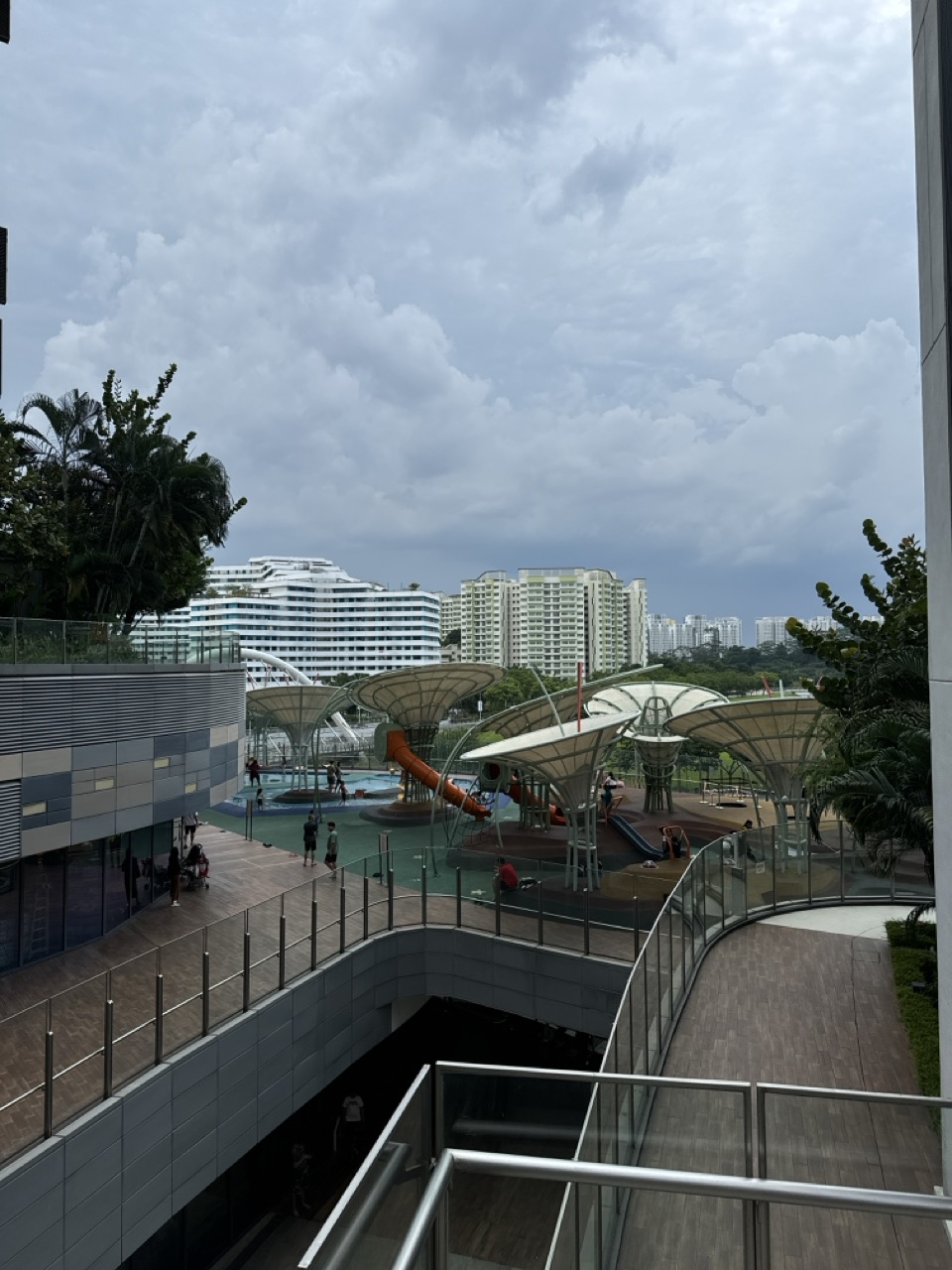
The best things to do in Punggol for kids are not necessarily the ten loudest attractions. For a good family day, match one experience to your children’s ages, one practical food or toilet stop, and a return journey that still works when somebody becomes tired. Start with Punggol Waterway Park and Waterway Point for an easy outdoor-and-indoor pairing; choose One Punggol and the regional library for a lower-cost calm morning; choose SAFRA Punggol’s Splash @ Kidz Amaze when you specifically want paid indoor water play.
This guide ranks ten family-friendly Punggol activities by how useful they are on a real day with children. It separates permanent venues from programmes that need a booking or current schedule, distinguishes splash play from swimming, and explains why Coney Island is not automatically suitable for strollers or very young children. You can use the quick comparison and three sample plans without reading everything.
Punggol’s newer north-coast district adds heritage walks and food choices, but do not plan around Punggol Point Park without checking access: local current guides report the park closed for upgrading from August 2026 to a projected end-2027 completion. The nearby Settlement and other waterfront locations are separate places. Weather, lightning, age limits, venue maintenance and transport changes should determine the final route.
Quick answer: which Punggol activity should you choose?
- 1. Take a four-zone stroll through Punggol Waterway Park — Sentul Crescent and Waterway Park public paths.
- 2. Explore Happy Park and the Waterway Point play area — Waterway Point, 83 Punggol Central.
- 3. Play at Splash @ Kidz Amaze at SAFRA Punggol — SAFRA Punggol.
- 4. Spend a calm hour at Punggol Regional Library — One Punggol, 1 Punggol Drive.
- 5. Try a confirmed Spark!Lab making activity — Punggol Regional Library, Level 2.
- 6. Turn a Punggol bridge walk into a treasure hunt — Public pedestrian bridges along Punggol Waterway.
- 7. Go on a short Coney Island nature adventure — Coney Island Park, via its West or East entrances.
- 8. Try a gentle family cycling or balance ride — Punggol’s suitable park connector sections.
- 9. Explore the open Punggol Heritage Trail section — Punggol Digital District near Punggol Coast MRT.
- 10. Finish with an unhurried food-and-story stop — One Punggol Hawker Centre, Waterway Point or Punggol Coast eateries.
Use the ten ideas below as a decision menu rather than a compulsory itinerary. No family can enjoy ten full experiences in one afternoon; ranking means ‘worth considering’ rather than a promise that each activity is suitable for every child. Admission prices, wet-play schedules, temporary restrictions and individual venue rules must be checked against the operator’s current information.
How this family guide ranks activities
Prioritise a short route, age-appropriate physical challenge, clear adult supervision, a nearby toilet and an exit plan. A child’s attention span and tolerance for heat matter more than the number of map pins completed. An outdoor activity should be treated as optional when thunderstorms or heat make it uncomfortable.
The first test is child fit. Children of the same age may have different tolerance for crowds, loud play, wet clothes, open sun and unfamiliar walking surfaces. Ask which activity will be comfortable, not simply which is most popular. A younger child may remember finding an unusual leaf better than a multi-stop itinerary; an older child may relish solving a making challenge.
The second test is recovery. Notice where an adult can use a toilet, refill water, change clothes, cool down or stop altogether. Families often design around the attraction and leave these elements to chance. Planning recovery is what lets an outing remain enjoyable after the first burst of excitement.
The third test is return certainty. Punggol is not one short pedestrian zone. Its town-centre waterway, north-coast dining, island entrances and newer Punggol Coast district have different starting points. Look up the precise entrance and a current journey home before committing to a far end of a trail.
We also separate four kinds of claims. A park’s official opening hours are not today’s weather clearance; a library’s building hours are not an event booking; a mall directory is not proof that a play feature is operating; and a future sports facility is not yet an attraction you can visit. When the status is unclear, the answer is to check, not to pretend.
1. Take a four-zone stroll through Punggol Waterway Park
Where: Sentul Crescent and Waterway Park public paths. Best use: Best for varied ages; no advance admission booking for a standard public path; check current NParks notices.
Why children may enjoy it
The park offers Nature Cove, Recreation Zone, Heritage Zone and Green Gallery, but children need not finish all four. The attraction is a sequence of changing views rather than a task to conquer.
What makes this a worthwhile choice is the way the child participates. Rather than treating take a four-zone stroll through punggol waterway park as something adults arrange and children merely consume, give the child one small decision that is safe to make: what to notice first, when to pause, or which detail deserves a second look. The activity becomes easier to remember when there is an action the child can explain afterward.
A workable way to do it
Select one comfortable entrance and an obvious turnaround bridge. Let children find three different patterns in leaves, paths or reflections while adults manage road crossings and shared-path etiquette.
Before leaving home, state a minimum successful version of this stop. It could be twenty minutes, one completed observation or one comfortable circuit, depending on the children’s energy and the day’s conditions. Identify the nearest realistic indoor or food alternative from the same district. A clear minimum makes the plan resilient: you can finish early without declaring the outing a failure.
A real-life example and what can go wrong
A family starting near the town centre can walk toward one bridge, compare how the water appears from both sides and return for a drink without promising a full park circuit.
Hot open stretches, cyclists on shared routes and tired children can turn a gentle walk into an ordeal. Keep to designated paths and avoid the water edge.
This is where good judgement matters more than a ‘top ten’ ranking. If a posted rule, a staff instruction, the weather or a child’s discomfort changes the situation, stop and choose the safer version. The family does not owe the itinerary another attraction. When a child is overwhelmed, change the environment before trying to persuade them to enjoy it.
How to extend the value
Repeat the same short section at another daylight hour and ask what changed in light, shadows or bird sounds.
One useful question after take a four-zone stroll through punggol waterway park is: ‘What did you notice that we did not expect?’ It encourages observation without turning leisure into a test. On a later visit, keep the same simple question and compare answers. Repeated familiar places can teach attention, independence and confidence more steadily than constant novelty.
Make the logistics proportional to the promise. If this is the main outing, prepare specifically for it. If it is an optional addition, carry only what would be reasonable for the principal activity. Avoid paying, booking or travelling farther because of a vague hope that the child ‘might like it’. The family should always be able to leave with its comfort and dignity intact.
2. Explore Happy Park and the Waterway Point play area
Where: Waterway Point, 83 Punggol Central. Best use: Best for shorter visits with a ready Plan B; check the mall’s current facility information on arrival.
Why children may enjoy it
An outdoor mall-linked play stop is convenient because a family can pair movement with toilets, food and air-conditioned recovery nearby. Play elements or water availability can change, so arrival expectations should stay flexible.
What makes this a worthwhile choice is the way the child participates. Rather than treating explore happy park and the waterway point play area as something adults arrange and children merely consume, give the child one small decision that is safe to make: what to notice first, when to pause, or which detail deserves a second look. The activity becomes easier to remember when there is an action the child can explain afterward.
A workable way to do it
Look at the facility signs before bringing out a change of clothes. Ask whether the splash/play area is operating and whether height, adult supervision or clothing rules apply to your particular child.
Before leaving home, state a minimum successful version of this stop. It could be twenty minutes, one completed observation or one comfortable circuit, depending on the children’s energy and the day’s conditions. Identify the nearest realistic indoor or food alternative from the same district. A clear minimum makes the plan resilient: you can finish early without declaring the outing a failure.
A real-life example and what can go wrong
A preschooler has thirty minutes of active play, then changes and eats at the mall. The adult avoids making the playground the entire day’s success criterion.
Wet floors, changing arrangements, crowds and a closure for cleaning can disrupt the plan. Never treat decorative water as a place to enter unless specifically marked as play.
This is where good judgement matters more than a ‘top ten’ ranking. If a posted rule, a staff instruction, the weather or a child’s discomfort changes the situation, stop and choose the safer version. The family does not owe the itinerary another attraction. When a child is overwhelmed, change the environment before trying to persuade them to enjoy it.
How to extend the value
When play is unavailable, turn the visit into a sheltered short walk, a snack stop and an observation game near an accessible public concourse.
One useful question after explore happy park and the waterway point play area is: ‘What did you notice that we did not expect?’ It encourages observation without turning leisure into a test. On a later visit, keep the same simple question and compare answers. Repeated familiar places can teach attention, independence and confidence more steadily than constant novelty.
Make the logistics proportional to the promise. If this is the main outing, prepare specifically for it. If it is an optional addition, carry only what would be reasonable for the principal activity. Avoid paying, booking or travelling farther because of a vague hope that the child ‘might like it’. The family should always be able to leave with its comfort and dignity intact.
3. Play at Splash @ Kidz Amaze at SAFRA Punggol
Where: SAFRA Punggol. Best use: Best for paid energetic play and wet-weather flexibility, except site-specific maintenance closures; SAFRA announced a cleaning closure for 19 October 2026.
Why children may enjoy it
This is indoor water-play activity, not lap swimming. Children who enjoy splashing and climbing may find it more engaging than an ordinary shopping trip, but there are rules and an admission charge.
What makes this a worthwhile choice is the way the child participates. Rather than treating play at splash @ kidz amaze at safra punggol as something adults arrange and children merely consume, give the child one small decision that is safe to make: what to notice first, when to pause, or which detail deserves a second look. The activity becomes easier to remember when there is an action the child can explain afterward.
A workable way to do it
Check SAFRA’s current calendar, age/supervision conditions and admission terms. Its standard FAQ currently lists weekday, weekend and school-holiday hours separately, while notices may announce temporary maintenance.
Before leaving home, state a minimum successful version of this stop. It could be twenty minutes, one completed observation or one comfortable circuit, depending on the children’s energy and the day’s conditions. Identify the nearest realistic indoor or food alternative from the same district. A clear minimum makes the plan resilient: you can finish early without declaring the outing a failure.
A real-life example and what can go wrong
Pack towels, permitted swimming attire, spare dry clothes, water for afterward and appropriate swimming diapers for a child not yet toilet trained. Plan for the family to change together without rushing.
A child who dislikes splashing, is unwell or cannot meet safety conditions should not be pushed into play because the tickets feel expensive. Admission is first come, first served, subject to capacity.
This is where good judgement matters more than a ‘top ten’ ranking. If a posted rule, a staff instruction, the weather or a child’s discomfort changes the situation, stop and choose the safer version. The family does not owe the itinerary another attraction. When a child is overwhelmed, change the environment before trying to persuade them to enjoy it.
How to extend the value
For a first visit, discuss one easy play feature before trying the more challenging ones; reward sensible stops rather than only brave slides.
One useful question after play at splash @ kidz amaze at safra punggol is: ‘What did you notice that we did not expect?’ It encourages observation without turning leisure into a test. On a later visit, keep the same simple question and compare answers. Repeated familiar places can teach attention, independence and confidence more steadily than constant novelty.
Make the logistics proportional to the promise. If this is the main outing, prepare specifically for it. If it is an optional addition, carry only what would be reasonable for the principal activity. Avoid paying, booking or travelling farther because of a vague hope that the child ‘might like it’. The family should always be able to leave with its comfort and dignity intact.
4. Spend a calm hour at Punggol Regional Library
Where: One Punggol, 1 Punggol Drive. Best use: Best for quieter days and free browsing; check NLB for the building’s latest service times and programme slots.
Why children may enjoy it
A library can be the main attraction, not merely the alternative to a park. Browsing, reading, observing illustrations and choosing books can fill a gentle, low-cost outing, particularly when outdoor temperatures are high.
What makes this a worthwhile choice is the way the child participates. Rather than treating spend a calm hour at punggol regional library as something adults arrange and children merely consume, give the child one small decision that is safe to make: what to notice first, when to pause, or which detail deserves a second look. The activity becomes easier to remember when there is an action the child can explain afterward.
A workable way to do it
Choose a child-appropriate area, follow library rules on noise and food, and set one discovery question such as ‘Which picture explains something new to you?’ rather than demanding that every minute is educational.
Before leaving home, state a minimum successful version of this stop. It could be twenty minutes, one completed observation or one comfortable circuit, depending on the children’s energy and the day’s conditions. Identify the nearest realistic indoor or food alternative from the same district. A clear minimum makes the plan resilient: you can finish early without declaring the outing a failure.
A real-life example and what can go wrong
Two siblings pick one book each, trade recommendations and tell a caregiver their favourite page. A visit can finish naturally after one story even when an adult hoped for a longer session.
Busy periods, full seating and children’s different energy levels can make an elaborate reading plan unrealistic. Respect other library users and move outside for lively conversation.
This is where good judgement matters more than a ‘top ten’ ranking. If a posted rule, a staff instruction, the weather or a child’s discomfort changes the situation, stop and choose the safer version. The family does not owe the itinerary another attraction. When a child is overwhelmed, change the environment before trying to persuade them to enjoy it.
How to extend the value
Turn a library visit into a recurring monthly ritual: one favourite series, one unfamiliar author and one topic chosen by the child.
One useful question after spend a calm hour at punggol regional library is: ‘What did you notice that we did not expect?’ It encourages observation without turning leisure into a test. On a later visit, keep the same simple question and compare answers. Repeated familiar places can teach attention, independence and confidence more steadily than constant novelty.
Make the logistics proportional to the promise. If this is the main outing, prepare specifically for it. If it is an optional addition, carry only what would be reasonable for the principal activity. Avoid paying, booking or travelling farther because of a vague hope that the child ‘might like it’. The family should always be able to leave with its comfort and dignity intact.
5. Try a confirmed Spark!Lab making activity
Where: Punggol Regional Library, Level 2. Best use: Best for primary-school children who enjoy hands-on problem-solving; confirm precise age and session requirements.
Why children may enjoy it
Spark!Lab offers making and experimentation for school-aged children rather than an all-ages drop-in promise. Its focus is asking questions, trying designs and improving what did not work on the first attempt.
What makes this a worthwhile choice is the way the child participates. Rather than treating try a confirmed spark!lab making activity as something adults arrange and children merely consume, give the child one small decision that is safe to make: what to notice first, when to pause, or which detail deserves a second look. The activity becomes easier to remember when there is an action the child can explain afterward.
A workable way to do it
For children roughly seven to twelve, look up the actual activity and whether registration is needed. Make the challenge explicit: build one idea, test it and describe one change that might make it better.
Before leaving home, state a minimum successful version of this stop. It could be twenty minutes, one completed observation or one comfortable circuit, depending on the children’s energy and the day’s conditions. Identify the nearest realistic indoor or food alternative from the same district. A clear minimum makes the plan resilient: you can finish early without declaring the outing a failure.
A real-life example and what can go wrong
A child sees an object tip during a building challenge, notices the narrow base and modifies the shape. The useful outcome is the explanation, not a perfect finished model.
Do not assume the library’s general opening hours also guarantee a facilitated session. Arriving without checking a booking-only programme can lead to disappointment.
This is where good judgement matters more than a ‘top ten’ ranking. If a posted rule, a staff instruction, the weather or a child’s discomfort changes the situation, stop and choose the safer version. The family does not owe the itinerary another attraction. When a child is overwhelmed, change the environment before trying to persuade them to enjoy it.
How to extend the value
Afterward ask, ‘What did you change and why?’ and try a safe variation at home using ordinary approved household materials.
One useful question after try a confirmed spark!lab making activity is: ‘What did you notice that we did not expect?’ It encourages observation without turning leisure into a test. On a later visit, keep the same simple question and compare answers. Repeated familiar places can teach attention, independence and confidence more steadily than constant novelty.
Make the logistics proportional to the promise. If this is the main outing, prepare specifically for it. If it is an optional addition, carry only what would be reasonable for the principal activity. Avoid paying, booking or travelling farther because of a vague hope that the child ‘might like it’. The family should always be able to leave with its comfort and dignity intact.
6. Turn a Punggol bridge walk into a treasure hunt
Where: Public pedestrian bridges along Punggol Waterway. Best use: Best as a free 30–60-minute activity; choose daylight and keep weather escape points visible.
Why children may enjoy it
Bridge hunting makes a modest local walk feel like a purposeful adventure. Children enjoy identifying shapes, colours, shadows and different views without needing a purchased activity.
What makes this a worthwhile choice is the way the child participates. Rather than treating turn a punggol bridge walk into a treasure hunt as something adults arrange and children merely consume, give the child one small decision that is safe to make: what to notice first, when to pause, or which detail deserves a second look. The activity becomes easier to remember when there is an action the child can explain afterward.
A workable way to do it
Choose one or two public bridges, give the group a simple list of things to notice and keep the route much shorter than the maximum distance adults could manage.
Before leaving home, state a minimum successful version of this stop. It could be twenty minutes, one completed observation or one comfortable circuit, depending on the children’s energy and the day’s conditions. Identify the nearest realistic indoor or food alternative from the same district. A clear minimum makes the plan resilient: you can finish early without declaring the outing a failure.
A real-life example and what can go wrong
A child finds a curved handrail, a repeating pattern and a reflection under the bridge. At the return point, everyone shares one difference between the two banks.
Keep children away from rail edges, and do not stop across shared bike lanes for photographs. Never climb, balance or lean beyond safety barriers.
This is where good judgement matters more than a ‘top ten’ ranking. If a posted rule, a staff instruction, the weather or a child’s discomfort changes the situation, stop and choose the safer version. The family does not owe the itinerary another attraction. When a child is overwhelmed, change the environment before trying to persuade them to enjoy it.
How to extend the value
Use the same route as an informal maths lesson on repeated patterns or as a storytelling exercise about a bridge that joins two neighbourhoods.
One useful question after turn a punggol bridge walk into a treasure hunt is: ‘What did you notice that we did not expect?’ It encourages observation without turning leisure into a test. On a later visit, keep the same simple question and compare answers. Repeated familiar places can teach attention, independence and confidence more steadily than constant novelty.
Make the logistics proportional to the promise. If this is the main outing, prepare specifically for it. If it is an optional addition, carry only what would be reasonable for the principal activity. Avoid paying, booking or travelling farther because of a vague hope that the child ‘might like it’. The family should always be able to leave with its comfort and dignity intact.
7. Go on a short Coney Island nature adventure
Where: Coney Island Park, via its West or East entrances. Best use: Best for patient school-aged children; not a substitute for a flat playground and not a sunset-after-closing destination.
Why children may enjoy it
Coney Island feels more rustic than the central waterway. Its habitats, trees and quieter routes reward patient observation, but the experience becomes poor when a family overestimates young children’s walking comfort.
What makes this a worthwhile choice is the way the child participates. Rather than treating go on a short coney island nature adventure as something adults arrange and children merely consume, give the child one small decision that is safe to make: what to notice first, when to pause, or which detail deserves a second look. The activity becomes easier to remember when there is an action the child can explain afterward.
A workable way to do it
NParks gives opening hours of 7am to 7pm and warns some terrain is rugged. Choose a short in-and-out visit near a suitable entrance rather than assuming every path is stroller-friendly.
Before leaving home, state a minimum successful version of this stop. It could be twenty minutes, one completed observation or one comfortable circuit, depending on the children’s energy and the day’s conditions. Identify the nearest realistic indoor or food alternative from the same district. A clear minimum makes the plan resilient: you can finish early without declaring the outing a failure.
A real-life example and what can go wrong
On a cooler morning, a family enters for a short tree-and-bird observation, keeps an agreed return time and leaves with one good sighting rather than waiting for ten.
Insects, uneven ground, wildlife and limited services require covered shoes, water and careful supervision. Do not feed animals, enter vegetation or stay past the park’s hours.
This is where good judgement matters more than a ‘top ten’ ranking. If a posted rule, a staff instruction, the weather or a child’s discomfort changes the situation, stop and choose the safer version. The family does not owe the itinerary another attraction. When a child is overwhelmed, change the environment before trying to persuade them to enjoy it.
How to extend the value
For older children, compare the island’s more natural habitat with the designed waterway landscape. Ask how visitor behaviour should change in each setting.
One useful question after go on a short coney island nature adventure is: ‘What did you notice that we did not expect?’ It encourages observation without turning leisure into a test. On a later visit, keep the same simple question and compare answers. Repeated familiar places can teach attention, independence and confidence more steadily than constant novelty.
Make the logistics proportional to the promise. If this is the main outing, prepare specifically for it. If it is an optional addition, carry only what would be reasonable for the principal activity. Avoid paying, booking or travelling farther because of a vague hope that the child ‘might like it’. The family should always be able to leave with its comfort and dignity intact.
8. Try a gentle family cycling or balance ride
Where: Punggol’s suitable park connector sections. Best use: Best for children already ready for the required balance and supervision; consult dedicated Punggol cycling guidance.
Why children may enjoy it
A short ride can teach confidence, signalling, stopping and sharing space. Its quality depends on a route that fits the youngest rider rather than an adult’s wish to complete a famous loop.
What makes this a worthwhile choice is the way the child participates. Rather than treating try a gentle family cycling or balance ride as something adults arrange and children merely consume, give the child one small decision that is safe to make: what to notice first, when to pause, or which detail deserves a second look. The activity becomes easier to remember when there is an action the child can explain afterward.
A workable way to do it
Start with bike and brake checks, properly fitted helmets, traffic-free practice where permitted and a clearly defined turnaround. Use the active path rules and don’t mix inexperienced riders into crowded situations.
Before leaving home, state a minimum successful version of this stop. It could be twenty minutes, one completed observation or one comfortable circuit, depending on the children’s energy and the day’s conditions. Identify the nearest realistic indoor or food alternative from the same district. A clear minimum makes the plan resilient: you can finish early without declaring the outing a failure.
A real-life example and what can go wrong
A child practises smooth starts and stops before attempting a shared connector, then rides only as far as everyone can return comfortably. Praise predictable and courteous riding.
Do not assume bike rental availability or child-seat suitability. Check current rental details, path surface, weather and speed differences between family members.
This is where good judgement matters more than a ‘top ten’ ranking. If a posted rule, a staff instruction, the weather or a child’s discomfort changes the situation, stop and choose the safer version. The family does not owe the itinerary another attraction. When a child is overwhelmed, change the environment before trying to persuade them to enjoy it.
How to extend the value
On subsequent rides, introduce one skill at a time: hand signals, scanning ahead, giving way and recognising when to stop.
One useful question after try a gentle family cycling or balance ride is: ‘What did you notice that we did not expect?’ It encourages observation without turning leisure into a test. On a later visit, keep the same simple question and compare answers. Repeated familiar places can teach attention, independence and confidence more steadily than constant novelty.
Make the logistics proportional to the promise. If this is the main outing, prepare specifically for it. If it is an optional addition, carry only what would be reasonable for the principal activity. Avoid paying, booking or travelling farther because of a vague hope that the child ‘might like it’. The family should always be able to leave with its comfort and dignity intact.
9. Explore the open Punggol Heritage Trail section
Where: Punggol Digital District near Punggol Coast MRT. Best use: Best for curious school-aged children and accessible shorter walks; verify trail stage and works notices first.
Why children may enjoy it
The heritage route connects local history, changing landscape and urban planning. Its publicly opened first 400 metres offer a manageable introduction without promising access to the full projected trail.
What makes this a worthwhile choice is the way the child participates. Rather than treating explore the open punggol heritage trail section as something adults arrange and children merely consume, give the child one small decision that is safe to make: what to notice first, when to pause, or which detail deserves a second look. The activity becomes easier to remember when there is an action the child can explain afterward.
A workable way to do it
Follow JTC and NParks’s latest open-section information. Begin in public areas near Campus Boulevard, note the old road alignment and observe how vegetation and modern campus buildings meet.
Before leaving home, state a minimum successful version of this stop. It could be twenty minutes, one completed observation or one comfortable circuit, depending on the children’s energy and the day’s conditions. Identify the nearest realistic indoor or food alternative from the same district. A clear minimum makes the plan resilient: you can finish early without declaring the outing a failure.
A real-life example and what can go wrong
Ask an older child to imagine what a road looked like before the surrounding university and digital district existed. Compare the question with official heritage panels or confirmed historical sources.
Parts remain under phased development; an announced project completion date is not permission to walk through work zones. University buildings also have separate access rules.
This is where good judgement matters more than a ‘top ten’ ranking. If a posted rule, a staff instruction, the weather or a child’s discomfort changes the situation, stop and choose the safer version. The family does not owe the itinerary another attraction. When a child is overwhelmed, change the environment before trying to persuade them to enjoy it.
How to extend the value
Link the walk to a map exercise: mark what is old, what is retained and what is newly built, then discuss why a town may keep traces of its past.
One useful question after explore the open punggol heritage trail section is: ‘What did you notice that we did not expect?’ It encourages observation without turning leisure into a test. On a later visit, keep the same simple question and compare answers. Repeated familiar places can teach attention, independence and confidence more steadily than constant novelty.
Make the logistics proportional to the promise. If this is the main outing, prepare specifically for it. If it is an optional addition, carry only what would be reasonable for the principal activity. Avoid paying, booking or travelling farther because of a vague hope that the child ‘might like it’. The family should always be able to leave with its comfort and dignity intact.
10. Finish with an unhurried food-and-story stop
Where: One Punggol Hawker Centre, Waterway Point or Punggol Coast eateries. Best use: Best as the finishing anchor for virtually any family itinerary; the activity should end before the family is exhausted.
Why children may enjoy it
The meal is an activity when children help make a manageable choice and reflect on the day. It prevents a good outing from collapsing into a hungry, overheated trip home.
What makes this a worthwhile choice is the way the child participates. Rather than treating finish with an unhurried food-and-story stop as something adults arrange and children merely consume, give the child one small decision that is safe to make: what to notice first, when to pause, or which detail deserves a second look. The activity becomes easier to remember when there is an action the child can explain afterward.
A workable way to do it
Pick food where your route ends, not a famous venue requiring a long second journey. Allow for the household’s dietary needs, queues, stroller space and a small budget agreed in advance.
Before leaving home, state a minimum successful version of this stop. It could be twenty minutes, one completed observation or one comfortable circuit, depending on the children’s energy and the day’s conditions. Identify the nearest realistic indoor or food alternative from the same district. A clear minimum makes the plan resilient: you can finish early without declaring the outing a failure.
A real-life example and what can go wrong
At One Punggol, a child chooses one unfamiliar dish to learn about, a familiar fallback remains available and the family talks about the best part of the outing over lunch.
Menus, stall opening days and dining areas change. Check allergy and halal needs at the actual stall instead of assuming a whole hawker centre shares one certification.
This is where good judgement matters more than a ‘top ten’ ranking. If a posted rule, a staff instruction, the weather or a child’s discomfort changes the situation, stop and choose the safer version. The family does not owe the itinerary another attraction. When a child is overwhelmed, change the environment before trying to persuade them to enjoy it.
How to extend the value
At home, the child draws a favourite scene or writes three sentences: where we went, what surprised me and what we might do next time.
One useful question after finish with an unhurried food-and-story stop is: ‘What did you notice that we did not expect?’ It encourages observation without turning leisure into a test. On a later visit, keep the same simple question and compare answers. Repeated familiar places can teach attention, independence and confidence more steadily than constant novelty.
Make the logistics proportional to the promise. If this is the main outing, prepare specifically for it. If it is an optional addition, carry only what would be reasonable for the principal activity. Avoid paying, booking or travelling farther because of a vague hope that the child ‘might like it’. The family should always be able to leave with its comfort and dignity intact.
Three family itineraries that actually fit a day
Under 60 minutes: choose calm
A 60-minute starter: read and browse at Punggol Regional Library, choose a single child-led book, then have a snack nearby; this avoids overcommitting.
Treat the time allowance as a ceiling rather than a target. Include the journey to the first stop and the walk back to transport; those minutes are real. A comfortable early finish is a successful outing. If the weather changes or someone needs a break, remove the optional part first instead of speeding up.
Around two hours: mix movement and recovery
A two-hour mixed day: begin with a short waterway bridge walk before it gets hot, stop at Waterway Point for lunch or cooling down, and finish while everyone still has energy.
Treat the time allowance as a ceiling rather than a target. Include the journey to the first stop and the walk back to transport; those minutes are real. A comfortable early finish is a successful outing. If the weather changes or someone needs a break, remove the optional part first instead of speeding up.
Half a day: one high-energy anchor
A half-day high-energy option: check Splash @ Kidz Amaze opening and maintenance notices, pack suitable swimwear and towels, and keep an unbooked meal as the final stop. Avoid stacking a long park walk after tiring water play.
Treat the time allowance as a ceiling rather than a target. Include the journey to the first stop and the walk back to transport; those minutes are real. A comfortable early finish is a successful outing. If the weather changes or someone needs a break, remove the optional part first instead of speeding up.
Family decision checklist before leaving
- Check the precise venue or entrance and today’s official opening or booking conditions.
- Look up active weather and lightning information and choose an indoor substitute.
- Check the youngest participant’s needs: stroller, footwear, toilet, food and rest.
- Decide who supervises children at water, road crossings, bicycles or crowded shared paths.
- Set a short successful version and a clear turnaround or stop time.
- Bring water and necessary medication or personal items without overpacking.
- Check whether the activity is free, paid, subject to age limits or subject to capacity.
- Use the same transport anchor on the return whenever possible.
- Do not promise a feature, programme, restaurant or park section that is not currently confirmed.
- Ask the child for one favourite observation afterward rather than demanding every stop.
A practical ‘go/no-go’ method is to list the one thing that must be true for the outing to work. For water play, it is the operating session and suitability for the child. For island nature, it is safe daylight access and a comfortable walk. For an indoor workshop, it is age eligibility and a confirmed place where required. If that one condition fails, go to the fallback. This method saves both disappointment and unnecessary travel.
Common family outing mistakes and how to repair them
Mistake one: treating a district as if all destinations were next to one another. Repair it by planning in clusters—Waterway Point and the central park; One Punggol and the library; SAFRA and nearby routes; or Punggol Coast and its public trail. Avoid combining a north-coast visit with every central attraction in the same short afternoon.
Mistake two: relying on an old attraction photo. A picture proves a feature existed at some time, not that it is operating today. This matters particularly for temporary play installations, water features, restaurant tenants and places under construction. Use the operator’s latest page or on-site sign for operational details.
Mistake three: misunderstanding safety around water. An ornamental canal, a waterfront edge, an indoor splash playground and a public swimming pool are four different environments with different rules. A child who can play in shallow supervised splash equipment cannot be assumed safe near an unprotected water edge. Follow the actual venue’s safety rules.
Mistake four: making every outing educational in an exam-like way. A family can learn while having fun, but children also need unstructured enjoyment. Use one good question, a short shared reflection or a creative record if the child is interested. If the activity is already rewarding, resist turning it into homework.
Mistake five: staying too long to justify travel. The useful measure is the quality of participation, not the distance from home or the number of photographs. A good twenty-minute walk with a refreshed child may be better than a two-hour trek ending in conflict. End while the experience is still positive.
Frequently asked questions
What is the easiest Punggol outing with a toddler?
A short, stroller-manageable waterway walk or a quiet library visit with a nearby food stop is often easier than committing to a long nature route. Check the particular path and room rules.
Is Splash @ Kidz Amaze a swimming pool?
No. It is an indoor water-play playground at SAFRA Punggol. Admission, swimwear rules and available sessions are different from public lap-swimming arrangements.
Can younger children use Spark!Lab?
Its main hands-on activities target ages seven to twelve. For a toddler, use age-suitable library areas instead; do not assume younger children may join a scheduled Spark!Lab workshop.
Is Coney Island suitable for a stroller?
NParks describes the East and West ends as stroller-friendly but warns that some terrain is rugged and unsuitable for younger children. A short visit near a suitable entrance can be better than a through-walk.
Are the Waterway Park paths always open?
NParks lists Waterway Park open 24 hours, but temporary closures and adverse weather may affect access to particular sections. Check signs and notices.
Where should we eat during a children’s outing?
Waterway Point, One Punggol Hawker Centre and Punggol Coast’s food venues are useful anchors. Pick a location near the chosen activity, not a restaurant across town.
Do we need a car?
Not for the central Waterway Point and One Punggol cluster. For northern destinations, check current rail, LRT and bus links and the extra walking involved.
What if it starts raining?
Leave exposed paths and water-play areas when lightning threatens; switch to the regional library, mall or another legitimate indoor venue rather than waiting under a tree.
What is free?
Public park walks, accessible public spaces and general library browsing are generally free; paid play, cinema, transport, food and workshops have separate rules and charges.
How do we choose between ten places?
Ask what the child needs now: movement, cooling down, curiosity, food or rest. Choose a single core activity and reserve the second activity as optional.
Official sources and deeper Punggol routes
This article uses the public operator and authority pages for park, activity and district facts, supported by more detailed eduKatePunggol local guides. Where a source describes a proposed facility or programme, it is not treated as proof of current public availability. These are reference links rather than guarantees for a future visit.
- Punggol Waterway Park
- Coney Island Park
- Kidz Amaze official updates
- Kidz Amaze admission FAQ
- Waterway Point visitor information
- JTC Punggol Digital District community
- Punggol Coast and north-coast guide
- Punggol family cycling detail
- Current park change guide
- Spark!Lab age-specific guide
What to do next
Choose the single activity that best matches your child’s needs this week. Write down its exact location and the latest official requirements, choose an exit point, and keep one gentle fallback. Punggol offers enough variety that you can return for the remaining activities another day. That is the real advantage of a neighbourhood guide: it helps an ordinary outing work, not merely look impressive on paper.


