
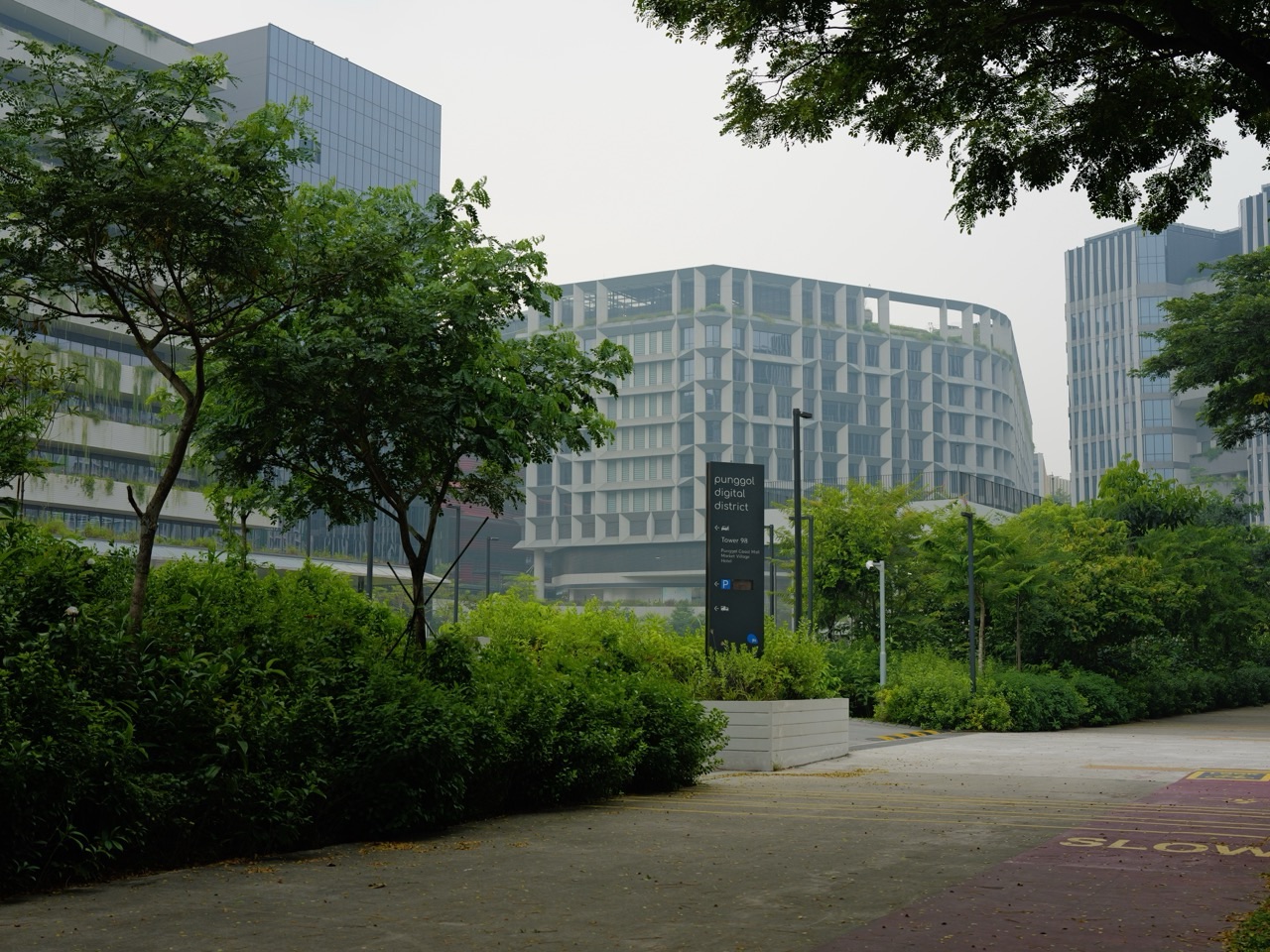
Hunting for public art in Punggol is one of the most surprising things to do in Punggol during the school holidays: one very long mural, a library full of art you can walk through, and bridges that turn out to be designed with a story in mind.
Singapore’s longest hand-painted mural is not in the city centre. It is in Punggol, and it is 132 metres long.
This is idea #74 in eduKate Punggol’s Top 100 Things to Do in Punggol During the School Holidays. Below you will find where the verified art is, how to turn it into a family “art passport” hunt, a plan for the day, and how to look at art with children so the outing feels like an adventure rather than a gallery lecture.
The point is not to tick off famous artworks.
It is to train young eyes to spot art everywhere.
Once a child learns that a bridge can be designed to look like a fishing platform, or that a wall can tell a town’s whole history, the walk to the LRT is never quite the same again.
This idea is perfect for families who want to:
- find a free cultural outing close to home;
- introduce children to art without a long, quiet museum visit;
- combine an outdoor walk with an air-conditioned rain plan;
- learn a little Punggol history through pictures;
- give a teen a creative photography or sketching project; or
- show children that art is made by real people, including people like them.
Quick look
- Best for: Primary 1 to Secondary 4, with grandparents welcome
- Time needed: 1.5 to 3 hours, depending on how many stops you choose
- Cost: free
- Best time: morning for outdoor art; 5pm to 7pm for the library’s Words That Move room
- Nearest MRT/LRT: Punggol Coast MRT for the mural; Punggol MRT or Sam Kee LRT for the library
- Rain plan: the library’s art and heritage installations at One Punggol
See all 100 school-holiday ideas · Chat with eduKate Punggol on WhatsApp · Visit eduKate Punggol on Facebook
Public Art in Punggol Is Bigger Than It First Appears
When people think of public art, they often picture a bronze statue in a city square. Punggol does not really work like that.
Its art comes in three kinds.
First, there is art you go to see: a documented, named artwork made by real artists. Punggol’s star is the Our Punggol Story mural in Punggol Digital District.
Second, there is art you walk through: installations inside Punggol Regional Library, where Singapore poems come alive through animation and a Memory Map gathers stories of old Punggol.
Third, there is art hiding in design: bridges, paths and old-style features that were shaped deliberately to tell a story. These are not “artworks” in the gallery sense, but they reward an artist’s eye.
A good public art hunt visits all three. And it teaches children something important along the way: art is not only in museums. It is a choice people make about how a place should look and feel.
The Hidden Lesson in a Mural Hunt
Stand a child in front of a very long painting and ask, “What do you see?” You will usually hear, “Lots of colours.”
Now ask a different question. “Find one thing that repeats. Where else does it appear? Does it change?”
The child walks along the wall. “This shape keeps coming back. Here, and here. This one is bigger.” Or: “This colour is everywhere at this end, but not at that end.”
That is the hidden lesson: looking for evidence before giving an opinion. Instead of “It’s nice”, the child is noticing repetition, change and sequence. Instead of guessing what the artist meant, they are describing what is actually there, and then wondering why.
Teachers call this moving from observation to interpretation. The sentence frame is simple: “I see…, so I think…, but I would want to check…”. It works for a mural, a poem, a science experiment and a news article. The mural just makes it fun.
Why Punggol Families Love a Public Art Hunt
Art outings with children can mean quiet galleries and “do not touch” signs. Punggol’s art is the opposite: outdoors or in a busy public library, free, and full of things to talk about.
The joys of a Punggol art passport
- The headline mural is free and in a public space
- The library’s art installations make a perfect air-conditioned rain plan
- Children can sketch, photograph or simply talk, so every personality fits
- The art connects to Punggol’s real history of kampongs, fishing and farms
- The mural was made with artists with disabilities, which opens a warm conversation about inclusion
- It is easy to combine with a hawker lunch at Punggol Coast or One Punggol
- Older children can lead the hunt using a simple checklist
- Grandparents often add their own memories of old Punggol
What You’ll Find on the Hunt
Here are the verified stops, in three groups. Choose one group for a short outing, or all three for a full day.
The big one: Our Punggol Story mural
According to Singapore Institute of Technology (SIT), the 132-metre hand-painted mural at the Community Promenade in Punggol Digital District was unveiled on 16 November 2025 and holds the Singapore Book of Records title for Singapore’s longest hand-painted mural. It was created by artists Simeon Tan Rui En, known for robots, animals and mythology, and Ezra Chan Yi, a former UOB Painting of the Year awardee known for colour, abstraction and form. Both took part in Shaping Hearts, which SIT describes as Singapore’s largest inclusive arts festival featuring artists with disabilities.
The project brought together Design Factory at SIT, JTC, North East CDC and the creative studio Tell Your Children, and SIT says more than 100 volunteers helped paint it. Its themes include technology, connection, community and Punggol’s journey from waterfront heritage to digital district. SIT’s project page also describes “People of PDD”, where visitors scan QR codes on the benches at the mural to create an avatar inspired by the artists’ shapes and textures and see augmented-reality overlays. Check that the digital part is working, and look at its privacy details, before handing a phone to a child. The painted wall is wonderful on its own.
Art you walk through: Punggol Regional Library
Inside One Punggol, Punggol Regional Library (NLB also calls it Punggol Library) hosts Punggol Stories, a free, library-wide heritage trail. On Level 1, Words That Move presents Singapore poetry through animation, from 5pm to 7pm. On Level 4, Singaporium includes a Memory Map installation with more than 50 memories of old Punggol, open 10am to 9pm. Level 3’s Lens of Literature brings in Singapore writing in four languages. NLB’s event card lists free admission. One note on dates: NLB’s event card shows Punggol Stories running to 14 March 2027, while its exhibition site calls it permanent, so it is safe for the year-end holidays either way.
Art hiding in design: bridges and old-road features
Along Punggol Waterway Park, Kelong Bridge was designed to resemble a kelong, the wooden fishing platforms on stilts that once stood off Punggol’s coast. Jewel Bridge is named for its dome-shaped structure. In the Digital District, the first open 400 metres of the Punggol Heritage Trail keeps the undulating ground of Old Punggol Road and a recreated old-style bus stop near Campus Boulevard, with interpretive panels supported by the National Heritage Board. None of these is a gallery artwork, but each is a deliberate design choice that tells a story.
Art you discover yourselves
Many neighbourhoods have small pieces of community art, decorated corners or themed play areas that no guide lists. Make “found art” a category in your passport: if your family spots something, sketch or photograph it, describe where it is in general terms and give it your own title. Do not publish exact home addresses, and never step into private or residents-only spaces to reach it.
How to Plan a Brilliant Art Hunt
A little preparation turns an art walk into a quest.
1. Check the weather and the air
Look at the forecast and the latest readings on haze.gov.sg. If the air is poor, do the library half of the hunt only.
2. Make an art passport
Fold an A4 sheet into a little booklet. Give each stop a page with three boxes: “I saw…”, “It made me think…” and “My sketch”. Add a final “Found Art” page. Children love stamping or ticking each page.
3. Learn the artists’ names before you go
Read the names Simeon Tan Rui En and Ezra Chan Yi aloud together at breakfast. When children know art has makers, they look at it differently, and they remember to credit them.
4. Choose the order by the clock
Do the outdoor mural and Heritage Trail in the morning, lunch at Punggol Coast, then head to the library for the afternoon. If you want Words That Move, time your library visit for 5pm to 7pm.
5. Agree the “looking rules”
No touching painted walls. Step aside to look, never stand in a walkway. Talk at library volume indoors. Photos of the art are fine; close-up photos of strangers are not.
6. End with a gallery at home
Back home, lay out the passports and sketches. Let each child choose one artwork to “present” in one minute. Then stick the pages on the fridge: your very own Punggol exhibition.
A Sample Holiday Day, Hour by Hour
This plan suits a weekday, when paths and the library are calmer.
9am: Punggol Coast MRT and the mural
Take the North East Line to Punggol Coast MRT and follow signed public routes to the Community Promenade. Walk the length of the mural slowly. Each person picks one favourite section and fills in the first passport page.
10am: The Heritage Trail stretch
Walk the open first stretch of the Punggol Heritage Trail. Look for the recreated old-style bus stop, the bumpy line of the old road and the heritage panels. Ask, “What did the designers want us to remember here?”
11.15am: Lunch at Punggol Coast
Punggol Coast Hawker Centre, which JTC says opened in July 2025 with 40 stalls, makes an easy lunch stop. Stall hours vary, so have a back-up.
1pm: Over to One Punggol
Ride back to Punggol MRT and walk to One Punggol. On Level 4, find the Memory Map in Singaporium. Ask a grandparent, if one is with you, to point to a memory they recognise.
3pm: Rest, read or sketch
Find a quiet corner, borrow an art or picture book, and let children finish their sketches. Afternoon thundery showers are common in the monsoon season, so this is a good indoor block.
5pm: Words That Move
Visit the Words That Move room on Level 1 when it runs from 5pm to 7pm, and watch poems come alive. Each child writes one line of their own on the last passport page.
Three Ways to Enjoy It
Art speaks differently at different ages. Here is how to tune the hunt.
For little explorers (Primary 1–3)
Make it a colour-and-shape game. “Find something blue. Find a circle. Find an animal.” Let them choose a favourite bit of the mural and copy just one shape from it. Keep the walk short and the library visit lively; preschool siblings will love the moving images in Words That Move.
For big kids (Primary 4–6)
Give them the “I see, I think, I’d check” sentence frame and ask for one complete sentence at each stop. Ask them to find the part of the mural that shows the oldest Punggol and the part that shows the newest, then explain how they decided. Primary 6 children can try sketching one section in pencil, writing the artists’ names beside it.
For teens (Secondary 1–4)
Teens can treat the hunt as a mini-documentary. Shoot a wide, a medium and a close-up photo of the mural, compare the Heritage Trail’s recreated bus stop with the preserved Old Punggol Road features in Waterway Park, and write a short piece on how Punggol remembers its past. Interested teens can read about the mural’s inclusive making process on SIT’s page and discuss why collaboration matters in public art.
The Learning Bridge: English and Art Vocabulary Without the Worksheet
An art hunt is about enjoyment first. But it is also a natural place for children to grow precise, expressive vocabulary.
- Vocabulary: words like motif, texture, contrast, composition and sequence give children the language to explain what they see. A child who can say “the colours contrast” instead of “it’s colourful” is thinking more precisely.
- English (Speaking and Representing): describing an artwork, giving an opinion and supporting it with a reason is exactly the shape of a good spoken response, in the PSLE Oral’s Stimulus-based Conversation or a secondary Spoken Interaction.
- History and Social Studies, gently: telling the difference between a painting of the past and evidence from the past, such as an old photograph, is a key skill in learning how communities change.
Keep it to one or two new words per outing. Our article Education: Regarding Vocabulary explains why words matter so much for organising and communicating ideas.
Little Hiccups and How to Dodge Them
Most art outings go wrong in small, predictable ways. Here is how to avoid them.
“Art is boring”
Change the question. Instead of “Do you like it?”, ask “Which bit would you remove?” or “If you added one thing, what would it be?” Children love to edit.
Heat on the outdoor stretch
Shade is patchy on new district paths. Go in the morning, drink water and take breaks. Check the heat stress advisory on very hot days.
Rain and lightning
The year-end break falls in the Northeast Monsoon season. If thunder starts, head indoors. Live alerts are on the MSS lightning page; an open walkway is not the place to wait.
Haze days
When readings on haze.gov.sg are high, skip the outdoor stops and do the library art only. Our Punggol Haze Indoor Activity Planner suggests other indoor stops.
Holiday library closures
In the 2026 break, NLB lists the library as closing at 5pm on 24 and 31 December and closed on 25 December and 1 January. That means no Words That Move on those evenings. Check before you go.
Construction and closed paths
Parts of the Digital District and the longer Heritage Trail are still being built. Stay on signed public paths, never cross hoardings, and do not enter university or office buildings looking for art.
What a Great Day Looks Like
You will know the hunt worked when your children:
- name the mural’s artists without being prompted;
- describe one artwork using a new word, like “texture” or “contrast”;
- spot a piece of “found art” you would have walked past;
- explain why Kelong Bridge looks the way it does;
- want to make their own artwork at home afterwards; and
- start noticing designed details on ordinary walks.
Hold on to that final one. A child who sees art everywhere has learnt that the world is made by people’s choices.
When to Go
MOE lists the 2026 year-end holidays for its primary and secondary schools as Saturday 21 November to Thursday 31 December 2026. MOE’s 2027 calendar adds March (13 to 21 March), June (29 May to 27 June) and September (4 to 12 September) breaks for a return visit.
Weekday mornings are calmest for the outdoor stops. Plan library art for the afternoon, and Words That Move for 5pm to 7pm on a day the library is open its full hours.
Getting There from Around Punggol
For the mural and Heritage Trail, take the North East Line to Punggol Coast MRT and follow signed public routes into Punggol Digital District. JTC’s Punggol Digital District page is the official reference for the district; some areas are still under development.
For the library, Punggol Regional Library is inside One Punggol at 1 Punggol Drive, near Punggol MRT and Sam Kee LRT. For the Waterway bridges, NParks lists Punggol MRT and Damai LRT as the nearest stations.
Location: Community Promenade, Punggol Digital District; Punggol Regional Library, One Punggol
Nearest MRT/LRT: Punggol Coast MRT (NE18); Punggol MRT (NE17) and Sam Kee LRT
Entry: free
Quick Details
Activity: a self-guided public art hunt with a home-made art passport
Where: Our Punggol Story mural (Punggol Digital District), Punggol Regional Library installations, Waterway bridges and the Heritage Trail
Best ages: Primary 1 to Secondary 4
Cost: free (food and transport extra)
Time needed: 1.5 to 3 hours
Booking: none for self-guided viewing; art courses at One Punggol CC are listed on onePA (check live)
Accessibility: check the step-free route through the Digital District before you go; NParks recommends wheelchair users be assisted on the Heritage Trail’s undulating terrain
Status checked: October 2026, SIT mural project page and NLB Punggol Stories
What to Bring
- An A4 sheet folded into an art passport, plus a pencil
- A few colour pencils for sketching
- A phone or camera for photos of the art (not of strangers)
- Water bottles, hats and sunscreen
- A light umbrella
- An NLB card if you want to borrow art books
- A small snack for the train ride between stops
Frequently Asked Questions
Where is the biggest piece of public art in Punggol?
The Our Punggol Story mural at the Community Promenade in Punggol Digital District. SIT describes it as 132 metres long and Singapore’s longest hand-painted mural.
Who made the Our Punggol Story mural?
SIT credits artists Simeon Tan Rui En and Ezra Chan Yi, working with Design Factory at SIT, JTC, North East CDC, Shaping Hearts and Tell Your Children, with more than 100 volunteers helping to paint it.
Is it free to see?
Yes. It is in a public space and no admission is mentioned. The library’s Punggol Stories installations are also free.
Can children use the QR code feature?
SIT describes QR codes on the benches that let visitors create avatars and see augmented-reality overlays. Check that it is working and read the privacy details first.
What can we see if it rains?
Head to Punggol Regional Library for the Memory Map on Level 4, Lens of Literature on Level 3 and Words That Move on Level 1 (5pm to 7pm).
Is the whole Punggol Heritage Trail open?
No. Only the first 400 metres is confirmed open. Follow signs and do not cross construction barriers.
Can we photograph the mural?
Yes, for personal use, without blocking walkways. When you share photos, name the artwork and its artists.
Helpful Reading for Punggol Families
- Top 100 Things to Do in Punggol During the School Holidays
- Punggol School Holiday Guide: A Week-by-Week Plan for the Year-End Break
- Public Art and Creative Walks in Punggol 2026
- Our Punggol Story Mural at PDD: Location, Artists and a Family Art Walk
- Punggol Stories at One Punggol Library
- Words That Move at Punggol Library
- Punggol Digital District Guide
- Education: Regarding Vocabulary
- SIT: People of PDD, the inclusive mural project
Public Art for Punggol Families
A wall can tell a town’s story.
A bridge can remember a fishing village.
A library can bring a poem to life.
For little ones, the hunt is a game of colours and shapes.
For big kids, it is a puzzle of clues and evidence.
For teens, it is a lesson in how a place chooses to remember.
For parents, it is a reminder that some of the richest cultural afternoons in Singapore are free, close to home and waiting for someone to look closely.
Plan the Rest of Your School Holidays
Art passport complete. Browse the full Top 100 Things to Do in Punggol During the School Holidays, or carry straight on to idea #75, a neighbourhood treasure hunt, where signs, bridges and stations become your clues.
And if a calm, small-group learning block is also on your holiday list, eduKate Punggol teaches English, Mathematics and Science in classes of three. Come find out more.
Book a consultation · Chat on WhatsApp
eduKate Punggol
Small-group English, Mathematics and Science
Primary and Secondary
By appointment · +65 8823 1234
Properly taught kids shine a bright light into the future.
← Previous: #73 Photo walk · All 100 ideas · Next: #75 Neighbourhood treasure hunt →
Checked October 2026. Opening hours, prices, programmes and closures change, so please confirm with the official source before you go.


