
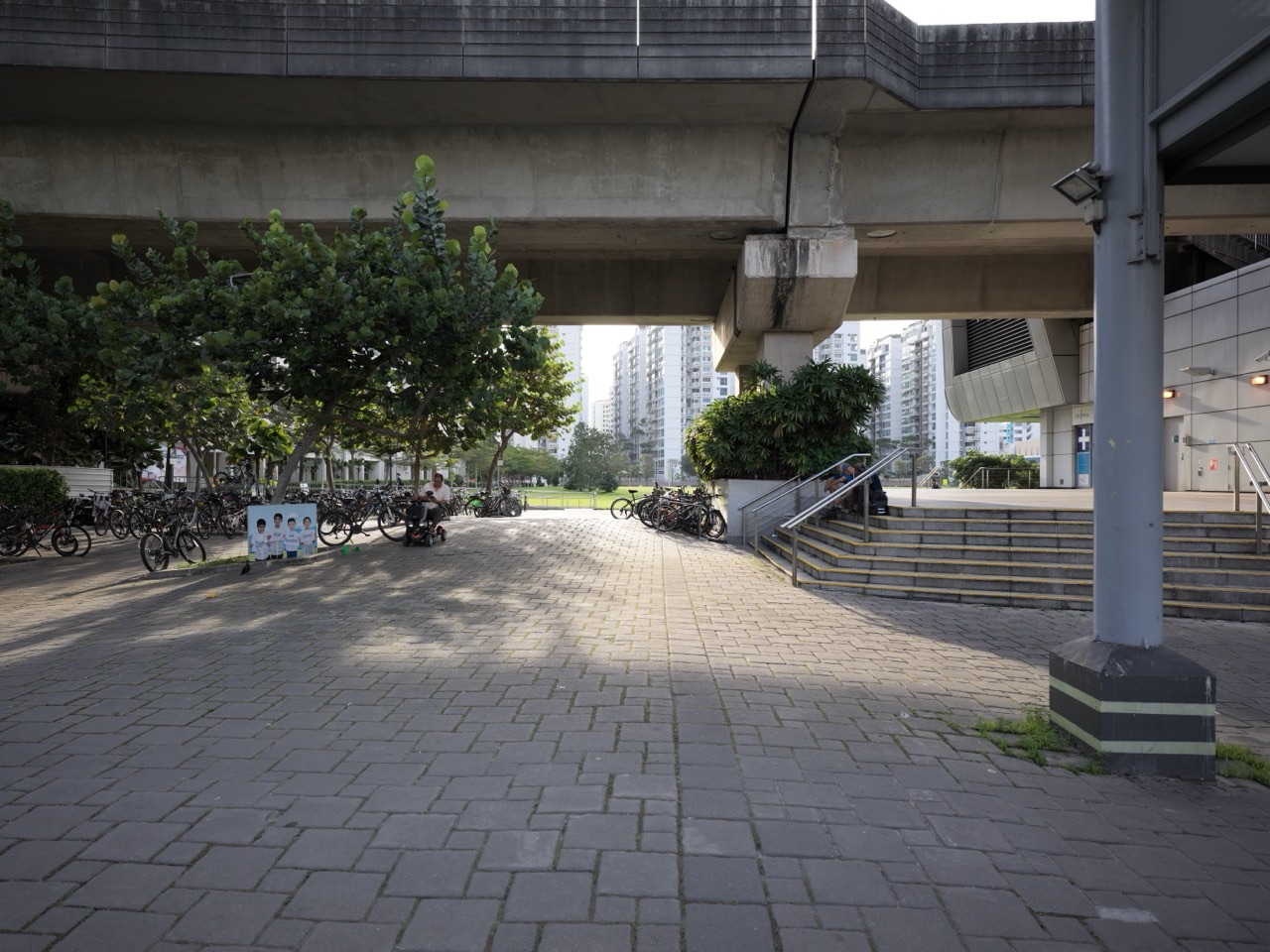
A home-made treasure hunt Punggol style is one of the most exciting free things to do in Punggol during the school holidays: no buried chests, no tickets, just a pocketful of clue cards and a neighbourhood full of signs, bridges and secrets waiting to be read.
“Mum, where is the treasure buried?” “It isn’t buried. It’s written on that sign. Look.”
This is idea #75 in eduKate Punggol’s Top 100 Things to Do in Punggol During the School Holidays. In this guide, you will find how to set up a treasure hunt in under an hour, a ready-made set of clues for the Punggol Town Centre and Waterway, ideas for different ages, and the safety rules that make it fun for everyone.
The treasure is not an object.
It is a piece of information.
A station code. A bridge with legs. An old bus stop that no bus visits. When children learn that a town is full of clues, every walk becomes a mystery to solve.
This idea is perfect for families who want to:
- turn an ordinary walk into an adventure;
- get reluctant walkers moving without a single complaint;
- practise reading signs, maps and numbers in real life;
- run a birthday-style activity for cousins or friends at no cost;
- help a new-to-Punggol family learn the neighbourhood; or
- give an older child the fun of designing the hunt for younger ones.
Quick look
- Best for: Primary 1 to Secondary 2, with teens as brilliant clue-setters
- Time needed: 45 minutes to set up; 45 to 90 minutes to play
- Cost: free (a small “treasure” snack is optional)
- Best time: 8am to 10.30am, or after 5pm
- Nearest MRT/LRT: Punggol MRT/LRT for the Town Centre route; Damai or Sam Kee LRT for the Waterway
- Rain plan: an indoor map-and-library version at One Punggol
See all 100 school-holiday ideas · Chat with eduKate Punggol on WhatsApp · Visit eduKate Punggol on Facebook
A Treasure Hunt Is Bigger Than It First Appears
A treasure hunt sounds like a party game. It is, and that is exactly why it works.
Children who drag their feet on a “nice walk” will run, read, count and argue happily when there is a mystery to crack. A simple clue card turns a sign into a puzzle, a bridge into a riddle and a station into a code.
Punggol is especially good for this. It is a planned town, which means it is full of deliberate details: numbered stations, named bridges, map boards, heritage features and patterns repeated on purpose. Most people walk past them. A treasure hunter cannot.
There is a bonus for parents too. A hunt quietly teaches children how their neighbourhood fits together: which way the Waterway runs, where the library is, how the LRT loops connect. A child who has hunted for clues around the Town Centre is far less likely to feel lost there.
The Hidden Lesson in a Treasure Hunt
Here is a clue a nine-year-old might get:
“I am two letters and two numbers. I tell trains where to stop. You are standing at me.”
She looks around. Signs everywhere. Then she spots it: NE17, the code for Punggol MRT. “Found it.”
Clue two: “On this map, every centimetre is 50 metres. The line to the next clue is four centimetres long. How far is that?”
She thinks. “Two hundred metres.”
Then the twist. “But the path bends. Will the real walk be shorter or longer than 200 metres?”
“Longer. We can’t walk through the buildings.”
That is the hidden lesson: using evidence, and knowing its limits. A map scale gives you a straight-line distance; real paths bend. A sign tells you where something is; it does not tell you whether the path is open today. Children who learn to ask “What does this clue really tell me?” are learning the same careful thinking they need for problem sums, science investigations and reading comprehension.
And it all happened between a station and a library.
Why Punggol Families Love a Treasure Hunt
Plenty of outings depend on tickets, travel and luck with the weather. A treasure hunt asks only for a pen, some cards and an hour. It can be as short or as long as small legs allow, and it can be repeated in a different zone every week of the holidays.
The joys of a Punggol treasure hunt
- It is completely free and needs no booking
- Children practise reading, counting and map skills without noticing
- It works for one child or a crowd of cousins
- Teens can design hunts for younger siblings, which they love
- Each LRT neighbourhood offers a brand-new set of clues
- Nothing is hidden, collected or taken, so nature and neighbours stay happy
- The final “treasure” can be as simple as a hawker treat
- It builds real confidence in finding your way around town
What You’ll Find: Clue Ideas Around Punggol
Every good clue points to something that is genuinely there, safe to reach and public. Here are the best kinds of clues in Punggol, with real examples.
Station codes and transport clues
Punggol MRT is NE17 on the North East Line, and Punggol Coast MRT is NE18. The LRT has two loops: the East Loop runs from PE1 Cove to PE7 Damai, and the West Loop from PW1 Sam Kee to PW7 Soo Teck, according to the station names and codes on LTA’s rail map. Clues can ask children to find a code, match a name to a number or work out which loop a station belongs to. Keep transport clues outside fare gates and away from platform edges.
Bridge clues
NParks names five bridges along the Punggol Waterway: Jewel, Adventure, Kelong, Wave and Sunrise. Each makes a perfect riddle. Kelong Bridge was designed to look like a kelong, a wooden fishing platform on stilts. Jewel Bridge is named for its dome-shaped structure. Adventure Bridge is a steel suspension bridge. Riders must dismount on Kelong, Wave and Adventure Bridges, which gives you a ready-made “find the rule” clue.
Heritage clues
Inside Punggol Waterway Park, NParks has preserved an old Punggol Road bus stop and a 160-metre stretch of the old road. “I am a bus stop that no bus visits” is a favourite clue, and a lovely chance to talk about Punggol before the new town.
Building and number clues
One Punggol, at 1 Punggol Drive, holds Punggol Regional Library, which NLB describes as five storeys, plus a hawker centre on Level 2. Clues can ask children to count floors, find the library’s name or locate a lift symbol. Indoors, keep clues quiet and simple so the library stays calm for readers.
Map and sign clues
Park map boards and wayfinding signs are full of puzzles: a legend to decode, an arrow to follow, a symbol to explain. These are also great for teaching children how to check a sign before trusting a guess.
How to Plan a Brilliant Treasure Hunt
Setting up takes under an hour. These steps keep it smooth and safe.
1. Choose one zone and walk it first
Pick a small area you know well, such as Punggol MRT, One Punggol and the nearest stretch of the Waterway. Walk it yourself a day before, or on the way to the hunt, noting six to ten features you can see from public paths. Never set a clue that needs a closed path, a construction area, a school or a residents-only space.
2. Write the clues on cards
One clue per card. Mix riddles (“I have legs but never walk”), counting (“How many floors?”), reading (“What is written under the arrow?”) and maths (“How far on the map?”). Number the cards so the route flows in one direction and ends near food or home.
3. Decide what counts as “proof”
Children can answer aloud, write the answer, sketch the object or take a photo of it. No touching, picking or collecting. The treasure is knowing.
4. Set the safety rules out loud
An adult controls every road crossing. Nobody runs ahead out of sight. Keep left on shared paths and step aside for bicycles. Agree a meeting point in case anyone gets separated. Phones are for photos of objects, not of strangers.
5. Plan the treasure
The final clue leads to the prize. It might be a snack at a hawker centre, a library book chosen by the winner, or a “golden certificate” waiting at home. Small and fun beats big and expensive.
6. Agree when to stop
Decide in advance that you will stop if anyone is too hot, too tired, or if thunder starts. Unused clue cards can be next week’s hunt.
A Sample Holiday Day, Hour by Hour
Here is a ready-made Town Centre and Waterway hunt for a weekday morning. Adjust the clues to what you actually see on the day.
8am: Breakfast and the briefing
Over breakfast, hand out a “detective badge” (a sticker will do), explain the rules and give out a notebook and pencil. Card 1 goes in the lead detective’s pocket.
8.45am: Clues 1 to 3 at Punggol MRT
Card 1: “I am two letters and two numbers. I tell trains where to stop.” (NE17.) Card 2: “Find the name of one East Loop and one West Loop LRT station on a map.” Card 3: “Walk to the building where the library lives. How many floors does the library have?”
9.30am: Clues 4 to 6 by the Waterway
Card 4: “Find a sign that tells cyclists what to do on a bridge.” Card 5: “I have legs like a table and I remember the fishermen.” (Kelong Bridge.) Card 6: “I am a bus stop that no bus visits.” (The preserved Old Punggol Road bus stop.)
10.30am: The final clue and the treasure
Card 7: “Your treasure waits where many stalls share one roof.” Head to One Punggol Hawker Centre for a drink or snack. Hand over the “treasure”, perhaps a certificate that reads “Official Punggol Detective”.
Afternoon: The detective’s report
At home, during the afternoon showers common in the monsoon season, children draw a map of their route and mark each clue. Older ones can write the next hunt for a sibling.
Three Ways to Enjoy It
Every age loves a mystery, but in different ways.
For little explorers (Primary 1–3)
Use picture clues instead of words: a drawing of a bridge, a photo of a sign, a shape to find. Keep it to four or five clues, close together. “Find something round. Find something with numbers. Find water.” Preschool siblings can be the “official stamper” who ticks off each clue.
For big kids (Primary 4–6)
Add maths and reading clues: station codes, floor counts, map scales and directions using left, right, north and south. Let them navigate with a printed map while an adult quietly handles crossings. Primary 6 children can design a three-clue mini hunt for a younger sibling as part of the day.
For teens (Secondary 1–4)
Teens are the best clue-setters in the family. Give them a zone and challenge them to write a ten-clue hunt for cousins, including one map-scale puzzle and one history clue. For a harder version, they can plan a Punggol Coast hunt around the Digital District, the first open stretch of the Heritage Trail and the Our Punggol Story mural, staying on signed public paths.
The Learning Bridge: Mathematics Without the Worksheet
A treasure hunt is a game, but it is packed with real maths and reading.
- Position and direction: primary Mathematics includes Measurement and Geometry. Following “turn left at the bridge” or “walk north along the Waterway” practises position and direction in a real place.
- Scale and estimation: if a map says 1:5,000, one centimetre on the paper is 50 metres on the ground, so a four-centimetre line is 200 metres. Then comes the clever bit: the real path is longer, because it bends.
- Number sense: station codes, floor counts and “how many steps between two lamp posts?” all build quick mental maths.
- Reading for information: signs, legends and notices are real-world non-fiction, read for a purpose.
Keep the questions playful. If you are thinking about how to use the holidays for Mathematics more broadly, our guide to holiday Mathematics: repair, consolidate or prepare ahead explains how to choose the right focus without overloading a child.
Little Hiccups and How to Dodge Them
Treasure hunts go wrong in small, fixable ways. Here are the usual ones.
Running ahead
Excitement makes children sprint. Make it a rule that the “clue card holder” must stay beside an adult, and swap the holder at every clue.
The midday heat
Waterway paths have patchy shade. Hunt early or late, carry water and take breaks. Check the heat stress advisory on very hot days.
Rain and lightning
The year-end holidays fall in the Northeast Monsoon season. If you hear thunder, stop the hunt and head indoors. Check the MSS lightning page for live alerts. The clues will still be there tomorrow.
Haze days
Check haze.gov.sg before you go. When readings are high, switch to an indoor map-and-library version. Need more? Try our Punggol Haze Indoor Activity Planner.
A missing clue
Signs move and paths change. If a clue cannot be found, or the path is closed, skip it cheerfully. Never let a child climb, cross a barrier or take a shortcut to “finish” a clue.
Squabbles between siblings
Give each child a role: navigator, reader, recorder, timekeeper. Rotate roles at each clue so everyone gets a turn at the exciting jobs.
What a Great Day Looks Like
You will know the hunt worked when your children:
- read a sign aloud without being asked;
- point out a station code or bridge name on the way home;
- explain why the real walk was longer than the map line;
- want to design the next hunt themselves;
- can lead you from the MRT to the library without help; and
- ask, “Can we do a different neighbourhood next week?”
That final question is the treasure behind the treasure. A child who wants to explore is a child who is becoming confident in their own town.
When to Go
MOE primary and secondary schools break from Saturday 21 November to Thursday 31 December 2026, according to MOE. That is six weeks, enough for a new neighbourhood hunt every week. MOE’s 2027 calendar adds March (13 to 21 March), June (29 May to 27 June) and September (4 to 12 September) breaks.
Weekday mornings are calmer than weekends around the Town Centre. From 8am to 10.30am, paths are cool and less crowded. After 5pm, the light is softer, but leave enough daylight to finish comfortably.
Getting There from Around Punggol
The Town Centre hunt starts at Punggol MRT/LRT, beside Waterway Point and a short walk from One Punggol. For the Waterway clues, NParks lists Punggol MRT and Damai LRT as the nearest stations for Punggol Waterway Park, which is open 24 hours. Sam Kee LRT is handy for the western side. Use OneMap to plan the walk from your block.
Location: Punggol Town Centre (Punggol MRT, One Punggol) and Punggol Waterway Park
Nearest MRT/LRT: Punggol MRT (NE17) and LRT, Damai LRT, Sam Kee LRT
Entry: free
Quick Details
Activity: a self-made neighbourhood treasure hunt using signs, bridges, stations and heritage features
Where: Punggol Town Centre and Punggol Waterway Park, or any LRT neighbourhood you know well
Best ages: Primary 1 to Secondary 2 as players; teens as clue-setters
Cost: free
Time needed: 45 to 90 minutes to play
Booking: none for a small family hunt; large organised events in parks may need NParks permission
Accessibility: NParks lists Punggol Waterway Park as wheelchair accessible and elderly friendly; plan a step-free route for strollers
Status checked: October 2026, NParks Punggol Waterway Park page (no closures listed for the park at the time of checking)
What to Bring
- Numbered clue cards in a zip bag
- A notebook and pencil for each detective
- A printed map of your zone
- A phone for photos of clues (objects only)
- Water bottles, hats and sunscreen
- A light umbrella or raincoat
- Stickers or “detective badges” for younger children
- The treasure, hidden safely in an adult’s bag
Frequently Asked Questions
Do we hide objects for the children to find?
No. In this version, the treasure is information: a code, a name, a shape or a fact. Nothing is hidden or collected, so the neighbourhood stays exactly as you found it.
How many clues should a treasure hunt have?
Four or five for Primary 1 to 3, six to ten for older children. Stop while everyone is still having fun.
Where is the best place in Punggol to start?
Punggol MRT is ideal: it is easy to reach, full of signs and close to One Punggol and the Waterway.
Can we include the LRT?
Yes, as clues read from maps and signs outside the fare gates. Avoid games near platform edges or in busy commuter flows.
Is it safe for children to lead?
Children can read and navigate, but an adult should always control road crossings and keep everyone in sight.
What if it starts to rain?
Move indoors to One Punggol and switch to library and map clues. If there is thunder, leave open paths straight away.
Can older children design the hunt?
Absolutely. Teens and upper primary children often enjoy setting clues even more than solving them.
Helpful Reading for Punggol Families
- Top 100 Things to Do in Punggol During the School Holidays
- Punggol School Holiday Guide: A Week-by-Week Plan for the Year-End Break
- Punggol Urban Treasure Hunt for Families
- Punggol Nature Scavenger Hunt
- Make Your Own Punggol Map
- Punggol LRT Guide: East and West Loop Stations
- Punggol Waterway Park Guide
- School Holiday Mathematics Plan: Repair, Consolidate or Prepare Ahead?
- NParks: Punggol Waterway Park
A Treasure Hunt for Punggol Families
A sign becomes a riddle.
A bridge becomes a clue.
An old bus stop becomes a secret from the past.
For little ones, the hunt is a game of shapes and colours.
For big kids, it is a mystery of codes and maps.
For teens, it is a chance to be the mastermind.
And for parents, it is proof that the best treasure in Punggol was never buried at all. It was waiting in plain sight for someone curious enough to read it.
Plan the Rest of Your School Holidays
Clues solved, treasure found. Browse the full Top 100 Things to Do in Punggol During the School Holidays, or carry straight on to idea #76, a history quest, which follows Punggol’s story from kampongs to the Digital District.
And if a calm, small-group learning block is also on your holiday list, eduKate Punggol teaches English, Mathematics and Science in classes of three. Come find out more.
Book a consultation · Chat on WhatsApp
eduKate Punggol
Small-group English, Mathematics and Science
Primary and Secondary
By appointment · +65 8823 1234
Properly taught kids shine a bright light into the future.
← Previous: #74 Public art hunt · All 100 ideas · Next: #76 History quest →
Checked October 2026. Opening hours, prices, programmes and closures change, so please confirm with the official source before you go.


