
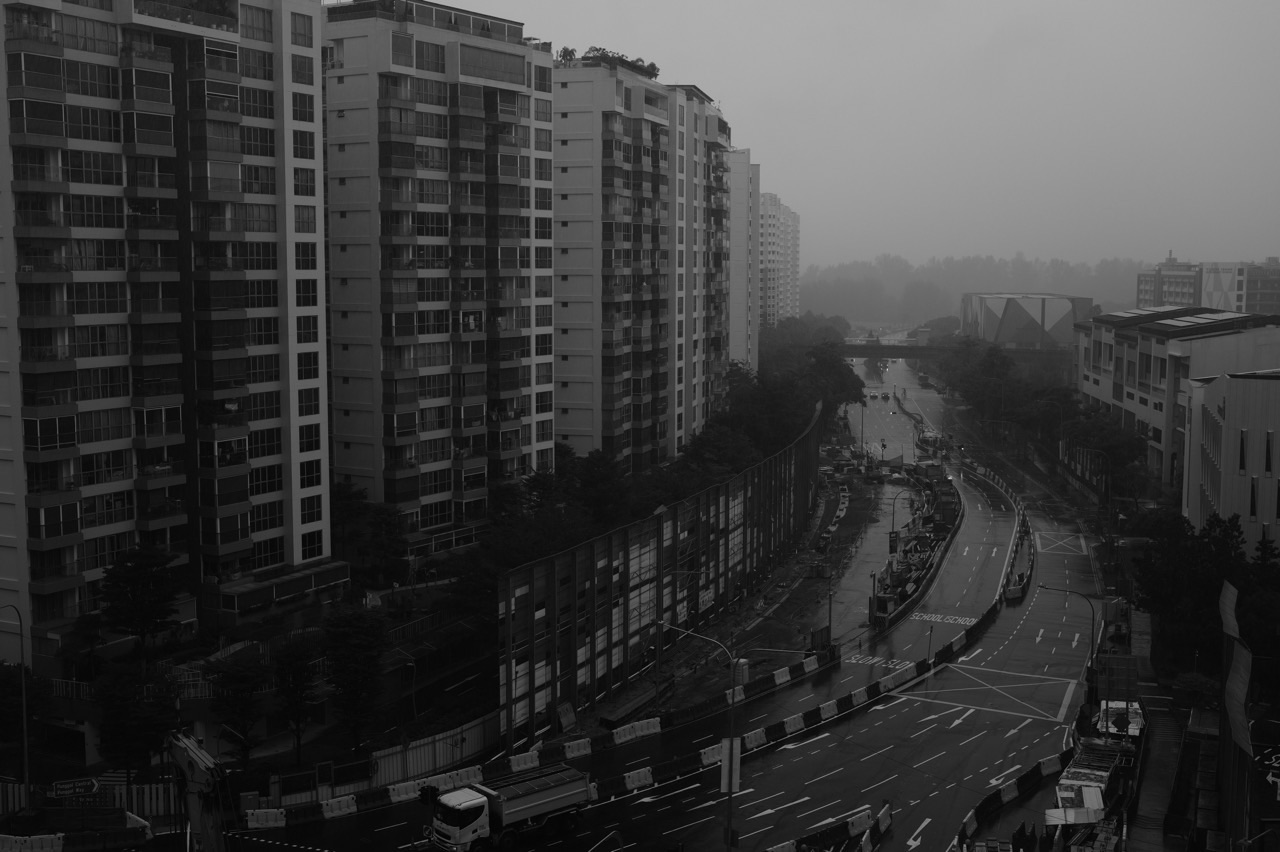
Keeping a weather diary for kids is one of the most fascinating stay-at-home things to do in Punggol during the school holidays: five minutes at the window each day, a pencil, and a front-row seat as the Northeast Monsoon rolls across the blocks.
December is, on average, Singapore’s wettest month. Your child can measure that for themselves.
This is idea #79 in eduKate Punggol’s Top 100 Things to Do in Punggol During the School Holidays. This guide explains what the monsoon really is, what to record each day, how to compare your notes with official data, and how to turn six weeks of observations into a real graph your child made.
Most children complain about rain.
A weather scientist welcomes it.
Rain is data. Thunder is data. Even a sunny day is data. Give a child a diary and a simple routine, and the gloomiest monsoon afternoon becomes the most interesting part of the day.
This idea is perfect for families who want to:
- turn rainy holiday days into something to look forward to;
- build a five-minute daily habit that needs no travel;
- give children real Science and Maths practice without a worksheet;
- understand why the holidays bring so many afternoon storms;
- learn to read official weather information together; or
- end the break with a chart that genuinely surprises everyone.
Quick look
- Best for: Primary 3 to Secondary 1, with a picture version for younger children
- Time needed: 5 to 10 minutes a day, plus 30 minutes for the final graph
- Cost: free; a notebook and pencil
- Best time: the same two times each day, such as 8am and 4pm
- Nearest MRT/LRT: none needed; observe from a safe indoor window
- Rain plan: rain is the plan
See all 100 school-holiday ideas · Chat with eduKate Punggol on WhatsApp · Visit eduKate Punggol on Facebook
A Weather Diary Is Bigger Than It First Appears
A weather diary looks almost too simple. A date. A word or two. A cloud drawing.
But keep it every day for six weeks, and something remarkable happens. Patterns appear. Mornings that are mostly bright. Afternoons that darken. Thunder that seems to arrive at roughly the same time of day. A week of grey that feels different from the storms before it.
Those patterns are real. The year-end school holidays sit right where Singapore’s weather shifts from one season to the next, from the inter-monsoon period into the Northeast Monsoon. Your child is not just writing about the weather. They are recording a season changing, from their own window in Punggol.
That turns an ordinary diary into a small science project, the kind that makes a child say, “I noticed that before anyone told me.”
The Hidden Lesson in a Weather Diary
Here is how it often goes.
Week 1, a ten-year-old writes: “Rain. Again.”
Week 2, with a little structure: “8am: sunny, few clouds. 4pm: dark grey, thunder heard at 3.40pm, heavy rain.”
Week 4, she looks back and says, “Every time there was thunder, the morning was sunny first. Why?”
That question is pure gold.
She has moved from describing to spotting a pattern to asking for an explanation. That is the scientific method in miniature. The answer, by the way, is the kind of thing Meteorological Service Singapore (MSS) explains: afternoon and evening thunderstorms are driven by the day’s surface heating and the afternoon sea breeze. A child who discovers the pattern first will remember that explanation far better than one who simply reads it.
The same move, from noticing to explaining, sits at the heart of Science open-ended answers, Maths problem-solving and good writing.
Why Punggol Families Love a Weather Diary
Punggol is a great place for weather watching. Many high-rise windows look out over open water and wide skies, so you can often watch showers approaching across the town.
The joys of a monsoon weather diary
- It takes five minutes and needs no outing or booking
- It works best on exactly the days when outdoor plans fail
- Children see real seasonal patterns emerge over the holiday
- It builds observation, recording and graphing skills
- It makes official weather information feel useful, not boring
- Siblings can each track a different thing, such as clouds, rain or thunder
- It teaches healthy respect for lightning and heat
- The final graph is a genuine “I made this” moment
What You’ll Find: Punggol’s Holiday Weather Explained
Before you start, it helps to know what the season usually brings. These facts come from MSS’s Climate of Singapore page and NEA.
Two seasons in one holiday
MSS describes October to November as an inter-monsoon period, with light and variable winds and afternoon and early evening thunderstorms, sometimes severe. The Northeast Monsoon follows, from December to early March. NEA notes it usually starts around the end of November. Its early, wet phase, from December to early January, can bring monsoon surges with widespread, continuous moderate to heavy rain, as well as afternoon and early evening showers. Its later phase, from late January, is windy and relatively dry.
The numbers worth knowing
Using 1991 to 2020 averages, MSS records November rainfall of 252.3 mm over 19 rain days, with 19 thunderstorm days and 22 lightning days. December averages 331.9 mm, the highest of any month, again with 19 rain days, plus 14 thunderstorm days and 16 lightning days. MSS counts a “rain day” as one with at least 0.2 mm of rain. December is also among the coolest months, with a 24-hour mean of 26.8°C, and November and December have the fewest sunshine hours.
Lightning is common
According to the Ministry of Sustainability and the Environment, Changi Climate Station records lightning on about 176 days a year, roughly every second day. That is why your diary should always be kept indoors during storms.
Rain is not the same as clean air
October 2026 brought unhealthy haze readings to Singapore. Rain may change how hazy the sky looks, but a clearer view is not a reading. Check the official numbers on haze.gov.sg rather than guessing from the window.
How to Plan a Brilliant Weather Diary
A good diary is simple, regular and safe. These steps take ten minutes to set up.
1. Choose a safe window
Pick an indoor window with a good view of the sky and a familiar landmark, such as a block, tree or bridge. Children observe from inside, never leaning out, never on a balcony during storms.
2. Fix two times a day
Morning and late afternoon work well, for example 8am and 4pm. Same times every day make the data fair and comparable.
3. Make a simple recording table
Rule a page into columns:
- Date and time;
- Sky: clear, a few clouds, mostly cloudy or overcast;
- Rain: none, light, heavy;
- Thunder heard: yes or no;
- Landmark: clear, hazy or hidden;
- One word for how it feels: hot, sticky, breezy, cool; and
- Official check: what the MSS forecast said.
4. Add a cloud sketch
Each entry gets a tiny drawing: puffy white clouds, a flat grey sheet or tall, towering clouds. Over time, children learn which kinds come before storms.
5. Check the official forecast
Once a day, look at the forecast on the MSS website or the NEA myENV app together. Did the forecast match what you saw? Forecasts give likelihoods, not promises, which is a great lesson in itself.
6. Skip the outdoor rain gauge
Bottle rain gauges left outside collect stagnant water, and NEA advises removing stagnant water to stop mosquitoes breeding. Use your words for “light” and “heavy”, and borrow measured rainfall numbers from MSS instead.
A Sample Holiday Day, Hour by Hour
Here is how a weather diary fits into a typical monsoon holiday day.
8am: The morning reading
Before breakfast, the “chief meteorologist” fills in the morning row: sky, rain, landmark, feel, cloud sketch. Two minutes.
9am: Outdoor plans while it is bright
Mornings are often the best time for outdoor activities in this season. Check haze.gov.sg, then head out for a park, cycle or walk.
Noon: The forecast check
Over lunch, look at the MSS forecast. Is rain expected this afternoon? Make a prediction and write it in the diary: “I think it will rain by 4pm.”
3pm: Storm watch, from indoors
If thunder rumbles, note the time it was first heard. Watch the rain move across the blocks from inside. Close windows if rain blows in.
4pm: The afternoon reading
Fill in the afternoon row. Was the prediction right? Draw today’s cloud.
Sunday evening: The weekly tally
Count the week’s rain days and thunder days. Colour in a bar on the chart. Compare with last week.
Three Ways to Enjoy It
Every age can be a weather watcher.
For little explorers (Primary 1–3)
Use pictures instead of words: a sun, a cloud, raindrops or a lightning bolt sticker for each day. Let them choose a “weather word of the day”. Counting sun stickers versus rain stickers at the end of each week is lovely early maths. Preschool siblings can hold the “weather card” and announce it at breakfast like a TV presenter.
For big kids (Primary 4–6)
Use the full table and add predictions. At the end of the holidays, make a bar graph of rain days per week and a tally of thunder days. Compare their December count with the MSS average of 19 rain days. Primary 6 children can write a short “weather report” for the family chat each Sunday.
For teens (Secondary 1–4)
Teens can compare their own observations with official data, noting where they agree and where they do not, and why a single window cannot speak for all of Singapore. They can read MSS explanations of monsoon surges and Sumatra squalls, and try a short “correlation is not causation” discussion: does rain cause clearer views, or do other factors matter too?
The Learning Bridge: Science and Mathematics Without the Worksheet
A weather diary is a genuine little investigation. It quietly practises real school skills.
- Science, observing and recording: Primary Science, a formal subject from Primary 3, emphasises observing, questioning and recording. A daily table is exactly that, done properly.
- Science, the water cycle: rain, clouds and evaporation link to the Cycles theme in primary Science. Ask, “Where did the rain come from, and where does it go?”
- Mathematics, data: tallies, tables and bar graphs belong to the Statistics strand of primary Mathematics. Graphing your own data is far more memorable than graphing a textbook’s.
- Fair testing, gently: recording at the same times each day is the beginning of understanding why scientists keep conditions the same.
Keep it light and curious. If you would like to use the holidays for Science in a more structured way, our guide to the school-holiday Science plan explains how to repair, consolidate or prepare ahead without overloading a child.
Little Hiccups and How to Dodge Them
Weather diaries are easy, but a few things can go wrong.
Forgetting the readings
Stick the diary beside the window and set two gentle phone reminders. Missed a reading? Leave the box blank. Never invent data.
Unsafe windows and balconies
Observe from inside, standing back from open windows, especially with young children. Never lean out or go onto a balcony during a storm for a better look.
Lightning
If you hear thunder, stay indoors. The MSS lightning page shows live activity, and NEA’s myENV app can send alerts. Never send a child outside to count the seconds between lightning and thunder.
Heat on bright days
On hot, sunny mornings, keep outdoor plans short and drink often. The heat stress advisory is worth checking.
Haze days
Do not judge air quality by how the sky looks. Check haze.gov.sg, and on high-reading days keep activities indoors. Our Punggol Haze Indoor Activity Planner is full of indoor plans.
Stagnant water after rain
Rain can leave water in plant pot plates and containers. Let an adult empty and scrub them, following NEA’s advice on preventing mosquito breeding.
What a Great Day Looks Like
You will know the diary is working when your children:
- fill in the morning reading without being reminded;
- predict the afternoon weather and check whether they were right;
- name a cloud type that often comes before a storm;
- notice that thunderstorms tend to come in the afternoon;
- check the official forecast before planning an outing; and
- feel proud of a graph that shows the monsoon arriving.
Pride in that graph is worth more than any sunny day. A child who has graphed a season has learnt that the world is full of patterns waiting to be measured.
When to Go
The timing could hardly be better. MOE sets the year-end break for primary and secondary schools from Saturday 21 November to Thursday 31 December 2026. That window covers the end of the inter-monsoon period and the start of the Northeast Monsoon, perfect for spotting a change. If your child is in a school used as an O-Level venue, Term IV ended on Friday 23 October 2026, so they could start even earlier.
MOE’s 2027 calendar puts the June holiday from 29 May to 27 June, during the Southwest Monsoon, so a June diary makes a great comparison.
Getting There from Around Punggol
No travel needed. The best weather station is your own window. Choose one with a wide view of the sky and a landmark in the distance. If your home faces another block, any patch of sky will do; note what you can see.
For a change of scene on a dry, clear morning, Punggol Waterway Park, open 24 hours according to NParks, offers wide views of the sky over the water. NParks lists Punggol MRT and Damai LRT as the nearest stations. For weather and climate books, Punggol Regional Library is in One Punggol, near Punggol MRT and Sam Kee LRT.
Location: a safe indoor window at home
Nearest MRT/LRT: none needed; Punggol MRT (NE17) for the library or Waterway
Entry: free
Quick Details
Activity: a twice-daily monsoon weather diary with a final graph
Where: at home, from a safe indoor window
Best ages: Primary 3 to Secondary 1; picture version for younger children
Cost: free
Time needed: 5 to 10 minutes a day
Booking: none
Accessibility: fully home-based; suits children who prefer staying in
Status checked: October 2026, MSS Climate of Singapore (monthly averages for 1991 to 2020)
What to Bring
- A notebook with a ruled recording table
- A pencil and a few colour pencils for cloud sketches
- Sun, cloud, rain and lightning stickers for younger children
- A clock or watch near the window
- Graph paper for the end-of-holiday chart
- The MSS website or myENV app for the daily forecast check
Frequently Asked Questions
What should a weather diary for kids include?
The date and time, the sky, whether it is raining, whether thunder was heard, how clearly a landmark can be seen, one “feel” word and a small cloud sketch. Add the official forecast once a day.
When does the Northeast Monsoon start?
MSS describes it as running from December to early March, and NEA notes it usually starts around the end of November.
How many rainy days should we expect in December?
MSS’s 1991 to 2020 averages show 19 rain days in December, with an average of 331.9 mm of rain, the highest of any month. Your own count will vary.
Should we make a rain gauge?
We suggest not leaving one outside, because collected water can become a mosquito breeding spot. Use MSS’s measured rainfall instead.
Can we watch the storm from the balcony?
No. Stay indoors and away from open windows during thunderstorms. Lightning is common in Singapore.
Does rain clear the haze?
Not reliably. Rain can change how hazy the sky looks, but check the actual readings on haze.gov.sg before planning outdoor activity.
What if we miss a day?
Leave it blank and carry on. Honest gaps are better than made-up data.
Helpful Reading for Punggol Families
- Top 100 Things to Do in Punggol During the School Holidays
- Punggol School Holiday Guide: A Week-by-Week Plan for the Year-End Break
- Rain Watching in Punggol from Home
- Punggol Weather for Families
- Cloud Watching in Punggol
- Things to Do in Punggol on a Rainy Day
- School Holiday Science Plan: Repair, Consolidate or Prepare Ahead?
- MSS: Climate of Singapore
- MSS: Lightning Information
A Weather Diary for Punggol Families
A grey sky can be a mystery.
A thunderclap can be a data point.
A rainy afternoon can be the best part of the day.
For little ones, the diary is a sticker chart of suns and storms.
For big kids, it is a science project with a real graph.
For teens, it is a lesson in comparing evidence with official data.
For parents, it is proof that even the wettest month of the year can be full of curiosity, as long as everyone stays dry and safe indoors.
Plan the Rest of Your School Holidays
Clouds logged, patterns found. Browse the full Top 100 Things to Do in Punggol During the School Holidays, or carry straight on to idea #80, kitchen maths and science, the perfect thing to do when the afternoon storm arrives.
And if a calm, small-group learning block is also on your holiday list, eduKate Punggol teaches English, Mathematics and Science in classes of three. Come find out more.
Book a consultation · Chat on WhatsApp
eduKate Punggol
Small-group English, Mathematics and Science
Primary and Secondary
By appointment · +65 8823 1234
Properly taught kids shine a bright light into the future.
← Previous: #78 Stargazing night · All 100 ideas · Next: #80 Kitchen maths and science →
Checked October 2026. Opening hours, prices, programmes and closures change, so please confirm with the official source before you go.


