
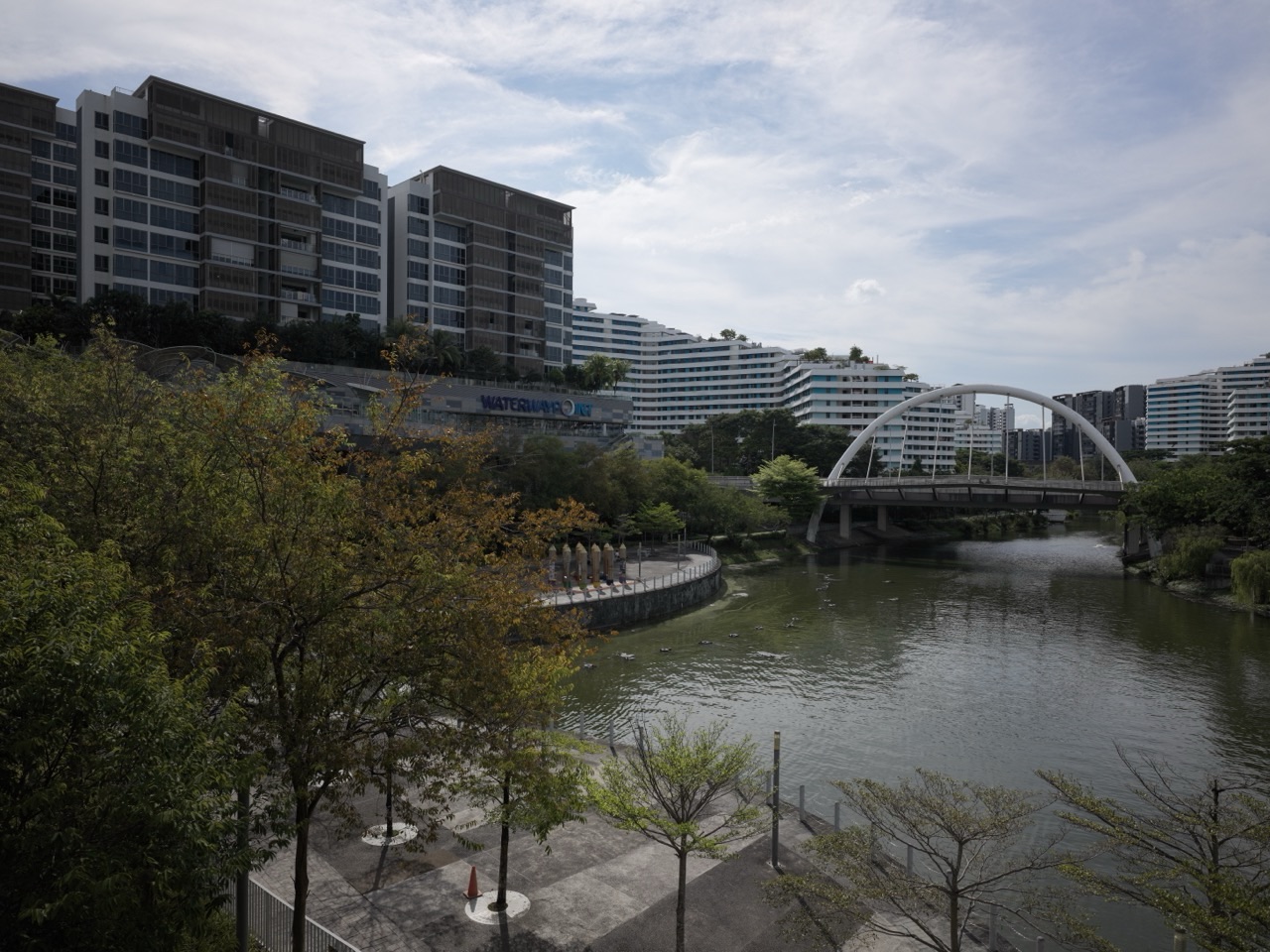
Punggol weather is not a separate climate from the rest of Singapore, but local geography changes how weather is experienced. Families move through open waterfronts, exposed crossings, sheltered HDB links, MRT and LRT stations, school gates, parks and the newer Punggol Coast district. Rain, heat, lightning and wind therefore become part of the school-day system rather than background scenery.
For parents planning school runs, tuition in Punggol, CCA, walking routes or time outdoors, the useful question is not “What is Punggol weather like?” in the abstract. It is “What does today’s weather change about this route, this child and this timetable?” A ten-minute walk can be easy in one condition and exhausting, unsafe or simply unpleasant in another.
This guide uses Singapore’s official weather framework from the Meteorological Service Singapore and NEA, then applies it carefully to Punggol family life. It does not predict local weather. For live conditions, use official forecasts and alerts.
Start with Singapore’s actual climate
Singapore has a tropical climate with high humidity, warm temperatures and abundant rainfall through the year. The Meteorological Service Singapore describes two monsoon seasons separated by inter-monsoon periods. The Northeast Monsoon generally runs from December to early March; the Southwest Monsoon from June to September; the transition periods fall roughly in late March to May and October to November.
That seasonal framework is useful because different weather systems become more common at different times. The wet phase of the Northeast Monsoon can bring prolonged rain. Inter-monsoon periods commonly bring afternoon and early-evening thunderstorms. The Southwest Monsoon can bring Sumatra squalls, sometimes with strong gusty winds and heavy rain.
For families, the point is not to memorise meteorology. It is to stop treating every rainy or windy day as an exception. Weather variability is a normal design condition for a Singapore school week.
Punggol is open to water, sky and long exposed edges
Punggol’s waterway, promenade, reservoirs, coastal edge and newer northern districts create many open stretches. Open space can make wind and sun feel more noticeable than they do inside dense sheltered corridors. At the same time, much of residential Punggol is connected by covered walkways, void decks, malls, stations and other sheltered links.
The family experience therefore changes sharply within a short distance. A child may leave a sheltered HDB path, cross an exposed junction, wait at a platform and then enter air-conditioned space. The weather is not one condition across the whole journey. It is a sequence of micro-environments.
This is why a locale expert should describe routes entrance to entrance, not simply station to station.
Rain changes the route before it changes the destination
Heavy rain rarely changes where a child needs to go. It changes how long the trip takes, which path is sensible and how much buffer the family needs. The transport itself may continue normally while the last five hundred metres become the difficult part.
School dismissal is particularly sensitive because many people move at once. Covered paths become busier. Pickup areas become slower. Umbrellas, wet bags and puddles add friction. A child who normally walks quickly may take longer because the route becomes crowded or slippery.
Our local article When Heavy Rain Arrives at School Dismissal looks at that family moment in detail. The wider principle is to build a rain version of any route that matters repeatedly.
A rain version of a route should answer four questions
- Which sections are genuinely sheltered?
- Where does water collect or footing become less comfortable?
- Which transfer becomes crowded during a downpour?
- How much extra time is enough without creating panic?
Families do not need a complicated emergency plan for ordinary rain. They need a realistic alternate version of the ordinary route.
Thunderstorms require a different standard
Thunder and lightning are not simply heavier rain. NEA notes that a forecast of thundery showers indicates an imminent risk of lightning, and lightning can strike several kilometres from the storm itself. Singapore experiences frequent thunderstorm and lightning days, especially during the inter-monsoon periods.
When lightning risk is present, the family should not treat an exposed park, open field or waterfront path as an ordinary shortcut. Follow current official safety guidance and live alerts. The correct plan may be to wait in proper shelter rather than to preserve the original schedule.
This is one reason to avoid timetables with no slack. A schedule that fails because a child waited safely for a storm to pass was too fragile to begin with.
Heat changes attention before it changes the clock
Singapore afternoons are often hot, and the official climate page notes that maximum daytime temperatures commonly reach the low 30s Celsius. Heat stress depends on more than air temperature. NEA’s public advisory uses Wet Bulb Globe Temperature, which reflects temperature, humidity, wind and solar radiation.
For a Punggol student, that matters because a route with little shade can create a different arrival condition from a sheltered one even when both take the same time. A child arriving flushed and dehydrated may need water and a brief recovery before tuition or homework.
The correct response is not to fear ordinary outdoor movement. It is to plan it intelligently: lighter load where possible, water, sensible clothing, shade, breaks and realistic timing. Check the current NEA heat-stress advisory for prolonged outdoor activity.
The 2pm route and the 6pm route are not the same route
Families sometimes record one journey time and treat it as universal. Weather makes that unreliable. An exposed walk may feel demanding in mid-afternoon sun and easy in the evening. A sheltered route that is comfortable in light rain may become crowded during school dismissal. A waterfront path that is pleasant in dry weather may not be the route you choose in a thunderstorm.
Time of day therefore belongs inside local route planning. If a child travels independently, teach the child to recognise when conditions have changed enough to choose the slower, simpler option.
Wind should be treated as information, not folklore
Punggol residents often notice breezes around open water and exposed northern areas. Singapore’s official climate guidance explains that coastal locations can experience sea-breeze effects because land and water heat at different rates, while monsoon winds and thunderstorms also affect surface wind.
That does not justify saying Punggol is always windier than another town. Local wind varies by time, weather system, buildings and exact exposure. What families can observe reliably is the route itself: open stretches feel different from protected corridors.
For children, strong gusts matter most when they are carrying umbrellas, loose worksheets, art materials or sports equipment. A sheltered route can be valuable even when it is not the shortest.
Weather belongs in the thirty-minute family radius
Our Punggol 30-Minute Family Radius guide measures the week through door-to-door time, transfers, food and recovery. Weather is one of the reasons that radius must be flexible.
A route that usually takes twenty minutes may need thirty in heavy rain. The mistake is not that the rain added ten minutes. The mistake is building a schedule that can tolerate only the best-case twenty.
Weather also belongs in the mental map
A child who knows only one route is vulnerable to small changes. A child who knows the town in anchors can adapt. Punggol MRT, Punggol Coast, the relevant LRT station, the nearest substantial indoor space and the final destination form a more resilient map.
Our wayfinding guide builds that structure. Weather adds the question: which part of the route becomes less suitable today?
School bags are part of weather planning
A child carrying a heavy school bag, laptop, CCA kit and umbrella does not move like an adult carrying a phone. Weight changes walking speed and balance. Wet bags create practical problems after arrival. Papers, electronic devices and uniforms may need protection.
For frequently exposed journeys, the useful solution is usually mundane: a bag that closes properly, a small umbrella the child can manage, a simple waterproof layer for vulnerable items and a habit of checking before leaving. Good local systems are often built from ordinary details.
Shoes matter more than parents think
Footwear affects whether a child is willing to walk, how quickly they move and how comfortable they remain after rain. A route that includes long wet stretches, slippery surfaces or repeated stairs deserves practical shoes rather than a plan built around avoiding every puddle.
This is not a fashion rule. It is part of reducing unnecessary friction in a week already full of school demands.
Heat and rain can both change appetite
Weather affects eating and drinking patterns. A hot afternoon can leave a child thirsty and uninterested in a large meal until later. A long rainy journey can delay food entirely. If tuition begins soon after travel, plan the meal around the child rather than around an ideal timetable.
Sometimes a small snack and water before the lesson is better than forcing a rushed full meal. Sometimes the opposite is true. The principle is simply that physical state belongs in the learning plan.
The waterfront is educational, but weather sets the boundary
Punggol’s waterway, reservoirs, promenade and coast make excellent places for observation. Children can notice clouds, wind direction, drainage, water level, shade, evaporation and the relationship between built form and comfort.
But place-based learning should not override common sense. Do not pursue an outdoor observation during lightning risk, heavy rain or high heat stress simply because the activity was planned. The ability to change the plan is itself part of scientific and practical judgment.
Our Punggol Science Inquiry guide shows how to turn the local environment into questions and evidence without needing elaborate equipment.
Weather can teach estimation without becoming homework
One useful family habit is to ask for a prediction before a familiar journey. “It is raining lightly. How much extra time do you think we need?” After arrival, compare the estimate with reality.
Do this occasionally, not obsessively. The child begins to understand that planning means updating a model when conditions change. That skill transfers far beyond transport.
Do not let weather create a permanent car dependency
Some families respond to weather uncertainty by driving every route that might be inconvenient. That can solve a short-term problem while preventing the child from learning how to use sheltered walking, LRT, bus and MRT options confidently.
The better balance depends on age and conditions. Use the car when it genuinely improves safety or feasibility. But preserve the child’s ability to move through the town using public transport and walking under ordinary conditions.
Build three versions of important routes
| Route version | Use when | What changes |
|---|---|---|
| Normal | Dry, ordinary conditions | Fastest familiar safe route |
| Rain | Wet weather without severe conditions | More shelter, extra walking time, fewer exposed crossings |
| Weather hold | Lightning risk, severe storm or conditions the family judges unsuitable | Wait safely, use substantial indoor shelter, delay or change pickup |
This three-version method is enough for most recurring journeys. The family does not need a giant contingency manual. It needs a normal plan, a wet-weather plan and permission to stop when conditions are genuinely unsuitable.
The parent handover should include weather judgment
When children begin travelling more independently, adults often teach the route but not the decision rules. Teach both. What does the child do if rain becomes much heavier? Where is the nearest substantial shelter? When should the child call? Which shortcuts are never worth taking?
The aim is not to make the child anxious about weather. It is to make changing conditions legible.
A simple morning check is enough
For most families, weather planning should remain lightweight. Check the official forecast. Notice whether the child has a long exposed segment. Pack accordingly. Add buffer when needed. Recheck before a later CCA or evening activity if conditions have changed.
NEA’s weather page provides forecasts, rain areas, warnings and advisories. The Meteorological Service Singapore’s Climate of Singapore page explains the larger seasonal pattern. Use the first for today and the second for understanding.
A school-week weather checklist
- Check the current forecast before the longest exposed journey.
- Know which sections of the route are sheltered and which are not.
- Add realistic time for wet-weather walking and crowding.
- Protect books and electronics from rain.
- Carry water on hot days and use shade where practical.
- Respect lightning risk; do not preserve a timetable at the expense of safety.
- Have one clear pickup or waiting plan when conditions deteriorate.
- After repeated problems, redesign the route rather than repeating the same stressful solution.
Run the weather audit by age, not by one family rule
The same Punggol route can be appropriate for one child and too demanding for another. Weather makes those differences more visible. A family therefore needs age-appropriate expectations rather than one household rule such as “everyone takes the LRT” or “we always fetch when it rains”.
Primary 1 to Primary 3: recognition, shelter and adult handover
For younger primary children, the weather plan should be concrete. Can the child recognise the correct waiting point? Do they know which sheltered route the adult expects them to use? Can they manage their own umbrella without blocking others or losing balance with a heavy school bag? Do they know the agreed adult to call if the pickup is delayed?
At this age, independence should grow through repeated familiar journeys rather than through sudden removal of support. A useful target is not “travel alone”. It is “understand what is happening and participate in the route”. Let the child notice rain direction, choose the sheltered side of a path, keep books dry and explain what the family will do if thunder begins.
Primary 4 to Primary 6: estimation, packing and route choice
Older primary students can begin to own more of the weather decision. They can check whether an umbrella is packed, estimate whether rain adds five or fifteen minutes, recognise when the normal shortcut is too exposed, and message an adult with a useful update instead of only saying “raining”.
This is also the age when PSLE preparation, CCA and tuition can make the week denser. A weather delay that looks small on a transport map may remove the child’s meal or recovery window. Parents should therefore teach the child to protect the whole sequence: school → travel → food → tuition or homework → home → sleep. Weather judgment is not separate from time management; it is one of the things time management must absorb.
Secondary school: independent judgment under changing conditions
Secondary students usually have more freedom and more complicated days. CCA may finish after sunset. Project meetings may happen away from school. Friends may suggest a different route. A student who already knows the network should now learn to judge the conditions rather than follow a route automatically.
The standard becomes: can the student identify the exposed part of the journey, check live conditions when needed, choose a safer alternative without drama, communicate a delay clearly and still preserve the important next commitment? A student who can do that has moved beyond route memory into real local independence.
One family, three different weather plans
Families with siblings should resist making the eldest child’s capability the standard for everyone. A Secondary 3 student may comfortably reroute through Punggol MRT or Punggol Coast while a Primary 2 sibling still needs a fixed pickup point. A Primary 6 child may be ready to wait in a library or mall until a storm passes while a younger child needs an adult handover.
That is not inconsistency. It is calibrated independence. The weather plan should change as demonstrated capability changes.
Keep a two-week route note before changing the timetable
If a route repeatedly creates problems, record two weeks before redesigning everything. Note the weather condition, actual door-to-door time, whether the child arrived wet or overheated, whether food was delayed, and whether the return home pushed bedtime later. Patterns usually become clearer quickly.
If the same exposed segment repeatedly causes trouble, change that segment. If the problem appears only on CCA days, redesign only the CCA day. If the route is fine but the timetable has no buffer, fix the timetable. Local expertise is most useful when it helps the family change the smallest thing that solves the real problem.
Frequently asked questions
Is Punggol always windier because it is near the coast?
No. Singapore has a coastal climate and local sea-breeze effects, but actual wind depends on monsoon flow, thunderstorms, buildings and exact exposure. Punggol’s open waterfront spaces can make wind more noticeable on some routes, but avoid treating that as a constant.
Should a child skip tuition when it rains?
Ordinary rain does not automatically make travel unsuitable. Use current conditions, transport status, route exposure and the child’s age. Lightning or severe weather deserves a different safety judgment from routine rain.
How much extra travel time should families add in rain?
There is no universal number. Test the actual recurring route. The extra time depends on distance, shelter, crowding, transfers and whether pickup areas slow down.
What is the most useful weather habit for students?
Notice changing conditions early and choose the safer, simpler route before the situation becomes rushed. Good judgment is more useful than trying to preserve the fastest plan.
The quiet standard
Locale expertise lives in small realities. In Punggol, a family week is shaped not only by schools, tuition centres and transport maps but by the open stretch between them, the covered path, the heat after dismissal, the thunderstorm that arrives before CCA ends and the decision to wait rather than rush.
A strong local system does not promise perfect conditions. It gives the family enough understanding, margin and judgment to keep going when the conditions are imperfect.
For related school-day and family guides, return to the Punggol Education & Town-Life Article Index.


