
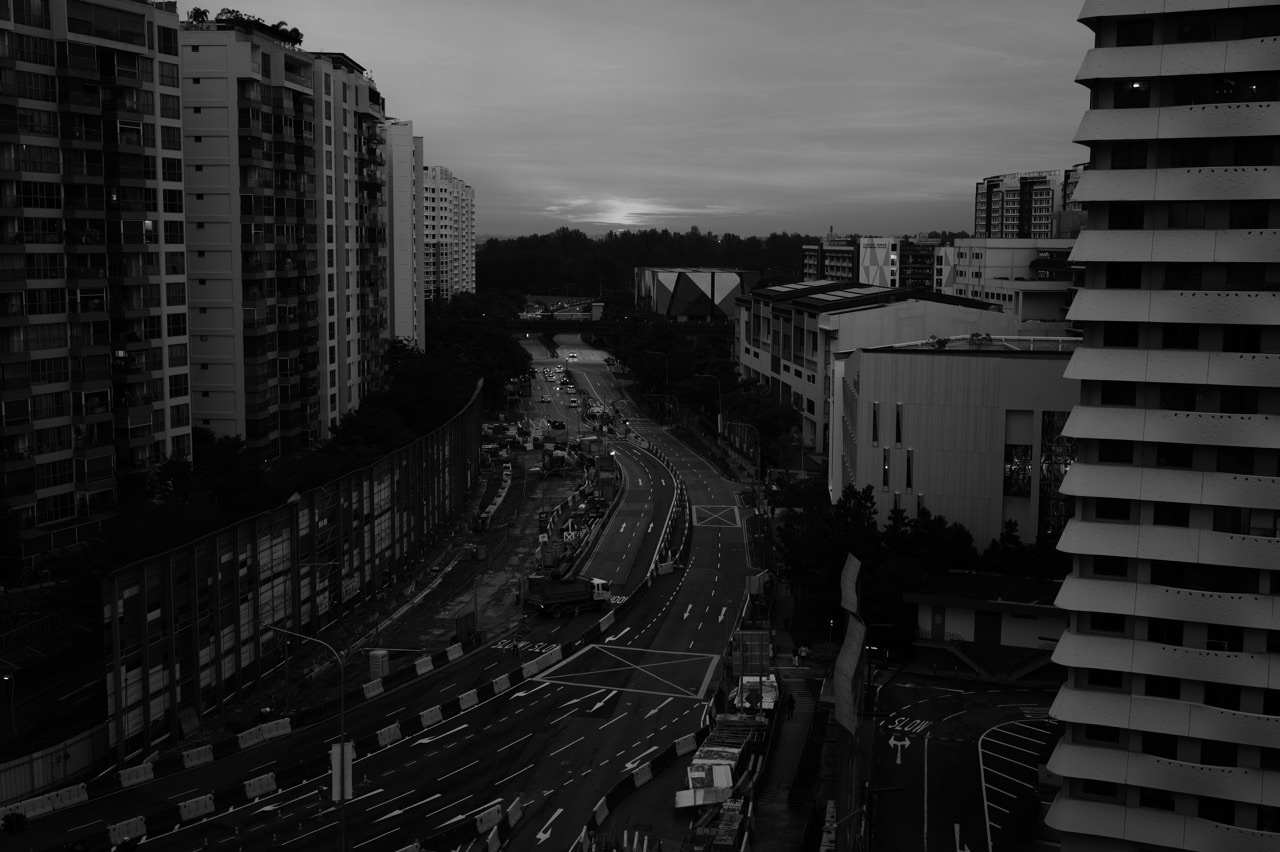
A family stargazing Punggol night is one of the most magical free things to do in Punggol during the school holidays: twenty minutes, one clear patch of sky, and the thrill of finding the Moon, a bright planet or even a shooting star from your own neighbourhood.
Eight o’clock. The corridor lights are off. A small finger points over the blocks. “Is that a star or an aeroplane?” “Watch it for ten seconds and see if it moves.”
This is idea #78 in eduKate Punggol’s Top 100 Things to Do in Punggol During the School Holidays. This guide explains what you can realistically see from a bright town like Punggol, where to look safely, how to plan a short family sky night, and the December meteor shower worth knowing about.
Punggol is not a dark-sky site.
It does not need to be.
The goal is not a sky full of stars. It is one object, found together and truly understood. A child who can find the Moon and tell a planet from a plane has started a hobby that can last a lifetime.
This idea is perfect for families who want to:
- try something gentle and memorable after dinner;
- give children a reason to look up from their screens, literally;
- explore Science through real observation, not a worksheet;
- enjoy a free activity that needs no booking or equipment;
- share quiet, unhurried time together at the end of the day; or
- plan a special late night for older children during a meteor shower.
Quick look
- Best for: Primary 1 to Secondary 4, with shorter sessions for younger children
- Time needed: 15 to 30 minutes
- Cost: free; a free sky-map app helps
- Best time: after dark on a clear evening; check what is up first
- Nearest MRT/LRT: none needed; for Punggol Waterway Park, Punggol MRT or Damai LRT
- Rain plan: borrow an astronomy book and plan the next clear night
See all 100 school-holiday ideas · Chat with eduKate Punggol on WhatsApp · Visit eduKate Punggol on Facebook
Stargazing in Punggol Is Bigger Than It First Appears
People often say, “You can’t see stars in Singapore.” That is not quite true.
You cannot see as many as you would in a desert or on a remote island. City lights scatter in the air and wash out the faintest stars. But the brightest objects still shine through: the Moon, a handful of bright stars and, at the right times, planets that can be seen with the naked eye.
That is plenty to start with.
Stargazing in a bright town teaches something important: patience and preparation. You check what is in the sky tonight, choose one target, find a safe spot with a clear view and give your eyes time. When the Moon rises over the blocks, or a steady bright point turns out to be a planet, the joy is real, because you worked for it.
And unlike many holiday outings, this one can happen from your own home, needs no ticket and fits neatly between dinner and bedtime.
The Hidden Lesson in a Night-Sky Watch
Here is a classic first-night moment.
A seven-year-old spots a bright light. “A star.”
“Let’s check,” says Dad. “Is it moving? Is it blinking?”
They watch. It blinks red and green and slides across the sky. “An aeroplane.”
A few minutes later, another bright point. This one does not blink and does not move. Dad opens a sky-map app. “It might be a planet. The app says one is up in that direction tonight.”
The child has just done real science.
That is the hidden lesson: observe, compare, then check. Instead of naming the first bright thing she saw, she looked for evidence (movement, blinking) and checked it against a reliable source. Scientists work exactly like this. So do good readers, careful mathematicians and anyone deciding whether something online is true. The sky simply makes the method beautiful.
Why Punggol Families Love a Stargazing Night
It is cheap, calm and surprisingly exciting. It turns an ordinary evening into an expedition without leaving the neighbourhood.
The joys of a family sky night
- It is free and can start from your own home
- The Moon changes shape from week to week, giving you something new each time
- Bright planets are sometimes visible to the naked eye
- It is a calm, screen-light way to end the day
- Children learn to tell planes, satellites and planets apart
- Grandparents can join from a chair, no walking needed
- A sky diary over the holidays shows real patterns
- It plants a seed for Science that lasts far beyond the holidays
What to Expect in Punggol’s Night Sky
It helps to know what you might, and might not, see. Here is an honest guide.
The Moon: your best first target
The Moon is the easiest object to find and the most rewarding. Its shape changes through the month as we see different amounts of its sunlit side. It is not up at the same time every night, and it is sometimes up in daytime, so check a moon-phase calendar or sky app before you plan. A few nights of sketches show the phases changing, which children find fascinating.
Bright planets: sometimes, not always
Venus, Jupiter, Mars and Saturn can be visible to the naked eye at suitable times, and Mercury occasionally, low and close to the Sun’s position. None is guaranteed on any particular evening. A sky-map app set to Singapore will show what is up and in which direction. A planet usually shines steadily rather than twinkling, but always check before naming it.
Bright stars and simple patterns
On clear nights, a handful of bright stars can be seen even from town. Pick one pattern that your sky app says is visible at your time, and try to match it with the real sky. Buildings may hide part of it, and that is fine.
Moving lights
Aeroplanes blink and often show coloured lights. Satellites can look like steady points gliding across the sky. Drones may hover. A good rule for children: watch for ten seconds before deciding.
What you probably will not see
The Milky Way and faint galaxies need truly dark skies far from city lights. Do not promise them in Punggol, and do not go looking for “darker” spots in unsafe or closed places.
December’s special guest: the Geminid meteor shower
The American Meteor Society’s meteor shower calendar lists the Geminids as active from 4 to 17 December 2026, peaking on the night of 13 to 14 December, with the Moon only about 21 percent lit. Its rate of up to 150 meteors an hour is for ideal dark skies; from a bright town, expect far fewer, and the best hours are late at night. Treat it as a lucky bonus, not a promise, and keep any late-night watching to a safe spot at home.
How to Plan a Brilliant Stargazing Night
Good sky nights begin indoors, with a few minutes of checking.
1. Check the weather and the air
Look at the evening forecast on the MSS weather site and the latest readings on haze.gov.sg. Clouds hide everything, and haze dims the sky. If either is bad, swap to an indoor astronomy evening.
2. Choose one target
Open a sky-map app set to Singapore and today’s date. Pick one object: the Moon if it is up, or one bright planet. One target is enough for a first night.
3. Choose a safe, familiar viewing spot
The best spot is the one you know well and can reach safely. A balcony, a window with a view, or an open public space near home all work. Never lean over railings or let children climb for a better view. Keep away from water edges, roads and cycle paths.
4. Give your eyes time
Turn off nearby lights where you safely can, and dim phone screens. Spend a few minutes just looking at the broad sky before you search for your target. Your eyes adjust and fainter points appear.
5. Record what you see
Draw the Moon’s shape or the position of a bright point relative to a building. Write the date, time and weather. A sky diary makes the next night more interesting.
6. Go home on time
Twenty minutes is a complete outing. Finish while everyone is still enjoying it, and save the late nights for older children and special events.
A Sample Holiday Evening, Hour by Hour
This rhythm suits a clear school-holiday evening at home or close to it.
4pm: The sky check
Check the forecast, haze readings and your sky app. Agree on tonight’s target. If the afternoon brings thundery showers, as it often does in the Northeast Monsoon season, decide by early evening whether the sky has cleared.
6.30pm: Dinner and the briefing
Over dinner, explain the “ten-second rule” for moving lights and show children where to look on the app.
Around dusk: Watch the sky change
As the sky darkens, look for the first bright points. If your app shows a bright planet in the evening sky, it is often among the first to appear. Look up the day’s sunset time first.
7.45pm: Lights down
Head to your viewing spot, switch off nearby lights where you can, and let eyes adjust.
8pm: Find the target
Search for the Moon or your chosen planet. Point, compare with the app and confirm. Then simply enjoy it.
8.15pm: Sketch and wonder
Each person draws what they see and writes one question. “Why does the Moon look orange near the horizon?” Questions are the best souvenir.
8.30pm: Home and bedtime
Pack up, write the date in the sky diary, and head to bed on time. There will be other clear nights.
Three Ways to Enjoy It
The same sky invites different adventures at different ages.
For little explorers (Primary 1–3)
Keep it to fifteen minutes and make the Moon the star of the show. Let them draw its shape each clear night for a week and see it grow or shrink. Play “plane or not a plane” with the ten-second rule. Preschool siblings love saying goodnight to the Moon, which is a perfectly good astronomy lesson.
For big kids (Primary 4–6)
Give them the sky app and the job of chief navigator. Ask them to find one planet and explain how they knew it was not a plane. Keep a two-week Moon diary and see whether they can predict tomorrow’s shape. Primary 6 children enjoying a post-PSLE breather may like reading an astronomy book from the library before a sky night.
For teens (Secondary 1–4)
Teens can plan a Geminid watch on the night of 13 to 14 December from a safe spot at home, counting meteors in fifteen-minute blocks and comparing their count with the “ideal sky” rate. They can also try phone photography of the Moon by steadying the phone and adjusting exposure. For guided telescope viewing, Science Centre Singapore’s Observatory, which is not in Punggol, has run Friday-evening stargazing programmes; when we checked, its stargazing page carried 2024 details and said sessions depend on the weather, so confirm dates and tickets live.
The Learning Bridge: Science Without the Worksheet
A sky night is about wonder first. But it quietly practises the habits at the heart of school Science.
- Observing and recording: Primary Science, a formal subject from Primary 3, puts great weight on observing carefully and recording what you see. A dated sky diary is exactly that.
- Light: we see the Moon because it reflects sunlight. That links to what your child meets about light in primary Science’s Energy theme. Ask, “Where is the light really coming from?”
- Patterns and prediction: noticing that the Moon’s shape changes in a regular way, and predicting tomorrow’s shape, is scientific thinking in action.
- Checking evidence: the ten-second rule and the sky app teach children to test a first guess before calling it a fact.
Keep it to one question per night. If you are thinking about how to use the holidays for Science more broadly, our guide to using the school holidays for Science explains how to repair, consolidate or prepare ahead without overloading a child.
Little Hiccups and How to Dodge Them
Most disappointing sky nights come from small, predictable problems.
Clouds
The year-end holidays fall in the Northeast Monsoon season, and cloudy evenings are common. Check the forecast, keep plans flexible and celebrate the clear nights when they come.
Rain and lightning
If thunder or lightning is around, stay indoors and keep an eye on the MSS lightning page. Open balconies, rooftops and waterfront paths are no place to be in a storm.
Haze days
Haze dims the sky and is not good for lungs. When readings on haze.gov.sg are high, watch from indoors through a window or swap to an astronomy book. Our Punggol Haze Indoor Activity Planner has other cosy options.
Unsafe or closed spots
Coney Island Park is closed from 7pm to 7am and has no lighting, according to NParks, so it is never a stargazing spot. Punggol Point Park is closed for upgrading. Never climb, cross barriers or go to unlit, unfamiliar places in search of darker skies.
Glare and bright screens
Phone screens and nearby lights ruin night vision. Dim screens, turn off what you safely can, and look away from streetlights.
Lasers and late nights
Leave laser pointers at home; they are a hazard to eyes and aircraft. And keep school-age bedtimes in mind. A great sky night is short and happy.
What a Great Day Looks Like
You will know the night worked when your children:
- find the Moon, or one bright planet, by themselves;
- explain how they knew a light was a plane;
- draw the Moon’s shape and want to compare it tomorrow;
- ask a “why” question about the sky;
- check the forecast the next day to see if tonight will be clear; and
- look up on the walk home, just in case.
The last one is the brightest sign of all. A child who looks up has discovered that the sky is part of their neighbourhood too.
When to Go
The year-end break for MOE primary and secondary schools runs from Saturday 21 November to Thursday 31 December 2026 (MOE). Mark the night of 13 to 14 December for the Geminids, and remember that MSS climate records show December is, on average, Singapore’s wettest month, so have several back-up evenings. MOE’s 2027 calendar adds March (13 to 21 March), June (29 May to 27 June) and September (4 to 12 September) breaks for more sky nights.
The best time is after dark on a clear evening. For younger children, the hour after dusk is ideal. Check your sky app for when the Moon rises, because some nights it is up early and some nights very late.
Getting There from Around Punggol
The easiest observatory is your own home: a balcony or window with a view of open sky, used safely. If you prefer an open public space, choose one you know well near home, with lighting along the way and an easy route back.
Punggol Waterway Park is open 24 hours, according to NParks, and its wide open water gives some big views of the sky. NParks lists Punggol MRT and Damai LRT as the nearest stations. Pick a familiar, well-used stretch near your usual route, stay on the path, and keep well away from the water’s edge and cycling lanes.
Location: home, or a familiar public stretch of Punggol Waterway Park
Nearest MRT/LRT: Punggol MRT (NE17) and Damai LRT
Entry: free
Quick Details
Activity: a short family stargazing session with a sky-map app and a sky diary
Where: a safe home view, or a familiar public stretch of Punggol Waterway Park
Best ages: Primary 1 to Secondary 4; late-night meteor watching for older children
Cost: free
Time needed: 15 to 30 minutes
Booking: none; Science Centre Observatory programmes need tickets (check live)
Accessibility: works from home or a seated position; NParks lists Waterway Park as wheelchair accessible
Status checked: October 2026, AMS meteor shower calendar, NParks Coney Island Park page (closes 7pm) and NParks Punggol Waterway Park page
What to Bring
- A sky-map app on a phone, with the screen dimmed
- A notebook and pencil for the sky diary
- A torch with a red cover (red cellophane works) for reading notes
- A mat or chairs if you are outside
- Insect repellent for outdoor spots
- Water and a light jacket for the breeze
- Binoculars, only if you already own some, and never pointed near the Sun
Frequently Asked Questions
Can you really go stargazing in Punggol?
Yes, with realistic expectations. City lights hide faint stars, but the Moon, bright stars and sometimes bright planets can be seen on clear nights.
Where is the best place to stargaze in Punggol?
A safe, familiar spot with a clear view of the sky, often your own balcony or window, or a well-used public space near home. Avoid closed or unlit places.
Do we need a telescope?
No. Start with your eyes and a sky app. Binoculars and telescopes show more detail, but they are not needed for a first night.
When is the Geminid meteor shower in 2026?
The American Meteor Society lists it as active from 4 to 17 December 2026, peaking on the night of 13 to 14 December, with a fairly dark Moon. From a bright town you will see far fewer meteors than the ideal-sky rate.
Can we stargaze on Coney Island?
No. NParks lists Coney Island Park as open only from 7am to 7pm, and the island has no lighting.
How can children tell a planet from an aeroplane?
Use the ten-second rule. Planes usually blink and move. A planet shines steadily and stays in place over minutes. Check the sky app to confirm.
What if it is cloudy all week?
Read an astronomy book, make a Moon-phase model with a torch and a ball, and try again on the next clear night.
Helpful Reading for Punggol Families
- Top 100 Things to Do in Punggol During the School Holidays
- Punggol School Holiday Guide: A Week-by-Week Plan for the Year-End Break
- Stargazing in Punggol for Beginners
- Moon Watching in Punggol
- Things to Do in Punggol at Night
- Punggol Waterway Park Guide
- School Holiday Science Plan: Repair, Consolidate or Prepare Ahead?
- American Meteor Society: Meteor Shower Calendar
- Science Centre Singapore: Stargazing
Stargazing for Punggol Families
The sky above Punggol is brighter than a desert’s.
It is still full of wonders.
A Moon that changes shape.
A planet that does not twinkle.
A shooting star, if you are lucky.
For little ones, it is a goodnight to the Moon.
For big kids, it is a puzzle of lights and patterns.
For teens, it is a late-night adventure with a meteor count.
And for parents, it is twenty quiet minutes, side by side, looking up, which may be the most peaceful part of the whole holiday.
Plan the Rest of Your School Holidays
One night sky, ninety-nine more ideas. Browse the full Top 100 Things to Do in Punggol During the School Holidays, or carry straight on to idea #79, a monsoon weather diary, which makes good use of all those cloudy evenings.
And if a calm, small-group learning block is also on your holiday list, eduKate Punggol teaches English, Mathematics and Science in classes of three. Come find out more.
Book a consultation · Chat on WhatsApp
eduKate Punggol
Small-group English, Mathematics and Science
Primary and Secondary
By appointment · +65 8823 1234
Properly taught kids shine a bright light into the future.
← Previous: #77 Place-name detectives · All 100 ideas · Next: #79 Monsoon weather diary →
Checked October 2026. Opening hours, prices, programmes and closures change, so please confirm with the official source before you go.


