
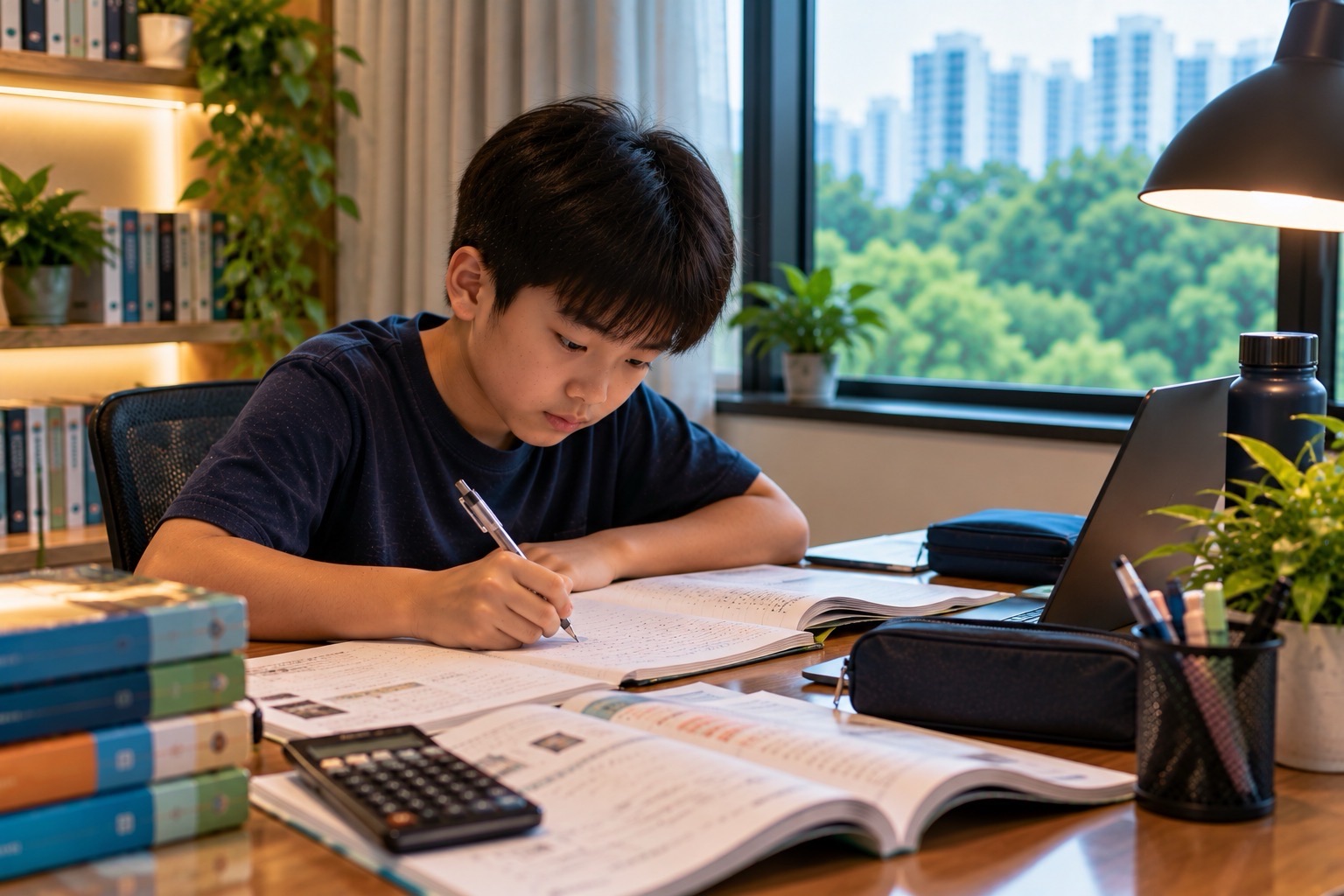
How do you stay healthy while working from home in Punggol? Set up a usable desk, move away from it regularly, plan lunch before you get hungry, and choose one small outdoor break when the weather and air quality are suitable. You do not need expensive ergonomic furniture or a daily 10,000-step competition. The simplest improvement is to stop treating a whole day at home as eight uninterrupted hours in the same chair.
This Punggol work-from-home health guide for 2026 covers desk comfort, eye breaks, meeting-heavy days, simple home lunches, short Waterway walks, commuting on hybrid-office days and work-family boundaries. It is written for residents near Punggol MRT, Waterway Point, Oasis, Matilda, Northshore and Punggol Coast. For general town lifestyle, use Life in Punggol 2026; this page stays focused on the working day itself and the small decisions that make it sustainable.
Quick answers for a healthier Punggol work-from-home day
| Everyday problem | Fast, practical response | What not to assume |
|---|---|---|
| Sitting through consecutive meetings | Get up during suitable gaps; change position and walk briefly. | A standing desk cannot replace all activity. |
| Neck or shoulder discomfort | Check the display, chair, mouse reach and work posture; seek advice for persistent symptoms. | One expensive chair fixes every cause of pain. |
| Eyes feel tired after screens | Look into the distance periodically, blink and adjust glare and text size. | Eye discomfort should be ignored indefinitely. |
| Lunch disappears between calls | Pick one balanced default meal or prepare food before the busy window. | Healthy eating requires elaborate meal prep. |
| Want exercise without a commute | Use a short familiar outdoor walk or a suitable indoor alternative. | Punggol Waterway has to be a complete loop. |
| Work messages run into dinner | Agree on suitable work boundaries and a shutdown step. | All jobs allow identical off-duty rules. |
| Hot weather, thunderstorms or haze | Check official advisories; postpone the optional outdoor component. | A balcony view tells you the health risk. |
1. Working at home changes how movement happens
When you travel to an office, parts of the commute create natural transitions: walking to a bus stop, climbing stairs, crossing a concourse or visiting a colleague. A home-based working day can remove these incidental movements. The same convenience that saves travel time can also leave someone sitting for hours. That is why the first habit to recover is often an opportunity to stand or walk, not a demanding new exercise programme.
HealthHub’s Simple Exercises for Office Workers and the MOVE IT initiative both encourage breaking up sedentary time and moving throughout the day. There is a separate recommendation to build toward regular moderate activity and strength training across the week. A quick walk between calls helps interrupt sitting, but should not be presented as equivalent to all components of a full activity plan.
Think about your real meeting calendar. If the first call begins at nine and another follows at nine-thirty, place a glass of water away from the desk or take a short walk before the second call. For a job that requires uninterrupted customer support, look for scheduled break opportunities or discuss reasonable arrangements with the employer. The idea is to reduce preventable long stretches of immobility without making a worker fail at their actual job.
One reliable movement anchor is better than five elaborate reminders that you dismiss. Tie a brief break to something that already happens: ending a video call, printing a document, making tea or returning from the bathroom. Keep the movement suitable for your body and home environment. Someone with pain, dizziness or mobility limitations may need adapted options rather than a generic instruction to stand.
2. A useful desk setup in an ordinary Punggol flat
Many homes do not have a dedicated study, especially when adults and students share space. A dining table, compact desk or corner by the window may need to support both work and family learning. Start with adjustability and comfort rather than brand names. Are your feet supported? Are shoulders relaxed? Can you reach keyboard and mouse without a prolonged awkward stretch? Is the screen positioned so you are not repeatedly bending your neck?
A laptop alone often makes it difficult to position the screen and keyboard independently. A stable stand and separate keyboard can help where suitable, but even simple adjustments may improve comfort. Avoid balancing electronics on unstable stacks or using a soft sofa as a long-term default work surface. Wires should not cross walking routes, especially where children, carers or older relatives pass through. Keep ventilation, glare and noise in mind.
HealthHub’s musculoskeletal pain self-help guidance discusses workstation ergonomics among several management strategies. It is not a promise that changing a desk will cure persistent neck or back pain. Ongoing or worsening symptoms, numbness, weakness or other concerning changes warrant assessment. Make the desk functional, then observe whether the working pattern also needs improvement.
For video calls, light from a nearby window can be pleasant, but glare on the screen may make someone squint or lean toward the display. Adjust the screen orientation, available shading or text size before buying new furniture. Check the chair and arm position during a normal working task rather than posing in an idealised straight-backed position for one photograph. Comfortable variation throughout the day is often more realistic than holding one rigid posture for hours.
3. The movement-break ladder: two minutes, five minutes or a longer pause
| Gap in the working day | Possible activity | Use it when |
|---|---|---|
| About two minutes | Stand, move comfortably or walk to refill water. | A call ends or you have a short natural break. |
| About five minutes | Walk around the flat or along a safe nearby corridor without obstructing neighbours. | There is a proper pause between tasks. |
| About ten to fifteen minutes | Take a familiar neighbourhood walk or do a suitable home routine. | Your calendar permits a meaningful break. |
| A full lunch break | Eat away from your main work screen and add optional movement afterwards. | You can protect the break from avoidable meetings. |
These are examples, not a medical exercise prescription. Keep passages clear, do not run on polished indoor surfaces and avoid strenuous movement in a cramped shared room. An individual recovering from illness, with significant pain or with a medical condition should adapt the plan with professional advice when needed. The point is to interrupt sitting and restore comfort, not to burn a specific number of calories each time a calendar alert appears.
An effective low-friction experiment is to select two predictable break points for the next five workdays. Perhaps one occurs after your first major meeting and another before lunch. At the end of the week, ask: Were the breaks practical? Did I return to work on time? Did my body feel more comfortable? If not, adjust the timing. A routine that repeatedly clashes with your job is not yet well designed.
4. Lunch without the midday decision spiral
Working from home can be surprisingly bad for lunch. The kitchen is nearby, so you assume eating will be easy. Then a meeting overruns, you check messages while making instant noodles and another hour disappears. The solution is often a default lunch: two or three familiar meals that can be prepared, bought or assembled without much thought. They should fit appetite, dietary needs and available storage.
Our Healthy Hawker and Grocery Choices in Punggol guide provides a flexible five-day approach built around Singapore’s My Healthy Plate principles. You can use a suitable meal from One Punggol, Oasis, Northshore or your closest coffee shop when leaving home is practical. But a special journey across town for lunch may make the break more stressful. The nearest suitable option can be the best one.
For example, if rice, an appropriate protein and vegetables are already available, combine them into lunch with safe food-handling practices. Another day, a hawker meal may be simpler. Keep plain water accessible when medically appropriate, and resist the idea that working near the fridge requires constant snacking. Eating away from the keyboard when possible makes the meal a real pause rather than background activity.
When several adults are working at home, lunch roles need not become a hidden responsibility for one person. Agree who buys or prepares food, who cleans, and whether everyone wants to eat together. If school-age children are home for a holiday, plan their meals separately according to age and supervision needs rather than assuming an adult can work continuously while improvising care. Household coordination is a wellbeing issue as well as a logistics issue.
5. A Punggol waterway break: short beats ambitious
Punggol Waterway Park is an inviting place to walk, but nobody needs to travel all the way there from Northshore or another precinct just to achieve a healthy midday break. Choose a neighbourhood route that begins close to your flat and has a reliable return. If the Waterway genuinely lies beside your workday errands, a brief waterside walk can be pleasant. Otherwise, your block’s familiar pathways may be the better option.
NParks lists Punggol Waterway Park as open 24 hours and describes its four themed areas, while access to particular facilities may be affected by maintenance or local notices. The official NParks listing is a useful visitor reference. Our Walking for Everyday Errands in Punggol explains how to build routes around work, shopping and family obligations without requiring a full loop.
A common mistake is treating the break as an exercise competition. If you spend twenty minutes walking and another twenty returning, you may have created a meeting problem. Set a turnaround point before leaving home. Let the environment do something useful: a change of scene, a few minutes away from the screen and a reminder that Punggol is a neighbourhood, not only a collection of homes connected by meetings.
6. Heat, rain and haze: use the right official information
A home-based worker has flexibility to move some breaks, but Singapore’s climate matters. High heat stress is not the same thing as a sunny-looking afternoon, and strong rain may bring lightning danger. Check the MSS heat stress information, the MSS lightning information service and Singapore’s official haze guidance when outdoor conditions are uncertain. A rainy day can be a perfectly good indoor-break day.
If heat stress is high, postpone a planned brisk Waterway walk rather than telling yourself the water makes the air cool enough. If lightning or a thundery shower is present, do not shelter under a park tree or continue outdoor sport. If haze advice calls for reducing outdoor exertion, change the plan rather than trying to make up the missing steps. The longer explanations sit in our linked Punggol heat-stress guide and rainy-day exercise guide.
The best workplace wellbeing system has three choices: outdoor when suitable, indoor when conditions are poor and rest when unwell. You do not have to replace every missed walk with a rigorous home workout. The point of the break is to support the rest of the working day, not prove that the schedule can withstand every possible environmental condition.
7. Home distractions, household boundaries and children
Work-from-home routines also affect people who are not employees. A child doing homework may need the same quiet table that an adult uses for calls. Grandparents may be caring for younger children, while another adult is preparing meals. Instead of repeatedly saying ‘Please be quiet’, agree on which periods need the most quiet, where each person can work and how to handle urgent interruptions.
Our Family Life in Punggol guide covers school runs, play, seniors and weekly care more broadly. For home-working adults, an especially useful habit is the visible work boundary: a shared calendar or a short statement about when calls require privacy. Keep children supervised appropriately; a door sign does not replace childcare. Be realistic about shift changes and last-minute work requirements.
When the desk is a shared study area, end the working day by restoring the table. Put away confidential documents, remove charging cables from walking space and make room for meals or schoolwork. This short closing ritual can also act as a mental boundary between job and home. Our After-Work Wellbeing in Punggol explores sleep, messaging boundaries and evening recovery in more detail.
8. A five-day work-from-home experiment
| Day | Small change | How to judge it |
|---|---|---|
| Monday | Adjust the screen, chair and keyboard for comfortable use. | Less awkward reaching or screen glare. |
| Tuesday | Protect two natural movement pauses. | Could you repeat them without missing work? |
| Wednesday | Choose lunch before the busiest call window. | Did you eat a suitable meal without rushing? |
| Thursday | Try one short local walk only if weather and air conditions suit. | Did you return comfortably and on time? |
| Friday | Close work with a brief desk reset and shutdown note. | Was the evening less interrupted by work clutter? |
At the end, keep the two changes that made a difference. Drop those that added friction. Maybe the winning idea was a better screen height and reliable lunch, not the walks. Maybe a work-from-home parent values twenty minutes of quiet after school collection more than another fitness session. There is no universal best routine. Your work schedule, household and health decide which changes are practical.
9. Three realistic Punggol household examples
A hybrid worker near Punggol MRT
They work from home three days weekly and commute on two. Instead of using two entirely different health plans, they keep the same two natural movement pauses and default lunch timing whenever possible. On office days, travel creates some walking. On home days, they deliberately add a few minutes of movement between tasks. They do not duplicate a long commute walk in the evening when tired.
A parent with a small flat and two learners
Their dining table supports a laptop, schoolbooks and dinner. The repair is mostly spatial and logistical: a compact, safely arranged work setup, an agreed schoolwork window and a quick reset before eating. They take short breaks that do not interrupt supervised child care. When a park outing would complicate the afternoon, a suitable indoor pause is sufficient.
A resident near Northshore with midday meetings
They routinely lose lunch because the calendar runs through one o’clock. The most useful change is to identify a portable meal option before the day starts and protect a real break at an available time. A local neighbourhood shop may be more useful than crossing the estate for a popular hawker centre. If the weather is comfortable later, an evening walk is a separate choice, not a missed-lunch penalty.
A real home-working week in Punggol: the hidden constraints
Consider a household where one adult works from home near Punggol Field, a teenager studies at the dining table and a grandparent comes by to help with childcare. There is only one quiet room and one dependable video-call headset. Buying another desk would not automatically solve the scheduling problem. Begin by mapping the most important quiet periods for each person. The adult may need forty minutes for client calls; the teenager may need an undisturbed revision slot; the younger child may need supervision in a different space. Agree on an arrangement people can actually remember.
A simple shared whiteboard or calendar can distinguish work calls, schoolwork, meals and family time. Do not publish children’s schedules or personal information publicly, and keep private documents away from shared household spaces. Build an ordinary reset between uses of the table: clear the laptop and cables, wipe the space and leave it ready for the next person. That physical transition can make the same small home feel less crowded, even without another piece of furniture.
The movement arithmetic that matters
Suppose a worker spends seven hours largely at a screen but has two meaningful scheduled breaks. Adding ten minutes of walking in the morning and ten in the afternoon creates twenty minutes of activity on those days, if those walks are actually taken. Across three similar home-working days, that totals sixty minutes. This is arithmetic, not a medical prescription and not automatically sixty minutes of moderate-intensity activity: effort, pace, health and interruptions determine the category.
The lesson is that realistic small blocks can add up without turning every free minute into exercise. Someone may prefer several brief breaks simply to interrupt sitting, followed by separate strength training on a suitable day. A resident who has pain or mobility limitations may need adapted movements instead. Do not let a calendar calculation tempt you to skip meals, sacrifice sleep or push through symptoms.
A one-page weekly diagnostic before buying equipment
Write five headings: screen comfort, movement opportunities, food timing, household interruptions and work shutdown. Under each heading, note one recurring obstacle and one small potential change. For screen comfort it might be reducing glare. For movement it may be standing after a scheduled call. For food it may be deciding on lunch before nine. For interruptions it may be agreeing on a quiet period. For shutdown it may be packing away work items before the family uses the table.
Test only two adjustments in the coming week. You can record a simple yes or no against each: Did the new screen position feel workable? Was the lunch break actually used? Then ask what unexpected cost the improvement created. If an exercise break repeatedly pushes a meeting late, choose a different time. If a desk change creates a trip hazard for a child, redesign it. A healthy home-working routine is a compromise between multiple real needs, not a photograph of an ideal workstation.
Punggol Digital District, SIT and working closer to home
Punggol’s changing workplace landscape makes the question of working near home more interesting, but proximity is not the same as a universally shorter day. Some residents work in offices within or near Punggol Digital District; others travel to central Singapore or work remotely for organisations elsewhere. The real health variables include the actual journey, job demands, available breaks and how easily people can separate work from family time.
A resident who works nearby may choose to walk part of a safe commute. Someone whose employer allows a hybrid arrangement might use saved travel time to prepare meals, but might also find that more meetings occupy the entire day. Neither arrangement is automatically healthier. For a geographical explanation of how homes, jobs and transport networks intersect, use eduKateSG’s Punggol transport geography and sustainable mobility guide.
When home-working discomfort deserves professional review
Persistent neck or back pain, numbness, weakness, severe headaches or symptoms that interfere with function should not be dismissed as proof that you need a better chair. Individual causes differ, and an ergonomic adjustment cannot diagnose them. Ask a suitable healthcare professional about concerning or persistent symptoms. The same applies when work stress, sleep disturbance or mood changes become difficult to manage. Practical lifestyle changes may help, but medical and workplace support can be necessary.
Before the next working week, check three essentials: a safe and usable workspace, a realistic plan for movement and food, and a clear arrangement for stopping work when the agreed day ends. If those are working, you have built something more valuable than a long list of productivity hacks: a Punggol workday that leaves energy for life outside the laptop.
10. Frequently asked questions
Is working from home healthier than commuting?
It can save travel time but may increase sitting. Health depends on the overall work routine, environment, activity, meals and rest rather than location alone.
Do I need a standing desk?
No. A suitable setup and regular position changes can help; one product does not replace all movement or guarantee relief from pain.
How frequently should I take breaks?
Use reasonable movement opportunities around your tasks and the employer’s arrangements. HealthHub encourages breaking up prolonged sitting; exact timing should suit your needs.
Is a Waterway walk essential during lunch?
No. A brief familiar local route or indoor movement may be more practical. Outdoor walks depend on weather, haze and time.
Can short movement pauses replace exercise?
They help interrupt sedentary time but do not necessarily deliver all recommended aerobic and muscle-strengthening activity.
What if screen work causes persistent headaches or neck pain?
Review working conditions and speak with an appropriate healthcare professional when symptoms persist or concern you.
What should I do on days with haze or lightning?
Postpone discretionary outdoor activity and consult official Singapore advisories; use suitable indoor alternatives or rest.
How do I stop work taking over the home?
Agree on available boundaries, a shutdown routine and clear household arrangements while accounting for genuine on-call or care obligations.
Related reading: eduKate’s Punggol and Singapore knowledge ecosystem
- Life in Punggol 2026 — master neighbourhood lifestyle guide
- Walking for Everyday Errands in Punggol
- Healthy Hawker and Grocery Choices in Punggol
- After-Work Wellbeing in Punggol
- Family Life in Punggol — care and school routines
- Rainy-Day Exercise in Punggol — HDB home and community options
- Heat Stress and Outdoor Exercise in Punggol
- Accessible and Inclusive Exercise in Punggol
- eduKateSG: Punggol Waterway Park and Waterfront Student Life
- eduKateSG: Punggol Transport Geography and Accessibility
Official sources and editorial note
- HealthHub — Simple Exercises for Office Workers
- HealthHub — How to Move More in Everyday Life
- HealthHub — Pain Self-Help and Workstation Advice
- NParks — Punggol Waterway Park
- MSS — Heat Stress
- MSS — Lightning
- Official Singapore Haze Information
Reviewed 17 October 2026. This is an educational Punggol lifestyle guide, not medical advice or a guarantee of local opening hours, weather or service availability. Individual work, health, family and accessibility needs may require different choices. Check live official sources before travelling.


