
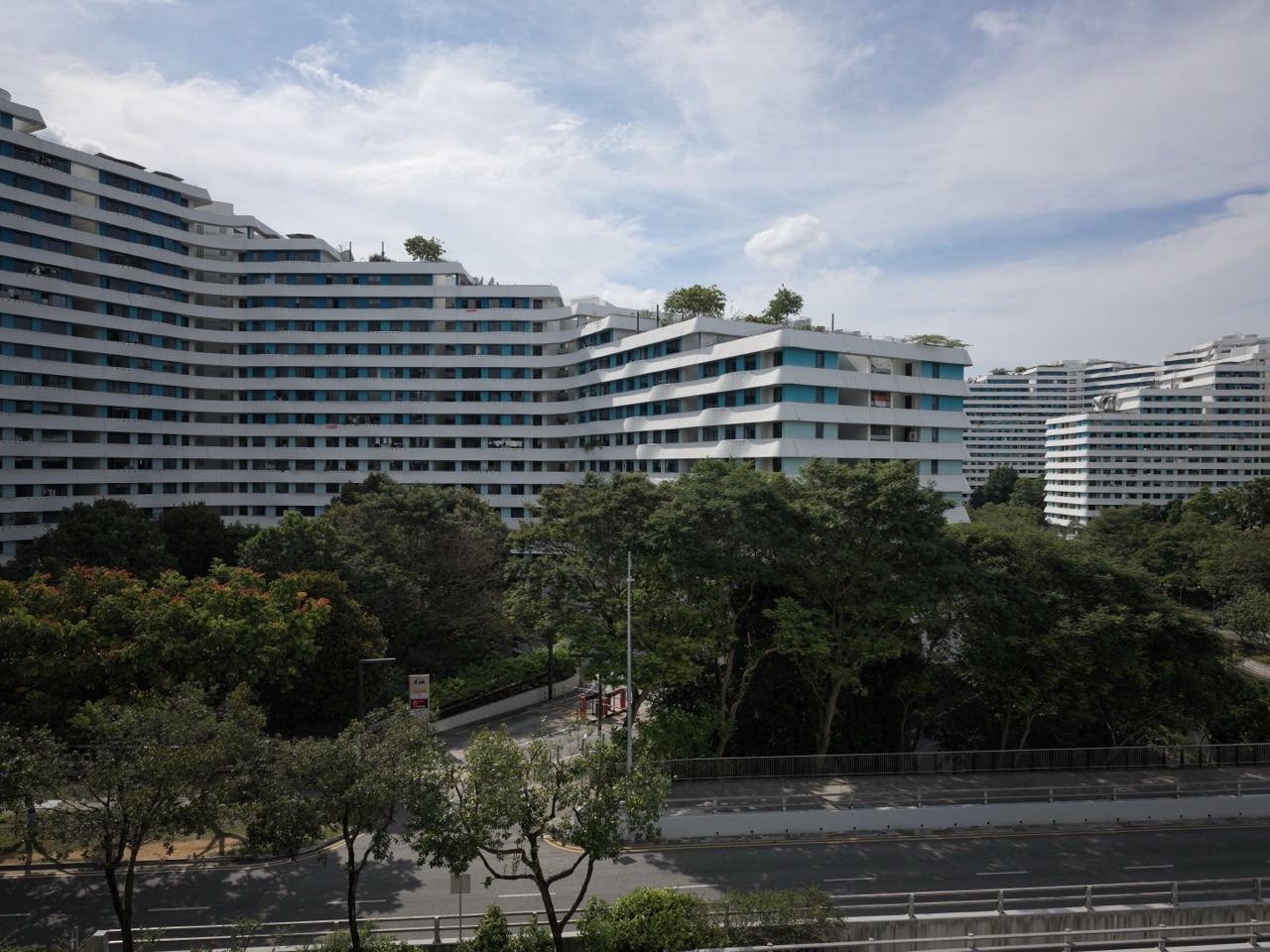
A modern town is increasingly able to sense itself.
Temperature can be measured. Energy use can be monitored. Movement can be counted. Equipment can report faults. Environmental conditions can be tracked. Digital systems can combine these measurements and help people decide what to do next.
For Punggol students, this makes “smart town” ideas unusually tangible. The district around them provides a natural bridge from school Science into sensors, data, engineering and future technology.
This article continues the Journey of Learning Advanced Science in Punggol and connects it to the local future described in Growing Up Beside SIT and Punggol Digital District.
A Smart System Starts With Measurement
Before a system can respond intelligently, something has to be measured.
Sensors can measure temperature, light, motion, pressure, humidity, sound, electrical quantities and many other conditions.
This links directly to school Science because the underlying quantities are familiar. The technology becomes more advanced, but the measurement principles remain.
A Sensor Is Not the Same as Understanding
A sensor produces data. It does not automatically produce meaning.
Students still need to ask whether the sensor is calibrated, where it is placed, what its resolution is, whether the reading is representative and what other variables may affect it.
This is why the evidence discipline from Research, AI and Learning Beyond the Syllabus remains essential.
Buildings Can Become Measurable Systems
A building can be studied through temperature, electricity use, lighting, occupancy, ventilation and water consumption.
Once measurements are available, students can ask systems questions:
- When does energy demand rise?
- Which spaces heat up fastest?
- Does lighting respond to occupancy?
- How does outdoor weather affect indoor conditions?
- Where are the largest losses or inefficiencies?
This links the earlier Urban Heat and Materials article to sensing and data.
Data Adds a New Layer to Science
A single reading answers one moment. A stream of readings creates a time series.
With enough data, students can see daily cycles, unusual events, thresholds and correlations. Mathematics becomes increasingly important because averages, variability, graphs and rates help reveal structure.
Correlation Is Not Automatically Cause
Smart systems can produce huge amounts of data. That creates a new danger: finding patterns and assuming they prove causation.
If two quantities rise together, one may cause the other, both may respond to a third variable, or the relationship may be coincidental.
Advanced Science students should keep asking what mechanism would connect the variables and what experiment or comparison could test it.
Energy Is a Smart-Town Question
Buildings, transport, lighting, cooling and digital infrastructure all use energy. Monitoring helps reveal where and when that energy is used.
Students can connect familiar school concepts—power, energy, current, voltage and heat transfer—to much larger systems.
Environmental Monitoring
Sensors can also support monitoring of temperature, rainfall, water conditions, air quality and other environmental variables.
This creates a direct link back to Punggol Waterway as a Living Laboratory and the wider Environmental Science branch.
AI Sits Above the Measurement Layer
Artificial intelligence can help classify patterns, forecast demand, detect anomalies or optimise decisions. But AI does not remove the need for good measurements.
Poorly placed sensors, missing context or biased data can still produce misleading outputs.
The chain remains scientific:
- Measure the world.
- Check the measurement quality.
- Organise the data.
- Build a model.
- Test the model.
- Use the result carefully.
- Monitor what happens next.
Punggol Students Can See the Full Stack
| Layer | Student Science connection |
| Physical world | heat, light, motion, water, electricity |
| Sensor | measurement and instrumentation |
| Data | tables, graphs, statistics, units |
| Model | relationships and prediction |
| Control | feedback and engineering |
| AI / software | pattern recognition and optimisation |
| Human decision | safety, cost, usefulness, ethics and trade-offs |
This is the same Science journey becoming more technologically complete.
The Importance of Human Judgement
A smart system can recommend an action, but people still decide what goal matters.
Should a building minimise energy, maximise comfort, reduce cost or balance all three? Should a transport system optimise speed, safety, capacity or accessibility? Those are not purely technical questions.
This is where advanced education moves beyond calculation into judgement.
How eduKate Can Use Smart-Town Science
The tutor does not need specialised equipment to teach the idea. A simple graph of temperature over time, a light sensor on a phone, a discussion of station systems or a building energy example is enough to build the mental architecture.
Then the student can connect school Science to the larger technological world without losing syllabus discipline.
The Local Science Chain
- Water and ecology: Punggol Waterway as a Living Laboratory.
- Heat and buildings: Urban Heat and Materials.
- Movement and infrastructure: The Science of Movement and Transport.
- Technology and design: Engineering and Technology — Sensors, Electronics, Computing and Design.
Continue the Journey
- Previous: The Science of Movement and Transport in Punggol.
- Earlier: Research, AI and Learning Beyond the Syllabus.
- Return to the Punggol Science Tuition hub.
The future does not begin after school. Punggol students are already living inside systems that measure, communicate, compute and respond. Advanced Science helps them understand what is underneath the convenience.
Browse more learning guides
Use the Punggol Science article index to find another topic, or return to Learning Routes to choose a subject or school-year guide.


