
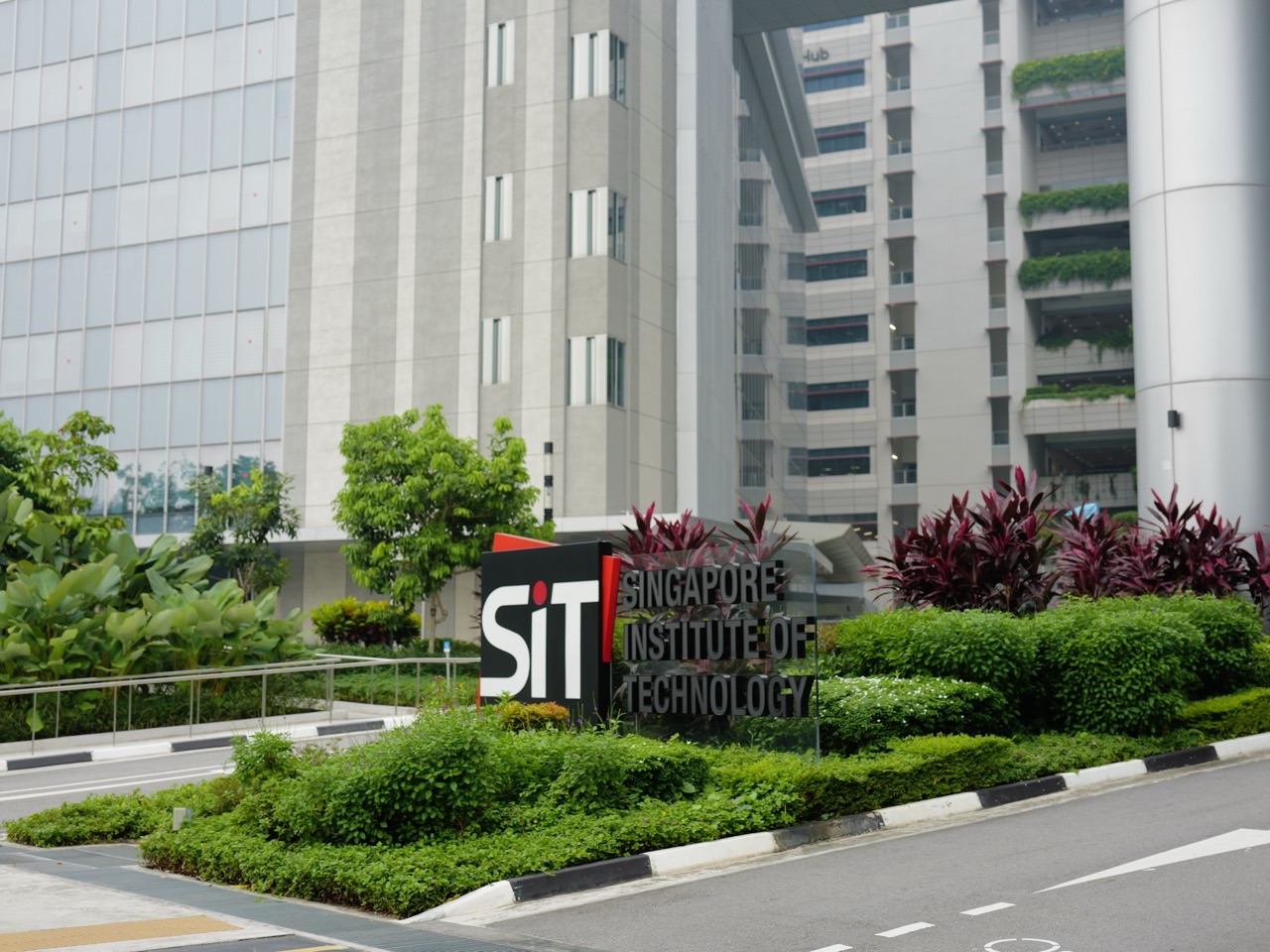
Education in Punggol now sits beside an unusually visible experiment in how learning, work and urban life can meet. The Singapore Institute of Technology’s Punggol Campus and Punggol Digital District place higher education, industry, technology and community infrastructure in the same part of the town where today’s Primary and Secondary students are growing up.
For a Punggol parent, the useful question is not whether every child should become a software engineer or study at SIT. It is what kind of education remains valuable when children can see advanced technology, applied learning and new forms of work developing close to home. The answer begins with strong school foundations—language, mathematics, science, attention, judgment and the ability to learn independently—then extends into the ability to apply knowledge to unfamiliar problems.
This article is a family interpretation layer, not a duplicate district guide. For current district facts and development context, use JTC’s Punggol Digital District information and eduKatePunggol’s existing local owners, including 28,000 Jobs Closer to Home, School → SIT → Industry and Punggol 2036.
What is different about learning beside an applied university and digital district?
JTC describes Punggol Digital District as a district that brings business, academia and the community together, with SIT integrated into the area. JTC’s current district information describes a 50-hectare development planned around approximately 28,000 jobs and 12,000 students. SIT’s Punggol Campus was officially opened in 2025, and the public description of the campus emphasizes applied learning and industry collaboration.
For a school-age child, those numbers are not a curriculum. They are context. The educational significance is that abstract ideas—data, engineering, design, cybersecurity, energy, transport, communication, automation, human behaviour—are no longer only distant topics in a textbook or news article. They are part of a changing local environment that families can observe and discuss.
Do not answer the future by teaching fashionable tools too early
When technology changes quickly, adults are tempted to respond with whichever tool appears newest: a coding course, an AI application, a robotics kit, a software certificate. These can be useful when they fit the learner, but they should not replace foundational capability.
A child who can code but cannot read a difficult explanation is limited. A teenager who can use an AI tool but cannot judge whether its answer is credible is vulnerable. A student who knows software commands but lacks mathematical reasoning will struggle when the interface changes. The durable layer sits underneath the current tool.
| Visible future skill | Durable school foundation underneath |
|---|---|
| AI use | Reading, questioning, source judgment and domain knowledge |
| Coding | Logic, decomposition, mathematical thinking and debugging habits |
| Data work | Numeracy, proportion, graphs, statistics and interpretation |
| Engineering | Mathematics, Science, modelling, measurement and persistence |
| Design | Observation, communication, iteration and understanding users |
| Team problem-solving | Language, listening, explanation, responsibility and feedback |
English remains infrastructure
Future-facing education still depends on language. Students must read instructions, understand unfamiliar concepts, compare sources, explain decisions, write reports, ask precise questions and collaborate with other people. As information becomes more abundant, the ability to decide what a text means and whether it deserves trust becomes more important.
That is why English should not be reduced to examination technique alone. Examination performance matters, but the deeper capability is to move meaning accurately between reading, thought, speech and writing. Families who need the subject route can use English Tuition at eduKatePunggol.
Mathematics remains a language for systems
A digital district makes technology visible, but technology itself depends on quantitative structure. Rates, proportions, graphs, coordinates, probability, optimization, measurement and algebra appear across engineering, computing, finance, logistics and data analysis.
The educational mistake is to tell children that mathematics matters only because a future employer might need it. Mathematics also teaches disciplined representation: how to turn a messy situation into quantities, relationships and constraints. That habit transfers far beyond the examination paper. The local subject route is Mathematics Tuition at eduKatePunggol.
Science teaches how claims meet evidence
Science education gives children more than facts about systems. It teaches a relationship between claim and evidence. What do we observe? What changes? What must be controlled? What explanation fits the evidence? What would make us revise the explanation?
Those habits matter in a technology-rich environment because novelty can make claims sound impressive before they have been examined. Scientific thinking gives the learner a disciplined way to ask what is actually known. The local route is Science Tuition at eduKatePunggol.
Primary school: protect breadth before narrowing toward careers
A Primary student does not need a career plan because a digital district exists nearby. Childhood education should remain broad. Reading widely, building number sense, observing nature, making things, drawing, playing, speaking clearly, solving problems and learning to work with others are not distractions from the future. They are how future capability is built.
Parents can use the district as a source of questions rather than a source of pressure. Why do buildings need sensors? How does a lift know where to stop? How does a map app estimate travel time? Where does electricity come from? Why do offices use access systems? What information does a camera capture? Who decides whether a technology is fair?
Questions preserve the child’s agency. The Primary Pathway remains the correct academic route; local technology context can widen understanding around it.
Secondary school: begin connecting subjects without collapsing them into one “STEM” label
Secondary students can make stronger connections across subjects. A discussion about autonomous systems can involve Mathematics, Physics, Computing, English, ethics and public policy. A discussion about smart buildings can involve energy, sensors, data, materials and human behaviour.
But interdisciplinary learning works best when the disciplines are themselves strong. Integration should not become an excuse for vague projects with shallow content. The student needs enough Mathematics to reason quantitatively, enough Science to understand mechanisms, and enough language to read and explain accurately.
The Secondary Pathway provides the wider route through subject choice, Full SBB and the later post-secondary transition.
Applied learning means knowledge survives contact with reality
Applied learning is sometimes misunderstood as making education less academic. It is often the opposite. Reality is less tidy than a textbook question. Data is incomplete. Constraints compete. Instructions are ambiguous. People disagree. Materials behave imperfectly. A learner must know enough to adapt rather than merely reproduce a procedure.
This is a useful standard for school learning too. After a method has been taught, can the student recognise when to use it? Can they explain why it works? Can they handle a variation? Can they transfer the underlying idea to a new context? If not, the knowledge may still be trapped inside the original lesson.
The district can make career conversations more concrete without making them premature
Children often hear broad career labels—engineer, programmer, designer, scientist, entrepreneur—without understanding what people in those roles actually do. A nearby district can make the conversation more concrete because families encounter real organisations, buildings, systems and university-industry activity in the same town.
The parent does not need to predict the child’s future occupation. A better question is: “What kinds of problems seem interesting to you?” Some children enjoy building systems, some explaining ideas, some understanding people, some analysing patterns, some designing experiences, and some working with living systems. Interests can change; the early goal is noticing, not committing.
AI literacy should begin with judgment before automation
Students growing up beside a digital district will encounter artificial intelligence as ordinary infrastructure rather than exotic technology. Educationally, the first question is not how many AI tools a child can use. It is whether the child understands that generated output must be interpreted and checked.
A useful AI habit has four parts: state the problem clearly, inspect the answer, verify important claims, and remain responsible for the final decision. Younger students can learn the principle without needing unrestricted access to every tool. Older students can practise comparing an AI answer with a textbook, official source or their own reasoning.
The durable skill is epistemic responsibility: knowing that fluent output is not the same as true output, and that convenience does not transfer responsibility away from the user.
Digital capability includes knowing when not to use a digital tool
Technology is valuable when it reduces friction, reveals information, supports creation or solves a genuine problem. It is less valuable when it replaces thinking the student still needs to learn. A calculator can be appropriate after number sense exists. An AI writing assistant can be useful after the learner can judge language and argument. A simulation can deepen understanding after the student knows what the model represents.
This gives parents a better question than “Is technology good or bad?” Ask: “Which cognitive work is the tool doing, and does my child still need to learn that work?” Sometimes the answer is yes; sometimes no. Good digital education depends on that distinction.
Future capability includes human capabilities that technology cannot simply supply
- Attention: the ability to stay with a difficult problem long enough to understand it.
- Judgment: choosing between competing explanations, sources and actions.
- Communication: making meaning clear to another person.
- Responsibility: owning the consequences of decisions and work.
- Collaboration: coordinating with people who know different things.
- Curiosity: noticing that a question exists before anyone assigns it.
- Repair: using error as information and trying again intelligently.
These capabilities are not soft decorations around “real” technical skills. They determine whether technical knowledge can be used safely and effectively.
A parent can use the district without turning the family into a career programme
Walk through the area and notice. Read public information. Ask what a building appears designed to do. Discuss why a university and businesses might benefit from being near one another. Follow one question home. Use the Growing Up Beside an AI District article for the deeper local conversation.
The educational value comes from connecting observation to knowledge. A child sees something, asks what it is, learns enough to explain it, and then notices the world differently on the next visit. That is a much stronger learning loop than simply enrolling in a programme because its title sounds futuristic.
Tuition has a limited but useful role in future readiness
Tuition cannot manufacture curiosity, and it should not attempt to predict the labour market for a ten-year-old. It can help when a weak foundation prevents the learner from accessing later opportunities. A child who cannot read confidently, manipulate basic mathematics or explain scientific ideas may need focused repair before broader applied learning becomes rewarding.
The correct sequence is diagnose, repair, practise, transfer and reduce support. Families can start at Tuition at eduKatePunggol rather than choosing classes by trend.
Do not mistake exposure for capability
Visiting a technology event, attending a coding workshop or using an AI tool gives exposure. Exposure is useful because it broadens what a child knows exists. Capability requires more: sustained practice, feedback, increasing independence and transfer into new situations.
Parents can ask after any enrichment experience: What can the child now do without the instructor? What idea can they explain? What problem can they solve? What did they build or revise? What question do they now want to pursue? If nothing survives beyond the event, the family bought an experience rather than a durable skill.
The future-facing Punggol education ladder
| Stage | Priority | Useful local connection |
|---|---|---|
| Early Primary | Reading, number, observation, play, routines | Town as a source of questions |
| Middle Primary | Background knowledge, explanation, problem-solving | Library, maps, public systems, simple making |
| Upper Primary | Independent practice, PSLE readiness, broad reading | Connect school concepts to real examples |
| Lower Secondary | Subject foundations, self-management, source judgment | Observe how disciplines appear in the district |
| Upper Secondary | Depth, transfer, pathway decisions, applied projects | Explore fields without forcing a career decision |
| Post-secondary | Specialisation, work exposure, higher-order judgment | Engage directly with tertiary and industry pathways |
Frequently asked questions
Should Punggol children learn coding because Punggol Digital District is nearby?
Coding can be valuable, but proximity alone is not a sufficient reason. The child should first have strong age-appropriate foundations and genuine interest. Coding works best as one way to develop logic, creation and problem-solving, not as a compulsory badge of future readiness.
Does AI make English or Mathematics less important?
No. AI can generate language and perform calculations, but users still need comprehension, quantitative judgment and domain knowledge to frame problems, inspect outputs and detect errors. Tools can change which tasks are automated without removing the need to understand what good work looks like.
Should Primary students start thinking about careers?
They can learn that different kinds of work exist and notice what problems interest them, but there is no need to narrow childhood education around one predicted occupation. Broad foundations keep future options open.
What is the most useful future skill?
No single skill is sufficient. A durable combination is strong literacy and numeracy, enough knowledge to reason within a domain, the ability to learn independently, good judgment, and the habit of repairing errors rather than avoiding them.
How can parents use Punggol Digital District educationally without spending money?
Use observation and questions. Read official material together, discuss visible systems, connect a school topic to something local, visit public areas, and follow one interesting question through books or trusted sources. The educational mechanism is attention plus inquiry, not consumption.
Build a capability bridge from school foundations to future systems
Living near SIT and Punggol Digital District can make technology, higher education and new forms of work more visible. The educational mistake would be to respond by teaching children a list of current tools and calling that future readiness.
A stronger bridge begins with school foundations and asks how those foundations become useful inside more complex systems.
| Foundation | Future-facing capability |
|---|---|
| English | Read specifications, explain decisions, evaluate claims, communicate across teams |
| Mathematics | Model quantities, compare trade-offs, reason with data and uncertainty |
| Science | Understand mechanisms, test evidence, separate observation from inference |
| Digital literacy | Use tools without surrendering verification or privacy |
| World knowledge | Place one local technology inside a larger social, economic and institutional system |
Do not predict one job; build transferable capability
A Primary student does not need a narrow career track because a new district exists nearby. The child benefits more from seeing that adult work combines domain knowledge, communication, quantitative reasoning, technology and responsibility.
Specific job titles can change faster than these underlying capabilities.
Use public official material as a reading-and-verification exercise
Families can read a public description of SIT or Punggol Digital District and ask: what is stated as current, what is planned, what purpose is claimed, and what remains to be verified from operation?
This teaches children to read future-facing material without treating every projection as completed fact.
Use systems questions instead of gadget questions
Instead of asking only “What technology is used here?”, ask what problem the system is trying to solve, what information it needs, what happens when it fails, who maintains it and which human decisions remain.
The learner begins to see technology as part of a larger operating system rather than as an impressive object.
AI literacy should include verification and boundaries
Children can learn that AI output is useful for drafting, explanation and exploration while still requiring checks for facts, calculations, dates, sources and privacy. The more consequential the decision, the stronger the verification standard should be.
Future capability is not the ability to accept automated output quickly. It is the ability to use powerful tools while keeping human judgement active.
Use one local question to connect school knowledge to a future system
A Secondary student might ask how a district reduces transfer friction, how data could support building operations, how energy use is measured or how institutions change local movement. The student can then identify which school tools are needed: graphs, ratios, explanatory writing, scientific models or source evaluation.
The local environment supplies the question; subject owners supply the depth.
The return test is a child who can learn a new system
Future readiness should be visible when the student can meet an unfamiliar tool or institution, ask what it does, learn the necessary concepts, verify the explanation and adapt when the system changes.
That capability is more durable than memorising the technology visible in Punggol today.
The quiet opportunity
The most important educational advantage of growing up near SIT and Punggol Digital District may not be access to a particular technology. It may be that children can see learning, work, infrastructure and community sitting close enough together to ask better questions about how knowledge is used.
Families do not need to predict the exact jobs of 2036. They need to build children who can read deeply, reason quantitatively, understand evidence, learn new tools without surrendering judgment, communicate with other people and adapt when the problem changes. Those capabilities remain useful even when today’s fashionable technologies become ordinary or disappear.
That is the local promise of education in Punggol: not a race to make childhood look futuristic, but a chance to connect strong foundations with a town where the future is becoming visible enough to study.
Explore the Punggol education and town-life library for related guides.


