
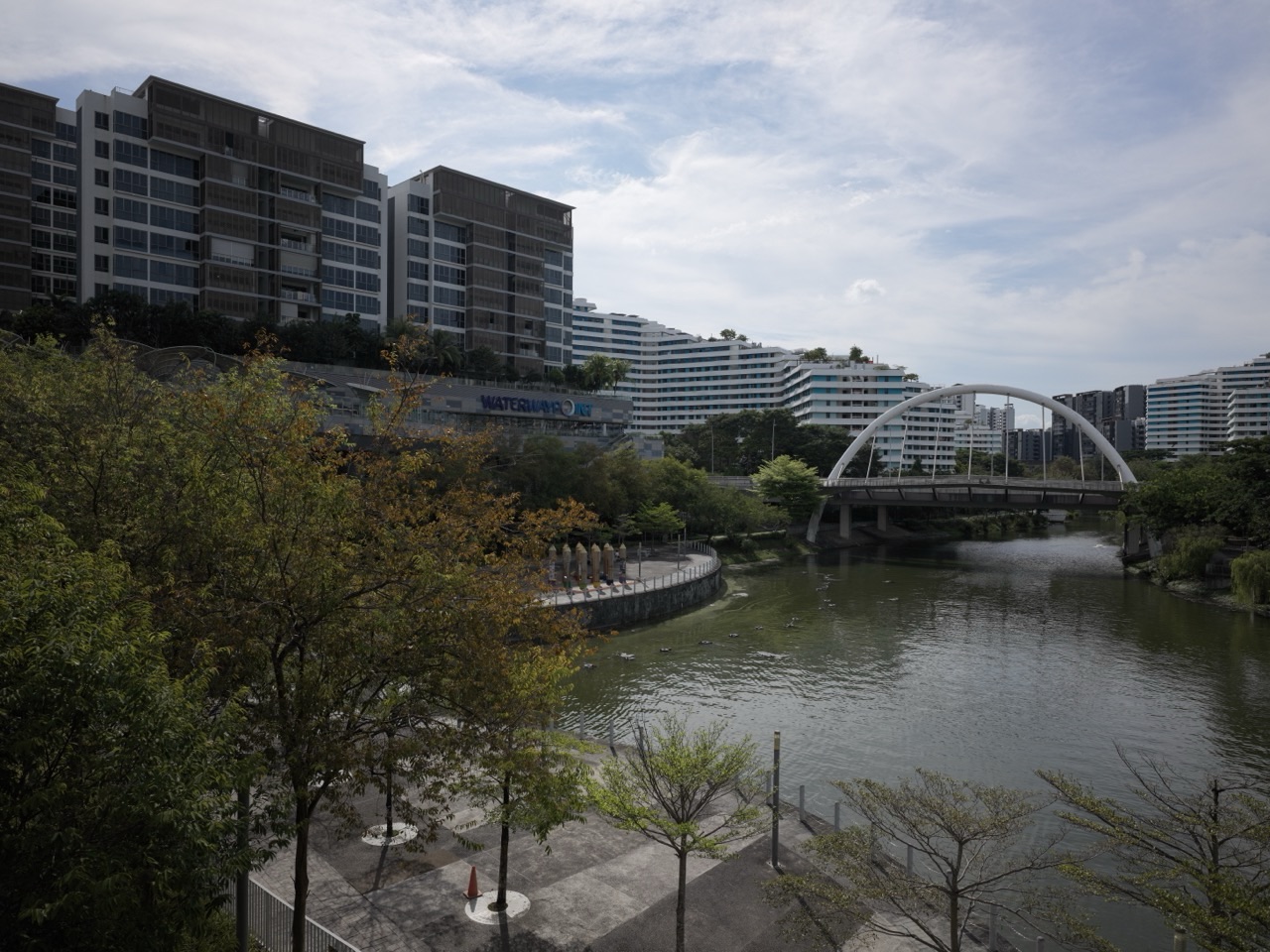
Environmental Science is one of the clearest places where advanced scientific thinking becomes real.
A waterway is not only Biology. It is also Chemistry, Physics, Geography, engineering and data. A hot pavement is not only heat transfer. It is also material science, urban design, weather and human comfort. Air quality is not only Chemistry. It is also particles, transport, health, measurement and policy.
Punggol gives students a rich environment in which these connections are visible.
This article continues the Journey of Learning Advanced Science in Punggol by turning the town itself into a scientific system.
Water: More Than Something That Flows
Water questions can begin simply: where does rain go? Then they become more advanced.
- How quickly does water infiltrate different surfaces?
- How does runoff change with surface type?
- What affects water temperature?
- How do dissolved substances affect water quality?
- How do plants and floating wetlands influence habitats?
- How do drainage and storage reduce flood risk?
The same local observation can therefore connect fluid movement, chemistry, ecology and engineering.
See Floating Wetland Science — Water Quality, Habitats and Bioengineering.
Heat: The Urban Environment as a Thermal System
Different surfaces absorb, store and release thermal energy differently. Shade, colour, material, wind and water all affect local temperature.
Students can compare shaded and exposed surfaces, building walls, vegetation and open paved areas. The advanced question is not merely “which is hotter?” but “what physical properties and energy transfers explain the difference?”
Air: Chemistry You Can Measure
Air pollution connects atmospheric Chemistry with particles, gases, health and weather.
Students can learn the meaning of PM2.5, ozone, nitrogen oxides and sulfur dioxide, then ask how monitoring turns invisible substances into data.
See Air Pollution and Atmospheric Chemistry for the deeper chemistry route.
Biodiversity: Biology at System Scale
A park or waterway can be studied as a habitat network. Students can observe plant types, insect activity, shade, moisture and human disturbance.
The advanced skill is not merely naming organisms. It is understanding interactions: resources, competition, adaptation, food relationships and environmental conditions.
Urban Science Is Interdisciplinary
| Urban question | Scientific lenses |
| Why is one area hotter? | heat transfer, materials, radiation, vegetation, airflow |
| Why does water collect here? | topography, permeability, drainage, rainfall, flow |
| Why are some organisms found here? | habitat, resources, temperature, moisture, disturbance |
| Why is air quality changing? | chemistry, particles, wind, traffic, weather |
Observation Must Become Evidence
Environmental Science is vulnerable to casual conclusions because many variables change at once.
If one park feels cooler than another, is it because of shade, time of day, wind, surface material or recent rain?
Advanced students learn to control what they can, record context and avoid claiming more than the data support.
A Simple Punggol Field Inquiry
- Choose one measurable question.
- Define the locations and conditions.
- Use the same measurement method each time.
- Record units and contextual notes.
- Repeat where useful.
- Graph the results.
- Identify possible confounding variables.
- Write a conclusion proportional to the evidence.
This structure turns a casual outing into genuine scientific practice.
Why Environmental Science Is Future-Relevant
Cities will continue to face questions about energy, water, climate, biodiversity, transport, waste and human comfort.
Students do not all need to become environmental scientists. But understanding how evidence, systems and trade-offs interact will be useful across many future fields.
Punggol and the Wider eduKate Ecosystem
Environmental Science naturally connects Science with Mathematics, English, Geography, data, systems thinking and future capability.
That is exactly why SIT and Punggol Digital District are useful local reference points: real urban systems need many disciplines working together.
Continue the Journey
- Previous: Systems Thinking — Feedback, Equilibrium, Cycles and Interdependence.
- Next: Engineering and Technology — Sensors, Electronics, Computing and Design.
- Earlier: Experiments, Data, Graphs and Practical Reasoning.
- Return to the Punggol Science Tuition hub.
The local environment becomes much more interesting when students learn to see it scientifically. Punggol is not only where they live. It can also become where they investigate.


