
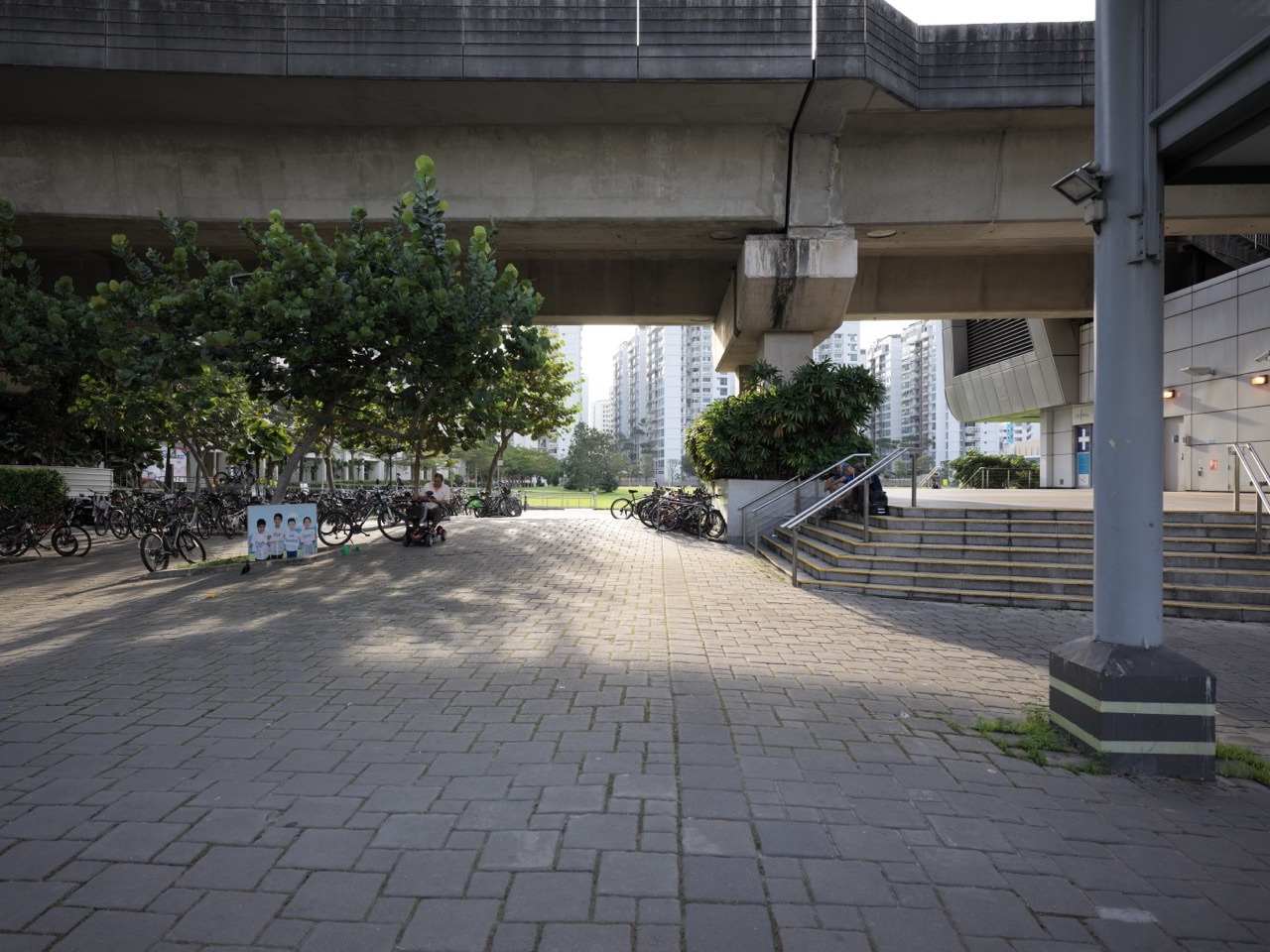
Every school day in Punggol contains Physics.
A student walks to a bus stop, cycles along a path, rides the LRT, enters Punggol MRT station, accelerates, slows, turns, climbs an escalator and feels moving air. The journey may feel ordinary, but scientifically it is full of forces, energy, motion, friction and systems.
This article continues the Journey of Learning Advanced Science in Punggol by using transport as a bridge between textbook Science and the town students move through every day.
Motion Begins With a Reference Point
To say that something is moving, students need a reference point. A passenger may be stationary relative to the train seat but moving relative to the ground.
That simple idea becomes increasingly important in Physics. Motion depends on what is being compared.
Speed Is a Rate
Speed connects distance and time. That makes every journey a possible rate problem.
Students can compare walking, cycling and rail travel, but should be careful: average speed depends on total distance and total time, including stops if the time interval includes them.
This connects directly to the Mathematics layer of Advanced Science: ratios, units and rates.
Acceleration Is About Change
A train leaving a station can increase speed. Approaching the next station, it decreases speed. Around bends, velocity can change even when speed is similar because direction changes.
Students often think acceleration means “going fast”. Advanced understanding means recognising that acceleration describes a change in velocity.
Forces Explain the Change
When a vehicle accelerates, forces are unbalanced. When it travels at steady speed on a level path, driving forces and resistive forces may balance overall.
Cycling makes this easy to feel. Pedalling provides a driving effect. Air resistance and friction oppose motion. Braking changes the force balance dramatically.
Friction Is Both Useful and Costly
Students sometimes learn friction only as something that “slows things down”. Transport shows why that is incomplete.
- Tyres need friction with the ground to accelerate, turn and brake.
- Brakes use friction to reduce motion.
- Bearings are designed to reduce unwanted friction.
- Air resistance increases energy demand at higher speeds.
- Wet or contaminated surfaces can change available grip.
The same interaction can be helpful in one place and wasteful in another.
Energy Moves Through the Transport System
A moving vehicle has kinetic energy. Climbing changes gravitational potential energy. Braking reduces kinetic energy. Electrical systems provide power to trains and station equipment.
Advanced students can ask where the energy comes from, where it goes and how efficiently the transport system converts and transfers it.
Stations Are Systems, Not Just Buildings
A station includes more than trains. It has lighting, ventilation, escalators, lifts, signalling, communications, power, safety systems, passenger flow and information.
That makes Punggol MRT and LRT useful examples of systems thinking.
| Station subsystem | Science or engineering connection |
| Escalator | forces, power, mechanical systems, control |
| Lighting | electricity, optics, energy efficiency |
| Ventilation | fluid flow, thermal comfort, energy |
| Train movement | forces, acceleration, braking, power |
| Passenger flow | measurement, rate, systems design |
| Signalling | electronics, communication, sensing, control |
Cycling Adds Human Biology
Cycling also connects Physics to Biology. Muscles convert chemical energy from food into mechanical work and heat. Breathing and circulation support increasing energy demand. Body temperature regulation becomes more important during exercise.
One short journey can therefore connect forces, energy and human physiology.
How Students Can Investigate Transport Scientifically
- Choose one journey segment.
- Record distance using an appropriate map or known route length.
- Measure travel time safely.
- Calculate average speed.
- Compare several trips.
- Note stops, weather and traffic conditions.
- Graph travel time or speed across repeated journeys.
- Explain why the values vary.
The purpose is not to optimise the family commute. It is to learn how real-world data differ from ideal textbook questions.
Transport Teaches About Constraints
Real transport design is never about maximum speed alone. Engineers also consider safety, comfort, energy use, capacity, braking distance, noise, cost and reliability.
This is where Science begins to meet engineering decision-making.
From Punggol Transport to Future Capability
Students growing up in Punggol can see that transport is a network of physical infrastructure and digital control. Sensors, communications and software increasingly sit on top of mechanical systems.
That connection leads naturally to Smart Town Science — Sensors, Buildings, Data and Energy.
How eduKate Uses Everyday Motion
A tutor can take a familiar transport situation and progressively raise the level of abstraction.
- Primary: compare faster and slower.
- Lower Secondary: calculate speed and describe forces.
- Upper Secondary: analyse energy, acceleration and graphs.
- Advanced extension: model system efficiency, sensing and control.
The physical world stays the same. The student’s model becomes more powerful.
Continue the Journey
- Previous: Urban Heat and Materials.
- Next: Smart Town Science — Sensors, Buildings, Data and Energy.
- Earlier: Engineering and Technology — Sensors, Electronics, Computing and Design.
- Return to the Punggol Science Tuition hub.
The next time a student travels through Punggol, the journey can be read as more than transport. It is a moving lesson in rate, force, energy, control and systems.


