
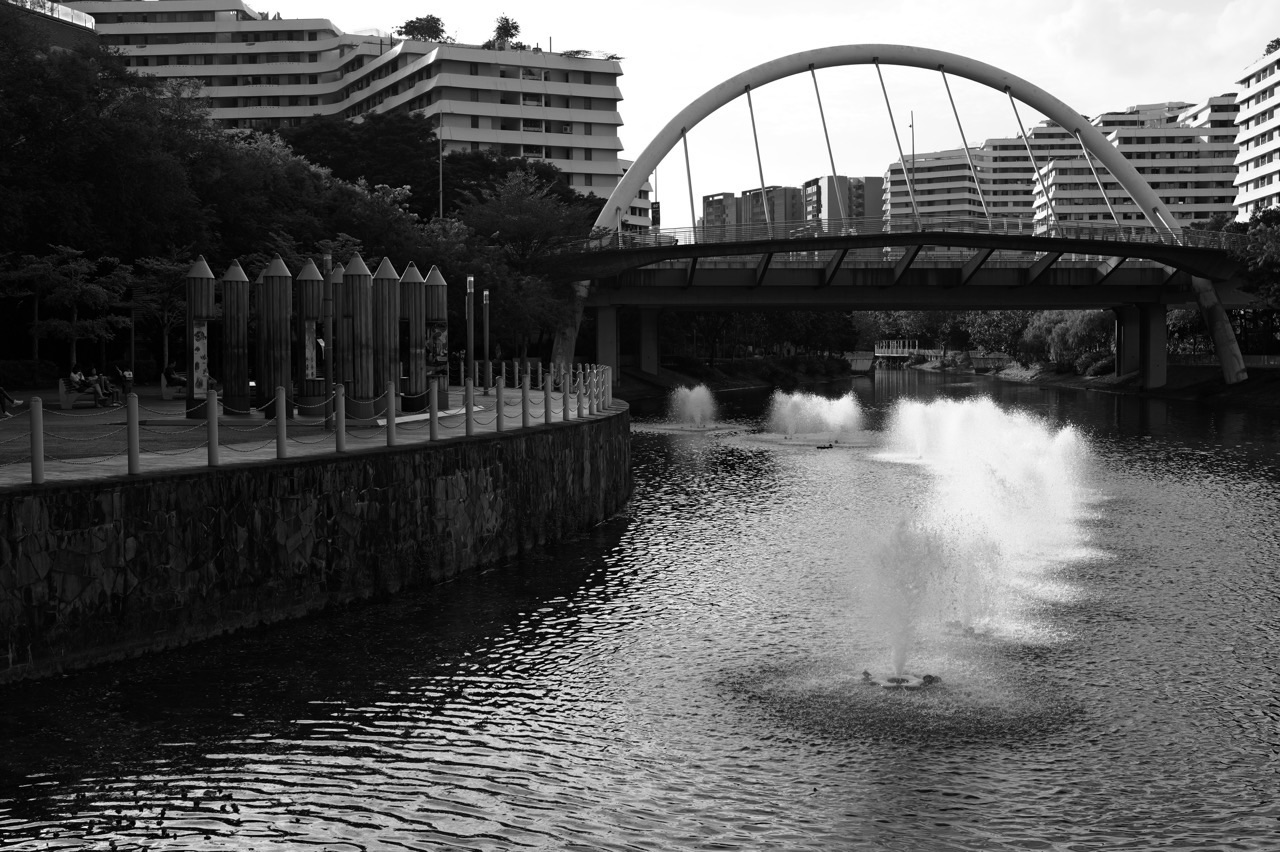
Punggol is full of light.
Sunlight reflects from water. Glass facades brighten and darken as the viewing angle changes. Shadows stretch across paths. Sheltered walkways create sharp changes in illuminance. Water surfaces distort what students see beneath them.
These everyday effects give students a natural route into optics.
This article continues the Journey of Learning Advanced Science in Punggol by turning familiar scenes into questions about reflection, refraction, shadows, intensity and measurement.
For the wider local idea, see Punggol as a Classroom and Punggol Science Inquiry.
Reflection Is Everywhere
When light reaches a surface, some may be reflected. Smooth surfaces can produce clearer reflections, while rough surfaces scatter light in many directions.
A calm water surface can behave almost like a mirror. Ripples disturb the surface orientation and break the reflected image into changing patches.
This is an excellent example of how a simple physical law can produce a complicated visual result once the surface becomes irregular.
The Law of Reflection Is Simple
At a reflecting surface, the angle of incidence equals the angle of reflection when both are measured from the normal.
The rule is simple. The challenge is choosing the correct normal and drawing the ray paths accurately.
Advanced students should be able to move between the real scene, the ray diagram and the written explanation.
Refraction Changes the Path of Light
Light changes direction when it crosses between media in which its speed differs.
That is why objects seen through water can appear displaced. It is also why lenses work.
Students can notice refraction at the edge of a water feature or through glass without needing specialised equipment.
Shadows Reveal Geometry
A shadow forms when an opaque object blocks light.
The position and length of the shadow depend on the geometry of the light source, object and receiving surface.
In outdoor spaces, the Sun’s changing position means shadow length and direction change across the day.
That creates a bridge from optics into measurement, angles and even Earth-Sun geometry.
Illuminance Can Be Measured
A place may look bright or dim, but illuminance allows light level to be measured more systematically.
Students can compare an open path, a covered walkway and an indoor space. The same measurement principles still apply: consistent sensor orientation, units, repeated readings and awareness of changing conditions.
For a deeper extension, see Light Intensity and Distance — Inverse Square, Illuminance, Angle and Measurement.
Distance Matters
For a point-like source in open space, light intensity can decrease strongly with distance as energy spreads over a larger area.
Real urban settings are more complicated because walls, windows, multiple sources and reflections alter the pattern.
This is useful scientifically because students learn the difference between an ideal model and a real environment.
Glass Creates Interesting Questions
- Why can glass look reflective from one angle but transparent from another?
- Why do indoor lights become more visible on a window at night?
- Why can glare make a screen difficult to read?
- How do tinted or coated windows change transmitted light?
These questions link basic optics to materials and building design.
A Simple Punggol Light Investigation
- Choose three locations with different exposure.
- Measure illuminance at the same approximate height.
- Keep sensor direction consistent.
- Record weather and time.
- Repeat readings.
- Compare the pattern.
- Explain which features of the environment may account for the differences.
Optics Links to Biology
The eye is itself an optical system. Light is focused onto the retina, where sensory cells convert the signal into nerve activity.
That means one local observation can connect Physics to human Biology.
Optics Links to Engineering
Lighting design, cameras, optical sensors, displays, communications and building facades all depend on controlling light.
This creates a natural bridge to Smart Town Science.
How eduKate Can Use Local Light
A tutor can begin with a Punggol photo showing water, glass or shadow and ask the student to explain what light is doing.
The lesson can then move from observation to ray diagrams, measurement and calculation.
Continue the Journey
- Next: Weather and Atmosphere — Rain, Humidity, Clouds, Heat and Pressure.
- Then: Electricity and Energy — Power, Buildings, Transport and Efficiency.
- Then: Water Chemistry — pH, Conductivity, Dissolved Substances and Treatment.
- Return to the Punggol Science Tuition hub.
Once students understand optics, the reflections and shadows around Punggol stop being visual decoration. They become evidence of light travelling, interacting and changing direction.
Browse more learning guides
Use the Punggol Science article index to find another topic, or return to Learning Routes to choose a subject or school-year guide.


