
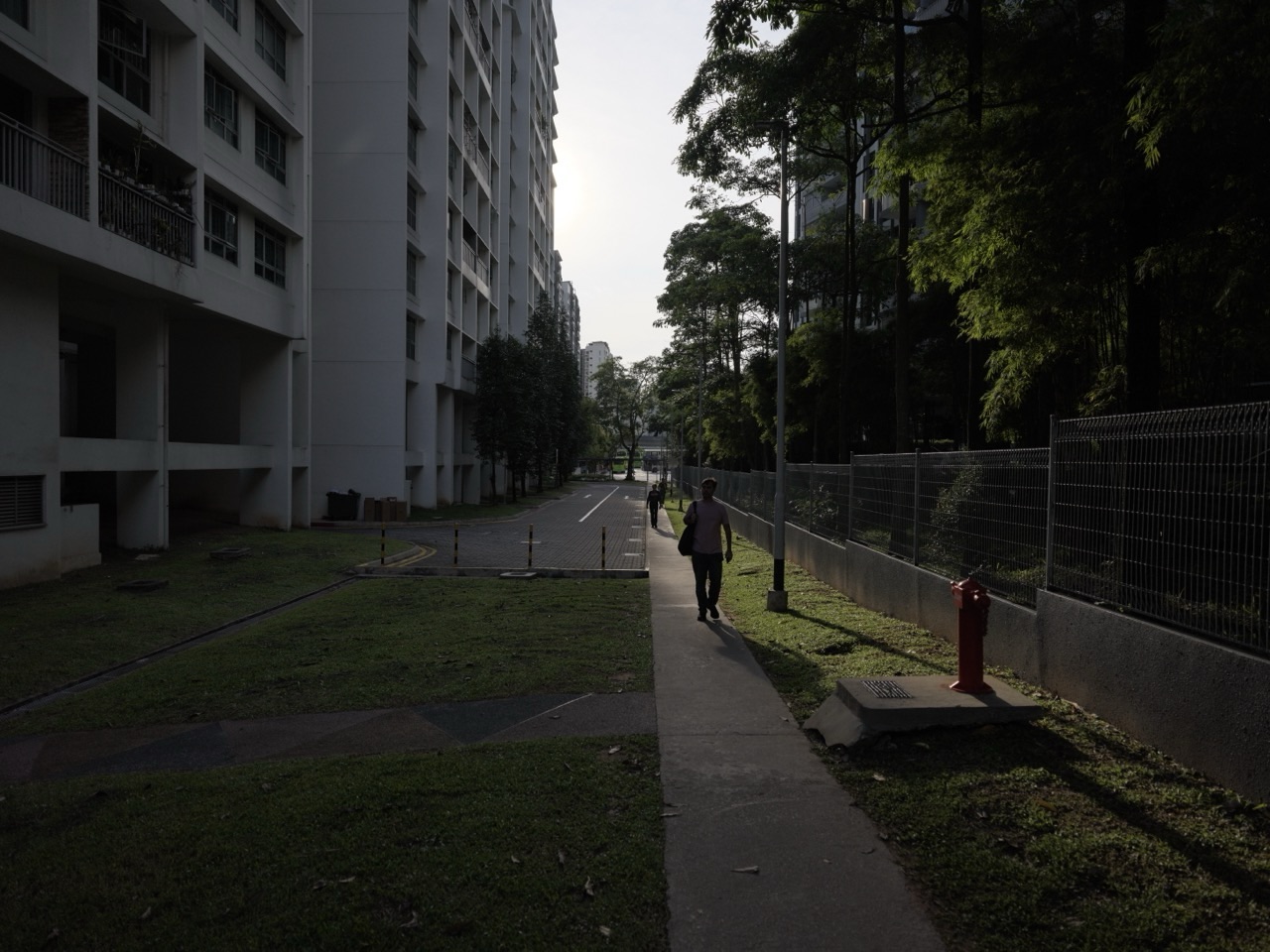
Punggol science inquiry becomes powerful when a child learns that Science is not confined to a worksheet or laboratory bench. The family’s actual environment contains questions everywhere: sunlight and shade, water and drainage, plants, materials, temperature, movement, sound, public infrastructure and the changing patterns of a neighbourhood. The educational value comes not from turning every walk into a lesson, but from learning how to move from observation to a careful question and from a question to evidence.
This is a local implementation article, not a duplicate Science syllabus. The deeper concepts belong to the Science subject owners. eduKatePunggol’s job is to show how a family can use the town it already lives in to practise science process skills: observe, compare, classify, measure where appropriate, identify variables, record evidence, distinguish observation from inference, explain cautiously and communicate what remains uncertain.
For parents looking for Science learning in Punggol, the key principle is simple: start with something real enough to notice, narrow the question until evidence can answer it, and finish with a report or explanation the child can defend. The Science route at eduKatePunggol handles subject support; the Complete Punggol Guide provides the wider town context.
Science begins before the experiment
Children are often taught to think of Science as an experiment with equipment. But inquiry begins earlier. Someone notices a pattern, asks what might explain it, decides what information would help, and chooses how to collect or compare that information. An experiment is one possible method, not the definition of Science.
A Punggol family can therefore practise scientific thinking safely through observation, public information, simple home measurements and comparisons. The objective is not to produce publishable research. It is to train habits of evidence that later transfer to school Science and to ordinary reasoning.
The seven-step family inquiry loop
- Notice. Describe something visible without explaining it yet.
- Question. Turn the observation into one answerable question.
- Predict. State what you expect and why.
- Plan. Decide what evidence would be relevant and how to collect it safely.
- Record. Keep observations, counts, measurements or source notes without changing them to fit the prediction.
- Explain. Connect the evidence to a scientific idea with appropriate caution.
- Report and revise. State limitations and what you would check next.
This loop matters more than the sophistication of the project. A simple observation carried through carefully can teach more scientific discipline than an elaborate activity in which an adult makes every decision.
Observation is not the same as explanation
Suppose a child notices that one paved surface dries before another after rain. “This surface is dry while that one is still wet” is an observation. “This happened because the first surface receives more sunlight” is an explanation. The explanation may be plausible, but it is not yet established by the observation alone.
This distinction is one of the most valuable habits a parent can encourage. Ask: “What did you actually see?” and then, separately, “What do you think might explain it?” The gap between those two sentences is where scientific reasoning begins.
Choose questions that a family can answer safely
Good home and neighbourhood inquiry questions are modest. They do not require a child to enter restricted areas, touch unknown substances, approach wildlife, interfere with public infrastructure or collect samples from unsafe locations. Observation from ordinary public or home spaces is enough.
Useful categories include:
- how shade changes surface temperature or drying time;
- how plant leaves differ in shape, texture or apparent exposure in two ordinary locations;
- how shadows change position or length across different times of day;
- how different household materials respond to the same gentle force or absorb a small measured amount of water;
- how travel-time observations vary across repeated journeys;
- how a public map, sign or information panel represents a water, transport or ecological system;
- how sound levels seem to differ between two locations, recorded descriptively rather than treated as a professional noise survey.
The project should stay within ordinary family activity and adult supervision. If an idea requires specialist equipment, hazardous materials, electrical work, climbing, traffic exposure or contact with wildlife, choose another question.
Use Punggol as context, not as a claim
A local Science project should not invent facts about Punggol. The town provides the setting in which a learner can observe, ask and verify. If the child wants to understand the waterways and reservoirs, begin with trustworthy public information and the local orientation in Punggol and Serangoon Reservoirs. Then ask a narrow learning question that does not pretend a family observation can establish an entire environmental system.
For example, a child can study how a map communicates connections among water bodies, paths and built areas. That is different from making unsupported claims about water quality or ecological change. Scientific literacy includes knowing what the available evidence is not strong enough to conclude.
A first inquiry: sunlight, shade and surface change
A simple family inquiry can compare two safe, accessible surfaces—one mostly shaded and one more exposed—without touching anything hazardous. The child records the time, weather description, surface type and a repeated observation such as apparent wetness after rain or surface warmth measured with a suitable household thermometer under adult supervision.
The useful learning is not “sun makes things hot”, which the child may already know. It is the discipline of holding the comparison together: same observation method, similar timing, repeated checks, clear labels and a conclusion that matches the evidence. If conditions change between observations, record that rather than hiding it.
A second inquiry: shadow as evidence of changing geometry
Choose one safe fixed object visible from home or an ordinary public area. At several times, record the direction and approximate length of the shadow using the same reference method. The child can sketch rather than measure precisely if equipment is unavailable.
Then ask what changed and what remained fixed. The object stayed in place. The shadow changed. The learner can connect the pattern to the changing apparent position of the Sun across the sky, while recognising that a few observations do not establish every astronomical detail. The project trains pattern recognition and careful language.
A third inquiry: materials at home
The home is often the simplest laboratory because conditions are easier to control. A child can compare how equal small drops of water behave on different safe household materials, how paper types bend under the same light load, or how identical objects move across different surfaces when pushed in a consistent way.
The parent’s role is to keep the comparison fair enough for learning. Use equal amounts, the same observation interval and clear labels where possible. The child should predict before testing and report outcomes even when the prediction is wrong. A wrong prediction followed by honest evidence is successful Science.
Variables: teach them as decisions, not vocabulary
Students can memorise “independent variable”, “dependent variable” and “controlled variables” while still designing weak comparisons. A more useful route begins with ordinary questions: What are you changing? What are you observing or measuring? What else should stay as similar as possible?
Only then attach the formal vocabulary. This keeps the terms connected to the actual decisions they name.
| Planning question | Scientific role |
|---|---|
| What will we deliberately change? | Independent variable |
| What outcome will we observe or measure? | Dependent variable |
| What should remain as similar as possible? | Controlled variables |
| What could still distort the result? | Limitations or uncontrolled influences |
Record before explaining
Children often rush to write the conclusion they expect. Reverse the sequence. First record the data or observation. Then describe the pattern. Only after that should the learner offer an explanation.
A simple table is often enough. Include date or time, condition, observation and a short note about anything unusual. Mathematics becomes useful here because measurement, tables, averages and graphs can help organise evidence. The local project can hand mathematical technique to Bukit Timah Tutor rather than duplicating a Mathematics lesson.
Science writing is also English
A child may understand the investigation but write an unclear report. Scientific writing needs precise subjects, accurate verbs, logical relationships and careful strength of claim. “This proves” is often too strong when the family has only a few observations. “In these observations, the shaded surface remained wet longer” is narrower and more defensible.
This is where Science and English meet. The local route can use Singapore English Tuition Centre for deeper work on explanation, evidence language and report structure when language becomes the limiting factor.
A report structure a child can reuse
- Question: What are we trying to find out?
- Prediction: What do we expect, and why?
- Method: What did we compare or observe?
- Evidence: What did we record?
- Pattern: What changed or stayed similar?
- Explanation: Which scientific idea could explain the pattern?
- Limitation: What else might have affected the result?
- Next check: What would we repeat or change next time?
This structure is deliberately reusable. The child can apply it to a home investigation, a school practical reflection, a public-information research task or an observation made during a family walk.
The parent should not rescue the conclusion
When the child’s explanation is weak, ask for the link rather than supplying it. “Which observation supports that?” “What changed?” “What scientific idea connects those two?” “Is there another explanation?” These questions make the reasoning visible.
If the child cannot answer, that is useful evidence. The next Science lesson now has a clear job. The family has discovered a bottleneck without turning the home activity into a second classroom lecture.
How to tell whether the inquiry is becoming more sophisticated
Improvement appears when the learner asks narrower questions, records before concluding, notices uncontrolled conditions, distinguishes observation from inference, uses units and labels more carefully, and makes claims that match the strength of the evidence. The project can become more complex later, but these habits matter first.
A Primary learner may begin with careful comparison. A Secondary learner can add repeated measurements, graphing, explicit variables, uncertainty and alternative explanations. The same inquiry loop can grow with the child.
A family walk can become background knowledge without becoming homework
Not every outing needs a clipboard. Sometimes the best educational move is a conversation: Why is this structure shaped that way? Where might the water go after rain? What evidence would we need before we could answer? Which part is observation and which part is our guess?
These questions teach epistemic restraint: the habit of wanting evidence before certainty. They also help a child see that Science is a way of interrogating the ordinary world rather than only a subject that appears on an examination paper.
Keep locality and subject depth separate
eduKatePunggol should not rewrite every chapter of Biology, Chemistry or Physics with “Punggol” inserted into the title. Locality matters when the town changes the observation, family route, access, context or learning task. The scientific mechanism itself should link to the appropriate subject library.
This division makes the ecosystem stronger. Punggol provides the lived context and the return task. The specialist subject owner provides the concept depth. The learner then comes back to the local environment and asks whether the concept helps explain something real.
Frequently asked questions
Does a family inquiry need special equipment?
No. Many useful inquiries require only observation, a notebook, a clock, simple household measuring tools or trustworthy public information. Equipment should serve the question, not become the purpose of the activity.
Should the child know the answer before starting?
No. A prediction is useful, but inquiry is not a performance in which the child must guess correctly. The evidence should be allowed to disagree with the prediction.
Can we use Punggol Waterway or parks for Science learning?
Yes, as ordinary public observation contexts, provided the activity is safe, respectful and does not involve entering restricted areas, disturbing wildlife or making unsupported environmental claims. A map-reading, observation or question-generation activity is often enough.
How is this different from doing more Science worksheets?
Worksheets can practise known formats. A local inquiry asks the learner to decide what matters, gather evidence, manage uncertainty and communicate a conclusion. Both can be useful, but they train different parts of scientific capability.
Punggol Science Outside the Worksheet: Observation → Question → Evidence → Explanation
The strongest local Science route is not “go outside and find Science.” It is more disciplined: begin with an ordinary observation, turn it into a question narrow enough to answer, gather evidence that can actually distinguish between explanations, and then write a conclusion no stronger than the evidence allows. That sequence is what turns a walk, a window view, a family errand or a safe home comparison into scientific learning rather than decoration.
This is the core job for the Punggol Science inquiry route. The town matters because the child is using a real environment with real variation. The Science remains Science because the learner still has to define variables, separate observation from inference, compare fairly, record honestly and test whether an explanation survives a changed context.
Start With the Observation the Child Can Defend
A learner should be able to point to the first sentence and say, “I actually saw or measured this.” That sentence might describe a shadow appearing longer at one time than another, two safe surfaces drying at different rates, leaves looking different in two ordinary locations, or water droplets behaving differently on two household materials. The observation should be ordinary enough that it does not require special access or risky behaviour.
The discipline begins when the parent refuses to let the explanation enter too early. “This shaded surface is still wet while the sunlit surface is dry” is observable. “The sun caused faster evaporation” is already an explanatory claim. The learner may ultimately support that explanation, but only after asking what else changed and what evidence would make the explanation stronger or weaker.
This separation is one of the most transferable Science habits a child can build. Examination questions often reward students who know what the data show and penalise answers that leap beyond the evidence. The local environment gives the family a safe place to practise that restraint before it appears under timed conditions.
Turn the Observation Into a Question Small Enough to Answer
Broad curiosity is useful, but broad questions produce weak investigations. “How does weather affect Punggol?” is too large for a family inquiry. “Does this shaded surface stay wet longer than a nearby more exposed surface when observed using the same method after rain?” is narrower. “Why are plants different?” is too broad. “Do leaves from two safe, ordinary observation points differ in visible size or orientation under different light exposure?” can at least be described and compared honestly.
The question should contain enough structure that the child knows what evidence to collect. A good question usually implies a comparison: one condition against another, one time against another, one material against another, one location against another, or one prediction against the observed result.
If the family cannot imagine what a useful table or observation record would look like, the question is probably still too vague.
The Family Should Decide What Counts as Evidence Before Collecting It
Children often collect whatever is easy to notice, then build a conclusion around it. Scientific thinking works better when the learner decides in advance what would count as evidence. If the question concerns drying time, the family needs a consistent way to judge or measure drying. If the question concerns shadow length, the same reference method should be used across observations. If the question concerns material behaviour, the comparison conditions should be defined before testing.
This does not need laboratory precision. It needs intellectual honesty. The child should know the difference between “we measured this,” “we estimated this,” “we noticed this once,” and “we saw the same pattern repeatedly.” Those categories change how strongly the conclusion can be written.
Parents can help by asking one quiet question before the activity starts: “What would make you change your mind?” If the learner cannot answer, the investigation may be searching only for confirmation rather than testing a claim.
A Safe Punggol Waterway Observation Route
The Waterway can be used as an observation context without turning the family into environmental researchers. The child can observe safe, public, visible features: light and shade, reflections, wind movement on vegetation, patterns in built surfaces, the relationship between paths and water, or how maps and signs represent the area. The child does not need to touch the water, enter restricted areas, disturb wildlife or make claims about water quality.
A useful route might begin with one question about reflection. The learner photographs or sketches how a visible object appears in water from safe public points, notes how viewing angle or surface disturbance seems to change the image, and connects the observation to reflection concepts already learned. The family then returns home and asks what was observed versus what was inferred.
Another route might use shadow geometry. A child chooses one safe fixed object visible from an ordinary public path, records the apparent direction or approximate length of its shadow at separated times using the same method, and then explains the change using prior knowledge. The child is not proving astronomy from one outing. The child is practising how evidence and model connect.
Observation Walks Should Produce Questions, Not Obligations
A family walk does not need to become a formal practical. One of the strongest outcomes is a child who begins to ask better questions spontaneously. “Why is this side wetter?” “Why is the shadow pointing there?” “Why does this metal railing feel hotter than that surface?” “Why are these leaves moving more?”
Parents do not need to answer every question. They can sort the question. Is this something we can observe more carefully? Something we can safely compare at home? Something that needs a trustworthy reference source? Something beyond what we can conclude from one observation?
That sorting process is Science. It teaches the learner that curiosity is not satisfied by the first plausible explanation.
From Public Observation to a Home Test
The local environment often provides the question, while the home provides the controlled comparison. A child may notice that different surfaces seem to dry differently outside. At home, the learner can safely compare equal small drops of water on ordinary safe materials under controlled conditions. A child may notice how shade affects apparent temperature outside, then compare how identical containers or safe objects warm under different light exposure without touching dangerous surfaces or using risky equipment.
The home test should simplify the world. Outside, many conditions change together. At home, the child can hold more things constant. The result does not “prove” what happened outside, but it can strengthen or weaken a proposed mechanism.
This movement from messy real-world observation to cleaner controlled comparison is a powerful way to teach why experiments exist at all.
Use Repeated Measurement to Separate Pattern From Accident
One observation is useful for generating a question. Repeated observations are more useful for judging a pattern. The learner should understand why repetition matters: ordinary measurements contain variation, and environments change.
If shadow length is recorded only once, there is no pattern. If a surface is checked only once after rain, timing may dominate the result. If a droplet test is performed only once, a slightly different drop size may matter. Repetition does not eliminate uncertainty, but it helps the learner see whether the same relationship appears again.
The family can keep the repetition modest. The educational target is not statistical sophistication for its own sake. It is the habit of asking whether the result survives another look.
A Simple Evidence Table Is Better Than a Complicated Notebook
The learner does not need a beautiful project book. A useful table can contain four or five columns: condition, time or trial, observation or measurement, anything unusual, and a short note. The table is valuable because it separates recording from storytelling.
The family can later add a graph if the data support one. A graph should not be added because “Science projects need graphs.” It should be added when a graph makes a relationship easier to see. If the data are categorical observations rather than meaningful numerical measurements, a different representation may be better.
This prevents presentation from outrunning evidence.
Teach Measurement as a Decision About Precision
Students often assume that more decimal places mean better Science. They do not. Precision should match the tool and method. If a child is estimating a shadow length using rough ground references, writing 2.437 metres would imply more accuracy than the method supports.
This is a valuable local lesson because everyday observation is naturally imperfect. The learner has to decide whether the data are exact, approximate, ranked, timed or simply descriptive. That decision should appear in the report.
A child who learns to match the strength of the number to the strength of the method is developing scientific judgment, not merely measurement technique.
Variables Are Easier When Framed as Family Decisions
Instead of beginning with vocabulary, ask the learner to make three decisions: what are we deliberately changing, what are we watching or measuring, and what are we trying to keep similar? Only after those decisions are clear should the formal labels be attached.
This is particularly useful in local inquiry because the environment contains many uncontrolled variables. On two outdoor surfaces, light exposure, material, angle, wind and prior wetness may all differ. The learner should not pretend the comparison is perfectly controlled. The report can say which conditions were not controlled and how that limits the conclusion.
That sentence may be more scientifically mature than a stronger claim based on weaker evidence.
Control Does Not Mean Pretending the World Is a Laboratory
One of the most important ideas in field observation is that control is limited. A family cannot hold wind, cloud cover, pedestrian activity and exact surface history constant. The learner should therefore distinguish between a controlled home comparison and an uncontrolled public observation.
The public observation may generate the hypothesis. The home comparison may test one mechanism under simpler conditions. The student can then return to the real-world observation with a better model while still acknowledging that many factors may be operating.
This keeps Punggol context useful without manufacturing certainty about the town.
From Evidence to Explanation: Build the Bridge Explicitly
Students frequently write a result and then jump to a textbook phrase. The missing step is the bridge: how does this evidence support that explanation?
A useful sentence frame is: “We observed ____. This is consistent with ____ because ____.” The learner then states the relevant concept. Another useful frame is: “The evidence supports this explanation more than ____ because ____.” This introduces comparison between explanations without demanding advanced scientific writing.
The family can ask the child to point to the exact observation used in the explanation. If the explanation cannot be connected to recorded evidence, it may be a memorised fact rather than an evidence-based conclusion.
Alternative Explanations Make the Report Stronger
A strong inquiry does not merely ask, “What do we think happened?” It asks, “What else could produce the same observation?”
If one surface dried earlier, perhaps it received more sunlight. Perhaps the material retained less water. Perhaps wind exposure differed. Perhaps the starting amount of water was not equal. The learner does not need to test every alternative. The learner needs to recognise that the first explanation is not automatically the only explanation.
This habit is especially valuable in Science examinations, where students may need to identify limitations, sources of error or improvements. The family inquiry makes those ideas real rather than vocabulary to memorise.
A Good Conclusion Has a Strength Level
Conclusions can be written at different strengths. “This proves sunlight always makes surfaces dry faster” is far too strong for a small family observation. “In our observations, the more exposed surface dried earlier than the shaded surface” is descriptive and safe. “The pattern is consistent with greater heating increasing evaporation, although surface material and wind exposure were not fully controlled” is a stronger scientific explanation because it states both mechanism and limitation.
Teaching strength of claim is one of the most useful intersections between Science and English. The student learns that words such as “shows,” “suggests,” “supports,” “is consistent with,” and “proves” are not interchangeable.
Photographs Are Evidence Only When the Method Is Clear
A photo can preserve an observation, but it does not automatically make the observation scientific. The learner should note when and where the photo was taken, what condition it represents, and what the photo can and cannot show.
A single photograph of a wet path does not reveal drying rate. A pair of photographs taken at known intervals with a consistent viewpoint may be more informative. A photograph of leaves does not establish species or health unless other evidence supports that claim.
This teaches the child to treat images as data with context, not as decoration.
Maps Can Become Science Tools Without Becoming Geography Homework
A map can help a learner locate observation points, compare distance, identify orientation or plan a repeatable route. The child can mark where observations were made and use the same points on another day.
The map should serve the question. It should not become a second project merely because mapping is available. If two observation points are compared, mapping helps show location. If the investigation is entirely at home, a map may add nothing.
This is another editorial habit: use only the representation that improves the evidence.
Weather Information Should Be Used Carefully
If the learner wants to compare observations across days, basic weather context can matter. But the family should use trustworthy current information where required and should not claim precise local conditions beyond the available source or measurement.
The article itself does not need to make current weather claims. The learner can note broad conditions directly—sunny, overcast, light rain—while clearly describing the method, or can use an appropriate current public source for more formal data if the project needs it.
The principle is the same: distinguish measured, observed and externally sourced information.
A Primary Learner’s Version of the Inquiry Loop
- Notice one thing.
- Ask one small question.
- Predict what might happen.
- Compare two safe conditions.
- Write or draw what happened.
- Say what the result might mean.
- Say one thing that could have affected the result.
For younger learners, the parent can scaffold the recording while the child owns the observation and explanation. The goal is not formal terminology. The goal is to build the sequence of thought.
A Primary child who can say, “I thought A would dry faster, but B did. Maybe the shade was not the only difference,” is already practising scientific revision.
A Secondary Learner’s Version of the Inquiry Loop
A Secondary learner can add explicit variables, repeated measurements, graphing, uncertainty, alternative explanations, model-based reasoning and source checking. The same local question can therefore grow in sophistication without changing the whole activity.
For example, a Secondary student comparing cooling can measure temperature safely with appropriate household equipment, repeat the trial, graph the change over time and discuss control variables. The student can then connect the pattern to heat transfer mechanisms studied in school.
The key is that the sophistication grows from the learner’s stage, not from the desire to make the project look advanced.
Turn the Inquiry Into a Report That Someone Else Can Inspect
The final report should allow another reader to understand what was asked, what was done, what was observed and why the conclusion was written. A reader should not have to trust the child’s memory.
- Question — narrow enough to answer.
- Prediction — with a reason if the learner can provide one.
- Method — enough detail to understand the comparison.
- Evidence — table, observation record, simple graph or annotated image where useful.
- Pattern — what changed and what stayed similar.
- Explanation — connect evidence to scientific idea.
- Limitation — what was not controlled or measured well.
- Next question — what the evidence makes worth testing next.
This report architecture scales from a Primary family project to more formal school scientific writing.
The Parent’s Best Role Is Editor of Thinking, Not Author of the Report
Parents can protect safety, help with timing and ask questions. They should resist rewriting the child’s conclusion into adult language. If the report becomes more sophisticated than the learner can explain aloud, the parent has probably taken too much ownership.
A useful parent prompt is, “Show me where that sentence came from.” Another is, “What evidence would make that claim weaker?” These questions preserve authorship while demanding precision.
The report should sound like the learner at the learner’s current level, not like a parent performing Science through a child.
What to Do When the Evidence Disagrees With the Prediction
Celebrate the disagreement as useful. The purpose of prediction is not to be right. It is to expose a model that evidence can test.
If the result differs from the prediction, the learner can check the method, look for uncontrolled conditions, repeat the observation and revise the explanation. This is often where the deepest learning occurs because the student sees that Science is not a guessing game rewarded only for correct guesses.
Parents should avoid rescuing the child by altering the conclusion to match the original expectation. Let the evidence win.
What to Do When the Evidence Is Messy
Messy evidence is common in real environments. Results may vary. Measurements may be approximate. One trial may not match the others. The correct response is not to hide the awkward result.
The learner can describe the variation, consider whether the method was consistent, repeat where reasonable and state the limitation. This is more scientifically valuable than producing a suspiciously perfect table.
The family can ask whether the variation itself suggests a better question. A messy investigation can generate the next, more controlled investigation.
What to Do When the Question Turns Out to Be Too Big
Narrow it. A learner who asks, “Why does Punggol have so much water?” may discover that the question spans planning, geography, history and engineering. That is useful recognition. The family can select a smaller scientific question such as how reflections appear under different surface conditions or how drainage is represented on a map, while broader town questions move to the appropriate reference owner.
Good inquiry includes the ability to say, “This question is beyond what our evidence can answer.” That is intellectual maturity.
The Locality Boundary Protects the Science
Punggol should not be used as a decorative keyword attached to every Science chapter. The locality matters when it changes the observation, route, context or family decision. The deeper conceptual owner remains the Science learning system.
The local page should therefore send a learner outward to the environment and back inward to the concept. A question about shadows can return to light. A question about drying can return to evaporation and heat transfer. A question about leaves can return to plant structure or transpiration. A question about motion can return to forces. The town creates the prompt; the Science owner provides depth; the learner returns with a better explanation.
A Family Inquiry Can End With One Fresh School-Style Question
After the local investigation, the tutor or parent can give one fresh question that uses the same scientific idea in a different context. This protects against the opposite failure: the student becomes good at talking about the family activity but cannot transfer the concept back into school Science.
If the child investigated evaporation, the fresh question might describe a different drying situation. If the child studied shadows, the fresh question might use a diagram or changed light source. If the child compared materials, the fresh task might ask for variables or explanation in a new context.
The loop is complete when local observation improves formal scientific reasoning and formal Science improves the way the child observes the local world.
A Tutor Can Use the Family Inquiry as Diagnostic Evidence
The report reveals more than content knowledge. It shows whether the student can define a question, manage variables, record accurately, interpret a pattern, distinguish evidence from explanation and write a bounded conclusion.
A tutor can therefore diagnose where the scientific process breaks. Some students know facts but cannot design a fair comparison. Some can collect data but cannot explain it. Some can explain but overclaim. Some write well but fail to connect the answer to the evidence.
This helps tuition become more precise. The local activity returns with an inspectable output rather than a vague claim that “we did Science outside.”
Remove Anything That Does Not Strengthen the Question
A project can become bloated with decorations, lengthy introductions, unnecessary research and elaborate presentation. The editing question is what carries the meaning. Does this photo show evidence? Does this graph reveal a pattern? Does this paragraph explain a limitation? If not, remove or shorten it.
A ten-year-old can produce a strong inquiry on one page if the evidence and reasoning are clear. A twenty-page scrapbook can remain weak if the scientific question disappears under decoration.
Which Clue Discriminates Between Explanations?
A good observation is not merely interesting. It helps narrow possibilities. If two surfaces dry differently, which additional observation would tell us whether sunlight, material or airflow is more plausible? If a shadow changes, which feature—direction, length, time—best connects to the model?
The learner should search for the clue that changes the interpretation. That is more powerful than collecting many unrelated facts.
Send Each Question to the Right Owner
If the local question becomes deep Physics, Chemistry or Biology, use the Science owner. If the main challenge becomes report language, use the English owner. If the learner must graph or quantify carefully, Mathematics may become a support. If the question becomes town planning or history, move to the Punggol or Singapore reference owner.
This routing prevents one local article from trying to become an encyclopedia. The local inquiry page is the dispatcher and return path.
A Complete Family Example: Waterway Observation to School Science
A family notices after rain that two visible surfaces near an ordinary public route appear to dry differently. The child records the observation without touching unsafe areas. The question becomes: under similar timing, does a more exposed safe surface appear to dry earlier than a nearby more shaded surface?
The family takes repeated visual observations from the same safe positions and notes broad conditions. The result is suggestive but uncontrolled. At home, the child performs a simpler safe comparison using ordinary household materials and equal small amounts of water under more controlled conditions. The child records the results and notices that material type also changes drying.
The conclusion becomes more careful: outdoor exposure may matter, but material and airflow are also plausible factors; the home comparison showed that material alone can change the pattern. The child then answers a fresh school-style evaporation question and explains the role of heat and surface conditions without claiming the family activity proved every mechanism.
That is a strong learning loop because the real world generated the question, the controlled comparison improved the explanation and the school concept returned to a fresh context.
A Complete Family Example: Shadow Observation to Geometry and Light
A learner records the apparent direction and approximate length of a fixed object’s shadow at several separated times from the same safe reference point. The student sketches rather than overclaims precision. The pattern changes.
The student explains the observation using the apparent position of the Sun and the geometry of light rays. A parent asks what stayed fixed and what changed. The child identifies the object as fixed and the light direction as changing.
A tutor can then provide a diagram-based question with a different light source and ask the learner to predict the shadow. The local observation has now supported transfer back into formal Science.
A Complete Family Example: Household Materials to Fair Testing
A child compares how equal small drops of water behave on several safe household materials. The learner labels the materials, attempts to use similar drop sizes, observes at the same intervals and records what happens.
The first trial is messy. The student realises the drops were different sizes. The second trial is more consistent. The report explicitly states that controlling drop size improved the fairness of the comparison. The scientific gain is not only the result about materials. It is the discovery that method quality changes conclusion quality.
When the Inquiry Is Finished
The activity is finished when the learner has answered the question as well as the evidence allows, identified an important limitation and knows what would be worth checking next. It does not need to become a permanent family project.
The parent can keep the best report or work sample as evidence if it helps a current learning decision, then let the rest go. The aim is capability, not an archive of every walk and experiment.
The Completion Standard for This Route
- The observation is safe and ordinary.
- The question is narrow enough to answer.
- The evidence method is stated before the conclusion.
- Observation and explanation are separated.
- Variables or uncontrolled conditions are acknowledged.
- The learner records before interpreting.
- The claim strength matches the evidence.
- At least one alternative explanation or limitation is considered where appropriate.
- The report is the learner’s work.
- A fresh task returns the idea to school Science.
- Locality changes the context without replacing the subject owner.
When those conditions are present, “Science outside the worksheet” becomes more than an outing. It becomes a repeatable learning mechanism.
Return to the Science Learning Route
Continue through the Science Article Index for published Punggol Science routes. Use the Complete Punggol Guide and Punggol Atlas for the wider locality. The local inquiry should always return the learner to a stronger scientific question, a stronger piece of evidence or a more careful explanation.
The quiet standard
A good family Science inquiry does not need to look impressive. It needs a real question, honest evidence and a child who owns enough of the decisions to learn from them. The adult protects safety, asks for precision and resists the temptation to rescue every weak explanation.
That is how a local Punggol education website can make place matter without duplicating the national Science library: the town becomes a field for observation, specialist knowledge arrives when needed, and the learner returns to the ordinary world with a better way to ask what is true and how we know.
Continue through Science at eduKatePunggol, the Complete Punggol Guide, or the eduKatePunggol Atlas.


