
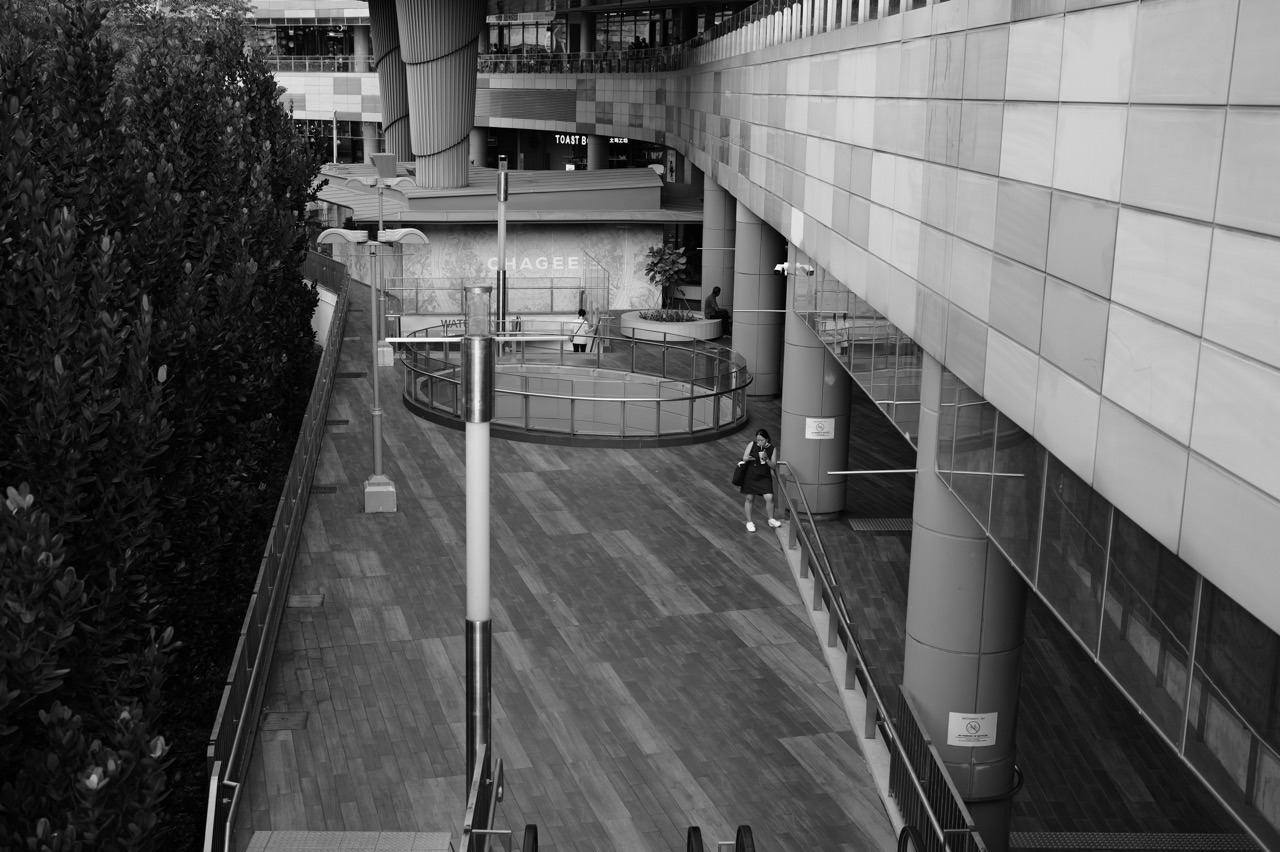
Electricity is almost invisible, but modern Punggol runs on it.
Lifts move. Escalators turn. trains operate. Lights switch on. Air-conditioning systems transfer heat. Phones charge. Sensors report data. Pumps, communications and safety systems work quietly in the background.
This article continues the Journey of Learning Advanced Science in Punggol by connecting school electricity to the energy systems students use every day.
Current Is Charge Flow
Electric current describes the rate at which electric charge passes a point.
Students should distinguish current from energy. Current is not “used up” in a simple circuit. Electrical energy is transferred from the source to components.
Potential Difference Drives Energy Transfer
Potential difference tells us how much energy is transferred per unit charge between two points.
This becomes much more meaningful when students stop seeing voltage as merely a number written beside a battery.
Resistance Changes the Relationship
Resistance describes how strongly a component opposes current under particular conditions.
For many school problems, students use the relationship among potential difference, current and resistance.
For the deeper route, see Resistance, Ohm’s Law and Series–Parallel Circuits.
Power Tells Us How Fast Energy Is Transferred
Power is a rate.
A high-power appliance transfers energy more quickly than a lower-power one operating under comparable conditions.
This connects electricity directly to Mathematics because students must work comfortably with energy, time, current, voltage and units.
Electrical Energy Accumulates Over Time
A device using a certain power for a short time consumes less energy than the same device running for many hours.
This is why electricity bills are about energy use, not simply power ratings.
Buildings Are Electrical Networks
A modern building contains many electrical subsystems.
- lighting,
- air-conditioning,
- lifts and escalators,
- pumps,
- security systems,
- communications,
- sensors and controls.
Each subsystem has its own load profile and operating conditions.
Transport Uses Electrical Energy Too
MRT and LRT systems combine electrical power with motors, control systems, signalling and braking.
This links electricity to The Science of Movement and Transport in Punggol.
Efficiency Is About Useful Output
No real energy-conversion process is perfectly efficient.
Some energy becomes unwanted thermal energy, sound or vibration. Engineers try to reduce these losses where practical.
Students should therefore learn to ask what the intended output is and what other transfers occur.
| System | Useful output | Possible unwanted transfers |
| Lamp | light | thermal energy |
| Motor | mechanical movement | heat and sound |
| Air-conditioner | thermal energy moved from indoors | waste heat and electrical losses |
| Train | motion | heat, sound, resistive losses |
Smart Energy Begins With Measurement
Energy use can be monitored across time. Once a building or system knows when and where energy is being used, controls can respond more intelligently.
This is where school electricity connects to Smart Town Science.
Electrical Conductivity Depends on Material
Metals conduct because mobile charge carriers can respond to an electric field. Insulators do not allow charge to move as easily under ordinary conditions.
For a materials extension, see Electrical Conductivity — Materials, Conductors, Insulators and Resistance.
A Simple Energy Audit for Students
- Choose one room or familiar system.
- List the electrical devices.
- Record their power ratings where safely visible.
- Estimate daily operating time.
- Calculate approximate energy use.
- Identify which device dominates.
- Suggest one realistic way to reduce unnecessary use.
The purpose is not to criticise family habits. It is to understand how power and time combine.
Safety Is Part of Electrical Science
Electricity is useful because it can transfer energy efficiently, but unsafe contact with electrical systems can be dangerous.
Students should never turn a learning activity into unsupervised work on mains electricity or building equipment.
Scientific curiosity should always remain inside sensible safety boundaries.
How eduKate Can Teach Energy as a System
A tutor can start from a familiar appliance or station system, then trace the chain: electrical input → component behaviour → useful output → losses → control.
That makes electricity less abstract and prepares students for more advanced Physics and engineering.
Continue the Journey
- Previous: Weather and Atmosphere in Punggol.
- Next: Water Chemistry — pH, Conductivity, Dissolved Substances and Treatment.
- Earlier: Smart Town Science.
- Return to the Punggol Science Tuition hub.
Electricity is one of the invisible infrastructures of modern life. Advanced Science helps students make that hidden system visible enough to reason about.


