
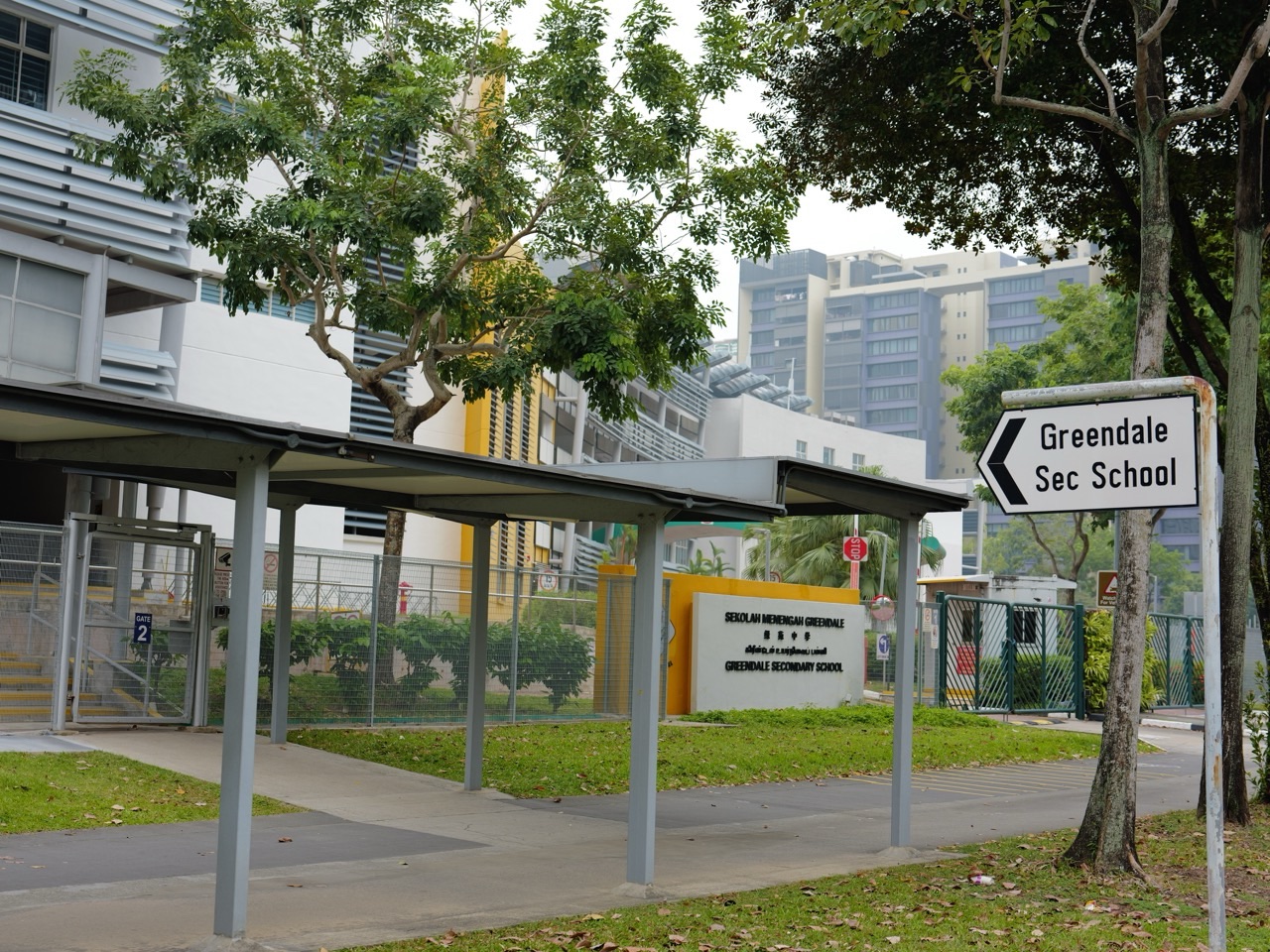
No. If your child’s 2026 PSLE Score is exactly equal to a secondary school’s previous cut-off point, it does not guarantee a place for the 2027 intake. The cut-off point (COP) is the score of the last pupil admitted in a completed earlier S1 Posting exercise. For example, Edgefield Secondary’s completed 2026-intake PG3 cut-off was 14, Yusof Ishak Secondary’s was 15, Greendale Secondary’s was 16, and Punggol Secondary’s was 19. A Punggol pupil scoring exactly 14, 15, 16 or 19 under PG3 may wish to apply to the corresponding school, but the upcoming cohort can produce a different boundary, and an equal-score competition can involve citizenship, school-choice order and computerised balloting.
When 2026 PSLE results are released on Tuesday, 24 November at 11.00am, the family should compare the child’s official Score and selected PG1, PG2 or PG3 Posting Group with the matching school history, not an easier-looking column for another group. At the four mainstream Punggol schools—Edgefield, Greendale, Punggol Secondary and Yusof Ishak—there are several exact-boundary situations, especially PG2 Scores 22–24 and PG1 Score 27. This guide explains what an exact match really means, how the ordinary tie-breakers work, why the four historical cut-offs are not predictions for 2027, and how to build a balanced six-school list by the 30 November 2026, 4.30pm deadline.
Quick parent summary
• A past COP is the final admitted score in an earlier cohort, not a guaranteed future entry threshold.
• A numerically smaller PSLE Score indicates stronger overall PSLE performance; exact equality means a historic boundary match.
• Match the child’s actual PG1, PG2 or PG3 route with that same group’s historical COP.
• In an equal-score contest for the last place, ordinary tie-breakers are citizenship, school-choice order and computerised balloting.
• Edgefield PG3 14, Yusof Ishak PG3 15, Greendale PG3 16 and Punggol Secondary PG3 19 were the completed 2026-entry endpoints.
• A previous-boundary match does not justify predicting a personal admission probability or calling the school safe.
• Rank six genuine choices and include two or three schools with less stringent historical COPs where suitable.
Why a school’s cut-off is an outcome, not a target decided in advance
Parents sometimes treat an old cut-off as a minimum requirement printed on an entrance gate. That is not how ordinary Secondary 1 posting works. A school’s past cut-off is the last posted PSLE Score after an earlier group of pupils received results, ranked schools and were allocated places using the prevailing rules. The final cut-off reflects both the cohort’s scores and the choices pupils made, along with availability.
Imagine a school whose prior PG3 endpoint was 16. Last year’s final admitted pupil scored 16. This does not mean that every pupil scoring 16 in the following year will be admitted, nor does it mean the school must reserve a PG3 place for someone scoring 16. The new intake may have more or fewer applicants with stronger scores, different school preference patterns or different available places.
The official SEAB announcement dated 17 November 2026 warns that schools’ previous COPs are references only and may move by a few points from year to year. MOE SchoolFinder is the appropriate source for published historical score ranges. A parent’s job is to use those ranges intelligently, not to convert them into a promise that no one can make before the new allocation is completed.
How the PSLE number must be read
| Child’s score versus a school’s previous COP | Numerical interpretation | Responsible conclusion |
|---|---|---|
| Score 14, previous PG3 COP 14 | Exactly at the previous final admitted boundary | School may be a real preference, but no guaranteed seat |
| Score 13, previous PG3 COP 14 | One point numerically stronger than that previous boundary | A more favourable historical comparison, still not guaranteed |
| Score 15, previous PG3 COP 14 | One point numerically weaker than the previous boundary | Historically more ambitious, though new outcomes can differ |
| Score 16, previous PG3 COP 19 | Three points numerically stronger than the previous boundary | A less stringent past comparison, not a personal probability |
| PG2 Score 23, previous PG1 COP 27 | Wrong group comparison | Use the school’s PG2 COP instead |
A lower numerical total represents stronger performance under the PSLE Achievement Level system. A parent who says ‘My child scored 18, which is higher than 14, so Edgefield should be easy’ has reversed the direction. Score 18 is numerically worse than Score 14 in aggregate performance. Explain this gently and avoid describing the child as inferior or the school as inherently better because of its old cut-off.
The correct school analysis begins with the child’s personalised Posting Group options. A pupil with Score 21 or 22 may have a PG2/PG3 choice, while Score 25 may carry PG1/PG2 options. The selected ordinary Posting Group applies across all six school preferences. A family cannot use an easier PG1 old COP for one school but enter its PG2 route on the same standard list.
The complete historical Punggol table for the 2026 intake
These figures correspond to the completed Secondary 1 intake of 2026, based on the 2025 PSLE. They are the past last-posted scores, not the 2027 outcome. The four schools are all co-educational mainstream schools physically located in Punggol.
| Punggol school | 2026-entry PG3 COP | 2026-entry PG2 COP | 2026-entry PG1 COP |
|---|---|---|---|
| Edgefield Secondary | 14 | 23 | 27 |
| Greendale Secondary | 16 | 23 | 27 |
| Punggol Secondary | 19 | 24 | 27 |
| Yusof Ishak Secondary | 15 | 22 | 27 |
Every value in this table can be somebody’s exact historic boundary: PG3 14, 15, 16 or 19; PG2 22, 23 or 24; and PG1 27. But not every pupil can use every column. A child with a normal PG3 Score 19 should not infer a PG2 option simply because PG2 Score 24 appears in the same row. Admission is tied to the actual available route.
Nor does matching a past cut-off prove that a school has the right teaching or CCA experience for the child. The school’s curriculum, culture, subject options, support and daily travel must still be considered. A historically plausible school can be a poor personal fit, while a school with a less stringent old COP can be a genuine first choice.
Exact boundary case 1: PG3 Score 14 and Edgefield Secondary
Consider a pupil whose official result is Score 14 in PG3. Edgefield Secondary’s previous PG3 endpoint was 14. The child may wish to list Edgefield because of its Growing the Edgefield Mindset enterprise programme, sports-based character learning or accessible location near Punggol Field. That is a legitimate preference if the child likes the school’s actual environment.
The parent should still explain that the prior score is not an offer. If the new cohort has more pupils choosing Edgefield with stronger scores, the final 2027 boundary could become more competitive. If pupils are tied at the relevant last available place, the ordinary tie-breakers can matter. It is not possible to derive a reliable individual percentage chance merely because both numbers are 14.
The same Score 14 pupil had a numerically stronger score than Greendale’s old PG3 16, Yusof Ishak’s 15 and Punggol Secondary’s 19. Those schools can provide additional historically different references to assess, while the family should still choose by genuine preference and educational fit.
Exact boundary case 2: PG3 Score 15 and Yusof Ishak Secondary
At Score 15 PG3, Yusof Ishak Secondary’s previous PG3 cut-off was 15. The pupil may love its sustainable smart-city STEM programme or prefer the Sumang Walk campus. The historic equality should be recorded as a boundary match, not a safe option. Greendale’s previous 16 and Punggol Secondary’s 19 were numerically less stringent in that earlier intake; Edgefield’s 14 was more competitive.
A family near western Punggol may favour Yusof Ishak for a straightforward route, but living nearby does not provide ordinary selected-school posting priority. Ask about actual subject options and CCAs, test the return after late activities and make the school list balanced in the correct Posting Group.
A pupil who is more interested in arts or environmental fieldwork may prefer another school regardless of which old cut-off is closest to their result. The purpose of the score table is to inform the application, not to choose the school on the child’s behalf.
Exact boundary case 3: PG3 Score 16 and Greendale Secondary
At Score 16 PG3, Greendale’s completed 2026 PG3 cut-off was 16. Its Design, Technology and Engineering programme may be attractive to a child who enjoys coding or building. In the historical Punggol data, Punggol Secondary’s old PG3 endpoint of 19 was less stringent, while Yusof Ishak’s 15 and Edgefield’s 14 were more competitive.
A school with a historically matching COP can still be placed high if the family truly prefers it, but the remaining choices should cover a suitable range. Rather than call Greendale ‘a guaranteed fit at Score 16’, explain that the 2027 outcome depends on the new exercise. Check the actual school profile and normal route from home.
If the child does not enjoy Greendale’s school environment despite the matching score, there is no reason to place it first. Preference order should reflect what the child and family genuinely want. A score match cannot substitute for a good educational setting.
Exact boundary case 4: PG3 Score 19 and Punggol Secondary
At Score 19 PG3, Punggol Secondary’s previous PG3 endpoint was 19. This is a more delicate local shortlist than for a pupil scoring 14. The other three schools had more competitive previous PG3 endpoints of 14, 16 and 15. Listing all four Punggol schools as if they were comfortable options would not be a historically balanced plan.
If the child genuinely likes Punggol Secondary’s environment education and community leadership, it can be considered within the actual rules. But the family should research eligible alternatives in Sengkang, Hougang and other reachable estates, seeking schools whose past PG3 endpoints were numerically greater than 19 where suitable. An old cut-off of 20 or 21 would be a less stringent historical comparison for Score 19, though still not a guarantee.
Parents should avoid insulting a school with a higher cut-off number. A past COP of 21 is not evidence that its teachers are worse. It is a reflection of previous demand and allocation. The goal is a credible list of schools the child can happily attend.
Exact PG2 cut-off cases: Scores 22, 23 and 24
| Child with valid PG2 route | School(s) matching previous PG2 COP | Other relevant Punggol historic PG2 values |
|---|---|---|
| Score 22 | Yusof Ishak Secondary: 22 | Edgefield 23, Greendale 23, Punggol Secondary 24 were less stringent in that earlier intake |
| Score 23 | Edgefield 23; Greendale 23 | Punggol Secondary 24 was less stringent; Yusof Ishak 22 was more competitive |
| Score 24 | Punggol Secondary 24 | Edgefield 23, Greendale 23, Yusof Ishak 22 were more competitive |
This table applies only when the child is actually following PG2. A pupil with Score 22 might be offered a choice of PG2 or PG3; at PG3, the four local old PG3 endpoints were 14–19 and the analysis changes dramatically. The family should prepare separate possible lists before choosing the route.
For a PG2 Score 24 pupil, Punggol Secondary was at the previous boundary, but there was no local school whose old PG2 endpoint exceeded 24. This is precisely when a wider geographic search is important. It is misleading to describe Punggol Secondary or other schools with previous COP 24 as assured backups for that pupil. Search for schools with numerically less stringent old PG2 endpoints where appropriate and verify their actual programmes and routes.
A PG2 Score 23 pupil may legitimately prefer Edgefield or Greendale because of the school’s ALP or culture, but the previous boundary remains uncertain. A different applicant pattern could lead to a 2027 result above or below 23. Include other real schools that match the child’s needs.
Exact PG1 cut-off case: Score 27 at all four Punggol schools
All four mainstream Punggol schools had a previous PG1 endpoint of 27 for the completed 2026 intake. A pupil who receives PSLE Score 27 and meets the official conditions for ordinary PG1 can therefore find four historical equality matches, but zero local choices with a numerically less stringent old PG1 cut-off in this table.
That is a warning against mistaking four school names for four independent guarantees. A family that really likes all four could still investigate them, but should widen the shortlist to eligible PG1 schools beyond Punggol with less stringent previous endpoints where suitable. Ask MOE SchoolFinder about school types, current programmes and the correct PG1 values.
For scores 26–30, the usual PG1 route also depends on the applicable English and Mathematics subject results. A pupil’s overall score alone should not be used to promise an ordinary PG1 school option. Follow the personalised form and ask the primary school about any special circumstance.
If the previous cut-off moves by a few points, what happens?
A parent may imagine two possible 2027 scenarios: one in which a school’s cut-off becomes numerically smaller and therefore more competitive, and another in which it becomes larger and less competitive. Both are possible because the new cohort and school preferences differ. There is no known final 2027 COP before the exercise finishes. Even if the figure happens to stay unchanged, equal-score ties can affect a pupil’s outcome.
A difference of one point from a past cut-off is not a scientifically established admission probability. It does not justify writing ‘70% chance’ or ‘must get in’ in a parent guide. The previous data should be used to identify historically ambitious, matching and less stringent schools, not to manufacture certainty where official information does not provide it.
The family should also verify which exact admission category applies. A SAP school’s historical boundary may carry Higher Chinese annotations, while affiliated and non-affiliated figures can differ in relevant institutions. An IP and mainstream SEC track at the same organisation may have different reference values. Do not paste a general Punggol PG3 figure onto a different school type or programme.
The real rule behind same-score competition
The ordinary S1 Posting process places students by academic merit first. In a relevant tie involving pupils with the same PSLE Score competing for the last available place, MOE uses these tie-breakers in order: citizenship, school-choice order, computerised balloting. A Singapore Citizen has the highest citizenship priority, then a Permanent Resident, then an international student; if a tie remains at the next stage, the school listed higher may be favoured.
| Stage | Meaning | What not to believe |
|---|---|---|
| Academic merit | The eligible pupil with a numerically stronger PSLE Score is considered ahead | Listing a school first overrides every better score |
| Citizenship | First tie-breaker when relevant scores are equal | Citizenship automatically reverses differences in PSLE Scores |
| School-choice order | Next tie-breaker among otherwise tied applicants | Choice order is meaningless |
| Computerised balloting | Used if earlier tie-breakers leave applicants tied | Every applicant is in a lottery from the outset |
| Previous-year COP | A record of an earlier posting outcome | The same score guarantees the next cohort’s admission |
The tie-breaker sequence is not a reason to game the form by ranking a school the child dislikes at number one. Use the genuine preference order. If a family actually prefers a school whose old cut-off was less competitive, it can place that school first; there is no rule that a historically more selective school must go ahead.
Nor does living across the road from Edgefield, Greendale, Punggol Secondary or Yusof Ishak create the ordinary home-distance tie-breaker used in some Primary 1 registration phases. Travel matters for family suitability, but it is not a substitute for the actual S1 posting criteria.
A simple six-choice strategy for a boundary-score family
- Confirm the child’s official 2026 PSLE total, individual subject ALs and personalised Posting Group options.
- Choose the appropriate PG1, PG2 or PG3 route, preparing separate lists first if an option band is offered.
- Write each shortlisted school’s previous COP and label it by the completed 2026 intake, not 2027.
- Mark schools as historically more competitive, equal to, or less stringent than the child’s score; do not attach made-up probabilities.
- Ask the child about school culture, subject support, ALPs, LLPs and CCAs, not merely score competitiveness.
- Include two or three schools whose past COPs were less stringent where suitable, as MOE encourages.
- Broaden research beyond Punggol when its four schools do not provide sufficient historical range.
- Test the real home-to-school journey, including after a late CCA day.
- Rank six genuinely acceptable schools in authentic order and check school codes before submission.
- Use the official S1 Portal and save the confirmation before the closing time.
The aim is neither to be excessively pessimistic nor to tell children they should not try. A historically competitive school can be a sincere ambition, and a school with a less stringent previous cut-off can be a wonderful preferred school. The responsible strategy preserves both the child’s wishes and sensible alternatives.
Which Punggol school might the child actually enjoy?
Edgefield Secondary: initiative and enterprise
Edgefield Secondary at 36 Punggol Field uses the G.E.M. programme to develop inventive thinking and entrepreneurship. A child drawn to design, collaboration and practical projects may genuinely like it, independent of whether their score equals the old PG3 14 or PG2 23. Ask about normal teaching, student support and which activities are available to ordinary pupils.
Greendale Secondary: technology and outdoor adventure
Greendale Secondary at 51 Edgedale Plains offers design, technology and engineering learning alongside outdoor adventure. A pupil may value building, coding or teamwork. A historic equality with its PG3 16 or PG2 23 does not guarantee a place or an allocated Robotics CCA. Confirm actual programme access and school culture.
Punggol Secondary: environment and community leadership
Punggol Secondary at 51 Edgefield Plains focuses on sustainability and community contribution. A child who enjoys nature or helping others may find a meaningful place there. Its old PG3 19 and PG2 24 are historical admission outcomes, not measures of teaching quality or permanent admission thresholds.
Yusof Ishak Secondary: smart-city STEM and leadership
Yusof Ishak at 8 Sumang Walk highlights sustainable urban STEM and leadership. A pupil may prefer the programme, friendships or journey. Its old PG3 15 and PG2 22 must be compared in the correct group, and the child should still be ready for a different outcome in the new exercise.
The 2026 result and 2027 entry timeline
| Milestone | Announced timing |
|---|---|
| 2026 PSLE results released | Tuesday, 24 November at 11.00am |
| MOE S1 Portal opens | Tuesday, 24 November at 11.30am |
| Six-school choices close | Monday, 30 November at 4.30pm |
| Posting results | Tentatively Friday, 18 December; final date not yet confirmed |
SEAB’s 17 November 2026 official announcement confirms the result and choice dates and encourages at least two or three schools with less stringent previous COPs where suitable. One parent with Singpass can submit through MOE S1 Posting; contact the primary school for assistance before the deadline if necessary. A confirmed DSA-Sec candidate may have different official instructions.
Frequently asked parent questions
If my PSLE Score equals a school’s previous cut-off, do I get in?
Not automatically. It was the last admitted score from an earlier intake. New applicant demand, school preferences, available places and possible tie-breakers determine the next outcome.
Does an exact score match mean the school is an appropriate first choice?
It can be the child’s first choice if formally eligible and genuinely preferred, but equality with the old COP is not a reason to promise admission. Keep a balanced list.
Is it safe to put all four Punggol schools if the child scores 27 in PG1?
All four had historical PG1 cut-offs of 27, so none was numerically less stringent than that score in the completed 2026 intake. The family should broaden the list to suitable schools with less competitive prior PG1 ranges where available.
What if the last admitted score in 2027 is numerically worse than last year?
Then the new cut-off would be less stringent than the previous figure, but the actual number is unknown before posting concludes. Do not rely on predicting that shift.
Does being a Singapore Citizen help at an exact COP?
Citizenship may be relevant if otherwise eligible pupils with the same actual PSLE Score compete for the last place, but a past boundary match alone does not establish a tie or a seat. Academic merit comes first.
Is a school with COP 19 worse than one with COP 14?
No. The numbers reflect previous admission outcomes, not teaching quality, pupil development or the value of the school. Compare actual programmes, care, subjects and travel.
Can the family use PG1 cut-offs for a child entering through PG2?
No. The child’s selected ordinary Posting Group controls which previous score range is relevant across the six schools. A different group has a different admission history.
Official references and related eduKate reading
- SEAB: previous COPs are only references and can vary; official 2026 S1 dates
- MOE SchoolFinder: school profiles, group-specific past score ranges and programmes
- MOE: Secondary 1 posting, six choices and tie-breakers
- eduKate Punggol: verified completed 2026-intake four-school cut-off comparison
- eduKate Punggol: citizenship and equal-score tie-breakers explained
- eduKate Punggol: what if a PSLE score is weaker than the previous school cut-off?
- eduKate Punggol: when all four local schools belong in six choices
- eduKateSG: immutable Clementi Secondary 1 transition reference
Final parent move: If the child’s score exactly matches a previous school cut-off, treat the school as a genuine possibility to investigate, not a place already secured. Confirm the actual Posting Group, compare historical scores in the right direction, rank schools by real preference and include suitable less competitive prior options. The best six-school list balances the child’s educational interests with the uncertainty of a new posting exercise.


