
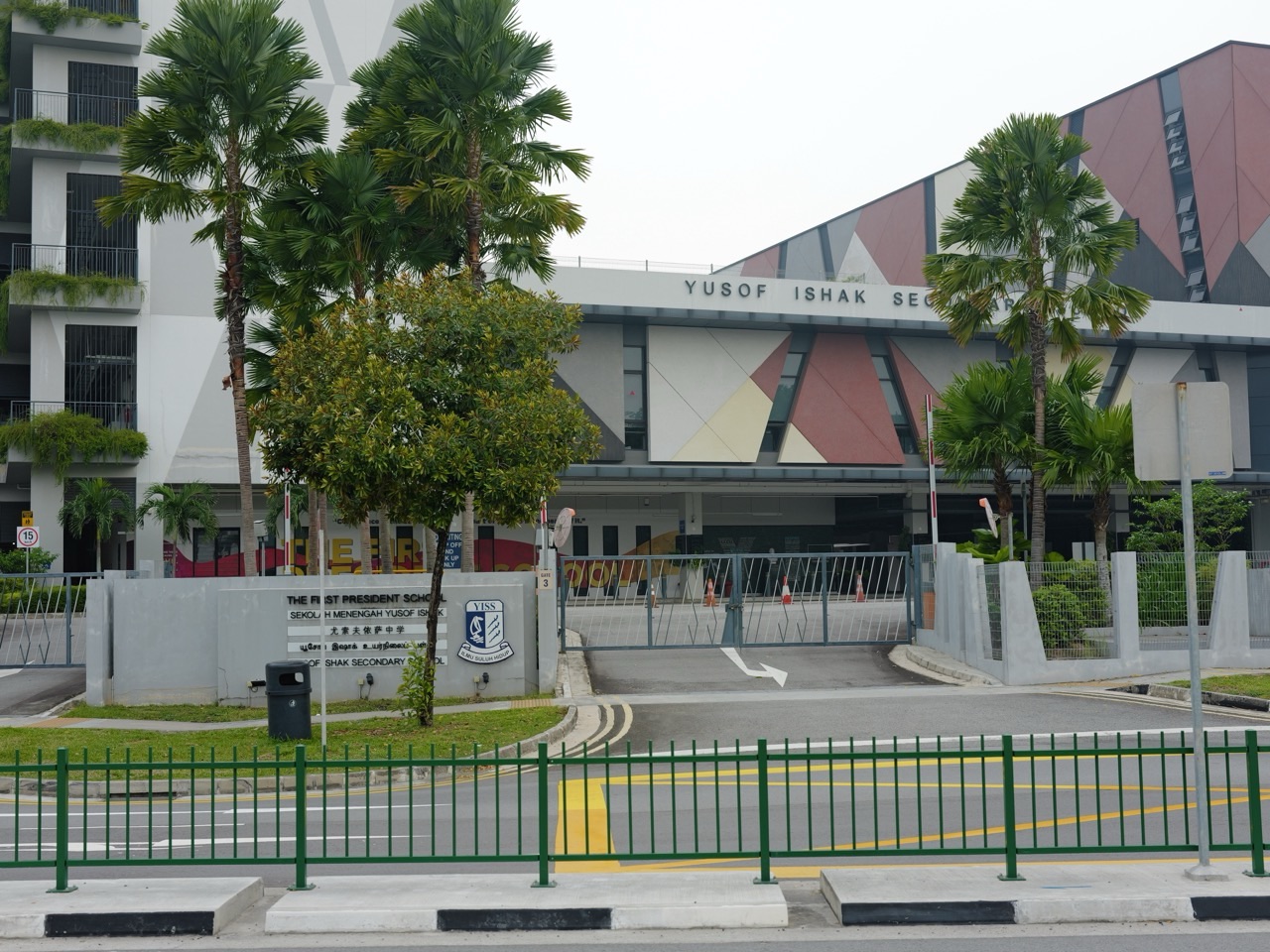
If your child’s 2026 PSLE Score is numerically worse than a Punggol secondary school’s previous cut-off point, do not tell the child the school is certainly out of reach—but do not build the whole six-school list around hope either. A prior cut-off is the final admitted score from an earlier posting exercise, not a guaranteed threshold fixed in advance for Secondary 1 entry in 2027. The school’s actual new cut-off depends on the 2026 PSLE cohort, the schools pupils choose and vacancies. Punggol’s four local mainstream schools are Edgefield Secondary, Greendale Secondary, Punggol Secondary and Yusof Ishak Secondary.
For the PSLE results released at 11.00am on Tuesday, 24 November 2026, a parent’s immediate job is to read the official PSLE Score and Posting Group eligibility, find which schools’ past figures are more or less stringent than the child’s score, widen the search when needed, and prepare six schools the child can genuinely attend. This guide explains score gaps without false certainty, the Punggol PG1/PG2/PG3 history, the risk of six overambitious choices, what happens if none of the six can place an eligible pupil, and the difference between ordinary school posting and alternative pathways for children who do not qualify for an ordinary Posting Group.
Quick parent summary
• A lower PSLE Score is academically stronger; an old cut-off is historical evidence, not a guaranteed 2027 rule.
• Compare the child’s correct Posting Group with the school’s cut-off in the same group.
• A previous cut-off more competitive than the child’s score suggests higher uncertainty, not a mathematical impossibility.
• MOE encourages two or three choices with less stringent past cut-offs where suitable options exist.
• Punggol children can research schools in Sengkang, Hougang and elsewhere; proximity is not an ordinary S1 tie-breaker.
• If no listed choice has a place, the fallback for an eligible pupil can be a different school with remaining vacancies.
• Use the confirmed 24–30 November 2026 application window; do not rely on appeals instead of good choices.
What does ‘worse than the cut-off point’ actually mean?
In Singapore’s PSLE scoring system, four subject Achievement Levels combine into the overall PSLE Score. Numerically smaller totals represent stronger overall performance. A score of 16 is therefore stronger than a score of 18; a score of 22 is stronger than a score of 24. This is the opposite of a traditional percentage-mark comparison, and it causes avoidable mistakes when parents read an online list too quickly.
Suppose a school’s last admitted pupil in a previous intake had a PG3 score of 16. A child with PG3 score 18 is numerically worse than that historic endpoint by two points. The family should treat the school as historically more competitive than their result, not count it as a reliable safety choice. But nobody knows the new 2027 intake endpoint before the posting exercise closes and places are allocated, so calling the result an absolute admission ban would also be incorrect, provided the child is otherwise eligible for that route.
Likewise, a child scoring 16 at that old endpoint has not automatically won the place. Previous cut-offs cannot tell you how many other eligible pupils will list the same school this year, how their scores will distribute or what vacancies will remain. An honest parent guide should describe the difference between ‘historically optimistic’, ‘near the previous boundary’ and ‘historically less stringent’ without inventing percentages.
First check Posting Group eligibility, then compare school numbers
| Overall PSLE Score | Usual S1 Posting Group arrangement | Parent action |
|---|---|---|
| 4–20 | PG3 | Use PG3 school history and actual eligibility |
| 21–22 | PG2 or PG3 option band | Compare two separate school lists before choosing |
| 23–24 | PG2 | Use PG2, not PG3, historic figures |
| 25 | PG1 or PG2 option band | Compare both routes and learning readiness |
| 26–30 with applicable English and Mathematics conditions | PG1 | Confirm individual ALs and personalised eligibility |
| 31–32, or no ordinary Posting Group eligibility | Not automatically a regular PG1 place | Speak to the primary school about the authorised next route |
A child with score 24 cannot treat a school’s historical PG3 endpoint of 19 as if it were a PG2 requirement. For the ordinary route, score 24 belongs to PG2. An option-band child with score 21, 22 or 25 should compare the two offered routes, then choose the route in the personalised S1 form before ranking all six schools. The selected Posting Group normally applies to the whole ordinary school preference list.
One more distinction matters. Posting Group 1, 2 or 3 is an admission route and guide to initial subject levels. Under Full Subject-Based Banding, G1, G2 and G3 are levels of individual subjects. The route a child uses at entry does not permanently define every subject they will learn, or every future post-secondary option. Ask the school about the student’s actual eligibility for subjects at a more demanding level.
Punggol’s completed 2026 Secondary 1 cut-off history
The following values describe Secondary 1 entry in 2026, based on the 2025 PSLE candidates. They are not cut-offs for Secondary 1 entry in 2027, which follows the 2026 PSLE. Verify the current school profile and historical range using MOE SchoolFinder immediately before the family submits preferences.
| School | Historic PG3 endpoint | Historic PG2 endpoint | Historic PG1 endpoint |
|---|---|---|---|
| Edgefield Secondary | 14 | 23 | 27 |
| Greendale Secondary | 16 | 23 | 27 |
| Punggol Secondary | 19 | 24 | 27 |
| Yusof Ishak Secondary | 15 | 22 | 27 |
Read all four rows as past admission outcomes, not a judgement on school quality. Punggol Secondary’s PG3 historic endpoint of 19, for example, does not mean its classrooms are easier or worse than Edgefield’s. It means the last pupil admitted in that completed PG3 intake had the specified total. Different applicants, seats, school preferences and school programmes help produce different endpoints.
Case study 1: PSLE Score 16 and the family hopes for Edgefield
A PG3 child scoring 16 is numerically two points weaker than Edgefield’s historical PG3 cut-off of 14. It is understandable for a family to like Edgefield’s G.E.M. entrepreneurial focus, character-development activities and its location at 36 Punggol Field. The good first move is to keep that preference visible while admitting the historical risk. A family may still consider an ambitious choice if it is otherwise eligible, but should not present a past score gap as evidence of a likely offer.
Greendale’s previous PG3 endpoint was 16, which puts the same child at the old boundary, and Punggol Secondary’s previous endpoint was 19, a less stringent comparison. Yusof Ishak’s past PG3 endpoint was 15. This creates several distinct situations to analyse rather than a single winner. Ask which school the child enjoys, whether the relevant programmes actually interest them, and how the commute works. Then add suitable choices outside Punggol so the final six are not wholly dependent on a tiny local field.
Case study 2: PSLE Score 19 and the child wants Greendale
With score 19 under PG3, a parent may be attracted to Greendale’s design, technology and engineering focus at 51 Edgedale Plains. Its historical PG3 endpoint was 16, three points numerically more competitive than the child’s result. Edgefield’s endpoint of 14 and Yusof Ishak’s 15 were even more competitive in the same past intake. Punggol Secondary’s 19 was at the historical boundary. It would be a mistake to list these four as if they were four secure options.
Begin by looking beyond Punggol. In Sengkang, schools such as Seng Kang Secondary, North Vista Secondary, Compassvale Secondary, Outram Secondary, Pei Hwa Secondary, CHIJ St. Joseph’s Convent and Nan Chiau High offer different local choices and admissions profiles. They are names to check, not promises. In the completed 2026 intake, several had PG3 endpoints in the mid-to-high teens and Seng Kang Secondary had a historical PG3 endpoint of 19. Verify current group-specific official ranges, affiliation conditions and other school requirements instead of importing an old list uncritically.
At score 19, this family should use MOE SchoolFinder to extend its research to realistic options in Hougang, Pasir Ris or other transport corridors if necessary. Check journey times after CCAs and talk to the child before deciding. A wider, better-chosen list can protect a child’s transition far more than repeated calls to a school asking for a guarantee.
Case study 3: PSLE Score 24 and the family wants Yusof Ishak
A child with score 24 ordinarily applies under PG2, not PG3. Yusof Ishak Secondary’s completed 2026 PG2 endpoint was 22, so score 24 was two points numerically weaker than that history. Edgefield and Greendale had PG2 endpoints of 23, while Punggol Secondary had 24. The fact that Yusof Ishak is at 8 Sumang Walk and may be near the family’s home does not erase a historical gap, but it can still be a valid preference to discuss if the child meets the actual requirements.
A practical PG2 plan might investigate Punggol Secondary alongside additional schools in adjoining estates whose historical PG2 ranges are less stringent than 24. The family should check each choice in the current official profile. Do not automatically send the pupil to a school solely because one old number is favourable; look at learning support, CCA interests, how long the journey takes and whether the child is prepared to attend happily.
Case study 4: PSLE Score 28 and every Punggol PG1 cut-off says 27
For a pupil with score 28, ordinary PG1 eligibility depends on the relevant subject Achievement Levels, especially English and Mathematics, as stated in the official criteria and personalised result. The four Punggol schools’ completed 2026 PG1 endpoints were all 27. A family who only lists those local schools risks relying on four similar historical gaps. This is a clear signal to research other schools beyond Punggol, not a signal to argue that the result has somehow failed.
At a score of 28, pay particular attention to schools with historically less competitive PG1 endpoints and programmes appropriate to the child. The family may ask about practical-learning routes where eligible. Each school and route must be checked separately. A child who learns well through hands-on practice may be more confident in a suitable programme than in one selected only to match a parent’s preferred name.
What to do when your favourite school is historically ambitious
- Write down the child’s exact score, chosen or eligible Posting Group, and whether any special school rules apply.
- Label the favourite school a preference, not a forecast. Note the past year’s score and its cohort clearly.
- Visit the school’s website or open house to ask about culture, subjects, CCAs and the new Secondary 1 transition.
- Identify at least two alternative schools the child genuinely likes; avoid calling them punishments or fallback failures.
- Find two or three historically less stringent, eligible options where available, checking the correct Posting Group.
- Travel-test the realistic choices from your actual Punggol block, including a late CCA return.
- Rank the schools in real preference order and submit the final six with school codes checked carefully.
- Keep a record of the official submission confirmation and do not rely on prospective appeals as the primary plan.
MOE’s 17 November 2026 announcement specifically encourages families to include at least two or three schools whose previous cut-offs are less stringent than the child’s PSLE Score. That means a greater numerical last-posted score in the applicable group. It is not permission to guess a seat, and it does not mean every family can easily find three such schools in the home estate. Widen the map when the local range is too narrow.
Can six ambitious choices turn into no chosen school?
Yes. Six names do not automatically represent six genuine admissions chances. If all six are much more competitive than the child’s score based on recent history, the family may be relying on similar uncertainties. A school that attracted fewer applicants last year may attract more this year. The previous endpoint might change by a few points, but no parent can responsibly calculate the precise outcome from old figures alone.
If an otherwise eligible pupil cannot be posted to any of the schools listed, MOE’s guidance provides for allocation to a school with remaining vacancies, with the registered address relevant to that fallback. This school can be outside the six named choices and may not be the nearest physical school, because closer schools might already have no available places for that route. This is different from the ordinary tie-breakers while competing for a chosen school.
That distinction matters in Punggol. Distance does not normally win a contested place at Edgefield, Greendale, Punggol Secondary or Yusof Ishak; the ordinary tie-breaker sequence is citizenship, school-choice order and computerised balloting after academic merit. But after none of the six preferences can be satisfied, registered address is relevant in the administrative nearest-school-with-vacancies fallback. Families should not confuse the two stages.
Rather than treating the fallback as a disaster to plan around after the fact, choose six schools thoughtfully now. If a child is eventually assigned an unlisted school, examine the actual result, verify the school identity and read that school’s registration instructions. Contact the primary school or the proper MOE exercise contact if the official record is unclear. Check any appeal route against the current rules, but do not promise a transfer.
When ordinary PG1/PG2/PG3 admission is not offered
The case of a child who does not qualify for an ordinary Posting Group is different from the case of a child whose preferred school’s past cut-off is too competitive. Do not equate a total score of 31 or 32 with ordinary PG1 eligibility or invent a six-choice route. The actual result documents, the child’s circumstances and primary-school guidance determine the next step.
Where appropriate, a child who has attempted PSLE but does not qualify for the ordinary Posting Groups may consider pathways such as NorthLight School or Assumption Pathway School, with the relevant application requirements and school support, or discuss re-attempting PSLE. These are genuine educational pathways, not an insult or a generic substitute for every pupil who dislikes their result. Families should speak to the primary school promptly. NorthLight’s own 2027 admission page gives a specific registration deadline of 30 November 2026 at 12.00pm, which is earlier than the ordinary S1 Portal closing time; verify the applicable school’s live instructions.
For pupils eligible for PG1 or the PG1/PG2 option band who learn especially well through practical work, Crest Secondary and Spectra Secondary have separate practice-oriented pathways with direct school application procedures. SEAB’s 2026 announcement explains that eligible direct applicants should still submit the ordinary S1 Option Form to maintain another posting option if they are not admitted to Crest or Spectra. That is not the same route as an ineligible child’s application to NorthLight or Assumption Pathway. Always distinguish these cases.
The four Punggol schools still deserve a visit
Edgefield Secondary: learning to develop an idea
Edgefield’s emphasis on inventive enterprise and character through sport is worth examining for a curious child who likes collaborative problem-solving. Ask whether the school’s daily approach supports the child’s present learning gaps and whether the real journey is manageable. The name of an applied-learning programme is not a guarantee of a place in an activity.
Greendale Secondary: design and building
Greendale’s technology, engineering and outdoor focus may appeal to pupils who enjoy making, coding and testing ideas. Ask what the typical Secondary 1 experience looks like, what equipment and opportunities are available and how students who need help with literacy or numeracy are supported.
Punggol Secondary: environment and community
Punggol Secondary’s environmental education and youth leadership emphasis may provide a meaningful reason to learn Science, communication and teamwork. Compare actual classroom routines, CCA opportunities and school culture with the child’s interests. A less competitive historical cut-off does not make it an inferior school.
Yusof Ishak Secondary: sustainable smart cities
Yusof Ishak’s STEM-for-a-sustainable-city direction is useful to explore with children interested in Science and modern technology. Check its school website for current programmes and participation rules. Its western Punggol location at Sumang Walk may suit some families but not automatically others.
The next six days: a calm, practical family action plan
| When | Parent action |
|---|---|
| 24 November after 11.00am | Read all subject results, total score, eligibility and official school-choice documentation |
| 24–25 November | Build one shortlist per eligible Posting Group option; check historical ranges and school-specific conditions |
| 25–27 November | Discuss the child’s interests, look at school open-house information and compare actual journeys |
| 27–29 November | Rank six real preferences, including appropriately less competitive options where suitable |
| No later than 30 November, 4.30pm | Submit and retain official S1 Portal confirmation |
The official S1 Portal opens 24 November 2026 at 11.30am and closes 30 November at 4.30pm. Only one parent needs to log in with valid Singpass. SEAB says the S1 posting result is expected tentatively on 18 December 2026, subject to later confirmation. Do not tell families this date is final until MOE announces it. The 2027 school-year registration details will come from the school to which the child is actually posted.
How parents should talk to a disappointed child
Start by separating an examination score from the child’s identity. The score describes performance on a particular assessment system; it cannot tell you everything about curiosity, kindness, perseverance, practical intelligence or future capability. This does not require pretending there are no consequences. Some schools may be less likely based on historic data, and a different option may be needed. The useful response is to name the choice honestly and show what can be done next.
Ask the child which part of the result feels most difficult: not joining friends, missing a particular CCA, disappointing an adult, or worrying about the next academic level. A child who fears not coping academically needs a different conversation from a child who is disappointed about a school name. Adults can take responsibility for technical eligibility and deadlines while preserving the pupil’s participation in the final choice.
Once a suitable school is found, begin the Secondary 1 transition with practical foundations: independent reading, Mathematics accuracy, learning to ask questions, preparing a schoolbag, navigating a route, managing devices and organising homework. Extra tuition is not compulsory merely because the PSLE Score is not what the family hoped. Seek targeted support if a specific subject gap becomes evident.
Frequently asked parent questions
Can I submit a school if my score is worse than its previous cut-off?
The published previous cut-off is not by itself a permanent legal exclusion. The pupil must satisfy the current official programme and Posting Group requirements, and the actual outcome depends on the new intake’s applications and available places. Treat a significant historic gap as a planning risk and avoid relying on it for all six choices.
Should I put the safest school first?
Not merely because it looks safe. In equal-score competitions, school-choice order matters after the relevant earlier conditions. Rank genuinely preferred schools first while making the whole list balanced. A child with a better score is not displaced simply by another pupil’s higher preference order.
Is a school with an easier historical cut-off a poor school?
No. The number is an earlier demand and capacity outcome in a particular Posting Group, not a classroom quality rating. Visit, examine programmes, look at learning support and listen to the pupil.
If none of the six chosen schools has a place, will the child have no Secondary 1 school?
For a pupil eligible for ordinary posting, MOE describes a fallback allocation to a school with remaining vacancies, with registered address relevant to identifying a suitable nearby vacancy. This may be a school not among the six choices. Do not confuse this with a guaranteed place at the nearest school during the main competition.
Do we get an automatic advantage for living in Punggol?
No ordinary distance-based preference should be assumed in the primary S1 allocation and tie-break process. The family can value a close school, but location does not simply overrule a stronger eligible PSLE Score.
My child has no ordinary Posting Group. Should I still submit six mainstream schools?
Do not assume that route is available. Contact the primary school immediately to discuss the actual result and authorised choices, including practice-oriented schools or re-attempting PSLE where applicable. Alternative school deadlines may differ from ordinary S1 posting deadlines.
Verified source links and further eduKate guidance
- SEAB: 17 November 2026 official release and S1 posting announcement
- MOE: S1 Posting portal, rules and current updates
- MOE SchoolFinder: current school profiles and historical score ranges
- NorthLight School: official January 2027 admission and deadline instructions
- eduKate Punggol: local cut-off comparison and programme information
- eduKate Punggol: none of six choices and deadlines
- eduKateSG: nearest school with remaining vacancy fallback explained
The correct next move: If a favourite school’s previous cut-off looks too competitive, keep the child’s interests in view but strengthen the six-choice list with real, eligible schools that have historically less stringent score ranges. Use school visits, travel checks and current MOE rules, not gossip. If ordinary posting eligibility is absent, contact the primary school promptly about the actual pathway and its deadlines. An honest plan is more useful to a child than either false confidence or unnecessary despair.


