
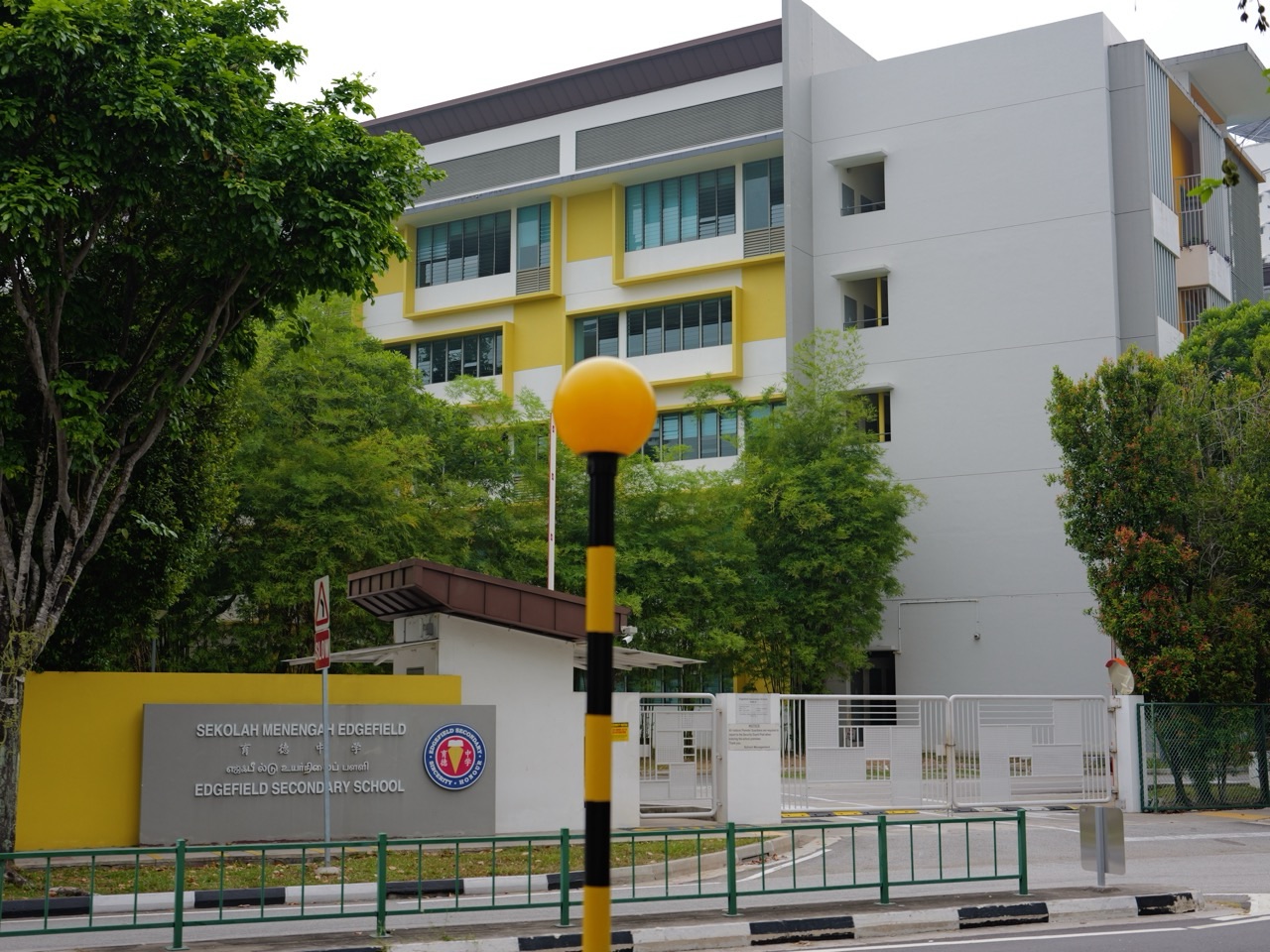
Yes, an eligible child can list all four mainstream secondary schools in Punggol among the six ordinary S1 choices—but that is only sensible when the schools fit the child and the chosen Posting Group. The four are Edgefield Secondary, Greendale Secondary, Punggol Secondary and Yusof Ishak Secondary. After 2026 PSLE results are released on Tuesday, 24 November at 11.00am, parents should compare the child’s official PSLE Score and Posting Group with the correct historical cut-off column. The fact that all four schools are in Punggol does not make all four safe choices or give residents automatic entry priority.
This guide answers a practical parent question: should we place all four Punggol schools at positions 1–4 and use only two choices outside the estate? Sometimes that is a reasonable preference list; in other cases it is unnecessarily risky. The decision changes sharply between a PG3 pupil with PSLE Score 12, a PG3 pupil with Score 20, a PG2 pupil with Score 24 and a PG1 pupil with Score 28. We explain the numerical differences, compare actual school characteristics, and provide a six-school checklist so families can make a realistic application for Secondary 1 entry in 2027.
Quick parent summary
• Punggol has four mainstream schools: Edgefield, Greendale, Punggol Secondary and Yusof Ishak.
• You may investigate all four, but six choices should not simply mean the four nearest schools plus two random names.
• Choose PG1, PG2 or PG3 according to your child’s personalised eligibility, then compare only that historical column.
• The 2026-entry cut-offs are previous outcomes, not promises for 2027.
• Include two or three schools with historically less stringent cut-offs when suitable, as MOE advises.
• Rank all six by genuine preference, and check safe school-day and after-CCA travel.
• Submit the S1 Option Form by 30 November 2026 at 4.30pm.
Why a six-school list needs more thought than a list of six names
Parents naturally begin with the four schools in their estate. A short journey, familiar roads, a manageable bus or LRT trip and nearby friends can make a school feel attractive. These are valid quality-of-life considerations. They are not the same as an admissions advantage. A Punggol resident does not gain the ordinary Secondary 1 home-distance priority used in parts of Primary 1 registration. The ordinary S1 exercise compares eligible candidates by PSLE Score, and where relevant uses citizenship, school-choice order and computerised balloting as tie-breakers.
Another source of confusion is that a lower PSLE Score represents stronger overall PSLE performance. A child scoring 14 performed better on the PSLE aggregate than a child scoring 19. A school’s last-posted score, often called its cut-off point or COP, is the final admitted score from a completed intake. An old COP of 19 is historically less stringent than an old COP of 14. That observation is about the former intake, not a rating of teaching quality.
A family may love all four Punggol schools. That does not change the score comparison. If their child’s correct Posting Group score was numerically worse than all four schools’ previous COPs, then the first four choices are historically ambitious together. The family should widen its research before using only two remaining slots for backups. Conversely, when several local schools have less stringent historical endpoints than the child’s score, listing all four may be a defensible preference choice—but the family should still verify actual programmes and consider other schools it would like more.
The four local schools and their completed 2026-entry cut-offs
These figures come from the completed Secondary 1 intake in 2026, based on pupils who took PSLE in 2025. They are useful as an evidence-based reference for parents applying after PSLE 2026, but the 2027-entry cut-offs are outcomes of the forthcoming school-posting exercise and cannot be guaranteed in advance. Always reconfirm the profile and school range in MOE SchoolFinder.
| Punggol secondary school | PG3 past COP | PG2 past COP | PG1 past COP |
|---|---|---|---|
| Edgefield Secondary | 14 | 23 | 27 |
| Greendale Secondary | 16 | 23 | 27 |
| Punggol Secondary | 19 | 24 | 27 |
| Yusof Ishak Secondary | 15 | 22 | 27 |
The table is not sorted by academic merit. It is alphabetical and describes separate Posting Groups. PG3 cut-offs must not be compared with PG2 or PG1 school choices. For example, a child with score 24 normally uses PG2; the relevant old values are 23, 23, 24 and 22—not the PG3 values of 14, 16, 19 and 15.
If the official result offers two Posting Groups, as normally occurs for scores 21–22 or 25, prepare two provisional school lists and make an informed group decision before submitting the ordinary S1 form. The selected route usually applies consistently to all six school preferences. One cannot claim PG3 eligibility in one school and borrow a more convenient PG2 cut-off in the next school.
Scenario A: PSLE Score 12 in PG3
A PG3 pupil scoring 12 has a numerically stronger score than all four schools’ previous PG3 endpoints: Edgefield 14, Yusof Ishak 15, Greendale 16 and Punggol Secondary 19. That gives a meaningful historical reason to investigate all four, subject to the new intake, specific school conditions and actual eligibility. But it does not oblige the child to prefer the four local schools simply because the older data is less stringent.
If the child has a strong interest in another eligible secondary school in Sengkang, Hougang or elsewhere, compare it fairly. School culture, the types of subjects offered, the child’s CCA interests and the journey after a late activity may make that school more appealing. A six-choice form should reflect what the family genuinely wants, not be mechanically filled by a postcode. There are no guaranteed 2027 seats based on a COP table.
Scenario B: PSLE Score 20 in PG3
This is a very different planning case. Score 20 is still an ordinary PG3 score, but all four Punggol schools had more competitive historical PG3 endpoints: 14, 16, 19 and 15. Even Punggol Secondary’s endpoint of 19 was numerically stronger than score 20. A six-choice list containing all four local schools could be possible to submit if the actual conditions allow; it would not be a particularly balanced historical plan.
Research other schools using the correct PG3 school ranges, including options along feasible Sengkang, Hougang and other public-transport corridors. EduKate’s earlier school comparison identified Hougang Secondary and Serangoon Secondary as examples whose completed 2026 PG3 cut-offs were 20, and Bartley Secondary with an old PG3 cut-off of 21. These are historical examples only, not a declaration that the schools still offer the same range for 2027 or that they are equally reachable from every Punggol block. Confirm each school individually on MOE SchoolFinder.
A parent might prefer one Punggol school and then select five genuinely suitable alternatives outside the estate. Another family might keep two nearby schools on the list and use four more geographically diverse options. There is no fixed requirement that four of six choices must be local. What matters is a deliberate mixture of preferences and credible historical options.
Scenario C: PSLE Score 24 in PG2
A child with overall PSLE Score 24 ordinarily belongs to Posting Group 2. The historical PG2 endpoints were 23 at Edgefield, 23 at Greendale, 24 at Punggol Secondary and 22 at Yusof Ishak. Punggol Secondary was at the old boundary; the other three were numerically more competitive. Listing every local school is therefore not the same as creating three or four relatively comfortable historical choices.
Families should investigate additional eligible PG2 schools. The completed 2026 data discussed in eduKate’s Punggol school-finder series included examples such as Compassvale Secondary, North Vista Secondary and Seng Kang Secondary with historical PG2 endpoints of 24. Those are boundary examples at score 24, not necessarily less stringent backups. A parent seeking less stringent past figures should look for appropriate PG2 values numerically above 24 and then verify the actual offering, journey and current requirements.
For a child with stronger practical interests, school programmes and individual subject-level support deserve attention. Perhaps the family likes Greendale’s design and technology emphasis, or Punggol Secondary’s environmental learning. A historically difficult option can still be a genuine preference. The mistake is treating a cluster of similarly competitive options as several independent safety nets.
Scenario D: PSLE Score 28 with conditional PG1 eligibility
A pupil who scores 28 may qualify for ordinary PG1 only when the applicable subject conditions are met. It is not enough to infer eligibility from the total alone; check English, Mathematics and the personalised school-posting documents. The four Punggol schools’ previous PG1 endpoints were all 27. For an eligible PG1 pupil with score 28, all four were numerically more competitive than that result.
Here, a parent should not assume that four local choices cover the child’s needs. Check suitably reachable PG1 schools with less stringent historical values, such as schools in Sengkang, Hougang or Pasir Ris, and verify the actual 2027 school offering. If the child does not qualify for the ordinary PG1 route, contact the primary school about the authorised next steps rather than filling a mainstream school-choice form based on a generic web table.
The programmes behind the Punggol school names
Edgefield Secondary — 36 Punggol Field
Edgefield describes its Growing the Edgefield Mindset (G.E.M.) applied-learning approach, including initiative, enterprise and collaborative problem-solving. It also highlights character development through sport. Ask how a Secondary 1 pupil experiences these programmes in the ordinary timetable and how the school supports a child who needs stronger English or Mathematics foundations. A school programme is a reason to enquire, not an admission guarantee.
Greendale Secondary — 51 Edgedale Plains
Greendale has a design, technology and engineering direction and outdoor adventure learning. Children who enjoy building, testing and coding may want to visit or review its open-house resources. Ask about the actual CCA allocation process, introductory activities for beginners and how new pupils receive learning feedback. A robotics or technical programme does not guarantee a place in a particular CCA.
Punggol Secondary — 51 Edgefield Plains
Punggol Secondary highlights environmental education, sustainability, community contribution and youth leadership. Its old PG3 endpoint of 19 and PG2 endpoint of 24 should not be confused with a ranking of its teachers, peers or curriculum. A family should examine the actual environment, student support, transport and what the child wants to learn.
Yusof Ishak Secondary — 8 Sumang Walk
Yusof Ishak’s S4TEM@YI learning connects STEM and sustainable smart-city ideas, while its leadership activities offer other opportunities. Its Sumang Walk location may be attractive to families in the western part of Punggol. A family closer to Oasis or Edgedale may have a different route. Check the school’s current subject-level opportunities and real participation details rather than assuming every pupil takes part in every specialist activity.
Where should choices five and six come from?
Start with the child’s requirements, not a geographical boundary. Once the four local schools have been checked for actual eligibility and fit, identify other schools in places the child can reasonably travel to. Sengkang may be convenient for some Punggol households; Hougang may work for families who can use a direct route; Pasir Ris or other estates may work for others. A straight line on a map does not capture LRT direction, transfer time, station exits, road crossings or an evening CCA journey.
MOE encourages applicants to include at least two or three schools whose previous cut-offs are less stringent than the child’s PSLE Score, where suitable options exist. The advice applies to the complete list, not just the final two positions. If a child with PG3 score 20 finds three historically less stringent schools outside Punggol, those may deserve more attention than automatically filling four slots locally.
The schools should be acceptable to the child. A historical score that looks favourable is not enough if the pupil would face an unsafe or exhausting daily journey or an environment that does not support their needs. Ask about school culture, subjects, student support, CCA and the route home after a late training day.
A simple six-choice worksheet
| Choice position | What the family must record | What to avoid |
|---|---|---|
| 1 | The school the child genuinely prefers most, with eligible group checked | Placing a school first only because of a rumoured trick |
| 2 | Another school the child would like to attend | Duplicating the same school name or assuming identical programmes |
| 3 | A realistic school with a checked historical group-specific comparison | Using a PG1 number for a PG2 pupil |
| 4 | A genuine acceptable school, local or not | Adding a name merely to fill the form |
| 5 | A suitable option with less stringent historical COP when available | Calling a past COP a guaranteed admission |
| 6 | A further suitable, verified option | Using an unreachable school as a nominal backup |
This is an illustration, not a rule that less stringent schools belong only at the bottom. The order should reflect authentic preference across all six eligible schools. A family that prefers a historically less competitive school can put it first. The decision should be made with the child and with the school conditions understood.
How the S1 allocation affects choice order
The ordinary posting process considers PSLE academic merit, and if eligible applicants at the same score compete for the last place it uses the relevant tie-breakers of citizenship, school-choice order and computerised balloting. It is incorrect to believe a first choice beats any pupil with a better eligible score. It is also incorrect to assume that putting a school lower on the list never matters. Write the real preference order and do not try to reverse-engineer an imaginary probability.
Living directly opposite Edgefield, Greendale or another school does not automatically provide a normal S1 posting priority. Distance can still be an excellent family reason for liking the school; it is simply a different factor from formal allocation. If no choice can be met for an otherwise eligible pupil, MOE’s fallback processes are separate from the usual contest for the selected schools.
A parent-child conversation before the final submission
- Ask the child which school they most want and why, then listen without immediately discussing numbers.
- Check whether the reason is a genuine school programme, friends, a CCA or simply a familiar name.
- Explain that a historical COP is evidence from an earlier intake, not an insult to the child and not a promise of a place.
- Compare the correct Posting Group at each school, then put all realistic options on one sheet.
- Test at least one school-day transport route and a late CCA return for any unfamiliar school.
- Ensure each choice is a school the child could reasonably attend and the household can support.
- Agree on the six names and preference order before entering them into the official portal.
- Save the confirmation and avoid changing the list based solely on unverified social-media rumours.
The 2026 results and 2027 admission timeline
| Official milestone | Date or status |
|---|---|
| PSLE results release | Tuesday, 24 November 2026, 11.00am |
| Online S1 Portal opens | Tuesday, 24 November, 11.30am |
| S1 school choices close | Monday, 30 November, 4.30pm |
| Posting result release | Tentatively Friday, 18 December 2026; final date to be confirmed |
SEAB confirmed these timings in its 17 November 2026 announcement. A parent with a valid Singpass can submit the child’s choices through the MOE S1 Portal. Only one parent needs to log in; the primary school can assist a family that has difficulty submitting online if approached before the deadline. A pupil with a confirmed DSA-Sec place should follow the personalised instructions rather than assume the ordinary form is identical for every candidate.
Frequently asked parent questions
Does it make sense to rank all four Punggol schools above schools in Sengkang?
Only if the family genuinely prefers all four and their admission routes are appropriate. For scores where all local historical COPs were more competitive than the child’s score, that arrangement may produce a weakly balanced application. A Punggol address does not require Punggol schools to occupy the first four places.
Can I use a PG2 cut-off to make my child’s PG3 school choice safer?
No. The posting route determines the relevant school history. A PG3 applicant must compare with PG3, and an option-band child must use the chosen route consistently across the six ordinary preferences.
Are four schools with old PG1 cut-off 27 effectively four guaranteed choices at Score 25?
No. A score-25 pupil choosing PG1 was numerically stronger than that past boundary, but those are previous outcomes, not known admission requirements for 2027. Check school fit and include alternatives.
Will my child get extra priority because we live in Punggol?
Home proximity is useful for travel and wellbeing but does not create the ordinary S1 tie-break priority for a contested selected-school seat. Confirm any specific admission scheme separately rather than assuming an estate bonus.
What if the child dislikes the sixth school?
It should not be listed merely to make up six entries. Search for another eligible, reasonably accessible school whose environment the child could accept. A weak last preference can still become a real posting destination.
Official references and further eduKate parent guides
- SEAB: confirmed 2026 PSLE result date, school-choice advice and submission deadline
- MOE: Secondary 1 Posting rules and parent portal
- MOE SchoolFinder: actual school profiles and historical cut-off ranges
- eduKate Punggol: four local secondary schools compared
- eduKate Punggol: PG3 scores 19–20 school shortlist beyond Punggol
- eduKate Punggol: which secondary schools can my child apply to?
- eduKateSG immutable Clementi Secondary 1 transition reference
Final parent move: You can list all four Punggol secondary schools if they are eligible, meaningful choices. You do not have to. The goal is six real preferences supported by the child’s actual Posting Group, the correct historical score comparisons, workable travel and a school environment in which the child can learn and belong. When four local choices are historically too competitive together, expand the search instead of mistaking proximity for security.


