
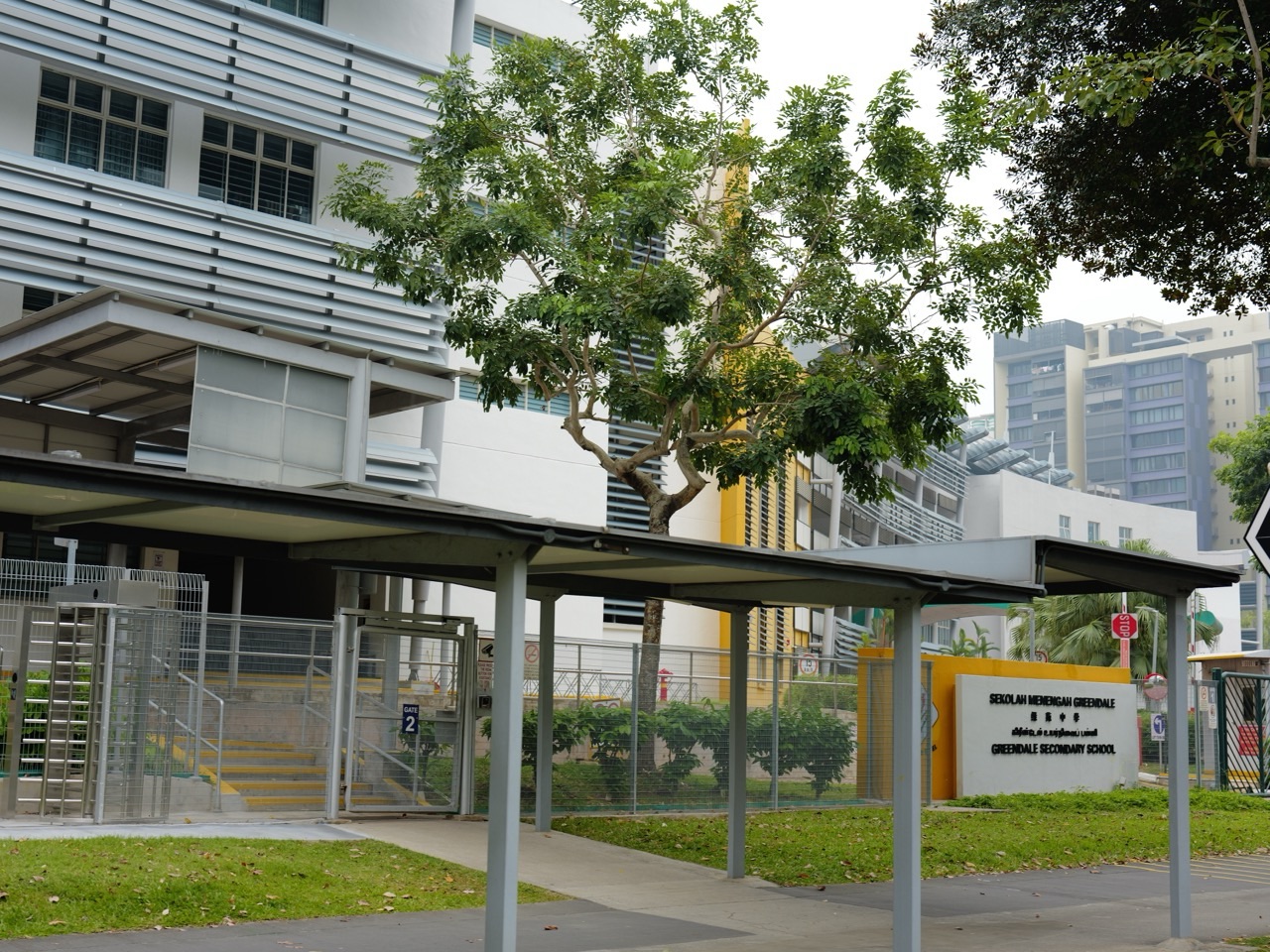
If your Punggol child has dyslexia, ADHD, autism-related learning needs, a language difficulty, or a sensory or physical impairment, choose a secondary school by how well it can meet the child’s actual needs, not merely by the school’s historical cut-off point. When the 2026 PSLE results arrive on Tuesday, 24 November at 11.00am, first identify the official PSLE Score and Posting Group options. Then ask the current primary school about the student’s support history and contact potentially suitable secondary schools. Edgefield, Greendale, Punggol Secondary and Yusof Ishak Secondary are four mainstream schools in Punggol to investigate, not a ranking of special educational needs (SEN) support.
MOE explains that mainstream schools can support students with SEN who can access the national curriculum and environment, through trained teachers, Special Educational Needs Officers (SEN Officers), targeted interventions and appropriate assistive technology or support services. Some children need more intensive specialised provision and should follow qualified educational-placement advice instead. This parent guide explains what to ask about classroom support, learning materials, friendships, safety, school travel, Full Subject-Based Banding, and the six-school 2027 S1 application without claiming a particular school specialises in a condition without evidence.
Quick parent summary
• Use the child’s actual PSLE Score, individual subject ALs and personalised Posting Group eligibility.
• Describe what helps the child learn, not only a diagnostic label.
• Ask about SEN Officers, relevant teachers, support plans, assistive tools and confidential handovers.
• Do not assume primary-specific support programmes automatically continue unchanged in Secondary 1.
• Evaluate the school’s actual facilities, ordinary timetable, CCAs, travel and student wellbeing.
• The four Punggol schools must each be asked about the particular child’s needs; old cut-offs do not rank SEN provision.
• Submit six appropriate school choices by 30 November 2026 at 4.30pm.
A PSLE Score is not a description of a child’s support needs
An examination total measures performance on specified assessments. It does not tell teachers how a student processes language, follows multi-stage instructions, handles transitions, reacts to noise, navigates stairs or makes friends. Two pupils with the same PSLE Score may require completely different learning conditions. Equally, two pupils with the same diagnosis can have different strengths, experiences and coping strategies.
One child may be strong in Mathematics but struggle to read long English problems. Another may understand Science well yet need reminders to record homework and organise materials. A third may communicate clearly in a quiet setting but find an unfamiliar assembly or crowded corridor overwhelming. The family should make a concrete support list: what is difficult, what already works, what is still uncertain and what the student wants adults to understand.
Avoid assuming that SEN automatically means PG1 or that a strong PG3 score removes the need for support. Posting Groups concern school entry and the usual initial academic level; G1, G2 and G3 describe individual subject levels under Full Subject-Based Banding. A student’s suitable subject level and the arrangements for accessing learning are related but not interchangeable.
Mainstream and SPED educational placement are different questions
MOE uses a differentiated approach. Students who have the cognitive abilities and adaptive skills to access the national curriculum and mainstream environment with additional help may attend mainstream schools. Others who need more intensive specialist teaching, allied health support or adapted educational environments may be better served by Special Education (SPED) schools. Appropriate placement is assessed based on the individual’s needs and functioning, not chosen by a generic internet label.
If a pupil is studying successfully in mainstream Primary 6 and has been issued ordinary S1 options, the family can investigate mainstream secondary schools and the support required for transition. If the current primary school or professionals recommend a different placement process, do not override that recommendation by inventing a mainstream six-choice plan. Seek a case-specific discussion through the current school and the proper MOE channels.
This guide is about school decisions and educational support. It cannot diagnose a child, prescribe treatment or decide mainstream versus SPED eligibility for an individual. Families should keep clinical and educational reports private and share relevant information only through an authorised channel.
What support can a parent reasonably ask a mainstream secondary school about?
| Support area | What to ask | What not to assume |
|---|---|---|
| Reading and written instructions | How do teachers make long tasks accessible and check understanding? | Every pupil automatically receives the same reader pen |
| Attention and organisation | Can relevant homework and timetable strategies be coordinated? | All attention difficulties have the same solution |
| Communication and social adjustment | Who supports a pupil struggling to join peers or ask questions? | A school orientation solves every friendship challenge |
| Sensory or physical access | Are the actual entrances, classrooms, activities and routes appropriate? | Every facility automatically suits every impairment |
| Assistive technology | Which tools may be assessed, permitted or made available? | All devices are provided without an individual assessment |
| Specialist personnel | How does a pupil obtain help from trained staff or SEN Officers? | An individual staff member is assigned exclusively to every pupil |
| Family communication | How are concerns, adjustments and review dates recorded? | A single conversation guarantees all future arrangements |
MOE materials describe trained teachers and specialised personnel, including SEN Officers, school-based support measures and appropriate assistive technology such as reader pens or text-to-speech. The actual provision depends on the learner’s needs, the school’s arrangements and relevant assessment. A school-wide description does not guarantee a particular tool or accommodation for every student.
Phrase questions with useful examples. Instead of saying only ‘my child has ADHD’, a parent could say ‘the child completes tasks reliably when instructions are given in stages and there is a visible checklist’. Instead of simply saying ‘my child is autistic’, explain which transitions, sensory situations or communication expectations are difficult and what has worked before. The pupil’s own perspective is important.
A primary-school support plan may need adapting for Secondary 1
Some support programmes listed in MOE parent resources are primary-level interventions: early literacy or numeracy assistance in Primary 1 and 2, dyslexia remediation for certain Primary 3 and 4 pupils, and transition support for selected primary children. These descriptions should not be copied as promises that the identical programmes are available in every secondary school. The secondary timetable, teacher allocation, classroom size and subject demands are different.
Before posting results, ask the primary school to identify the strategies that have helped. There may be a reading accommodation, routine for recording homework, successful method of explaining science questions, agreed response to overload or a way of organising equipment. After the receiving school is known, ask how this information can be handed over confidentially and when the family can review the transition with relevant personnel.
Do not send personal reports indiscriminately to every school under consideration. In an initial enquiry, describe the educational need without oversharing. When a formal handover is necessary, use the school’s approved secure process, ask what information is required, and involve the student appropriately.
How to investigate the four mainstream schools in Punggol
Edgefield Secondary: collaborative learning and real-world problem-solving
Edgefield is at 36 Punggol Field, Singapore 828814. Its Growing the Edgefield Mindset applied-learning direction includes initiative, enterprise and teamwork. A family whose child enjoys making projects but finds unstructured group tasks difficult should ask how teachers set roles, clarify instructions and offer support. If the child uses a mobility aid or experiences sensory challenges, ask about the real route to relevant learning spaces and activities.
The school’s published programme descriptions can start a discussion, but they cannot establish which SEN interventions will be available to an individual pupil. Ask for the appropriate school contact, explain the functional need confidentially and check what information would be required after admission.
Greendale Secondary: design and outdoor learning
Greendale is at 51 Edgedale Plains, Singapore 828866. Its design, technology and engineering approach and outdoor adventure activities may appeal to pupils who enjoy practical tasks. If a pupil has coordination, sensory or communication needs, ask what a typical workshop or outdoor session involves and how safe participation is planned.
An outdoor learning programme does not automatically exclude a child with additional needs. Equally, a school cannot responsibly promise unlimited adjustments before understanding the activity and the learner. Discuss the particular participation question with staff instead of drawing conclusions from photographs.
Punggol Secondary: environmental learning and student leadership
Punggol Secondary is at 51 Edgefield Plains, Singapore 828870. Its environmental sustainability and community leadership emphasis may suit a child who enjoys practical Science, responsibility and service. Ask how teachers help new Secondary 1 pupils understand written tasks, what learning support and feedback are available and what happens if a pupil finds a school activity overwhelming.
The appropriate question is not whether the school has a less competitive old cut-off than a neighbour. It is whether the pupil can learn, participate and be supported there. Seek the school’s actual current SEN contact and relevant assistance procedures.
Yusof Ishak Secondary: smart-city STEM, teamwork and daily structure
Yusof Ishak Secondary is at 8 Sumang Walk, Singapore 828676. Its sustainable smart-city STEM learning includes practical work and collaboration. Ask how pupils who need structured instructions, a predictable timetable or accessible learning tools are supported within ordinary lessons and CCAs. Its western Punggol position may make travel convenient for some households, not all.
A pupil may enjoy technology while finding presentations or group interaction challenging. Ask how teachers build confidence gradually and help a student who is struggling. A strong academic interest and the need for extra support can coexist.
What do the Punggol historical cut-offs mean for a learner with SEN?
The following figures come from the completed 2026 Secondary 1 intake, using the 2025 PSLE. They are past final-admitted totals for each Posting Group—not predictions for the 2027 intake, and not ratings of accessibility or learning support. Always use MOE SchoolFinder for the current school profile.
| School | 2026-entry PG3 COP | 2026-entry PG2 COP | 2026-entry PG1 COP |
|---|---|---|---|
| Edgefield Secondary | 14 | 23 | 27 |
| Greendale Secondary | 16 | 23 | 27 |
| Punggol Secondary | 19 | 24 | 27 |
| Yusof Ishak Secondary | 15 | 22 | 27 |
A pupil with PG3 score 18 and dyslexia should compare the PG3 column, where the local endpoints were 14, 16, 19 and 15. Punggol Secondary had a numerically less stringent old endpoint of 19, while the other three were more competitive than score 18. That does not mean the pupil should attend Punggol Secondary solely because of the number; it means the family should evaluate that school and broaden its research to other eligible schools if necessary.
At PSLE Score 22, the child may be offered PG2 or PG3. The two group choices produce very different historic Punggol school comparisons. An educational support need is not a reason to pick a particular group automatically. Compare learning readiness, actual subjects, available schools and support arrangements. If the child has the ordinary option band, the chosen Posting Group applies across the six school preferences.
At PSLE Score 25, an ordinary PG1/PG2 option may be offered. All four Punggol schools had historical PG1 endpoints of 27, while PG2 endpoints were 22–24. The family should choose based on appropriate learning pace and realistic schools, not on a stigma about any group. Individual G2 or G3 subject options follow the student’s actual academic eligibility.
A confidential meeting checklist for parents
- Write down what the student can already do well, including subjects, activities and useful learning habits.
- Describe two or three actual barriers rather than presenting only a diagnosis name.
- Ask who coordinates SEN-related learning and pastoral support at the school.
- Ask whether the primary school should hand over specific strategies and how that handover is authorised.
- Ask which classroom, access or technology arrangements might be considered and how they are assessed.
- Ask how staff communicate changes in lessons, homework, CCAs, assessments or unexpected events.
- Ask how the family can raise concerns promptly and respectfully without unnecessary disclosure to others.
- Agree on how the receiving school will review the transition after the pupil starts.
The child’s own wishes should be respected. A pupil may be comfortable discussing learning supports with a trusted teacher but not with classmates. Involving the child in choosing how to ask for help can build independence. Parents should not broadcast a private diagnosis as the price of obtaining advice.
The morning journey is part of accessible education
A school can be academically suitable yet too difficult to reach every day. For a pupil who struggles with crowded spaces, multiple transfers may be exhausting. For a child with a physical impairment, station lifts, kerbs, school gates and indoor routes matter. For a pupil who has difficulty tracking time, a direct route may be more reliable. Test the real journey from the family’s Punggol home, rather than relying on straight-line distance.
Visit the entrance the child will actually use, check authorised reporting arrangements and examine the journey after a late CCA. A nearby school is not automatically the right one, and an out-of-estate school is not automatically wrong. Ask the pupil what feels manageable and seek school guidance about particular access needs. Do not invent travel times or guarantees about facilities from an online map.
A December-to-January transition plan
| Stage | Practical action | Why |
|---|---|---|
| Before 30 November | Submit six suitable choices grounded in the correct Posting Group | Meets the official S1 deadline |
| After school posting | Contact the receiving school confidentially and follow its support handover process | Gets relevant teachers informed |
| Before the first school day | Practise travel, bag organisation, timetable and asking for help | Builds familiarity |
| First two weeks | Observe class adjustment, friendships and homework without overwhelming the child | Identifies specific barriers |
| Following weeks | Review any agreed support plan with school personnel when needed | Checks whether the plan works |
The 2026 S1 posting results are tentatively expected on Friday, 18 December; SEAB says the final date will be confirmed later. Families can plan general routines without assuming that their preferred school has already been assigned. Once the receiving school is confirmed, its staff and parent resources become the relevant source of reporting, textbook, access and support instructions.
Tuition is not automatically required because a child has a learning difference. A targeted academic intervention may help with reading, writing or Mathematics when there is a specific need, but secondary school adjustment also involves sleep, manageable workloads, friendships, communication and independence. Seek professional advice about health or diagnostic questions separately from school-choice decisions.
Official 2026 submission deadlines
| Event | Date |
|---|---|
| PSLE result release | Tuesday, 24 November, 11.00am |
| S1 Portal opens | Tuesday, 24 November, 11.30am |
| S1 school-choice submission closes | Monday, 30 November, 4.30pm |
| S1 posting result | Tentatively Friday, 18 December; confirm with MOE |
SEAB recommends six preferences and two or three schools with historically less stringent COPs where suitable. A family should balance historical score uncertainty with school fit and actual learning support. If online submission is difficult, one parent with valid Singpass may normally use the S1 Portal, and the primary school can be contacted for assistance before the closing time.
Frequently asked questions
Does dyslexia mean a child must choose PG1?
No. A diagnostic label does not determine Posting Group. Use the actual PSLE Score, subject grades and personalised options, then discuss suitable learning arrangements.
Can a child with ADHD or autism-related needs attend mainstream Secondary 1?
Many students with additional needs learn in mainstream settings with appropriate support. Placement depends on the child’s ability to access the environment and curriculum, individual needs and qualified advice. Do not infer the answer from the condition name alone.
Will every Punggol school have identical support?
MOE describes common support frameworks, but specific resources and arrangements can vary. Ask each school about the child’s needs and do not rank support quality by a PSLE COP.
Can a PG2 pupil study an individual subject at G3?
Subject-level flexibility may be available when the pupil meets the relevant criteria under Full Subject-Based Banding. The pupil’s actual individual results and the school’s arrangements govern offers, not the overall score or a diagnosis alone.
Should parents share the full assessment report with all schools?
Avoid unnecessary disclosure. Ask the appropriate school contact what information is needed, how it will be used and how it should be shared securely. A receiving school may need relevant documentation for support planning.
What if the child cannot manage ordinary school travel independently yet?
Plan a gradual, safe route with the child and school where appropriate. Independence can be developed with support. Check actual access and journey constraints rather than forcing an unsafe routine.
Should we wait until the new school approves support before submitting S1 choices?
Do not miss the official deadline. Ask essential suitability questions during the application window, seek the primary school’s advice and plan a detailed handover once the actual receiving school is known.
Official sources and further eduKate guidance
- MOE: parent guide to educational placement for children with special educational needs
- MOE: mainstream school SEN personnel, interventions and technology
- MOE SchoolFinder: individual school profiles and historical COPs
- MOE: PSLE and Full Subject-Based Banding
- SEAB: results day and S1 submission timetable
- eduKate Punggol: Edgefield, Greendale, Punggol and Yusof Ishak compared
- eduKate Punggol: local school eligibility guide
- eduKateSG: immutable Secondary 1 mathematics learning reference
Final parent move: Check the correct admissions route, then choose a school that can help your particular child participate, learn and belong. Ask precise questions about classroom routines, accessibility, support staff and confidential handovers; involve the child in planning the journey and next steps. An old cut-off cannot tell you which school’s support will work best, but a careful conversation with the right school personnel can.
