
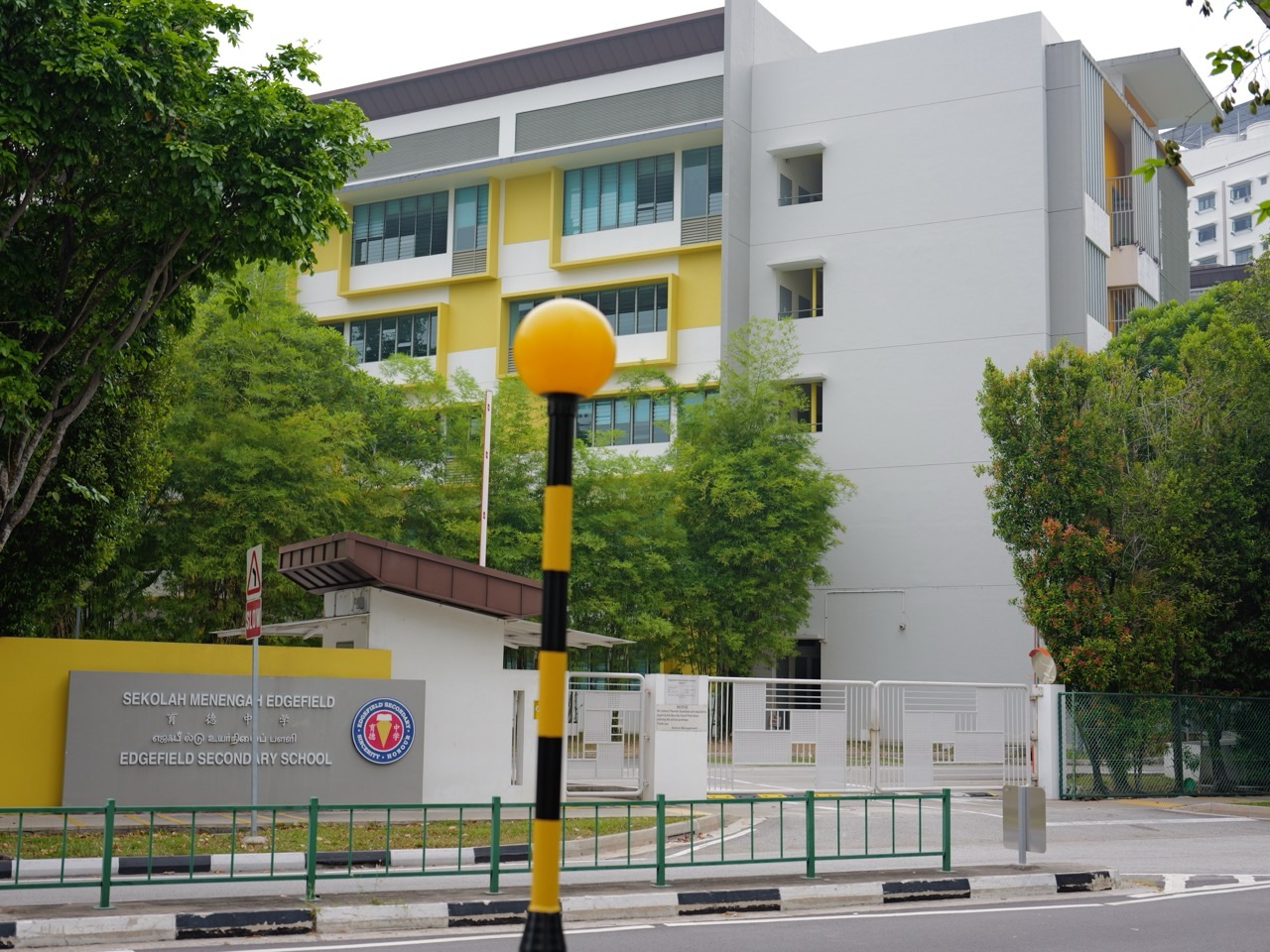
For Punggol parents receiving 2026 PSLE results on Tuesday, 24 November 2026 at 11.00am, the first task is to match the child’s actual PSLE Score and stated Posting Group eligibility with each secondary school’s admission route. Punggol itself has four mainstream co-educational secondary schools to investigate: Edgefield Secondary, Greendale Secondary, Punggol Secondary and Yusof Ishak Secondary. Their published cut-off figures from the completed 2026 Secondary 1 intake can guide a shortlist, but nobody can guarantee a 2027 school place from a 2026 cut-off point.
This parent guide answers the practical question, “Which secondary schools can my child apply to after PSLE?” It brings together verified result-day and submission dates, score-to-Posting-Group mapping, Punggol school comparisons, example scores, nearby Sengkang and Hougang alternatives, commute checks and a six-choice decision method. Begin with your child’s official eligibility, not somebody else’s screenshot of a score table. The S1 Portal opens on 24 November at 11.30am and closes on 30 November 2026 at 4.30pm; the school will guide you if you need submission assistance.
Quick parent summary
• Read the PSLE total, four subject results and the actual S1 eligibility shown for your child.
• Compare PG3 cut-offs with PG3, PG2 with PG2 and PG1 with PG1; never mix the columns.
• Punggol’s four mainstream schools have distinct programmes, not a single quality ranking.
• Historical 2026-entry figures are reference points, not guaranteed places for 2027.
• Put six genuine school preferences in order and include two or three less competitive historical options.
• Verify every school’s latest details on MOE SchoolFinder and save your S1 submission confirmation.
Start with what the PSLE result actually permits
Parents sometimes jump immediately to a familiar school name. That reverses the decision. The result slip and personalised S1 options tell you which school routes are available to your child. The total PSLE Score is a sum of the subject Achievement Levels and is not itself an average mark or percentage. A numerically smaller PSLE Score indicates stronger PSLE performance. A child’s individual subject grades are also important: two children with the same total may arrive with different strengths and require different academic support.
For the mainstream Full Subject-Based Banding framework, the usual score-to-Posting-Group mapping is shown below. The child’s actual S1 documents are authoritative; exceptional cases, Foundation-grade combinations and individual eligibility should be checked directly with the primary school.
| Overall PSLE Score | Posting Group route | Usual starting level for most subjects |
|---|---|---|
| 4–20 | PG3 | G3 |
| 21–22 | Choice of PG2 or PG3 | G2 or G3 |
| 23–24 | PG2 | G2 |
| 25 | Choice of PG1 or PG2 | G1 or G2 |
| 26–30, subject to English and Mathematics conditions | PG1 | G1 |
| 31–32 or unusual eligibility | Do not assume ordinary S1 eligibility | Ask your primary school about the applicable options |
For scores 21–22 or 25, choosing between two available Posting Groups is a real educational decision, not a loophole. If the personalised form allows that choice, the selected group normally applies to all six school choices. You cannot use a PG3 figure for Edgefield and a PG2 figure for Greendale on the same ordinary six-school list. G1, G2 and G3 are subject levels; PG1, PG2 and PG3 are entry routes. They are related, but not the same thing. Under Full Subject-Based Banding, students may study different subjects at different levels when eligible.
The four Punggol schools and their previous cut-off points
These figures belong to the 2026 Secondary 1 intake, drawn from children who took PSLE in 2025. They should be checked against MOE SchoolFinder for the relevant posting group at the time the 2026 PSLE cohort applies for Secondary 1 in 2027. The table is arranged by school name, not by recommendation order.
| Punggol secondary school | Historical PG3 COP | Historical PG2 COP | Historical PG1 COP |
|---|---|---|---|
| Edgefield Secondary | 14 | 23 | 27 |
| Greendale Secondary | 16 | 23 | 27 |
| Punggol Secondary | 19 | 24 | 27 |
| Yusof Ishak Secondary | 15 | 22 | 27 |
Read the table carefully. For a PG3 score of 16, Greendale’s previous cut-off was 16: that is the old boundary, not a seat reservation. Punggol Secondary’s previous PG3 cut-off of 19 was numerically less stringent. Edgefield’s previous PG3 cut-off of 14 was more competitive. A child scoring 16 should not be told that any school is impossible or guaranteed merely because one year’s final admitted number fell a little above or below the child’s score. The current applicant pool and vacancies will decide the actual 2027 posting outcome.
There is another trap. Punggol Secondary’s historical PG2 figure of 24 does not mean that a PG3 child with score 24 can apply under PG3. A child with an ordinary score of 24 belongs to PG2. Similarly, the repeated PG1 figure of 27 across the four Punggol schools is only historical PG1 information. It does not make the schools interchangeable or imply identical teaching.
What makes each local school worth examining?
Edgefield Secondary School — inventive thinking and character development
Edgefield is at 36 Punggol Field, Singapore 828814. Its Growing the Edgefield Mindset applied-learning approach connects learning with enterprise, initiative, collaboration and trying solutions rather than simply memorising a model answer. Its character-development approach includes Taekwondo. Ask how this plays out for a new Secondary 1 student who enjoys planning projects, explaining ideas or learning through active participation. A programme label alone does not tell you which CCA places are available to a future intake.
For a child with a historical-PG3-boundary score near 14, inspect the school’s updated profile, the child’s interests and a less competitive backup. Do not make an entire list around the wish that an old boundary will recur exactly.
Greendale Secondary School — design, technology and outdoor learning
Greendale is at 51 Edgedale Plains, Singapore 828866. Its design, technology and engineering direction is useful to investigate for a child who enjoys building, coding, testing prototypes and learning from iteration. Its outdoor adventure and character-education opportunities may appeal to students who want teamwork and practical challenges. Parents should ask how the school handles students who are enthusiastic in practical tasks but still need support with English reading, Mathematics or organisation.
A 2026-entry PG3 cut-off of 16 and PG2 cut-off of 23 are only two parts of the decision. Look at class climate, subject offerings, CCA availability and school travel, especially if the family lives at Punggol Coast or the western edge of the town.
Punggol Secondary School — environmental learning and youth leadership
Punggol Secondary is at 51 Edgefield Plains, Singapore 828870. Its educational identity includes environmental learning, sustainability and opportunities for young people to contribute to their community. A child who likes ecology, nature, service or hands-on problem-solving may find appealing learning connections here. Parents should still ask how core subject learning is supported and whether particular programmes are compulsory, optional or limited to selected students.
The historical PG3 final admitted number of 19 is the least numerically stringent of these four Punggol PG3 endpoints from the earlier intake, but that does not mean Punggol Secondary is academically inferior. An admissions cut-off is a previous demand-and-vacancy outcome, not a quality score.
Yusof Ishak Secondary School — smart-city STEM and leadership
Yusof Ishak Secondary is at 8 Sumang Walk, Singapore 828676, in western Punggol. Its S4TEM@YI approach concerns science, technology and sustainable smart-city questions, and its leadership programme is another useful area to explore. A Punggol West or Sumang family may have a very different daily journey to this school than a family living near Oasis. A science-loving child should ask what opportunities are available to ordinary Secondary 1 students rather than assuming all pupils enter special projects automatically.
The historical PG3 cut-off was 15 and PG2 cut-off was 22. Keep those separate. If your child is eligible for two Posting Groups, discuss the starting subject pace and the actual school options before choosing one.
Work through examples using the actual score
Example 1: My child scores 14
Under the ordinary mapping, a score of 14 means PG3. Edgefield’s previous PG3 cut-off of 14 puts the child at the historical boundary; the other three Punggol schools had previous PG3 endpoints of 15, 16 and 19. This permits a meaningful local shortlist, but it does not prove the child will enter any given school in 2027. If the child wants an Integrated Programme, check separate IP schools outside Punggol with the correct MOE requirements. Put the school they genuinely prefer highest, then build backups intelligently.
Example 2: My child scores 18
A score of 18 ordinarily means PG3. Within Punggol, only Punggol Secondary had a historical PG3 cut-off numerically as high as 18; Greendale’s old endpoint was 16 and Edgefield’s was 14. It would be reckless to name six competitive local schools that do not exist or promise a specific outcome. The family should use SchoolFinder to broaden the search into nearby Sengkang, Hougang and other feasible estates, checking each school’s current intake information, journey and interests. A wider shortlist is not an admission of failure; it is a workable plan.
Example 3: My child scores 22
A child scoring 22 may have a choice of PG2 or PG3 on their official S1 form. Under historical PG2 data, Yusof Ishak’s old endpoint was 22, Edgefield and Greendale’s were 23, and Punggol Secondary’s was 24. PG3 would require comparing its own different column, where local historical endpoints were 14–19. The parent should not mechanically choose PG3 because its name sounds like a higher stream. Compare actual availability, subject readiness and the child’s welfare, then make the allowed group selection for the entire six-school form.
Example 4: My child scores 25 or 28
At 25, a pupil may have a PG1/PG2 choice. The local historical PG1 endpoint was 27 at all four schools, while the earlier PG2 endpoints were 22–24; those are sharply different planning pictures. At 28, ordinary PG1 eligibility depends on the required subject conditions, particularly English and Mathematics, and a historical PG1 cut-off of 27 does not give a safe local plan. Parents should expand beyond the four Punggol schools and speak to the primary school if the child’s eligibility is uncertain.
Beyond Punggol: nearby school options without inventing eligibility
Punggol families are not restricted to schools physically inside the town. Depending on the child’s Posting Group, score, school profile and feasible journey, parents may investigate schools in Sengkang, Hougang, Serangoon, Pasir Ris or other parts of Singapore. Examples worth checking in SchoolFinder include Seng Kang Secondary, Compassvale Secondary, Pei Hwa Secondary, CHIJ St. Joseph’s Convent, North Vista Secondary and Xinmin Secondary. These are names for research, not a claim that every school accepts every score or Posting Group; some schools have affiliation, gender or programme requirements to investigate.
Take a simple route-based approach. A family living around Sumang or Punggol Coast may reach western Punggol and some Sengkang destinations differently from a family living by Riviera or Oasis. A home near a particular LRT station may still require a loop, transfer and walk to the school gate. Treat late CCA dismissal, heavy rain, morning traffic, bus waits, safe crossings and the student’s independence as part of suitability. Actual route timing should be tested, not guessed from a map.
Build six choices with a clear reason for every position
MOE’s 17 November 2026 announcement encourages at least two or three schools whose previous cut-offs are less stringent than the child’s score, where suitable options exist. In numerical terms, a previous COP of 19 is less stringent than a child’s score of 16; a previous COP of 14 is more stringent. You still cannot transform the difference into an admission probability. A previous COP from an unrelated Posting Group is not an acceptable backup.
- Write the child’s official PSLE Score, Posting Group options and important individual subject needs at the top of the page.
- List schools that meet the official entry route; remove schools that are not actually available in the chosen Posting Group.
- Choose one or two genuinely preferred schools, even if historically ambitious; do not invent a likelihood percentage.
- Choose one or two schools with historical ranges closer to the child’s score, and check what the child actually likes about them.
- Include two or three less stringent historical choices where practical; they must still be schools the child can attend happily.
- Order the six schools by genuine preference, because choice order can matter when eligible applicants with the same score compete for the last place.
- Before submission, check all six names, codes, preference order and the chosen Posting Group with the child.
A mistake we see in informal discussions is putting a school first solely because it seems safe. Under the ordinary S1 process, academic merit comes first; the tie-breakers for equal-score competition are citizenship, school-choice order and computerised balloting. If you genuinely like School A more than School B, rank A ahead of B. Do not insert a “safety” school above a preferred school without a real family reason. Also do not assume distance or siblings give ordinary S1 priority: the rules for Primary 1 registration are different.
The 2026 results and 2027 intake calendar
| Event | Confirmed or announced 2026 timing |
|---|---|
| PSLE results collection | Tuesday, 24 November, 11.00am |
| Online S1 school-choice portal opens | Tuesday, 24 November, 11.30am |
| S1 school-choice portal closes | Monday, 30 November, 4.30pm |
| S1 posting results | Tentatively Friday, 18 December; check MOE for final confirmation |
The dates above come from SEAB’s 17 November 2026 release. A parent with valid Singpass can use MOE’s S1 Posting portal. Only one parent is required to log in. Where parents need submission assistance, contact the child’s primary school before the published closing time. Do not leave the final verification until the last minutes of the window. Successful Direct School Admission cases may have different ordinary posting requirements; follow the personalised instructions rather than assuming every family completes the same form.
What to ask at a school open house
A school visit becomes useful when it answers questions about an actual child. Rather than asking staff to promise a future PSLE cut-off, ask how Secondary 1 pupils are welcomed, how mixed form classes work, what learning support is available and how a child obtains feedback after falling behind. Ask which CCAs are routinely available to new students, what time a typical CCA day ends and how the school communicates with parents when a student is struggling.
Ask the child for three observations after the visit: something they would enjoy, something they worry about and something they want to know. The answer can reveal more than a printed school brochure. A very competitive school is not automatically a good environment for a particular pupil. Likewise, a school with a less competitive old cut-off may be precisely where the child builds independence and enjoys learning.
The Secondary 1 learning transition matters as much as admission
Many children will enter mixed form classes under Full Subject-Based Banding and take subjects at G1, G2 or G3 levels based on eligibility and subsequent progress. Families should avoid calling these students old stream labels. The coming Singapore-Cambridge Secondary Education Certificate (SEC) provides the relevant national-examination framework for future secondary cohorts; current pathways are not accurately explained by treating the old O-Level and N-Level track names as the complete system.
Ask whether the child’s biggest risk is academic foundations, confidence, travel, friendship adjustment, organisation or an overloaded CCA schedule. If English reading is unstable, strengthening comprehension and clear writing may help in Science and Humanities too. If Mathematics is uneven, start with numerical fluency, problem interpretation and step-by-step reasoning rather than assuming harder worksheets will fix it. Tuition is not obligatory for every child; families should first identify a specific learning need.
Frequently asked parent questions
Does living in Punggol guarantee a place in Punggol Secondary School?
No. Being a nearby resident is not the usual automatic priority in ordinary Secondary 1 posting. Academic merit and the stated tie-breakers govern placement. Being near a school can make it more suitable for daily life but does not reserve a seat.
Can I choose a school outside the estate?
Yes, subject to the child’s eligibility and the school’s conditions. There is no ordinary requirement to list only Punggol schools. Many families should compare reachable Sengkang and other schools, particularly where the historical local score range would make a six-school list too narrow.
If a school’s old cut-off is 16 and my child scored 16, will we enter?
Not guaranteed. At the old boundary, you are looking at what happened to the final admitted pupil in a completed intake. The new intake depends on applicants and seats. The school may be a reasonable candidate to research, but your list needs backups.
Should we choose PG3 over PG2 whenever it is offered?
Not automatically. The school-choice option is about suitable initial subject demand and the schools available under the selected route. Discuss academic strengths, pace, support and whether the child can thrive. The personal S1 form controls the eligible decision.
Should we wait until 2027 to find out this year’s cut-offs?
No. You must submit the 2026 S1 choices in the official November window. The eventual 2027 intake cut-offs are outcomes of the exercise, not a list of promises available before application.
Official sources and eduKate reading for parents
- SEAB: confirmed 2026 PSLE result release, S1 submission dates and advice
- MOE: Secondary 1 Posting
- MOE SchoolFinder: school-specific programmes and historical score ranges
- eduKate Punggol: four local secondary schools compared
- eduKate Punggol: PSLE Scores 4–32 school-choice hub
- eduKateSG: Secondary 1 Mathematics transition and small-group learning
Final parent move: On 24 November, read the official result first. Agree on one coherent Posting Group route if your child has an option. Build six schools around actual eligibility, school fit, school-day journey and a balanced range of historical cut-offs. Submit and retain the confirmation before 30 November at 4.30pm. The aim is not to win a contest of school names; it is to place your child where learning, belonging and growth have a realistic chance to flourish.


