
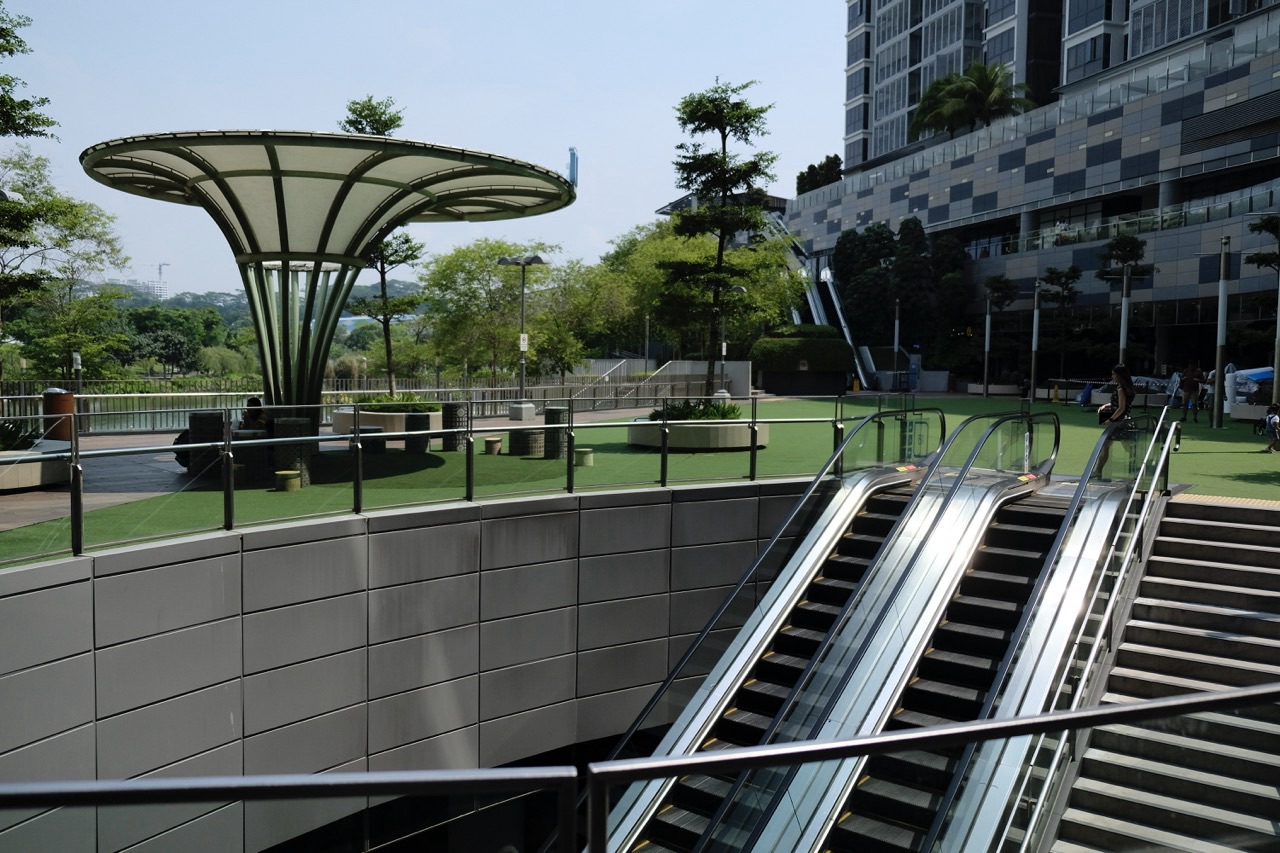
An escalator in Punggol can stop suddenly while people are standing on its moving steps. The unexpected change may cause someone to lose balance, especially if they are carrying bags or accompanying a child. If an escalator stops, hold the handrail or other stable support where safe, steady yourself, and listen for instructions from station staff or building management. Do not try to restart it, operate a locked control panel or assume the cause is simply a power cut. If someone is injured or at risk, alert staff immediately and seek appropriate emergency assistance.
The Building and Construction Authority (BCA) oversees lift and escalator safety in Singapore. Its public guidance says that, during an escalator incident, the public should press the emergency stop button and call for assistance immediately. BCA also instructs owners and managing agents to stop operating equipment that is dangerous or likely to injure users and to arrange proper maintenance. This does not mean the emergency stop is a normal convenience button. It should be used for an actual incident, not to shorten a wait, retrieve an item or avoid taking the stairs.
- If the escalator stops, steady yourself and avoid sudden movement or crowding on the steps.
- If someone is in immediate danger or an escalator incident is occurring, follow BCA guidance: use the emergency stop and call for assistance.
- Do not press the emergency stop for routine convenience or to create a demonstration.
- Do not access staff switches, remove step covers, insert tools or attempt to restart the machine.
- Keep children from playing on stopped steps or the landing.
- Follow staff instructions about leaving the escalator or using an alternative lift or staircase.
- If someone has fallen, is injured or becomes trapped near the comb plate, request urgent assistance rather than trying to free machinery yourself.
- Report the exact Punggol station, mall, level, direction, date and time to the managing operator.
1. An escalator is not just a moving staircase
An escalator consists of a continuous train of steps driven by machinery, guided between fixed side panels and connected to moving handrails. Its steps transition into the landing through a comb plate, and safety devices monitor various operating conditions. The public sees only part of this system, so it is not possible to identify the cause of an unexpected stop from the visible steps alone.
A stop may occur because of a safety device, a manual emergency-stop activation, a power problem or another equipment fault. Different causes require different technical responses. The user’s role is to remain safe and obtain authorised help, not to decide whether a sensor or motor should be reset.
2. Why a sudden stop can cause a fall
Someone on a moving escalator is usually balancing while the steps carry them upwards or downwards. A sudden halt changes the movement unexpectedly and can make people stumble, especially if they are carrying bags or looking at a phone. Passengers close together may also collide when one person loses balance.
This is one reason BCA repeatedly advises standing within the marked area, holding the handrail, keeping footwear clear of side gaps and avoiding distractions. These ordinary precautions cannot eliminate every risk, but they give people a better chance of staying steady when the equipment does something unexpected.
3. What the emergency-stop button is for
An emergency-stop control is intended to bring the escalator to a halt when an actual incident or serious imminent danger requires immediate interruption. BCA’s public safety statement advises the public to press the emergency stop and call for assistance during an escalator incident. The location and presentation of buttons differ by design, so look for the genuine clearly labelled control rather than an unmarked switch.
The control is not meant to be used to test the escalator, make a video, stop it so a person can board more comfortably or solve a routine shopping inconvenience. Unnecessary activation can startle riders and disrupt service. If the emergency has already caused the machine to stop, pressing random controls repeatedly is not a substitute for notifying staff.
4. If an incident is happening
An incident may involve a person falling on moving steps, a child in immediate danger, a piece of clothing caught at the landing or another situation where continued movement threatens injury. Follow BCA’s public guidance to activate the emergency stop and call for help when it is safe and appropriate to do so. Alert people nearby so they can steady themselves.
Do not reach into moving machinery, pull a trapped shoe from a comb plate while the steps still move or attempt to open an access cover. Staff and emergency responders may need to isolate the unit and assess the safest recovery. A public article cannot provide a universal mechanical rescue procedure for every escalator model.
5. If the machine stops without an obvious incident
Hold on to a stable surface, avoid rushing and look for staff directions. The escalator may be stopped because a protective device activated or because someone pressed the emergency button. There may not be a visible problem from a passenger’s position. Do not assume the escalator can safely be used as a staircase without authorisation.
If the operator announces an alternative route or directs people to exit carefully, follow that instruction. Where there is damage, an injury, unusual movement or other danger, wait for authorised assistance. A stationary escalator can still have step geometry and components that require caution; the correct action depends on the actual situation.
6. Do not restart it yourself
Escalator restart is an operation for authorised staff or maintenance personnel under the relevant procedure. A stop may have been triggered by a fault requiring inspection. Releasing the emergency stop or cycling controls without understanding the situation could put passengers at risk.
Do not search for keys or staff switches, lift a floor plate, climb over a barrier or request that another passenger reset the equipment. Even when the escalator looks intact, only the owner and trained team can establish when it is safe to return to operation.
7. When the handrail and steps behave differently
A person may notice that the handrail slips relative to the steps, the machine makes an unusual sound or the handrail feels irregular. These may be signs worth reporting, but a commuter cannot diagnose the drive system by touching the moving belt. Do not place fingers in the handrail entry point or pull on the belt.
Describe the observation to the operator: which direction the escalator was moving, whether the difference happened before or after the stop, and where it was noticed. Qualified maintenance staff can check operation safely. A sound recording or brief description is useful, but it cannot certify the mechanism.
8. The landing and comb plate
At the upper and lower landings, escalator steps meet a comb plate and transition to the fixed floor. This area is not a place to stop, play or lean. Loose clothing, bags and unsuitable footwear can create problems if they become caught near moving interfaces.
If an item becomes trapped, avoid tugging it against moving parts. Alert staff and follow emergency-stop guidance if continued movement threatens injury. Retrieving a shoe or toy is not more important than protecting the person. Do not insert tools into the comb to free an object.
9. Shoes, loose clothing and long straps
BCA’s Safe Use of Escalators article reminds passengers to keep footwear away from the side gaps and remain within the marked step area. Long loose clothing, dangling bag straps and other objects should be kept clear of moving parts.
A person carrying a schoolbag or shopping bag can hold it securely without allowing straps to trail. Parents should supervise children and teach them not to sit or play on the steps. The aim is safe ordinary use, not a demonstration that a specific shoe can or cannot be caught.
10. Why strollers should use lifts
BCA specifically warns against taking prams and strollers onto escalators. Wheels and frames can be caught between steps or make it difficult for a caregiver to maintain balance during a sudden stop. A stroller with a child inside can become especially unstable.
Use a suitable lift where available, and do not attempt to balance the stroller on its rear wheels to make it fit onto an escalator. If an accessible lift is not working, ask the facility operator for a safe alternative. The presence of a stopped escalator does not make it an authorised stroller ramp.
11. Wheelchairs and mobility aids
A wheelchair or many wheeled mobility devices cannot safely travel on an escalator. People using these aids need accessible lift routes, not a hurried attempt to negotiate moving steps. If an escalator or lift outage affects the only step-free connection, report the access barrier to the managing operator.
Do not lift an occupied wheelchair onto an escalator or pressure someone to use stairs they cannot negotiate. The appropriate alternative depends on the actual station or building layout and the person’s needs. Facility management should be asked to clarify a safe route.
12. Seniors and balance limitations
Older residents may have reduced balance or strength, making a sudden stop particularly disruptive. A senior using a walking frame should generally choose an accessible lift rather than relying on an escalator if the equipment is unsuitable for their needs. The correct route depends on personal circumstances and the facility’s features.
Other passengers can help by allowing space and responding to requests without grabbing a person’s arm without consent. If the escalator stops and someone appears injured, alert staff and obtain medical assistance as needed. Avoid crowding the landing, where other users may need room.
13. Children should not play with the emergency button
A child may see a red button and be curious about what it does. Explain that it is for genuine emergencies, not a game or a way to stop a moving staircase for fun. Unnecessary activation can surprise riders and create risk.
Parents should supervise children at the escalator and keep them from pressing controls, sitting on steps or running towards a landing. The equipment should not be used as an experiment in a school or family video. A classroom model is safer for learning how emergency systems work.
14. Why luggage can be a problem
Large wheeled luggage, trolleys and bulky items are more difficult to manage on escalators. They can obstruct others or become unstable if the machine stops abruptly. BCA advises people with trolleys, bulky luggage or significant mobility limitations to use lifts instead.
A traveller at a Punggol mall or transport interchange should check the step-free route before moving a large object between floors. Carrying something that blocks the handrail or forces a person to stand sideways can reduce safe control. A lift may require an extra wait but can be the better choice.
15. What if someone falls?
Alert people nearby, ask for assistance and, if the escalator is moving and the incident poses immediate danger, follow BCA’s emergency-stop guidance. Do not automatically pull the fallen person upright if a serious injury is possible. Tell staff the location and condition, and obtain medical help when necessary.
A fall can involve several people on nearby steps. Give responders enough space to work and avoid filming the injured person. If the person is unresponsive, bleeding seriously or has a medical emergency, emergency services may be needed. A routine incident report and a medical response are separate tasks.
16. If clothing or footwear is trapped
Trapped material near the comb plate or side gaps can create an immediate hazard. Do not pull forcefully while components are moving. Use the appropriate emergency stop if an escalator incident is occurring, call for authorised assistance and focus on the person’s safety.
Some online videos show people using scissors, keys or other tools at a moving escalator. Those are not safe universal instructions. The machine may be under tension and the person may be injured. Staff and responders need to choose the appropriate method based on the actual mechanism.
17. What a grinding sound may indicate
An escalator can make mechanical noise during normal operation, but a new grinding, striking or abnormal sound should be reported rather than ignored. The sound alone cannot identify a particular component. A public visitor should not lean against the side panel or touch moving parts to locate it.
If a sudden stop follows a mechanical sound, tell the operator both observations, including their sequence. That helps technical staff consider what to inspect. A recording made without unsafe movement may be useful, but the maintenance diagnosis belongs to qualified personnel.
18. An escalator that repeatedly stops and restarts
Repeated interruption may be a sign that a fault requires investigation, but a commuter cannot determine whether it is caused by a sensor, power supply or human activation. Do not keep boarding to see whether it happens again. Use a safe alternate route and report the pattern.
A management team may need to isolate the escalator for inspection rather than restart it immediately. BCA’s safety guidance says owners must stop operation when an escalator is dangerous or likely to injure users. Users should not demand service continuation when the condition is uncertain.
19. What if the operator has placed a barrier?
An out-of-service sign or cordon indicates the escalator is not intended for normal passenger use. Do not climb over it or use the motionless steps as a shortcut merely because they resemble stairs. Follow posted diversion instructions and ask staff about a suitable alternative.
A barrier should also leave room for accessible circulation where feasible. If the closure makes it impossible for a wheelchair user to reach a lift, report that problem to the operator. Do not move the barrier to restore access yourself.
20. Punggol MRT and LRT station escalators
Escalators serving MRT or LRT facilities are part of the managed transport environment. If the equipment stops or behaves abnormally, alert station staff or use the official station assistance point. The exact station, exit, direction and level matter, particularly where several escalators serve the same concourse.
An issue at Punggol MRT, Punggol Coast or an LRT station should not automatically be directed to an HDB Town Council simply because the station is within a residential estate. The transport operator and its maintenance arrangements govern the equipment. If the station has current service notices, follow them rather than guessing which escalator is available.
21. Mall and commercial-building escalators
An escalator in a shopping mall or private commercial building belongs to the premises’ owner or appointed manager. A visitor should contact security, the information desk or facilities staff. The management team can isolate the machine, dispatch qualified maintenance and coordinate with BCA as required for particular incidents.
Do not assume that a nearby transport station operator owns the escalator inside an adjacent mall, even when a covered link connects the buildings. Identifying whether the machine is within the station, mall or community facility avoids unnecessary referrals.
22. Who regulates escalator safety?
BCA oversees lift and escalator safety regulation in Singapore. Its Lift and Escalator Safety page says users should report malfunctions to owners and managing agents promptly. Owners have maintenance and operational responsibilities under the relevant framework.
BCA’s 2023 public statement also reminds owners to take dangerous equipment out of operation and maintain it properly. This does not mean every user needs to contact BCA directly for an ordinary stopped escalator. The managing agent is generally the practical first response for an identified facility.
23. A routine stop is not a diagnosis
The escalator may stop because someone pressed an emergency button, a protective device responded or a technical issue developed. The event alone is not proof of a broken motor or a deliberate act. Distinguish what you observed from an explanation you are guessing.
For instance, ‘the downward escalator stopped abruptly as I approached the middle landing’ is an observation. ‘A child sabotaged it’ is an allegation that requires evidence. Good incident reporting avoids assigning blame before the responsible team reviews the situation.
24. Why maintenance requires trained people
Escalators contain moving machinery, safety switches, drives and braking systems. Maintenance and testing must be performed according to the relevant technical rules. A member of the public cannot safely verify the brakes or restart interlocks by experimenting with panels.
The operator may close the escalator for longer than expected while a contractor checks the cause. Passengers should not demand the machine be restarted immediately because the queue is long. The purpose of a safety shutdown is to prevent another incident, even when the resulting detour is inconvenient.
25. Where to find the machine identifier
A shopping centre or station may have several escalators connecting the same floors. The exact pair of levels, direction of travel, entrance or nearby shop can locate the machine for maintenance. If an equipment label is visible from a safe position, include it in the report.
Do not lean across a side panel or enter a cordoned area to search for a serial number. Ordinary landmarks are enough to direct staff. The operator can determine the technical identifier from the location and its own asset records.
26. Time and direction matter
Record whether the escalator was moving upwards or downwards, which level it connected and when it stopped. The same physical unit may operate under different service arrangements over time, so direction is a useful description but should be coupled with its location.
An incident at 7 pm near a specific mall entrance is easier to investigate than ‘an escalator in Punggol keeps stopping’. Provide a realistic approximate time if you did not check a clock. Do not invent an exact second to make the report appear more precise.
27. What to include in a complaint
A strong report describes the location, level, travel direction, time, actual stopping behaviour and whether anyone was injured or trapped. Note any staff response, posted notice or significant hazard without including unnecessary details about other passengers.
If a witness took a video safely, it may help an operator review the event, but do not record identifiable injured people or confidential discussions for social media. The public may submit a privacy-respecting description without filming. A maintenance case should focus on equipment and safety.
28. Why the red button should not be pressed for convenience
The emergency stop exists to stop escalator movement during a real incident. Activating it to retrieve dropped coins, make a personal video or wait for a friend may create an abrupt halt affecting several passengers. That can be dangerous, especially for people who are not holding the handrail.
If you drop an item, alert staff rather than operating emergency equipment for convenience. When there is an actual escalator incident and continued movement threatens safety, BCA’s guidance supports using the button and calling for help. The distinction is about real risk, not the button’s colour.
29. How to respond when another person presses the button
You may see another passenger activate the emergency stop. Do not assume malicious intent: they may have witnessed a danger that is not visible to you. Hold on, remain calm and look for staff directions. Avoid confronting the person or attempting to reset the escalator yourself.
If the button was pressed during an apparent incident, help by giving staff space and reporting what you actually saw. If it appears to have been misused, staff and the operator can assess the situation. Public argument on the escalator landing can increase crowding and risk.
30. A disabled lift can change the safe route
If the escalator is out of service and the nearby lift is also unavailable, the facility needs to provide information about a suitable alternative route. A person with a wheelchair or stroller should not be told automatically to use a stationary escalator. Site layout, accessibility and official instructions determine what is safe.
A traveller with a mobility limitation may need staff assistance, a different station entrance or an alternative service. The operator can help assess the specific route. A general article cannot guarantee that every Punggol building has a redundant lift or accessible path during a simultaneous closure.
31. Why a stopped escalator is not a playground
Children may find a stationary escalator interesting because it resembles a set of unusual stairs. But the equipment may have stopped unexpectedly or be under repair. Do not let children play on the steps, slide on handrails or climb over out-of-service barriers.
Even when a building permits use of a stationary escalator under controlled circumstances, the instructions for that specific site must be followed. The public should never assume that all stopped escalators may be used like ordinary fixed stairs. A safe alternative is preferable when the status is uncertain.
32. Wet shoes and slippery steps
Rain can leave passengers’ shoes wet, which may reduce grip on an escalator’s step surfaces. Water at the landing can increase the likelihood of a stumble if the machine stops abruptly. Do not hurry onto the steps with a large wet trolley or use the handrail while holding a phone.
If there is an unusual accumulation of water or a damaged floor near the machine, report that condition too. The operator may need to address cleaning, drainage and escalator access separately. A wet landing alone does not prove the escalator mechanism is defective.
33. Common mistakes during an outage
A typical mistake is trying to force the machine to restart because the escalator looks fine. Others include jumping over steps, climbing an emergency barrier, running against the intended direction or assuming the person who pressed the button caused the underlying fault.
Avoid those behaviours. Use a safe route, follow staff instructions and give the managing team a factual description. A few minutes of inconvenience do not justify a mechanical experiment that could hurt several people.
34. A Punggol family at Waterway Point
A parent and child are riding an escalator during a shopping visit when it stops unexpectedly. The parent steadies themselves, keeps the child close without pulling them across the steps and looks for staff guidance. After reaching a safe area, the parent identifies the escalator’s levels and direction so the mall operator can understand what happened.
This is a hypothetical example, not a report that any Waterway Point escalator is defective. It shows the importance of a stable immediate response, respectful communication and accurate location information. The family does not attempt to reach a control cabinet or ask the child to press buttons.
35. A commuter at an MRT connection
A commuter notices an escalator already stopped with an out-of-service sign near a station entrance. Rather than climbing over the barrier to save time, the person uses the posted alternative route. If that diversion is difficult for someone using a mobility aid, the commuter asks station staff for guidance.
A planned maintenance shutdown and a sudden stop during use are distinct events. The former may already have a management plan; the latter requires incident reporting and safety assessment. The commuter should avoid claiming that both are ‘breakdowns’ without further information.
36. A senior loses balance
An older passenger stumbles when the escalator stops. Nearby people alert staff and assess whether immediate first aid or medical care is necessary, without forcing the person to walk. If an active incident places people at risk, they follow BCA’s emergency-stop guidance and contact assistance.
The operator may need an incident report, and medical responders may need the exact building and level. The passenger’s dignity and privacy matter. Bystanders should not share photographs or personal health information in a neighbourhood group to demonstrate the event.
37. A child drops a shoe
A child loses a loose shoe near the escalator landing. The parent keeps the child away from the machinery and asks staff for help. If a shoe becomes caught and movement threatens immediate injury, the situation is an escalator incident requiring prompt emergency-stop action and assistance. If the shoe merely falls onto an accessible floor away from the mechanism, the appropriate response may be much less urgent.
The parent should not put a hand into a moving comb plate or ask a child to retrieve an object from a dangerous gap. A small property loss does not justify an injury. The actual emergency threshold depends on whether someone is in immediate danger.
38. A person claims the escalator restarted automatically
A passer-by may say that a stopped escalator normally starts again in thirty seconds. That is not a safe rule for the public to rely upon. The actual machine may have been shut down, placed into maintenance mode or awaiting authorised inspection. Do not stand on the steps expecting automatic movement or attempt a reset.
Listen to the facility operator and follow the posted closure. A public article should not invent a standard restart time or imply that the absence of visible damage means normal operation will resume. Only the trained team can make that determination.
39. What a good operator follow-up involves
After an incident, the owner or managing agent may need to inspect the equipment, review service records, arrange repairs and determine when the escalator can safely return to service. Some cases involving injuries or specified safety failures may have regulatory reporting obligations. The public need not perform these duties.
A passenger can retain the case number and ask whether the operator has assessed the issue. The response may include a temporary closure or diversion. The goal is a safely functioning escalator, not just a quick restart that satisfies a queue of impatient commuters.
40. The key lesson for Punggol residents
An escalator is a shared machine that people often use without thinking about its mechanical systems. When it stops unexpectedly, the safest response is to steady yourself, identify whether an actual incident requires the emergency stop, summon staff and avoid unauthorised intervention. The precise building and machine location should accompany any report.
This division of roles makes public information useful: commuters recognise danger and communicate; owners maintain equipment; trained technicians inspect and restart it; emergency responders assist when people are injured or trapped. No one needs to experiment with hidden machinery to contribute to a safer neighbourhood.
A concise safety and reporting checklist
- Steady yourself and keep hold of the handrail if safe.
- Assess whether there is an actual incident or immediate danger.
- Use the emergency stop and call for help during an incident in line with BCA guidance.
- Do not restart or operate staff controls.
- Keep children away from stopped equipment and moving gaps.
- Follow authorised alternate-route instructions.
- Record the exact building, levels, direction, time and observed behaviour.
- Report to the station operator, mall or building managing agent.
- Tell responders if someone is injured or needs urgent medical help.
- Save the incident report reference and avoid public speculation.
Frequently asked questions
Why did an escalator stop suddenly?
The cause may involve a safety device, manual emergency-stop activation, power or another fault. Only trained maintenance staff can diagnose the actual event.
Should I press the emergency stop if somebody falls?
BCA advises activating the emergency stop and calling for assistance during an escalator incident. Protect people first and follow the actual emergency instructions.
Can I press the emergency stop if I just want to get off?
No. It is an emergency control, not a convenience stop. Use normal escalator exits and approved alternatives.
Can a stopped escalator be used as stairs?
Do not assume so. Follow the operator’s posted instructions and any closure barrier. A stopped escalator may be under repair or unsuitable for public passage.
Who may restart an escalator?
Authorised staff or trained maintenance personnel following the operator’s procedure. Passengers should never open or reset equipment controls.
What if a child is near a trapped shoe?
Keep the child away and obtain assistance immediately. If continued motion threatens injury, follow BCA emergency-stop guidance. Do not insert tools into moving mechanisms.
Why should strollers use lifts?
BCA warns that stroller wheels can be caught by escalator steps and that a sudden stop can destabilise a stroller. Use an appropriate lift.
Can a wheelchair use an escalator?
No. Wheelchairs and similar mobility devices generally require an accessible lift route. Ask the facility operator for an alternative when a lift is unavailable.
What if an escalator makes a grinding noise?
Avoid unsafe use and report it to the owner or managing agent. The sound alone does not identify the technical cause.
What if the handrail moves differently from the steps?
Do not reach into the handrail mechanism or test it. Report the observed behaviour and the exact escalator to the operator.
Does every sudden stop mean the machine is dangerous?
Not necessarily. A protective shutdown may have prevented danger. However, the owner must assess the condition before normal service continues.
Who manages an escalator at a mall?
The mall or building owner and its managing agent, not automatically a nearby transport operator or Town Council.
Who manages station escalators?
The relevant public transport station operator and authorised maintenance team. Alert station staff through official assistance channels.
When should I call 995?
For genuine medical, fire, rescue or other relevant emergencies. An ordinary out-of-service escalator with no injury is generally a facility-management issue.
What information belongs in a report?
Building, level, direction, time, escalator position, actual symptoms and whether anyone was injured. Avoid making up a technical cause.
Is it safe to pull a trapped object from the comb plate?
Do not force an object out of moving machinery. Summon staff and follow the appropriate emergency-stop procedure if an incident threatens injury.
What if I see someone press the red button?
Do not assume misconduct. Stay stable and inform staff of what you observed; the person may have seen a danger others could not.
What if the escalator is stopped behind a barrier?
Follow the closure and use a safe alternative. Never move a barrier or climb into an area undergoing maintenance.
Can staff ignore repeated stops if the escalator restarts?
Repeated abnormal behaviour merits reporting and appropriate assessment. The public should not decide that one successful run proves safety.
What is the safest one-sentence report?
‘At [building], the [up/down] escalator between Levels [A and B] stopped suddenly at about [time/date]; [observed details]; please assess and advise.’
Official sources and related Punggol reading
- BCA — Escalator Incidents, Emergency Stop and User Safety
- BCA — Safe Use of Escalators
- BCA — Lift and Escalator Safety and Reporting
- BCA — Escalator Safety Regulation and Owner Duties
- LTA — Public Transport Feedback and Contacts
- eduKate Punggol — Lift Door Faults, a Different Equipment Issue
- eduKate Punggol — Lift Emergency Alarm and Intercom Issues
- eduKate Punggol — Wheelchair Boarding Accessibility
Reviewed 7 November 2026. This article explains general public escalator safety and reporting. It does not diagnose a specific Punggol installation or authorise a mechanical rescue. In a genuine incident follow BCA and the responsible facility operator, and obtain emergency help where necessary.


