
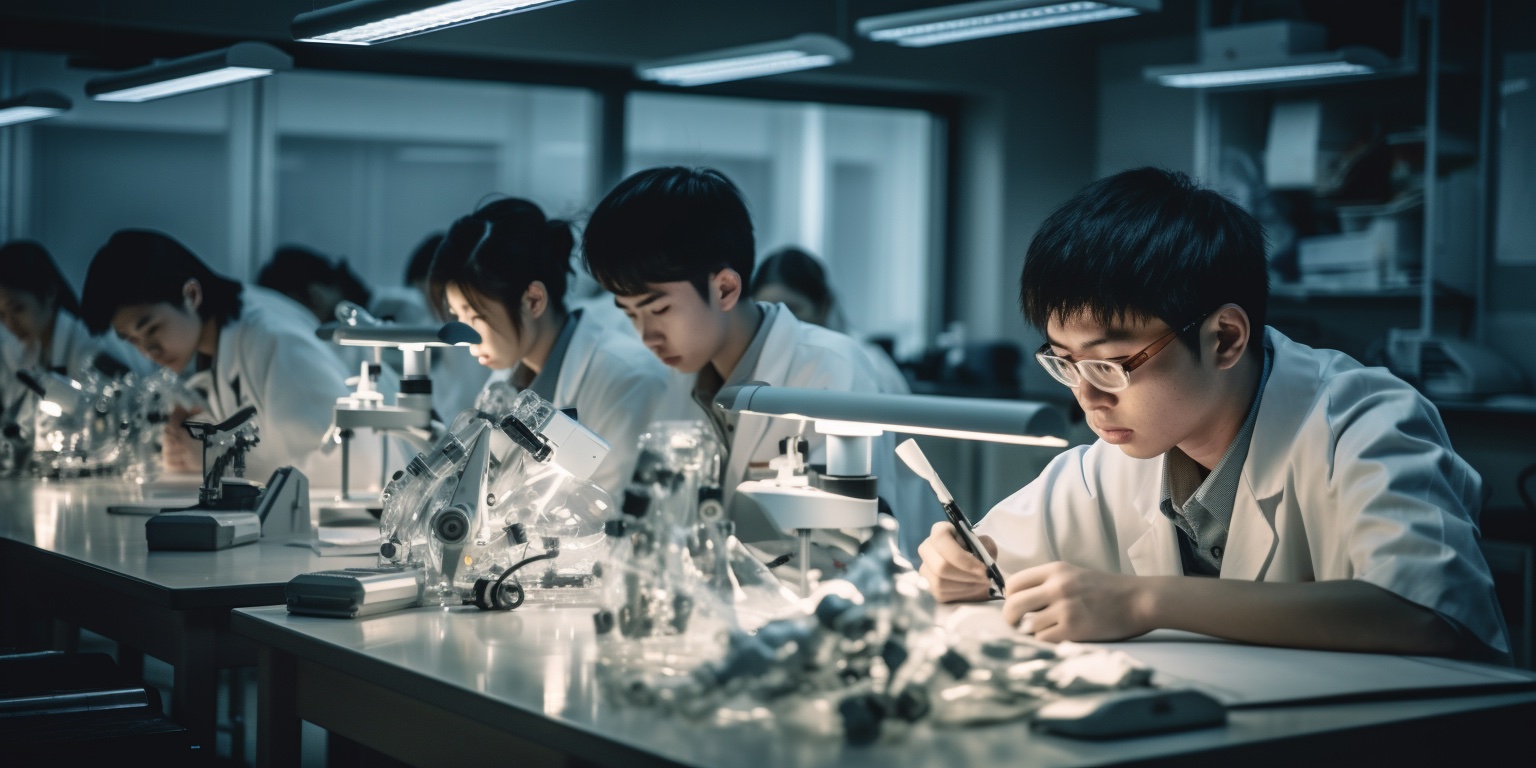
PG3 means Posting Group 3, the Secondary 1 admission group associated with a G3 starting level for most subjects under Full Subject-Based Banding. It is not a separate school laboratory qualification. A pupil beginning G3 Science in a Punggol secondary school needs to learn the practical habits behind reliable experiments: reading the teacher’s instructions, recognising hazards, handling approved apparatus correctly, measuring with units, recording results honestly and explaining what the evidence shows.
MOE’s G2/G3 Lower Secondary Science syllabus, updated in April 2024, places scientific inquiry alongside core knowledge and values such as integrity, objectivity and responsibility. Its themes include Scientific Endeavour, Diversity, Models, Interactions and Systems. A PG3 pupil may encounter demonstrations, school-supervised investigations and data analysis before later decisions about Physics, Chemistry or Biology. Parents should follow the receiving school’s actual laboratory rules; the activities in this article are explanatory examples, not instructions for unsupervised experiments.
- PG3 is a school posting route; G3 is a subject level. Neither authorises independent use of school laboratory equipment.
- Read instructions, follow teacher supervision, know safety contacts and report problems immediately.
- Handle glassware, electrical devices, heated equipment, specimens and substances only as the school directs.
- Measure with appropriate units, scale interpretation and honest records; never invent or ‘fix’ experimental results.
- Distinguish independent, dependent and controlled variables before interpreting a fair comparison.
- Present data in labelled tables and appropriately scaled graphs, separating observation from explanation.
- Explain anomalies and limitations rather than removing inconvenient results without a valid reason.
- Use current MOE syllabus and school guidance; SEC practical examinations are later, cohort-specific assessments.
Definition lock: what each practical term means
| Term | Meaning | Typical beginner error |
|---|---|---|
| Observation | What is noticed or measured | Writing an assumed cause as a fact |
| Dependent variable | The outcome measured | Confusing it with the factor changed |
| Control | A relevant condition kept consistent | Writing ‘keep everything the same’ without reasons |
| Precision | Agreement among repeated readings | Equating precision with accuracy |
| Conclusion | Answer supported by results and science | Claiming more than the data establish |

Chapters
- The first distinction: PG3 does not determine laboratory access
- What MOE means by scientific endeavour
- The laboratory starts before a pupil touches anything
- Know the difference between a hazard and a risk
- Supervision, clothing and protective equipment
- Never improvise with unknown substances or apparatus
- What to do when something goes wrong
- Measurements begin with the question being asked
- Read the scale before copying the number
- Units must remain attached to meaning
- Accuracy, precision and uncertainty are different ideas
- Identify independent, dependent and controlled variables
- Fair testing is a reasoning problem, not a ritual
- Make observations before explanations
- Repeat measurements for a reason
- A raw-data table should be readable by another person
- Graphs must not exaggerate the pattern
- Distinguish results from conclusions
- Anomaly is not a synonym for failure
- A useful practical report is an argument from evidence
- Work as a group while recording honest contributions
- Access needs and inclusive laboratory learning
- Why home Science need not imitate the laboratory
- Practical skills connect to future Sciences without guaranteeing a subject
- Punggol school questions and a three-task readiness check
The first distinction: PG3 does not determine laboratory access
Posting Group 3 describes how a pupil enters secondary school and generally guides the initial level of many academic subjects. The school decides when and how students enter laboratories, what practical work is appropriate and what supervision is required. A child who achieved a strong PSLE result is not automatically authorised to handle unfamiliar apparatus. Laboratory competence begins with listening, asking questions and respecting the purpose of the activity.
Full Subject-Based Banding recognises that pupils may have different academic strengths. A class can include teenagers who have never used a particular instrument alongside others who saw one at an enrichment programme. The teacher must build common expectations for safe work. Parents should not assume a commercial science kit or an online demonstration reproduces the safeguards of a school laboratory.
Explain this to the child before the first lesson: being capable means knowing what one is permitted to do and why. A careful student who pauses to clarify an instruction is demonstrating scientific maturity, not lack of confidence.
What MOE means by scientific endeavour
The official lower-secondary G2/G3 Science syllabus begins with Scientific Endeavour and links its content to themes such as diversity, models, interactions and systems. The aim is not simply to retain an impressive catalogue of facts. Pupils learn how scientific knowledge develops through questions, evidence, representations, scrutiny and responsible application. These practices can be explored through classroom discussion as well as supervised experiments.
A student might know that different materials behave differently when heated or mixed. The scientific question is how to establish a fair, repeatable observation and communicate it accurately. A teacher may choose apparatus, a simulation or supplied data to make that learning accessible. The chosen method should follow school policies and the intended learning outcome.
Parents can ask what concept an activity was meant to illustrate and whether the pupil can explain the evidence without reciting a memorised answer. That question connects practical work with conceptual understanding.
The laboratory starts before a pupil touches anything
An ordinary practical lesson begins with preparation. Students need to know the learning question, equipment named in the instructions, any restricted areas and the procedure for obtaining help. Reading everything once does not always produce understanding. A careful pupil identifies unfamiliar terms and asks the teacher before proceeding. Rushing to the most exciting-looking step can create errors or hazards.
Ask the student to explain the purpose of the activity in one sentence. Then ask what will be observed or measured. If they cannot explain either, the next action is clarification rather than experimentation. The teacher may demonstrate safe technique or identify particular controls. School-specific instructions always override general advice found online.
This habit transfers to mathematics and writing: read the task, identify the goal, understand constraints and act deliberately. A laboratory simply makes the consequences of skipping a step more immediate.
Know the difference between a hazard and a risk
A hazard is a potential source of harm, while risk considers the chance and consequences of harm in the circumstances. Heat, breakable glass and electrical equipment can create hazards, but the relevant controls depend on the actual activity. Students are not expected to design professional risk assessments independently. They are expected to recognise instructions, use approved protective measures and notify the responsible teacher of concerns.
Consider an ordinary hot surface in a school demonstration. The lesson may involve observing a change without any student directly handling the heated object. The correct decision is to remain within the teacher’s specified role. The mere presence of equipment does not imply permission to use it or improvise a similar activity at home.
Parents should praise good judgement: ‘You noticed the instruction and followed it’ is more educational than celebrating a student for taking a needless risk.
Supervision, clothing and protective equipment
Some practical tasks require particular dress, secured hair, eye protection or other precautions. The exact requirements follow the activity and the receiving school’s rules. It would be misleading to promise that every Secondary 1 lesson needs the same protective equipment or that a pupil may choose an alternative based on personal preference. The teacher explains what is appropriate.
A parent can ensure the child reads the school’s instructions and knows how to seek help when protective equipment does not fit. A pupil should not conceal a problem because classmates seem ready to begin. If an approved arrangement is needed for a physical or sensory reason, discuss it through school channels before the activity.
Safety rules make participation possible. They are not decorations for a photograph or punishments imposed on curious students. Understanding their purpose creates more responsible independence.
Never improvise with unknown substances or apparatus
School practical materials are chosen for defined learning aims and used under controlled procedures. Students should not mix leftover substances, taste or smell unknown samples, modify electrical connections or remove materials without instruction. Even familiar-looking objects may have laboratory-specific hazards. A general article cannot determine safe handling for a particular apparatus or chemical.
If an instruction seems inconsistent with what a classmate says, ask the teacher. A peer’s confident guess should not override authorised procedures. If a student notices a damaged container or faulty instrument, the responsible response is to stop and report it, not attempt a repair.
Families can nurture scientific curiosity through books, safe observations and discussions without reproducing restricted demonstrations. Inquiry is about asking answerable questions and collecting trustworthy evidence, not seeking danger.
What to do when something goes wrong
Accidents and unexpected results must be communicated promptly. A spill, breakage, damaged cable, injury or unusual equipment behaviour calls for the school’s relevant procedure and teacher direction. Pupils should not conceal incidents because they fear getting into trouble. Fast, accurate reporting can help prevent harm and preserve useful information about what happened.
Teach the child to describe observable facts: what they noticed, where it occurred, whether anyone may need assistance and which steps have already been taken under instruction. Avoid speculative claims or attempts to clean hazardous material without permission. Emergency responses belong to trained personnel and school protocols.
An honest report is a lesson in scientific integrity as well as safety. A student who can acknowledge an error without inventing excuses is better equipped for future experiments.
Measurements begin with the question being asked
Scientific measurement is not just reading a number from a device. The student should identify which physical quantity matters and why. Length, time, mass, volume and temperature are different quantities with corresponding units and instruments. A reading without an appropriate unit may be ambiguous or unusable. The correct instrument depends on the task.
Suppose a supplied diagram shows a container’s volume increasing during a process. A pupil should distinguish the volume reading from the elapsed time. If an analysis concerns volume per unit time, both quantities need attention. The graph’s apparent direction cannot replace reading the axes and units.
At home, parents can practise interpreting diagrams of scales rather than asking children to use unfamiliar laboratory apparatus. That develops measurement literacy without introducing unsafe practical tasks.
Read the scale before copying the number
Many early practical errors occur because a student reads the wrong interval, starts from a nonzero mark or mistakes a labelled division for an unlabelled one. Before recording a measurement, identify the smallest division shown and what the marks represent. Where applicable, follow the teacher’s method for reading from the correct viewpoint. Do not invent a level of precision the instrument does not support.
For an illustration, imagine a drawn scale where major markings are separated by five units and each interval contains five equal spaces. Each small space then represents one unit. A student who assumes every small mark means five units produces an error before any interpretation begins.
A good check is to ask the learner to explain the scale verbally before stating the reading. This reveals whether the pupil understands the instrument or is guessing from a picture.
Units must remain attached to meaning
Secondary Science requires careful unit use because a numerical value without context may not answer the question. A temperature and a mass can both have a number such as 25, yet they represent entirely different information. A student should copy units from the question or instrument correctly and convert only when necessary and valid.
In a table, the heading can carry the measurement unit so that individual data cells need not repeat it. In prose, the unit should be explicit when a quantity is stated. If a learner makes a mistake, identify whether the problem is the measurement, a conversion or merely presentation. Each needs a different correction.
Parents should not reward false precision. An answer with many decimal places is not automatically better than one expressed to an appropriate precision.
Accuracy, precision and uncertainty are different ideas
Accuracy concerns closeness to an accepted or true value, while precision concerns how closely repeated measurements agree. They are related but not interchangeable. A set of values can cluster tightly yet still reflect a systematic problem. Students do not need sophisticated statistical theory to begin recognising that repeated agreement is not the same as guaranteed correctness.
Consider an illustrative thermometer diagram that consistently gives readings higher than a reliable reference. Repetition might show similar values, yet the instrument could have a calibration issue. The learner should not claim the result is accurate solely because it repeats. This is conceptual discussion, not an instruction to adjust real school devices.
Uncertainty is part of responsible evidence. A student who reports a measured range or limitation when appropriate is demonstrating a stronger scientific habit than one who pretends every reading is exact.
Identify independent, dependent and controlled variables
Scientific questions become testable when the student can distinguish the condition being deliberately varied, the outcome measured and other factors that need to be held reasonably consistent. These are the independent, dependent and controlled variables in a fair comparison. Confusing them can make an otherwise neat experiment incapable of answering its question.
Use a fictional scenario about whether different amounts of shade affect a model surface’s recorded temperature. The relevant outcome is temperature; shade condition may be the factor varied. Time of observation, material and measurement approach would need consideration. The scenario is a reasoning exercise, not a directive to operate school equipment outdoors.
Ask the pupil to name one alternative explanation for a pattern. The ability to identify a confounding factor is more meaningful than memorising the three variable labels alone.
Fair testing is a reasoning problem, not a ritual
Students sometimes write ‘keep everything constant’ without understanding why. A fair test controls relevant conditions so differences in the observed outcome can be interpreted more meaningfully. Not every variable in the world can be identical, so the learner must understand which factors matter to the particular question. A clear rationale is better than a random list.
Suppose two hypothetical sets of data compare materials under different conditions, but one was measured for longer than the other. A simple difference in outcome cannot be attributed only to material. The student should identify the mismatch and explain how it weakens the conclusion. Teachers may provide data precisely to test such reasoning.
Parents can ask: ‘What else might have caused the result?’ That short question teaches more than demanding the phrase ‘controlled variable’ in every answer.
Make observations before explanations
An observation reports what is noticed or measured. An inference proposes what the observation means, using relevant scientific knowledge. If a drawing shows droplets on the outside of a cool container, ‘droplets formed on the outer surface’ is an observation. ‘Water vapour in the air condensed on the surface’ is an explanation. ‘The container leaked’ would be a different hypothesis needing evidence.
This distinction matters because a student may confidently record their preferred explanation as though it were directly seen. When that happens, raw data become distorted before the analysis begins. Good lab records preserve what happened first and interpret it afterward.
Practice with photographs, supplied data or ordinary safe phenomena. Ask which statements are direct observations and which require a scientific model. The child learns to reason without needing to perform a hazardous experiment.
Repeat measurements for a reason
Repeating observations can help identify variability, accidental errors or unusual readings. But repetition without consistent procedure may simply produce more confusing data. Students should understand why multiple results are collected and how they should be compared, using the method required by the teacher. It is not acceptable to repeat only until a preferred answer appears.
Suppose a fictional sample gives readings of 11, 12 and 11 units. A later reading of 18 merits investigation, not automatic deletion. The student should check whether the method, scale or conditions differed and report what is known. If no valid reason explains the reading, its presence may still matter to the result’s uncertainty.
Scientific integrity means retaining inconvenient evidence until there is a defensible reason to treat it differently. ‘It made my graph untidy’ is not such a reason.
A raw-data table should be readable by another person
Useful tables have a clear title where appropriate, labelled columns, units and observations in an order that allows comparison. Students should place measurements in the correct columns and distinguish raw readings from values calculated later. The table should not conceal missing data or replace an unexpected number with a guessed average.
Imagine an experiment summary that records time and temperature. A readable table might use ‘Time / min’ and ‘Temperature / °C’ as headings. If the lesson uses a different notation convention, the school format takes priority. What matters is that another reader can identify what each value represents without asking the experimenter.
Neatness supports scientific communication, but it should not be confused with accuracy. A beautifully formatted table containing invented numbers is worse evidence than an imperfect but honest record.
Graphs must not exaggerate the pattern
Graphs help students see trends and relationships, but every graph is a set of design decisions. Read the axes, units, intervals and scale before deciding what the line means. A graph with a truncated axis may make a small change look dramatic. A missing label can make the data impossible to interpret. The pupil should select the graph type appropriate to the measurements and the teacher’s instructions.
For example, a sequence of readings taken at equal time intervals might show a gradual decrease. That supports a claim about the observed interval; it does not prove the value will continue decreasing forever. Extrapolation requires assumptions that should be stated.
Ask the child to write one conclusion the graph supports and one claim it cannot establish. This helps the student develop calibrated scientific statements instead of overconfidence.
Distinguish results from conclusions
Results are the observed or calculated findings. A conclusion answers the investigation question using relevant results and concepts. Students often repeat every data point in the conclusion instead of explaining what the overall evidence suggests. Others jump directly to a textbook claim without mentioning their measurements. Both approaches lose an opportunity to connect evidence and reasoning.
A useful structure is: the tested condition, observed pattern, relevant concept and limitation. For a hypothetical cooling scenario, the student might report a temperature drop over the measurement period and explain a relevant heat-transfer principle, while acknowledging that the setup and environmental conditions matter.
The teacher should guide what the actual assessment expects. At home, parents can ask how the conclusion would change if a key reading were different.
Anomaly is not a synonym for failure
An anomalous result does not fit the pattern of the other observations or expected behaviour. It can arise from measurement errors, inconsistent conditions or an unanticipated phenomenon. The responsible response is to investigate and report it thoughtfully, not erase it or invent a story. Occasionally an unexpected result prompts a better question.
Suppose a diagram shows a set of mostly increasing values with one lower value. The student can check whether a reading was transcribed incorrectly or whether a relevant condition changed. If neither can be established, the analysis should acknowledge the uncertainty. A single outlier does not necessarily disprove an entire concept or justify ignoring the data.
Learning to handle inconvenient results is one of the most important contributions of practical Science. It develops honest reasoning that applies beyond a laboratory.
A useful practical report is an argument from evidence
A school practical report may have sections such as aim, method, observations, results, discussion and conclusion, depending on the teacher’s task. The headings are helpful because they distinguish what was being investigated from what was actually found and what it means. Yet a completed template does not automatically show good reasoning. Every section should answer a relevant question.
Ask the pupil whether the method allowed the question to be investigated, whether the table gives enough information and whether the conclusion is no stronger than the evidence. If the answer relies on an unexplained phrase such as ‘because science says so’, return to the appropriate concept and data.
Teachers may use oral discussion, worksheets, reports or other assessment modes in lower secondary. Families should follow those requirements rather than assume a full national-examination-style report is needed after every classroom demonstration.
Work as a group while recording honest contributions
School investigations may involve pupils sharing equipment, observations and responsibilities. Collaboration can improve learning, but it can also conceal uneven participation if one confident student performs every step. The group should follow teacher-assigned roles and ensure everyone understands the purpose. Each member can contribute through careful reading, observation, recording or explanation as appropriate.
An ethical collaboration records data truthfully and distinguishes shared findings from each pupil’s individual reflection. A student should not pretend to have performed a measurement they did not take. Nor should they copy another pupil’s explanation wholesale when the teacher expects independent work.
Parents can ask what their child personally contributed, what they learned from teammates and which question remained difficult. This rewards genuine participation rather than the appearance of teamwork.
Access needs and inclusive laboratory learning
Some pupils may need additional support with reading dense instructions, manipulating instruments, moving around the laboratory or managing sensory demands. Such needs should be discussed privately with school staff and relevant professionals. A posting group does not itself determine accommodations. The school can consider access to the lesson while preserving the academic objective and safety of the activity.
Do not assume that a child with a physical or learning difference should be excluded from scientific inquiry or allowed to use every tool without assessment. Accessible participation may involve adapted communication, approved assistance or a carefully selected mode of demonstrating understanding, depending on the task.
The family should seek the school’s actual support process rather than a general promise that every equipment arrangement will be available at every campus.
Why home Science need not imitate the laboratory
Parents sometimes respond to a child’s excitement by buying chemicals, electrical components or glass equipment advertised as suitable for young scientists. A school laboratory has supervision, procedures and safety systems that ordinary home settings may not reproduce. The safest approach is to use reading, diagrams, simulations and only genuinely low-risk activities with appropriate adult supervision.
Scientific reasoning can be practised with supplied graphs, labelled photographs or a comparison between two published claims. A child can learn variables, evidence and limitations without recreating the practical procedure. This is especially helpful when the learning need is not manual technique but the ability to explain an unfamiliar result.
Encourage curiosity while keeping boundaries clear. A pupil who wants to try a particular demonstration should ask a qualified teacher about appropriate school opportunities.
Practical skills connect to future Sciences without guaranteeing a subject
Lower-secondary Science provides a foundation for later Biology, Chemistry and Physics options. The official G2/G3 syllabus covers broad concepts and scientific practices, while upper-secondary subject combinations and examination requirements are selected later. A PG3 student who enjoys laboratory work is not automatically entitled to separate Sciences or a particular SEC practical paper.
Parents should distinguish a 2027 SEC syllabus for pupils graduating in that year from the learning programme of a child beginning Secondary 1 in 2027. SEAB publishes examination-year requirements, including Science practical components, but the younger child’s actual examination year will be later under an ordinary four-year progression.
The sound present goal is to learn safety, observation, measurement, graph interpretation and careful explanations. These habits remain useful regardless of the eventual subject configuration.
Punggol school questions and a three-task readiness check
Ask the receiving school how lower-secondary practical work is introduced, where pupils can find safety instructions and how teachers provide feedback on investigations. The school can describe its own laboratory resources and procedures. Do not copy a list of equipment from another campus and assume that Edgefield, Greendale, Punggol or Yusof Ishak Secondary uses identical tasks.
At home, try three paper-based questions: read an instrument scale from a diagram, identify a confounding variable in a fictional fair test, and distinguish an observation from a conclusion. Ask the pupil to explain each answer aloud. An error provides a teaching target rather than an excuse to label the child unready for G3.
Return to different examples a week later. The aim is independent reasoning and readiness to participate safely, not a stack of memorised experiment write-ups.
Frequently asked questions about PG3 practical Science
Does PG3 mean a student can perform laboratory experiments independently?
No. PG3 is a posting group, and laboratory activity follows the school’s instructions and required supervision.
Is lower-secondary Science the same as separate Chemistry or Physics?
No. The G2/G3 lower-secondary syllabus develops broad scientific concepts and inquiry before later subject choices.
What is an independent variable?
The factor deliberately changed in a fair comparison. The dependent variable is what is measured, while relevant controlled variables are kept consistent.
What should a pupil do if a piece of equipment seems damaged?
Stop using it and tell the responsible teacher. Do not attempt unauthorised repairs or procedures.
Can a pupil delete an unexpected measurement?
Not merely because it looks wrong. Investigate and record legitimate reasons before any data treatment.
What is the difference between accuracy and precision?
Accuracy concerns closeness to an accepted value; precision concerns agreement among repeated measurements.
Does a neat graph prove a conclusion?
No. It must reflect correctly recorded data and appropriate interpretation, with limitations acknowledged.
Can parents replicate school experiments at home?
Do not reproduce hazardous or restricted procedures. Use safe observations, simulations and supplied data to practise reasoning.
Are practical examinations held for Secondary 1 students in 2027?
National SEC practical components apply to the relevant graduating examination cohort, not automatically to pupils entering Secondary 1 that year.
What if a pupil needs laboratory access support?
Discuss the particular need privately with school staff and qualified professionals so safe, appropriate arrangements can be considered.
What matters more, remembering the method or understanding it?
Both have roles, but the student must explain why the method answers the question and what the resulting evidence supports.
Where can parents verify syllabus and laboratory requirements?
Use MOE’s lower-secondary G2/G3 Science syllabus and the receiving school’s actual laboratory instructions.
Continue the PG3 subject skills series: PG3 Prose, Poetry and Drama | PG3 Geography fieldwork and map skills | PG3 History sources and Punggol heritage
Official syllabus and related Punggol guides
- MOE G2/G3 Lower Secondary Science syllabus, updated April 2024
- SEAB: Secondary Education Certificate framework and practical assessment timeline
- SEAB: 2027 G3 SEC school-candidate syllabus list (graduating cohort)
- Science Centre Singapore: school programmes and scientific inquiry
- PG3: G3 Science and Humanities foundations
- PG3: inclusive learning and appropriate support
Your next step
Ask the student to read the school’s laboratory instructions and explain why the rules matter. Use a diagram to practise a scale reading, a fictional experiment to identify variables, and an original data table to distinguish observations from conclusions. For actual experiments, the teacher’s directions and approved safety arrangements always take priority.


