
Direct School Admission to Secondary Schools (DSA-Sec) can offer a Punggol pupil a place on the basis of demonstrated talent, aptitude and commitment before the Primary School Leaving Examination (PSLE) results are released. But a Confirmed Offer (CO) is still conditional: the pupil must obtain a PSLE Score qualifying for a Posting Group offered by that school. For a student whose results place them in Posting Group 2 (PG2), the important check is whether the school offers PG2. A talent trial, strong interview or an October school preference cannot override that group-eligibility requirement.
A family living in Punggol should distinguish three DSA outcomes: Confirmed Offer, Wait List and Unsuccessful. A Confirmed Offer can reserve a place when the student ranks and qualifies for the offering school; a Wait List can become a place only if relevant vacancies open, the pupil is successfully allocated and the PSLE Posting Group condition is met. A student successfully allocated through DSA-Sec does not submit six ordinary Secondary 1 school preferences and is expected to honour the school commitment. The 2026 DSA calendar is historical: parents planning 2027 must read the new MOE schedule rather than reuse May, August or October 2026 deadlines.
- Meaning: PG2 is the Secondary 1 posting group, not the selection category for sports, leadership, performing arts or STEM talent.
- Eligibility: PSLE Scores of 23–24 normally indicate PG2; scores 21–22 can permit choosing PG2 or PG3, and 25 can permit PG1 or PG2 under prevailing rules.
- DSA Confirmed Offer: A conditional reserved school place requiring preference submission and a PSLE Posting Group offered by the school.
- DSA Wait List: A possibility of allocation when CO holders do not take up places, not a guaranteed seat.
- Unsuccessful: The pupil normally proceeds to ordinary Secondary 1 posting through the applicable rules.
- School matching: Check the DSA school’s advertised Posting Groups before assuming PG2 is available.
- No automatic cut-off waiver: DSA may differ from ordinary cut-off competition but still requires the school-offered Posting Group and the programme’s academic conditions.
- Commitment: A successful DSA allocation is expected to be honoured for the duration of the programme.
- Evidence: Genuine Primary 5–6 activities, teachers’ observations, projects, performances and student reflection may be more informative than an expensive manufactured portfolio.
- Next step: Use MOE’s current DSA-Sec portal guidance, verify the actual school talent domain and discuss the commitment before ranking offers.
Definition lock: PG2 and DSA-Sec describe different mechanisms
Posting Group 2 belongs to the Secondary 1 posting system introduced alongside Full Subject-Based Banding. It determines an admission pathway and indicates general starting subject demands. DSA-Sec is a separate way of considering applicants based on talent and aptitude before the ordinary posting exercise. A student may take part in DSA selection without yet knowing their PSLE Posting Group, because the PSLE results arrive later.
This timing creates a necessary conditional check. A school can be impressed by a child’s ability to lead a team, code a project or perform music, while the eventual PSLE result may not qualify for a Posting Group the school offers. MOE’s 2026 briefing material gives an example in which a pupil has a Confirmed Offer from a PG3-only school but the PSLE result qualifies the pupil for PG2. The pupil cannot be admitted to that DSA school under those circumstances and must join ordinary S1 posting. That is a formal compatibility issue, not a judgement that the pupil lacks talent.
Conversely, if a school offers PG2 and the child’s result qualifies for PG2, the group condition can be satisfied, subject to the other DSA allocation rules. Parents should verify the actual school rather than assert that every selective or specialised campus accepts all Posting Groups. Different programmes can have different requirements.
The parent needs to keep three distinct records: the child’s talent and interests; the school’s DSA offer or wait-list status; and the eventual PSLE Posting Group eligibility. If all three are kept separate, a large part of DSA confusion disappears.
Why families investigate DSA before PSLE results
DSA allows a school to consider capabilities not fully captured by a four-subject examination aggregate. A pupil might excel at performing arts, demonstrate sustained leadership, show strong athletic commitment or develop an unusual interest in engineering and design. Schools publish eligible talent domains, selection processes and expectations. The opportunity is to match a teenager’s strengths with a school environment that can develop them.
It is not an invitation to disregard education. Applicants still need to sit the PSLE where applicable, and their eventual score must satisfy the school’s Posting Group condition. Schools also consider whether the pupil can cope with the demands of the offered programme. A family should not sell DSA to a child as a way to avoid academic learning or as a guaranteed escape from examination requirements.

DSA is most meaningful when the child has an authentic interest worth continuing for years. A parent might encourage a sports talent to investigate a school with relevant coaching and a suitable curriculum. Another pupil may have sustained an arts interest or served reliably in school leadership. The application should explain why the particular school’s offering fits the child.
A weak reason is that a school name looks prestigious and DSA appears easier than earning the ordinary PSLE score. That motivation ignores the long-term commitment and may leave a child in a programme they do not truly enjoy.
Check the school-offered Posting Groups before preparing a portfolio
Start with the school’s official DSA information. Look for which Posting Groups are offered and whether the specific school programme is suitable for the student’s likely academic profile. The school may also have an Integrated Programme, SEC curriculum or another structure. A family should not infer those details from a general league table.
A child whose PSLE Score later becomes 24 normally falls in PG2. If the DSA school admits through PG2, the relevant group condition may be satisfied. If it offers PG3 only, a PG2 result cannot simply be treated as a PG3 qualification because the child had a strong audition. A different hypothetical pupil with score 22 may have choices under the published PSLE structure; the official portal and school must determine the appropriate application, not a parent’s preferred interpretation.
The school may publish talent areas such as leadership, performing arts, sports or STEM, but these are not Posting Groups. “DSA-Sec through football” identifies the aptitude selection route. “PG2” identifies the PSLE-based admission group. Parents who keep those concepts separate ask better questions when contacting the school.
A helpful enquiry is: “If the pupil receives a PG2-eligible PSLE score, can your DSA-Sec offer in this talent domain be taken up?” Ask the school to confirm its current published arrangements rather than rely on assumptions.
Where to find the current DSA-Sec information
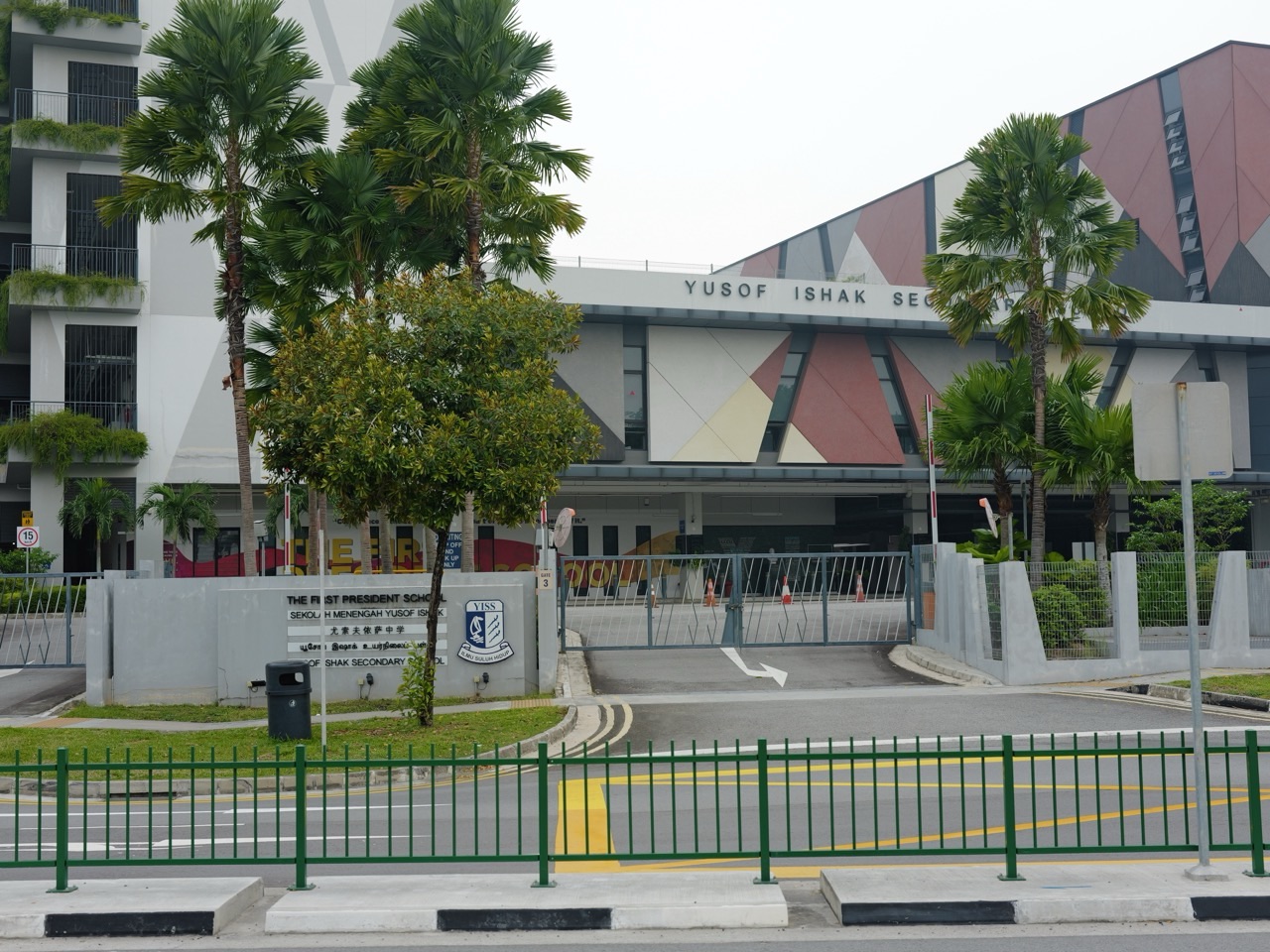
MOE’s DSA-Sec page and the linked application portal are the main national sources. Individual secondary schools publish the talent domains, expected evidence and selection procedures. Yusof Ishak Secondary’s public 2026 DSA page, for example, lists application dates, shortlisting and interview windows, offer notifications and school preference submission. Those dates illustrate the order of a completed exercise; they must not be copied into a 2027 family calendar.
The 2026 application period ran from 6 May to 2 June, with various selection and notification stages afterwards. Its October preference submission occurred before PSLE results. The subsequent PSLE and allocation outcomes determined which offers could actually become school places. The key lesson is sequence, not memorisation of last year’s dates.
Schools may have different trial, interview, audition or performance-task arrangements. A pupil applying through more than one talent domain may need to prepare for separate school-defined selection activities. The exact requirements belong to the relevant school and are not standardised across all Punggol or Singapore schools.
Create a source register with the school webpage, last-updated date, talent domain, contact and current application stage. When a PDF carries an older year, mark it historical.
An authentic talent portfolio begins with real experience
A portfolio is strongest when it shows work the child has genuinely done and can explain. For sports, this may include relevant participation, training, competition experience and reflection on teamwork. For arts, it may include performance or creative work. For STEM, a project may show problem identification, design changes, testing and a clear account of the pupil’s contribution.
Parents should not treat portfolio creation as an exercise in purchasing certificates. A stack of expensive workshops proves little if the student cannot explain what was learned. A smaller collection of authentic, well-documented projects may help a school understand commitment and growth. Selection panels can ask questions that reveal whether an applicant actually owns the work.
A useful record includes the date, activity, role, challenge, evidence and reflection. The child should be able to say what was attempted, what failed and what would be changed. That explanation demonstrates learning rather than simple participation.
Do not fabricate leadership titles, competition rankings or project contributions. An admission process requires accurate information, and the child’s long-term trust in adults is more important than a single application outcome.
Sports talent: performance and long-term commitment
A sports DSA application may involve trials, physical performance, school or club records and a discussion of commitment. A pupil who enjoys a sport should understand the training expectations at the receiving secondary school. The school may need evidence not only of present ability but also of willingness to participate and improve.
A teenager should not be pushed into unsafe extra training solely because a DSA deadline is approaching. Rest, injury prevention and appropriate coaching matter. A serious injury can affect both schooling and the sport the pupil enjoys. Families should follow the school’s selection instructions and seek suitable professional advice on health-related questions.
A good interview answer might describe how a pupil responded to a setback, supported teammates or improved a particular technique. The strongest version includes a real example, not a memorised speech about perseverance. A parent can practise asking follow-up questions while letting the student choose the words.
If an offer is received, investigate the expected school CCA commitment and whether it is manageable alongside the child’s academic subjects. The DSA place involves an obligation to the talent domain, not simply a route to an admired school badge.
Performing arts: a portfolio of development, not one polished clip
A child applying through music, dance or another performing arts domain may be asked to audition or demonstrate relevant skills. The school sets the precise format. Some applicants have years of training, while others may show strong aptitude with different types of experience. Avoid guessing that a particular recording or certificate guarantees selection.
The pupil should practise performing the actual work and explaining what they learned from it. Can the student respond constructively when asked to repeat a section or discuss a challenge? Does the young person enjoy rehearsing and working within an ensemble? A school performing arts programme often involves cooperation and sustained preparation beyond the audition itself.
A short video may help document a performance if the school accepts it, but visual polish is not equivalent to talent. Editing should not misrepresent the child’s actual capability. Families should also respect copyright, privacy and consent when submitting group performances involving other children.
Ask what the secondary school expects after admission: CCA attendance, performances, rehearsals and participation across the programme. The child should understand the real experience attached to the talent offer.
STEM and creative problem-solving: explain the actual reasoning
A STEM DSA applicant may have enjoyed robotics, coding, environmental projects or a school Applied Learning Programme. The school’s particular talent domain should determine what evidence is appropriate. A project becomes educationally convincing when the student can explain the problem, constraints, prototype, tests and changes.
Suppose a pupil built a small sensor system. The interview panel may be more interested in why the sensor threshold was chosen, what errors occurred and how the child resolved them than in an attractive photograph of the finished device. A parent who writes the technical explanation for the student may actually weaken readiness for a live discussion.
A pupil should also recognise the limits of AI-generated or externally supplied work. If a chatbot wrote most of the code, the child should be honest about the assistance and able to explain the underlying logic. Ownership matters. The school will specify what kinds of materials are acceptable.
STEM interest can exist in students across different Posting Groups. The challenge is matching genuine aptitude to the school-offered DSA route and maintaining sound academic foundations for the eventual timetable.
Leadership and service: character can be demonstrated in small acts
Leadership is not limited to being a head prefect. A child may have helped organise a class project, supported a younger pupil, coordinated a community service activity or dealt constructively with a difficult team situation. Selection criteria differ by school, but genuine examples reveal how a pupil approaches responsibility.
Ask the teenager to describe a decision they made and its consequences. What did the group need? Whose views were considered? What happened when the plan failed? Could the student identify something they would do differently? These questions demonstrate reflective leadership more effectively than a long list of titles.
A service project should respect participants. Photographs of vulnerable beneficiaries should not be gathered or publicly circulated merely to create a DSA portfolio. The child should be able to explain the actual need, what the project contributed and what evidence supported its usefulness.
A school may emphasise character, values or service in its talent selection. The family should use the official criteria and submit accurate examples rather than assume that a single volunteering event satisfies a national standard.
Confirmed Offer: what the family really receives
A Confirmed Offer is a DSA result that can reserve a place at the offering school, provided the family submits the school through the official school preference process and the pupil later meets the applicable PSLE Posting Group condition. It is not a waiver of PSLE eligibility, nor an unconditional entitlement to enrol at a school offering a group the pupil does not qualify for.
The family should check the exact talent area, school programme, academic track and commitment. If multiple schools offer CO, the preference order becomes important. A pupil will not have the freedom to accept all offers after seeing their PSLE results. The DSA preference stage occurs earlier and is binding under the rules when successful allocation takes place.
Discuss the choice as a family, including transport, training or rehearsal, subject levels, school culture and the child’s own interest. The parent may be excited by a famous school, but the pupil will live with its timetable for several years. A fit decision cannot be made responsibly from prestige alone.
The official portal confirms which choices may be ranked and how the final allocation operates. Keep a copy of the submission receipt.
Wait List: understand uncertainty without inventing a guarantee
A Wait List outcome means the applicant may be considered if a relevant place becomes available through the DSA allocation process. It is not equivalent to a Confirmed Offer, and the number of vacancies may be unknown to the family. The outcome depends on what other applicants choose, the school allocation and the pupil’s eventual Posting Group eligibility.
Parents should avoid telling the child that being wait-listed means they are practically guaranteed admission. Equally, a Wait List is not a statement that the pupil lacks talent. Selection is competitive and schools have limited capacity. The applicant may have performed well without receiving an immediate reserved place.
When a student has both a WL and a CO from different schools, the order of choices can matter. Raffles Institution’s official AskGov explanation gives examples showing how the system considers a higher-ranked Wait List while protecting an eligible lower-ranked Confirmed Offer under the applicable process. The family must read the current portal guidance to understand the details rather than rank schools casually.
A sensible conversation distinguishes hope from certainty: “We have a chance at this school, but we will plan responsibly for the outcome.” That protects the teenager from unnecessary disappointment.
Unsuccessful outcome: return to ordinary S1 posting
An Unsuccessful DSA result means the child has not secured that particular DSA route. The pupil can still participate in the ordinary Secondary 1 posting process, using the PSLE result and applicable eligibility. The six-school form should be prepared carefully and based on genuine school preferences, previous-year score ranges and practical fit.
Parents should not speak about the DSA result as a failure of the child’s identity. A talented performer or athlete may not match a particular school’s limited places or selection needs. The same interest can continue through another school’s CCA, a suitable community activity or personal practice. An application result does not erase skill.
The ordinary posting exercise is a distinct administrative system. Historic cut-off points are references, not future guarantees. For a PG2 pupil, the family should review the specific school’s PG2 range where published and choose schools the student would genuinely want to attend.
The existing eduKatePunggol school-choice guide explains that separate process in detail. This article concentrates on DSA and why an unsuccessful attempt should lead to a thoughtful next plan rather than panic.
The October DSA preference stage happens before PSLE results
For the 2026 DSA exercise, school preference submission took place in October before PSLE results. This sequence is important because families could not yet know the final Posting Group when ranking the offers. The application therefore involves two kinds of uncertainty: whether a Wait List will convert, and whether the PSLE result will meet a school-offered Posting Group.
The 2026 DSA user guide permitted ranking up to three DSA school choices, depending on the offers received. The order mattered for final allocation. Do not confuse the initial application choices with the later preference submission, or with the ordinary six-school S1 posting exercise that successful DSA applicants cannot complete.
Parents should make the October decision using the pupil’s genuine interest, the school’s full programme and realistic academic expectations. A prediction of the child’s PSLE score can inform discussion, but it remains uncertain until results arrive. The family should read the conditional nature of every offer carefully.
When the child’s own application year arrives, check the current MOE dates. A 2027 school preference window is not established simply because a previous year’s dates were in October.
The PSLE result is still decisive for Posting Group compatibility
MOE’s primary-school briefing material uses a direct hypothetical: a pupil receives a Confirmed Offer from a school that admits through PG3 only, then obtains a PSLE result qualifying for PG2. Because the pupil’s Posting Group does not match the offered school’s groups, the DSA allocation cannot proceed and the student returns to ordinary S1 posting.
This example matters because some parents assume that a very high talent rating removes all academic group rules. It does not. The DSA process is designed to recognise other strengths while preserving the minimum suitability requirements of the school programme.
The issue works in the other direction as well. If a pupil’s PSLE result permits a group the receiving school offers, and all other conditions are met, a DSA place may be allocated despite a historical ordinary posting cut-off that would otherwise have seemed difficult. The family should not mistake that distinction for a universal cut-off waiver available to any school or track.
The correct question remains specific: Does this particular child qualify for this particular school programme’s offered Posting Group? A generic web answer cannot replace the allocation information.
DSA commitment lasts beyond the offer letter
A successful DSA-Sec allocation comes with an expectation that the student honours the commitment for the duration of the admitted programme. The 2026 school information includes examples of four-year SEC or six-year Integrated Programme commitments, depending on the school. A child offered a place through a specific talent domain is generally expected to participate in related activities through the programme.
That is why the initial enthusiasm must be matched with realistic planning. A football talent may enjoy training now but need to understand how the school balances CCA and academic lessons. A music applicant should understand rehearsals and performances. A leadership applicant should appreciate that responsibility is a commitment, not a ceremonial title.
Do not treat DSA as a temporary way to obtain a school place and then plan to abandon the talent area immediately. Nor should the family assume that a later wish to transfer to another school will be permitted through ordinary appeal rules. Read the actual conditions and consult MOE in a genuinely exceptional situation.
A teenager who understands the commitment can make a more informed and confident choice. It is better to reject an unsuitable offer thoughtfully than accept it solely because adults admire the school’s name.
How DSA fits Full Subject-Based Banding after admission
Once admitted, the pupil joins the school’s curriculum under its actual arrangements. Full SBB may mean mixed form classes and subjects at different G levels. A DSA talent does not guarantee that English, Mathematics or Science is automatically offered at G3, and the relevant academic subject options depend on the school’s criteria and the pupil’s individual results.
A pupil admitted through PG2 may have a strong talent outside academics and a different pattern of academic readiness. Teachers should still work from actual subject needs, not from assumptions about the DSA offer. The family should ask about the timetable, assessment structure and available subject-level guidance after placement.
This is an opportunity to recognise different forms of capability. A strong sports leader may need support with written explanation. A technically skilled pupil may be ready for more demanding Mathematics. Neither profile is contradictory. The point of Full SBB is that one broad label should not govern every subject.
Families should protect the student’s wellbeing by checking that the combined academic and talent programme load is sustainable. Admission is the beginning of daily school life, not the end of the educational decision.
Choosing a Punggol or nearby DSA school
A family in Punggol may examine local schools and those in neighbouring towns if they offer relevant DSA talent domains. Yusof Ishak Secondary publishes a DSA page, while other schools may have different current opportunities. It is not safe to assume every Punggol campus offers every talent category or all Posting Groups. Use the official school listing.
Location matters because the pupil may have training or rehearsals after ordinary school hours. A long homeward journey can affect rest, homework and family life. For a child admitted on a demanding talent programme, the extra commitment may make transport more significant than for a pupil with a lighter activity schedule.
Research school culture, teacher support, current subject-level arrangements and the programme’s actual expectations. If a school has an impressive robotics or sports reputation but the child cannot realistically sustain the travel, discuss that trade-off honestly.
Do not confuse being geographically close to Punggol Digital District or a sports facility with a guaranteed partnership or training venue. The school must confirm its own programme arrangements.
What a good DSA interview actually demonstrates
A strong interview should reveal the applicant’s thinking and character. The child may be asked about a chosen activity, difficulties, teamwork, school fit and long-term commitment. A rehearsed answer can help with nervousness, but an entirely scripted performance may be less convincing if the pupil cannot answer a natural follow-up question.
Practise with real examples. Ask the student to describe a failed project or a difficult training session. What happened? What did the child do? What changed afterwards? If the answer contains only slogans such as “I never give up,” ask for evidence. A specific account is easier to understand and reflects actual learning.
The interviewer may also want to know why the school is suitable. Encourage the pupil to read the school’s programmes and choose one genuine reason, not a generic statement that it is prestigious. The family should never invent awards, medals or leadership posts to make an application sound more impressive.
The purpose of preparation is confident honesty. It should help the child communicate authentic strengths rather than construct a false identity around an admissions exercise.
What not to spend money on
A DSA application may tempt families to purchase urgent courses, professional filming, private trials or portfolio packages advertised as guaranteeing selection. No provider can guarantee a particular school place or override MOE Posting Group eligibility. Before paying, ask whether the activity provides genuine development the child would value even if the application is unsuccessful.
A sports pupil may benefit from appropriate coaching that improves skill and safety. A musician may benefit from regular instruction. A STEM learner may enjoy a project that teaches coding or design. These have educational value independent of DSA. The problem begins when a purchased certificate is presented as a substitute for aptitude.
A parent should also consider the pupil’s workload. Primary 6 students already prepare for PSLE and manage other commitments. Overloading the calendar with speculative DSA classes can impair learning and wellbeing.
Spend time understanding the rules and the child’s real interests before spending money. A clear, honest portfolio with genuine work can be more informative than expensive packaging.
Three hypothetical PG2 families
The PG2-eligible athlete. A pupil obtains a sports DSA CO from a school that offers PG2 and later receives a qualifying PSLE score of 24. The family has ranked the offer correctly and fulfilled the formal requirements. The place can be allocated under the applicable process. The pupil should then prepare for both the academic timetable and the sports commitment. This example shows group compatibility, not a guarantee about a particular named school.
The PG3-only mismatch. Another pupil receives a talent CO from a school that offers only PG3, then qualifies for PG2 after PSLE. The DSA offer cannot be converted into a place under the rule illustrated in MOE’s briefing. The family must complete ordinary S1 posting, without telling the child that a strong talent performance somehow proves the school made an unlawful decision.
The Wait List decision. A third child has a WL from a preferred school and a CO from another acceptable school. The family studies the official preference mechanism, ranks the choices in genuine order and understands which possibilities are protected. The later PSLE result and allocation determine the final school. The family does not promise that the WL will certainly become a place.
These are invented examples for explaining the rules, not current DSA vacancies or predictions for Punggol schools.
A parent’s decision worksheet before October preferences
Create a separate line for every DSA CO or WL. Record the exact school, talent area, school programme, Posting Groups offered, commitment, travel and genuine student preference. Next add the offer type and the final preference order. If a school is PG3 only, note the possible PSLE compatibility issue rather than treating the talent outcome as enough.
Ask the child to explain why they prefer the highest-ranked school. Does the school develop a talent the pupil wants to sustain? Can the student imagine ordinary lessons and CCA life there? Does the family understand the travel and academic demands? These questions are especially important when multiple offers are available.
Use the official portal during the current preference submission window and keep confirmation of successful submission. Do not send sensitive account information or login credentials to a private admissions adviser. The family should understand and control its own official choices.
After submission, prepare for the PSLE result without reopening the whole decision through unsupported rumours. Eligibility and allocation will be determined through the formal process.
Frequently asked questions about PG2 DSA
Can a child whose PSLE result is PG2 take a DSA Confirmed Offer?
Only if the child qualifies for a Posting Group offered by the DSA school and the other allocation conditions are met. The offer is conditional, not an automatic waiver.
Does a CO guarantee a seat regardless of PSLE results?
No. PSLE Posting Group compatibility remains required for applicable applicants, alongside valid preference submission.
Does DSA waive the school’s ordinary cut-off point?
DSA operates differently from ordinary posting competition, but it does not remove the requirement to qualify for a Posting Group the school offers.
Can a PG2 pupil enter a PG3-only DSA school?
Not merely because of a CO. MOE’s example specifically shows that a PG2 result cannot satisfy a PG3-only school offer.
What does Wait List mean?
It means the pupil may be considered if relevant places become available under the DSA allocation process. It is not a confirmed seat.
Can I submit six ordinary S1 choices after successfully receiving DSA allocation?
No. Successful DSA applicants do not take part in the ordinary six-school S1 posting exercise.
What if DSA is unsuccessful?
The pupil proceeds through ordinary S1 posting using actual PSLE eligibility and the applicable school-choice process.
Can a successful DSA pupil freely transfer after results?
No. The programme involves a commitment; transfers are not freely available simply because the family changes its preference.
Must every DSA applicant have national medals?
No general rule says so. Each talent domain and school sets criteria. Genuine work, aptitude, performance and commitment can be relevant.
Does every Punggol school offer DSA in all talent domains?
No. Check the current published school list, talent categories and Posting Groups; they are not universal.
Are the 2026 DSA dates valid for 2027?
No. Use the new MOE and school announcements for the actual application cohort.
Can a DSA applicant still take a third language?
Eligible applicants may have separate third-language option arrangements under the official posting process. Follow the current instructions rather than treating DSA allocation as automatic language enrolment.
What the family should do next
Identify the actual talent domain, school-offered Posting Groups and commitment before beginning the application. Prepare authentic evidence that the child can explain, check the current MOE schedule, understand CO and WL outcomes, and rank offers based on genuine preferences. If the PSLE Posting Group is incompatible with a school, follow the ordinary S1 posting procedure instead of relying on a promise that DSA overrides the rules.
This PG2 guide is specific to DSA offer compatibility and the decision before ordinary posting. The separate PG2 school-choice article explains six-choice admission, and the transfer guide explains exceptional appeals after allocation. Those are distinct processes and should not be blurred into one generic “how to enter a secondary school” article.
Official sources and further reading
- MOE: Direct School Admission to secondary schools
- MOE DSA-Sec Portal User Guide for School Preference Submission
- MOE primary-school briefing on DSA Posting Group compatibility
- Yusof Ishak Secondary: DSA-Sec 2026 school information
- Raffles Institution AskGov: DSA Confirmed Offer and Wait List ranking
- eduKatePunggol: PG2 Secondary 1 posting and PSLE score eligibility
- eduKatePunggol: PG2 Punggol school choices


