
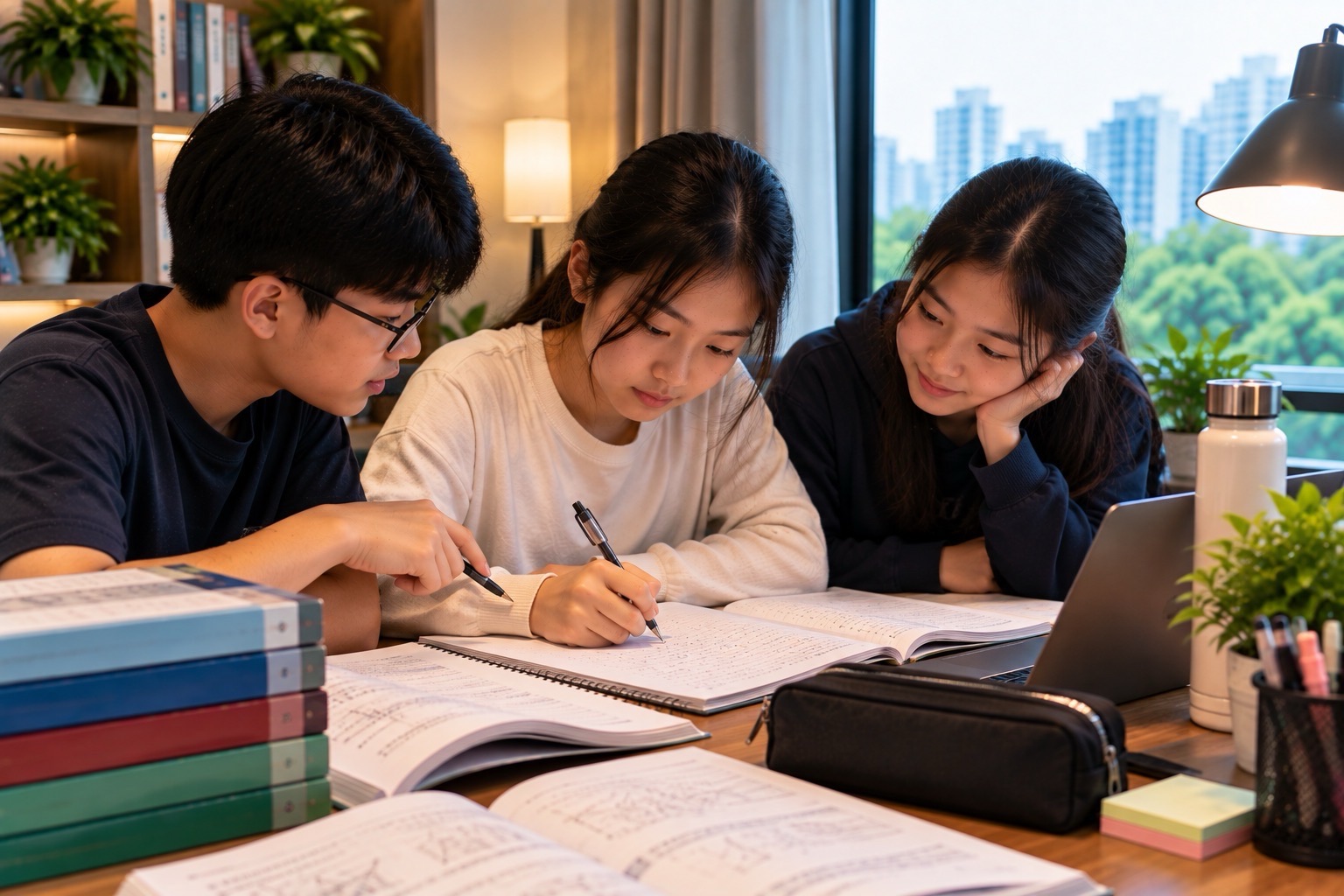
Yuying Secondary School at 47 Hougang Avenue 1, Singapore 538884, is a government-aided co-educational school that eligible Punggol families can consider through Posting Group 2 (PG2). For the completed 2026 Secondary 1 intake, its historical PG2 PSLE Score range was 22–25, with 25 the last admitted score in that group. Those figures describe the preceding PSLE cohort; they are not fixed thresholds or guaranteed offers for 2027. Before ranking Yuying, parents should confirm the pupil’s actual Posting Group eligibility, inspect MOE SchoolFinder and consider the journey between their Punggol home and the school near Kovan.
Yuying’s 2026 educational identity is particularly clear: its Applied Learning Programme develops eco-innovators through food sustainability and design thinking, while its Learning for Life Programme, Yuying C.A.R.E.S., develops community youth leadership. Secondary 1 pupils explore food-waste challenges in an Eco-Innovators Programme with Singapore Institute of Technology; Secondary 2 pupils work with Super Bean International (Mr Bean) on food innovation using soya bean pulp. The C.A.R.E.S. framework—Collaborate, Act, Reflect, Empathise and Serve—progresses from environmental awareness to active ageing and later advocacy for social inclusion. A PG2 pupil can investigate these experiences without assuming that an applied project automatically changes the formal level of English, Mathematics, Science or other subjects.
- School: Yuying Secondary School, 47 Hougang Avenue 1, Singapore 538884.
- 2026 historical PG2 range: 22–25, for the 2026 intake based on PSLE 2025; the 2027 outcome is not yet known.
- Academic meaning: PG2 is the Secondary 1 posting group, while G2 or G3 refers to a particular academic subject under Full SBB.
- School heritage: Founded in 1910, with more than a century of education history and a present-day government-aided structure.
- Applied Learning Programme: Design Thinking and Critical Design Futures Thinking, with real food-sustainability problems.
- Secondary 1 ALP: Yuying × SIT Eco-Innovators; pupils propose workable ways to reduce food waste.
- Secondary 2 ALP: Yuying × Super Bean International food innovation, including reuse of soya bean pulp.
- LLP: Yuying C.A.R.E.S.—Collaborate, Act, Reflect, Empathise, Serve.
- LLP progression: Secondary 1 environment and sustainability; Secondary 2 active ageing; upper secondary inclusion and social causes.
- School visit questions: What is standard for all students, what is selected, and what student work demonstrates the programme’s learning?
- Punggol commute: Check actual buses and the Kovan MRT area rather than assuming a fixed journey from all parts of Punggol.
Definition lock: PG2 describes entry, not the whole child
Posting Group 2 is the admission group used for Secondary 1 posting under Singapore’s Full Subject-Based Banding. It helps determine the school to which the child may be posted and indicates a broad starting reference for academic demand. G2 is different: it describes the level of one academic subject. A learner may enter through PG2 while having strengths at different levels in language, mathematics, science or creative work.
This is why a parent should never introduce a child at a school open house as if PG2 is a permanent verdict about intelligence. A child may be exceptionally attentive when conducting a science experiment and less secure when writing a long essay. Another may communicate confidently with elderly residents but struggle with algebra. The school should respond to those specific strengths and learning needs rather than treat the whole pupil as one unchanging category.
The distinction also protects the student from unrealistic promises. Participation in a food innovation project is not automatic eligibility for an upper-secondary G3 subject, a selective competition or a polytechnic course. Each formal subject level and later qualification has its own criteria.
This school-specific guide focuses on how Yuying’s distinctive programmes and daily learning may suit a Punggol pupil. National posting rules and later SEC admissions belong to separate guides.
How to read the 2026 PSLE score range correctly
Yuying’s completed 2026 PG2 intake range was 22–25. Lower PSLE totals represent stronger overall performance. The number 25 is therefore the historical last admitted score, commonly called the cut-off point for that group. This is not an entry score announced in advance for future applicants.
If a pupil scores 25 in the coming PSLE, the family may reasonably investigate Yuying because an earlier intake admitted pupils at that score. But the actual posting outcome will depend on how many other families prefer the school, available places and the prevailing tie-breaking process. Meeting a historical number never guarantees a seat.
Another common mistake is to compare different Posting Groups. Yuying’s 2026 PG3 last admitted score was 22, while PG2’s was 25. These are separate admission categories. A child whose PSLE Score permits a PG2/PG3 or PG1/PG2 choice should understand the consequences of that choice before ranking schools. One cannot replace the applicant’s formal eligibility with a more favourable table column.
The responsible shortlist records the school, the group, the intake year and the source. A number without those labels is not reliable admissions information.
Why the school’s age is useful context, not a quality ranking

Yuying traces its heritage to 1910 and has experienced different phases of Singapore education, including its development as a Chinese-medium institution and later transition towards the mainstream English-medium curriculum. Its official history describes reopening after the Second World War and the move to its Hougang Avenue 1 site in the 1980s. Today it operates as a government-aided school.
This history may be meaningful to families who value continuity, community and an established school identity. However, an old school is not automatically a better school for every teenager. A child needs an appropriate modern curriculum, supportive teachers, meaningful activities and a daily routine the family can sustain.
A parent may use the school’s history to ask how its traditions are connected to new programmes. The Eco-Innovators work, for example, responds to current sustainability challenges while the C.A.R.E.S. approach promotes service across different generations.
A useful school profile respects heritage without turning age into an invented academic ranking or a substitute for checking current programme details.
The location: Hougang Avenue 1 near Kovan
Yuying’s official contact page places it at 47 Hougang Avenue 1 and identifies Kovan MRT as the nearest MRT station. It also lists nearby bus routes, including services 53, 53M, 62, 113 and 115 around the closer stop, with other services accessible nearby. These are practical transport references, not a promise that the journey from any particular Punggol block takes the same number of minutes.
Parents should test the morning route from the actual home. Include walking to a stop, waiting, transfers and the final approach to the school. A teenager who has not travelled independently may need practice in checking the service direction and recognising when to alight.
Repeat the exercise for a day with CCA. A child returning after a long activity may experience different congestion and levels of fatigue. This can affect homework, meals and sleep, so it belongs in the school-fit calculation.
A longer journey can be justified if the student is genuinely enthusiastic about Yuying’s programmes and can manage the routine. But geography should not be ignored simply because a school brochure is attractive.
The eco-innovators idea: build a solution to a real problem
Yuying’s Applied Learning Programme integrates Design Thinking with Critical Design Futures Thinking. The official 2026 description says it aims to nurture creative confidence and critical thinking through authentic challenges. The focus is on identifying an issue, examining its context, designing a potential intervention and evaluating what could work.
Food waste is a useful educational problem because it involves behaviour, resource use, measurement and sometimes technology. A pupil may initially propose an impressive digital solution, but an honest investigation must first establish what is being wasted and why. Is the problem portion size, information, storage or some other factor? Different causes require different responses.
The learner should collect appropriate evidence and avoid claiming that one isolated observation proves a general pattern. A prototype is useful when it makes an idea testable, not merely when it looks sophisticated.
For a PG2 pupil, applied learning can reveal strengths in practical reasoning, careful observation and collaboration. Those skills complement, but do not replace, the G-level academic curriculum.
Secondary 1 Yuying × SIT Eco-Innovators
Yuying’s official ALP page identifies the Secondary 1 Eco-Innovators Programme in partnership with the Singapore Institute of Technology. Pupils develop workable solutions to problems such as food waste in the school canteen. The partnership provides a concrete example of applied education connecting a secondary-school concern with wider design and technological thinking.
The first educational question is what the pupil actually investigates. A canteen may have different reasons for food leftovers, and the solution should not be selected before the problem is understood. Students could explore how choices are made, what information is available and whether a proposed change fits school operations, subject to the school’s actual project instructions.
A good solution requires trade-offs. A more complicated system could demand time and maintenance, while a simpler communication change might work better. Pupils should learn to compare alternatives using evidence instead of assuming complexity equals innovation.
Parents can ask their child which idea was rejected and why. Being able to explain a rejected design can reveal stronger learning than merely presenting a polished final model.
Food-waste research requires good measurement
A sustainability project becomes more rigorous when pupils define what they are measuring. Food waste can be described by mass, frequency, type or context, but those measurements answer different questions. An observation that one bin appears full is not the same as a reliable quantitative estimate of a school’s entire waste.
If the school activity involves collecting data, students should follow hygiene, safety and privacy instructions. They should not photograph identifiable individuals or make accusations about classmates based on one meal. Ethical research respects people while investigating a genuine problem.
The child can practise calculating proportions and representing results with clearly labelled graphs. Then ask what the data cannot establish. A finding during one event may not apply to every day.
These are foundational habits for G2 Mathematics, Science and Humanities. The ALP becomes educationally powerful when students connect the practical issue to those formal reasoning skills.
Design thinking: empathy before an attractive prototype
A good design process starts by understanding the people affected. In a canteen, pupils, stallholders, cleaners and school staff may view the same problem differently. An intervention that seems convenient to one group could create extra work for another. A meaningful design lesson teaches students to listen before inventing.
A hypothetical pupil may propose an app to encourage smaller food portions. But if people already know the problem and the real constraint is food packaging or menu planning, the app may not help. The team should test assumptions through appropriate observation or consultation and revise its idea.
That experience can develop humility and adaptability. A child learns that a first idea is not a personal identity to defend at all costs. Changing it in response to evidence is a strength.
Parents should ask how the school teaches feedback and iteration. A programme can be entertaining without producing deep learning if pupils are never required to explain why a solution works.
Critical Design Futures Thinking
Futures thinking asks students to consider how changing conditions might affect a design. It is not a claim that pupils can predict exact future technologies or national policies. A class could consider how resource needs, population patterns or technology use may change, and whether a proposal remains useful under several plausible conditions.
For a food-sustainability task, one scenario might involve higher demand, another different packaging and another changing access to information. Pupils can ask which design would adapt most effectively and what evidence is missing. They should distinguish a present fact from a hypothetical scenario.
This can support a teenager’s ability to reason under uncertainty. A student who says “we do not yet know” may be more intellectually careful than one who makes a dramatic prediction with no evidence.
The child’s future career also contains uncertainty. Learning to adapt, verify and improve is a more reliable educational objective than memorising a list of supposedly guaranteed jobs.
Secondary 2 Yuying × Super Bean International
Yuying’s official ALP page identifies a Secondary 2 Food Innovation Programme with Super Bean International, the company associated with Mr Bean products. It describes pupils developing new food ideas from soya bean pulp that might otherwise be discarded. This is a particular, verifiable application of the school’s sustainability theme.
The learning connects Science, food systems, product design and entrepreneurship. A pupil must consider what the material can become, whether the result is suitable for consumers and what the relevant constraints might be. A novel ingredient does not automatically make a product nutritious, safe or commercially viable.
Students should learn to test the idea appropriately, present evidence and describe their own contribution. The school’s actual project arrangements determine whether pupils prepare, evaluate or display prototypes and what safety rules apply.
Parents should not interpret the industry partnership as a guarantee of employment, a paid internship or a retail launch for every student’s product. The educational opportunity is exposure to authentic problem-solving and feedback.
Turning by-products into better questions
Using soya bean pulp raises an important systems question: when an ingredient becomes a by-product, can it be repurposed responsibly? Students may consider properties, storage, user preferences, processing and waste reduction. But every claim about safety, nutrition or shelf life requires appropriate evidence and professional standards.
A school project can introduce the question without pretending a teenage prototype is a commercially approved food product. Pupils should follow teacher and partner guidance for handling materials and presenting any samples.
A parent might ask the child to compare two proposed ideas and explain the trade-offs. One may be simpler to produce, while another might appeal to a different audience. The learner should avoid assuming that an attractive advertisement is proof of demand.
This example helps develop decision-making that is both inventive and honest. It also reminds students that waste reduction needs practical implementation, not only positive intentions.
Yuying C.A.R.E.S. and Community Youth Leadership
Yuying’s Learning for Life Programme is named C.A.R.E.S.: Collaborate, Act, Reflect, Empathise and Serve. The official August 2026 description places it within Community and Youth Leadership and says students plan experiences to understand and address different social needs across the school years.
The five verbs form a useful educational sequence. Collaboration means working with others rather than controlling every decision. Action means doing something relevant. Reflection asks what happened and what could improve. Empathy involves recognising the experiences of people affected. Service directs the effort towards a genuine benefit.
A child can practise these capabilities without having a formal prefect or council title. Helping a group organise a practical task, listening to a beneficiary and accurately reporting results are meaningful contributions.
The school programme should not be translated into an automatic LEAPS 2.0 bonus or leadership appointment. Recognition has separate criteria, while everyday responsible behaviour has value even without an award.
Secondary 1: sustainability and the environment
Yuying’s 2026 LLP page identifies sustainability and environmental responsibility as the Secondary 1 theme. Pupils experience and empathise with food-waste issues, and the programme encourages better choices. This connection with the ALP can make service and applied learning reinforce one another.
The educational aim is not simply to shame students for leaving food. A thoughtful project investigates what drives behaviour, recognises financial or cultural circumstances and explores realistic improvements. A teenager should learn that a meaningful environmental claim requires evidence and respect for others.
A pupil can contribute by observing patterns responsibly, explaining information or supporting a school-approved activity. Different skills become useful; the strongest speaker is not always the best analyst, and the strongest mathematician may need a teammate’s empathy.
Parents can ask how the child changed a habit or refined an assumption. That is a clearer measure of learning than the number of slogans printed on a poster.
Secondary 2: active ageing and the elderly
Yuying’s LLP progression identifies Active Ageing and the Elderly as the Secondary 2 theme. Students apply design thinking to plan Values-in-Action projects that address the needs of older people. This is especially relevant in Singapore, where households and communities include older residents with varied capabilities and interests.
A well-designed project begins with listening. The student should not assume every elderly person needs the same activity or feels isolated. Older adults are individuals with experiences, preferences and agency. A useful service idea responds to what participants actually want rather than what looks good in a portfolio.
Design thinking may help students test an activity, gather appropriate feedback and refine it. A small respectful conversation can be more meaningful than an elaborate event that participants find tiring or confusing.
The family should also discuss consent and privacy. Pupils should follow the school’s guidance before photographing or sharing personal stories about community members.
Upper-secondary advocacy and inclusion
The official C.A.R.E.S. page places Secondary 3 and 4/5 emphasis on advocacy for inclusivity and social causes, involving young and elderly community members. By this stage, students can be expected to take more responsibility for understanding an issue, communicating accurately and developing sustained service.
Advocacy is most responsible when it distinguishes facts, values and proposed actions. A pupil who sees a problem should not immediately create a sensational video without checking the context. The school can guide how to research, consult stakeholders and communicate without stereotyping or humiliating the people affected.
A student might discover that one well-intentioned idea is inaccessible to someone with a disability. A constructive response is to listen, ask what adjustment would help and improve the plan. Empathy is a process, not a phrase to insert into a speech.
The LLP’s developmental progression can be valuable when pupils recognise that real social change often requires patience, accuracy and cooperation.
Vertical farming and the school environment
Yuying’s published school information also describes vertical-farming experiences and sustainability projects. Gardens and growing systems make environmental questions visible: how much space is available, what conditions influence plants, what resources are consumed and how maintenance works.
A pupil should distinguish a demonstration from a national-scale solution. Growing plants at school can teach observation and measurement without proving that one method will solve Singapore’s entire food-security challenge. This is not a weakness of the activity; it is a reason to learn to interpret evidence at the correct scale.
Parents can ask the child to explain the variables in a plant-growth activity and identify what could be tested fairly. The experience may connect G2 Science with data interpretation in Mathematics and explanations in English.
The actual learning objectives and equipment belong to the school. A family need not purchase a home farming kit to appreciate the educational concept.
Full SBB subject levels in everyday life
A PG2 pupil joining Yuying receives a school-issued timetable specifying subject levels where relevant. Students may share form-class experiences across different academic profiles while attending particular lessons in levelled groups. The parent should not assume the same G2 label applies to every subject without reading the formal offer.
The first term can involve movement between classrooms, different teachers and several digital learning systems. A reliable assignment record and a clear routine for asking questions can reduce confusion. The student should know where to go if the subject-level timetable appears inconsistent.
A child who performs strongly in one subject may later be eligible for a more demanding level under MOE and school criteria. That decision requires sustained readiness, not an entitlement created by an external tuition mark or participation in an ALP showcase.
The goal is appropriate teaching and real understanding, not symbolic movement between labels.
G2 Mathematics through food-waste data
Food sustainability provides useful contexts for ratios, percentages, averages and graphs. A student might compare the amount of waste under different conditions and learn why the baseline matters. If two quantities are expressed in different units, the child must convert them correctly before comparing.
However, applied contexts do not replace basic algebra teaching. If a pupil writes 3(x + 2) = 3x + 2, the error is failing to distribute the multiplier to both terms. The teacher can explain why three groups of x + 2 equal 3x + 6, then ask the child to solve an unfamiliar variation independently.
A child who knows the correct method but misreads a graph needs a different intervention from one who does not understand the relationship. The learning plan should diagnose errors rather than assign indiscriminate worksheets.
Ask the student to explain one calculation from a project without relying on the software. Genuine transfer is the measure of understanding.
G2 Science through controlled observation
A project about food, farming or sustainability can help pupils distinguish observation from explanation. A child may record that one growing arrangement produced a different result, but cannot automatically conclude that one change caused it if several variables differed. The experiment must be interpreted carefully.
For formal Science tasks, teach the pupil to identify the independent and dependent variables, relevant controlled conditions and the limits of the evidence where appropriate. Then ask for a clear explanation linking scientific knowledge to the observed result.
Some students memorise a long answer but cannot handle a changed question. A useful tutor or teacher can ask the child to explain why the mechanism works and test it in another context. The goal is reasoning that remains useful beyond the first worksheet.
Scientific integrity also means resisting exaggerated marketing claims about health, nutrition or environmental benefits. A school prototype needs accurate description, not unsupported certainty.
G2 English and the ability to explain a design
A good prototype can fail to communicate its purpose if the student cannot explain the problem or evidence. Applied learning therefore provides a natural context for G2 English: reading instructions accurately, organising a report, addressing an audience and distinguishing fact from opinion.
A short project explanation might use four parts: the problem, the proposed method, the observed result and a limitation or next step. The pupil should write in their own words and choose details relevant to the intended reader. Complex vocabulary is not automatically better than precise language.
For comprehension, practise claim, evidence and explanation. A plausible inference must be supported by relevant words from the text. This habit applies when reading an article about sustainability as well as an examination passage.
Parents can encourage reading beyond worksheets, including age-appropriate stories and accurate articles about food systems, technology or community life.
CCAs and talent interests
Yuying publishes CCAs in sports, performing arts, uniformed groups and clubs. Its 2026 DSA talent information includes volleyball, wushu, concert band and community youth leadership. The actual CCA list, allocation, trials and training schedule for 2027 must be confirmed with the school.
A pupil attracted by food innovation may also enjoy a creative or technical activity, but ALP participation does not automatically secure a place in a selected CCA or competition team. Families should distinguish school-wide experiences from elective or talent pathways.
A CCA can also offer friendship and belonging that are not directly related to the student’s G-level subjects. A teenager who struggles with one academic topic may gain confidence through collaboration, performance or service.
Formal LEAPS 2.0 recognition follows school records and specific criteria. Parents should value genuine commitment instead of promising an exact bonus based on attendance at one activity.
DSA-Sec and Posting Group compatibility
Direct School Admission to secondary school allows schools to select eligible applicants on the basis of recognised talent or aptitude before PSLE results are known. Yuying’s 2026 domains provide context, but the exact 2027 exercise, dates and selection criteria may differ.
A Confirmed Offer remains conditional on the pupil later qualifying for a Posting Group offered by the school. The child must still meet the formal PSLE group requirement. An impressive talent record cannot bypass a mismatch between the pupil’s eligible group and the school’s offered groups.
Successful DSA pupils also have a commitment to the school and relevant talent area. Parents should investigate training, participation and academic fit before ranking an offer, not treat DSA as a temporary way into a school whose programmes the child does not want to sustain.
A pupil who does not receive a DSA offer can still participate in the ordinary Secondary 1 posting exercise and develop interests later.
School-home communication and registration
After posting, the family should use Yuying’s actual current Secondary 1 registration instructions, booklists and uniform notices. A publicly indexed December 2025 letter describes the 2026 intake’s ordering and collection arrangements. It should not be treated as the 2027 deadline or vendor instruction without confirmation.
The formal subject-level offer matters for textbooks. A pupil may have different G levels across subjects, so parents should not simply purchase every G2 book based on the Posting Group label. Follow the school-issued list and ask for clarification when uncertain.
Parents Gateway or the school’s official channels may communicate administrative matters, programme events and consent. Sensitive pupil information should not be shared in unofficial community chats.
The teenager should gradually learn to manage assignments and bring correct materials independently. This is part of the transition to secondary school, not a responsibility adults must perform forever.
Three fictional PG2 pupils considering Yuying
The inventive food-system learner. A child enjoys experiments and practical design but finds long written answers difficult. The family investigates Yuying’s Eco-Innovators programme and teaches clear explanation of evidence. The practical interest becomes a reason to improve English rather than an excuse to avoid it.
The service-minded teenager. Another pupil enjoys speaking with older relatives and wants to help community members. The C.A.R.E.S. progression appeals to the family, who ask about authentic VIA and how children learn to respect beneficiaries’ wishes. The parent does not promise a formal leadership title.
The cautious school explorer. A third pupil has PSLE Score 25 and notices the historical Yuying PG2 last admitted score was 25. The family recognises that admission is not guaranteed, checks group eligibility and travel, and includes realistic alternatives in the preference list.
These are illustrative profiles, not actual applicants or predictions of placements.
A realistic weekly routine for a commuter from Punggol
A student travelling from Punggol to Hougang may have a longer ordinary journey than a pupil attending a nearby campus. Parents should include that time when planning homework, CCA, meals, family activities and sleep. A timetable that relies on every journey running perfectly can become stressful.
Encourage one reliable method for recording assignments and a short weekly review of upcoming tasks. When an ALP project requires collaboration, the child should plan milestones rather than wait until the final evening. If a subject becomes persistently difficult, identify the actual misconception and ask the teacher for guidance.
Do not fill every free hour with tuition because the child entered through PG2. An exhausted pupil may struggle with tasks that would be manageable when rested. A focused explanation and independent retry can be more useful than another large packet of exercises.
A sustainable routine supports academic learning, social wellbeing and the kind of practical experiences that make Yuying distinctive.
What to ask at the school open house
Ask what all Secondary 1 pupils actually do during the SIT Eco-Innovators programme and what work is expected from them. For Secondary 2 food innovation, ask how students learn about the relevant scientific and ethical constraints and whether any company-related project extensions are selected.
Ask how the school delivers C.A.R.E.S. and how pupils reflect after service. What is the progression from environmental learning to active ageing and later inclusion advocacy? How are students supported if they are shy, new to group projects or uncertain about a particular social interaction?
Then ask about the actual Full SBB timetable, teacher feedback, available CCAs, wellbeing support and parent communication. Allow the child to ask a genuine question and record what felt welcoming or difficult.
The visit is for understanding school fit. It cannot guarantee a place before MOE processes the actual posting choices.
Frequently asked questions about Yuying PG2
Does Yuying Secondary accept PG2 pupils?
Yes. The completed 2026 intake included PG2 pupils with a historical PSLE Score range of 22–25.
Is 25 a guaranteed cut-off for the 2027 intake?
No. It was the last admitted PG2 score in the previous exercise. Future admission depends on the next cohort and official posting rules.
Is Yuying located in Punggol?
No. It is at 47 Hougang Avenue 1, in the Kovan/Hougang area, and may be considered by eligible Punggol families.
What is Yuying’s Applied Learning Programme?
It integrates design thinking, critical design futures thinking and food sustainability through programmes such as Eco-Innovators and Food Innovation.
What does the Secondary 1 SIT partnership involve?
The published school programme describes a Yuying × SIT Eco-Innovators project in which pupils develop workable solutions to challenges such as canteen food waste.
Does every pupil launch a food product with Mr Bean?
No. The 2026 Secondary 2 collaboration describes a food-innovation educational experience. Commercial product launches and individual outcomes are not guaranteed.
What does C.A.R.E.S. mean?
Collaborate, Act, Reflect, Empathise and Serve, the school’s Community Youth Leadership framework.
Can a PG2 student take G3 subjects?
Where eligible and offered under Full SBB, individual subjects can be at different levels. The school issues the formal offer and determines later progression.
Is the school more suitable than every Punggol secondary school?
No. Suitability depends on the child’s learning, interests, school culture, travel and available programmes.
Does DSA override the pupil’s PSLE Posting Group?
No. The final result must qualify the pupil for a Posting Group offered by the DSA school.
Should a pupil hire a tutor for food innovation?
Not automatically. The school programme provides educational experiences; private help is appropriate only for a real learning gap or purposeful extension.
Where should parents verify details?
Use the current Yuying school site, MOE SchoolFinder and official S1 posting instructions. Previous cohort dates and cut-offs are historical.
Your Next Step
Check Yuying’s current ALP, C.A.R.E.S. LLP, academic and contact pages, then compare its verified historical PG2 data with your child’s actual eligible group. Test the route from Punggol, ask the teenager about the practical food and service activities, and rank the school only if the ordinary school day as well as the signature programmes feel appropriate.
This is the Yuying-specific PG2 school profile. The other Punggol and nearby school profiles each own their own verified programme details, while national posting rules and post-secondary pathways remain in separate articles to reduce duplication.
Official sources and further reading
- Yuying Secondary: Applied Learning Programme, Eco-Innovators and Food Innovation
- Yuying Secondary: C.A.R.E.S. Learning for Life Programme
- Yuying Secondary: School history
- Yuying Secondary: Contact and Hougang location
- Yuying Secondary: Sustainability Education
- MOE SchoolFinder
- 2026 intake historical PG2 score reference; verify with MOE
- MOE: Full Subject-Based Banding
- eduKatePunggol: PG2 Hougang Secondary School


