
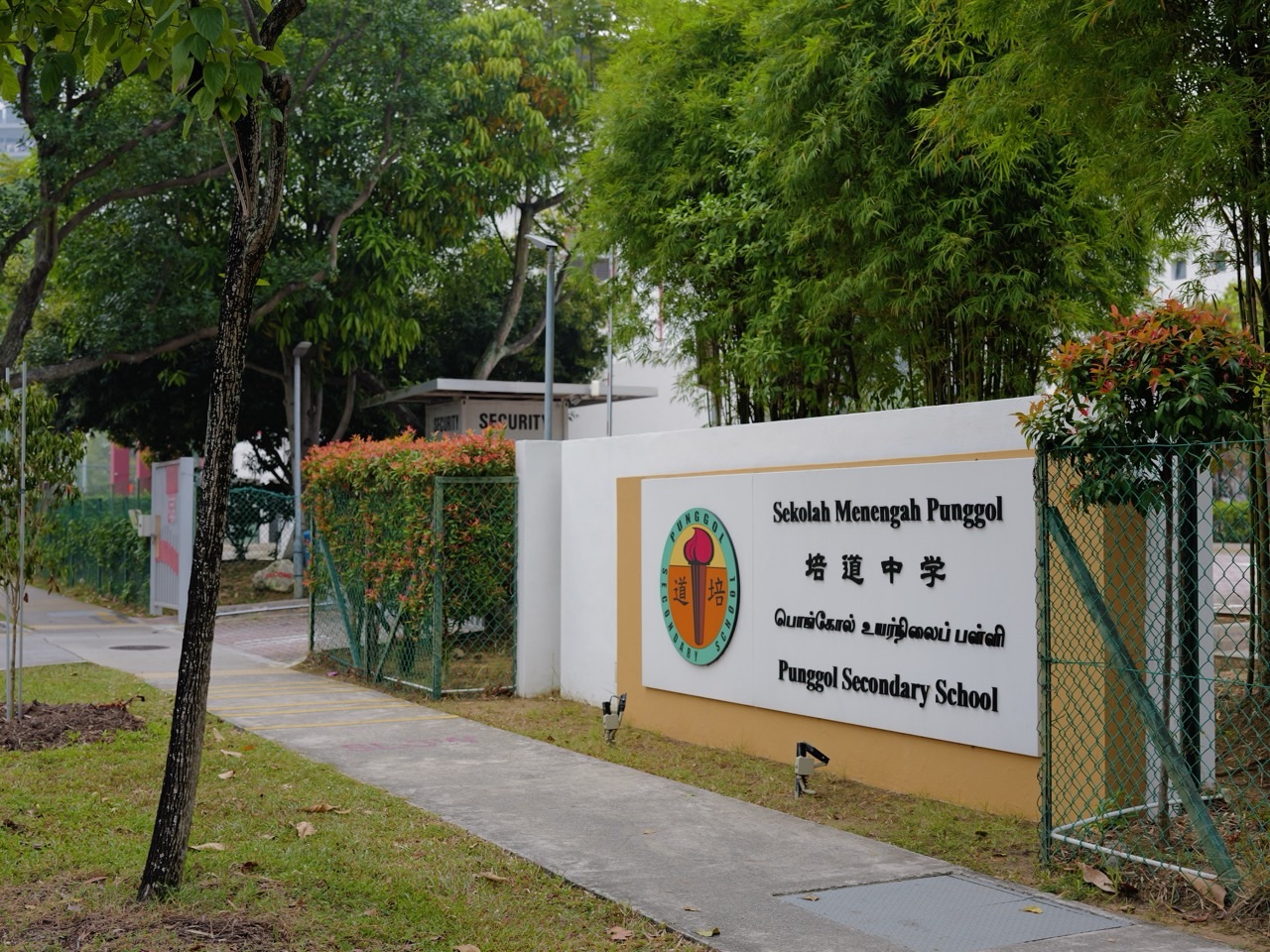
If you are considering Punggol Secondary School for Secondary 1 in 2027 through PSLE Posting Group 2, check the school’s PG2 row in MOE SchoolFinder, then decide where the school belongs on your child’s list. Compare the journey to its campus at 51 Edgefield Plains with the school’s programmes, co-curricular activities and support. A previous score range describes an earlier intake. The posting exercise for your child determines the actual school place. MOE SchoolFinder · Punggol Secondary School’s contact and campus information
After posting, read the school’s registration instructions and any individual subject offer. A PG2 student usually starts most levelled subjects at G2. A Standard PSLE grade of AL5 or better can qualify the student to take the corresponding English Language, Mathematics, Science or Mother Tongue Language subject at G3. Punggol Secondary has published 2027 book lists. Use the Secondary 1 list after the subject levels are confirmed. Full Subject-Based Banding eligibility · Punggol Secondary’s 2027 book lists
- Read the PG2 row for the correct year and school. Keep the child’s group eligibility and the school’s historical score range separate.
- Keep the school’s live announcements, registration instructions, subject offers, timetable and book list where you can check them easily.
- Check every subject offer by name, level, deadline and reply method. Confirm books against the accepted combination.
- Explore the school’s Applied Learning Programme in Environmental Sustainability and its Learning for Life Programme in Community and Youth Leadership.
- Confirm CCA arrangements and any Direct School Admission commitments from the instructions relevant to your child.
- Try the commute on an ordinary school morning and ask whom your child can contact when they need help.
Contents
- Check which decision you are making today
- Read a past score range as a past outcome
- Use the school’s history to start a conversation
- See what students do in Environmental Sustainability
- Ask how community leadership is learned
- Separate regular posting, DSA and CCA allocation
- Confirm what Parents Gateway is asking you to do
- Prepare from the 2027 book list and the confirmed timetable
- Try the route and make an ordinary school week visible
- Know whom to contact for different problems
- Help your child connect a classroom subject to a project
- Use a short visit to decide what you still need to know
- Questions families ask about Punggol Secondary and PG2
Check which decision you are making today
A Primary 6 family may hear people say “Punggol” when they mean the neighbourhood, a primary school or Punggol Secondary School. Put the actual school name and address at the top of your notes. The public contact page lists the campus at 51 Edgefield Plains, Singapore 828870. Edgefield Secondary and Greendale Secondary are separate schools with different campuses. Matching the name and address first helps you time the right journey and read the right school information.
The first decision is whether to list Punggol Secondary and where to rank it. Eligibility for PG2 comes from the PSLE result. Scores of 23 and 24 qualify for PG2. Students scoring 21 or 22 have a PG2 or PG3 choice, and those scoring 25 have a PG1 or PG2 choice. If your child has two eligible groups, the choice applies to the whole submission. Compare school ranges within the group you are considering, then decide which single group and school ranking to submit. Posting Group eligibility under Full Subject-Based Banding · MOE’s Secondary 1 posting guidance
The second decision comes after a child has been posted. Read the receiving school’s instructions for registration, subject offers, materials and reporting. At this stage an individual notice can do more for a family than a general score discussion. It can tell you whether a particular response is required, what books are relevant and what time your child should arrive. Keep the official notice and the date it was issued so another caregiver knows which version to use.
For a family still comparing schools, keep one note for each realistic option. Record the journey, the current school profile, what interests the child and one question to ask the school. A local school can be a good fit for reasons the child can describe, such as enjoyment of a practical project or a route they can manage independently. A short walk is also a real advantage if it gives the student a more manageable start to the day. Use the child’s experience as one piece of information alongside eligibility. Punggol’s guide to choosing six secondary schools
Read a past score range as a past outcome
Published historical records put Punggol Secondary’s PG2 range at 21 to 24 for the 2026 Secondary 1 intake following the 2025 PSLE. Confirm the current listing and the year shown in SchoolFinder as you prepare the application. Quoting a historical range with both the exam year and the school entry year can prevent confusion when a friend refers to the same result by a different date. Historical score range for the 2026 entry · MOE SchoolFinder
For example, a pupil with 23 would have been numerically better than the last score of 24 in that earlier PG2 range. A pupil with 24 would have matched it. A pupil with 25 using PG2 would have been one point above it numerically, which is a weaker result on this score scale. Those comparisons describe relative position against one historical reference. The number of places, scores and choices in the current exercise determine its own result.
If applicants with the same PSLE score compete for the remaining place, the general tie-break sequence is citizenship, choice order and then computerised balloting. Choice order can matter for equal-score applicants after citizenship is considered. Rank the schools that your child would genuinely prefer in that order, with an appropriate spread of options. Use the exact school name in the submission, and keep the confirmation after the family has checked it. Secondary 1 posting tie-break example
Use the school’s history to start a conversation
The school traces its history through Pei Dao Secondary School. It says that Pei Dao was renamed Punggol Secondary School and moved to Punggol New Town in 2001, with the school officially opening in 2003. Parents who know the former school may recognise the Chinese name. If two generations are comparing memories of school, make room for the child to ask what a day looks like now and how the campus is used today. Punggol Secondary’s school history
The principal’s message describes an emphasis on students taking initiative and shows an example in the Students Learning Festival, where students have shared learning with their peers and teachers. For a family, it is worth asking what a student would prepare before making a presentation. The answer might involve reading about a topic, trying a method, explaining it to a partner and then making changes after feedback. A pupil can use that account to decide which part sounds familiar and which part they would like to learn. Punggol Secondary’s principal’s message
See what students do in Environmental Sustainability
Punggol Secondary’s Applied Learning Programme is described by the school as Environmental Sustainability. Its published examples include using block programming to develop a smart hydroponics system and using technology to monitor plant growth. The school also shows examples of students learning about vermicomposting and visiting Sungei Buloh Wetland. These examples give families a concrete sense of the kind of inquiry to discuss at an open house. Punggol Secondary’s Applied Learning Programme
Imagine a child who likes growing plants at home and another who wants to program a device. Both can find a good question in a hydroponics project. One may want to know what the leaves tell them about growing conditions. The other may want to know why a reading changes or whether the sensor is reliable. A team can benefit from both interests. The child who notices unexpected results and records them carefully is doing a useful part of the work.
A good open-house question is “What do students actually do with one set of readings?” Ask whether students decide what to measure, write or modify instructions, compare results, keep records or present a conclusion. Follow up by asking which parts are introduced in Secondary 1 and which experiences are offered in later years. If a demonstration is led by a team of older students, ask what a new student learns before they can do that work. The answers can help a child picture learning during the ordinary school week.
You can try a short observation exercise to see which part your child enjoys. Over several days, ask them to record the appearance of two plants, note any difference they can see and suggest one reason for it. Then ask what else might explain that difference. The task is about careful observation and explaining limits. It can also help the family talk about environmental science without assuming that every interesting observation has a single proven cause. If your child likes the exercise, ask the school about the next point at which practical inquiry appears in the curriculum.
Ask how community leadership is learned
The school’s Learning for Life Programme focuses on Community and Youth Leadership. The school describes collaboration and service, and publishes examples such as secondary students presenting on a cause, engaging younger children or preparing meals through a community organisation. Activities can vary by cohort. Ask the school which experiences your child’s year level is expected to have and how students are prepared for them. Punggol Secondary’s Learning for Life Programme
Participation can look different for different children. A student who enjoys speaking may volunteer to open a presentation. Another may write clear instructions, keep the group on schedule or notice who has been left out of a discussion. Ask a student ambassador how roles are assigned in a shared project and what happens when someone is still building confidence. A child can imagine joining a group more easily when they know several ways to contribute.
For a parent, a useful follow-up is to ask how students get feedback after the project. Suppose a group tries explaining an activity to younger children and the children lose interest halfway through. The secondary students can ask what was hard to follow, test a shorter explanation and see whether it helps. That example offers a more precise account of leadership than a list of roles. It shows how a student responds to the people the activity is supposed to serve.
Separate regular posting, DSA and CCA allocation
Punggol Secondary’s 2026 Direct School Admission information for the 2027 Secondary 1 intake lists Volleyball, Choir and Environmental Science. Those were the domains in a specific DSA cycle. It also says that students who accept an Environmental Science DSA offer join the Environment Club CCA, and that students admitted through DSA are expected to honour their talent commitments. Families planning a later application should consult that year’s DSA information. Punggol Secondary’s 2026 DSA information for the 2027 intake
If your child is applying through regular Secondary 1 posting, viewing the Environmental Sustainability programme is a way to understand the school. An interest in the programme can help explain why your child would rank the school highly. Once posted, follow the current CCA selection instructions, which can include preferences, trials or other school arrangements. Ask when your child will be told how allocation works and what alternatives to consider if a popular activity has limited space.
An older registration page can be useful as a preview of how the school groups its materials. Its Secondary 1 Matters page for the 2026 intake published the registration briefing, information about subject levels and CCA allocation. Follow the instructions for the intake your child is actually joining. Keep any communication specific to an accepted DSA offer with the placement records, and ask the school if its instructions differ from the general notice. Punggol Secondary’s Secondary 1 Matters page
Confirm what Parents Gateway is asking you to do
A notification about school registration and a notification about a more demanding subject can require two separate actions. The school’s earlier intake materials show how it has used Parents Gateway for follow-up. Read the full message, open its attachment and look for a response date and time. If you share the work with another caregiver, assign one person to check the message and one person to confirm the action is recorded. That can prevent duplicate replies and last-minute uncertainty.
Imagine that Sara is posted through PG2 and receives an offer to take Mathematics at G3. Her family writes down “Mathematics, G3” and then checks the rest of the notices. English and Science are separate entries. The G3 Mathematics offer does not settle whether any other subject is at G3. If there is one notice covering several offers, read whether the school asks for a choice on each subject. If the reply method is unclear, contact the school and describe the exact notice or attachment.
A different family may have heard that Standard AL5 in Science meets the threshold but has not seen a subject notice. Check the child’s original grade and level and the date or stage identified by the school. Then ask whether a message is expected and where it can be found. An older Q&A can illustrate the channel the school has used, while its past dates do not supply the deadline for 2027. Punggol Secondary’s example of Parents Gateway subject offers
For a child who is uncertain about accepting a G3 offer, ask what a typical lesson and assignment look like, what support the school can provide and when progress would be reviewed. The child can bring a recent piece of work they did independently. Talk about how they worked through a difficult question and how much time they usually have on a busy weekday. The family will then have something concrete to discuss alongside the PSLE grade. Punggol guide to reading a subject offer and timetable
Prepare from the 2027 book list and the confirmed timetable
Punggol Secondary’s book list page has a 2027 Secondary 1 link covering all subject levels. Start with the school’s confirmed subject and level for your child, find the corresponding book entry, then check the full title and ISBN where listed. Some subjects can use shared materials across levels. Other entries, such as the Mathematics items in the published list, have separate G2 and G3 books. Item titles that look alike may still refer to different editions or levels. Punggol Secondary’s 2027 book list page
A family can make one practical comparison before paying. Put the subject notice on the left, the book list in the middle and the order preview on the right. Check that all three match for Mathematics and English. Then check whether the Science entry actually applies to both G2 and G3 or whether a different line is required. If a subject offer is pending, ask the school or bookshop which materials you can buy now and which should wait. Keep the order confirmation available in case a correction is needed.
On its published 2026 semester 2 timetable page, the school used odd and even weeks and described a fortnightly Home-Based Learning day. This is a useful example of why a family should check more than one column when the timetable arrives. For 2027, use the timetable and reporting instructions issued for your child. Ask where updates are posted and how the child can tell which week applies. Punggol Secondary’s timetable page
Try marking the three details your child will use on Monday morning. Write the first reporting location, the first subject room if given, and the point in the timetable where your child needs to move to a different group. If there is a second version for another week, write down the date it first applies. During the first week, keep the school’s original document nearby in case the family’s simplified note has missed a detail. Punggol guide to mixed form classes
Try the route and make an ordinary school week visible
Try the route from your own block to Edgefield Plains at the time your child is likely to travel. A route that feels simple when a parent is alongside can feel different when the child has to identify a bus stop or a turn independently. Walk the last stretch in the direction the student will actually use. Ask them to say where they would stop and check if they became unsure. Rehearse the return journey as well, particularly if the child might return later after CCA.
Compare a regular lesson day with a longer day. Going home after a late activity can shift dinner, homework and sleep. Sketch a realistic evening schedule for each. Leave a little margin for a wait or a delayed transfer. If the trip is short, the student may have time to unwind before beginning homework. If it is longer, plan what can be done before leaving school and what should wait until home. Use these practical differences when comparing the schools on your list.
In the first weeks, ask the child to choose one task they can take over. They could pack their bag using the timetable, keep track of which day a worksheet is due or tell the household when a late CCA will affect dinner. Younger siblings or grandparents may also help with the morning. Give them the reporting time, campus address and the arrangements for that day. Keep the details of subject decisions available to the people handling those decisions. Punggol’s First 100 Days guide
Know whom to contact for different problems
Use the form teacher or Year Head as a starting point if the problem affects several parts of the school day. For an individual lesson, the subject teacher can help clarify what work is expected and where the student needs practice. A student who repeatedly loses time on the way to a classroom might need help locating it. A child who can find the room but cannot start the work needs a different conversation. Give the school an example it can act on.
Punggol Secondary publishes a Student Support Team page describing counselling, support for special educational needs, welfare and education and career guidance. It directs families to form teachers or Year Heads if they need help identifying what support to ask for. If your child had arrangements in primary school, ask the secondary school how to share the relevant information and who will confirm the next steps. Punggol Secondary’s Student Support Team
Families who need help with school expenses can use the school’s forms page or ask its general office for the current process. If you are waiting for a decision, ask whether to order books or uniforms first and how any approval should be presented. Keep a copy of the individual communication. The forms page also lists other administrative routes, including updating a student’s address. Ask which process applies to your child’s situation. Punggol Secondary’s parent forms
What to do when a child reports exclusion
A child might tell you at dinner that they avoid part of the school because of repeated comments from classmates. Listen for what happened, where it happened and whom they already told. Write down the facts they can recall in their own words. If the issue is ongoing, share the relevant details promptly with the form teacher or Year Head and ask who will follow up. The school publishes a reporting policy and describes ways students can talk directly to staff, with additional reporting routes in school. Punggol Secondary’s reporting and student safety information
Help your child connect a classroom subject to a project
A Science project can make the language demands of secondary school visible. After your child describes a project orally, ask them to write three sentences. The first states what they measured. The second describes one change they observed. The third explains why more evidence might be needed. This task is small enough to try once and concrete enough to discuss with a teacher if the child struggles to connect evidence with an explanation.
The Mathematics version could start with a simple set of readings from a school or home activity. Ask the child to label the headings, include units and identify the change between two readings. If they understand the data but get the calculation wrong, look at the first step where the reasoning goes off track. Ask them to estimate an answer and check whether the result fits. A child beginning at G2 can build these habits in their actual lessons and make the same habits available when a project is more demanding.
Make reading part of the activity too. Ask your child to pick one instruction and explain it without looking at the page. If they can repeat the words but cannot tell you what to do first, show them how to identify the action word and the information they need to carry it out. A student can take that skill from English homework into practical work, Humanities and everyday school notices. Use the teacher’s current guidance to decide whether a small home exercise is worth repeating.
Use a short visit to decide what you still need to know
Go to an open house or school briefing with two questions the child chose and two that matter to the household. A child might want to see a practical project or hear what Choir rehearsals involve. A parent might ask where the first-year timetable is published and how the school responds when a child needs help managing the workload. Keep the questions short and allow time to listen to students who have actually done the activity.
After the visit, ask the child to describe one thing they would like to do at the school and something that still feels uncertain. A student might say that the hydroponics project looks interesting but they are nervous about speaking in front of others. That is a question the school can answer. Ask how students get practice explaining their work in pairs or small groups, and what teachers do when a child is still nervous. Write down an example the child remembers, while it is fresh.
At home, compare the school against another realistic choice on the same questions. For example, a household might value the journey, access to an activity the child wants to try and the clarity of first-term support. Check which school can answer those questions and where you need to follow up. A ranking is easier to explain if the child can say what they are looking forward to and the adults can explain how the daily plan would work.
Questions families ask about Punggol Secondary and PG2
Does a score of 24 guarantee a PG2 place at the school?
A score of 24 gives PG2 eligibility and can be compared with a previous range. The school place depends on the actual posting exercise. Use the current SchoolFinder entry and put the school in genuine preference order within a full list of workable choices. MOE’s Secondary 1 posting information
Can my child take G3 Science and G2 Mathematics?
A mixed subject combination is possible. If a PG2 student meets the Standard PSLE subject threshold for G3 Science and accepts that offer, Science can be at G3 while Mathematics remains at G2. The school’s confirmed notices and timetable show the actual combination.
Does every student do the same Applied Learning Programme activities?
The school’s public page shows examples of its Environmental Sustainability work. Ask which activities your child’s cohort will experience, when they take place and whether a specific project is for the full cohort, an elective or a selected group. This also applies when an older student describes a competition or CCA activity.
How should I verify a book if the level is unclear?
Check the student’s confirmed subject level against the relevant 2027 list and ask the school or bookshop to verify the exact entry. If an accepted offer and a timetable appear inconsistent, keep both records and check with the school before ordering a level-specific book or assuming a change.
Where should my child ask for help in the first week?
Show them how to identify the form teacher and how to reach the school office or another staff member named in the intake instructions. If the problem appears in one lesson, ask the subject teacher. If a concern continues across the week, contact the form teacher or Year Head with a brief example of what has been happening.


