
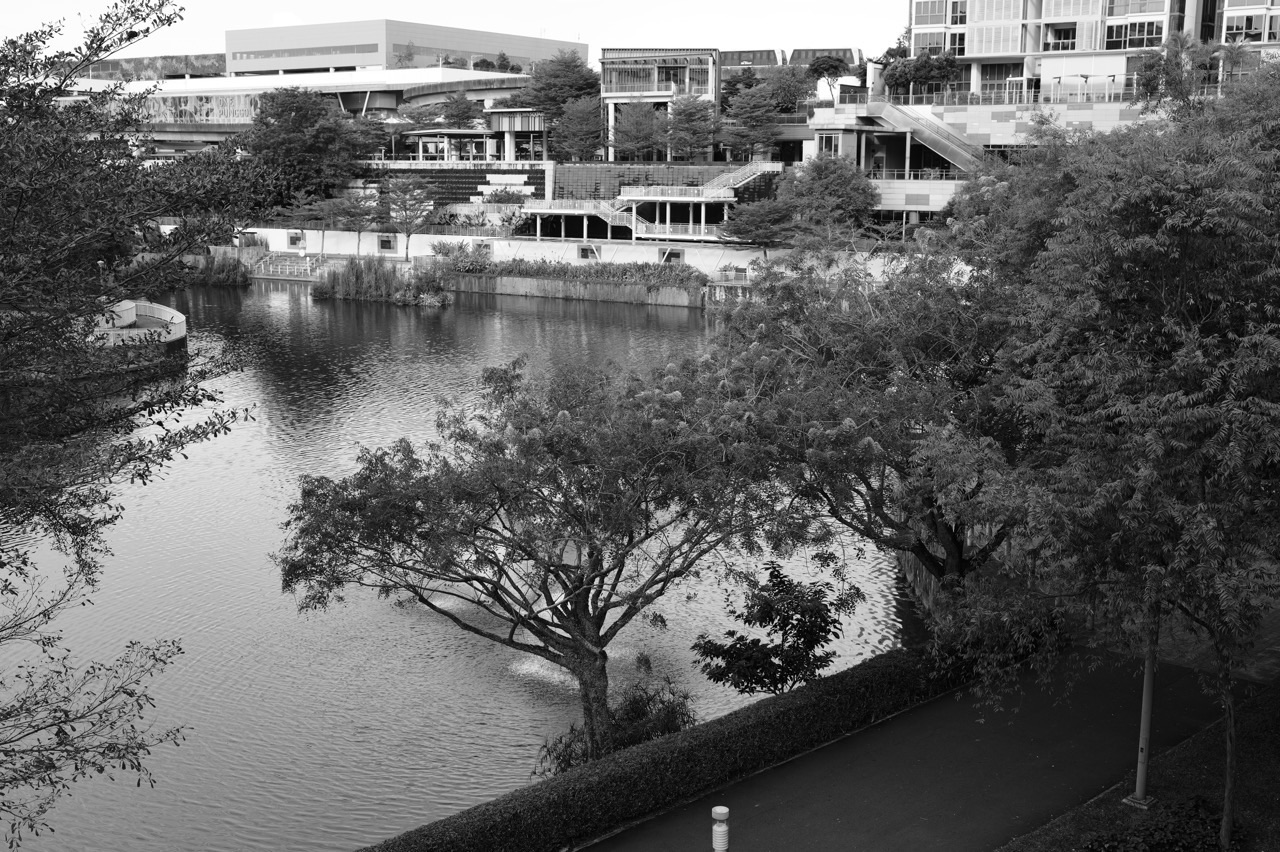
Schools and education at Punggol include environmental learning through Singapore’s Eco Stewardship Programme, which connects curriculum, campus, culture and community. The programme is implemented across MOE schools from primary to pre-university, but each school develops its own activities. Waterway Primary School provides a locally documented example: its official eco-stewardship approach is themed ‘Protecting Waterways, Celebrating Biodiversity’. Families can support these aims by teaching children to observe environmental problems carefully, distinguish facts from slogans and take modest, responsible action.
This Punggol guide explains practical eco-stewardship through resource use, waste prevention, water and energy, biodiversity, school gardens, ethical observation and student-led sustainability projects. It separates confirmed Waterway Primary programme information from hypothetical home or classroom exercises. A green poster or attractive garden does not automatically prove a measured environmental benefit, and no particular facility or club should be assumed at every school. Use current MOE, school and environmental-authority guidance for actual arrangements.
- National framework: MOE Eco Stewardship Programme, organised around Curriculum, Campus, Culture and Community.
- All MOE schools participate in the national eco-stewardship direction, but specific projects vary.
- Waterway Primary’s official 2026 theme is ‘Protecting Waterways, Celebrating Biodiversity’.
- Start with resource prevention and responsible use, not recycling slogans alone.
- Water and energy claims require suitable measurements and relevant conditions.
- School gardens are optional educational facilities requiring maintenance and permission.
- Observe biodiversity from safe public areas; do not collect or disturb living organisms.
- Distinguish student awareness campaigns from measured environmental results.
- Sustainable consumer choices involve trade-offs and trustworthy product information.
- Independent goal: define a manageable question, gather appropriate evidence and propose a permitted action.
Definition lock: eco-stewardship, sustainability and biodiversity
Eco-stewardship means informed, responsible care for the environment through knowledge, values, everyday choices and suitable collective action. Sustainability considers whether present decisions use resources and affect people or ecosystems in ways that can be maintained responsibly over time. Biodiversity refers to variation among living organisms, including diversity within species, among species and of ecosystems. A school garden, recycling bin or green-themed logo can support learning but is not sufficient evidence of environmental outcomes without context.
The four Cs of school eco-stewardship
- Curriculum: teach relevant environmental concepts and inquiry skills.
- Campus: use appropriate sustainability features and responsible infrastructure management.
- Culture: establish practical habits such as reducing unnecessary waste.
- Community: work with suitable partners through approved learning experiences.
- For every C, ask what children should understand and what evidence could show an appropriate outcome.

1. Understand MOE’s Eco Stewardship Programme and its four Cs
Environmental education in Singapore schools is not limited to a yearly recycling poster or a single Science topic. MOE’s Eco Stewardship Programme has been implemented across MOE schools from primary to pre-university and links sustainability to curriculum, campus, culture and community. Those four areas describe different kinds of learning: what students study, how the school environment functions, which habits become normal and how people work with partners beyond the classroom.
The four-Cs model does not mean every school has an identical garden, solar system, environmental club or public project. The national framework provides direction while school-based initiatives are developed in different ways. Parents should check the actual school’s current programmes rather than assume a particular activity is universally available. A child can learn environmental responsibility through classroom investigation and everyday habits even when there is no specialist garden or named eco-leader appointment.
A child-friendly inquiry with meaningful evidence
Consider the difference between knowing and acting. A pupil may accurately explain that resources are finite yet continue to throw away unused sheets without noticing. Another child may carefully reuse materials but struggle to explain why reducing consumption is generally preferable to recycling an already purchased product. Both knowledge and practical judgement matter. The educational aim is to connect a concept to an appropriate decision while recognising that individual children have different levels of control over school and family systems.
An introductory activity can ask pupils to place examples under the four Cs. A lesson explaining water conservation belongs under curriculum; a properly maintained water-saving fixture under campus; a routine of turning off unused lights under culture; and a school-approved collaboration with an environmental partner under community. Some activities may span more than one category. The point is not to memorise four headings but to see how education, infrastructure and behaviour interact.
Check the claim, protect the environment
An error occurs when parents or students treat a visible poster as proof that a school has achieved a measurable environmental improvement. A campaign may raise awareness, yet it cannot establish lower energy use without appropriate evidence. Ask what outcome the activity is intended to change, what information would show progress and which factors could affect that result. This is a constructive response, not cynicism about school sustainability.
For transfer, give a fictional campus proposal: install clearer water-saving signs, track suitable aggregate consumption and discuss habits in class. Can the learner identify which of the four Cs are involved and which permissions and evidence would be required? That thinking is more transferable than simply repeating the slogan ‘save the Earth’.
2. Waterway Primary School shows one locally documented approach
An important Punggol example comes from Waterway Primary School’s own Eco Stewardship page, updated in August 2026. The school describes its theme as ‘Protecting Waterways, Celebrating Biodiversity’ and explains a progression involving awareness, authentic learning experiences and opportunities for advocacy. The published aims include understanding dependence on the environment, recognising interactions between people and resources, and contributing to informed sustainability choices. This is a documented example from a named school, not evidence that every other Punggol school uses the same theme.
Waterway Primary’s description connects its approach to Punggol’s agricultural heritage and waterfront identity. That local context can make environmental questions easier for pupils to understand because the surrounding town includes waterways, parks and urban development. The educational gain does not come from a picturesque setting alone. Teachers still need an appropriate question, reliable information, safe observations and opportunities for children to explain or reconsider what they notice.
A child-friendly inquiry with meaningful evidence
The school’s published model also describes three broad tiers: school-wide approaches, level-specific programmes and student ambassadors who champion sustainability. A parent should not interpret the tiers as compulsory appointments, guaranteed places or identical activities for every pupil. The exact opportunities belong to the school and may change. The useful lesson is that an institution can build environmental awareness while allowing children to take on increasing levels of responsibility when appropriate.
A child who encounters a school eco activity should ask how it connects knowledge with action. If the topic is biodiversity, what living things are being studied, why do they matter and what respectful behaviour is expected? If the topic is water conservation, which processes or everyday choices are being explored? The questions are more valuable than copying the school’s publicity language without understanding the issue.
Check the claim, protect the environment
Another risk is confusing local inspiration with an official claim. A photograph of a pond in Punggol does not demonstrate that a particular primary class has tested its water or monitored the wildlife. If a family writes about a school programme, they should attribute the details to the school’s published page and date. Imagined home exercises should be clearly labelled as examples. Accuracy preserves the credibility of both the school and the guide.
For a fresh test, examine a different school’s official eco-stewardship description and compare its stated learning goals, not its photographs. Can the child identify a common national theme and a distinctive local approach without claiming that one school is necessarily better? That is evidence-based comparison rather than promotional ranking.
3. Reducing waste begins before the recycling bin
Children may be taught to recycle, but recycling is only one part of reducing the environmental burden of materials. Avoiding an unnecessary purchase, using an item for longer and repairing it when appropriate can sometimes be more meaningful than discarding it after a brief use and hoping it will be recycled. The best option depends on the material, available infrastructure and actual circumstances. Education should teach pupils to compare options rather than treat any single label as a universal solution.
Consider a fictional class that uses thirty sheets of paper for an activity, then discovers that many pages were printed on only one side. A pupil might propose adjusting the printing plan for the next activity or reusing suitable blank sides where safe and permitted. The teaching question is not ‘How many recycled sheets can we collect for a photograph?’ It is ‘What caused unnecessary material use, and what feasible change could prevent it?’ That creates a link between observation and responsible action.
A child-friendly inquiry with meaningful evidence
A small audit can use hypothetical numbers before any school project is attempted. Suppose five groups each take ten sheets, but each needs only eight. The avoidable difference is ten sheets in total. Students can identify the calculation and discuss whether a change in instructions would actually help. Real school purchasing or waste data must not be invented; conducting an actual audit requires permission, privacy protections and safe handling.
Sorting materials correctly matters because contamination and unsuitable items can defeat the intended recycling process. Pupils should use current official local guidance rather than assuming that anything with the recycling symbol can go into every available bin. A material’s theoretical recyclability is not identical to acceptance by a particular collection system. The most useful habit is to check the collection rules and reduce unnecessary use in the first place.
Check the claim, protect the environment
Students sometimes propose upcycling projects that require buying many new decorations and materials. That may be appropriate for an art-learning objective, but it is not automatically a net reduction in resource use. Ask what would otherwise happen to the material, what new resources the project consumes and what the finished item will be used for. The conversation introduces life-cycle thinking without requiring complicated calculations.
Transfer the lesson to an ordinary family stationery drawer. Ask the child to distinguish what can be used now, repaired, donated appropriately or eventually disposed of through a suitable route. Keep the project small, never handle hazardous waste and avoid collecting items from public bins. Responsible stewardship starts with accurate decisions within the family’s authority.
4. Water conservation requires understanding and careful measurement
Water is essential for homes, plants, ecosystems and Singapore’s wider economy. Children can learn how ordinary actions affect demand without being asked to operate water systems or collect samples from public waterways. A good home exercise distinguishes a measurable quantity from a general moral claim. Saying ‘We care about water’ expresses a value; identifying a safely avoidable use and testing a practical adjustment provides evidence about a choice.
An illustrative calculation might compare a fictional tap flowing at four litres per minute for three minutes with the same tap flowing for two minutes. The arithmetic gives twelve litres and eight litres respectively, a difference of four litres under those stated assumptions. This is not a measured flow rate for a Punggol home or school. It is a mathematics exercise that shows why time and rate must both be known before claiming a saved volume.
A child-friendly inquiry with meaningful evidence
Children can study a water bill with appropriate adult permission using only aggregate figures, never by publishing personal account details. They should notice that household use can change for many reasons: the number of residents, weather, guests or a change in daily activities. A single lower bill does not prove that one reminder poster caused the difference. Explain the need for comparable conditions and careful interpretation.
In a school setting, a pupil should not adjust plumbing, access maintenance panels or demand operational data without authorisation. Campus systems belong to responsible staff. A class may still use teacher-provided aggregate datasets or fictional examples to reason about consumption. This is an opportunity to connect Mathematics, Science and citizenship without compromising infrastructure security.
Check the claim, protect the environment
A common error is treating public reservoir or canal water as a convenient science experiment. Sampling water can be unsafe or unauthorised, and disturbing habitats may damage the environment a project claims to protect. Use official published data, approved supervised activities or safe home models instead. Observation from a permitted path can generate worthwhile questions without entering the water.
For transfer, ask the child to plan a hypothetical water-saving comparison and identify which measurements are needed, what conditions must be held comparable and which conclusion would be too strong. The goal is a responsible evidence plan, not to collect large volumes of water for a demonstration.
5. Energy efficiency connects the school building with everyday choices
A building uses energy through lighting, cooling, devices and other systems. Eco-stewardship can help pupils understand that the campus is not just a backdrop for lessons but an environment with real resources and operational constraints. MOE has described efforts to enhance school campuses through sustainability features, but families should not assume that a specific technology has been installed at every local school. Photographs of solar panels or an efficient building also cannot establish actual savings without supporting data.
Begin with a simple comparison: two fictional lamps provide the same useful light while drawing different amounts of electrical power. Energy use depends on both power and duration, so a child should not judge a device solely by how bright it looks. With appropriate age-level teaching, an older pupil can reason about why leaving unused equipment on for longer may increase consumption. No child should handle electrical wiring or measure mains electricity directly.
A child-friendly inquiry with meaningful evidence
Discuss the difference between a useful habit and a false guarantee. Turning off an unnecessary light when it is safe to do so can be reasonable, but demanding that every room remain dark regardless of safety or access needs is not responsible. Likewise, indoor comfort and adequate ventilation matter. Energy decisions involve trade-offs, not a competition in inconvenience.
A fictional school proposal might compare two classroom schedules to see whether equipment is left running unnecessarily. Before drawing a conclusion, the pupil should ask whether the rooms served equivalent uses and whether essential devices must remain on. Measurements need appropriate instruments and authorised staff. A well-designed paper exercise can teach the reasoning without touching actual campus systems.
Check the claim, protect the environment
One misconception is that the presence of a green label proves an appliance or facility uses little energy in every circumstance. Labels generally depend on defined criteria and conditions. Teach pupils to read what the label measures, not simply its colour. If the label is unfamiliar, consult the responsible authority’s explanation before repeating a claim.
Transfer the principle to a household decision involving two fictional devices with different power use and operating duration. Can the student identify which information is needed to compare total energy, and which other factors might matter for a responsible purchase? That is an applied reasoning skill that extends beyond a school poster.
6. School gardens are living systems, not automatic proof of sustainability
A garden can support observation of plant needs, soil, water, insects and changing seasons in a tropical urban setting. But a garden also requires space, maintenance, appropriate species, supplies and care during school holidays. Families should not assume that every Punggol school operates a garden or that any particular garden is open to public visitors. A school’s official programme description and authorised access rules control those details.
Imagine a teacher-approved planter project with two identical pots and a clear learning objective about observing plant growth. Pupils might record the dates of new leaves, differences in appearance and relevant environmental conditions. The goal is not to claim that one week’s measurements prove a universal agricultural method. Children should learn to distinguish observations from assumptions about why a plant changed.
A child-friendly inquiry with meaningful evidence
Growing a plant requires understanding that living things are not disposable experiment props. Do not encourage pupils to uproot public planting, disturb habitats or collect unknown seeds and insects. Choose safe materials and suitable species with adult or school guidance. Environmental stewardship includes protecting the very organisms students are learning about. A project that destroys a mature plant to obtain a dramatic photo has missed the ethical lesson.
Urban agriculture also raises practical questions about inputs. Soil, water, fertiliser, containers and transport have environmental and financial costs. A small garden may be valuable for learning even if it is not a significant food source. It is more accurate to describe the educational outcome than to exaggerate claims that a few pots will solve urban food security or erase a school’s carbon footprint.
Check the claim, protect the environment
Children may confuse a lush appearance with ecological diversity. A manicured planting of one ornamental species and a varied habitat support different kinds of observations. Biodiversity is not simply the number of pots or colours visible in a photo. Identifying organisms requires appropriate references, and the pupil should be willing to record ‘unknown plant’ rather than invent a scientific name.
For transfer, give the learner a fictional garden plan with limited shade, time and water access. Ask what information is needed before selecting a plant and who would be responsible for maintenance. A thoughtful plan with honest constraints is stronger evidence of learning than a drawing of an unrealistic rooftop farm.
7. Biodiversity needs evidence and respectful distance
Punggol’s waterways and parks provide opportunities to notice urban nature, but a nature walk should not become a race to touch, photograph or collect the most animals. An ecological observation begins with attention and restraint. A child can notice how plants, shade, water, food sources and human activity create conditions for living things without claiming to have surveyed every species in the area.
Use a supervised short observation from a permitted path. The learner may describe a tree’s general form, a bird call heard at a distance or differences between sunlit and shaded patches. These are modest observations. They do not establish species identity, animal population trends or the health of the entire ecosystem. The child can record uncertainty and compare their notes with trusted educational references later.
A child-friendly inquiry with meaningful evidence
Photography may be unnecessary or even intrusive. Disturbing a nesting bird to obtain a close picture would contradict the goal of conservation. Children should avoid handling unfamiliar animals, entering sensitive areas or interfering with plants. If a species cannot be identified confidently, an honest descriptive label is preferable to a fabricated claim. Learning to respect limits is part of scientific integrity.
A common misconception is that every green space is equally beneficial to biodiversity. Habitat quality depends on many factors, including vegetation, connectivity, disturbances and management. A pupil can explore these as questions without pretending that a short family walk has produced definitive ecological evidence. For rigorous school fieldwork, use the teacher’s supervised protocol and appropriate authorised data.
Check the claim, protect the environment
Local environmental learning can also examine the relationship between people and ecosystems. Public paths allow access, while protected areas may restrict particular activities. Explain that these arrangements serve different goals and that a pleasant recreation space does not grant permission to leave paths or collect specimens. Stewardship includes sharing spaces responsibly with other users and wildlife.
For a changed-context exercise, show two published photographs of different urban habitats and ask what can be directly observed. Which biodiversity claims would need more data? If the learner refuses to infer species counts from scenery alone, they have demonstrated an important scientific and ethical habit.
8. Food waste, reusable items and consumer choices require trade-offs
Sustainable living is not limited to bins and gardens. Food purchases, packaging and the lifespan of household items also matter. Students can learn to distinguish a reasonable action within their control from a sweeping claim about the behaviour of other families. A young child may help plan an appropriate portion or care for a reusable bottle without needing access to household financial records.
Consider a fictional canteen scenario in which a student buys more food than they intend to eat. It is reasonable to discuss portion choice and respecting food. But it would be inappropriate to shame children who have different appetites, dietary needs, allergies or family circumstances. An educational discussion focuses on planning, flexibility and kindness rather than judging another person’s plate or body.
A child-friendly inquiry with meaningful evidence
Consumer choices can involve competing goals. A durable item may have a higher initial price; a disposable item may be convenient in a particular situation; cleaning reusable products also uses water and energy. Teach pupils to ask how often an item will be used, whether it can be maintained and which safety or hygiene requirements apply. Oversimplified slogans can conceal these real considerations.
One small maths task uses invented figures: an item used once costs $2, while a reusable item costs $10 and can be used safely many times. The pupil can calculate when the repeated purchasing cost exceeds $10 under stated assumptions, but should not conclude that price alone determines environmental impact. Materials, replacement rates, transport and washing may also matter. The exercise helps children separate a numerical result from a broader sustainability claim.
Check the claim, protect the environment
Students sometimes equate a purchase with an environmental contribution because the product carries a leaf graphic. A marketing symbol is not a verified environmental standard. Ask what specific claim the label makes and what independent information supports it. The child may discover that some claims describe recycled content, some describe lower energy use and others are vague brand messages.
For transfer, present a hypothetical family event with options for paper plates, reusable plates and an existing stock of clean containers. Ask what information would be needed to choose responsibly. A good answer includes hygiene, access, actual use and practical constraints instead of naming one universal winner.
9. Student advocacy should be honest, permitted and proportional
Schools may encourage pupils to become environmental ambassadors or participate in Values in Action. Advocacy can help people understand an issue, but a poster, video or presentation should not turn uncertain information into a dramatic claim. The learner must be able to distinguish what the source establishes, what the group recommends and what it hopes will happen. Responsible persuasion starts with accuracy, not the loudest message.
Suppose an imaginary group wants classmates to use less paper. Before designing a campaign, they could ask the teacher whether a particular waste pattern has actually been observed and which changes are permitted. A useful proposal might involve checking printing instructions or making a clear reminder at a suitable place. The group should not claim to have saved hundreds of kilograms of paper without a method and evidence.
A child-friendly inquiry with meaningful evidence
Permission matters for collecting material, installing notices, interviewing others or recording images. Good intentions do not override school policies or people’s privacy. Children should not expose classmates’ habits, publish names of supposed ‘wasteful’ individuals or pressure families to disclose consumption data. Ethical advocacy concerns systems and feasible behaviours rather than humiliating people.
Reflection is more helpful when it asks whether an action worked than when it demands a triumphant testimonial. A school project may show that its message was misunderstood or that an assumed problem was smaller than expected. Those findings can justify revision. Students should learn to celebrate accurate learning, including the decision to stop an ineffective activity, rather than manufacture positive impact figures.
Check the claim, protect the environment
A useful four-step advocacy statement is: problem supported by evidence, feasible proposed action, person or institution responsible for approving it, and a plan for checking outcomes. It is not necessary to begin with a public campaign. A class discussion, revised sign or family conversation may be a more appropriate first step depending on the stakes.
For transfer, ask the child to review a fictional advertisement claiming an item is ‘100% planet-saving’. Which words need definitions, which evidence is missing and what modest claim could be supported? The same critical thinking protects environmental education from greenwashing and helps future consumer choices.
10. A realistic four-week eco-learning cycle connects knowledge and action
A family sustainability activity can be modest and still teach several skills. In the first week, ask the child to identify one household resource question that can be explored safely using public or family-approved information. In the second, choose a small practical adjustment, such as reducing unnecessary paper use or planning portions more carefully. In the third, record only suitable observations with permission. In the fourth, discuss what can be concluded and what remains unknown.
The educational objective should be written before the action begins. ‘Be greener’ is too broad to evaluate. ‘Reduce unused paper sheets during one family craft activity’ is a manageable target. Even then, one weekend comparison may not establish a long-term effect. Teach the child to explain the limitations of the observation rather than treating a small improvement as proof of a national impact.
A child-friendly inquiry with meaningful evidence
Parents can combine disciplines. Mathematics helps compare quantities, Science helps understand materials and living systems, Social Studies considers who makes decisions, and English helps communicate findings. These connections are valuable when students can name the relevant idea from each subject. They do not mean every sustainability activity automatically improves examination results or replaces formal lessons.
A learner may become discouraged by the scale of climate and biodiversity challenges. Adults should avoid placing responsibility for global outcomes on one child. Instead, focus on informed choices within the family’s genuine authority and the importance of larger institutional systems. Understanding the limits of personal action can make engagement more thoughtful, not less caring.
Check the claim, protect the environment
At the end of the cycle, ask for one statement supported by observations, one uncertainty and one action that could be continued sustainably. If the child cannot identify evidence for a claim, revise the wording. If an activity proved inconvenient or wasteful itself, learn from that. The goal is developing practical judgement rather than an Instagram-ready transformation.
For transfer, give the pupil a different fictional problem involving water, food or electricity and ask them to design a modest evidence plan before acting. If they can identify permission, measurement, competing factors and an appropriate next step, eco-stewardship has become a way of thinking that extends beyond one poster or garden.
Four-week family project: reduce unnecessary resource use
Week one: choose one small household resource issue, such as unused craft paper, and define a question before collecting data. Week two: practise a simple permissible change in the activity and record only aggregate observations. Week three: compare what happened, identify any competing factors and discuss whether the adjustment was workable. Week four: ask the child to explain one supported conclusion, one limitation and one sustainable next action. This plan is optional; it is not a school task or an approved environmental audit.
Frequently asked questions
Is the Eco Stewardship Programme part of Singapore education?
Yes. MOE’s Eco Stewardship Programme has been implemented from primary to pre-university across MOE schools and connects curriculum, campus, culture and community to sustainability education.
Does every Punggol school have a garden or eco-club?
No uniform provision should be assumed. Programmes and facilities vary by school; verify the actual school’s current pages and contact staff where necessary.
What is Waterway Primary School’s documented eco-stewardship theme?
Its official page updated in August 2026 uses the theme ‘Protecting Waterways, Celebrating Biodiversity’ and describes learning through awareness, authentic experiences, collective action and a tiered approach.
Can children collect water or wildlife from Punggol Waterway for homework?
Do not do so without a suitable authorised, supervised programme. Public waterways and habitats present safety and environmental concerns; safe observation and published resources are better defaults.
Does recycling always beat reduction or reuse?
Not necessarily. The best choice depends on the material and circumstances. Avoiding unnecessary consumption and extending useful life may be important before end-of-life recycling.
Is a school poster evidence that the school reduced its carbon emissions?
No. A campaign may support awareness, but measurable outcomes require suitable data, methods and context.
What can a child do without buying new eco-project materials?
Begin with a modest observation, a paper-based comparison or a manageable family habit within the child’s control. Expensive equipment is not a prerequisite for learning.
Does eco-stewardship guarantee stronger Science grades?
No. It can build inquiry, values and responsible action, but exam results depend on syllabus knowledge and assessed skills.
Your Next Step
Ask your child to choose one everyday resource that the family can use more thoughtfully, such as paper, water or food. Decide what is genuinely within the child’s control and what information is needed before claiming an improvement. Encourage a small responsible action with a clear limit, then revisit the evidence without pressure to produce an impressive headline. Stewardship begins with accurate observation and care, not with expensive displays.
Official references and related Punggol reading
- Singapore Green Plan 2030: Eco Stewardship Programme
- Waterway Primary School: Eco Stewardship — Protecting Waterways, Celebrating Biodiversity
- Singapore Department of Statistics: education for sustainable development and MOE ESP
- MOE SchoolFinder for current school offerings
- Schools and Education at Punggol | Learning Science Through the Waterway, Weather and Local Evidence
- Schools and Education at Punggol | Primary Science Fair Tests, Variables and Reliable Evidence
- Schools and Education at Punggol | Everyday Student Leadership, Responsibility and Service
Editorial reference date: 1 November 2026. Waterway Primary’s programme details are attributed to its published August 2026 page. Other activities, quantities and scenarios are illustrative and do not represent real audits, facility permissions or measured school outcomes.


