
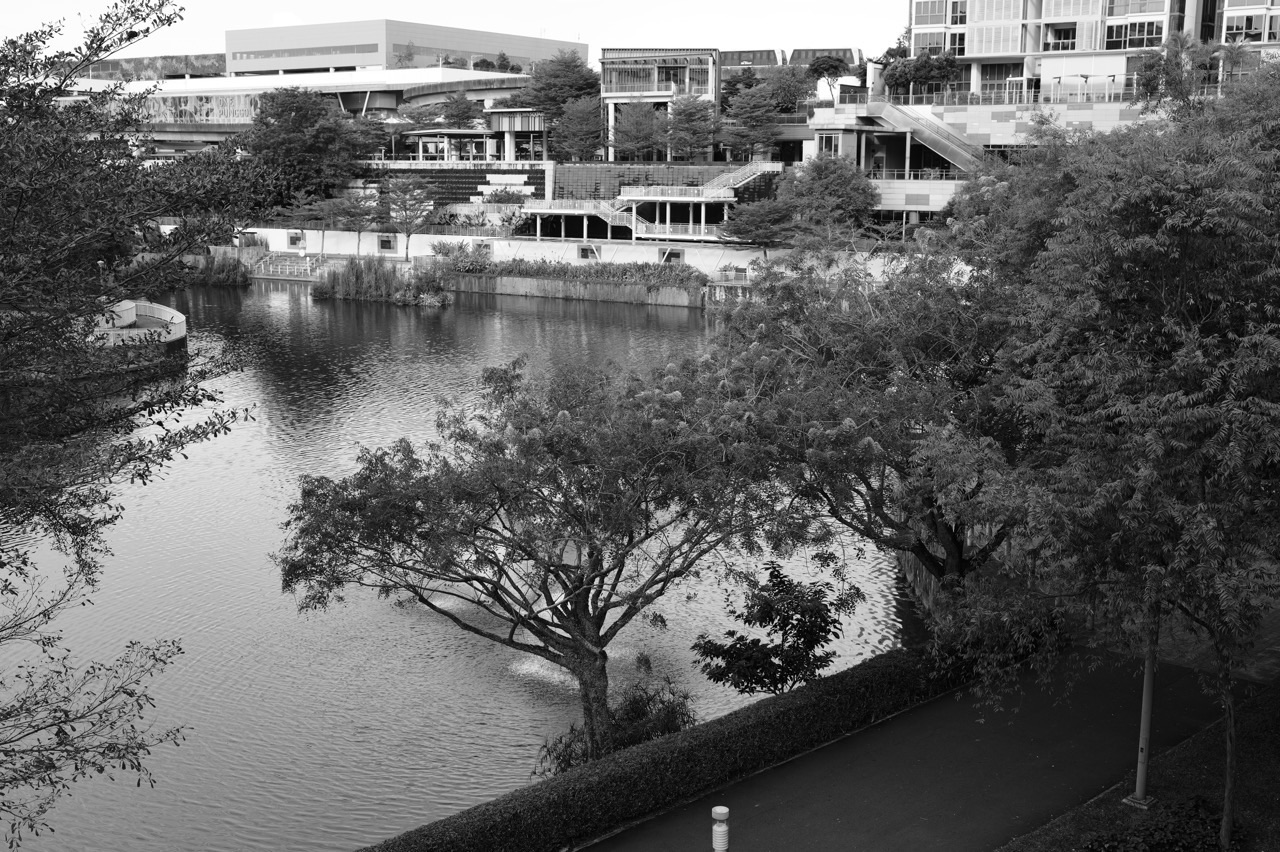
Schools and education at Punggol can make Science easier to understand when children connect classroom ideas with safe observations of the waterway, public parks, weather, bridges and everyday infrastructure. The practical method is simple: ask a precise question, separate what was observed from what was inferred, find suitable evidence, and explain what the evidence actually supports. Punggol Waterway Park is a public park, not an unrestricted experiment site.
Primary pupils can practise classifying and comparing, upper-primary learners can explain variables and mechanisms, and secondary students can analyse data, models and uncertainty. Teachers control syllabus instruction and school practical safety. Parents can support curiosity through suitable reading, careful conversation and supervised observation from permitted areas, while relying on NParks, PUB, NEA and MOE for authoritative information.
- Theme: classroom Science inquiry connected to familiar Punggol environments.
- Key learning cycle: question → observation → evidence → explanation → limitations → transfer.
- NParks manages Punggol Waterway Park and its visitor rules; use authorised public paths.
- PUB explains that Punggol Waterway connects Punggol and Serangoon Reservoirs.
- Do not enter water, sample it without authority, disturb wildlife, damage plants or conduct risky experiments.
- Young pupils focus on noticing and classification; older pupils and teenagers add fair tests, data and models.
- For haze and severe weather, follow current official advisories and school decisions.
- Use official publications as evidence; never present a hypothetical example as a live local measurement.
Scientific inquiry begins with a real question
Why Punggol is useful for teaching scientific thinking
A place becomes educational when it generates a question that can be investigated with suitable evidence. Punggol’s waterways, landscaped paths, bridges, transport routes and changing weather offer familiar examples. A child can notice shade, rainfall, birds, plants or surface temperature without needing a laboratory or pretending to be an expert. The important step is to turn noticing into a disciplined inquiry: describe what was seen, propose an explanation, identify evidence and decide what remains unknown.
This does not mean all scientific facts can be discovered by walking beside a canal. Many important mechanisms are invisible or too complex for a casual observer. Water quality, engineering design and ecological populations require appropriate methods and professional sources. The advantage of a familiar town is motivational: the learner already has questions about places they recognise. The school then helps connect those questions to scientific concepts, measurement, fair comparisons and communication. Real science begins where an attractive observation is not mistaken for a complete answer.
Start with a question, not with a photograph
A child may take a photograph of a plant, bridge or waterway and call it a Science project. A photograph is a record, but it is not automatically an inquiry. The student must ask something meaningful. Why is the shaded footpath cooler to the touch than the exposed paving? How does a bridge transfer loads to supports? Why do different plants thrive in different positions? Some questions can be explored through simple safe observation. Others need published information or supervised classroom experiments.
A good teacher or parent helps match the question to an ethical method. If a child wants to know whether two plant locations differ, they can describe visible characteristics from permitted paths. They should not uproot specimens or handle wildlife. If they want to know the concentration of pollutants in the water, the correct answer is to consult credible environmental information and qualified procedures, not collect a bottle from the waterway. The boundary between what we can see and what we can establish is part of scientific literacy.
Observation, inference and explanation are three different moves
Suppose a pupil sees several birds in vegetation beside Punggol Waterway. “I saw three birds on that tree” is an observation, subject to the accuracy of the count and identification. “They may have been seeking shelter or food” is an inference. “This species relies on that particular habitat because of these ecological factors” is a stronger explanatory claim requiring research and supporting evidence. Children often collapse these levels because ordinary conversation rewards a quick confident story.
Teach the learner to label statements before making them more elaborate. What did we observe directly? What might explain it? What information would help us decide? An adult can model this without dampening curiosity: “I don’t know why those birds chose the tree. We can look for a reliable guide and see whether our first idea holds up.” This method transfers directly to school comprehension, Science questions and responsible reading of online claims. Being accurate about uncertainty is a strength rather than a failure to know.
The waterway is not an unrestricted classroom laboratory
Punggol Waterway Park is a public space administered with visitor rules. NParks describes areas for recreation, nature and heritage appreciation. That does not grant families permission to conduct any experiment they imagine. Children should stay on permitted paths, respect safety barriers, avoid entering the water, and follow current rules about fishing, plants and wildlife. A parent-led outing is not a school-approved field programme, and an ordinary library article does not authorise intrusive sampling.
This matters especially when educational enthusiasm increases. A child might ask whether the water contains small organisms, whether a surface is slippery or whether a bird will approach for food. The correct response is not to test the question by taking physical risks. Seek a credible source or plan a safe, school-sanctioned activity under trained supervision. Science education includes ethical limits, risk assessment and responsibility for public spaces. It is possible to learn substantially by observing carefully and knowing when not to interfere.
How the waterway connects two reservoirs
PUB learning material explains that Punggol Waterway connects Punggol and Serangoon Reservoirs. That is a useful example of why urban water infrastructure should be understood as a system, not merely as a decorative landscape. Rainfall, drainage, storage and treatment serve different functions. Water observed in a public waterway must not be assumed safe to drink. Reservoir water is part of a managed water supply system that includes professional treatment before distribution.
A primary pupil might sketch a simple system with rain, catchment, waterways, storage and treatment, clearly marking which parts are described by official sources. A secondary student might discuss why urban runoff creates water-quality management challenges and which measurements would be needed to evaluate an intervention. Both are engaging with the same local setting at different levels of abstraction. The distinction between storage and treatment is especially important: a pond or reservoir that looks clear has not thereby demonstrated drinking-water quality. Reliable systems thinking replaces visual guesses with evidence.
Plants by the waterway: adaptation is not a magic story
NParks identifies vegetation around Punggol Waterway Park, including aquatic and drought- or flood-tolerant plantings. These can prompt questions about plant structures, habitat conditions and the purposes of designed landscapes. But children should avoid declaring that a particular feature proves an evolutionary story from one glance. A long leaf, a thick stem or a plant’s position can suggest hypotheses, not establish all the reasons a species thrives.
An appropriate family observation might compare plants in sunny and shaded public areas without handling them. The student records appearance, location and conditions they can reliably describe. Next, a school textbook or authorised botanical resource supplies information on structures and their functions. The student can revise a first guess. Environmental learning becomes stronger when identification is careful and when we acknowledge that human planting choices may shape what is growing in a park. A landscaped setting is not the same as an untouched ecosystem.
Birdwatching can teach patience and evidence quality
The park can support bird observation from public paths; NParks identifies birdwatching as one of its activities. A child can practise quiet observation, use a field guide and record location, time and visible features. This develops attention to detail. It also teaches the need to distinguish similar-looking species and to avoid overstating confidence when an animal is too distant to identify.
Do not approach nests, feed birds or enter sensitive vegetation for a photograph. A school learner can write “unidentified small brown bird” rather than force an uncertain species name. Over several supervised visits, they may notice differences in activity, weather and human use. Those notes are not automatically a reliable population survey: casual observations have sampling bias. Birds may be present but hidden, and visit times differ. Teaching a student to state those limitations provides a genuine introduction to scientific method, far richer than collecting an impressive list of names from online images.
Weather is a variable, not an inconvenience to ignore
Punggol’s outdoor environment changes with rain, cloud cover, wind, heat and air conditions. This makes weather an accessible topic for discussion. A child can notice that a place feels warmer after the sun emerges, but a single sensation is not a measurement. A science comparison needs clarity about time, location, instruments and confounding factors. Official meteorological sources can help explain weather data, while adults should avoid presenting a local feeling as a forecast.
Outdoor learning must adapt to safety. Lightning risk, heavy rain, high temperatures and haze may make an activity unsuitable or require changes. Current government advisories, school decisions and park restrictions take precedence over an article or a family experiment plan. The learning opportunity is not to brave unsafe conditions. It may be to discuss at home how meteorologists use instruments and why scientists distinguish short-term weather from long-term climate patterns. Scientific responsibility includes knowing when a field visit should be postponed.
Haze in 2026: a real case study in evidence and public health
Singapore experienced haze concerns in 2026, and NEA published advisories about 24-hour PSI, hourly PM2.5 and outdoor exposure. That episode offers a useful lesson in reading environmental information. Different indicators are designed for different purposes and time windows. A forecast is not the same as a local instant reading. A historical news report cannot tell parents the conditions this afternoon.
For children, safety guidance comes before science exercises. NEA’s current health advisories explain how risk varies with pollution levels, activity intensity and personal health; schools implement their own operational decisions. Parents should follow official advice, relevant medical instructions and actual school notices. As a classroom concept, students can ask why a measurement represents a time period, how uncertainty affects decisions, and what makes two numbers comparable. It is valuable to learn that careful environmental decisions rely on definitions and context, not whichever number happens to look most dramatic on a screen.
Primary 1 and Primary 2: noticing and classifying
For the youngest learners, inquiry should remain concrete and supported. A child can compare the colour, shape or position of leaves seen from a permitted path; sort safe household objects by properties; describe where shadows appear; or observe how the weather changes between morning and evening. The adult helps the child use accurate words and separate what was seen from what was guessed. There is no need for complex calculations or elaborate project boards.
The skill of classification can be surprisingly powerful. Imagine asking the child to group a set of printed photographs of local buildings and plants by one property. Then ask whether another property produces a different grouping. The child learns that a category depends on a criterion, and that the criterion should be stated. This is the foundation for later work on materials, living things and data. Keep activities short, playful and safe. The goal is curiosity with a little more precision, not accelerated examination content.
Primary 3 and Primary 4: fair comparisons
As students study Science more formally, they encounter the logic of fair tests. If we compare two situations, what must stay the same for the comparison to mean something? A safe indoor example is testing how two kinds of paper absorb small drops of water on a protected work surface, with adult supervision. The pupil should consider the number of drops, paper area, observation time and method of judging absorption. Changing many conditions together weakens the conclusion.
A Punggol walk can provide the question that inspires an appropriate school investigation, without requiring outdoor sampling. Observing different ground surfaces might prompt inquiry into absorbency or heat, but the school should decide how to test safely with suitable materials. Children need to learn that a dramatic result is not necessarily a fair result. By Primary 4, a learner can often explain in simple language why keeping conditions consistent helps identify the variable that matters. That explanation is more educationally valuable than memorising the phrase “fair test” without applying it.
Primary 5 and Primary 6: explain mechanisms, not just examples
Upper-primary Science requires students to connect observations with accepted concepts and respond accurately to questions. A learner may know that plants need light yet struggle to explain why changing light conditions could affect plant growth. The student must identify the relevant mechanism and choose evidence that matches the claim. Local examples can build interest, but they are not substitutes for the syllabus concepts and school-taught answer methods.
Consider a question about evaporation after rain. A pupil sees puddles disappear and immediately says that all water “went into the ground”. The better response is to consider more than one possible mechanism, look at the context and understand evaporation, drainage and infiltration as distinct processes. They should not claim to measure the proportion without evidence. This habit will help with PSLE Science questions that distinguish describing an observation from explaining a scientifically justified process. Accuracy begins with knowing precisely what the question asks.
Secondary 1 and Secondary 2: data, units and models
A secondary learner can move from qualitative descriptions to graphs, rates, units and evidence-based models. A rain record might show changing rainfall over days; a student should identify what the y-axis measures, how the x-axis is spaced and what comparisons are legitimate. When students read environmental datasets, missing data and differences in measurement stations must be considered. An apparent pattern may reflect the way observations were gathered rather than a straightforward causal relationship.
Teach the teenager to write units next to quantities and explain each transformation. If a set of observations uses millimetres of rainfall, those values cannot be treated as temperatures or directly compared with a different scale. A model may be useful without representing every real-world complication. That is an important distinction in learning about ecosystems, water systems and urban planning. Punggol’s environment supplies interesting questions, but trustworthy conclusions depend on defined variables, credible sources and appropriate mathematics.
Upper-secondary Science: evaluate competing explanations
At higher levels, students may be asked to interpret experimental evidence, justify a conclusion or evaluate limitations. A claim about water clarity, biodiversity or urban heat must be checked against the data available. Students should ask which alternative explanations remain plausible. For example, if two locations have different observed surface temperatures, differences in shade, material, time of day and measurement method may all matter. Identifying confounders is part of good reasoning.
This is also an exercise in scientific writing. A clear paragraph might state the pattern, reference specific evidence, offer a mechanism and acknowledge a limitation. It should not use complicated vocabulary to conceal missing logic. Teachers choose the level of depth that fits the current syllabus; parents can reinforce the structure without inventing an examination standard. In the coming years, Singapore’s secondary assessment framework includes subject levels under the SEC system, so students should always use their actual school’s and SEAB’s current subject requirements rather than a generic Science checklist.
The difference between a model, a map and the real place
A diagram of Punggol Waterway may simplify the network to a few arrows. A map might accurately show a route but omit underground pipes or treatment processes. A photograph records a view at a particular time. Each representation answers some questions and leaves others unresolved. Children need to understand those limitations so they do not overread attractive visuals.
Try comparing a simple hand-drawn water cycle with an official explanation of Singapore’s urban water management. Ask what each represents and what has been omitted. Does the drawing show evaporation and rain? Does it show collection, reservoirs and treatment as separate processes? Do not require an early-primary learner to master engineering detail. At secondary level, the omissions become a productive topic: which parts of a system are essential to the question, and what simplifications make a model misleading? Models are tools for thinking, not miniature copies of the world.
Measuring without pretending the instrument is perfect
When children first use a ruler, thermometer or stopwatch, the number can seem unquestionably correct. Scientific measurement is more careful. Instruments have resolution, readings can vary, timing matters and the person taking the measurement may make mistakes. A student should record an observation with a suitable unit and describe relevant conditions. Repeated measurements can help, but repetition does not correct a systematically wrong method.
At home, a safe paper-folding exercise can illustrate measurement uncertainty: different learners may obtain slightly different lengths with the same ruler. Rather than accusing somebody of carelessness, compare where the ruler began and how the value was read. This connects to future Science practical work. Do not buy professional sensors merely to perform unapproved experiments in public spaces. Schools supervise specialist investigations. The educational principle is to respect the limits of a measurement and explain why confidence in a number should depend on the method that produced it.
How to use official sources without turning research into copying
A child may discover an NParks page about Punggol Waterway Park or a PUB resource about reservoirs. The simplest temptation is to copy a paragraph into a project. That creates a polished-looking assignment without demonstrating comprehension. Teach the student to identify one relevant claim, restate it accurately in their own words and explain why it matters to the question. Keep the source title and link so the information can be checked.
Compare claims with the kind of evidence the source offers. NParks is a strong authority for park visitor information and described features. PUB is the relevant public source for water-system explanations. NEA supplies air-quality advisories. A single source should not be used to prove an unrelated claim merely because it mentions Punggol. At the school level, citation requirements depend on the teacher’s instructions. The broader habit is stable: do not present someone else’s fact as a personal discovery, and do not make a stronger statement than the evidence supports.
Data tables can be more informative than long paragraphs
Suppose a learner records cloud cover and outdoor impressions across several days from a safe location. A table with date, time, observation and any legitimate published weather reference makes the data easier to inspect. The child can ask whether differences might reflect measurement time, weather conditions or subjective judgement. A sequence of descriptive entries can teach more than a dramatic one-day claim about “Punggol’s climate”.
For older learners, a graph can reveal patterns, but axes and labels must be chosen honestly. Starting a scale at an unusual point may exaggerate a modest variation; combining incompatible measurements can create a meaningless chart. Ask the student to explain why the chart type matches the question and what limitations remain. Digital graphing tools can help, but they do not remove the need for critical thought. The goal is the ability to reason from organised evidence, not the ability to decorate a slide with a professional-looking data visualisation.
Mathematics and Science meet at the word ‘rate’
A student may calculate speed in Mathematics and encounter rates of change in environmental discussions. The common idea is comparison relative to a defined interval or quantity. If rain falls over a period of time, a total amount and an intensity measure are not the same statement. If a cyclist covers a distance, total distance and average speed answer different questions. This kind of cross-subject language often exposes hidden confusion.
Use simple invented numbers labelled clearly as examples, not live Punggol measurements. Suppose a hypothetical container receives 20 millimetres of rain in one hour and 10 millimetres in another. The values require understanding what is measured and how comparison works; they do not imply a real weather record. The learner should practise stating assumptions, writing units and checking whether the conclusion follows. Connecting science to mathematics improves reasoning only when the models remain accurate and children know which figures are illustrative.
History and engineering belong in the investigation too
Punggol’s built environment can be studied through historical and engineering questions. Why does a bridge have a particular form? What local activities existed before the town’s current layout? How did transport and water infrastructure develop? These questions invite different evidence: maps, historical records, photographs, engineering explanations and official project documentation. A child should not assume a single modern photograph tells the history of a place.
For example, NParks describes the Kelong Bridge in relation to Punggol’s fishing heritage and notes preserved historical features in the park. That supplies a useful starting point for inquiry, not the complete historical record. Students can compare the official description with other credible sources and explain what the structure communicates symbolically. This widens education without confusing disciplines. Science asks about physical mechanisms and testable claims; History may ask about records, context and interpretation. A thoughtful project may need both, while maintaining each discipline’s standards.
Citizen science and community projects require real boundaries
A school or community group may organise environmental observations or public projects. Participation can help students learn teamwork and contribute to shared knowledge, but a family should check who is running the activity, what data are collected and how participants are supervised. An informal promise that collected sightings will “help science” is not enough by itself. There should be an appropriate protocol for the participants’ age, privacy, safety and data quality.
Young learners can be encouraged to observe without exposing their identity or precise daily movement publicly. Photographs may contain other people, and location data can reveal routines. Do not publish images of classmates or private school areas without permission. For wildlife, the duty to avoid disturbance remains. A modest, responsibly run record is more valuable than a sensational video obtained by approaching an animal too closely. Scientific participation involves ethics because the process of obtaining information matters as much as the result.
Home experiments should be safe, simple and concept-led
Parents often search for exciting activities that produce bubbling, burning or unusual transformations. That is not necessary for useful Science learning. A safe activity might examine paper folding, the absorption of small water droplets by common household materials or the stability of a paper structure. An adult should check the task and materials for the child’s age and supervise appropriately. Do not use heat, electricity, chemicals, blades, water access or specialist equipment simply to make a project more dramatic.
Choose one question, write a prediction, decide what to observe and compare the result with the prediction. Ask what the evidence supports and what remains uncertain. If the child gets a surprising result, investigate the method rather than declaring a breakthrough. These steps are the transferable mechanism. Parents can reinforce concepts discussed in school, but should follow school practical-work rules and avoid creating unofficial claims about examination requirements. A small correct investigation is better than a large unsafe spectacle.
A school learning journey should have a before and after
A teacher-organised visit may involve a park, museum, science venue or another appropriate site. The educational experience is stronger when students know a question before going and reflect on evidence afterward. Parents should follow the school’s actual consent, supervision, transport and safety arrangements; an article about Punggol is not a substitute. A family outing may prompt curiosity, but it does not count as completing a school programme.
Imagine a class learning about environmental stewardship. Before a visit, students identify features they have been asked to notice. During the activity, they follow the organiser’s permitted observation method. Afterward, they compare what they saw with reliable information, check misunderstandings and explain one decision that would help protect a shared space. This three-stage structure makes learning visible. The same method works for a supervised school garden, a transport museum or an engineering demonstration. The experience is a source of questions; the teaching converts it into understanding.
Worked example: the warm pavement question
A Primary 4 pupil observes that a paved area in direct sun feels warmer than a shaded path. The first statement should be cautious: it is a sensation at one time, not an accurate temperature record. The student proposes that sunlight exposure may matter, but also identifies possible differences in paving material, surface moisture and timing. At school, the teacher can choose a safe controlled investigation using approved materials to test an appropriate concept.
The pupil records the conditions, compares results and states only what the data support. If the measurements are inconsistent, the class revisits the method. They do not go back to the park to touch risky hot surfaces or expose themselves to unsafe conditions for the sake of a number. The educational payoff is a sequence of moves: notice, hypothesise, control, measure, interpret and revise. This sequence can later help with laboratory work, reading research claims and understanding the physical design of cities.
Worked example: water looks clean, but what does that mean?
A Secondary 2 learner sees a pleasant-looking stretch of water and concludes that it must be clean enough for drinking. The teacher uses the statement as a reasoning exercise. The learner identifies appearance as one observation, then lists what it cannot establish: microbial content, chemical constituents, treatment history and drinking-water standards. Students consult credible PUB information about the managed water supply and the distinction between water collection, storage, treatment and distribution.
The class does not enter the water or take unauthorised samples. Instead, the student writes a revised explanation: visual clarity alone is insufficient to determine drinking-water suitability. They may diagram the parts of the system using official sources. This small correction captures an important scientific habit. An attractive appearance can be evidence about appearance and little else. A reliable conclusion about safety requires appropriate standards, measurements and authority. It also shows why education benefits from having local experiences that students can question rather than simply admire.
Worked example: a bird sighting and a misleading conclusion
A pupil sees two birds of a particular appearance on one supervised visit and none on the next. They declare that the population has disappeared. A parent can ask what else may explain the difference: time of day, weather, visibility, noise, seasonal movement and the limited number of observations. The student learns that absence from view is not proof of absence from the area. They can consult an appropriate bird guide without disturbing animals or searching restricted habitat.
At a suitable level, the learner may create a table distinguishing sighting, identification confidence and conditions. This does not become a formal population survey simply because it uses numbers. The adult can explain that ecologists use designed sampling methods to support stronger claims. The episode demonstrates something widely transferable: a small sample can be real data while still being inadequate for a large conclusion. The aim is to improve the reasoning, not make the child’s curiosity seem naive.
How a Science tutor or parent should respond to a weak explanation
Suppose a P6 pupil says plants grew differently “because the environment changed.” The statement is vague and gives no mechanism or relevant variable. The adult should not respond only by adding technical words to the sentence. Ask which environmental condition changed, which process the condition might affect and what evidence links the two. If the child cannot explain the concept, return to the school material or a suitable model rather than invent an answer.
Use the same process for an incorrect experiment question. Was the task misunderstood? Was the relevant variable not identified? Did the learner describe a result without explaining it? Did they use evidence that did not support the conclusion? Each error requires a different repair. A focused explanation, guided practice and later independent attempt are more useful than repeating a model answer until it sounds familiar. The ultimate test is whether the child can apply the reasoning to a new phenomenon away from the Punggol example.
A four-week inquiry routine without a project overload
Week one begins with a child’s authentic question about something observed in ordinary life. Choose a question whose investigation is safe and age-appropriate, or one that can be answered through reliable sources. Week two focuses on the evidence: a simple table, a source comparison or a teacher-approved practical. Week three asks the learner to explain what the evidence supports and what it cannot prove. Week four introduces a different example and checks whether the same reasoning method transfers.
For a young pupil, this might require only a few short conversations. For a secondary student, it may involve written justification and source comparison. These weeks are an optional family model, not an MOE curriculum schedule. Keep school assignments, rest and other interests in view. If weather or environmental conditions make outdoor observation unsafe, move the inquiry indoors or postpone it. The method is successful when the learner becomes more precise, not when the family assembles the most elaborate display board.
The larger lesson: scientific education is disciplined curiosity
Science begins with curiosity but cannot end with a guess. It asks for definitions, methods, evidence, explanations, uncertainty and revision. Punggol’s waterway and parks can make the starting questions vivid. Schools provide the structured progression and safe practical work needed to turn those questions into learning. Families contribute by noticing genuine interests, sharing reliable sources and refusing shortcuts that make unsafe behaviour appear educational.
A child who can say “I observed this, I think it may mean that, but I still need this evidence” is learning a powerful habit. The same habit helps when interpreting health advice, evaluating online claims, reading historical sources and solving technical problems in future study or work. That is the point of this guide. It is not a list of attractions or permission to experiment on public infrastructure. It is a method for converting familiar surroundings into better questions and better reasoning.
Frequently asked questions
Can my child collect water from Punggol Waterway for a school experiment?
Do not assume this is permitted or safe. Follow the school organiser’s instructions and applicable site rules. Public water sampling requires appropriate authority and procedures.
Is clear-looking water safe to drink?
No. Appearance cannot establish drinking-water quality. Water supply treatment and safety are separate technical matters covered by PUB and relevant authorities.
Is a family walk equivalent to a school learning journey?
No. A family outing may stimulate observation, but school programmes have their own supervision, objectives and consent arrangements.
What can a Primary 1 child learn outside?
Describe and compare visible features safely, ask simple questions and distinguish what was noticed from what was guessed.
What should a Primary 6 child practise?
Identify the science concept, explain a mechanism, use relevant evidence and answer the actual task—not merely memorise model phrases.
How can a Secondary 1 pupil use local data?
Learn to read units, dates, graph axes and source limitations. Distinguish an illustrative example from a published record.
Can children feed birds to get closer photographs?
No. Follow NParks rules and respect animals; observation should not involve feeding, disturbing or approaching wildlife.
What if haze or thunderstorms interrupt a plan?
Prioritise safety. Follow current advisories and the school’s arrangements, and move the task indoors or reschedule.
Does the waterway prove a scientific claim by itself?
No. A local observation can generate a hypothesis, but stronger explanations may require qualified measurements and reliable sources.
Where should we check local park and water-system information?
Use NParks for park access and visitor rules, PUB for water management, and NEA/MSS for applicable environmental information.
Official sources and useful local reading
- NParks: Punggol Waterway Park
- PUB: official water education trail resource
- MOE: 2023 Primary Science syllabus
- NEA: current haze health advisory
- Punggol outdoor education school guide
Your next step
Choose one safe question the child has genuinely asked about Punggol. Decide whether it needs a careful observation, a school-approved investigation or a reliable source, then ask the learner to explain the evidence and its limits. That one good inquiry is a better start than an unsafe experiment or a beautifully illustrated conclusion nobody can justify.


