
Schools and education at Punggol include Primary Science lessons that teach children to investigate questions, design fair comparisons and explain evidence. Under Singapore’s 2023 Primary Science syllabus, pupils progress from recognising fair tests with changed and unchanged variables by the end of Primary 4 to designing fair tests by the end of Primary 6. The key is not how dramatic an experiment looks: it is whether the child can explain what changed, what was measured, what stayed comparable, and what the results actually support.
This Punggol guide covers science fair tests, variables, repeatability, tables, graphs, predictions, inference, scientific explanation and safe practical learning. Examples use hypothetical paper towels, toy ramps and everyday observations, with school and neighbourhood photographs providing context rather than evidence about named schools’ lessons. Families can use the methods for supplementary discussion while keeping each school’s current teaching programme and MOE syllabus as authoritative. A successful home activity does not guarantee a particular grade or prove that every local school uses the same experiment.
- Age range: primarily Primary 3–6, with simpler reasoning prompts possible for younger children.
- Official reference: MOE’s 2023 Primary Science syllabus, implemented from the 2023 Primary 3 cohort.
- Fair-test structure: changed variable, measured outcome and relevant unchanged conditions.
- A hypothesis predicts; an observation records; an inference interprets.
- Measurements need appropriate tools, labelled units and consistent procedures.
- Repeating trials helps reveal variation but cannot repair an unfair comparison.
- Tables and graphs should describe evidence without exaggerating causation.
- Use safe, age-appropriate exercises and label invented results as hypothetical.
- Independent assessment: critique a fresh method and improve it with reasons.
- School curricula and programmes should be confirmed using official school information.
Definition lock: Science investigations, fair tests and reliable evidence
A science investigation is a systematic attempt to answer a question with relevant evidence. A fair test is a form of investigation that deliberately varies a factor and keeps other influential conditions as comparable as practical so that a response can be interpreted. Reliable evidence is evidence gathered and reported by a sufficiently consistent, transparent method for its intended claim. These terms are related but not interchangeable: careful observation can be a valid investigation even when a controlled experiment is impossible.
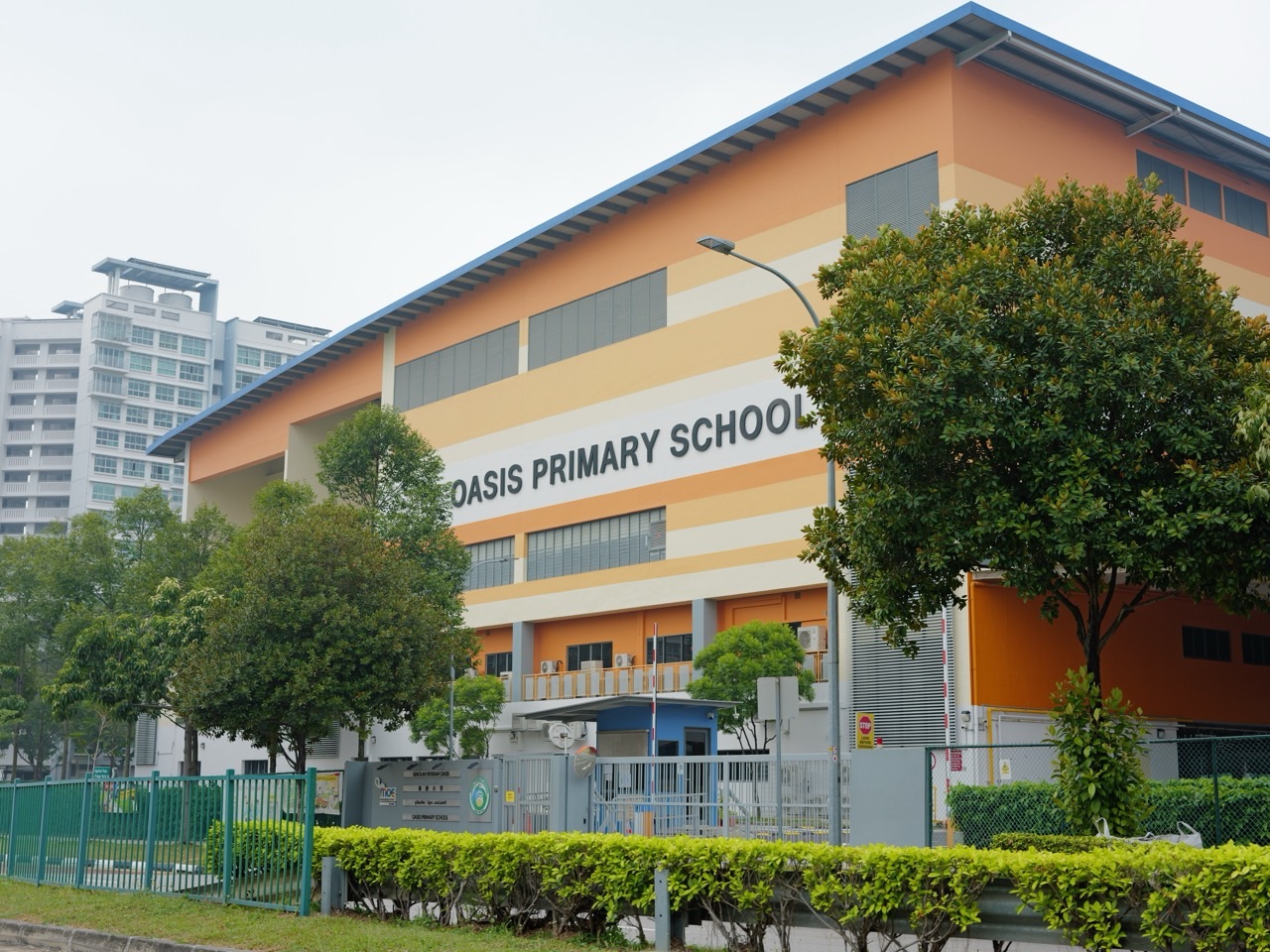
The national curriculum is the reference for formal school learning. This independent guide offers original, age-appropriate teaching examples and does not describe a specific Punggol school’s assessment practice. The photos are location illustrations. Do not infer that a school or library has conducted the invented examples simply because its exterior appears in the article.
Quick comparison before choosing an experiment
- Observation: What do you see, hear or measure directly?
- Testable question: What specific factor and outcome might be compared?
- Fairness: What other influential conditions should be kept consistent?
- Measurement: What tool, unit, starting point and endpoint will be used?
- Reliability: How will variation, repeat attempts and suspected errors be recorded?
- Explanation: Which claim follows from the data, and what remains uncertain?

1. Begin with a question that evidence can answer
A child sees a plant drooping beside a balcony window and asks, ‘Why is it unhappy?’ That question expresses curiosity, but it is not yet a useful investigation. Several explanations could fit: the amount of water, the type of plant, the light, the soil, or a damaged stem. Good Science begins when a learner converts a broad impression into a question about a defined relationship. The purpose is not to eliminate wonder. It is to give wonder a testable direction.
A more precise question might be, ‘Under the same conditions, do two identical paper towels absorb different amounts of water when we change the number of layers?’ The learner can decide what will be changed and what will be observed. The question names a manageable situation and a possible comparison. Before making the test, the child should explain what result would support the idea and what result would challenge it. A hypothesis is a prediction with a reason, not a guaranteed answer.
How a parent or teacher can make the thinking visible
The difference between investigation and demonstration matters. Watching water spread through paper can show an effect. It does not necessarily prove which factor caused a difference. A demonstration may be excellent for introducing a phenomenon; an investigation asks a narrower question and organises evidence to answer it. Parents should not call every interesting activity an experiment if there is no meaningful comparison. Children can enjoy both activities once the distinction is made clear.
For a safe paper-based starter, draw two imaginary cups with different amounts of water and ask what can be learned from that picture. The pupil may describe the amounts, but cannot conclude why they differ. Now ask what measurement and procedure would help compare two containers fairly. The child has moved from observation to design. This stage is valuable even when no real water or equipment is used. Thinking about a fair question is itself a scientific skill.
Find the error, then test the principle again
One common difficulty is deciding on the conclusion before identifying what evidence would count. A child may want to prove that their favourite material is ‘the best’. Ask, ‘Best for which purpose?’ A material might be good at absorbing water but poor at resisting tearing. Change the claim to a narrow property and choose a suitable measurement. The method should be capable of revealing an inconvenient result, otherwise it is an advertisement rather than inquiry.
At home in Punggol, questions can arise from condensation on a cold cup, drying clothes, shadows or the way different packaging materials feel. These are everyday starting points, not evidence that a particular Punggol school conducts the same activity. For each curiosity, ask the learner to name the object, the possible factor, the observable outcome and one safety limit. That four-part conversation can turn a casual ‘why’ into a much more useful learning moment.
2. Understand changed, measured and unchanged variables
A fair test changes one relevant factor while attempting to keep other influential conditions comparable. Children often hear ‘change one thing’ as a slogan without knowing why. The reason is causal interpretation. If several factors change together, an observed difference cannot easily be attributed to any single one of them. The changed variable is the factor deliberately varied. The measured or observed outcome is the response. Unchanged variables are the relevant conditions kept consistent.
Imagine comparing how quickly equal amounts of water move through two types of clean filter paper. The changed variable is the paper type. The outcome might be how long a fixed volume takes to pass through, using the same collection arrangement. The amount of water, container geometry, paper area and starting procedure should be comparable. Without those controls, a fast result might reflect a larger sheet or a different water volume rather than a genuine difference in material.
How a parent or teacher can make the thinking visible
Not every condition can be perfectly identical in a family activity. The practical aim is to recognise the strongest influences and handle them responsibly. If one piece of paper has a tear, it should be replaced. If the person timing the activity misses the start, the recorded time may need to be labelled uncertain. Students should understand that fairness is a reasoned design choice, not the magical absence of every conceivable difference.
MOE’s 2023 Primary Science syllabus describes a progression from recognising fair tests with changed and unchanged variables by the end of Primary 4 to designing fair tests by the end of Primary 6. This is a useful guide for parents: younger pupils can begin by detecting what makes a comparison unfair, and older pupils can increasingly propose a fair method themselves. The actual lesson sequence and support remain the responsibility of each school.
Find the error, then test the principle again
An instructive mistake is measuring two different paper types but using differently shaped containers. The student may accurately time both trials and then draw a confident conclusion. The calculation is not necessarily wrong; the design is. Ask the learner to identify the extra factor and state how it could influence the observation. Improving the design is more educational than simply calculating a new average from flawed results.
For an independent check, describe a toy-car test in which one car is released from higher up and also has different wheels. Can the pupil explain why the result cannot isolate the effect of wheel type? Then ask them to redesign the comparison by holding the release height constant. The learner has transferred the principle from paper and water to motion without memorising a single experiment.
3. Distinguish prediction, observation and inference
A prediction states what the learner expects before the test. An observation records what is seen or measured. An inference offers an explanation drawn from those observations. These have different jobs. If a child predicts that a folded towel will absorb more water, the prediction does not become a fact because it sounds reasonable. If a towel looks wetter, that observation alone may not establish the exact amount absorbed. Scientific vocabulary helps the child keep these ideas apart.
A simple notebook can have three columns. Before: ‘I predict two layers will hold more water because there is more material.’ During: ‘The sample with two layers held the first measured amount without dripping.’ After: ‘This result is consistent with the prediction in this trial.’ The final wording is deliberately modest. A single result does not prove the explanation under all conditions or for every paper towel in the world.
How a parent or teacher can make the thinking visible
Children may use the words ‘I saw’ when they really mean ‘I think’. For example, ‘I saw that this cup is colder because it was in the shade’ combines an observation about temperature with an explanation about cause. Unless the temperatures and conditions were checked, the explanation remains tentative. A parent can ask which part is directly known and which part requires another source or test. This is good Science and good communication.
The same discipline applies when learning from photographs. A picture of a puddle shows water at one moment; it does not reveal the amount of rain, exact source of the water, drainage conditions or what happened ten minutes before. A student should not turn a still image into a confident causal story. If more information is needed, the honest conclusion is that the available evidence cannot decide the question.
Find the error, then test the principle again
A typical error in written answers is using an observation as the entire explanation. Saying ‘The second sample took longer’ tells the reader what happened, but not necessarily why. The explanation needs a relevant scientific relationship, expressed at the student’s level, and should distinguish the tested factor from possible alternatives. If the mechanism is not established, students should identify the limit rather than invent one.
Try an unfamiliar example: two plants in photographs have different heights. Ask for a prediction about growth, a direct observation from the pictures, and an inference that cannot yet be confirmed. Can the pupil avoid asserting that one plant received more sunlight? The goal is a habit of disciplined language, not a prize for producing the most complicated theory.
4. Choose measurements and units that match the question
An investigation can have a clear question and still collect the wrong data. Measuring the height of a container will not answer how much liquid it holds unless its shape is taken into account. Likewise, counting drops of water with different droppers may not be a reliable measure of volume. Students need to connect each measurement with the actual outcome the investigation seeks to compare. The choice of instrument is part of the scientific reasoning.
Suppose a paper-towel test asks which sample can hold more water before dripping. The learner needs a consistent way to add water and decide what counts as the first drip. If one child adds large splashes while another adds tiny drops, the comparison becomes weak. A controlled volume or consistently used dropper might be better, with a clear rule for recording the endpoint. The details of the procedure protect the meaning of the result.
How a parent or teacher can make the thinking visible
Measurement also needs units. A statement such as ‘Sample A took 12’ is incomplete: twelve seconds, minutes or something else? Teach the pupil to label the column before any measurements begin. When the question asks how much water is absorbed, record a suitable volume unit if actual equipment supports it. The number and unit must travel together, including when results are transferred into a table or graph.
Precision should match the tool. An ordinary clock does not justify reporting a time to the nearest hundredth of a second. A ruler with centimetre marks does not prove a measurement accurate to an invisible fraction of a millimetre. Children can learn that more decimal places do not automatically make evidence better. The proper question is whether the instrument and method can support the stated precision.
Find the error, then test the principle again
A recurring error is using inconsistent start or end points. In a timing experiment one group might start the clock when the water touches the paper; another when the water is poured. Both may faithfully record numbers, but their results answer different questions. Agree on the event being timed before running the trial. This makes reliability a property of the method, not only of the arithmetic.
Use an invented example with three readings, 11, 12 and 13 seconds. Ask the child to write a labelled table and explain how the values were measured. Next, show a second table with 11, 12 and 13 minutes and ask why the same digits do not describe the same outcome. The child has to interpret the evidence, not merely copy it.
5. Use repetition to investigate variation, not to manufacture certainty
Measurements differ from trial to trial even when the procedure is carefully controlled. A release might be slightly delayed, an object might settle at a different angle, or a reading might be interpreted differently. Repetition helps reveal this variation. It does not transform an uncontrolled test into a fair one, and it does not prove a broad scientific rule beyond the situations actually investigated. Reliability begins with recognising that observations can vary.
If a toy car travels 72, 70 and 71 centimetres in three repeated trials on the same safe model track, the readings are close. The average is 71 centimetres. The mean can be a useful summary, but it does not explain why the car travelled that distance. If the next three readings were 72, 30 and 71, the unusual value deserves a method check before it is quietly discarded.
How a parent or teacher can make the thinking visible
Children sometimes think a repeated measurement should always be identical. Ask what could create a small difference and what would make a difference suspicious. The explanation may involve instrument resolution, human timing, positioning or uncontrolled conditions. The important learning is to investigate variation rather than feel embarrassed by it. An honest table with one anomalous reading is often more educational than a magically perfect record.
Do not tell a pupil to remove results simply because they disagree with the desired conclusion. A result may be excluded only for a clear reason that is recorded: for example, the object hit an obstacle that was absent in the other trials. Even then, show the original observation and the reason for repeating the test. This habit builds scientific integrity while allowing age-appropriate simplification.
Find the error, then test the principle again
Some investigations need a different kind of evidence. An observational study of shapes or materials may involve careful classification instead of repeated timing. The child should ask whether repeated trials will help answer the particular question. Copying three readings into every worksheet is not a substitute for designing an appropriate method. The measurement and repetition plan must serve the question.
For a transfer task, invent two sets of three measured distances: A = 40, 41, 39 cm and B = 40, 65, 15 cm. Both averages are 40 cm, but their variation differs markedly. Can the child explain why reporting only the averages would hide information? That is a real conceptual gain, even before formal statistics becomes a major part of the curriculum.
6. Make data tables and graphs communicate accurately
A table is not simply a neat place to store figures. Its structure determines whether a reader can see the tested factor, the outcome and repeated observations. Put the changed factor in a clearly labelled column and the measured response in another. If there are repeated trials, show them separately before summarising. A reader should not need to guess which number belongs to which condition or what the unit means.
Use a fictional test comparing two toy ramps, both made from the same material, with different inclines. A table could show the ramp setting, three measured travel distances and the mean distance. The parent need not teach advanced graph software. A careful pencil table can express the comparison clearly, while a simple graph might make a pattern easier to notice when several settings are involved.
How a parent or teacher can make the thinking visible
Graphs introduce another choice: the type of display. Categories such as paper type may suit a bar chart; a variable measured across an ordered numeric scale may suit a different representation. Teaching the reason for choosing a display is more valuable than making the most colourful chart. Axes, scale, title and units are integral parts of the communication, and the learner should be able to explain each.
Imagine a vertical axis that starts at 90 instead of zero while comparing values of 95 and 100. The visible bars might suggest a vast difference. A child should inspect the scale before concluding that one result is dramatically larger. This is not just mathematics; scientific evidence can be exaggerated by visual choices. The graph must help the reader understand the values rather than push a preferred reaction.
Find the error, then test the principle again
A common error is producing a graph and then describing the relationship more strongly than the data allow. If two trials show a modest difference, ‘always’ is too confident. If the measurements overlap, a claim of clear separation may be unjustified. Ask the child to state a comparison that is true of the recorded values and to identify conditions that were not tested.
For independent transfer, give a small table of three fictional water volumes—20, 30 and 40 mL—and three observed processing times—10, 16 and 23 seconds. Ask the child to draw an appropriate labelled display and explain one pattern without claiming that the pattern must continue forever. What the pupil notices is as important as the plot.
7. Separate patterns from explanations of cause
Seeing two things change together can suggest a scientific question without settling the explanation. Hotter afternoons may coincide with more ice cream sales in some settings, but the sales do not heat the air. This familiar distinction between association and causation appears in primary Science in a simpler form: students must ask whether the tested design has controlled important alternatives. Patterns guide inquiry; they are not automatic proofs of cause.
Consider an imagined comparison of two indoor plants, one near a window and one far away. Their growth differs. The observation alone does not establish that light caused the difference, because watering, soil, pot size and plant condition may also vary. The learner should propose a fairer comparison and state the limitations of the original picture. That is stronger science than assigning a confident explanation after seeing two heights.
How a parent or teacher can make the thinking visible
At Punggol Waterway, children may see more insects at one time than another. That observation can inspire curiosity about weather, time of day, location or vegetation. It cannot by itself prove that a specific factor produced the pattern. Outdoor conditions are complex, and unsupervised sampling should not be undertaken near water or sensitive habitats. A paper-based comparison using published data is often a more suitable school or home activity.
Parents can teach the language ‘in these observations’ or ‘under the tested conditions’ before broadening a statement. If the result applies to a particular material and measurement procedure, do not extend it to all materials or every environment. Such limits are not weaknesses to hide. They define what was actually learned and show the child’s growing understanding of scientific claims.
Find the error, then test the principle again
A misconception arises when children believe a graph itself shows cause. Even a smoothly rising line needs interpretation. Ask: Which variable was changed deliberately? Which conditions were held comparable? Were the results repeated? What other explanations might fit? If these questions cannot be answered, the result may be descriptive rather than a fair causal test.
Give the learner a novel example about two identical notebooks drying at different speeds after a spill. If one is placed in a windy location and another near a fan but at a different temperature, can they identify more than one changing factor? Ask them to propose a safer paper simulation or a properly supervised design rather than encouraging messy or risky real-world experiments.
8. Write scientific explanations that connect claim, evidence and reason
An explanation answers more than ‘What did I record?’ It states a claim supported by observations and explains the relevant scientific relationship. A child should be able to point to the result that supports the claim and then describe why that result matters. The familiar claim-evidence-reasoning structure is a useful teaching scaffold when it is understood rather than recited. It should not become an empty template filled with impressive words.
For a fictional filter-material comparison, a restrained claim might be, ‘In our three trials, material A let the fixed volume through faster than material B.’ The evidence is the labelled data and conditions. The reasoning should connect the measured times to the chosen comparison, while avoiding an unsupported microscopic explanation of material structure if that mechanism has not been established. Precision is not the same as complexity.
How a parent or teacher can make the thinking visible
Tell children that good scientific writing often includes a limitation. ‘The samples differed only in material type, as far as we could control’ is more credible than ‘This proves material A is always fastest’. A sentence explaining what could still influence the outcome shows the reader that the pupil understands how the result was produced. Mature scientific thinking is comfortable with carefully described uncertainty.
Teach three linked questions. First: what happened? Second: where can you see that in the evidence? Third: why does the evidence support this particular conclusion? In a young learner’s writing, a few accurate sentences can answer all three. A long page of unconnected definitions may sound academic while leaving the actual experimental question unanswered.
Find the error, then test the principle again
An error often appears when the pupil includes a correct scientific fact that is irrelevant to the tested question. For instance, a definition of evaporation does not automatically explain a toy-car result. The explanation must match the factor, outcome and mechanism being considered. Ask the student to cross out any sentence that cannot be linked to the data or the question.
Transfer the routine to a Punggol home observation of condensation on the outside of a cold drinking vessel. Ask which statements are directly observable, which explanation can be supported by the relevant Science topic and which details were not measured. Avoid suggesting experiments with dangerous temperatures or unsuitable materials. The goal is disciplined language attached to safe everyday evidence.
9. Safety, ethics and the difference between learning and spectacle
A dramatic experiment is not necessarily a good experiment. A child learns more from a safe comparison with meaningful evidence than from a risky demonstration that produces a large flame, a sudden reaction or an impressive video. Primary Science activities should use age-appropriate materials and school-approved supervision. Parents must avoid improvising with electrical sockets, chemicals, hot liquids, living specimens or open water because a video suggests an exciting outcome.
Scientific integrity also includes truthful recording. Do not invent measurements to make the results match the prediction, edit a table silently or present simulated data as if they came from a real school investigation. If the activity is hypothetical, say so. Children can practise fair tests with paper-only scenarios and still learn what variable control means. The label ‘fictional data’ protects the distinction between an exercise and a claim about the world.
How a parent or teacher can make the thinking visible
Respect for living things matters particularly in environmental inquiry. A Punggol walk can generate observations about plants, shade, surface materials and weather without removing organisms, disturbing nests or entering restricted ecological areas. An adult can model looking carefully, keeping distance and acknowledging uncertainty about species identification. A child’s curiosity is valuable, but curiosity never creates permission to damage a habitat.
Data privacy matters too. A family should not record identifiable strangers or classmates to assemble a learning project. If a worksheet requires measurements of human behaviour, ask the school what is permitted and whether anonymous, simulated or publicly published data can be used. A student does not need personal information to learn how tables, graphs and fair comparisons work. Ethical data collection is part of the scientific method.
Find the error, then test the principle again
Some children become anxious when a result differs from the prediction. Explain that a surprising result is not proof they have failed. The next question is whether the method worked, which conditions were controlled and what another test might show. A calm, accurate report is more valuable than a perfect story written afterward. Science advances when the observations have permission to disagree with expectations.
The final test is whether the child can criticise an unfamiliar experiment respectfully. Give a paragraph about two toy cars, each with a different wheel type and a different starting height. Ask the learner to identify the extra variable, propose a fairer design and say what should be measured. That changed-context reasoning is a better outcome than memorising a single list of science vocabulary.
Four-week teaching plan: one question, better evidence
A four-week sequence makes the reasoning visible without turning home life into a laboratory. Week one: compare two written experiment designs and explain which is fairer. Week two: draft a data table and choose suitable units for a hypothetical paper-towel investigation. Week three: interpret a set of repeated fictional results, identify an outlier and decide what would need checking. Week four: critique an unfamiliar toy-car comparison, propose a clearer method and write a claim supported by labelled evidence. Children who need more support can repeat one week; the calendar is not a formal assessment prescription.
A worked example: Is the paper towel test fair?
Imagine a child tests whether a two-layer paper towel holds more water than a one-layer towel. Sample A is a single sheet measuring 10 cm by 10 cm. Sample B is two layers, but the pieces are 15 cm by 15 cm. The child adds water with a dropper until the first drip appears, then says B performed better. The result might be true under those conditions, but the test cannot isolate the effect of layer count because total area also changed. Before repeating, the student should make the pieces comparable in area and agree on a consistent endpoint.
Now add a second complication: one sample is held horizontally while another hangs vertically. The orientation could influence where water moves and when it drips. A good pupil does not merely write ‘unfair’ and move on. They explain how the extra difference matters and what practical change would improve the design. The same reasoning transfers to toy ramps, seed germination models and many textbook questions because the real skill is recognising what comparison the evidence can support.
A question bank for discussing schoolwork without giving the answers
- Which fact or observation made you ask this question?
- What one factor are you investigating?
- What would you measure or record, and in what unit?
- Could something else cause the difference?
- How will another person know exactly when a trial begins and ends?
- What would an unexpected result tell you about the method?
- Are these data actual observations or a worksheet illustration?
- What claim can you support without adding facts you never checked?
- How would you test the same principle in a changed situation?
Frequently asked questions
What is a fair test in Primary Science?
A fair test compares conditions while controlling other relevant factors. The child needs to know what deliberately changes, what is observed or measured, and which conditions are kept as comparable as possible. Fairness is important because otherwise an observed difference may have several competing explanations.
Which Science syllabus is relevant for Primary 3 to 6?
MOE’s 2023 Primary Science Teaching and Learning Syllabus for Primary Three to Six began implementation with the 2023 Primary Three cohort. It describes inquiry practices, content, assessments and an age-appropriate progression of fair-test skills.
What is the difference between a variable and a measurement?
A variable is a factor that can differ between conditions or trials. A measurement records an outcome in a defined form, usually with a unit. Some variables are categorical, such as material type, while others are quantitative, such as time or length.
Can parents teach Science without laboratory equipment?
Yes. Children can inspect a fictional procedure, detect uncontrolled conditions, plan a table and critique an explanation using paper and pencils. Practical work needs appropriate materials and supervision; a thoughtful design exercise is often enough for introductory reasoning.
Is repeating a test three times always sufficient?
No universal trial count proves reliability. The number and type of repetitions depend on the investigation. A few trials can introduce variation to young learners, but they do not make an uncontrolled method fair or establish a claim for all settings.
Should children record results that disagree with the prediction?
Yes. Accurate data should be recorded honestly. If a trial had a known procedural problem, record the issue and decide whether to repeat it rather than silently replacing an inconvenient observation.
Can Punggol Waterway be used for a Science project?
The public setting can inspire safe observation and questions, but students should follow posted rules, remain away from risky edges and avoid interfering with living things. This article does not authorise water collection or claim a school is running a particular field experiment.
Will learning fair tests guarantee higher PSLE Science grades?
No. It builds a vital reasoning skill, but examination results also depend on syllabus knowledge, interpreting questions, explanations, accuracy and performance conditions. Use the child’s school feedback to choose priorities.
Your Next Step
Choose one recent Science question your child found difficult. Ask the child to identify the changed variable, one relevant unchanged condition and what needs to be recorded. If the question is observational rather than experimental, ask why a fair test may not be the right method. Then use a second unfamiliar example to check whether the pupil has learned the reasoning rather than memorised one experiment. A useful ten-minute discussion ends with a clear next action, not a verdict about the child’s talent.
Official sources and related Punggol reading
- MOE Primary Science Teaching and Learning Syllabus 2023
- MOE primary curriculum syllabuses
- MOE SchoolFinder
- Schools and Education at Punggol | Learning Science Through the Waterway, Weather and Local Evidence
- Schools and Education at Punggol | Understanding School Feedback, Progress Reports and Learning Gaps
- Schools and Education at Punggol | Mathematics Reasoning, Models and Real-World Problem Solving
Editorial reference date: 1 November 2026. Fictional measurements are identified as hypothetical. This guide does not claim that any named school uses the examples or that a Punggol public facility is an authorised field-test site.


