
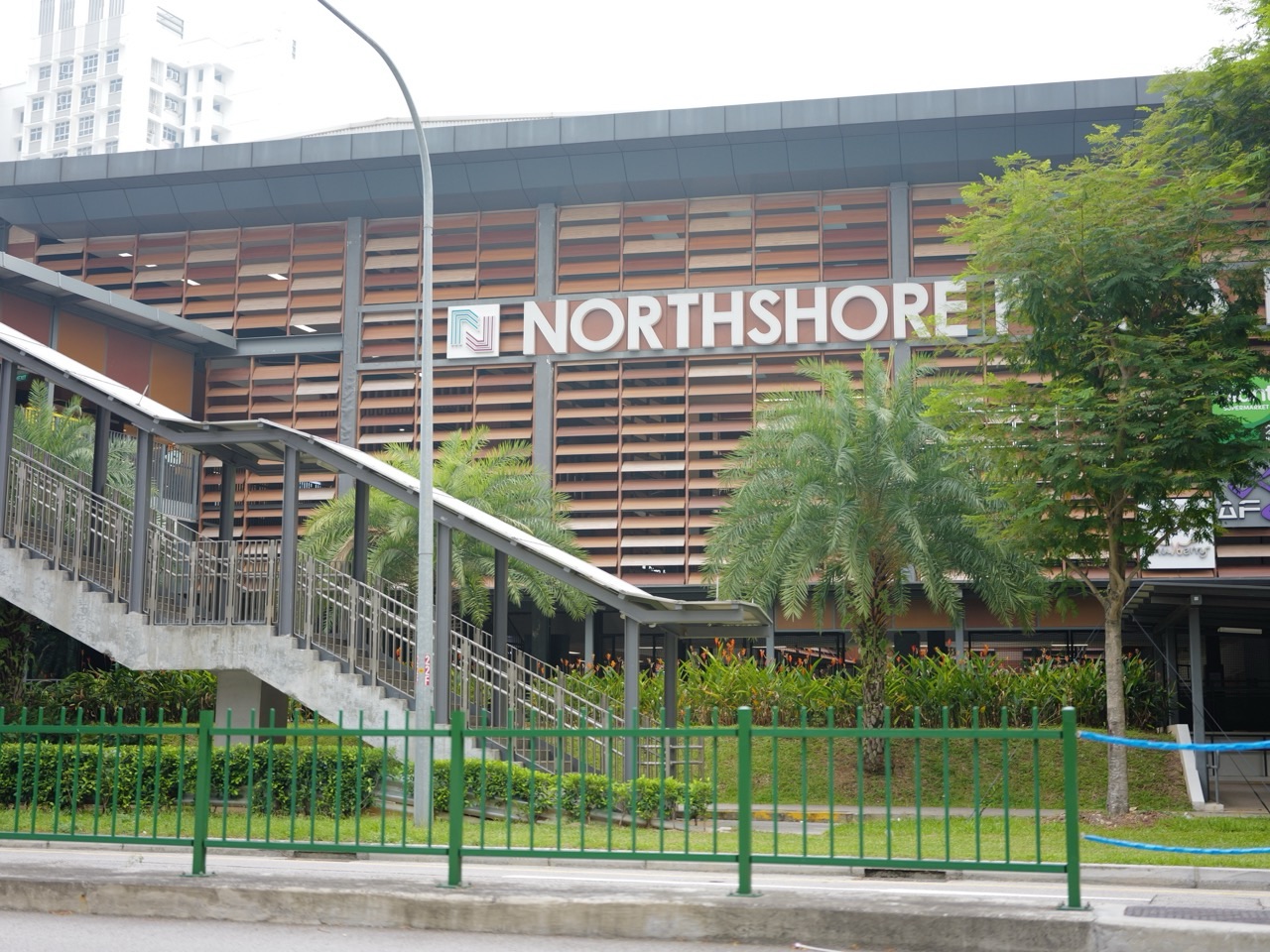
Living in Northshore, Punggol, means planning ordinary family life in a coastal residential precinct, not spending every day on a holiday by the sea. Northshore Plaza I and II, the Punggol LRT West Loop, local housing and nearby schools give residents practical anchors, while sea-facing homes, open spaces and environmental design make the neighbourhood feel different from the town centre. The right daily plan depends on the exact block, the route to the station, the people making the journey and whether the waterfront is actually accessible.
The trade-offs are straightforward. Coastal views can be attractive without guaranteeing cooling breezes; a nearby neighbourhood centre saves some errands without replacing every service; and a home described as ‘near Punggol Point’ does not mean the adjacent park is open. As of November 2026, Punggol Point Park is closed for upgrading, with works expected to finish on 31 December 2027 rather than a confirmed reopening date. This guide explains how Northshore residents can test transport, manage heat and rain, organise school and household routines, enjoy genuinely accessible outdoor spaces and decide what kind of coastal lifestyle suits them.
- Area: Northshore in the northern part of Punggol, beside the coastal edge and near the Punggol LRT West Loop.
- Everyday retail: Northshore Plaza I and II; verify individual shops, services and operating hours.
- Relevant stations: Samudera LRT (PW4) and Punggol Point LRT (PW3), depending on the exact home and trip.
- Housing reality: sea-facing, inland-facing and differently oriented flats do not have identical heat, noise, views or walking routes.
- School planning: confirm actual placement, school gates, crossings and authorised handovers; nearby schools do not guarantee admission.
- Outdoor caution: Punggol Point Park and adjacent carpark closed for upgrading since 11 August 2026; 31 December 2027 is an expected works-completion date, not confirmed reopening.
- Daily priorities: test weekday commute, simple meal and grocery routes, indoor weather alternatives, deliveries, rubbish arrangements and family needs.
- Verification: rely on HDB, NParks, LTA and individual operators for changing services, requirements and construction notices.
Northshore is a place to live before it is a place to photograph
The most recognisable feature of Northshore is its relationship with the northern coast. It is tempting to begin with a skyline, water, ships and sunset. For a resident, the first question is more ordinary: how do I leave this home at seven in the morning and return with food when everybody is tired? Good housing is partly a view, but a functioning neighbourhood is a network of everyday journeys, shared spaces and predictable services.
Think of coastal living as three overlapping experiences. The view is what you see from a particular unit or public vantage point. The environment is what you feel, including sun, rain, sound and air movement. Daily life is what you do, including work, school, meals, care and rest. None can be inferred reliably from the others. A beautiful photograph does not establish that a particular kitchen remains cool at four in the afternoon.
Northshore’s identity also comes from planned amenities and public infrastructure. HDB describes Punggol’s Northshore precinct as an early testbed for smart-town technologies, while Northshore Plaza was developed to serve ordinary neighbourhood needs. Those are useful features, but the resident still has to know the actual entrance, route and service. A useful local guide should make those everyday connections visible without pretending that technology alone solves household planning.
This article deliberately differs from a generic ‘things to do in Punggol’ list. It is for people weighing a Northshore home, settling into one or attempting to improve an existing household routine. It will not score all flats or promise future property values. Its test is whether a person can use the coast and the town while preserving time, safety, money and an appropriate amount of privacy.

The first Northshore decision is the exact block and orientation
A broad estate label cannot tell you how one home will feel. The building, floor, facing direction, adjoining spaces, window arrangement and surrounding structures all influence what a household experiences. If you are viewing a home, note where sunlight enters, whether the principal living spaces are exposed at certain hours and whether a nearby building changes ventilation. Different households may find the same conditions comfortable or uncomfortable.
Sea-facing does not always mean better ventilation. Wind direction varies, obstacles influence airflow, and an exposed view can bring direct heat or wind-driven rain. A shaded unit may feel better to somebody who works from home, while another family values the light and view. Avoid inferring physical comfort from an agent’s photograph taken at the most flattering hour. Observe appropriately on more than one occasion when access allows.
Noise is similarly local. A unit near a road, loading area, recreational space or shared corridor may have a different sound environment from an otherwise similar unit. An open landscape is not necessarily a silent one. Listen during ordinary permitted viewing times and check whether common areas are used heavily. Do not photograph neighbours through their windows or attempt to enter private areas to assess conditions.
For buyers or tenants, separate a personal preference from a contractual fact. A view may be appealing without being guaranteed forever. A service listed in a brochure may be subject to actual operation. Use authoritative property documents and current planning information when making an important financial decision. An attractive label should invite careful inspection, not replace it.
Northshore Plaza I and II: a daily anchor, not every errand in one building
Northshore Plaza I and II are practical reference points for residents: places to check food, shopping and selected services close to home. The exact stores and opening hours can change, so a permanent article should not pretend that the tenant list is fixed. Find the entrance you will actually use, understand how the two developments connect to your route and check the retailer’s current information before planning a special purchase.
A neighbourhood centre saves the most time on small, repeated errands. A person who needs fresh food after work may prefer a reliable stop close to home rather than travelling to a larger mall. A grandparent may value the shortest accessible route and a familiar seating area. A family buying bulky household goods may still require delivery or another destination. The neighbourhood centre is a tool, not an obligation to shop in one place.
Test an ordinary shopping basket. Can you find the basics the family purchases most often, at a price and quality that work for you? How much can be carried comfortably on the return journey? Would a shopping trolley help, or create difficulties on stairs and narrow passages? These are more useful questions than how many branded storefronts appear in a promotional description.
Be honest about gaps. A particular medicine, professional service or specialised item may not be available locally. Verify before leaving, and group occasional wider errands sensibly. Some residents will continue using Waterway Point or another centre for certain needs. A successful Northshore routine uses nearby services where they fit while keeping realistic access to the rest of Punggol and Singapore.
Samudera and Punggol Point LRT: which one actually works for you?
The West Loop connects northern Punggol areas with the broader transport network through the Punggol LRT system. Samudera (PW4) and Punggol Point (PW3) are useful map anchors in the Northshore area, but they do not make every home equally close to a station. The journey begins at your actual door and ends at the specific destination entrance, not at a labelled point in a mobile map.
Walk the route with the items you regularly carry. Someone taking a single shoulder bag may find a route comfortable that becomes cumbersome with a stroller, wheelchair, school bag and groceries. Observe crossings, sheltered links, lifts and the return approach. Do not trespass through construction sites or cut across unsafe roads to reduce an optimistic travel estimate. A sensible route should be lawful, repeatable and manageable when you are tired.
The station name also does not determine which service direction suits a given trip. Check current LTA and operator guidance rather than relying on an old graphic or a neighbour’s memory of former operating patterns. Measure transfers and waiting. A household that regularly catches a particular train should still have a reasonable alternative if service is disrupted or a family member leaves later than expected.
For first-time visitors, give the full meeting point instead of saying ‘meet at Punggol Point’. That name can refer to a station, the coast, a park or the wider area. The park’s present closure makes precision especially important. A meeting at an LRT entrance is not a request to walk through a closed construction boundary. Small geographic distinctions prevent big practical mistakes.
The weekday commute is different from a scenic weekend walk
A pleasant Sunday outing often tells you very little about a weekday journey. Crowds, school start times, weather and transfer reliability change the experience. If work begins at a specific hour, test the actual route at a comparable time and include a realistic buffer. A resident commuting from Northshore to a destination beyond the North East Line should measure the final leg after changing services, not only the ride to Punggol MRT.
Write the commute as a sequence: exit home, reach local station or bus, wait, ride, interchange, continue and walk to the destination. The weakest element is often the one ignored in a property advertisement. A short advertised rail journey can still be inconvenient if the final walk is long or the first service does not suit the departure time. A planned route improves when every component is visible.
A shift worker needs a separate assessment. An early departure or late return may not be covered by the same service pattern as an ordinary office commute. Check official first and last service times rather than assuming public transport operates unchanged around the clock. Consider safety, lighting, fatigue and suitable paid alternatives for exceptions. A home can be attractive while one particular shift pattern remains inconvenient.
There is no universal correct travel mode. Some residents prefer walking and rail, others need a car for work or care, and some combine modes. Compare recurring cost, time, accessibility and practical reliability. A useful decision allows the household to say ‘this works four days a week, but we need a different solution on Fridays’ without feeling it has failed a lifestyle ideal.
The coastal breeze question: why an open view is not a climate guarantee
A waterfront location does not provide permanent air-conditioning by nature. Breezes depend on weather, orientation, surrounding buildings and the arrangement of openings in a specific home. You may feel air movement at one window but not in a bedroom. A balcony can catch sunlight and heat, while a shaded corridor feels comfortable. It is better to observe the flat than to attach a simple cooling claim to the word ‘Northshore’.
If you can view a unit more than once, compare conditions during different appropriate parts of the day. Note direct sun, glare, cross-ventilation opportunities and whether windows can be used safely. Ask occupants or the responsible party about ordinary conditions without treating their answers as laboratory measurements. A home comfort decision should consider fans, shading, furnishings and safe air flow alongside the electricity budget.
In hot weather, practical behaviour matters. Keep drinking water accessible, recognise when strenuous outdoor activity is unsuitable and protect more vulnerable household members. Indoor comfort requires appropriate ventilation and reasonable use of cooling equipment. Avoid obstructing windows, exits or essential systems with makeshift modifications. If an unusual heat problem appears linked to a defect, follow the applicable maintenance arrangement.
Rain creates another trade-off. An exposed coastal edge may have pleasant airflow at one moment and difficult wind-driven rain at another. Secure appropriate items safely and do not lean out of windows during storms to adjust an external object. A well-designed daily routine accepts that a sea-facing home is part of Singapore’s weather, not apart from it.
What smart-town design changes, and what it does not
HDB has described Punggol Northshore as a testbed for smart-town technologies, including environmental monitoring and systems intended to improve estate management. These developments are part of Punggol’s planning story. They do not mean that every Northshore block possesses the same equipment, that a resident can control every system from a phone or that a technology named in an old concept plan is operating in every common area today.
Some precincts use specific smart or centralised waste arrangements. Residents should follow the instructions displayed in their own block rather than copy a neighbour’s procedure from another estate. The distinction matters: waste separation, bulky-item disposal, recycling and contractor waste have different rules. Technology can simplify one part of the process while leaving personal responsibility for correct disposal.
Smart lighting or building management may change the experience of common spaces, but it does not eliminate the need for maintenance reporting. If a public light is defective, record the location and contact the responsible party. If an app displays information that contradicts the physical situation, verify rather than ignore what you can safely observe. An estate is still used by real people and maintained by organisations with specific responsibilities.
The strongest way to evaluate smart design is to ask what problem it solves in ordinary life. Does a better-lit path aid a particular journey? Does clearer waste handling keep shared space safer? Does access information help residents choose a suitable route? The technology deserves attention when the resident can see a reliable benefit, not merely because a sign describes it as innovative.
Northshore Primary and the limits of ‘near a school’
Northshore Primary School is a real educational anchor in the wider area, but proximity to a school is not the same as a confirmed school place. Parents must follow MOE’s current admissions framework, verify their official residential details where relevant and review the school’s actual procedures. A glossy map cannot promise admission, and a household should not make a financial commitment on that assumption.
Once a child has an actual school placement, test the route to the correct entrance at the proper time. Children travel differently from adults. A route comfortable for an unaccompanied commuter may involve a challenging crossing or crowded approach for a younger pupil. Plan the authorised school collection and childcare arrangement rather than rely on the vague phrase ‘the school is a short walk away’.
School routines change with CCAs, special events and changing dismissal times. For a teenager, route planning can be an age-appropriate independence skill. For a young child, adult supervision and authorised handovers remain central. Where grandparents support the family, make the arrangement specific enough that everyone knows which adult is responsible, what time matters and whom to contact if plans change.
Punggol offers a range of schools and learning services, but a student’s academic wellbeing is not determined by living near an attractive campus. Sleep, suitable study space, family communication, realistic homework time and a route home that works are basic ingredients. Northshore’s housing and transport provide context; the family still needs to build a workable school week.
Morning household routine: make the first hour repeatable
In many households, the hardest part of a morning is not a lack of facilities. It is the order of tasks. Bags are missing, somebody cannot find a transport card, breakfast runs late and a caregiver is uncertain about the collection plan. A Northshore home becomes easier to operate when essential items have clear locations and recurring departures are understood. The solution is often simple rather than technological.
Put the items needed to leave in one appropriate place without blocking an HDB corridor, entrance or escape route. A small shelf for keys, a safe storage area for shoes and a school checklist can reduce repeated searches. Prepare only what helps: a fully itemised morning script may be excessive for adults who already manage their routines, but it can assist a family with multiple school and work schedules.
Count the time honestly. A fictional morning might require twenty minutes for food and preparation, ten for a child handover and another period for the first transport leg. The exact numbers vary; use your observed schedule. A plan is weak if one unavoidable task needs more time than the household has assigned. Protect a small buffer so a delayed lift or forgotten notebook does not ruin the whole day.
People differ in their preferred pace. An older resident may prefer a calm breakfast and a later errand. A shift worker may need quiet when the rest of the building is starting its day. Shared housing works best when different routines coexist without everybody having to conform to one adult’s preferred schedule.
Evening errands: deciding between the Plaza and a larger town-centre trip
At the end of a working day, convenience is measured by what can be completed without extra fatigue. A Northshore resident may use Northshore Plaza for a straightforward meal or routine grocery purchase. Another may need a particular product at Waterway Point, One Punggol or elsewhere. Both can be reasonable choices; the key is to distinguish a necessary trip from an unplanned shopping excursion that consumes the evening.
Try a two-tier grocery system. Tier one is the local repeat purchase: bread, vegetables, simple pantry items and daily essentials that are readily available. Tier two is the occasional larger or specialist purchase, planned around suitable transport or delivery. This helps residents avoid carrying unsafe loads or spending too much time travelling for one item that could have been ordered or purchased on another day.
If the household is carrying food in warm weather, consider appropriate storage and the time before returning home. Follow food safety guidance and avoid leaving perishables in unsuitable conditions. If an adult has a child to collect, the handover time takes precedence over opportunistic browsing. Shopping is useful only if it fits the rest of the household’s obligations.
At least once, observe the return route with a normal grocery load. A route may look direct on a map and still include awkward steps, exposed sections or long walking stretches. This test can be done safely and calmly. A modest routine that works five times a week is more valuable than an impressive one-off shopping day.
What waterfront recreation means while Punggol Point Park is closed
This is the most important access distinction for anyone drawn to Northshore’s coastal setting in late 2026. NParks’ dated notice says Punggol Point Park and its adjacent carpark have been closed for upgrading since 11 August 2026. The notice gives 31 December 2027 as the expected completion date. That is a project target, not a confirmed reopening or guaranteed visitor access on 1 January 2028.
Punggol Point LRT station, nearby residences, coastal destinations and open parts of the broader promenade have different operating identities. A working station does not mean the park is open. Likewise, a photograph showing a person near a waterfront path does not prove that all former routes into the park are accessible. Follow current NParks notices, on-site barriers and public wayfinding without inventing an unofficial shortcut.
A coastal walk can still be planned around a currently open destination. The first task is to identify an accessible starting point, an exit and the route back, then check weather and any temporary restrictions. The wider Punggol Promenade and other parks may offer suitable options, but portions can have their own works, regulations or changing access. Never step through a barrier to complete an old online itinerary.
For residents, the closure is inconvenient but manageable when described accurately. It does not erase Northshore’s coastal character, and it does not justify advertising the closed park as an available playground. A dependable neighbourhood article should preserve both truths: residents live beside a distinctive landscape, and a specific public site is temporarily unavailable until the responsible authority confirms otherwise.
Weekend coastal life without turning every outing into an expedition
A good Northshore weekend may begin with nothing more ambitious than breakfast and a walk along an accessible route. Some families enjoy extended outdoor exploration; others prefer a short period outside followed by reading or rest. What matters is that the route suits the actual participants. A child who wants to look at clouds may be happier with fifteen calm minutes than with a crowded itinerary of distant attractions.
Choose the return point before you leave. A scenic path can tempt adults to continue because the next view seems close, even when younger children or an older relative are already tired. Carry suitable water, consider sun protection and avoid unsafe exposure in thunderstorms or lightning. Conditions can change quickly, and the seafront should not be treated as weatherproof recreation.
A weekend can also be a chance to learn about the built environment. Why are the paths arranged as they are? Which plants are planted for shade? How does the sea influence what we notice in the air and on the horizon? Ask children to describe actual observations before forming explanations. A neighbourhood becomes an educational resource when curiosity is encouraged without claims that every observation must produce a formal lesson.
Photography should respect people and habitat. Do not photograph neighbours through windows, obstruct cyclists or disturb wildlife for a better angle. A family album need not be posted publicly to count as a good day. Northshore’s greatest recreational luxury may be the ability to enjoy an ordinary nearby space without organising a complex trip or paying for constant entertainment.
Coney Island and the temptation to assume everything is accessible
The wider Punggol northern edge includes access toward Coney Island Park, a popular destination for nature experiences. However, the route from your exact Northshore address, the park’s operating hours and any closure notices must all be checked before a visit. A map line that appears continuous does not remove the need to confirm entrances or account for temporary works along adjoining paths.
Coney Island is not a standard urban playground with every possible convenience. Residents should follow NParks’ current opening, wildlife and safety guidance, prepare for the weather and choose a route suited to the group. Do not feed or approach wildlife, damage habitats or assume that shorelines are safe for swimming. A nature outing is valuable because visitors respect the environment, not because they reach every possible feature.
For children, keep the day appropriately short and supervised. A school assignment on biodiversity can be completed by observing common plants or sounds from an accessible public route; it does not require leaving marked paths. For older adults, consider rest stops, ground conditions and the full return journey. The best park choice is the one people can use comfortably and lawfully.
Residents should also avoid combining a Coney Island plan with a supposed Punggol Point Park stop while that separate park is closed. The two names describe different places and access rules. Check each part of the itinerary independently. Local familiarity is no substitute for a current official closure notice.
Waste, deliveries and building operations: the hidden daily infrastructure
Coastal living includes bins, parcels, lifts, maintenance requests and common corridors. A resident who can admire the sea but cannot understand the building’s waste arrangements will encounter practical friction immediately. Find the correct collection point for your block, learn its recycling instructions and distinguish ordinary household waste from bulky and renovation materials. Do not assume that every Northshore development uses the same system.
If the precinct has pneumatic or other centralised waste infrastructure, follow the instructions physically displayed and supplied by the responsible authority. A smart waste system does not make it appropriate to discard batteries, electronics, large cartons or hazardous items through any chute. Those items may need separate authorised disposal. Responsibility for contractor waste should be settled directly with the contractor.
Delivery convenience also varies by building. Check appropriate parcel collection options, whether an authorised recipient must be present, and whether a delivery requires access to a private lobby. Do not publish access codes or photographs of security arrangements in neighbourhood groups. When ordering a bulky item, confirm how it can be carried through the permitted lift and corridor system without damaging shared property.
A simple first-month rule is to give every recurring household object a destination. Shoes, school bags, shopping bags, parcels and cleaning supplies should not accumulate across the main walking route. Good storage protects the people in the home and keeps common spaces respectful. It matters more to daily life than a perfect panoramic photograph of the living room.
Community and privacy in a densely shared residential environment
A coastal development can feel open and spacious outside while still involve close daily encounters in lifts and corridors. Neighbours have different work hours, family arrangements and privacy expectations. A considerate resident does not need to become everyone’s friend, but should keep shared access clear, communicate reasonably about noise and treat ordinary differences respectfully.
If you are renovating, consult HDB’s current requirements and the conditions applicable to your home. Give suitable notice, follow authorised working arrangements and keep a contact channel for practical problems. Do not promise that construction will be silent if it will plainly create sound. A neighbour who works night shifts may be particularly affected by daytime disturbance, while another household may have children who sleep early.
Online estate groups can be useful for notices and everyday information. They also make it easy to spread unverified claims about a person, business or public project. Do not identify someone’s unit, child, access code or private difficulties to a large group. Treat photographs of shared areas carefully. If something needs repair, choose the responsible maintenance or reporting channel rather than treating social media as an official hotline.
Community belonging grows through repeated reliability: a greeting, clear communication, fair use of lifts and proper disposal. The coast does not change those principles. It may create pleasant shared destinations where residents encounter each other, but no one should feel obliged to perform a particular lifestyle or share private family routines publicly.
Accessibility and ageing: test the route with the intended traveller
An advertised ‘walk to the shops’ does not tell an older person or a wheelchair user whether the journey is suitable. Examine the complete route from the home entrance to the destination, including lifts, gradients, sheltered sections, crossings, resting opportunities and the return. Ask the person what matters. Do not decide that a path is accessible solely because an ordinary adult can walk it quickly.
Healthcare, food and household support may require a wider network than the immediate neighbourhood. Residents can check local facilities, but a specific appointment, specialist service or home-care arrangement may be elsewhere. Plan the actual journey and appropriate booking details with the provider. The existence of a mall or community space is not proof that every service is available inside.
For a family caring for an older adult, create a clear but respectful contact plan. Decide who accompanies the person when requested, how to contact help and what happens if someone cannot make a scheduled visit. Keep sensitive medical information private. A resident’s independence and preferences should be central to the plan rather than treated as a problem to be solved by technology.
Even a small environmental adjustment may matter: a comfortable chair by the window, a predictable grocery time or a familiar nearby route. Northshore’s open views can enrich daily life, but their value depends on whether the person can use the home and its surroundings safely. Accessibility is the lived journey, not the brochure adjective.
Housing costs: separate the coastal premium from everyday affordability
People sometimes discuss Northshore as though a sea view automatically makes a home worth paying any premium. That is not a sound budgeting method. The real decision considers purchase or rental obligations, interest or financing terms where applicable, maintenance, utilities, transport, care costs and the household’s remaining financial flexibility. A view can be meaningful without replacing the need to compare the numbers responsibly.
For illustration, imagine two hypothetical homes with different monthly housing costs. Home A costs S$300 more each month but shortens an important daily journey; Home B costs less but requires extra transport or caregiving arrangements. Those numbers are fictional and not Punggol market prices. The decision is not solved by the difference alone: total time, accessibility, household stability and risk all matter.
A sea-facing unit can also have different cooling and shading demands. Do not promise a particular electricity bill from its orientation or a subjective description of sea breezes. Observe conditions, consider the household’s expected equipment and adjust the budget based on measured use once living there. A home should be evaluated as a system of recurring costs and benefits.
For HDB buyers or tenants, check current eligibility, legal documentation and relevant official schemes. This article is not a property valuation, financial recommendation or guarantee of future resale outcomes. A careful household can appreciate the coast and still decide that another location better serves its school, work or retirement needs.
An illustrative household: a couple choosing Northshore for a new start
Imagine a fictional couple comparing a home in Northshore with one closer to Punggol town centre. They like the coastal feeling but both commute on weekdays. Rather than settle the question with a sunset viewing, they draw each complete work route, including the local LRT connection and final walk. They also identify where an ordinary meal will come from on a late Thursday.
During a second permitted viewing, they notice that one room receives more direct afternoon sun than they expected. They consider shading and cooling rather than assume the coastal breeze will solve the issue. They inspect shared corridors and decide whether the home’s privacy suits them. Their decision becomes better informed even if they ultimately choose the sea-facing option.
They then test how groceries would work. A quick purchase at Northshore Plaza may be convenient, but a heavier purchase could require delivery. The couple also checks their preferred weekend route and discovers that Punggol Point Park is currently closed. This does not end their interest in the area; it changes the specific activities they can plan immediately.
This is a hypothetical example, not a report about real residents or a particular building. Its lesson is that a strong housing decision uses repeated ordinary conditions as well as beautiful moments. Northshore may suit the couple well, but it should succeed through the whole week, not only from one scenic window.
An illustrative multigenerational household: one view, different routines
Now imagine a fictional family with a primary-school pupil, a working parent and a grandparent. The adults like the nearby shops, the child enjoys seeing trains and the grandparent appreciates the landscape. They still face three distinct routes: school arrival, work departure and the grandparent’s regular errands. A common neighbourhood does not produce one timetable that suits everybody.
The family first confirms the child’s actual school and the permitted handover process. Then it tests a suitable route with the grandparent, paying attention to crossing points and the effort of carrying food home. The worker measures a normal weekday commute instead of relying on a weekend estimate. Only after the essential paths are reliable do they plan optional longer coastal walks.
In the evening, the child’s need for homework and sleep may conflict with a parent wanting a long outdoor outing. The family chooses a short appropriate activity on selected days and allows rest on others. That flexibility makes the landscape accessible rather than exhausting. The grandparent can enjoy an independent routine where feasible without being assigned every childcare task automatically.
Again, the household is illustrative and not evidence of a particular outcome. It demonstrates a basic truth of shared housing: a place can offer many attractive amenities without offering identical benefits to everyone. Good planning combines the strengths of the neighbourhood with the needs and consent of each resident.
A four-week experiment before changing the whole household routine
Week one is for observation. Note the real first-mile journey, the return time, the most convenient food purchase and how the flat feels at different normal times of day. Identify whether the most tiring task involves transport, weather, shopping, care or home organisation. Avoid solving a problem before understanding its actual cause.
Week two is for one careful change. The household might prepare bags in advance, buy staples on a different day, change the route to an appropriate accessible entrance or arrange delivery for a genuinely heavy purchase. Record whether the change saves time without shifting an unreasonable burden to somebody else. A modification should improve the whole household experience.
Week three is for the awkward day. What happens when heavy rain prevents an optional walk, a child stays late at school or an adult returns after the preferred shopping hour? Check the actual public-transport and business conditions, then establish a sensible fallback. Do not experiment with unsafe shortcuts or go into a closed park to see whether a route is still possible.
Week four is a review, not a competition. Which routine is now easier? Which issue needs a building or service-provider report? What remains a personal trade-off that cannot be eliminated? Keep a small list of practical improvements and choose one pleasant local habit that does not create another burden. A sustainable Northshore life is built through useful repetitions.
Frequently asked questions about everyday Northshore life
Does a Northshore sea-view flat stay cooler? Not necessarily. Wind, orientation, sun exposure, window arrangement and nearby structures affect a specific unit. The view alone is insufficient evidence. Observe permitted conditions carefully and plan safe ventilation or cooling appropriate to the household. Avoid claims that all coastal homes have the same thermal performance.
Is Northshore Plaza enough for all family shopping? It serves many everyday purposes, but it cannot guarantee every item, service or preferred outlet. Verify individual tenants and opening hours, compare your ordinary needs and plan occasional wider errands when required. Northshore Plaza I and II should be understood as local anchors rather than substitutes for the whole Punggol retail network.
Can I visit Punggol Point Park right now? As of November 2026, NParks lists the park and its adjacent carpark closed for upgrading. Works are expected to finish on 31 December 2027, but that does not confirm when visitors may enter. Punggol Point LRT and other nearby destinations have separate access conditions. Follow current NParks notices and site signs.
Is Northshore a good neighbourhood for a family? It may be, but the answer depends on the home, actual school placement, caregiving, accessibility, working hours and budget. No article can certify a universal fit. Walk the essential routes, compare real costs, look at the home during relevant conditions and speak with the people who will live there.
Official sources, related guides and the most useful next step
HDB’s Punggol town overview explains the area’s planned development and smart-town context. Its neighbourhood-centres information describes facilities such as Northshore Plaza. For active route and service decisions, consult the official Land Transport Authority and public-transport operators rather than rely on an old timetable.
For current park access, use NParks and the local status analysis Punggol Point Park: Closure and Upgrading. This article does not override temporary barriers or give permission to enter the park during works. For a broader orientation, read the Punggol Neighbourhoods Guide.
If the most important question is whether Northshore suits your home life, start with a one-week diary of four things: the actual commute, the evening grocery routine, the comfort of your rooms and one accessible place to unwind. Put those observations beside the household budget and the needs of everyone who will live there. This is more useful than a general ranking of housing estates.
The appeal of Northshore is real: coastal space, local services and a distinctive neighbourhood story. Its trade-offs are equally real: sun, weather, shifting services, transport chains and temporarily closed spaces. A good life here does not require pretending the trade-offs vanish. It requires choosing well, checking facts and building routines that make the place feel like home.


