
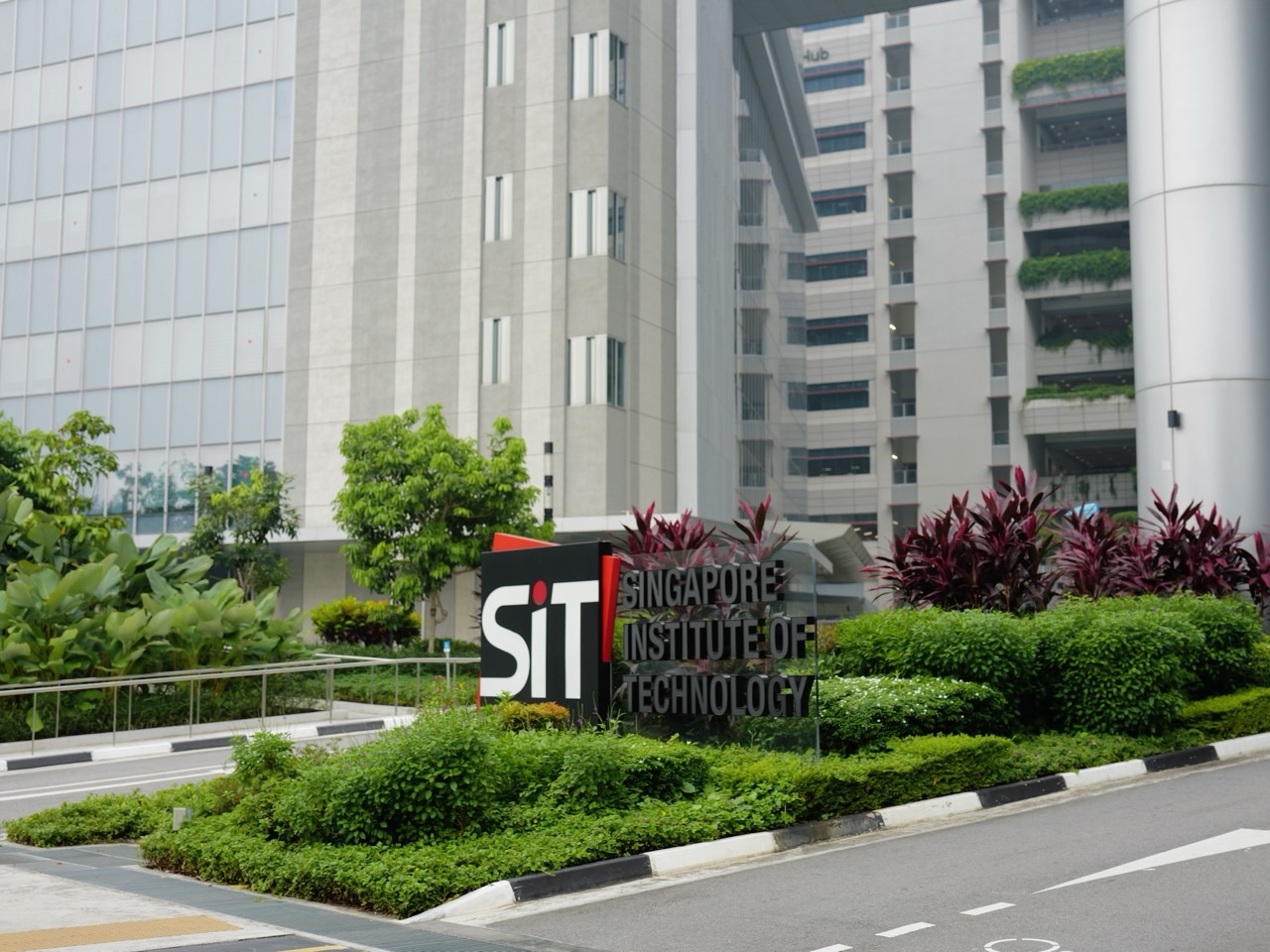
Punggol Events 2027 includes a professional engineering programme about preventing avoidable machine breakdowns through better data and responsible maintenance decisions. Singapore Institute of Technology’s Smart Maintenance Specialist Certificate is advertised for a January–April 2027 intake in the university’s Engineering Specialist Certificates catalogue. Its blended learning approach combines self-paced online study, scheduled online sessions and selected in-person assessments associated with SIT Punggol Campus, 1 Punggol Coast Road. The current individual programme page describes 18 academic credits and a full fee of S$10,006.20 including GST. Official Smart Maintenance programme.
Did you know? The programme comprises three six-credit subjects: ENG2400C Maintenance Engineering, ENG3400C Smart Sensing for Condition Monitoring and ENG3401C Condition-based Maintenance. Rather than teach technicians simply to repair machines faster, it connects equipment reliability, Failure Mode, Effects and Criticality Analysis (FMECA), sensor data and appropriate fault detection. The course expects knowledge of programming, engineering mathematics and data analytics, making it a substantial professional qualification rather than an open beginner taster for school pupils.
The 2027 booking distinction is essential. The general university catalogue advertises January–April 2027, and a historical booking catalogue has shown a 4 January 2027 Smart Maintenance start. But the current individual Course Runs panel explicitly says “There are no upcoming course runs at the moment.” Therefore the advertised seasonal window is planning information, not confirmation that applications are open, that 4 January is a final live start date or that a November application deadline applies. The course also publishes conditional funded fee examples of S$3,001.86 or S$1,165.86, plus a S$54.50 non-refundable matriculation charge. This guide was checked 30 October 2026 and separates verifiable course structure from unresolved admission arrangements.
Official January–April 2027 programme, fees, credits and booking status
- SIT programme: Smart Maintenance Specialist Certificate
- Provider: Singapore Institute of Technology, SITLEARN
- General catalogue intake window: January–April 2027
- Current individual booking status: No upcoming course runs displayed
- Exact approved 2027 start and application deadline: Not confirmed in current individual panel
- General in-person institution: SIT Punggol Campus, 1 Punggol Coast Road, Singapore 828608
- Delivery: Asynchronous learning weeks 1–12, live online integrative sessions weeks 1–12
- Published in-person assessment weeks: 3, 5, 8, 11, 12 and 13; exact times TBC
- Course 1: ENG2400C Maintenance Engineering, 6 credits
- Course 2: ENG3400C Smart Sensing for Condition Monitoring, 6 credits
- Course 3: ENG3401C Condition-based Maintenance, 6 credits
- Academic total: 18 credits
- Prior knowledge: Programming, engineering mathematics and data analytics
- Technical methods: Root Cause Analysis, Fault Tree Analysis, FMECA, sensing, IoT, machine condition prediction
- Assessment: Quizzes, tests and practical projects
- Specialist Certificate: At least 75% attendance plus passing all credit-bearing assessments
- Full course price: S$10,006.20 including GST
- Published conditional 70% funded amount: S$3,001.86
- Published conditional enhanced funded amount: S$1,165.86
- Matriculation: One-time S$54.50 non-refundable
- Possible funding: SkillsFuture Credit and conditional Mid-Career Training Allowance
- Degree stacking: Selected SIT electrical/electronic engineering, infrastructure/systems and technology/management paths
- Official detailed source: SIT Smart Maintenance
The 50-second Punggol resident’s summary
SIT advertises Smart Maintenance for January–April 2027 and describes an 18-credit engineering micro-credential centred on reliability, sensor-based condition monitoring and data-informed maintenance. The fee is S$10,006.20 full, plus separate matriculation, with conditional subsidised amounts. The individual course page presently shows no upcoming course runs, so it is inappropriate to claim a confirmed active January admission or exact application deadline. Applicants should register interest or enquire through SIT, assess their mathematics and programming preparation and plan for in-person assessment weeks. It is a professional educational opportunity, not an announcement that any particular Punggol lift or public facility is defective.
What smart maintenance means
Smart maintenance uses suitable engineering methods, measurements and data to make better decisions about the condition of equipment. The aim is not simply installing sensors everywhere or replacing people with dashboards. A reliable maintenance programme needs to understand which machines matter, what failures are plausible, how accurately conditions can be observed and who is authorised to act. SIT links traditional maintenance engineering to digital tools and analysis. Its value lies in more informed interventions and responsible management of equipment life, not a claim that every breakdown can be predicted in advance.
Why this is a distinct 2027 programme
The Punggol series already includes SIT courses on process safety, energy systems and Operational Excellence. Smart Maintenance is different: it focuses on the reliability of engineering systems and what condition data can tell a maintenance organisation. It shares themes with Sensing and Actuation but does not simply repeat feedback-control design. The specific three modules, assumed knowledge and assessment timetable make it a separate Specialist Certificate. A resident should select based on actual work responsibilities rather than assume every engineering micro-credential leads to identical learning.
The planned date window and current lack of open registration
SIT’s Engineering Specialist Certificates catalogue says Jan–Apr 2027. The detailed Smart Maintenance page currently says no upcoming course runs. An older SIT booking catalogue has shown 4 January 2027 for a Smart Maintenance certificate, but the current page does not confirm that as an active cohort with a payable place. It would be irresponsible to copy the 23 November deadline from Sensing and Actuation or Operational Excellence without evidence. Those are different programmes. Ask SITLEARN for an actual new course-run notice before taking leave or paying a deposit.
What is equipment reliability?
Reliability concerns whether an item or system performs its intended function under specified conditions over a relevant period. It is not the same as how expensive the machine is or how new it looks. A component can work perfectly today yet still require appropriate monitoring because its future performance is uncertain. A good engineer asks what failure means for the application, which evidence exists and what consequences matter. SIT’s Maintenance Engineering module uses reliability principles to support better maintenance choices instead of treating every minor fault as equally important.
Reliability and availability are different
A system can be reliable for long stretches but difficult to repair once it fails, producing long periods of unavailability. Conversely, equipment might experience small interruptions yet be restored quickly. A responsible manager should understand which measure reflects the service requirement. For a fictional production facility, the difference might affect whether a spare machine or better repair process is worthwhile. The details depend on the actual equipment and industry. A university programme should help learners choose meaningful metrics rather than report a single percentage without context.
Why maintenance is not only repair
A reactive approach waits until something fails, while other strategies may use scheduled inspection, preventive replacement or condition-based decisions. Each can be appropriate in a particular context. Replacing a component constantly can waste money and create new risk; doing nothing until failure may be unacceptable where consequences are severe. The right maintenance strategy considers criticality, equipment knowledge, failure patterns and applicable safety requirements. SIT’s programme combines these ideas with sensing and analytics. It is not permission to delay statutory inspections or bypass protective controls.
The role of life-cycle cost
A piece of equipment can have a low purchase price but high running, downtime or maintenance costs over its service life. Another may be expensive to buy but more reliable or maintainable. Evaluating life-cycle cost helps a decision-maker compare those trade-offs. The course describes reducing life-cycle costs while maintaining design requirements and sustainability. A simple supplier quotation does not capture all consequences. The correct calculation requires actual operating conditions, expected service, inspection requirements and uncertainties, rather than copying another factory’s estimates.
ENG2400C Maintenance Engineering
The first six-credit module covers foundational techniques for maintaining reliable plants, products and services. SIT’s outcomes mention Root Cause Analysis, Fault Tree Analysis and Failure Mode, Effects and Criticality Analysis. These are structured methods for asking what went wrong, which failures matter and how actions should be prioritised. They are not interchangeable labels for the same worksheet. A learner should understand their purpose and limitations, then use qualified judgement in a real organisation. A completed classroom example is not a statutory approval for altering equipment.
What is Root Cause Analysis?
Root Cause Analysis explores contributing conditions behind a problem so that corrective action targets more than a visible symptom. An equipment failure may be linked to a maintenance procedure, unsuitable conditions, a design assumption or several interacting causes. Simply replacing a damaged part without examining the recurring mechanism may lead to another failure. The actual investigation should use reliable records and competent staff. The course’s value is systematic reasoning, not assuming every problem has one convenient root cause that can be found by asking a fixed number of questions.
Fault trees organise logic
Fault Tree Analysis uses a structured representation to examine how combinations of conditions might contribute to a defined unwanted event. It can help a professional identify dependencies and ask which evidence is missing. But the result depends on the scope, assumptions and quality of input information. A visually detailed tree is not automatically correct or complete. The module teaches these methods within maintenance engineering, where real consequences can be significant. This guide does not supply operational failure scenarios or instructions for testing hazardous equipment.
Why FMECA is different from a simple fault list
FMECA considers possible failure modes, their effects and their criticality within a defined assessment. The purpose is not to make every imaginable problem equally urgent. A professional team examines which failures could matter most and which actions are appropriate. Criticality depends on context; a minor inconvenience in one system can be severe in another. SIT includes FMECA because smart maintenance needs a reasoned basis for what to monitor and prioritise. A learner should not assign risk ranks to an actual facility without appropriate data and authorisation.
A safe fictional prioritisation example
Imagine a community centre with an audiovisual projector, a room booking display and a building-wide essential safety system. Their failures would have very different operational consequences. A sensible maintenance plan should not allocate attention purely by which device is most visible or recently purchased. The actual facility’s regulated systems require their own professional procedures. This fictional comparison illustrates the idea of criticality without identifying any real defective Punggol equipment. It shows why maintenance priorities depend on function and consequence rather than just counting faults.
ENG3400C Smart Sensing for Condition Monitoring
The second six-credit module connects sensor principles with data acquisition and equipment monitoring. Learners may consider how to obtain meaningful evidence about machine condition and integrate it with appropriate embedded hardware, IoT and cloud tools. A measurement is valuable only if it relates to an actual question. Collecting enormous amounts of vibration or temperature data without knowing what it represents can create cost without better maintenance. SIT teaches sensing as part of a decision process rather than treating another dashboard as proof of operational improvement.
What is condition monitoring?
Condition monitoring means observing relevant indicators of equipment condition over time under appropriate technical arrangements. The goal is to identify patterns or changes that might warrant investigation. It is not a guarantee that every failure produces a clear warning before it occurs. Sensor suitability, maintenance history and operating circumstances influence interpretation. The official programme includes detecting and diagnosing faults and using data analytics to support prediction. The crucial professional question is which indicators are relevant to a particular failure mode, not whether the machine can produce any numbers.
Why sensor quality comes first
A condition model built on noisy, miscalibrated or inappropriate measurements can produce misleading warnings. A professional should consider how the sensor is mounted, what it measures, which operating range matters and how data quality is verified. These are engineering decisions requiring appropriate competence and permission. SIT’s broader sensing and data-acquisition teaching helps students understand that a sensor stream is not automatically the truth. An expensive analytics platform cannot repair a fundamental mismatch between the real phenomenon and the measurement being collected.
Understanding vibration data conceptually
Vibration is one form of information that may be relevant when assessing rotating or moving machinery under suitable methods. Some changes may indicate a condition worth examining, while others may reflect ordinary operating differences or sensor problems. It would be unsafe to assign a machine fault from one isolated value without qualified context. This article gives no thresholds or equipment adjustments. The educational point is that changes should be interpreted through documented operating conditions and appropriate expert analysis rather than a generic “red alert” graphic.
Temperature and context
Temperature measurements can also support condition assessment, but interpretation depends on where and how the value is measured, the environment and the equipment’s operating purpose. A warmer reading is not necessarily evidence of failure. Conversely, a seemingly normal average might conceal a local issue. SIT’s programme encourages connecting sensor data with engineering understanding. A professional should know what normal means for the actual machine and when a deviation merits qualified review. Real intervention must follow site-specific safety and maintenance procedures.
Why more data does not always mean better decisions
An organisation may install dozens of sensors and collect thousands of readings per second. That can be useful if the measurements support a clear diagnostic purpose, but can also create storage cost, false alarms and confusion. A smart maintenance strategy begins with critical equipment and meaningful failure questions. Data volume is not itself a measure of reliability. The correct outcome is accurate, timely decisions made by authorised people or suitably governed systems. The course’s combination of engineering and analytics gives a framework for this distinction.
What is data acquisition?
Data acquisition is the process of collecting information from measurement sources and preparing it for appropriate analysis or monitoring. It can involve sensors, interfaces, timing, data formats and storage. An engineer must know what each record means and whether sampling or communication errors could affect conclusions. SIT includes embedded hardware and IoT technologies in its condition-monitoring content. A learner should understand the chain from physical signal to stored observation before trusting a remote maintenance dashboard or prediction.
Internet of Things for industrial equipment
IoT can connect permitted devices and systems so that authorised users obtain useful condition information remotely. That convenience can also create cybersecurity and access-management requirements. A system that exposes maintenance controls publicly or mixes confidential plant data with uncontrolled services can introduce new risk. The course mentions IoT and cloud for smart sensing, not unrestricted permission to attach personal devices to a factory network. Appropriate policies, technical security and qualified review should govern every real implementation.
Data privacy and operational information
Maintenance datasets may contain commercially sensitive information about production capacity, equipment performance and facility operations. Even when they contain no obvious personal names, sharing them carelessly can harm an organisation. A participant should use approved examples and protect confidential workplace information. Where personal information is involved, relevant Singapore PDPC guidance may apply. A university project is not a blanket authorisation to upload employer records into a public analytics tool. Responsible engineering includes permission, secure access and appropriate data handling.
ENG3401C Condition-based Maintenance
The third six-credit module addresses deciding when maintenance is justified by observed condition and diagnostic evidence. It includes fault detection, diagnosis and machine-condition prediction. This is different from replacing a component after a fixed number of calendar days regardless of its state. A condition-based strategy may improve efficiency where appropriate, but not every component can be maintained this way and regulatory inspection requirements still apply. The learner must understand limitations, safety criticality and the actual evidence before recommending a different maintenance interval.
Condition-based versus scheduled maintenance
Scheduled maintenance follows defined timing or usage criteria, while condition-based maintenance uses suitable information about actual equipment state. Both may be part of a sound overall programme. A highly safety-critical system may require prescribed checks regardless of what a sensor predicts. An analytics model should not be used to override legal obligations or manufacturer instructions without appropriate competent approval. SIT’s programme teaches the relationship between methods, not an assertion that predictive technology makes all calendar-based maintenance obsolete.
Predictive maintenance is a forecast, not a prophecy
A predictive system estimates future condition or a need for attention using available evidence and assumptions. It can help teams plan work, but prediction quality varies and some failures provide little advance warning. The correct model should be evaluated on representative data, with clear consequences for wrong or missed alerts. A manager should not tell staff that software will prevent every breakdown. The useful capability is better prioritisation and earlier qualified investigation where the evidence genuinely supports it.
False alarms have a real cost
A system that frequently flags healthy machines can consume technician time, cause unnecessary production interruption or lead operators to ignore future alerts. That is why precision and the costs of a false positive matter. A manager should establish which interventions a prediction actually justifies and how to verify an alert. SIT’s fault detection and analytics teaching supports understanding this trade-off. An impressive detection rate without information about false alarms may not provide a complete picture of operational usefulness.
Missed faults can be more serious
A predictive system might fail to flag a problem that later develops into an incident or costly breakdown. The acceptability of such misses depends on the machine and relevant consequences. In safety-critical contexts, prediction should complement, not replace, proven protective systems and required inspections. A professional evaluation should track the types of errors and identify when human review or further tests are necessary. The course helps learners ask about these limits rather than advertise artificial intelligence as a universal substitute for engineering judgement.
What does a baseline mean?
Before calling a reading abnormal, an analyst needs a suitable reference for expected behaviour under comparable conditions. A machine might operate at different loads, temperatures or speeds, changing its measurement patterns legitimately. A baseline can help distinguish ordinary variation from concerns, but it must be appropriate and periodically reviewed. The practical task is not simply plotting a line through historical averages. The engineer needs to understand the equipment, the data and the consequences of incorrect classification. A classroom method cannot be copied blindly to a real plant.
A fictional maintenance dashboard
Imagine a manufacturer with a dashboard showing condition readings for several authorised training machines. A technician notices a consistent change and checks whether the operating load also changed. Rather than declaring an immediate failure or altering settings, the team follows its documented diagnostic and escalation process. This fictional case illustrates the value of context and qualified follow-up. It is not an observation about a real Punggol facility, nor does it provide a method for operating machinery. Good maintenance analytics supports evidence-based professional decisions.
Digital twins are not automatically accurate
A digital twin generally represents aspects of a physical asset through a digital model and, where appropriate, updated observations. Such systems may support analysis, but their usefulness depends on correct assumptions and reliable data. A detailed visualisation can still conceal important omissions. Smart maintenance may work with related modelling ideas, but the official SIT syllabus does not promise every learner constructs a full industrial digital twin. A resident should not interpret the programme’s use of sensors and IoT as evidence that all predictive maintenance requires an expensive virtual replica.
Why dashboards need an action pathway
A red indicator may get attention, but a useful maintenance programme defines what the indicator means, who reviews it and what happens next. Without those responsibilities, a dashboard can increase anxiety or create another list of unresolved tasks. Effective systems link measurements to the approved work-order and maintenance process. SIT’s training brings together sensing and condition-based action for this reason. The value of the technology is in the decision it improves, not the number of attractive charts on a screen.
Human oversight is an engineering necessity
Even a good model may encounter operating conditions outside its training data or generate an uncertain diagnosis. Appropriate technical staff need ways to inspect supporting evidence, challenge a recommendation and escalate important cases. Organisations should define the limits of any automated maintenance decision. A learner completing the micro-credential does not receive unrestricted authority to bypass safety systems or alter live equipment. Real implementation requires suitable engineering review, site permissions and often regulatory obligations. A system is smart only when it remains governable.
Maintenance data can change over time
Sensors can age, equipment can be replaced and operating practices may change. A model that once performed well might become less useful if its assumptions no longer match reality. Monitoring data quality and model performance is therefore an ongoing responsibility. Organisations should record which model version was used, which conditions it was tested under and who authorised changes. This is an important reason to teach engineering and analytics together. A one-time successful prediction is not proof that a maintenance system will remain reliable forever.
Why scheduled assessments matter
The detailed programme shows self-directed learning and online integrative sessions across weeks 1–12, with in-person assessments in weeks 3, 5, 8, 11, 12 and 13. Exact assessment times are marked TBC. This means an adult cannot assume that every aspect of the course fits into unscheduled evenings, even though it is advertised as blended. Work leave, transport and household responsibilities may be necessary on selected dates. The current detailed Course Runs panel has no open run, so applicants must first obtain actual 2027 admissions and joining instructions.
Programming and mathematical readiness
SIT says learners are required to have knowledge of programming, engineering mathematics and data analytics. That is a stronger assumed foundation than a general introduction to digital technology. Someone comfortable with routine spreadsheets but unfamiliar with code or engineering models should ask about preparation. A qualified maintenance worker may know equipment well yet need time to develop statistical skills; a data analyst may need more physical-system understanding. The course seeks to connect these disciplines, and the right applicant should be realistic about the learning curve.
The full programme fee and after-funding figures
The current individual SIT page lists S$10,006.20 including GST. Its table gives S$3,001.86 for specified eligible funded groups and S$1,165.86 for a stated enhanced category. These are conditional published figures, not a guarantee that everyone in Punggol pays the lowest amount. The final payable amount depends on eligibility, scheme conditions and SIT’s decision. A person should not treat an expression of interest as approval of funding or assume a historical legacy price remains the invoice for a future run.
The separate S$54.50 charge
SIT also lists S$54.50 as a one-time non-refundable matriculation fee. Adding it to the conditional S$3,001.86 amount produces S$3,056.36 as a planning example. Adding it to S$1,165.86 produces S$1,220.36. These are not personalised invoices or proof of subsidy eligibility. Travel and any approved additional requirements should be considered separately. An applicant should ask when payment occurs and what the actual withdrawal rules are, particularly because course assessments and in-person dates can affect working adults.
SkillsFuture Credit and possible training allowance
The detailed page refers to using applicable SkillsFuture Credit and to a possible S$300 monthly part-time training allowance for qualifying Singapore citizens aged forty or above with the required work history, subject to SkillsFuture Singapore approval. A possible allowance is not automatically a deduction from the fee or guaranteed household income. The applicant must verify all eligibility and disbursement rules. A responsible financial decision includes the risk of losing subsidies after failure or withdrawal without an accepted reason, which SIT also describes in its FAQ.
Completion requirements and career value
The Specialist Certificate is awarded only when learners satisfy 75% attendance and pass all credit-bearing assessments. SIT describes quiz tests and projects. The award can demonstrate relevant learning but does not replace work experience, professional registration or an employer’s authorisation to approve changes to critical equipment. Job prospects depend on actual openings and individual qualifications. A learner can use an appropriate project to explain their skills to an employer, while being clear about what was simulated and what was tested on authorised real hardware.
Stacking the 18 credits toward a degree
SIT identifies pathways in Electrical and Electronic Engineering, Infrastructure and Systems Engineering, and Technology and Management with Supply Chain specialisation. Credits may be stacked under the university’s separate admission and recognition rules. The certificate itself is not a bachelor’s degree. The broader CSM framework says credits remain valid for five years for stacking, but specific route constraints matter. Applicants should check whether the micro-credential contributes as a programme or elective requirement and how any diploma or previous experience would be recognised.
Comparison with Sensing and Actuation
The Sensing and Actuation January–April 2027 guide describes modelling, feedback controllers and embedded systems through a self-balancing robot. Smart Maintenance instead concerns reliability, monitoring and decisions about when equipment requires action. Both use sensors, but a sensor feeding a controller serves a different main purpose from a sensor feeding a maintenance assessment. Their modules and current booking statuses also differ: Sensing and Actuation has an active published January run and deadline, while Smart Maintenance’s individual panel currently shows no upcoming run.
Comparison with Operational Excellence
The Operational Excellence and Process Improvement guide addresses process flow, quality management, Lean Six Sigma and supply/inventory decisions. Maintenance data can contribute to operational performance, but the two qualifications are not substitutes. A manager seeking to improve scheduling and handoffs might choose Operational Excellence; an engineer studying machine condition and reliability might prefer Smart Maintenance. The correct choice depends on present skills and actual responsibilities, not simply whether both programmes share an advertised January–April intake window.
Comparison with energy-efficiency short courses
SIT also has Punggol-based courses on pumps, fans and motor-driven systems and compressed air, boiler and steam efficiency. Those examine particular categories of industrial systems and energy performance. Smart Maintenance is a longer eighteen-credit pathway covering general maintenance engineering and data-informed condition monitoring. A specific energy problem may require specialised study rather than an assumption that every engineer needs the same micro-credential. The courses have separate fees, dates and admission requirements.
A fictional Punggol worker considering the course
Imagine a resident employed as an equipment engineer at a factory elsewhere in Singapore. They understand the machines but want stronger skills in sensors, analytics and reliability evaluation. The Smart Maintenance syllabus may fit that goal, provided the learner can meet its programming, mathematical and assessed-project demands. Before changing a work schedule, they should verify when the next intake actually opens, request the in-person assessment dates and obtain a personal funding quote. This is a hypothetical career case, not a promise of an actual job or university admission.
A fictional business maintenance problem
Suppose a small service organisation has repeated downtime of a critical but ordinary device. Its team could begin by recording failure history, understanding the consequences and deciding whether a condition indicator would genuinely help. Installing a sensor without a maintenance response plan may add cost but not reliability. This hypothetical scenario is intended to show sound reasoning, not to advise a real site to perform technical work. An authorised professional would need the equipment’s actual requirements and safety procedures before changing its maintenance plan.
Why the Punggol campus address needs context
The general engineering course catalogue identifies SIT Punggol Campus at 1 Punggol Coast Road, Singapore 828608 for in-person components of its Specialist Certificate offerings. This is not One Punggol Community Club or Punggol 21 CC. However, the individual Smart Maintenance page has no current bookable course run assigning exact rooms. Even though the programme is locally relevant, applicants should not arrive expecting a drop-in engineering laboratory or guaranteed fixed classroom. Obtain official joining information after acceptance and confirm which assessment dates require campus attendance.
Quick test: is the programme a sensible next step?
Ask whether your work requires diagnosing equipment condition, whether you understand basic programming and statistics, whether you can assess reliability with relevant engineering evidence and whether you can attend selected campus assessments. Then ask if SIT has actually opened the intended 2027 intake and what the total payable fee would be. If these answers are unclear, enquire before committing. This simple decision check does not replace SIT’s admissions rules, and a resident does not need to study all eighteen credits simply to become a more careful consumer of technology.
Frequently asked questions
When? The engineering catalogue advertises January–April 2027. Can I book today? The current individual Smart Maintenance page says no upcoming course runs. Credits? Eighteen in three six-credit modules. Skills? Maintenance Engineering, Smart Sensing for Condition Monitoring and Condition-based Maintenance. Assumed knowledge? Programming, engineering Mathematics and data analytics. Full fee? S$10,006.20 plus S$54.50 matriculation. Conditional funded prices? S$3,001.86 or S$1,165.86. Assessments? Quizzes and projects, with selected in-person weeks. Job/degree guaranteed? No. Does it authorise repair of hazardous machines? No.
Official proof pack and connected Punggol reading
Individual programme: SIT Smart Maintenance, confirming three modules, prior knowledge, fee table, week-by-week learning approach, assessment and current no-upcoming-run state. 2027 window: SIT Engineering Specialist Certificates catalogue, listing the Jan–Apr 2027 intake family. Academic framework: SIT CSM Pathway. Other local guides: Sensing and Actuation, Operational Excellence and Punggol Events. Verified 30 October 2026. The university controls new intake dates, real venue, fee eligibility and any subsequent changes.
Final thought: maintenance begins with evidence
Smart Maintenance is an officially advertised January–April 2027 SIT Specialist Certificate with a meaningful professional scope: understand equipment failures, measure condition responsibly and use evidence to guide appropriate maintenance. It is distinct from simply installing sensors or promising a prediction before every breakdown. The academic value is eighteen credits, while the financial and study commitments are substantial. Because the current individual page says no upcoming course run, the first real task is verifying admission and assessment dates. Better maintenance decisions require engineering knowledge, accountable people and trustworthy data—not merely an appealing dashboard.


