
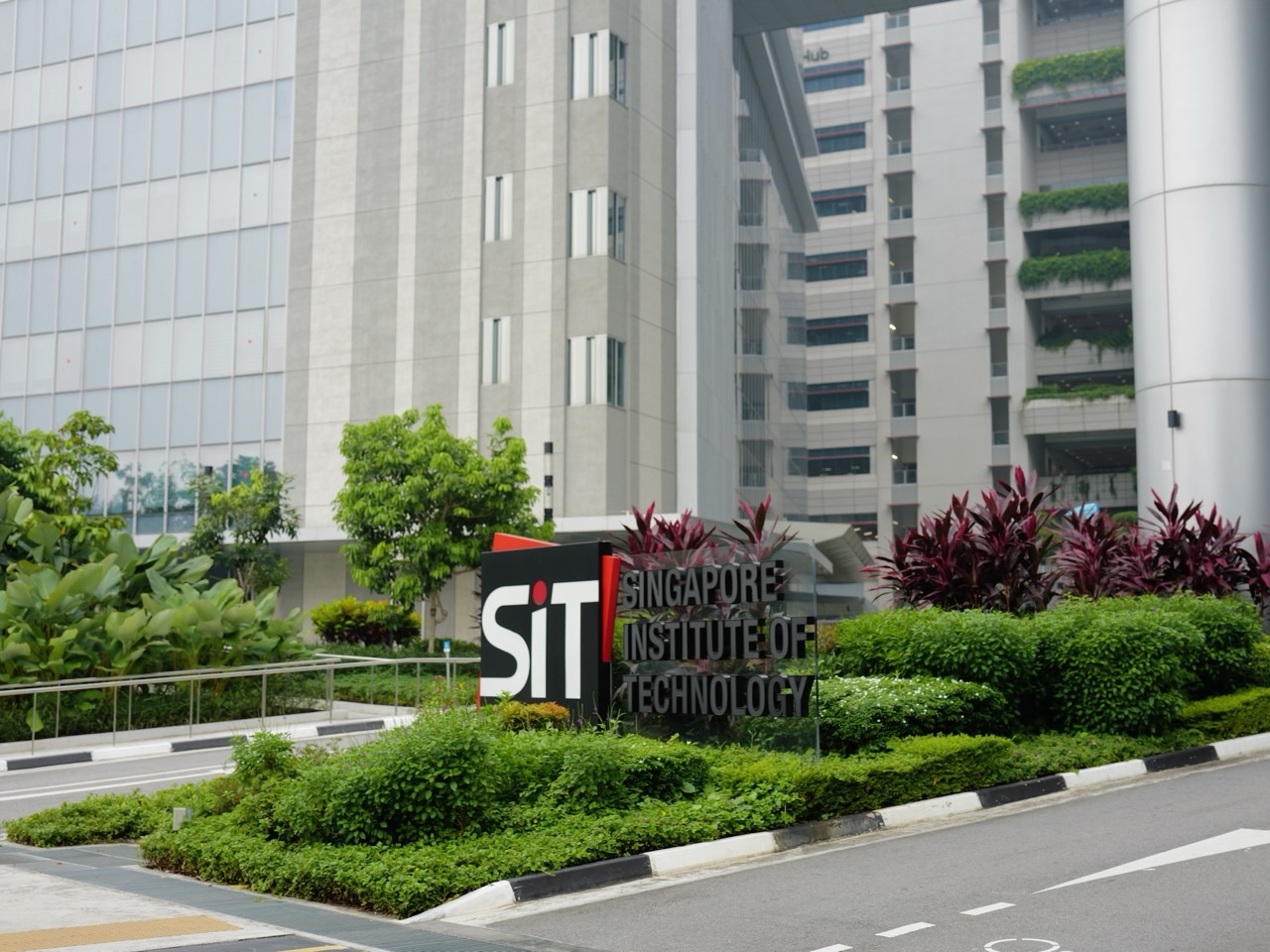
Punggol Events 2027 includes an officially bookable professional programme for people who want to improve how organisations actually work. Singapore Institute of Technology’s Operation Excellence and Process Improvement micro-credential is listed for 4 January–11 April 2027, in a 3+ month blended format associated with SIT Punggol Campus, 1 Punggol Coast Road. The current Course Runs section shows Apply Now and a specific closing deadline of 23 November 2026 at 11.59pm. This programme is built for working adults in engineering, manufacturing, quality and operations. Official SIT programme.
Did you know? This is an 18-credit Specialist Certificate, not a one-day motivational seminar. Four modules cover Process Management, Total Quality Management, Lean Six Sigma, and Supply and Inventory Management. Learners study self-paced material, attend online integrated sessions and complete in-person assessments in weeks 6, 8, 11 and 13, with precise assessment times to be confirmed. A student should expect real project and written work, not simply buy a certificate by paying the course fee.
SIT publishes a S$10,006.20 full fee, with conditional after-funding figures of S$3,001.86 and S$1,165.86 for eligible categories, plus a S$54.50 one-time non-refundable matriculation fee. Individual eligibility and a confirmed acceptance remain under the university’s control. This guide, checked 30 October 2026, explains the real deadline, fees, four academic modules, how Lean and process improvement differ from vague productivity advice and what Punggol residents should consider before enrolment.
Official 2027 intake, 18 credits, funding and application deadline
- Course: Operation Excellence and Process Improvement
- Institution: Singapore Institute of Technology, SITLEARN
- Current 2027 run: 4 January–11 April 2027
- Duration: Three-plus months, blended learning
- Training campus: SIT Punggol Campus, 1 Punggol Coast Road, Singapore 828608
- Confirmed advertised application deadline: 23 November 2026, 23:59
- Live provider entry: Course Runs lists the 2027 run and an Apply Now link
- Module 1: ENG3102C Process Management, three credits
- Module 2: ENG3103C Total Quality Management, three credits
- Module 3: ENG3104C Lean Six Sigma, six credits
- Module 4: ENG3105C Supply and Inventory Management, six credits
- Total: Eighteen credits
- Learning format: Self-paced weeks 1–12, integrated Zoom sessions weeks 1–12
- In-person assessment weeks: 6, 8, 11 and 13, actual times to be confirmed
- Assessment: Short answers, technical reports, assignments, projects and presentations
- Attainment rule: At least 75% attendance and passing every credit-bearing assessment
- Intended learners: Factory/plant managers, production and manufacturing engineers, quality engineers and process professionals
- Expected background: Analytical problem-solving, basic statistics and written communication
- Published full fee: S$10,006.20
- Conditional after-funding fee: S$3,001.86 for stated 70% categories
- Conditional enhanced-funded fee: S$1,165.86
- Separate matriculation payment: S$54.50, non-refundable
- Degree options: Specified SIT engineering and integrated studies CSM paths, subject to admission
- Primary university listing: SIT Operational Excellence
The 50-second answer for Punggol professionals
SIT’s current official run is 4 January–11 April 2027, at a Punggol-based university with substantial online learning and scheduled in-person assessments. Applications close 23 November 2026 at 11.59pm, subject to availability and actual acceptance. The four modules provide eighteen academic credits and address process management, quality, Lean Six Sigma and inventory. The published full fee is S$10,006.20, with conditional funded rates and a separate matriculation charge. This is a programme for adults improving real work systems, not an open public factory tour or a guarantee of a promotion. The important first decisions are admission, financial eligibility and a realistic study schedule.
Why the deadline is more important than the January start
A person who first searches for January career courses on New Year’s Day could be too late for this intake. SIT’s 23 November 2026 closing date falls over a month before the first scheduled day. Applicants may need employer sponsorship, proof of previous education or other administrative records. The Apply Now listing confirms a live application route in the current university schedule, but not that any individual has secured a place. The sensible approach is to use the official process early and wait for written acceptance before organising non-refundable work or travel arrangements.
What operational excellence means in plain English
Operational excellence is about designing and managing work so that an organisation delivers reliable value while learning from errors and changing needs. It is not simply telling workers to move faster. A process can be slow because tasks are duplicated, information is missing, decisions are unclear or equipment and people are not coordinated. Improving one step without understanding its effects on another may merely shift the bottleneck. SIT’s module structure is valuable because it looks at process, quality, improvement methods and supply together. Better performance requires evidence and organisational follow-through.
Why a process map is useful
A process map shows how a request, item or task moves from beginning to appropriate completion. It can identify decision points, queues and handoffs between teams. A manager might discover that a simple customer request is copied into three systems before anyone responds. The right improvement could be removing duplication rather than buying another expensive platform. This is a fictional example, not a SIT project result or a reported Punggol business problem. Mapping makes assumptions visible so a team can discuss what should change and who owns the result.
Start with the actual customer or user
An organisation can measure many internal activities without knowing whether customers are being served well. The programme emphasises value and meeting expectations. That requires defining what a correct, timely and useful result looks like from the recipient’s perspective. For a service organisation, the important outcome may be an accurately resolved enquiry rather than the number of emails created. For a factory, quality and reliability may matter alongside output. A good learner asks which problem is real and how evidence will show that the proposed change improved it.
Why efficiency is not just staff working harder
A team may already be working intensely but face confusing rules, repeated rework or information that arrives late. Ordering everyone to work faster may increase error rates rather than solve the underlying problem. Operational excellence examines the work system, including technology, people, materials and responsibilities. Some inefficiency comes from a design that can be improved; some constraints reflect necessary safeguards. The proper objective is sustainable value, not an arbitrarily reduced headcount or a claim that every useful human check is waste.
ENG3102C Process Management
The first module carries three credits and develops ways to analyse business processes and the way people and technology interact. Learners may examine how work is initiated, managed and completed, and how process owners use evidence to identify constraints. The exact class assignments belong to SIT, but the general reasoning can be illustrated by following one customer request through multiple departments. A process that looks efficient within each department can still be slow across the full journey. The module helps learners ask where accountability and true completion occur.
What is a bottleneck?
A bottleneck is a step or constraint that limits the throughput of a wider process. Speeding up tasks before that point may merely create a larger queue. For example, suppose a fictional organisation can receive 100 applications a day but its qualified review team can correctly handle only 60. Improving the speed of data entry alone would not increase properly completed applications beyond the review capacity. These figures are made up to explain the principle. The right improvement requires understanding the actual task, controls, demand and resources rather than guessing from a chart.
Why queues and waiting time matter
A customer may experience a process as slow even when each worker spends only a few minutes on the task, because the request waits in queues between steps. Useful measurement distinguishes time being actively worked from time spent waiting. A process review can identify opportunities for better scheduling, clearer information or appropriate parallel work. It should also recognise why some reviews are necessary. Removing a safeguard just to improve a speed metric could reduce actual quality and increase risk. Performance should be measured end to end, not as isolated activity counts.
ENG3103C Total Quality Management
The second three-credit module addresses Total Quality Management, commonly abbreviated TQM. This approach considers quality across the organisation rather than leaving it to a final inspection team. Reliable outcomes can depend on design, supplier quality, clear instructions, feedback and consistent management. A defect discovered at the end may have begun much earlier. Learners should ask how a system could prevent or identify problems sooner. The programme does not promise that every graduate will implement a formal company-wide TQM standard immediately; the skill is evidence-based quality thinking.
What is the difference between quality and perfection?
Quality means meeting valid requirements and producing results fit for the intended use. It does not imply that every product must be the most expensive or elaborate possible. A simple service can be high quality if it meets its purpose reliably and treats customers appropriately. An overengineered design may cost more without adding relevant value. TQM encourages organisations to understand requirements, measure performance and improve. A useful class discussion should clarify what an error or defect means in the actual process before claiming to reduce it.
The cost of rework
Rework occurs when a task must be corrected or repeated because the original result was unsuitable. It can consume money, staff capacity and customer patience. Imagine a fictional team processing 500 forms, with 40 returned for missing details. At ten minutes to correct each, the extra work is about 6 hours and 40 minutes. That is an invented example, not a SIT case-study outcome. The deeper lesson is to identify why information was missing and whether an earlier instruction or form design could prevent repeated errors without creating unnecessary burdens.
Why complaints can be useful evidence
A complaint is not proof that every part of a service is poor, but repeated themes can reveal a process that needs attention. Organisations should distinguish isolated experiences from systematic patterns and look for relevant evidence. Useful improvement includes asking customers what went wrong and checking internal records rather than simply sending an apologetic template. A strong quality system creates a route for issues to be reviewed and addressed. The aim is trust supported by better performance, not a dashboard that reports fewer complaints because people have stopped reporting them.
ENG3104C Lean Six Sigma
The third module carries six credits and combines ideas associated with Lean and Six Sigma. Lean often focuses on improving flow and removing activities that do not add relevant value. Six Sigma emphasises data-driven understanding and reduction of variation or defects under appropriate methods. They can reinforce each other, but their practical application needs care. A student should not identify every pause, review or human interaction as waste. Some tasks are necessary for safety, fairness or quality. A successful project defines the objective before choosing improvement tools.
Lean is not permission to remove important safeguards
A process may include checks that appear to slow work but prevent consequential errors. Removing such a control can make one metric look better while worsening the organisation’s actual results. Lean improvement should distinguish genuine rework, duplication and avoidable waiting from steps that serve a legitimate purpose. For a healthcare or financial service, appropriate reviews may be essential even when automation is possible. The university’s broader engineering and quality context makes it important to examine the whole system. Efficiency without accuracy and accountability is not operational excellence.
What does variation mean?
Two processes might produce the same average outcome but differ greatly in reliability. If a service usually takes ten minutes but occasionally takes two days, the average may not describe the experience of affected customers. Six Sigma-style reasoning encourages learners to examine distributions, variation and possible sources of inconsistent performance. A manager should know what is measured and whether the sample is representative. One impressive monthly average can hide a substantial number of poor outcomes. Good process improvement recognises such differences and tests whether changes are sustained.
A fictional before-and-after comparison
Imagine a team whose average completion time falls from five days to three after a process redesign. That looks promising, but the team should also check whether accuracy, workload and exceptional cases changed. If important cases now wait longer or quality deteriorates, the improvement may be less successful than the average suggests. These are illustrative numbers rather than actual course findings. A valid project records the starting conditions, intervention and results, and considers other explanations. One measurement taken immediately after a change does not establish durable improvement.
Why root-cause analysis needs evidence
A visible error may result from several contributing circumstances. For example, staff may enter an incorrect code because the instructions are ambiguous, two fields look alike or a source document is outdated. Telling the worker to pay more attention may not resolve those conditions. A good improvement team investigates what happened and tests possible explanations. It should avoid jumping to a favourite solution before evidence is available. The programme’s analytical background supports asking why a process produces its outcomes, not simply assigning blame after an incident.
How to make improvement sustainable
A project can briefly reduce delays while special attention is focused on it, only for the old problem to return afterward. Sustainable improvement needs clear ownership, appropriate procedures, measurement and a way to respond when performance drifts. Changes should fit the organisation’s real work rather than depend on one enthusiastic individual. A qualified manager can ask which indicators will be monitored and how the team will know when further action is required. The best result is a process that remains reliable after the presentation ends.
ENG3105C Supply and Inventory Management
The fourth module carries six credits and examines the balance between satisfying demand and avoiding unnecessary inventory cost or risk. Too little stock can disrupt service, while too much can tie up cash and space. The correct balance depends on demand, supply reliability, lead time and the nature of the goods. This is more than counting boxes. The programme describes managing inventory risk at the lowest feasible cost while meeting required service levels. Learners need to consider uncertainty instead of assuming there is one perfect stock quantity for every business.
Why stockouts and overstocks both matter
Imagine a fictional school-supply business that orders too few essential notebooks before a busy period. Customers may be disappointed and staff may need emergency replenishment. If it instead orders far too many items that become obsolete, the business may carry unnecessary costs. The useful management question is how to forecast demand reasonably and plan an appropriate response when predictions are wrong. The example does not endorse a particular retailer or specify a real price. A sound process connects customer needs, supply constraints and financial discipline.
Lead time is a practical planning variable
Lead time is the time between initiating a relevant order or process and obtaining the result. A supplier that normally delivers in a week may occasionally take longer. If a business ignores that variation, its planned stock could be insufficient. Supply and Inventory Management asks learners to make such relationships explicit. A manager should not rely on a single historical average without considering demand, disruption and service commitments. The correct methods depend on the product and actual data, which the course introduces within professional context.
What is inventory risk?
Inventory can create several kinds of exposure: holding costs, spoilage, obsolescence, shortage or dependence on a particular supplier. The most important risks differ by industry. A food business cannot treat expiry in the same way as a machinery manufacturer treats spare parts, and a service organisation may manage digital or staffing capacity rather than physical goods. A good learner asks what the stock represents, which customer commitment it supports and what could go wrong. Generic numerical rules from unrelated industries should not be copied uncritically.
What the four modules have in common
Process Management maps the work, Total Quality Management considers reliable outcomes, Lean Six Sigma provides structured improvement methods, and Supply and Inventory Management examines flow and material availability. Together they form a broader view of operational performance. Improving one part of the organisation while ignoring another can produce unintended effects. For example, reducing inventory might look efficient until frequent shortages damage service. The programme’s 18-credit structure encourages learners to consider evidence and trade-offs instead of applying one fashionable tool to every problem.
The actual blended timetable
The published schedule identifies self-directed recorded learning in weeks 1–12 and integrated Zoom sessions in weeks 1–12. In-person assessments are listed in weeks 6, 8, 11 and 13, with exact times to be confirmed. That is not a daily full-time campus programme, but it also is not entirely free of scheduled commitments. A working adult may need leave or shift changes for assessments and sufficient weekly time to complete online tasks. Before enrolling, obtain the current detailed timetable and understand the consequences of missing a required assessment.
How the January–April period affects family planning
The term crosses the start of Singapore’s academic year and extends through the first quarter of 2027. A parent or caregiver may need to coordinate evening study, online integrated sessions and the in-person dates. The university’s 3+ month duration is a guide, not a promise that every learner will need identical weekly hours. Someone unfamiliar with statistics or technical writing could need more preparation. The proper decision accounts for household responsibilities as well as the published course fee. Studying at a university located in Punggol does not automatically eliminate travel or childcare needs.
Why assessment is more than attending videos
SIT’s assessment plan includes written work, technical reports, projects, assignments and presentations. A Specialist Certificate requires at least 75% attendance and passing all credit-bearing assessments. Completing the videos without demonstrating competence may be insufficient. A student should ask what evidence is expected, whether projects can use authorised workplace examples and how in-person evaluation is organised. A certificate reflects learning under the university’s rules, not automatic mastery of every industry or permission to certify a company’s entire management system.
What does competency-based education mean?
Competency-based learning places emphasis on demonstrating capabilities rather than simply spending time in a classroom. The course aims to connect relevant tools to job functions and workplace problems. A learner may be asked to explain a process, analyse a quality issue or defend an improvement proposal. The exact tasks belong to SIT’s assessments. The general idea is sound: a person should be able to apply and communicate what they have learned. A qualification is useful when it represents demonstrated work rather than attendance alone.
The full fee and funding categories
SIT’s individual page lists S$10,006.20 as the full course amount. It gives S$3,001.86 for the specified eligible 70%-funding categories and S$1,165.86 for its enhanced category. These figures are conditional, not personal subsidy approvals. Citizenship, residency, age and current scheme rules may determine the actual invoice. A Punggol home address does not create a special local rate. Ask the university to confirm the individual fee, how SkillsFuture Credit can be applied and which payment conditions govern withdrawal or failure.
Do not omit the S$54.50 matriculation fee
The official page separately states a one-time non-refundable S$54.50 matriculation charge. Adding it to the published S$3,001.86 conditional category gives a planning figure of S$3,056.36. Adding it to the S$1,165.86 category gives S$1,220.36. These are arithmetic examples, not final invoices or proof that a person qualifies. A learner might also incur transport and time-away-from-work costs. A good financial plan accounts for all known payments while keeping unapproved subsidies separate from cash actually available.
The training allowance is not a course-fee discount
The university describes a potential S$300 per month part-time Mid-Career Training Allowance for eligible Singapore citizens aged forty and above, subject to employment-history and SkillsFuture Singapore approval. This is a separate scheme, not an automatic reduction of the course invoice for every enrollee. A person should not assume the allowance has been granted or will necessarily arrive on a particular household budget date. Check the actual eligibility and attendance requirements. The published fee table alone is not evidence of entitlement to every related subsidy or allowance.
What happens if a student withdraws or fails?
SIT warns that a participant who fails or drops out without a valid reason may be required to repay course subsidies. This makes the initial readiness and schedule decision important. A discounted fee does not eliminate the obligation to learn and complete assessments under the programme rules. Someone facing uncertain employment or caregiving arrangements should clarify withdrawal and support conditions before enrolment. It is better to defer an unsuitable intake than assume training can be abandoned without any financial consequence. The university, not this article, determines how its specific conditions apply.
Can the 18 credits help toward a degree?
The programme is part of SIT’s Competency-based Stackable Micro-credential pathway, with possible progression toward specified engineering degrees and Technology and Management routes under their current admission conditions. Completing the eighteen-credit Specialist Certificate is not equivalent to receiving a full Bachelor of Engineering degree. Additional credit, degree admission and qualification rules remain. The learner can choose whether to stack eligible study later or use the certificate as a standalone professional outcome. Verify the intended degree route before assuming any automatic conversion.
Who is best prepared for the programme?
SIT lists factory and plant managers, production engineers, manufacturing engineers, quality engineers and other process professionals. It assumes analytical problem-solving, basic statistical knowledge and sufficient communication and writing skills to complete technical exercises. A learner need not work in the same industry as every class example, but should have enough context to understand processes and evaluate improvement claims. A complete beginner in data analysis may need preparation. The course is not advertised as a general family workshop or an event for school-aged children.
Why management experience alone may not settle readiness
A person can be an effective team leader while unfamiliar with statistical measures or project documentation. The course’s Lean Six Sigma and assessment components may therefore create a learning curve. A prospective student should be honest about their background and ask which quantitative and writing abilities are expected. Conversely, an engineer with strong mathematical skills may still need practice understanding customers and leading cross-functional change. The programme’s breadth is a reason to assess fit, not a reason to claim it suits everyone identically.
A fictional Punggol small-business improvement
Consider a neighbourhood service provider receiving appointments through messages, calls and a booking form. Some requests are entered twice, causing mistakes and wasted time. An improvement project might first map the journey and measure where duplication occurs, then test an authorised simpler process. It should also protect personal information and preserve necessary checks. This example is fictional and not a claim about a named Punggol business or SIT assignment. The useful method is to define the problem and verify the result rather than immediately buy new software.
A fictional manufacturing improvement
Imagine a company whose parts arrive late because purchasing and production use different demand forecasts. The team may improve coordination by clarifying which data are authoritative and when updates are communicated. It should evaluate whether inventory shortages, excess stock and production delays actually decline afterward. A single impressive chart would not establish the cause of improvement. This hypothetical case shows how Process Management and Supply and Inventory Management can connect. Real industrial decisions require the organisation’s authorised data, safety controls and professional judgement.
Operational excellence versus AI automation
It is tempting to assume a company becomes excellent simply by introducing AI agents into every workflow. But automating a poorly designed process can increase the volume of errors or make exceptions harder to resolve. Process improvement should identify what work is valuable, who owns decisions and how quality is assessed before selecting technology. SIT’s Agentic AI for Operations course is a separate two-day programme on human–agent workflow design. This longer Operational Excellence credential teaches broad process, quality, Lean and inventory foundations.
Comparison with SIT Machine Learning
The SIT Machine Learning January–April 2027 guide covers three six-credit modules on supervised learning, unsupervised learning and recommendation systems. Operational Excellence shares the January–April dates and November application deadline, but focuses on management systems and process quality rather than building Python models. The fees also differ. A resident should not assume that enrolment in one Specialist Certificate automatically includes the other, or that the same degree-stacking route applies identically to every learner.
Comparison with SIT’s safety modules
Several Punggol Events guides describe Process Safety Operations modules such as Process Safety Concepts. Those investigate high-consequence industrial hazards and appropriate safeguards. Operational Excellence addresses broader process efficiency, quality and inventory concerns. Improvements in productivity must never be used as permission to remove necessary safety controls. Managers should see the disciplines as complementary rather than equate a shorter production cycle with a safer facility. Each academic programme has its own assessment and professional context.
The SIT Punggol location and attendance
The current 2027 Course Runs entry explicitly identifies SIT Punggol Campus, 1 Punggol Coast Road, Singapore 828608 as the blended programme location. That is different from One Punggol Community Club at 1 Punggol Drive. Learners should obtain the exact reporting room and assessment dates once accepted, because a campus address does not guarantee a particular building or free parking. Since some assessment activities are in person, transport should be included in planning even when most teaching is online. The campus’s location can be convenient without eliminating the programme’s academic commitment.
A practical applicant checklist
Open the official SIT Operational Excellence course, verify the 23 November 2026 23:59 deadline and use the university’s authorised application route. Check your analytical and statistical preparation, obtain your individual funding quotation including matriculation, and plan for in-person assessment weeks 6, 8, 11 and 13. If employer sponsorship is intended, clarify approval before payment. Ask what projects and written work are expected. Choose this programme because its process, quality and inventory competencies match real professional goals, not simply because it is discounted or located in Punggol.
Frequently asked questions
When? 4 January–11 April 2027. Apply by? 23 November 2026 at 11.59pm. Venue? Blended, with SIT Punggol Campus for relevant in-person activities. Credits? Eighteen across four modules. Content? Process Management, TQM, Lean Six Sigma, Supply and Inventory Management. Full fee? S$10,006.20 plus S$54.50 matriculation. After-funding examples? Conditional S$3,001.86 and S$1,165.86. Assessment? Written work, projects, presentations and in-person assessments in specified weeks. Does the certificate guarantee a job or degree? No; further employment and degree requirements apply.
Sources and related Punggol coverage
Primary university publication: SIT Operation Excellence and Process Improvement, supporting the 2027 active course run, deadline, modules, prices, blended format, assessments and academic pathway. Wider SIT framework: CSM Pathway. Local comparisons: Machine Learning Specialist Certificate, Agentic AI for Operations and Punggol Events. Verified 30 October 2026. SIT controls current admission, individual funding and any subsequent changes.
Final thought: improvement should make work better, not merely faster
The SIT 4 January–11 April 2027 Operational Excellence intake offers a substantial Punggol-based route to study process management, quality, Lean Six Sigma and supply flow in one 18-credit qualification. Its 23 November 2026 application deadline matters, as do the actual fee, matriculation charge and in-person assessment obligations. A person should choose the programme when they can commit to the work and apply the learning responsibly. Real improvement makes customers’ outcomes more reliable and employees’ work more manageable, instead of optimising one attractive metric while shifting problems elsewhere.


