
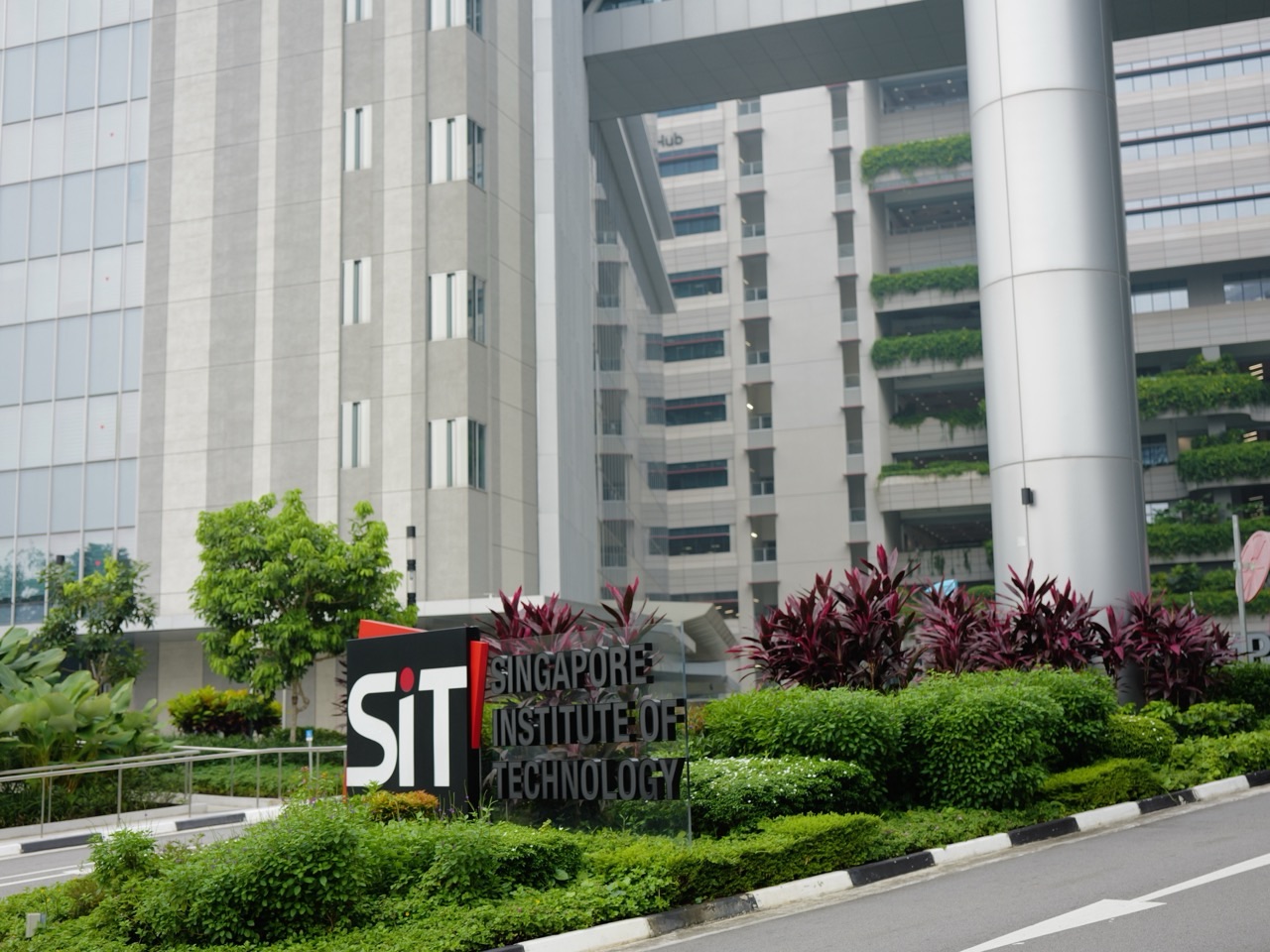
Punggol’s 2027 events pipeline includes a technical training programme that touches the everyday systems behind industry and buildings: the pumps that move water, the fans that move air and the electrical motors that make equipment work. Singapore Institute of Technology’s SITLEARN has listed Pumps, Fans and Motor-Driven Systems for 15–19 February 2027, taught in person at SIT Punggol Campus, 1 Punggol Coast Road, Singapore 828608.
The date residents should not miss is 25 January 2027 at 11.59pm, the application deadline displayed for this specific February run. The course is listed as five days, with the teaching-plan table giving 9am–6pm as the standard daily window. The full advertised fee is S$5,450 including GST. SIT publishes conditional after-funding amounts of S$1,635 for specified eligible 70% categories and S$635 for its enhanced-funding category.
Did you know? This is not simply a course about motors on paper. SIT says it includes hands-on workshops at its Energy Efficiency Technology Centre laboratory, where learners investigate the performance of pump and fan systems using appropriate training equipment and measurements. The syllabus covers variable-frequency drives, system losses, cavitation, instrument readings and energy audits. That is training for technically prepared adults, not permission for residents to adjust high-power equipment at home or enter a working laboratory without authorisation.
This Punggol Events 2027 article explains the verified course arrangements, the engineering ideas in everyday language, the conditional fees, who should apply and why measuring actual performance matters when making environmental and financial claims. The official source is SITLEARN Pumps, Fans and Motor-Driven Systems. Information was checked on 27 October 2026.
The official February 2027 programme at a glance
- Programme: Pumps, Fans and Motor-Driven Systems
- Provider: Singapore Institute of Technology, SITLEARN
- Published February run: Monday 15–Friday 19 February 2027
- Duration: Five advertised training days
- Daily time in detailed syllabus: 9am–6pm
- Venue: SIT Punggol Campus, 1 Punggol Coast Road, Singapore 828608
- Application deadline: 25 January 2027, 11.59pm
- Full fee: S$5,450 including GST
- Eligible 70% published payable fee: S$1,635
- Eligible enhanced-funding published payable fee: S$635
- Intended learners: Energy and sustainability auditors, facility and plant managers, operations and maintenance engineers, technical engineers, SCEM professionals and related specialists
- Prerequisite: Engineering bachelor’s degree, or engineering diploma with two years of relevant experience
- Practical component: Pump and fan workshops at SIT’s Energy Efficiency Technology Centre
- Assessment: Project
- Certificate of Attainment: At least 75% attendance and passing the credit-bearing assessment
- Official record: SIT’s course details and February run
This is an announced professional course, not a free community workshop, a public tour of industrial plant rooms or an automatic authorisation to operate pressure or electrical equipment.
Why this belongs in a Punggol 2027 article series
Residents often hear that Punggol will become a place for advanced technology, cleaner systems and new jobs. Those ambitions need people who understand the machinery and systems behind the slogans.
A building may have an intelligent energy dashboard, but meaningful improvement depends on whether engineers understand what the measurements represent. A pump that consumes electricity without meeting the required flow cannot be judged by a colourful screen alone.
SIT Punggol Campus provides a local venue for technical learning that connects academic knowledge with applied problems. The course’s existence is evidence that the university has scheduled specialist education in February 2027. It is not evidence that a specific Punggol employer is recruiting everyone who attends.
A good resident information guide separates verified training dates and conditions from wider predictions about the town’s economy.
What is a pump?
A pump is equipment used to move fluids through a system. Pumps appear in many types of industrial and building operations, from water supply and process circulation to particular cooling arrangements.
The energy needed depends on the equipment, the required flow and pressure, the system’s configuration and operating conditions. There is no universal statement that every larger pump is more efficient or that reducing pump speed is always safe.
Engineering analysis asks what service the pump must provide and how well it provides it under legitimate operating conditions.
The SIT course introduces pump behaviour and performance concepts as part of a professional programme. It is not a do-it-yourself guide to modifying water or pressure systems in an HDB building.
What is a fan in engineering terms?
A fan moves air or another gas through a designed system. It may serve ventilation, air handling, cooling, process equipment or other applications.
The useful performance is not simply whether the blades are spinning. An engineer cares about air movement, pressure, energy use, system resistance and the operating point.
A system with poorly chosen components can consume unnecessary energy or fail to deliver the intended service. But the correct remedy depends on measurement and the requirements of the actual installation.
A responsible professional should not remove protective equipment or alter a building’s ventilation controls based on a simplified internet explanation.
Why electric motors matter
Motors convert electrical input into mechanical motion. They are found across a wide range of systems, from industrial equipment to building services.
SIT’s published Day 1 covers motor types, characteristics, selection criteria, starting methods, load profiles, duty cycles and relevant mechanical and electrical considerations.
That is important because a motor is not selected only by the largest number on its label. It must be appropriate for what it drives, how frequently it operates and the conditions it encounters.
Good selection and maintenance require relevant engineering knowledge. A course certificate can strengthen professional learning, but it does not replace workplace authorisation or electrical-safety requirements.
Why the entire system matters more than one component
Imagine a perfectly functioning pump connected to piping with excessive resistance. The whole installation may perform poorly even if the pump itself is not defective.
A similar principle applies to a fan connected to ducts and fittings. The performance depends on how the elements interact.
SIT specifically teaches the interaction between the system curve and the pump or fan curve, alongside system losses. These ideas help engineers evaluate the installation as a whole rather than blaming whichever piece of equipment is most visible.
A sustainable improvement might involve design, controls or maintenance. But the right choice cannot be identified from a generic rule without reliable site-specific evidence.
What are system losses?
When fluid or air moves through an installation, components and flow conditions can create resistance and energy losses.
The course describes major and minor losses in piping and duct systems. It also introduces measurement and verification so that engineers can assess whether a proposed change improved performance.
A manager may be tempted to change a component immediately after reading a recommendation. A more responsible approach starts by documenting what is actually happening and which operating limits must be respected.
This is the difference between a data-supported engineering decision and an attractive guess.
A simple energy-use example
Suppose a fictional motor consumes an average of 12 kW while operating for 200 hours in one month. The electrical energy under those simplified assumptions is 2,400 kWh.
Now imagine that a properly engineered, approved improvement reduces average power to 10 kW while the system still delivers a comparable legitimate service for the same hours. The resulting energy use would be 2,000 kWh, a difference of 400 kWh.
Those figures are invented to illustrate multiplication of power by time. They are not measurements from SIT’s laboratory or any Punggol building.
The critical condition is that the useful service and operating circumstances remain comparable. Reducing equipment output below what the building needs does not automatically count as a successful efficiency improvement.
The price of electricity is only one variable
An energy-saving project can be attractive when it reduces cost, but financial analysis needs more than an assumed tariff multiplied by a kWh number.
Equipment purchases, maintenance, reliability, downtime, installation and staff training may all matter. Electricity prices and actual operating hours can change.
A professional audit should state the assumptions, provide measured evidence where possible and estimate how uncertainty affects the result.
The SIT course includes basic energy audits and measurement-and-verification principles, making it relevant to technical professionals who must justify improvement proposals to management.
What is a variable-frequency drive?
A variable-frequency drive, or VFD, is equipment used to control the operation of suitable electrical motors. Its use can be relevant to energy efficiency in certain pump and fan applications.
But the presence of a VFD does not guarantee savings for every installation, and an electrical system should never be reconfigured by unqualified people.
SIT’s Day 2 syllabus covers drive operation, compatibility, power quality, harmonics and energy-saving opportunities. It emphasises the need to consider how the drive interacts with the motor and system.
A professional learner should understand that a change in control must be checked against safety, equipment limits, required output and the actual measured result.
Control method versus real performance
An equipment brochure may claim that variable-speed operation saves energy. That claim may be true in appropriate circumstances, but actual benefits depend on how the system is used.
One plant may have a wide range of operating demand; another may run near a constant required load. Their opportunities differ.
A meaningful comparison uses suitable measurements and a clear basis for judging useful output. Advertising claims are not a substitute for engineering evaluation.
The course’s practical comparisons are intended to help learners understand these differences under controlled laboratory conditions.
Why power quality appears in the syllabus
Power quality concerns characteristics of the electrical supply and the way connected equipment operates. Disturbances can affect reliability and may be relevant when evaluating motors and drives.
SIT includes power quality, harmonics and mitigation among its Day 2 topics. That does not mean attendees receive unrestricted permission to work on live electrical installations.
Professional safety procedures and qualifications remain important. Measuring or changing an electrical system may require specific technical competence and authorisation.
The public takeaway is simple: an equipment change should not be judged only by energy savings while ignoring reliability and compatibility.
What are affinity laws?
The course refers to affinity laws used to understand relationships in certain pump and fan applications. They can help engineers reason about how operating conditions change with speed or other relevant parameters under appropriate assumptions.
A classroom formula is not enough to settle the behaviour of every real plant. The model’s assumptions must be examined, and the result should be verified where needed.
This article does not give instructions for changing motor speeds or controlling plant equipment. Those are professional engineering tasks with safety implications.
For a working learner, the important outcome is understanding when a relationship is applicable and when an on-site measurement or more complex model is required.
Why cavitation matters
SIT’s practical pump workshop includes investigating cavitation. In broad terms, cavitation involves the formation and collapse of vapour bubbles under certain fluid conditions and can be associated with performance problems or equipment damage.
The phenomenon requires proper engineering understanding. It is not something a homeowner should attempt to create or reproduce experimentally.
In a controlled teaching laboratory, the point is to recognise performance issues and understand why the system is behaving as it does.
The course’s value comes from careful supervised measurements and diagnosis, not from encouraging unsafe trials in real infrastructure.
What is measurement and verification?
Measurement and verification, often abbreviated M&V, is the practice of establishing whether a change achieved an intended measurable outcome.
Consider an engineer who claims a new control system reduced energy consumption. A good assessment asks whether operating hours, weather, loads and the useful service delivered remained comparable.
Without an appropriate baseline, a decrease on a bill may be misleading. A factory might simply have operated fewer shifts during the comparison month.
SIT lists M&V planning among the course’s learning outcomes. For managers, this is a powerful reason to seek technical training: it helps turn a claim into evidence.
Day 1: motor and driven-system foundations
The official schedule starts with motors, performance characteristics, loading, starting methods and equipment selection.
This foundation matters because later efficiency analysis requires knowing the intended function of the equipment and its relevant constraints.
A learner should be prepared to consider mechanical, electrical and operational perspectives together. A device cannot be assessed responsibly if important constraints are ignored.
The teaching outline is professional in nature. The page does not promise the content is suitable for a school-age beginner.
Day 2: variable-speed control and efficiency
The next day examines VFD concepts, compatibility, power quality and opportunities to reduce waste.
A participant can expect to connect general engineering concepts with control choices, rather than assume that one technology automatically solves every operating problem.
The right questions include what the equipment must deliver, whether a proposed control is compatible and how performance would be verified.
SIT, not this local guide, defines the specific laboratory exercises and approved procedures.
Day 3: understanding system performance
Day 3 focuses on the relationship between system resistance and pump or fan behaviour, together with control strategies and measurement planning.
The course description includes comparing different control approaches at a conceptual and technical level. That can help learners recognise when a proposed improvement has overlooked the rest of the installation.
For a facility manager, the key is to ask for a complete system analysis instead of purchasing a new component solely because it is marketed as energy-efficient.
Sound decisions need both operational requirements and credible evidence of savings.
Day 4: the supervised pump workshop
SIT advertises practical laboratory work on pump and piping systems. Learners observe measurements of flow, pressure and performance, consider system losses and examine issues including cavitation.
The practical environment provides a way to connect theory with data. It does not confer permission for visitors or participants to change industrial settings outside the supervised exercise.
If a professional wishes to apply the knowledge at work, they must follow their organisation’s own permits, safety procedures, qualifications and operating requirements.
A careful engineer learns to identify the limits of an experiment as well as its findings.
Day 5: the supervised fan workshop
The final scheduled day uses fan-system training equipment to examine air movement, pressure and power consumption under different conditions.
Participants then apply evidence to a short energy audit report. This strengthens the connection between measurement, explanation and useful recommendations.
A good report should document what was observed, what assumptions were used and which further checks would be needed before changing a live installation.
The public course page promises a project assessment, not a guarantee that a student’s report can be used directly to certify real equipment.
What happens in the assessment?
SIT’s page lists Project as the assessment type. It says a Certificate of Attainment requires at least 75% attendance and passing the credit-bearing assessment.
This differs from a simple attendance-only community talk. Learners may need to organise evidence, interpret results and explain their work.
The precise project brief, submission deadline and marking approach are not provided in the public excerpt. Ask SIT for those details, particularly if you are employed full time.
A Certificate of Attainment is evidence of learning under the university’s stated rules, not an automatic professional engineering licence.
Who can apply?
The page specifies an engineering bachelor’s degree, or an engineering diploma with two years of relevant work experience.
That is an important prerequisite and should not be concealed by broad headlines about lifelong learning. A person without those qualifications should ask SIT directly rather than assume they will be accepted.
Intended learners include energy auditors, facility and plant managers, operations engineers, maintenance professionals and technical specialists dealing with pumps, fans and motors.
A resident seeking a first general introduction to sustainability may benefit more from a different programme than this specialist course.
The January 25 application deadline
The official February course-run panel lists Apply By: 25 January 2027, 23:59.
Do not confuse the January deadline with the February teaching dates. A professional who begins researching on the first day of the course may already have missed the advertised application window.
Funding assessment, employer approval and leave may need time. Submit only through the authorised university process and wait for acceptance before treating your attendance as guaranteed.
A dated event notice should make the deadline at least as visible as the course opening day.
How the funding table should be read
The full published fee is S$5,450 including GST. The eligible 70% categories show S$1,635 payable; the enhanced-funding category shows S$635.
The table includes criteria related to Singapore citizenship, age and certain eligible residency statuses. The enhanced category uses the phrase “Above 40”, so anybody at an age boundary should seek a definitive eligibility decision.
Do not assume that living near SIT creates a local resident discount. Nor should a person presume that every SkillsFuture credit can be combined with the displayed funding.
The relevant university process decides the actual payable amount for each approved participant.
A hypothetical engineering-training budget
Imagine a professional confirmed eligible for the S$1,635 payable category. They need to attend five weekdays and anticipate additional personal expenses for travel and meals.
If those extra expenses were hypothetically S$100, the planning outlay would be S$1,735. The S$100 is an invented example, not a course fee or a transport quotation.
Another learner may receive employer sponsorship, while a non-funded participant may face the full S$5,450 fee.
A responsible applicant budgets the confirmed amount and the actual time commitment rather than relying on a stranger’s funding example.
How does this compare with SIT’s January compressed-air course?
SIT has also scheduled Compressed Air, Boiler and Steam Systems Performance Optimisation for 18–22 January 2027.
Both programmes involve industrial energy efficiency and practical equipment, but their system types differ. The February programme focuses on pumps, fans and electrical motors; the January programme focuses on compressed air and boiler/steam systems.
An energy or facilities professional may benefit from one or both depending on actual job responsibilities. That does not make them a combined course or give a person automatic admission to both.
The best course is the one that addresses a real capability gap in the equipment the learner works with.
What about Punggol Digital District?
The broader district includes technology, building operations and sustainability systems. Knowledge about energy efficiency can be relevant to facilities management and engineering, but the course page does not claim that students will audit the actual district cooling installation or be given special access to private buildings.
SIT’s laboratory activities use university training equipment under controlled arrangements.
For local background, see Punggol Digital District cooling and infrastructure.
It is useful to connect classroom knowledge with visible town systems without inventing a particular site visit or employer partnership.
Does the course guarantee an energy-saving result?
No. A training programme can teach methods for evaluating and optimising systems, but real savings depend on the equipment, site conditions, proposed changes and implementation quality.
A learner who passes a course does not automatically know everything needed to modify an unfamiliar installation or approve an engineering project.
Workplace procedures, professional judgement and further verification remain essential.
A credible improvement claim identifies the measured baseline, the change made and the conditions under which the outcome was assessed.
Does the course guarantee employment?
No. SIT publishes professional training rather than a job-placement contract.
The subject matter may be relevant to energy management, facility operations, engineering maintenance and technical consultancy, but individual hiring depends on employers and required qualifications.
For wider context, Punggol green engineering and smart buildings careers provides background without promising a particular vacancy.
Career decisions should combine suitable learning with practical experience and evidence of competence.
What a Punggol resident should ask SIT
1. Is the 15–19 February 2027 intake still scheduled and accepting applications? 2. Does the 25 January 2027 deadline apply to my intended registration? 3. Do my qualifications meet the degree-or-diploma-and-experience prerequisite? 4. What will I pay after an individual funding assessment? 5. Which exact teaching room and laboratory will be used? 6. What safety instructions and equipment requirements apply to the practical workshops? 7. How much additional time is needed for the project assessment? 8. Is there any guidance for learners who have general engineering experience but limited experience with pumps or fans? 9. What happens if I must miss a training day or if SIT postpones the programme? 10. What certificate will be awarded under the published attendance and assessment conditions?
These questions are more useful than assuming the answer from a short course advertisement.
Frequently asked questions
When is the February 2027 course? 15–19 February 2027, five advertised days.
Where is the course conducted? In person at SIT Punggol Campus, 1 Punggol Coast Road.
When is the application deadline? 25 January 2027 at 11.59pm under the official course-run entry.
What is the full fee? S$5,450 including GST, before any applicable funding.
Who may pay S$635? Only an applicant confirmed to meet the relevant enhanced-funding conditions. The figure is not universally available.
Is engineering experience required? SIT specifies an engineering degree or engineering diploma plus two years of relevant experience.
Is there practical work? Yes. The syllabus describes supervised pump and fan workshops at SIT’s Energy Efficiency Technology Centre.
Is a certificate automatically granted? No. The Certificate of Attainment requires at least 75% attendance and passing the credit-bearing project assessment.
Can a secondary-school student enrol just to explore engineering? The programme is designed for technically prepared professionals and has stated qualifications; it should not be treated as a youth science taster.
Official references and verification
Primary course and February 2027 run: Singapore Institute of Technology — Pumps, Fans and Motor-Driven Systems. SIT establishes the 15–19 February dates, 25 January application deadline, Punggol Campus location, funding table, engineering prerequisites, five-day plan, practical work and assessment.
Related Punggol knowledge: SIT Energy Efficiency Training Facility, SIT January compressed-air, boiler and steam programme, Punggol green engineering careers and Punggol Events.
Verified 27 October 2026. SIT may update dates, fees, instructors and venue. No live seat, personal subsidy approval, laboratory access outside class or engineering certification authority is asserted.
Final thought: efficiency needs evidence, not slogans
Pumps, fans and motors are often invisible to the people who depend on them. They are still important to how buildings and industrial operations use electricity and deliver services.
SIT’s 15–19 February 2027 Punggol course is a concrete professional-learning opportunity for people who already have relevant engineering backgrounds. The useful next step is to verify the 25 January application deadline, establish your individual funding category and ask whether the syllabus addresses systems you actually work with.
A properly trained professional should be able to investigate performance using appropriate measurements and limitations. That is more valuable than assuming the newest technology always saves energy.


