
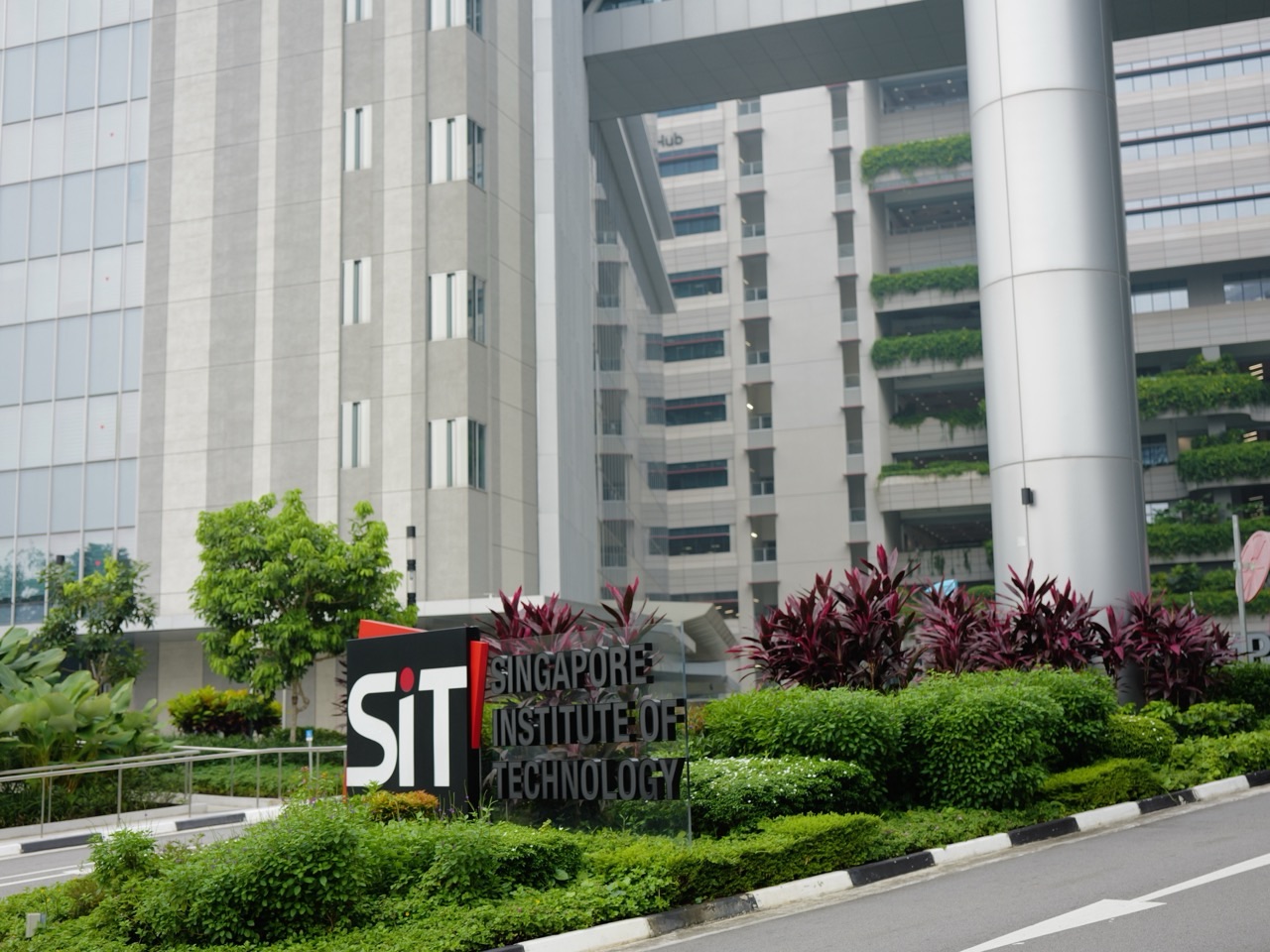
The next important Punggol event for working engineers is not a festival or an exhibition. It is a five-day technical course with a genuine 2027 date, a university venue and a registration deadline that falls in 2026. Singapore Institute of Technology (SIT) has advertised Compressed Air, Boiler and Steam Systems Performance Optimisation for 18–22 January 2027, with sessions scheduled 9am–6pm at SIT Punggol Campus, 1 Punggol Coast Road, Singapore 828608.
There is one deadline residents should write down before the teaching dates: 28 December 2026 at 11.59pm, the application cut-off displayed for the January run. SIT’s published fee is S$5,450 including GST before applicable funding. Its course table also shows conditional payable amounts of S$1,635 for eligible participants in the 70% categories and S$635 for the specified enhanced-funding category. Those are not automatic prices for everyone living in Punggol. Applicants must verify their actual funding and admission with SIT. <a href=”https://www.singaporetech.edu.sg/sitlearn/courses/engineering/compressed-air-boiler-steam-systems-performance-optimisation”>SIT’s official course record</a> is the authority.
Why cover an industrial systems course in a Punggol residents’ guide? Because sustainability and new careers are often discussed in abstract terms, while real industrial energy savings require people who can measure losses, understand equipment, interpret data and propose improvements that are both safe and economical. SIT specifically advertises hands-on training using real compressor, boiler and steam-trap systems at its Energy Efficiency Training Facility. The module’s advertised learning hours total 40, with a group project and presentation assessment.
This is a guide to the officially announced training opportunity, not permission to operate pressure equipment without the appropriate supervision, qualifications or workplace procedures. Details below were checked against SIT’s published course page on 27 October 2026.
Official details: what is actually announced?
- Course: Compressed Air, Boiler and Steam Systems Performance Optimisation
- Provider: Singapore Institute of Technology, through SITLEARN
- Dates: Monday 18 January through Friday 22 January 2027
- Hours: 9am–6pm in the advertised five-day timetable; total learning hours stated as 40
- Venue: SIT Punggol Campus, 1 Punggol Coast Road, Singapore 828608
- Application deadline: 28 December 2026, 11.59pm
- Full fee: S$5,450, including GST
- Eligible 70% funding category: S$1,635 payable, subject to approval and conditions
- Eligible enhanced-funding category: S$635 payable, subject to approval and conditions
- Intended learners: energy engineers and managers, facilities managers, compressor professionals, boiler and steam engineers and technicians
- Preparation expected: basic understanding of boiler, steam and compressed-air operating principles; technical background is beneficial
- Learning format: instructor-led training and practical work at SIT’s Energy Efficiency Training Facility
- Assessment: group project and presentation
- Certificate of Attainment: at least 75% attendance and passing the required assessment
- Primary reference: Official SIT course and January 2027 run
Published course runs are not a real-time vacancy guarantee. An advertised application button is not proof of a confirmed seat, and the organiser reserves the right to amend dates, fees, venues and instructors.
Why this belongs in Punggol Events 2027
Punggol is developing as a place where people can live, study and work near one another. The SIT Punggol Campus is therefore significant to residents beyond full-time university students. Short professional programmes also bring people from industry to the estate and create opportunities for residents contemplating an engineering career or a mid-career specialisation.
But it is important to distinguish this announced course from the wider story of Punggol Digital District. The event is delivered at SIT and has a particular five-day curriculum. It is not an official announcement that Punggol households will receive free boiler inspections, a neighbourhood energy audit or new public access to industrial equipment.
A useful local guide gives the exact dates and application cut-off, names the provider and explains who the programme is for. It also makes clear that the course is designed for working professionals who have some technical knowledge. Someone looking for a general public introduction to environmental protection may find another course more suitable.
For context about facilities rather than this booking, the existing SIT Energy Efficiency Training Facility guide describes the broader teaching-and-industry environment.
What are compressed-air systems?
Compressed air is a utility used in many industrial processes. An air compressor increases the pressure of air so it can be used by suitable equipment. Producing compressed air consumes electricity, so how the system is designed, maintained and operated matters to operating costs.
A plant may use compressed air for different equipment throughout a facility. It may have periods of heavy demand and periods of low demand. If the system is poorly matched to actual requirements, the electricity consumed may be larger than necessary for the useful work delivered.
That does not mean somebody should change pressure settings on the strength of a blog article. Incorrect changes can damage equipment or create serious hazards. Optimisation is a professional process requiring measurements, engineering judgement, suitable operating limits and organisational approval.
The SIT course addresses compressor types, controls, auxiliary equipment and efficiency. Its value lies in moving beyond vague advice to examine actual measured system performance.
What does a steam system do?
Industrial steam systems use thermal energy to supply useful heat or other process needs. Boilers, distribution equipment, condensate management and related components must operate together.
Losses may arise through poor maintenance, unsuitable operation, equipment faults or process design. But the correction of any particular issue depends on the real plant. Boilers and pressurised steam components pose substantial hazards; this article does not provide operating or repair instructions.
SIT’s published syllabus includes boiler and steam fundamentals, combustion concepts, heat transfer, steam distribution, water treatment and system maintenance considerations. It also covers assessment and optimisation methods.
A resident studying engineering can think of the broad objective as delivering the required industrial service while using resources responsibly and staying within safe operating conditions.
Why use an energy audit instead of guessing?
An energy audit asks what the system consumes, what service it delivers, what conditions affect it and what evidence supports a proposed improvement. A proposed change should have an estimate of cost and benefit, but the estimate must rest on reliable observations.
For example, a company may believe one machine is causing unexpectedly high electricity bills. That is a hypothesis, not yet a finding. An engineer must separate measured system data from impressions and establish whether the suspected equipment is actually responsible.
The SIT course includes measurement, verification, data collection, analysis and mini energy audits. Its practical workshops use instruments and controlled test systems so learners can connect ideas with observations.
This is a valuable skill because the visible electricity bill does not explain on its own which system, operation or change caused a particular cost.
What happens during the five scheduled days?
SIT publishes a structured teaching plan. The opening material addresses compressed-air physics, thermodynamics, compressor types, controls, maintenance and efficiency principles.
Later classroom sessions turn toward assessment methods and boiler/steam concepts. The course then moves into practical workshops with test equipment and energy-performance measurements, followed by group evaluation and presentation.
This arrangement means the programme is not simply five days of watching slides. SIT advertises an Energy Efficiency Training Facility with supervised activities and a final group report and presentation.
Applicants should not interpret that as permission to use the training rigs independently outside class. The provider controls the actual laboratory access, safety briefing and instructions. A workshop designed for qualified or prepared adult learners is not a family science demonstration.
Day 1: understanding the system before improving it
The first advertised topics include the physics and thermodynamics of compressed air, compressor types, controls and supporting equipment, together with cooling systems and maintenance practices.
Before recommending a change, a professional should know what the system was designed to do. A facility may require particular pressure, flow and reliability conditions. A theoretically efficient option may be unsuitable if it cannot meet operational needs.
Participants should arrive ready to think about both technical and economic performance. Efficiency cannot be assessed in isolation from safety and the useful industrial process being served.
For a resident considering a career in this field, this is an example of why foundational engineering concepts remain important even in an era of increasingly intelligent equipment.
Day 2 and Day 3: collect evidence and assess performance
The programme covers compressed-air energy assessment methodology, data collection, analysis and documentation. It also addresses steam properties, combustion, heat transfer, waste-heat recovery and boiler operation and maintenance topics.
On the third advertised day, the focus includes efficiency assessment and improvement methods for boiler and steam systems.
These are demanding subjects because a plant is not a single equation. What looks like an improvement in one subsystem may have unintended effects elsewhere. An engineer therefore needs to define a boundary, document assumptions and check the whole process.
A strong audit report should be understandable to a manager who is deciding whether to approve an improvement while still being defensible to technical reviewers.
Day 4: practical compressed-air measurement
SIT states that the fourth day includes practical testing of compressor equipment, analysis of pressure and flow under different conditions, comparing control approaches and examining energy performance.
These are supervised laboratory activities; the public course page does not grant visitors permission to enter the facility or operate its equipment.
The learning goal is to connect an engineering claim with measured evidence. If an adjustment is proposed, the learner should be able to describe what was observed and whether the data supports the change.
It is also a reminder that instruments are not magic. Measurements have units, uncertainties and limitations. Good engineering includes knowing what a reading does not prove.
Day 5: boiler and steam assessment, then presentation
SIT’s final-day outline discusses boiler efficiency, energy balance, steam system observations and energy-recovery concepts. It culminates in a group assessment that includes an audit report and presentation.
A report is useful only when its data, assumptions and recommendations are credible. An attractive chart can be misleading if conditions changed between measurements or if a relevant cost has been omitted.
The assessment gives participants a reason to practise explaining their findings rather than merely recognising technical terms.
A Certificate of Attainment depends on the published attendance and assessment conditions. Participation alone does not establish competence to approve or operate a particular industrial plant.
Why measurement and verification matter to a business
Suppose an improvement is proposed because engineers believe it could reduce electricity use. The business needs to know how expected performance will be tested after implementation.
A before-and-after comparison may appear straightforward, but equipment loads, operating hours, production volumes, weather and maintenance can change. Without suitable comparison conditions, an apparent reduction may not be caused by the modification.
Measurement and verification provide a structured way to evaluate that question. This does not require the public to learn every technical calculation; it requires decision-makers to recognise the difference between a prediction and an evidenced result.
SIT specifically lists measurement and verification among the programme’s learning outcomes, which makes the module relevant to people who sign off energy savings projects.
A simple, fictional electricity-cost illustration
Imagine a process uses 40,000 kWh of electricity in a comparable reference period and 36,000 kWh after an approved improvement. The numerical difference is 4,000 kWh, representing a 10% decrease in the energy measured for those periods.
If the illustrative effective price were S$0.25 per kWh, that energy difference would correspond to S$1,000 in simple energy charges. The tariff is hypothetical, not a current quotation from a Singapore electricity retailer.
The analysis is incomplete unless the process conditions are comparable. A drop caused by running the factory fewer hours would not be the same as an efficiency improvement. Actual energy charges can also include other components.
This example shows why a financial claim needs both a measured quantity and a clear explanation of its circumstances.
Fixed and variable costs in an efficiency project
An engineering upgrade may require an upfront investment, routine maintenance and training, while the benefit might vary with how much the facility operates.
Suppose a fictional upgrade costs S$24,000 and is expected to save S$8,000 per year under stable conditions. Its simple payback would be three years, ignoring financing, maintenance differences and other material factors.
If actual verified savings were only S$4,000 per year, simple payback would instead be six years. The same project could look much less compelling.
The purpose of professional training is not to guarantee such savings. It is to help people assess the engineering evidence and the economics before claims are made.
What is the difference between energy efficiency and sustainability?
Energy efficiency concerns the resources required to deliver a useful service. Sustainability is a wider question involving environmental, economic and sometimes social effects across a defined system and time.
A more efficient compressor can lower electricity consumption without automatically making an entire facility sustainable. Other inputs, waste, equipment life and operational impacts still matter.
Likewise, a training programme in energy systems should not be mistaken for a complete environmental-management qualification. SIT advertises a specific course with a clear technical scope.
For broader organisational planning, SIT Sustainability Roadmapping 2027 covers a separate March module whose emphasis is strategy and implementation.
Who should consider applying?
SIT names energy engineers and managers, facility managers, professionals involved in compressed-air systems and engineers or technicians responsible for boilers and steam systems.
The minimum-entry guidance asks for basic familiarity with relevant operating principles and says a technical or engineering background is best suited to the programme.
A student with no relevant experience should not assume this is a casual beginner activity simply because the university is located nearby. Equally, a technician with substantial practical experience may be a sensible applicant even if they do not use an engineer’s job title.
Discuss suitability with SITLEARN using your actual background and responsibilities rather than deciding solely from the course title.
Does the course qualify someone to inspect equipment professionally?
The official page promises training and a conditional Certificate of Attainment. It does not state that passing confers the statutory authority to certify boilers, operate regulated equipment unsupervised or sign off industrial compliance reports.
Those responsibilities may require separate qualifications, employer authorisation and compliance with applicable regulations.
A professional learner should therefore ask what the certificate evidences and which external requirements apply to their intended job. It is a mistake to treat any training certificate as an unrestricted licence.
The course can be useful without making claims beyond its scope.
Why the 28 December 2026 deadline deserves attention
The teaching begins on 18 January 2027, but the application cut-off is advertised as 28 December 2026 at 11.59pm.
Year-end leave and business closures can complicate employer sponsorship, training approvals or personal budgeting. Someone who first discovers the course in January may already have missed the normal published application window.
An applicant should check funding and entry requirements early enough to act. The published deadline also does not guarantee places remain available until the last minute; SIT controls admissions.
Submission is not acceptance. Confirm your seat and payment arrangements before making irreversible travel or leave commitments.
The S$5,450 full fee and who may pay less
SIT’s official fee table lists S$5,450 including GST. It also lists S$1,635 payable for certain eligible 70% funding categories and S$635 under its enhanced-subsidy category.
The table describes groups including Singapore citizens by age and eligible permanent residents or LTVP+ holders. In the enhanced category it uses the label “Above 40”. A learner at an age boundary should obtain an individual eligibility assessment rather than infer a rule from the shorthand heading.
A Punggol address does not create special subsidy eligibility. Neither does the fact that the course is at a Singapore university.
Ask SIT to confirm the actual payable fee, funding conditions, any necessary documents and how cancellations affect charges.
Does S$635 mean everyone over forty pays that amount?
No. It is a figure tied to the published eligibility and funding scheme, not an all-inclusive promotion available to any person who has reached a particular age.
There can also be conditions on the applicant, the course and funding approval. If you are self-funding or are applying through an employer, verify the correct process.
Do not assume the remaining amount can automatically be paid with every type of learning credit or that multiple subsidies are always stackable. The official funding and enrolment channels must confirm those details.
The sound decision is based on your own approved quotation rather than another attendee’s screenshot.
Course fee versus time away from work
Five weekdays from 9am to 6pm create a significant time commitment. A professional may require employer approval, task coverage or annual leave depending on their workplace arrangements.
A course can be subsidised while still costing the employer or learner time. Preparing for the group assessment may involve concentration that cannot be squeezed into an ordinary workday.
The actual attendance schedule totals 40 learning hours, according to SIT. Do not confuse the 9am–6pm daily window with a claim of 45 classroom learning hours without breaks.
A practical applicant should arrange work and family responsibilities before assuming the programme fits the week.
What does the assessment involve?
SIT describes a group project and presentation evaluating participants’ ability to interpret performance information and make recommendations.
A Certificate of Attainment requires attending at least 75% of the course and passing the assessment. People meeting the attendance threshold without passing may receive a Certificate of Participation under the published terms.
This is a nontrivial distinction when someone is taking the course for a career-development record. Paying the fee does not guarantee the stronger certificate.
Ask SIT what preparation, equipment and group-work expectations apply, and whether any assessment parts extend beyond the five-day teaching timetable.
What if you miss a training day?
The 75% threshold should not be converted into a personal permission to skip any chosen day. The exact attendance accounting and required assessment components remain subject to SIT’s course rules.
If you have a known work conflict or medical appointment, contact the organiser before applying. A missed practical workshop could affect learning even if a simple attendance percentage appears acceptable.
Do not assume you can replace hands-on laboratory work by reading the slides later. SIT controls any official makeup arrangement.
The best plan is to confirm that you can attend all five scheduled days and meet the assessment responsibilities.
What can a working adult bring to the classroom?
A useful participant arrives with questions from their work, but without disclosing confidential operational data. You may wish to ask how engineers compare performance under different loads or distinguish normal variation from evidence of inefficiency.
If an exercise would benefit from real facility data, seek employer approval and follow the course’s authorised data-handling instructions. Avoid sharing passwords, plant access credentials, proprietary maintenance records or sensitive layouts with external parties.
Use the provider’s sanctioned practical equipment rather than bringing private devices to connect to industrial systems.
Professional learning should reinforce safety and information discipline alongside technical skill.
Where exactly is the course in Punggol?
The official venue is SIT Punggol Campus, 1 Punggol Coast Road, Singapore 828608. The general course page does not identify a particular teaching room.
After enrolment, use SIT’s joining instructions to identify the building and laboratory. Do not navigate to One Punggol Community Club or Punggol 21 Community Club because their names contain the same neighbourhood term.
Students coming from outside the estate should allow time for MRT transfers and campus navigation. Residents nearby should still check their actual route.
The course fee does not promise reserved parking or a shuttle, so such requirements need separate confirmation.
What makes the practical facility useful?
SIT says learners work with live compressor, boiler and steam-trap systems and use an Energy Management System to collect and analyse data in real time.
There is a meaningful difference between reading a performance chart and collecting measurements under approved conditions with the right instrumentation and instruction.
The training facility can help learners ask better questions about what a measurement represents, why operating conditions matter and how recommendations should be documented.
But equipment access is controlled. The existence of a practical teaching facility does not make it a public open house or allow unsupervised handling by nonparticipants.
The connection to Punggol Digital District
The district’s emphasis on technology, work and sustainability makes this specialist programme a relevant local opportunity. It illustrates a different side of a digital economy: physical systems still require engineering expertise.
A facility manager may use digital monitoring tools, but sensors and dashboards do not replace understanding of the physical process. Engineers need to interpret readings, investigate anomalies and judge whether proposed changes are safe.
Related local reading includes Punggol Digital District cooling and the SIT Energy Efficiency Training Facility. These pages provide background, not a claim that the January course audits PDD infrastructure as part of its timetable.
A parent explaining this engineering field to a student
A student may ask why school Mathematics and Science matter outside examinations. Energy systems are an example of the answer: professionals work with quantities, units, measurements, uncertainty and cause-and-effect reasoning.
A learner can understand the idea without needing to touch industrial machinery. At home, a student might compare published appliance energy ratings or practise calculating percentage change using fictional data.
Do not turn that educational discussion into an instruction to operate boilers, compressors, electrical systems or pressurised equipment. Those activities require professional control and approved facilities.
The larger lesson is that abstract subjects can become tools for improving how real systems work.
How to compare this with another SIT sustainability programme
SIT’s Sustainability Roadmapping module for March 2027 addresses organisational strategy, baselines, stakeholders and implementation. The January compressed-air/steam programme is much more focused on industrial equipment and energy efficiency.
A manager deciding between the two should ask what capability is missing. If the organisation needs a sustainability strategy, the March module may be closer to the task. If someone must evaluate compressor and steam-system performance, the January technical module is more directly relevant.
Their fees, duration and assessment routes differ, and there is no automatic bundle or dual admission merely because both are run by SIT.
Choose based on the problem to solve rather than buying every course associated with green technology.
What careers can the course inform?
SIT’s target audience overlaps with energy engineering, industrial maintenance, plant operations, facilities management and engineering consultancy.
These areas can involve monitoring utilities, preparing technical analyses, supporting maintenance and assessing proposed efficiency projects. Actual roles depend on employer requirements, professional qualifications and relevant experience.
The course listing is not a jobs board. Completing the programme does not prove a Punggol employer is hiring or guarantee a promotion.
For broader pathways, see Punggol green engineering and smart-buildings careers.
Common misunderstandings to avoid
“This is a public energy-saving exhibition.” It is a professional course requiring an application and fee.
“The 90% subsidy applies to all learners.” SIT publishes eligibility categories; an individual’s fee must be confirmed.
“Five days guarantees an engineering licence.” No such licence is advertised.
“Hands-on equipment means participants can operate it independently.” Training is conducted under SIT’s authorised arrangements.
“If I apply on 18 January I can still join.” The published application deadline is 28 December 2026, well before teaching begins.
“A large electricity reduction always proves better efficiency.” Changes in operating conditions may explain an apparent difference. Measurement and verification matter.
Frequently asked questions
What are the official dates? SIT lists 18–22 January 2027, five days.
What time does the programme run? The advertised timetable is 9am–6pm, and SIT states 40 learning hours.
Where is the venue? SIT Punggol Campus, 1 Punggol Coast Road, Singapore 828608. Final room details follow organiser instructions.
When do applications close? 28 December 2026 at 11.59pm, according to the published January course run.
What is the fee? The listed full fee is S$5,450 including GST, with conditional after-funding examples of S$1,635 and S$635 for eligible categories.
Is this suitable for a complete nontechnical beginner? SIT expects basic understanding of compressed air, boiler and steam principles; it is best suited to people with technical or engineering backgrounds.
Is there a practical component? Yes. SIT advertises laboratory work on relevant systems at its Energy Efficiency Training Facility.
How do I receive a Certificate of Attainment? At least 75% attendance and a pass in the required group assessment, as stated by SIT.
Is job placement included? No employment offer or guaranteed job placement is stated in the course listing.
Applicant checklist and official sources
Before applying, verify that you understand what the course is designed to teach, meet its background expectations, can attend all five days, and can complete the group assessment. Confirm your exact funding category and fee with SIT. Check the 28 December deadline, your work or family arrangements, and the campus classroom instructions. Bring only authorised information and equipment to practical training.
Official announcement: SITLEARN — Compressed Air, Boiler and Steam Systems Performance Optimisation, January 2027.
Related local pages: SIT’s Energy Efficiency Training Facility, Punggol green engineering careers, Punggol Events and SIT Sustainability Roadmapping 2027.
Fact-check date: 27 October 2026. Training dates, course fees, funding eligibility, places and staffing may change. All financial examples in this article are explicitly hypothetical.
Final thought
A town preparing for tomorrow needs more than ambitious environmental targets. It needs people capable of measuring physical systems, understanding their limits and identifying improvements backed by evidence.
The 18–22 January 2027 SIT compressed-air, boiler and steam efficiency course is one verifiable route to develop those capabilities. The important decision is whether it matches your professional background and work needs, and whether you can complete the time and financial commitment. Use the university’s own course record for final enrolment, and judge the programme by what it actually teaches rather than by broad promises about green careers.


