
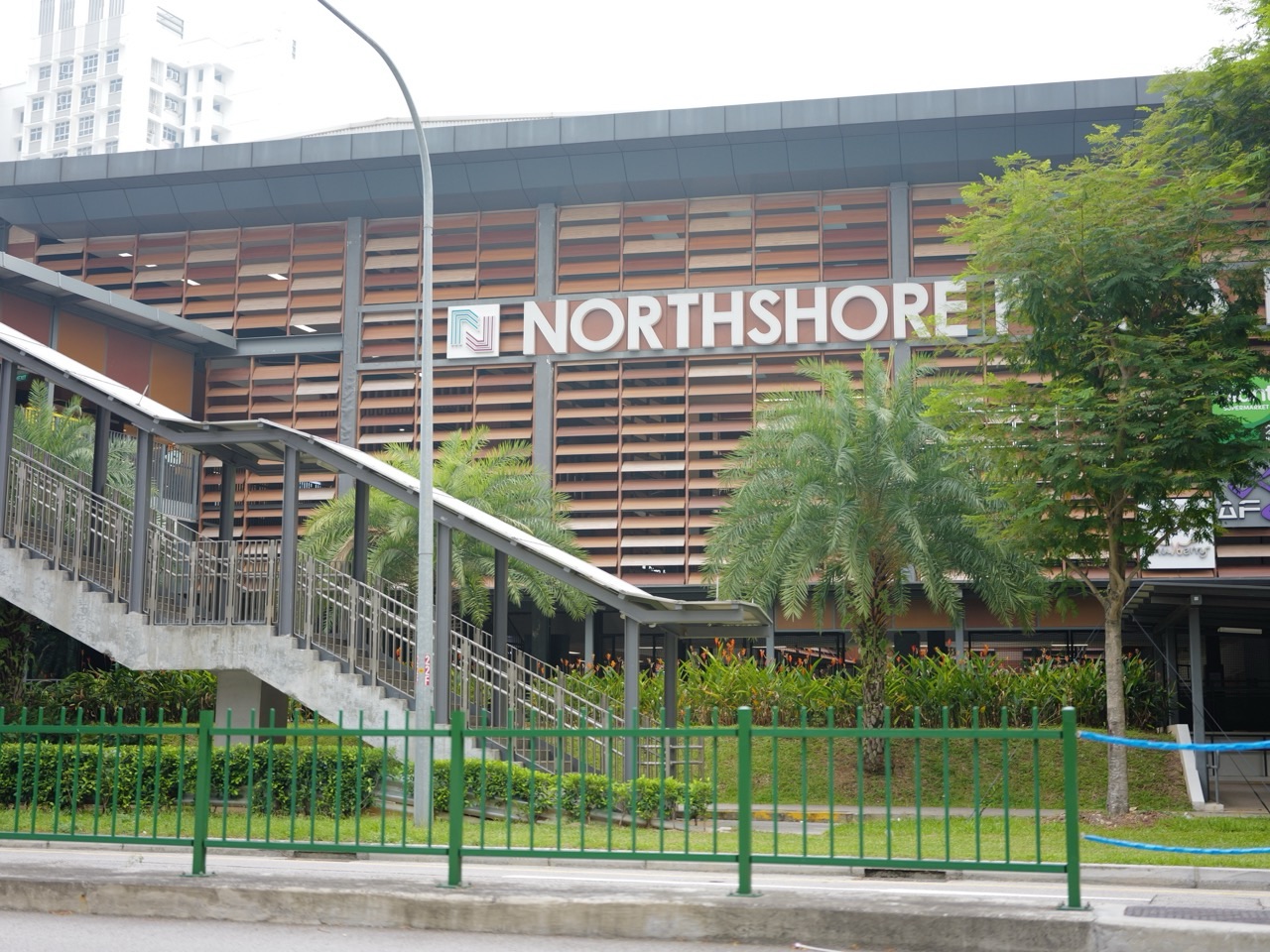
What should Northshore residents expect in 2027? More choices across northern Punggol, but the neighbourhood’s practical foundation is already there: Northshore Plaza, housing, Samudera LRT and links towards the seafront. The reliable 2027 plan is to use these existing amenities well while checking any new projects against official dates.
This guide is for people living in, moving to or visiting the Northshore area. It separates operating shops and transport from broader Punggol projects, gives families realistic checklists and explains why the currently closed Punggol Point Park is not a reason to mark the entire coast closed.

Northshore in one minute
| Northshore in 2027 | Evidence and meaning |
|---|---|
| Already there | Northshore Plaza I and II, residential blocks, food/shopping services, Samudera LRT connection and seafront pedestrian network. |
| Changing around Northshore | Further occupation and commercial activity around Punggol Coast and Punggol Digital District; check individual public venues and connecting routes. |
| Longer-range proposal | Marine fire post serving the Northshore waterfront is not evidenced as a fully operational 2027 service; follow official commissioning updates. |
| Live restriction | Punggol Point Park closed for upgrading from 11 August 2026, works expected to finish 31 December 2027; this is not a date for automatic park reopening. |
Information position: 27 October 2026. A project’s construction completion, an operator’s opening and a facility’s availability to a particular household are three different questions.
Northshore is already a living neighbourhood, not a future showflat
Did you know that the most useful story about Northshore in 2027 is not a promised new landmark? It is how an established seafront HDB neighbourhood works. Homes, shops, the Samudera LRT connection and pedestrian links are already part of daily life. Rather than wait for another opening announcement, families can evaluate what is available within an ordinary school day, supermarket trip or evening walk.
HDB describes Northshore Plaza as Singapore’s first seafront New Generation Neighbourhood Centre within an HDB estate. It is not merely a coastal photo spot. The centre includes a supermarket, food court, eateries and shops as well as childcare and enrichment-related uses, although each operator’s current programme or hours should be checked directly.
This is important for new residents comparing Northshore with other parts of Punggol. A flat closer to water is not automatically closer to every service; the actual block, entrance, lift, LRT platform and walking route determine convenience.
What you can use today: Northshore Plaza I and II, Samudera and the waterfront
HDB locates Northshore Plaza at Blocks 407 and 418 Northshore Drive and describes a community spine linking residential blocks and Samudera LRT to the centre and the Punggol Promenade. Its naturally ventilated corridor, sheltered segments and connecting green space explain why the neighbourhood is organised around walking rather than car trips alone.
Northshore Plaza provides everyday essentials that matter more often than occasional attractions: a meal, groceries, a short errand, a meet-up and possibly a childcare or enrichment trip. But a service category in a centre’s directory does not establish a specific vacancy, enrolment, promotion or Sunday closing time.
Northshore Primary School is an existing school in the wider district. School admission is governed by MOE’s applicable procedures and distances, not by a casual assumption that every home with ‘Northshore’ in its address falls within the same priority radius. Families should use the school and MOE’s current official distance checker for their actual registered address.
The waterside network is real, but it is not uniform. Some promenades, parks and access points have different managers, opening arrangements and maintenance closures. Check the named route and the signs on the day, especially if the outing includes seniors, young children or cyclists.
What can reasonably change by 2027
The nearby Punggol Digital District is bringing additional university, office, retail and technology-related life to northern Punggol. Residents of Northshore may use its amenities, but a nearby district is not the same as a facility within the Northshore housing precinct. Plan the actual route from Samudera, not simply the straight-line distance on a map.
JTC’s Punggol Coast district has an operating mall and hawker centre, while its LaunchPad is opening in phases from late 2026 and its 224-key hotel has a first-half-2027 construction-completion target. These are changes to the broader area’s choices; they do not constitute a guarantee of new shop openings, more childcare places or a new direct service at a particular Northshore block.
One longer-range safety project should be kept in its correct year. Public information describes a future marine fire post serving the Northshore waterfront in the 2027–2028 project window, with delivery described for 2028. Do not present it as an operational 2027 station. It is a good example of why a planned service and an already staffed emergency facility are different.
Likewise, it would be unsound to announce a Northshore 2027 BTO launch, a particular new bus route or a marina redevelopment simply because land remains visible on a planning map. Official announcements, not speculation, establish the project and date.
How to test the everyday Northshore journey
Start with a normal journey: home to Samudera LRT, the market or supermarket, school pickup or the waterfront. Walk the route at the time you would actually need it. Shelter, road crossings, pavement width and the last few minutes with heavy shopping can matter more than the neatness of a station-to-mall diagram.
For an adult with mobility needs, check kerbs, ramps, lift access, handrails and places to sit. A covered walkway does not prove that every link is step-free, and a public waterfront does not mean all coastal surfaces are suitable for wheelchairs. If you depend on the route, inspect it before committing to a fixed appointment.
For a cyclist, consider what a shared path actually requires: moderate speed, attention to pedestrians and correct parking. A bicycle can make the coast feel closer, but do not ride through a pedestrian area where cycling is prohibited, block an emergency route or leave a shared bicycle outside a designated parking area.
Heavy rain and lightning change the equation. The coast may be breezier but it is still exposed to storms. Use PUB and NEA weather alerts where relevant, avoid flood-prone shortcuts, and keep a practical indoor destination in mind.
Family life, schooling and the seafront
Families often ask whether the Northshore location itself makes a child happier or more active. It can provide opportunities, especially if a path, community space or sports area is truly accessible from home. A routine works when the entire family can repeat it after a school or work day, not just on a pleasant Sunday.
One simple learning habit is a weekly short walk where a child records two observations: something about the built environment and something about the natural environment. A child might notice how the sheltered connector links housing to shops, then observe how wind or rain changes conditions beside the coast. That teaches observation without promising that the waterfront is a formal outdoor classroom.
The temptation is to turn every new facility into an enrichment commitment. Families gain more by checking timing, suitability and recovery time. A nearby class is useful only if the subject, teacher, child and schedule are a good match. The same applies to after-school care and tuition choices.
Seven realistic 2027 Northshore decisions
A new homeowner: inspect the actual sheltered route to shopping and Samudera; note where accessible crossings and lifts are, rather than relying on an estate brochure.
A family choosing childcare: ask each centre for the current operator, licensed ages, available place, fees and intake date before making plans.
A primary-school parent: verify MOE’s registration rules and actual address distance; do not assume a named district guarantees a place.
A senior considering a daily walk: choose a loop with seating, toilet access, shade and a safe turning point; coastal scenery alone is not a mobility plan.
A worker commuting to PDD: check whether direct walking or an LRT transfer is more practical at the start and end of their shift.
A cyclist planning Coney Island: check park opening hours, cycling rules and temporary closures along the approach; Punggol Point Park’s separate closure still matters.
A resident hearing about marine rescue infrastructure: use official agency updates to distinguish construction progress from a staffed operational facility.
The north coast is not one continuously open park
Punggol Point Park is subject to an NParks closure that began on 11 August 2026, with expected completion of works on 31 December 2027. The site-specific closure must not be overridden by an older travel guide that still lists normal park hours. Its carpark is affected, while the park toilets are separately identified in the closure information.
That does not mean all of Northshore Plaza, the Punggol Promenade, Coney Island or Punggol Coast is closed. They are distinct places. A resident can still plan a lawful waterfront outing using currently open routes, but a ‘nearby’ alternative requires checking how to reach it from the actual starting point.
Nor does the 31 December 2027 works target guarantee entry on 1 January 2028. Wait for a specific NParks reopening announcement. The difference between project completion and public access is central to understanding any 2027 neighbourhood plan.
What to think about as Northshore matures
The headline number of shops is less useful than whether a family can reach what it needs without excessive time, cost or stress. Watch public crossings, pedestrian comfort, lift reliability, park maintenance, neighbourhood retail continuity and children’s daily journeys.
If the 2027 story is about future infrastructure, ask which body is responsible, what has been approved, whether construction has started and whether the published year is the start or end of a project. If it is about an existing place, ask about present services and access.
A developed neighbourhood still changes. But honest expectations treat its present-day assets as real, its planned upgrades as conditional and its resident experience as something more than a collection of opening announcements.
Northshore 2027: a household checklist
- Identify the exact block-to-Samudera and block-to-Northshore Plaza route; note rain shelter and step-free access.
- Use a current centre directory for tenants; call ahead for specific services or accessibility needs.
- Check official MOE school registration and childcare-provider intake information rather than inferring eligibility from a neighbourhood label.
- Follow separate NParks notices for Punggol Point Park, promenade and Coney Island; one closure does not describe them all.
- For new planned buildings, look for approval, construction, completion and public-opening notices as separate milestones.
- Review changes every few months; do not treat an old 2026 photograph or map as a 2027 access guarantee.
Frequently asked questions
Is Northshore Plaza open already?
Yes. HDB identifies Northshore Plaza I and II as an existing seafront neighbourhood centre, with shops and everyday amenities. Specific tenant hours can change.
Which LRT station serves Northshore Plaza?
Samudera LRT is linked with Northshore Plaza and surrounding housing through the area described by HDB’s community spine.
Can residents walk to the waterfront?
HDB describes links from the Northshore community spine towards Punggol Promenade. Check the current on-site access, crossings and any works along the specific route.
Does every Northshore address qualify automatically for Northshore Primary?
No. School admission rules depend on the MOE phase and verified address criteria. Use official MOE registration information for the applicable year.
Will a new Northshore childcare centre definitely open in 2027?
No such specific opening is established by this guide. Consult the named provider’s live information and official licensing and enrolment rules.
Is Punggol Digital District part of Northshore Plaza?
No. PDD is a nearby business and university district. Its public amenities may serve Northshore residents, but they are distinct places.
Is the future marine fire post operating in 2027?
Do not assume so. Published plans place the marine safety development on a later schedule; look for an SCDF or MHA commissioning notice.
Is Punggol Point Park open for a picnic in 2027?
No, based on the currently listed upgrading closure through expected works completion on 31 December 2027. Check NParks for any change.
Does a 2027 plan mean new BTO flats will launch in Northshore?
No. A specific BTO launch needs a separate HDB sales announcement; neighbourhood evolution does not prove a new launch.
Which source should residents check first for local amenities?
Use HDB’s Punggol neighbourhood-centre directory, live service-provider information, LTA for transport and NParks for park restrictions.
Primary sources
- HDB: Punggol neighbourhood centres and Northshore Plaza
- JTC: PDD public community amenities and status
- JTC: PDD startup/LaunchPad phase information
- URA: North-East Region, Master Plan 2025
- NParks: Punggol Point Park directory; check specific closure notices
Further reading around Northshore
- Complete Punggol neighbourhood and services guide
- Current Punggol Point Park closure and date interpretation
- Punggol waterfront promenade: distinguish its routes
- 2027 Punggol Coast neighbouring district outlook
- Town centres versus neighbourhood centres, explained
This guide is an evidence-based local explainer, updated 27 October 2026. It does not guarantee a flat launch, school place, business tenant or infrastructure opening. Follow the responsible agency’s latest notice for changes.


