
Quick answer: Punggol has several kinds of shopping and community centres because residents need services at different scales. The town centre around Punggol MRT and Waterway Point serves broader shopping and meeting needs; HDB neighbourhood centres such as Oasis Terraces and Northshore Plaza bring food, shops and services closer to surrounding housing; smaller precinct shop clusters support convenient everyday errands near homes. One Punggol is a civic hub rather than simply another shopping mall, while the Punggol Digital District has its own mixed-use spaces. These distinctions explain the town’s layout better than ranking every development as a ‘top mall’.

A parent may buy groceries at one location, visit a polyclinic in another and meet grandparents at a community hub elsewhere. A student may walk to a shop near an LRT station but travel farther for a specialist purchase. These are not accidental differences in what developers happened to build. Punggol’s commercial spaces form a network: some draw people from across the town, while others make ordinary tasks easier near home.
This guide explains the planning logic and use of Punggol’s amenities, rather than listing current shop tenants or predicting which business will open next. We distinguish HDB’s neighbourhood-centre concept, town-level shopping, housing-precinct shop clusters, civic hubs and a newer employment-focused mixed-use district. Official HDB and URA sources establish the broad roles; readers should still check individual mall directories and opening hours for specific shops.
Which kind of place serves your errand?
| Type of place | Typical role | Useful question |
|---|---|---|
| Town-centre shopping area | Broader shopping, transport and meeting point | Do I need town-level choice or an interchange? |
| New-generation HDB neighbourhood centre | Daily services and shared community space near homes | Can I combine groceries, meals and another local need? |
| Precinct shop cluster | Convenient smaller-scale errands within housing | Is the service available close to my block? |
| Civic hub, such as One Punggol | Public services, library, community and food functions | Am I visiting an institution rather than a shop? |
| Digital-district mixed-use space | Commercial, work, study and community functions | Is a new venue actually open and available? |
1. Punggol has a hierarchy of everyday destinations
A new town must serve residents who want different kinds of convenience. Daily purchases should not require a long trip, but not every small cluster can support the same variety of restaurants, shops or specialised services as a major centre. Planning therefore combines larger shopping areas with localised facilities within residential districts.
HDB’s Punggol Town Design Guide describes commercial spaces at town-centre, local commercial-centre and precinct-shop scales. It explains that town-level shopping serves a broader population while smaller clusters can sit near LRT stations and housing. This is a planning explanation, not a promise that every type of business will always remain at an exact location.
Residents benefit by understanding the function of each tier. A quick errand close to home, a multi-stop family trip and a specialised shopping visit do not need identical destinations. Choosing the appropriate scale saves travel time and reduces the urge to judge every local cluster against a major mall.
Punggol example
A parent needing milk may check the nearest precinct supermarket, while a family wanting several shops and a transport connection may choose the town centre.
2. A town centre is not simply a large retail building
At the heart of Punggol, the town-centre environment connects Punggol MRT and LRT services with shopping and public spaces. Waterway Point provides a significant retail component, while Punggol Town Square and the nearby waterway create public gathering opportunities. The value comes partly from the connections among these spaces rather than the mall building alone.
HDB describes Punggol Town Square as a new-generation town plaza integrated with transport facilities and shopping and dining at Waterway Point. This means a person may visit the area for an event, a walk or a train connection even if shopping is not the main reason. Commercial and public-space uses support one another.
Do not confuse town-square access arrangements with mall shop hours. A plaza and an indoor retail tenant can have different managers and conditions. A family should check the specific venue when planning an activity, particularly for a booked event, a late evening or accessibility needs.
Punggol example
A family meets at the Punggol MRT area, eats at Waterway Point and walks by the water. These activities use the town centre as a connected public destination.
3. An HDB neighbourhood centre solves local needs
HDB describes neighbourhood centres as integral parts of its towns, intended to provide easy access to dining, food, healthcare, shopping and daily needs. The objective is not that every household should use one identical facility, but that neighbourhoods have useful clusters of services close to where residents live.
Some centres take the form of conventional retail complexes; others include more community space and integration with transport. Their exact shops and services change as tenants and operating arrangements change. The planning role is more durable than a current retailer list.
A family should distinguish a centre’s broad purpose from today’s commercial details. It is reasonable to say a centre is designed around everyday needs. It is not reasonable to guarantee that a particular shop, service or promotional offer will remain permanently available.
Punggol example
A newcomer compares the nearest neighbourhood centre with the town-centre mall and learns that the smaller destination may be more efficient for routine purchases.
4. Oasis Terraces brought a new-generation model to Punggol
HDB introduced Oasis Terraces in 2019 as the first of its new-generation neighbourhood centres. Its official description emphasises public feedback, community plazas, play areas and everyday commercial and service needs. The integrated polyclinic and childcare centre illustrate how a neighbourhood centre can combine non-retail functions with shops and dining.
This is a different concept from treating the building only as a shopping mall. A parent’s trip to a medical service, a family’s meal and a resident’s visit to a community event can share one wider destination. The design aims to make services accessible through a connected neighbourhood rather than isolate each need in a separate part of town.
However, an integrated centre does not mean every facility shares the same hours, queue rules or booking procedures. A polyclinic has clinical appointments, shops have their own operations and public areas may have use conditions. Readers should follow the specific service’s current instructions.
Punggol example
A parent combines a planned healthcare visit with a grocery errand at Oasis Terraces, checking the institution’s appointment arrangements separately from shop opening hours.
5. Resident feedback can influence the mix of facilities
HDB’s account of Oasis Terraces explains that its design and tenant mix drew on residents’ preferences, including family dining and shopping needs. This is a useful planning principle: identifying everyday gaps can shape the facilities offered. Community feedback concerns the function of a place, not only whether its appearance is attractive.
Needs differ as neighbourhoods mature. A growing population may contain young families, working adults, older residents and students seeking different services. A centre’s operators and planners must balance commercial viability with community expectations. No single shopping tenant can represent every household’s wishes.
Resident consultation should not be confused with a guaranteed individual outcome. Someone asking for a specific retailer cannot assume it will appear on a fixed date. A factual feedback request identifies the unmet need, how often it occurs and which residents face the difficulty.
Punggol example
A family reports that an accessible seating area would help older residents during busy periods. This expresses a practical user need rather than demanding a particular brand.
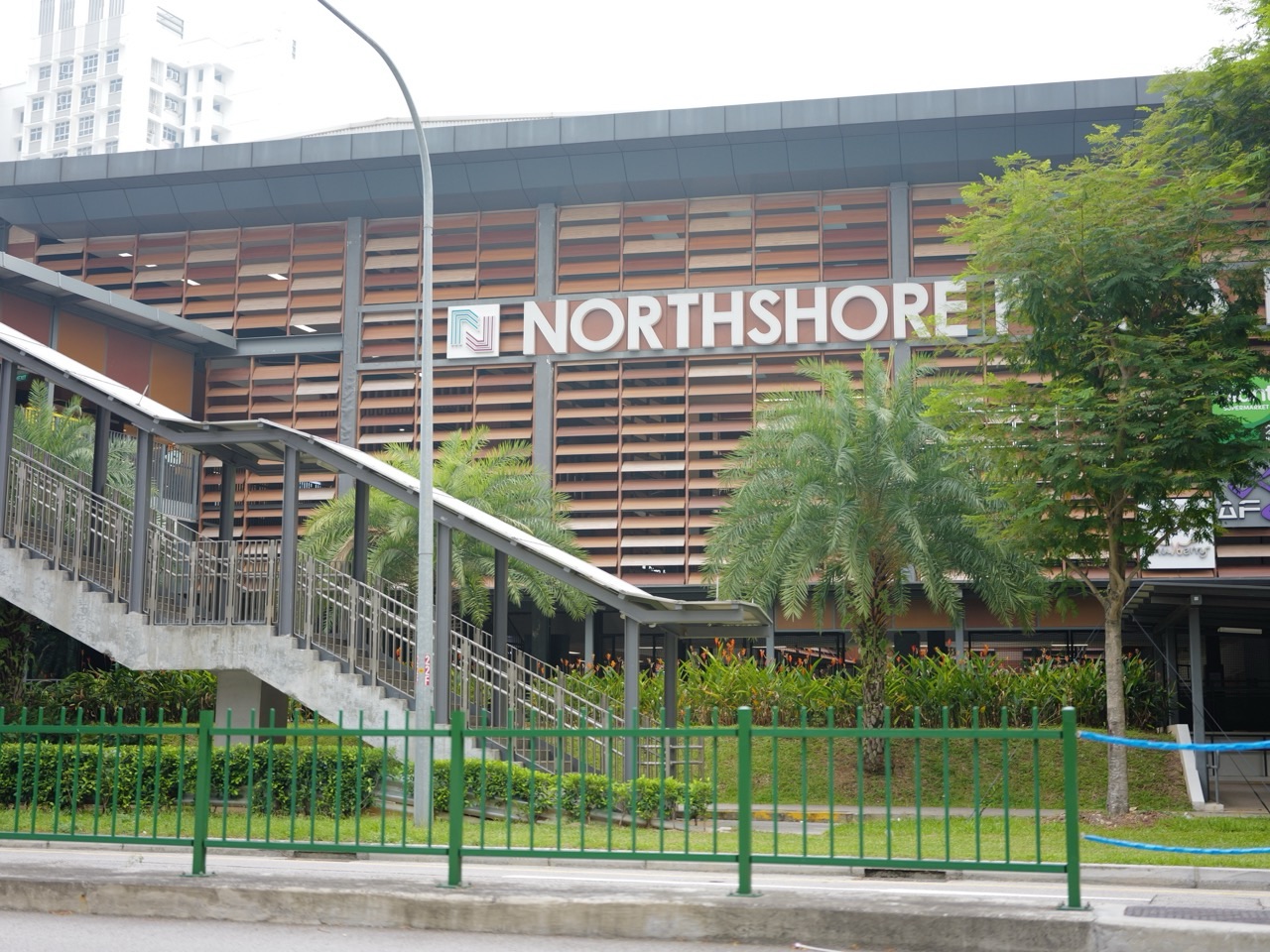
6. Northshore Plaza connects shopping with waterfront movement
HDB calls Northshore Plaza the first seafront new-generation neighbourhood centre in an HDB estate. Its official Punggol page identifies a supermarket, food court, restaurants, childcare and other services, but the broader planning feature is its relationship with the surrounding district.
The centre is integrated with residential blocks, a community spine and Samudera LRT station, with a naturally ventilated route extending toward Punggol Promenade. These elements help explain why some people travel through a centre as part of a walk while others come specifically to buy something.
This does not automatically make every route sheltered from all weather or accessible without interruption at all times. Construction, maintenance and differences between levels can affect practical routes. Visitors should verify the specific entrance, level and access condition needed.
Punggol example
A grandparent travels by LRT to Northshore Plaza while another relative walks from nearby housing. They agree on a visible meeting point and account for the different approaches.
7. Punggol Plaza belongs to an earlier local-centre story
HDB describes Punggol Plaza, located near Coral Edge LRT, as a one-stop shopping destination with food, daily purchases and a dry market among its facilities. It shows that Punggol’s retail network was not built in a single generation. Different neighbourhoods gained centres in different periods.
A conventional local mall can remain useful even when new-generation centres are built elsewhere. For some residents, proximity is more valuable than architectural novelty. The shortest familiar route to affordable essentials may serve an older adult better than a distant, more elaborately designed destination.
Comparisons should avoid unsupported rankings based on age. A newer building may offer different public spaces, but a centre’s usefulness depends on the household’s actual service need, accessibility and current operations. No planning category proves that one centre is always the best.
Punggol example
A family near Coral Edge may use Punggol Plaza for a quick meal and shopping, while making a separate trip to the town centre for a specialist purchase.
8. Precinct shops are a smaller type of convenience
HDB’s Punggol town-planning material identifies shop clusters at the void decks of selected developments, including locations near LRT stations. The underlying idea is to bring common purchases and services closer to residential homes. A small group of shops need not become a regional destination to be valuable.
Such clusters can serve errands that are frequent but brief: a household item, a modest meal or another available local service. Actual tenant types vary and should be confirmed by visiting or checking current listings. It is inaccurate to promise that every Punggol block has shops directly beneath it.
Precinct shops also share the estate with homes. Delivery access, noise, waste and pedestrian circulation need to be managed thoughtfully. The relationship is different from a large enclosed mall and can affect how commercial activity coexists with residents above.
Punggol example
An older resident may value a nearby precinct shop because the walk is manageable. A visitor should still check whether the needed item is sold there before making a special trip.
9. An LRT station can be a neighbourhood anchor
Punggol’s LRT network links residential districts to the MRT and town centre. Local shops and neighbourhood facilities near stations can benefit from the regular movement of residents arriving, departing and transferring. HDB’s Punggol planning guide expressly connects some precinct retail locations to LRT proximity.
This does not mean every station has an identical retail cluster or that a station name is also the official name of the nearest commercial centre. Routes, shop availability and walking distances vary. A resident may find the best approach from one lift or path instead of the station’s main entrance.
The useful planning lesson is that transport connections can make a local centre accessible beyond its immediate surrounding blocks. Parents can identify practical combinations—one train trip, one short errand, one accessible path—without inventing service availability.
Punggol example
A student arrives at an LRT station and stops at a nearby shop on the way home. That is an example of transport and local daily services working together.
10. A civic hub has a different purpose from a commercial mall
One Punggol is a combined community facility rather than merely a shopping destination. URA describes it as a lifestyle hub with a community club, library, hawker centre, childcare and healthcare-related services. These are public and community functions serving different age groups and needs.
A family visit may include borrowing books, attending an activity and eating a meal. However, each part has its own use arrangements. A library’s lending rules are not the same as a food outlet’s hours, and a community programme may require registration. The complex’s shared location does not merge those operating procedures.
Calling every large building a mall hides useful distinctions. A civic hub is evaluated partly by access to public services and community use. Its role is not captured by the number of fashion shops or restaurants in its directory.
Punggol example
Three generations spend time at One Punggol for different purposes: a child visits the library, a parent attends a community activity and a grandparent has lunch nearby.
11. The digital district introduces another mixed-use scale
Punggol Digital District integrates the Singapore Institute of Technology campus, business-park activity and public spaces. URA’s published description includes commercial and dining destinations such as Punggol Coast Mall and Market Village within the broader district. This is not simply a fourth HDB neighbourhood centre with a different name.
The intention is to connect work, study, services and everyday visits. A university student, an employee and a resident may use the same area for different reasons. The concentration of educational and employment activity can also create different patterns of weekday demand from those at a mainly residential neighbourhood centre.
Opening status matters because large districts develop in phases. A planning page may describe an intended venue before all its individual components are operating. When guiding readers, distinguish open and confirmed facilities from planned elements and check the actual operator’s current information.
Punggol example
A parent taking a student to SIT should verify whether the specific Punggol Coast retail or dining outlet they want is operating, rather than assuming a development plan is an opening notice.
12. Why mixed-use destinations can reduce separate trips
When a centre combines everyday shops with transport or community services, a household can sometimes complete several tasks on one journey. This is useful for people balancing school pickup, work, healthcare and groceries. The convenience comes from the spatial relationship among functions, not from the abstract promise of a smart town.
However, combining trips works only if practical details align. The healthcare appointment must be at the correct time, the walking route must be usable and the relevant shop must actually be open. A destination can be integrated in design but still require visitors to move between several levels or entrances.
Plan around the highest-priority task and add optional errands only when they fit. A family should not delay a medical appointment to reach a shop that might be closed. For parents, integrated centres are helpful tools, not guarantees of an effortless day.
Punggol example
A family visits a booked appointment at a Punggol facility and then checks whether nearby groceries can be purchased without an additional car trip.
13. Covered walkways are as important as the shops
HDB’s description of new-generation neighbourhood centres emphasises links to transport and surrounding residences through covered routes and pedestrian thoroughfares. A supermarket is more useful when a parent with a pram or an older resident can reach it without unnecessary barriers.
An apparently short map distance can conceal steps, level changes or an awkward crossing. Site design matters because the journey begins at home and ends at the actual service entrance. A centre should be considered together with its surrounding network of paths, not only the building footprint.
Covered access also has limits. Weather can blow beneath roofs and routes can be closed for maintenance. For people with mobility needs, verifying step-free continuity and a useful alternative can be more important than the name of the shopping centre.
Punggol example
A grandparent travelling to Northshore Plaza checks the accessible approach from the LRT rather than selecting a route solely because it appears shorter on a map.
14. Community space is not identical to bookable event space
HDB describes new-generation neighbourhood centres as having sheltered plazas where residents can gather and activities may be organised. Such spaces enliven the development and give it a role beyond commercial transactions. Ordinary public use, however, does not necessarily mean a resident can privately reserve the space.
Events, performances or commercial promotions may require permission and compliance with operator rules. A person should verify the particular booking channel, power access, permitted setup and cleanup requirements before advertising an event. A photograph of another group’s past gathering is not approval for a new activity.
This is another planning distinction worth remembering: a place can be physically open to walk through while still having managed requirements for exclusive use. Keeping these ideas separate helps communities enjoy shared spaces without obstructing ordinary circulation.
Punggol example
A school group wants to display a small project in a Punggol centre. They contact the venue manager for actual approval rather than treating an empty community plaza as available.
15. Commercial tenants can change while the centre’s role continues
A neighbourhood centre remains a neighbourhood centre when a tenant leaves or a shop relocates. Retail businesses are commercial operations with different leases and business decisions. A directory at one date is only a snapshot. The planning purpose—providing accessible services within the town—does not depend on one named brand staying indefinitely.
Guides should therefore distinguish features documented by HDB from current tenant information supplied by a centre’s operator. A supermarket or food court might be part of the official description at publication, but a family’s specific shopping list still requires a current check. This is important for readers using an article months or years later.
If a service closes, do not automatically describe it as a planning failure. It may reflect lease changes, renovations, demand or another cause not established in public. Accurate local reporting avoids assigning reasons without reliable evidence.
Punggol example
A visitor reads about a favourite shop at Punggol Plaza in an older article. Before travelling, they check the current official directory or contact the business.
16. HDB and private operators can have different responsibilities
HDB plans and develops many neighbourhood-centre facilities and maintains official information about their roles. Day-to-day commercial management may involve appointed managing agents, while individual tenants control their own trading hours and services. Civic hubs and private shopping destinations have different management arrangements again.
A broken escalator, lost item, event enquiry and municipal footpath defect may have different contacts even within one connected environment. The correct first question is which asset or service is affected. A mall’s management office is not automatically responsible for the public LRT platform next door.
Residents can save time by noting the exact centre, level and facility before making an enquiry. Use current official contact points rather than guessing based on the developer’s name or a nearby HDB block.
Punggol example
A parent finds a lift out of service at a shopping centre. The report goes to the centre’s manager, not automatically to the Town Council because the building is near HDB homes.
17. How an older adult may choose a centre differently
The most attractive retail destination is not necessarily the most practical for an older adult. Walking distance, resting places, access to a clinic, suitable toilets and lift reliability may matter more than the total number of stores. HDB’s integrated-centre approach recognises that everyday services have value when they are convenient and connected.
Families should identify a route from the actual arrival point. A taxi drop-off may be closer than the LRT for one person, while another resident may prefer a sheltered path. A centre’s accessibility cannot be judged from a single exterior photograph or an advertisement about being family-friendly.
Sometimes a small precinct shop is the better choice. If the desired service is available near home, avoiding a complicated journey can be more useful than visiting a large town-centre mall. Personal needs determine the practical destination.
Punggol example
A grandparent buys one essential item at a nearby shop rather than travelling across Punggol to a much larger mall solely because it has more tenants.
18. Shops and services follow changing neighbourhood demand
Punggol has developed through multiple housing and infrastructure phases. As new neighbourhoods grow, the number and composition of households change. This can affect demand for meals, schools, services and convenience shopping. A planning framework can guide where facilities belong, but individual commercial operations continue to respond to business realities.
New developments should be described with dates and status. A land parcel identified for commercial use is not evidence that a completed mall has opened. Similarly, an announced facility may open in phases. Official URA and HDB information is valuable, but live operator announcements remain necessary for immediate visiting decisions.
Accurate guides help parents separate three layers: the existing service they can use today, the facility under construction, and the longer-term planning intention. Blending them into one present-tense account creates confusion and can send families to unopened destinations.
Punggol example
When considering a newly announced centre near Punggol Coast, a parent checks the particular opening notice instead of assuming every planned tenant has begun trading.
19. Learn about geography by mapping ordinary errands
Children can study town planning by drawing three common routes: one to the nearest everyday shop, one to a neighbourhood centre and one to a town-centre destination. Mark the transport connection, time of day and any important access constraint. This turns a simple family routine into a concrete lesson about service catchments and movement.
At Primary level, compare near and far, transport modes and why a small shop may be sufficient for some tasks. At Secondary level, ask how larger centres draw users from wider areas and why placing every service in one building could increase unnecessary travel. These are reasoned explanations, not estimates of actual patronage without data.
Do not ask students to photograph residents secretly or make unsupported claims about which shop performs best commercially. They can learn from official maps, visible public infrastructure and ethical observations without collecting private information or sales data.
Punggol example
A student maps the route to a precinct shop and then to Waterway Point, recording the differences in distance, available transport and number of separate tasks each trip can accomplish.
20. The useful question is ‘what function does this place serve?’
A destination label often obscures the practical role. A centre may support housing, shopping, healthcare or community activities in different combinations. Asking whether a place is a town centre, neighbourhood centre, precinct cluster or civic hub helps explain how Punggol has been organised for daily life.
Do not assume every large new building is a mall, that every centre offers the same tenant mix or that every planned retail site is open. Use HDB and URA for the broad planning purpose, then site operators for today’s shops, events and access. The two kinds of information answer different questions and should be kept separate.
For families, the reward is simpler decision-making. Choose the nearest suitable errand destination, use more specialised centres when the need warrants it, and enjoy community spaces without mistaking them for private venues. A well-understood town can save households time as well as provide interesting places to visit.
Punggol example
On a weekend, decide whether the household needs a local purchase, a combined service-and-shopping trip or a broader town-centre outing. Punggol offers different places for those different jobs.
Four worked planning situations
The first month after moving in
A new Punggol household tries to do every errand at one large mall and ends up travelling farther than necessary. It lists recurring needs and identifies the closest suitable precinct shops, neighbourhood centre and larger shopping destination. The family then checks current operating details and chooses routes appropriate to its members. The result is not a definitive ranking of malls; it is a practical local map tailored to recurring tasks.
A three-generation family outing
A grandparent needs a comfortable short walk, a parent has a service appointment and a child wants a reading activity. A civic hub may provide a better combination than a retail-only venue. If the family chooses One Punggol, it should still check the individual institutional hours, accessibility and any programme bookings. The plan works because the destination has multiple community functions, not because every service shares identical rules.
A resident hearing about a new development
A social media post claims a future retail venue near Punggol Coast is already fully open. A careful resident compares the statement with the relevant URA or operator announcement and checks which component is actually operating. They preserve the distinction between a planned district, a completed building and a currently trading shop. This avoids sending neighbours to a place that has not yet opened as described.
The neighbourhood-centre study project
Students compare HDB’s descriptions of Oasis Terraces and Northshore Plaza. They note how healthcare, childcare, transport connections, shared plazas and nearby housing shape each centre’s role. They do not claim one centre has more customers without evidence or present a tenant listing from an old brochure as a live directory. Their conclusion explains the service-planning model, not a speculative winner.
Frequently asked questions
1. What is a new-generation HDB neighbourhood centre?
HDB describes a centre combining shops and daily services with community space and transport connections.
2. Was Oasis Terraces the first new-generation neighbourhood centre?
Yes. HDB identifies its introduction in 2019.
3. What makes Northshore Plaza different?
HDB identifies it as a seafront new-generation neighbourhood centre with community-spine links to housing, Samudera LRT and the waterfront.
4. Is Waterway Point the same as One Punggol?
No. One is part of town-centre retail; One Punggol is a community and public-service hub.
5. Do all precincts have shops beneath every block?
No. Small clusters are planned in selected areas; actual shops vary.
6. Are all neighbourhood centres operated by the same party?
Do not assume so. Check the particular centre and its appointed operator.
7. Is Punggol Plaza still relevant if newer centres exist?
Yes. Local proximity and the currently available services can make a conventional centre useful.
8. Does a centre near an LRT station guarantee step-free access?
No. Check the actual route, levels and temporary closures.
9. Can I organise an event in an open community plaza?
Check the specific venue’s booking rules before setting up an event.
10. Are Punggol Coast Mall and Market Village ordinary HDB neighbourhood centres?
They form part of the wider mixed-use Punggol Digital District context, not simply the same HDB category.
11. How can I confirm whether a specific tenant is open?
Use the current operator directory or contact the business rather than relying only on a historical guide.
12. What is the best shopping centre in Punggol?
There is no universally best centre; choose based on the household’s actual task, proximity, accessibility and current offerings.
Official planning and visitor sources
HDB: Neighbourhood Centres and Oasis Terraces
HDB: Northshore Plaza and Punggol Neighbourhood Centres
HDB: New-Generation Neighbourhood Centre Commercial Functions
HDB: Town and Community Plazas, Including Punggol Town Square
URA: North-East Region, Workplaces and Community Amenities
URA: Punggol Digital District Mixed-Use Planning
Related eduKatePunggol articles
Top 10 Things to Do in Punggol for Shoppers
Understanding Punggol | URA Master Plan and Land Use
Things to Know About Punggol | Void Decks and Shared HDB Spaces
Things to Know About Punggol | Green Man and Pedestrian Crossing Signals
Punggol’s retail and community destinations serve different distances, needs and moments in a household’s day. Understanding the hierarchy—precinct shops, neighbourhood centres, town-centre shopping and civic or mixed-use hubs—helps residents use the town as it was planned, while staying alert to the fact that individual shops and opening dates can change.


