
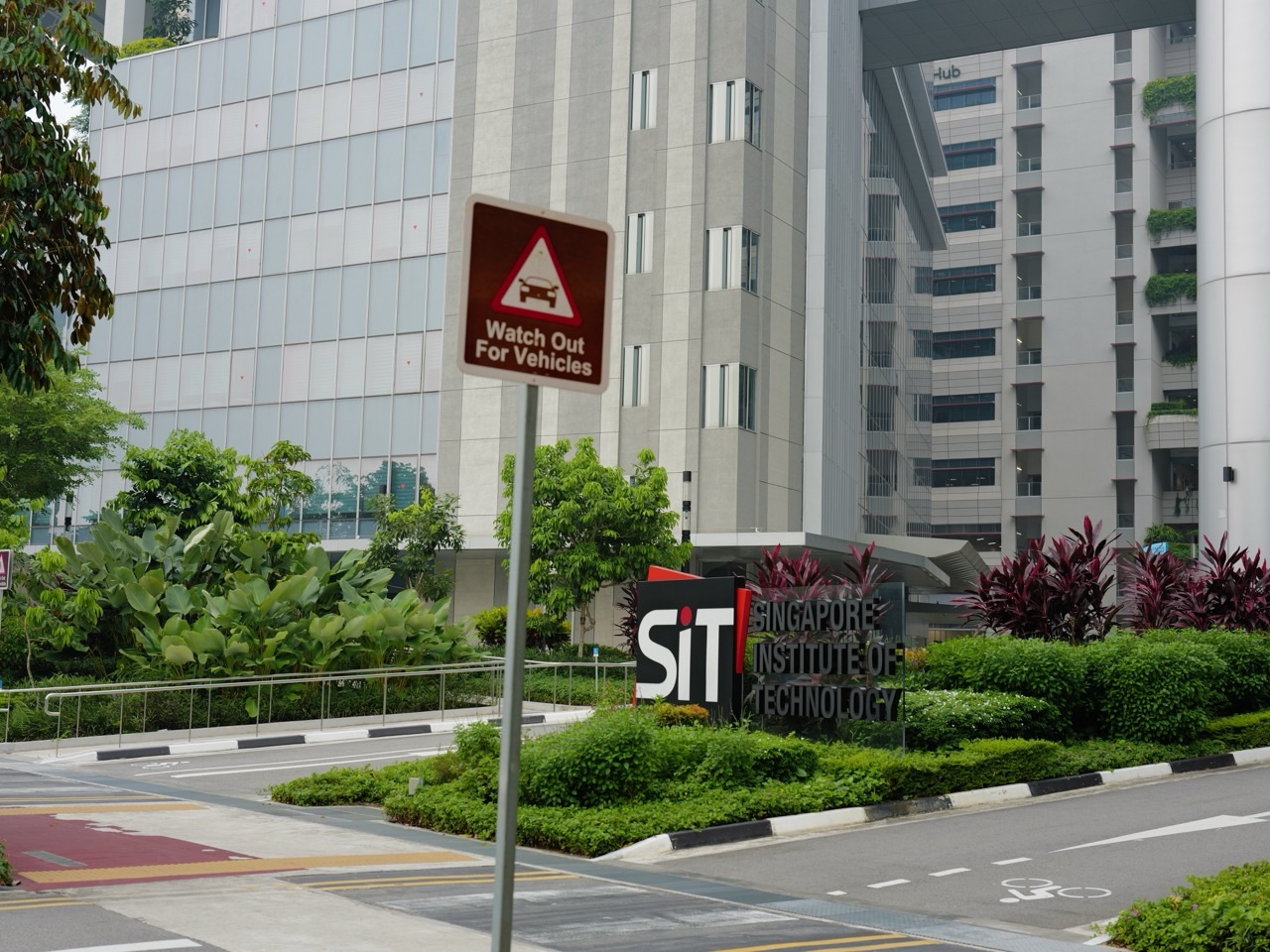
Quick answer, 27 October 2026: AI, cybersecurity and financial technology deserve attention in Punggol’s 2027–2028 career plans because JTC has identified them as focus areas of Punggol Digital District. Yet a useful forecast is about tasks and evidence, not declaring that every AI job will grow, every programmer will be replaced, or every fintech role will pay well.
Did you know that two jobs with the same title can face opposite futures? One software role may revolve around copying standard code; another may require integrating systems, investigating outages and defending customer data. The second job does not disappear simply because an AI assistant can write a function. It may change shape, its productivity expectations may rise, and employers may ask for stronger judgement.
For Punggol parents, school leavers and mid-career workers, the question is not simply “Should I learn AI?” It is: “Which problems can I solve, what evidence can I show, and can I work reliably when the software or model gets something wrong?”
The evidence in 60 seconds
| Evidence | What it actually supports |
| JTC identifies fintech, AI and cybersecurity in PDD | These activities are strategically relevant to the district; it does not prove a vacancy in every field. |
| IMDA’s Digital Economy Report 2025 covers 2024 data | Singapore’s tech workforce reached about 214,000 in 2024; AI and cybersecurity were growth areas nationally. |
| AI skills appeared in a rising share of tech job postings | IMDA reported an increase from 11% in 2019 to 14% in 2024. This is historical data, not a numerical 2028 projection. |
| MOM’s 2Q 2026 labour report | Technology-related vacancies can soften even while longer-term digital adoption increases. |
| Best near-term action | Compare actual job descriptions, prepare one verifiable project and understand the domain the software serves. |
The national evidence comes from IMDA’s 2025 Digital Economy summary and MOM’s September 2026 labour market release. Their figures cover different periods and populations. Neither is a Punggol-only forecast.

A task-based forecast beats a fashionable list of job titles
Try dividing every role into five parts: gathering evidence, performing routine operations, making difficult decisions, explaining results and taking responsibility. Digital tools are improving quickly at the first two and can assist with the others. But a regulated workplace still needs someone to verify that an output is correct, lawful, secure, accessible and appropriate.
This is why the phrase “AI will create new jobs” is incomplete. Technology can create new tasks, absorb old ones, change staffing ratios and shift who performs the work. A resident making a career decision needs to ask which change is happening in the specific employer and role.
| Work activity | What tools may increasingly assist | What responsible people still need to prove |
| Software development | Drafting routine code, tests and documentation | System design, integration, security, debugging, reliability and accountability |
| Cybersecurity | Alert triage, pattern summaries, log searches | Threat validation, investigation, access decisions, recovery and safe escalation |
| Data and AI | Data preparation, reporting drafts, model experiments | Data quality, evaluation design, bias checks, privacy, business understanding |
| Financial technology | Workflow automation, customer-service drafting, anomaly screening | Regulatory controls, fraud judgement, audit trails, reliability, customer protection |
| Product and operations | Research summarisation and routine status reporting | Prioritisation, accessible service design, negotiation and operational follow-through |
1. AI work: the forecast is broader than ‘prompt engineer’
In 2027, employers may seek people who can make AI useful inside ordinary business systems. That can mean collecting clean data, selecting suitable models, evaluating responses against known examples, securing sensitive information, monitoring failures and documenting what should happen when an answer is uncertain.
A student fascinated by generative AI might begin with a small, harmless application that uses public or synthetic data. The important evidence is not that the model produced a fluent answer. It is that the student defined success criteria, measured mistakes and explained when a human must take over.
By 2028, if AI becomes more integrated in workplaces, the advantage may lie less in writing a clever prompt and more in evaluating an entire workflow: data provenance, authorisation, error handling, latency, cost, accessibility and user trust. This is a plausible direction, not a prediction that any single tool or qualification will dominate.
A credible AI portfolio example
Build a simple document classification workflow using non-confidential sample documents. Create a test set, compare its decisions with a human-reviewed answer key, record false positives and false negatives, explain data-retention choices and show a manual-review step. That is stronger evidence than twenty screenshots of a chatbot responding enthusiastically.
2. Cybersecurity: demand is shaped by risk, not headlines
Every digital service creates a need for proportionate security. In finance, student systems, healthcare and urban infrastructure, cyber incidents can harm real people. A cybersecurity team therefore needs more than someone who knows attack terminology. It needs people who can manage vulnerabilities, explain risks, investigate suspicious events, secure identities and recover services.
The JTC district ecosystem includes organisations working on digital infrastructure and financial technology, so cybersecurity knowledge is relevant to local learning and potential careers. But employers distinguish between security operations, governance/risk/compliance, application security, cloud security and security engineering. Their entry requirements differ considerably.
A useful 2027–2028 scenario is that some basic alerts and reports become increasingly automated while engineers, investigators and risk owners are expected to validate findings, defend design decisions and work with the business. Workers who can explain an incident calmly to colleagues may be especially valuable.
Safe learning activity
Use a deliberately provided educational lab, a toy network or your own devices. Write a risk register with assets, threats, controls, owners and recovery procedures. Never scan, test or access an employer’s, school’s or neighbour’s system without explicit permission. Ethical restraint is part of professional competence.
3. Fintech and banking: know the difference between a hub and hiring
Punggol’s banking technology presence can draw attention to payments, cloud infrastructure, fraud controls, data platforms, digital customer experience and operational resilience. These jobs require both technical skill and domain knowledge: what money movement is, how records must reconcile, why customer data is protected and why a service must stay available.
Yet do not assume an announced office capacity equals an equal number of first-time hires. Organisations move existing teams between premises. Some roles are internal transfers and some belong to external vendors. Financial services also face restructuring cycles; MOM’s 2Q 2026 report recorded weaker professional vacancies in the sector.
For 2027–2028, a more useful forecast is that competence in dependable, compliant systems will remain important even if specific job openings fluctuate. A candidate should therefore show controlled change, documented tests, business understanding and clarity about risk.
4. Data analysis: the overlooked bridge between industries
Not everybody needs to become a machine-learning researcher. Schools, healthcare teams, small businesses, logistics firms and financial institutions need people who can turn messy records into trustworthy decisions. Spreadsheet literacy, SQL, simple programming, statistics and clear written explanations can transfer between sectors.
Suppose a small Punggol business wants to understand slow customer service. A weak analysis generates an attractive dashboard. A stronger analysis defines what waiting time means, checks missing records, separates weekday and weekend patterns, calculates a fair baseline and tests whether a change really helped. The difference is disciplined reasoning.
Which skills travel well between 2027 and 2028?
| Foundation | Practical demonstration | Why it remains useful |
| Clear English | Explain an error report for a non-technical reader | Projects fail when teams cannot understand one another |
| Mathematics and statistics | Work with rates, distributions, estimates and uncertainty | Data dashboards and AI evaluation need quantitative judgement |
| Programming or low-code literacy | Automate one repeatable process with tests | Automation is useful when controlled and maintainable |
| Security and privacy | Describe permissions, data minimisation and access logs | Trust depends on protecting the people behind records |
| Industry knowledge | Map a school, service, healthcare or finance workflow | Software solves a real problem only when the problem is understood |
| Human collaboration | Conduct user interviews and incorporate corrections | Quality is negotiated and tested with people |
What should a Secondary student, polytechnic student and working adult do?
Secondary school
Keep the general academic base strong. Build a small portfolio of honest work: clear scientific writing, mathematics solutions, school projects, coding exercises and reflections on errors. Do not feel compelled to choose a permanent tech identity at age fourteen.
ITE or polytechnic
Look for practical industry exposure, apprenticeships, capstones, relevant labs and cross-disciplinary work. Compare a qualification against real postings: are employers asking for network engineering, data management, system integration, security operations or product support? Prefer evidence of mastery over a long string of certificates.
University
Investigate laboratory work, internships and industry problems with measurable outcomes. SIT’s 2026 announcement of a selected 2+2 pilot illustrates the emphasis on extended applied experience, but each programme has its own arrangements. Check the actual placement and supervision details.
Mid-career worker
Identify what you already own: stakeholder trust, operations experience, financial controls, compliance understanding, customer service, project management or teaching. Add just enough technical competence to make those capabilities more valuable. Consider employment-based training or carefully selected conversion routes instead of automatically buying an expensive full-time course.
A realistic 2027–2028 opportunity matrix
| Area | Reasonable positive indicator | Risk worth watching | Portfolio evidence |
| AI integration | More published integration and evaluation jobs | Hype outpaces deployable business value | A measured pilot with error analysis |
| Cybersecurity | Recurring risk, resilience and security operations hiring | Entry-level roles require broader real experience | Safe-lab investigation and documented controls |
| Banking technology | More genuine postings across development and controls | Transfers or restructuring reduce external vacancies | Secure test project and domain explanation |
| Data analysis | Demand across non-tech as well as tech employers | Commoditisation of routine dashboard production | Reproducible analysis with decisions |
What not to do
- Do not choose a degree because someone says AI will definitely have the highest salary in 2028. Salary depends on role, performance, seniority, employer and market conditions.
- Do not present generated code as proof you can maintain a production system. Explain tests, failures, security limitations and decisions.
- Do not collect classmates’ or colleagues’ personal data for a portfolio without permission.
- Do not interpret an internship partnership or new office announcement as a job guarantee.
- Do not become so narrowly attached to a tool that you stop learning the underlying mathematics, systems and communication.
A six-week learning experiment
- Week 1: Choose one role family and obtain three current job descriptions. Distinguish essential skills from desirable extras.
- Week 2: Identify the everyday workflow behind that job, including who benefits, who approves, and what could go wrong.
- Week 3: Build one small project with lawful public or invented data; keep its scope narrow.
- Week 4: Ask someone knowledgeable to review it, and record what failed.
- Week 5: Improve documentation, tests, risk controls and explanation.
- Week 6: Decide whether to apply, seek structured experience, pursue a specific course or explore a different role.
Frequently asked questions
Are AI jobs guaranteed to grow in Punggol during 2027–2028?
No. National historical indicators point to significant AI activity, and JTC identifies AI as a Punggol Digital District focus. These do not establish a precise local future hiring rate.
Will AI eliminate junior programmers?
Some routine activities may be automated, and expectations of new hires may change. But the direction and size of employment effects differ by employer and task. Learn to verify and maintain systems rather than depend on a prediction that everyone or nobody will be replaced.
Must my child study computing to work in Punggol Digital District?
No. Engineering, finance, legal services, research, workplace support, education, service operations and many other disciplines can contribute. The district does not have a single degree requirement.
Should I trust salary figures in a promotional post?
Verify the occupation, qualification, experience level, fixed versus variable pay, working hours and the source year. National medians cannot be treated as starting salaries or Punggol guarantees.
Sources and connected local guides
- JTC: industries and tenants at Punggol Digital District
- IMDA: Singapore Digital Economy Report 2025 summary
- IMDA: National AI Impact Programme, March 2026
- MOM: Labour Market Report, 2Q 2026
- eduKatePunggol: practical AI engineering portfolio
- eduKatePunggol: cybersecurity analyst role pathway
- Part 1: how to interpret Punggol’s overall jobs forecast
The important forecast is about learning
By 2028, a specific application may have changed. The need to understand the task, test the outcome, protect people and explain the result is less likely to vanish. Punggol residents can use the digital district as a nearby window into what workplaces demand—without turning every career decision into a bet on one piece of technology.


