
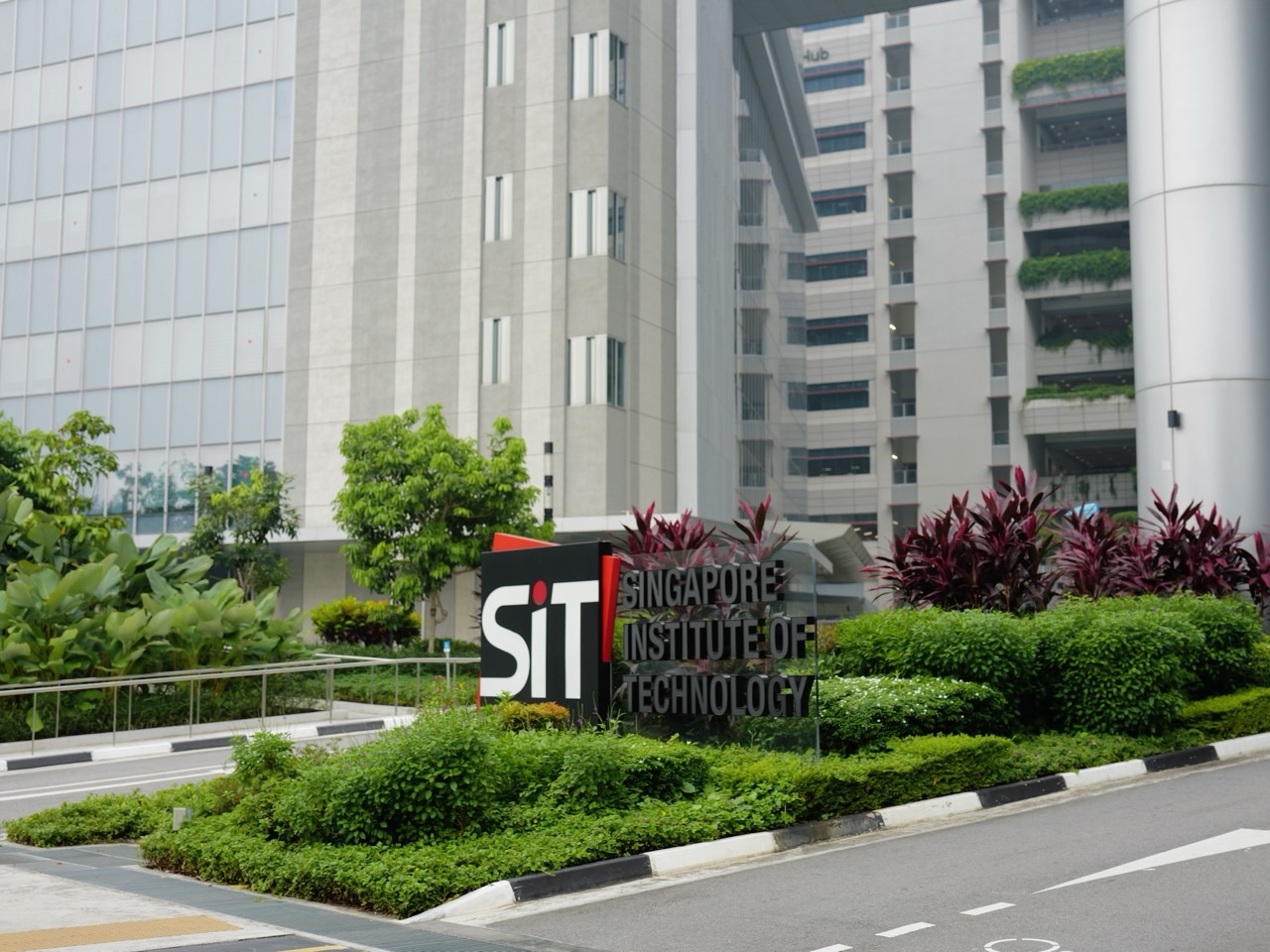
Punggol residents who work in engineering, facilities, operations, business management or environmental programmes have a dated 2027 sustainability course at SIT Punggol Campus to consider. The Singapore Institute of Technology’s SITLEARN programme lists SDE5405 Sustainability Roadmapping for 5, 12 and 19 March 2027, each scheduled 9am–6pm, at 1 Punggol Coast Road, Singapore 828608. The advertised application deadline is 12 February 2027 at 11.59pm.
Did you know? Unlike a general environmental talk, this is a credit-bearing module in SIT’s Graduate Certificate in Sustainability Principles and Practices pathway. SIT states that participants seeking a Certificate of Attainment must attend at least 75% of the module and pass a project assignment worth three credits toward that graduate-certificate pathway. It is not an automatic degree, a guaranteed Chartered Engineer (SG) qualification or a public exhibition that anyone can drop into.
The listed full course fee is S$3,597 including GST, with published after-funding scenarios of S$1,079.10 for eligible learners in specified 70% categories and S$419.10 under the displayed higher-funding category for eligible older Singapore citizens. Funding is conditional; no resident should assume the largest subsidy applies without SIT’s approval. The official source is SITLEARN SDE5405 Sustainability Roadmapping. This article was checked on 27 October 2026.
Quick answer: the official March 2027 course
| Item | Published information |
|---|---|
| Module | SDE5405 Sustainability Roadmapping |
| Provider | Singapore Institute of Technology, SITLEARN |
| Programme partner | IES Academy |
| March dates | Friday 5, 12 and 19 March 2027 |
| Scheduled hours | 9am–6pm, each of the three days |
| Location | SIT Punggol Campus, 1 Punggol Coast Road |
| Apply by | 12 February 2027, 11.59pm |
| Full GST-inclusive price | S$3,597 |
| Published eligible 70% category | S$1,079.10 payable |
| Published higher-funding category | S$419.10 payable, subject to eligibility |
| Assessment | Project assignment, credit-bearing |
| Certificate threshold | At least 75% attendance and a passing assessment |
| Programme pathway | Graduate Certificate in Sustainability Principles and Practices |
This is a three-day in-person course spread across three Fridays, not a continuous three-week residential camp. A resident must distinguish the 5–19 March date range from the actual three attendance days. SIT can change course particulars; the current organiser page controls applications.
What is sustainability roadmapping?
A sustainability roadmap is a plan that converts broad organisational ambitions into measurable work. It links the present situation to outcomes an organisation wants to reach, with responsibilities, budgets, evidence and realistic milestones.
A company may say that it wants to reduce energy use, use water carefully or improve procurement. Those are intentions. A roadmap identifies which assets or activities matter, what data is available, how actions will be prioritised, who makes each decision and what is needed to verify progress.
A roadmap is not simply a poster with green leaves or a promise to become “carbon neutral” by a distant date. It must address real operating constraints, including trade-offs, costs, staff capacity and how results are measured.
That distinction is central to SIT’s official module description. The course combines principles, case studies and practical exercises to build sustainability strategies suited to different organisations.
Why a sustainability course in Punggol matters
Punggol Digital District and SIT bring together public infrastructure, education, industry and everyday urban life. The local environment offers visible examples of topics that sustainability professionals analyse, including district cooling, energy management, water systems and sustainable buildings.
But it would be misleading to say this module includes a guided tour of every Punggol installation or guarantees a visit to an operating facility. The official SDE5405 page does not make that promise. The location is the SIT campus; the actual learning agenda belongs to the provider.
Residents can use Punggol as a source of real-world questions. How does a district measure resource savings? What is an appropriate baseline? How are competing objectives evaluated? Which organisation is responsible for a claimed result?
For neighbourhood context, the Punggol Digital District cooling guide and PDD rainwater-saving challenge discuss systems that can stimulate further inquiry without being represented as part of the SIT curriculum.
Who should consider SDE5405?
SIT identifies sustainability officers, policymakers, managers, business owners and learners seeking stronger sustainability expertise across different sectors. This is wider than an engineering-only audience, although the module also supports a professional engineering chartership pathway.
A manager may need to connect sustainability targets with business decisions. A facilities professional may be responsible for energy or water performance. A policymaker may be evaluating implementation options and stakeholder responsibilities. A business owner may need to understand which improvements are credible and affordable.
These are examples consistent with the advertised audience, not a claim that SIT customises an entirely separate syllabus for each job title. Participants are expected to engage with organisational sustainability concepts and the specified academic prerequisites.
The important question is whether you currently make, influence or aspire to make implementation decisions, rather than whether sustainability sounds fashionable.
The prerequisites have two different routes
The official module clearly separates learners not pursuing Engineering Sustainability Chartership from those who are pursuing the Chartered Engineer (SG) in Sustainability Sector Certification Programme through the Institution of Engineers, Singapore.
For people not pursuing chartership, SIT specifies a bachelor’s degree from a recognised university. For the chartership route, it specifies a Washington Accord degree or equivalent programme recognised by the Professional Engineers Board, plus at least four years of engineering work experience.
These are not interchangeable statements. Somebody without an engineering degree should not assume that taking SDE5405 automatically meets a chartership requirement. Likewise, a person with a relevant bachelor’s degree is not automatically enrolled in a professional chartership process.
The module page directs chartership candidates to the appropriate IES Chartered Engineering Board registration requirements. Verify these conditions with the relevant bodies before paying, particularly if the credential is the primary reason for attending.
What does IES Academy’s participation mean?
SIT identifies IES Academy, associated with the Institution of Engineers, Singapore, as a programme partner. The module is also mapped to IES CEng (Sustainability) EM4: Sustainability Strategy and Roadmap.
This relationship is a useful part of the official programme context. But a course developed in collaboration with IES Academy is not an automatic award of Chartered Engineer status. Professional certification can involve academic qualifications, experience and an application or assessment process outside a single module.
If you are not pursuing chartership, the module may still be relevant as graduate-level continuing education. The correct pathway depends on your learning goals and existing qualifications.
Ask SIT and IES about recognition if you need this module for a formal professional route. Do not infer recognition in an unrelated certification programme simply because the course has a similar name.
Why credit-bearing assessment matters
SIT states that the module carries a three-credit assessment that can be stacked toward its Graduate Certificate in Sustainability Principles and Practices. A learner must meet the 75% attendance requirement and pass the project assessment to receive a Certificate of Attainment.
This differs from merely registering for a community information talk. A credit-bearing assignment requires sustained analysis and completion of an assessment under the university’s rules.
The page indicates that participants who meet attendance requirements but do not pass receive a Certificate of Participation instead. The distinction should be understood before making a career or credentialing decision.
One three-credit module does not, by itself, constitute completion of an entire Graduate Certificate. SIT’s separate programme requirements control what additional modules are needed.
The course timetable: three Fridays, not fifteen weekdays
The detailed schedule lists 5, 12 and 19 March 2027, each 9am–6pm. The broader course-run field displays 5–19 March, which can look like a long continuous period when viewed in a search snippet.
A working adult needs to request leave or employer approval for the three specified Fridays, not every weekday in between, unless SIT issues additional instructions about assessments or attendance.
Nine hours between 9am and 6pm is the scheduled daily window, not a promise of nine hours of lectures without breaks. Actual teaching and assessment arrangements may vary.
For a parent managing school pickup, caregiving or other commitments, the timetable matters more than an abstract “three-day programme” label. Include travel time to the university and any preparation for the project assignment.
What does sustainability mean beyond carbon emissions?
The official module considers environmental, social and economic dimensions of sustainability. That broad framing matters because reducing one environmental burden can sometimes shift costs or risks elsewhere.
An organisation might lower electricity demand but increase maintenance complexity. A product change might reduce packaging waste but create higher transportation needs. A new industrial process might improve resource efficiency while requiring worker retraining.
A sound roadmap asks which outcomes are being improved, what trade-offs arise and who bears the costs. It also recognises that different organisations face different operational constraints.
Not every sustainability initiative is a carbon-credit programme or a solar-panel installation. Procurement, building operations, water, materials, management decisions and reporting can all be relevant.
Start with a baseline
A roadmap cannot show progress credibly without understanding the starting point. A baseline might describe energy consumed by a building, water used by a process, waste generated by an operation or a defined set of social and economic measures.
The baseline needs a time period, units and method. “Our factory uses too much electricity” is less useful than measured monthly consumption normalised where appropriate for production, floor area or operating hours.
If production volume doubles, absolute energy use may rise even though the process becomes more efficient per unit. Conversely, a lower absolute bill might simply reflect a temporary reduction in activity.
The purpose of measurement is to distinguish actual improvement from changes in the conditions under which performance is recorded.
A worked example: an energy baseline
Imagine a fictional small building that used 120,000 kWh of electricity during a baseline period and 108,000 kWh in a comparable later period. The measured decrease is 12,000 kWh, or 10% of the original electricity consumption.
That is a useful arithmetic result, but it does not automatically establish an exact greenhouse-gas reduction, financial saving or causation. To estimate emissions, an organisation would need a suitable applicable emission factor and defined accounting boundaries. To estimate cost, it would need the relevant tariff and charges.
The organisation should also ask whether weather, occupancy and operating hours changed. A sound roadmap pairs targets with a plan for interpreting data correctly.
These numbers are invented teaching examples, not statistics about any Punggol building or claim made by SIT.
A water-efficiency example
Suppose a fictional operation used 20,000 cubic metres of water in one comparable period and 18,000 later. The reduction is 2,000 cubic metres, representing 10% of the earlier volume.
The organisation should ask what changed. Did it repair leaks, alter a process, lower output or substitute another source? These possibilities have different implications for performance and cost.
A useful roadmap would assign someone to investigate the cause, maintain the improvement and report on measurement uncertainty. A headline figure without context can create false confidence.
Punggol’s own urban water systems offer a reminder that resource management depends on infrastructure and operating decisions, but this fictional example is not an official performance statement for Punggol Digital District.
Why stakeholder perspectives matter
SIT’s learning outcomes include evaluating the role of stakeholders in advancing organisational sustainability. In practical terms, a plan may depend on managers, engineers, operators, suppliers, finance teams and the people affected by the changes.
A technically elegant proposal can fail if no team is responsible for maintenance. A cost-saving initiative can create problems if frontline workers are not trained or if suppliers cannot meet a new requirement.
Stakeholder engagement should not be treated as a checkbox added after decisions are made. People responsible for implementing an initiative often know important details about how the system behaves in daily use.
A roadmap should explain whose input is needed, who has decision authority and how concerns will be addressed during the project.
What counts as an achievable target?
A target should be specific enough to evaluate while remaining linked to the organisation’s actual capabilities. “Be the greenest company” is not measurable unless the organisation defines what it means and what evidence would support it.
A better target might identify a process, indicator, baseline, deadline and accountable owner. For example, a fictional team might aim to reduce measured electricity use per unit of output by a defined percentage under comparable conditions.
Targets should also disclose material assumptions. A project dependent on equipment that has not been approved, or on supplier behaviour outside the company’s control, carries uncertainty.
The course’s focus on practical roadmaps helps decision-makers understand that ambitious language is not the same as operational readiness.
Do all organisations need the same roadmap?
No. A school, engineering company, restaurant, hospital and financial-services firm have different activities and impacts. One shared template can help structure thinking, but actual priorities must follow material issues and credible data.
A small business may begin by understanding energy and waste, whereas an industrial company may need more complex emissions, process safety, supply-chain and equipment planning. A public organisation may focus on service access and responsible procurement alongside environmental performance.
SIT’s module describes creating roadmaps tailored to organisational needs. That is more useful than a fixed checklist that assumes identical budgets and responsibilities.
Participants should approach the project with a clear organisational or hypothetical case rather than expect a one-size-fits-all result.
The difference between a roadmap and a report
A sustainability report communicates information about past or current performance. A roadmap lays out an intended path for future actions, responsibilities and verification. The two are related but not equivalent.
An organisation may have a polished annual report while lacking a funded implementation plan. Another may run practical improvement projects but report them inconsistently. The strongest management approach connects evidence, planned action and review.
A roadmap also needs mechanisms for updating assumptions. Energy prices, regulations, equipment performance and business conditions can change. A five-year plan should not become an excuse to ignore what was learned in the first year.
Ask whether the proposed measures lead to real decisions, not merely more graphics and indicators.
What is greenwashing?
Greenwashing is a broad term for presenting environmental claims in a way that misleads about actual performance or impact. A sustainability roadmap should help an organisation avoid claims it cannot support.
For example, a company might advertise a large percentage reduction while leaving out the fact that a major activity was excluded from the calculation. Or it might describe a small pilot as though the entire operation has changed.
The appropriate response is to define the scope, units, baseline, assumptions and verification method before publishing a claim. Do not infer from an attractive building or a company’s branding that its environmental goals have been achieved.
This article does not accuse any specific Punggol organisation of wrongdoing. It explains why careful measurement matters to managers working on sustainability.
Cost and payback: another illustrative exercise
Imagine a fictional facilities upgrade costing S$48,000 that is expected to reduce annual operating expenses by S$12,000, before maintenance differences and other relevant costs. The simple payback is four years.
That quick calculation is useful for screening, but it is not a complete investment decision. A full business case may need financing, ongoing maintenance, equipment life, uncertainty and a discount rate.
If annual savings were only S$8,000, simple payback would stretch to six years. That sensitivity can change a company’s priorities even though the equipment is identical.
A sustainability professional needs to connect environmental performance with financial feasibility rather than regard them as unrelated questions. All amounts here are hypothetical and not course fees or vendor offers.
Governance: who is accountable?
A roadmap needs owners at different levels. Senior leaders may approve strategy and budget. Operational teams implement changes. Finance professionals assess cost. Relevant specialists check safety, data quality and regulatory requirements.
If no one is accountable for collecting performance information, even a well-designed target can become unreportable. If the people responsible for implementation lack authority or resources, a plan can stall.
A useful roadmap therefore links each action to a decision-maker, an operating team, a budget and a review date. It should also say when a project needs reconsideration.
This is the difference between a programme of work and a wish list.
What the SIT module says learners will do
The published syllabus includes explaining sustainability and its relevance to organisations, identifying environmental, social and economic dimensions, examining implementation challenges and opportunities, analysing approaches to sustainable development and creating practical roadmaps.
It also includes critically evaluating stakeholder roles. Together, these outcomes suggest an emphasis on decision-making and the ability to connect multiple organisational functions.
The webpage does not promise an individually audited roadmap for every participant’s employer. A project assessment can demonstrate learning, but independent implementation and validation remain separate workplace responsibilities.
A participant should ask whether their intended organisation case is suitable for the assignment and what type of data can be used safely.
Do you need to bring company records?
Because the module includes a project, a learner may naturally want to use a real organisation as a case. However, the published course page does not grant permission to disclose confidential operating data, supplier contracts or customer information during training.
Ask SIT what kind of case material is expected. Where necessary, use authorised, anonymised or synthetic information rather than exposing sensitive files.
If employer data would be useful, seek the required approval and understand whether any sharing is allowed. A professional course cannot override workplace confidentiality requirements.
You can often learn the structure of a roadmap using a realistic fictional example without revealing trade secrets.
Sustainability careers in and around Punggol
A resident may see possibilities in facilities management, energy analysis, environmental reporting, sustainable procurement, policy, engineering or business transformation. The existence of a SIT course does not prove that a specific local employer is recruiting for all these positions.
Punggol Digital District’s systems can help explain why such competencies matter, but job vacancies must be checked with employers and official recruitment platforms. Completing SDE5405 is not a guaranteed offer of employment.
For wider context, the Punggol green engineering and smart buildings career guide explores possible work pathways. Treat forecasts differently from confirmed enrolment and job requirements.
The strongest career plan joins relevant education with actual experience and evidence of competence.
Does the course suit a mid-career worker?
Potentially, if the learner meets the academic prerequisites and wants to make better sustainability decisions. A manager already working on facilities or operations may be able to apply the concepts to a real business case.
But three Fridays at university, assignment work and a significant fee—even after potential subsidy—are real commitments. A person should discuss schedule, funding and relevance with their employer if workplace support is needed.
Do not assume all employers provide paid training leave or reimburse the fees. The public course page does not establish that.
A mid-career learner with no relevant academic background should ask SIT about eligibility rather than treating an attractive subsidy rate as sufficient for admission.
The exact funding categories
SIT displays a full fee of S$3,597 and the following conditional amounts: S$1,079.10 payable for its eligible 70% categories, S$419.10 for the stated higher-funding older-Singapore-citizen category, and the full S$3,597 for its published non-funded category.
The page’s category language for the enhanced subsidy uses “Above 40”. If the age boundary matters for you, obtain a clear eligibility decision from SIT rather than infer a rule from a brief table heading.
The programme also references up to 90% funding, but that is not a promise that an applicant can combine every credit, allowance or subsidy. Final payment is subject to the provider’s actual process and relevant scheme conditions.
Do not make a non-refundable personal financial commitment based on the lowest displayed fee alone.
Full cost versus opportunity cost
The course occupies three Fridays and includes a project assessment. A worker may need to arrange workload coverage, family care or employer approval. These activities have a time cost even if the course fee is subsidised.
Consider a hypothetical manager whose employer pays the approved course fee and grants normal paid training days. Their direct personal cash expense may be low, but the business still invests staff time.
A self-funding learner without paid leave faces a different decision. They should understand both course cost and any income effect from the three days away from work.
Neither situation is stated as an employer policy by SIT. These are planning cases for residents comparing real commitments.
Why 12 February is the important date
SIT’s March course begins 5 March, but the application deadline is 12 February 2027 at 11.59pm. Waiting until March to search for a “March course” may be too late for this announced run.
If you need eligibility clarification, employer sponsorship or funding confirmation, start early. The displayed deadline is not a guarantee that admission is available until the final minute.
Save the application confirmation, but do not treat submission as final enrolment until SIT has confirmed the place and payment conditions.
A useful Punggol events calendar should make registration deadlines as visible as event dates. Otherwise, readers discover opportunities only after they can no longer act.
Getting to SIT Punggol Campus
The official venue is SIT Punggol Campus, 1 Punggol Coast Road, Singapore 828608. Once accepted, ask for the correct block and classroom; the programme page does not identify a particular teaching room.
Do not navigate to One Punggol CC at 1 Punggol Drive or Punggol 21 CC at 80 Punggol Field. Those are separate venues. The shared word Punggol does not make their addresses interchangeable.
Plan to reach the relevant university building before the 9am start and allow for transport and orientation. A participant attending on three separated Fridays should retain the joining instructions rather than assume all room allocations remain unchanged without notice.
Any accessible-entry or parking requirement should be checked through SIT’s current campus and course guidance.
What to ask before enrolling
- Does your education and work experience satisfy the relevant non-chartership or chartership prerequisite?
- Will SDE5405 count toward the specific graduate-certificate or IES pathway you intend to pursue?
- Is the 5, 12 and 19 March timetable still confirmed, including the 9am–6pm daily window?
- Is the 12 February application deadline still in force for your intended intake?
- What is the exact tuition fee after your individual funding assessment?
- How much time will the project assignment require outside the classroom?
- May an assignment use an employer case, and what confidentiality conditions apply?
- What must be completed for a Certificate of Attainment and three academic credits?
- Where is the precise classroom and are any devices or materials required?
- What happens if a participant misses a training day or withdraws?
These questions should be answered by the course organiser before a person treats this as a guaranteed credential.
Frequently asked questions
Is the programme held in Punggol? Yes. SIT lists 1 Punggol Coast Road as the March 2027 venue.
Is it 5–19 March every day? No. The detailed timetable specifies 5, 12 and 19 March 2027, three Fridays, each 9am–6pm.
When do applications close? The official course-run section says 12 February 2027 at 11.59pm.
Is the full fee S$3,597? That is the published GST-inclusive fee before applicable funding. SIT also lists conditional after-funding scenarios.
Can any resident receive S$419.10? No. That figure relates to a particular enhanced-funding category. Eligibility must be confirmed.
Does this course award a Graduate Certificate by itself? No. It is a three-credit module within a larger graduate-certificate pathway. Completion of one module is not completion of the entire qualification.
Is it a Chartered Engineer qualification? No. It is mapped to an IES sustainability pathway, but chartership has separate professional prerequisites and requirements.
What is the assessment? The page specifies a project assignment, with a 75% attendance requirement and a passing assessment for Certificate of Attainment.
Must I be an engineer? SIT provides different prerequisites for chartership and non-chartership applicants. The latter route specifies a recognised bachelor’s degree.
A practical application checklist
- Open the official SDE5405 Sustainability Roadmapping page.
- Mark the three Fridays: 5, 12 and 19 March 2027.
- Plan for the 12 February, 11.59pm application deadline.
- Verify academic qualifications and whether you are pursuing IES chartership.
- Check your specific funding eligibility and payable course fee.
- Determine what organisational sustainability problem you want to analyse.
- Ask about the project assignment, three-credit recognition and attendance threshold.
- Secure employer approval or personal arrangements for three workdays if needed.
- Protect confidential business data during course exercises.
- Confirm the SIT campus classroom and current joining instructions.
Official verification and local context
Primary source: Singapore Institute of Technology — SDE5405 Sustainability Roadmapping. It supports the exact March teaching dates, campus, fee categories, prerequisites, IES mapping, project assessment and application deadline.
Programme partner and professional pathway: The official course page identifies IES Academy and the Chartered Engineer (SG) sustainability mapping. Applicants seeking chartership should follow the separate IES Chartered Engineering Board requirements referenced by SIT.
Punggol systems to explore: Punggol Digital District cooling, PDD rainwater management questions, Punggol green engineering careers and the Punggol Events guide.
Checked 27 October 2026. The organiser may change dates, funding, assessment arrangements or venue instructions. Examples in this article are fictional calculations for learning and not reported performance of any local organisation.
What should Punggol residents take away?
A verified three-day, credit-bearing SIT Sustainability Roadmapping module is scheduled in Punggol for March 2027, with an application deadline before the course month begins. It is relevant for professionals who need to turn sustainability ambitions into responsible, measurable organisational work.
The best reason to enrol is a clear job or learning need: you want to know how to define a baseline, compare choices, involve the right people, cost an initiative and verify what changed. Confirm the correct entry route, the three March dates and your actual funding eligibility. A useful sustainability roadmap should make a real organisation better at decisions—not merely better at promises.


