
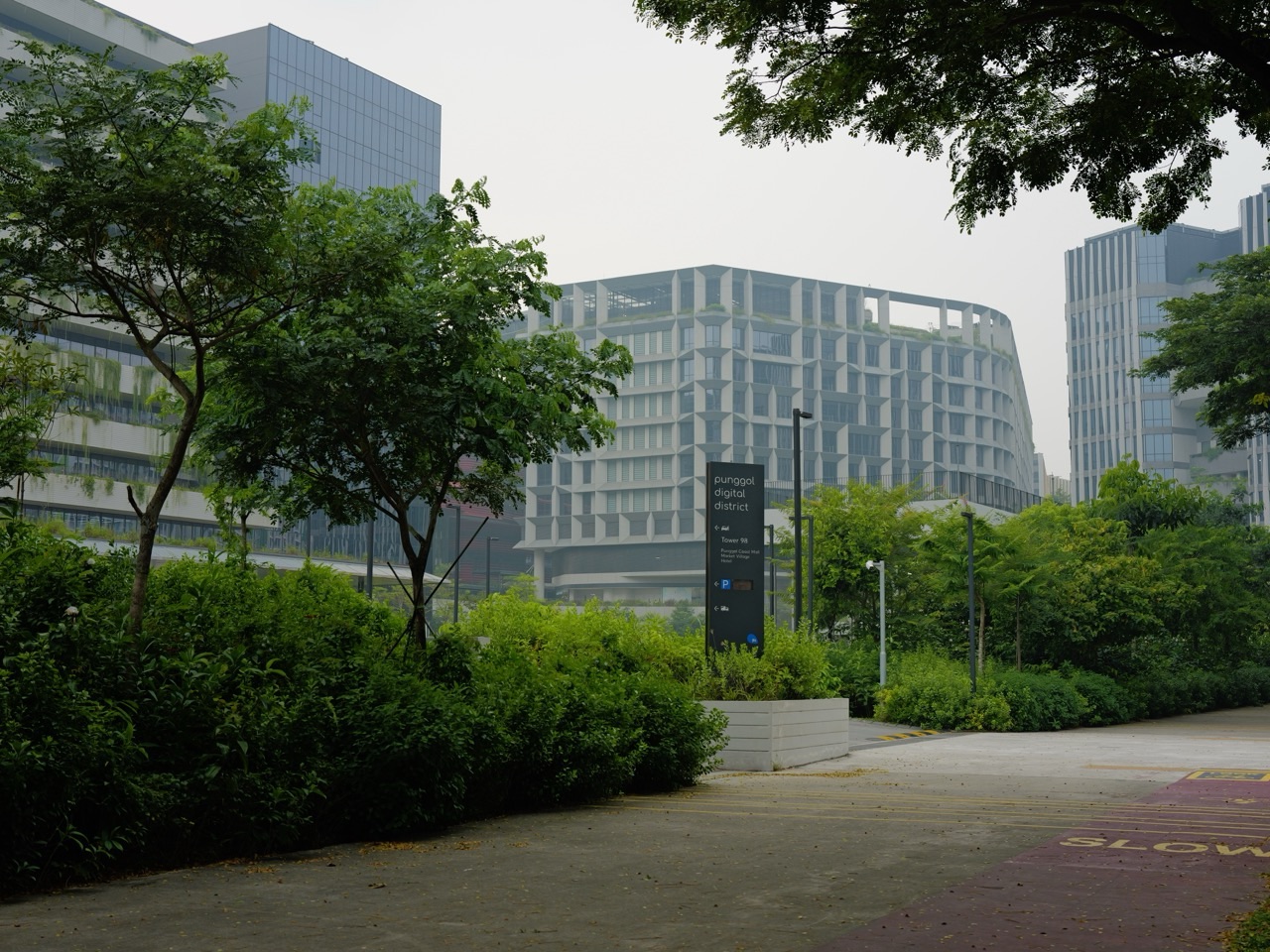
Quick answer, 27 October 2026: Punggol’s 2027–2028 career opportunities are not limited to software and office work. Smart buildings, sensors, autonomous robots, lifts, cooling systems, energy management and maintenance all depend on people who understand physical equipment, safe operations and data. JTC has announced smart-facility trials and robotics collaborations within Punggol Digital District. Those are credible signals of technical activity—not guarantees that a specific number of technician jobs will open next year.
Did you know that a robot moving through a building creates work for several different professions before it delivers a parcel? Someone must map its route, check safety, maintain equipment, manage system permissions, respond to faults, clean and repair its physical components, handle users and decide when a human must intervene.
A student good at hands-on troubleshooting, an ITE graduate, a polytechnic learner or an experienced technician may find this future more appealing than spending every working day writing code. The important question is which task you can do safely, reliably and to a recognised standard.
A 60-second technical career forecast
| Area | Evidence as at October 2026 | Careful 2027–2028 interpretation |
| Physical AI and robotics | JTC/IMDA/SIT announced a mixed-use robot testbed for later in 2026 | More testing and integration work is plausible, but trials are not proof of widespread permanent hiring. |
| Smart-facility operations | JTC announced Panasonic’s use of the Open Digital Platform for tests in July 2026 | Skills in monitoring, diagnosis and building management may gain relevance if deployments succeed. |
| Energy and environmental systems | PDD includes district-scale energy and sustainability infrastructure | Technicians and engineers may need both physical-system and data skills. |
| Maintenance, safety and service | A functioning precinct needs daily operations irrespective of high-tech growth | Workforce requirements depend on contracts, shifts, licenses and service models. |
| Best student preparation | Mathematics, measurement, physics, electronics, safety and clear technical reporting | A carefully documented practical project is more persuasive than a futuristic label. |
This is a conditional scenario analysis. It is not a salary prediction, a list of currently vacant posts or an official JTC manpower forecast.

What has actually been announced?
On 20 May 2026, JTC described a proposed multi-operator robotics testbed in a mixed-use public area of PDD, involving IMDA, JTC, SIT and industry partners. The announced use cases include food and parcel delivery, security patrolling and cleaning. The release stated that the testbed was to launch later in 2026, with safety conditions and operational safeguards. It did not disclose a definitive 2027 technician recruitment number. Read the May 2026 JTC announcement rather than treating a promotional video as a live vacancy notice.
On 9 July 2026, JTC announced that Panasonic would use PDD’s Open Digital Platform to develop and test smart facility management solutions. JTC said the platform aggregates data from more than 20,000 sensors and various systems, with a district digital twin for visualising and simulating conditions. This is significant because technicians increasingly need to understand what sensors indicate and whether the equipment is actually behaving as the software suggests. See the JTC–Panasonic announcement.
The important limitation: the existence of a pilot, sensor network or research partnership does not mean every imagined feature is in full commercial service. Treat planned, tested, deployed and scaled as four different stages.
Six career families hiding in a smart district
1. Building systems and facility management
Modern buildings rely on ventilation, cooling, electrical distribution, fire protection, lifts, water, controls, access systems and routine inspection. A facilities team needs scheduled maintenance, fault management, procurement, incident logs and coordination with specialist contractors. Digital dashboards help only when someone can connect an unusual reading to a physical cause.
Possible job families include facilities technicians, maintenance planners, electrical and mechanical engineers, building-management-system specialists, energy managers and operations supervisors. Exact scope depends on qualifications, licences, employer and whether work is performed in-house or contracted.
2. Robotics deployment and field service
A robot engineer designs or changes parts of a system. A deployment specialist maps a real building, checks communications, tests navigation, coordinates with security and makes sure the robot is safe around people. A field technician may diagnose sensors, batteries, motors and dock connections. An operations controller may handle exceptions and dispatch a human when a robot cannot complete a task.
These are different work functions, not interchangeable titles. In an interview, ask whether the job is research, installation, system integration, routine operations or warranty support. Some roles may require weekend testing or response outside office hours.
3. Cyber-physical system safety
PDD makes an important idea visible: connected equipment is both a machine and an information system. A door controller that receives the wrong command can create a real safety or access problem. Engineers must therefore coordinate physical fail-safes, cybersecurity, network reliability, permissions and maintenance practices.
Someone who can speak across electrical engineering, operations and information security may help prevent the classic failure of treating each system separately. No amount of software fluency replaces safety training or legally required authorisation for regulated work.
4. Energy efficiency and district cooling
District cooling and building energy management depend on heat transfer, fluid systems, measurement, pumps, chillers, controls and maintenance. Some roles work with data to spot abnormal consumption or compare predicted and observed efficiency. Others work directly with plant or site equipment.
A 2027–2028 scenario is growing demand for people who can reduce unnecessary energy use without compromising comfort, safety or availability. The difficulty is demonstrating a real saving: weather, occupancy, equipment load and baseline choice all affect the comparison.
5. Logistics, cleaning and last-metre service redesign
Robotics demonstrations in public spaces often focus on deliveries, security and cleaning. The actual future workplace may contain both people and machines, with workers supervising exceptions, restocking, handling customers, maintaining service quality and preserving accessibility.
Automation can also change staffing and reduce certain repetitive tasks. It would be misleading to promise that every pilot creates additional jobs. An honest forecast examines redeployment options, skill upgrading, employment terms and the quality of remaining work.
6. Testing, quality assurance and technical documentation
Before a physical system is trusted, teams must run defined tests: does the lift interface recover after a failed command? What happens if communications drop? Can a wheelchair user safely pass? Are manual override procedures documented? Quality and documentation work are not glamorous, but they often determine whether technology can leave the laboratory.
The difference between a smart dashboard and a safe building
| Dashboard says | Physical question | Who may need to act |
| Cooling energy is unusually high | Is the chiller operating differently, or has load and weather changed? | Facilities engineer, technician and energy analyst |
| Delivery robot stopped | Is the path blocked, the lift unavailable, or the robot in a safe stop? | Robot supervisor, field technician and site operator |
| Sensor reports missing data | Is the device faulty, the network unavailable, or the signal being misread? | Instrumentation, IT/network and maintenance teams |
| Door access control alert | Is access correctly configured, and what is the safe recovery route? | Security, facilities and authorised system personnel |
| Maintenance forecast indicates a fault | Does inspection confirm actual physical deterioration? | Appropriately qualified maintenance staff |
This is a useful school project framework too: write down what a system measures, what a reading cannot tell you, what failure looks like and when a human has to check.
Forecast for 2027 and 2028: three cases
Case A: pilots become repeatable operations
If a trial delivers reliable service at acceptable cost, organisations may expand deployments. That can support installation, training, maintenance, controls, field support and contract management. A jobseeker can look for evidence such as repeat procurement, multiple sites, documented safety procedures and operational vacancies.
Case B: pilots continue but scaling is slower
Research, testing and integration may still need specialised staff, but the workforce could remain small and project-based. A permanent career strategy should not depend on a single trial surviving its first year.
Case C: operations expand but tasks are redesigned
Employers might use automation to reassign existing teams rather than hire additional people. Workers who can manage a broader service process, maintain equipment and safely resolve exceptions could gain options, while some repetitive activities shrink.
None of these outcomes is certain for 2027 or 2028. The reader should revisit JTC’s announcements and actual job advertisements quarterly rather than invent an exact growth percentage.
Which educational route could suit this work?
| Route | Useful first capabilities | Question to ask before enrolling |
| Secondary school | Physics, Mathematics, Design & Technology, coding literacy, clear writing | Do I enjoy diagnosing real systems or only watching their demonstrations? |
| ITE | Electrical, mechanical, mechatronics, electronics or relevant service skills; safe practical work | Which qualifications, industry attachments and licences match employers’ roles? |
| Polytechnic | Engineering fundamentals, automation, building services, testing, project work | Will I handle real equipment and document failures, not only complete simulations? |
| University | Deeper design, modelling, safety, controls, data and research methods | Is the course aligned to engineering practice and actual industry problems? |
| Experienced worker | Domain experience plus sensors, documentation, data, safe work and supervisory skills | Can I use existing competence to move into a revised role without starting from zero? |
SIT’s Punggol campus is a relevant local place to understand applied learning. Its programmes, admission rules, modules and placements must be checked individually. A Punggol address or a futuristic course title alone is not accreditation.
One worked example: a cooling-system investigation
Suppose a facility reports electricity consumption rising despite unchanged opening hours. A beginner might announce that the system is wasteful. A careful trainee would first ask: Were outside temperatures and humidity comparable? Did occupancy rise? Was any major equipment added? Were maintenance schedules followed? Are meter readings complete? Does higher electricity use reflect a fault or a legitimate change in demand?
Next, the trainee produces a short report with a diagram, baseline calculations, safe inspection recommendations, uncertainty and a proposal for follow-up measurement. The trainee does not open electrical panels or adjust refrigerant systems without authorisation. That combination of physics, data and responsible limits demonstrates the habits employers need.
The household reality of technical jobs
- Location: A company serving PDD may assign workers to multiple sites. Confirm the reporting workplace and travel.
- Shifts: Maintenance, security, delivery support and essential services can operate outside school-friendly office hours.
- Safety: Check required licences, supervision, risk assessments, protective equipment and training.
- Pay: Compare basic pay, overtime rules, allowances, standby expectations and contract length rather than one quoted figure.
- Progression: Ask whether the employer offers cross-training in controls, data, supervisory work or recognised technical competencies.
- Durability: Look for long-term operating contracts and repeat maintenance needs, not merely a one-off showcase.
What not to do in response to the robotics boom
- Do not assume learning Python alone qualifies someone to maintain electrically powered equipment.
- Do not treat a robot trial as evidence that the district has adopted all advertised automation at scale.
- Do not experiment on real public paths, lifts, networks or machinery without the operator’s approval and applicable safety controls.
- Do not dismiss hands-on vocational routes. Practical competence, supervision and safety can be valuable and should be respected.
- Do not select a technical programme without checking costs, industry attachment quality, recognised qualifications and the exact entry-level roles it supports.
A four-week skill test for curious Punggol students
- Week 1: Observe one everyday system from a safe public location: cooling, lighting, escalators, waste collection or delivery. Draw a block diagram, not a speculative internal schematic.
- Week 2: Research how that system works using legitimate textbooks, public engineering materials and manufacturer instructions.
- Week 3: Build a harmless tabletop simulation or analyse an openly supplied dataset. Record measurements and sources of error.
- Week 4: Explain what the model leaves out, what could fail, who would be affected and which qualified professional would need to intervene.
Frequently asked questions
Are robotics technician jobs guaranteed in Punggol by 2027?
No. The 2026 JTC announcements describe programmes, partners and testbed intentions, not guaranteed vacancy numbers. Check actual employer advertisements.
Is engineering only for university graduates?
No. Different tasks call for different qualifications and competencies. Vocational, diploma, degree and professional routes can all contribute, subject to safety and statutory requirements for the specific job.
Will robots replace cleaning and security workers?
Trials may automate selected tasks while changing supervision, safety and service roles. The effects on employment are employer- and task-specific; it is irresponsible to promise either total replacement or guaranteed job growth.
Should I focus on green technology instead of computer science?
They overlap. Sensors, software and data are increasingly used to run physical systems. Choose a starting discipline that fits your aptitude, then learn enough of the neighbouring field to work together effectively.
Official sources and related local articles
- JTC/IMDA/SIT: May 2026 robotics testbed announcement
- JTC: July 2026 Panasonic smart-facility collaboration
- JTC: LaunchPad @ PDD and district testbed framework
- JTC: August 2026 construction technology and human control
- eduKatePunggol: district cooling infrastructure and capacity
- eduKatePunggol: smart maintenance learning announcement
- Part 1: what the district jobs forecast really means
- Part 2: AI, cybersecurity and fintech skills outlook
The long-lasting lesson
The best technician of 2028 may not be the person who has memorised the most brand names. It may be the person who can measure carefully, find a fault, explain uncertainty, coordinate with others and return a system to safe service. Punggol’s smart-district development offers a compelling local classroom for that way of thinking—even before a specific future vacancy can be confirmed.


