
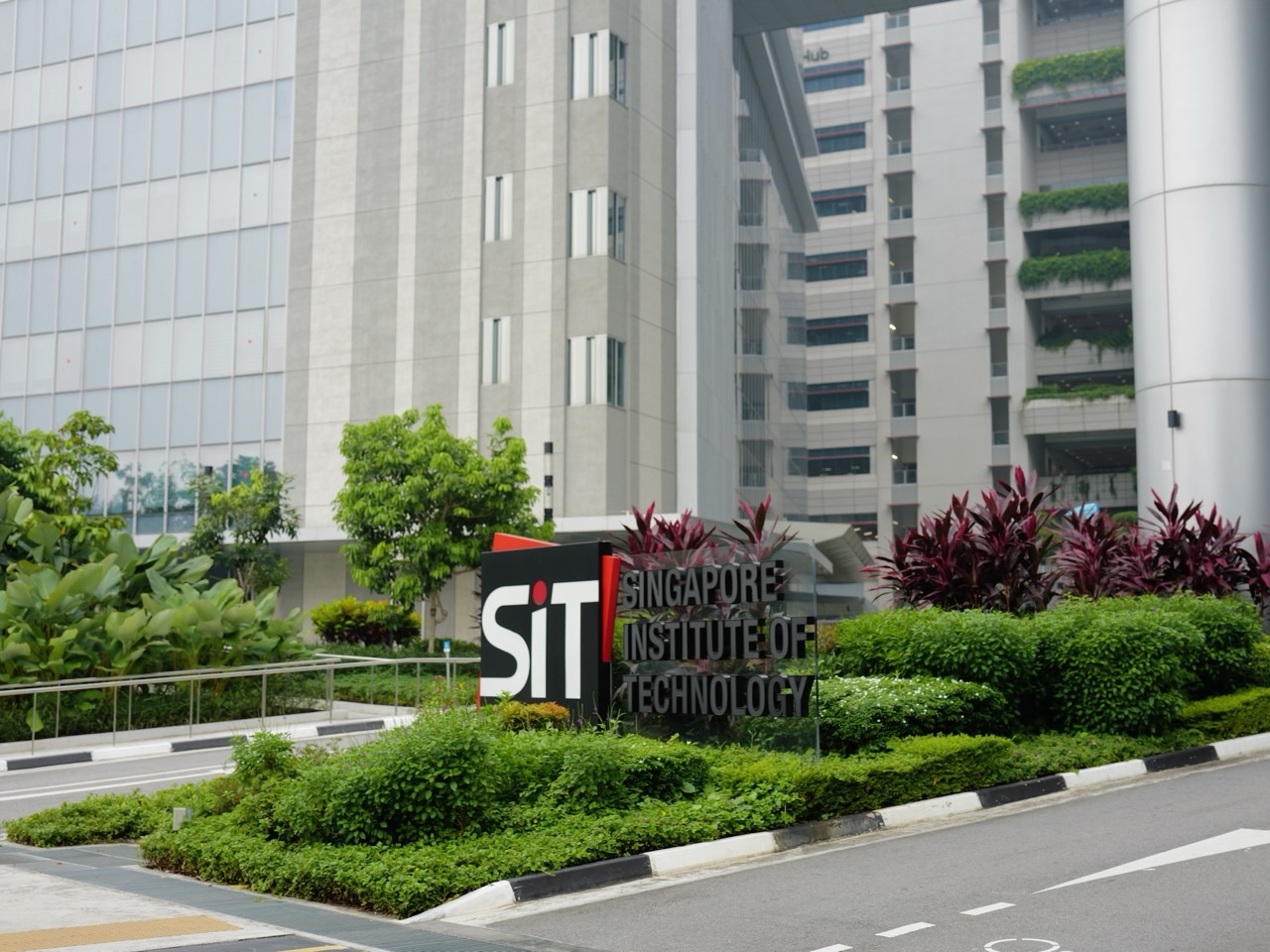
SIT Punggol Campus has become an important place for professionals studying how artificial intelligence affects real organisations. One of its published 2027 courses addresses a question that businesses cannot ignore: when an AI agent can use software tools and act across systems, who controls its permissions, detects mistakes and stops it when something goes wrong?
Singapore Institute of Technology’s SITLEARN page for Agentic AI Risk and Security contains a schedule table listing 11–12 January 2027, 9am–6pm, with a later 2–3 March 2027 run. It describes an in-person, two-day programme for risk, compliance, technology governance, internal audit and cybersecurity professionals, delivered in the wider SITLEARN Agentic AI series at SIT Punggol Campus.
Did you know? The course page has a significant booking distinction: despite publishing those January and March dates in its schedule, the separate “Course Runs” area says “There are no upcoming course runs at the moment.” That means the dates are genuinely published by SIT, but readers should not assume an active, bookable January place or invent an application deadline. The correct next step is to open SIT’s Agentic AI Risk and Security course page and contact SITLEARN for the current registration status.
The public page gives a full fee of S$2,507 including GST and illustrates conditional after-funding charges of S$752.10 or S$292.10 for qualifying categories. Those are not automatic prices for every resident. This article was researched on 27 October 2026 and separates what is scheduled, what is uncertain and what a Punggol professional needs to know before choosing the course.
What has SIT actually published?
- Programme: Agentic AI Risk and Security
- Organiser: Singapore Institute of Technology, SITLEARN
- Published January schedule: 11–12 January 2027
- Published March schedule: 2–3 March 2027
- Course-day hours in the table: 9am–6pm
- Delivery: in-person, with the Agentic AI series advertised at SIT Punggol Campus
- SIT campus address: 1 Punggol Coast Road, Singapore 828608
- Full fee: S$2,507 including GST
- Published eligible 70% fee example: S$752.10
- Published eligible enhanced-funding example: S$292.10
- Intended learners: risk, audit, assurance, cybersecurity, compliance, data governance and technology-control professionals
- Background: about one to two years of relevant experience and familiarity with generative AI concepts and risk frameworks
- Coding prerequisite: none stated
- Assessment: 30 minutes of oral questioning
- Certificate of Attainment: at least 75% attendance and a pass in the non-credit assessment
- Current booking warning: the Course Runs section says there are no upcoming runs at the moment
- Authoritative source: SITLEARN Agentic AI Risk and Security
This is a professional course with a published timetable, not an official announcement that seats are available today. SIT can revise its schedule, fees and admission conditions.
Why a published date is not the same as an available booking
An event can be announced with a date while registration is not yet open, is paused, or has no available sessions in its booking system. On this SIT page, the high-level schedule and the dynamic course-runs section do not convey the same status.
A responsible Punggol events article must preserve both facts. It would be inaccurate to claim “book your 11 January seat now” when the page says no upcoming course runs are available. It would also be incomplete to omit the January date entirely when SIT has deliberately published it in the course schedule.
If you are planning employer approval or professional development, treat 11–12 January as a published planning lead. Contact SIT before paying, reserving leave or counting on the class for a required qualification.
The date to check is the course run actually offered at the time of enquiry. There is no verified application closing date on the reviewed page for this intake, so no deadline is invented here.
Why agentic AI creates new kinds of risk
A conventional generative AI tool may suggest text or answer questions. An agentic AI application may combine language generation with access to other software systems, data, tools and multi-step workflows.
The risk changes when an application can do more than recommend. A system that drafts a purchasing summary is different from one allowed to change vendor records, trigger workflow actions or send information to another service.
The official SIT description focuses on how autonomy changes risk, control and governance. It mentions agent permissions, data exposure, third-party systems, escalation, rollback and incident response.
That is a meaningful professional problem. A plausible-looking response is not proof that the right action was taken, the right data was used or permissions were appropriate.
What is an AI agent in everyday workplace language?
Imagine a fictional employee asking software to prepare a monthly operations summary. A simple assistant might receive figures supplied by the employee and draft a report. An agentic workflow might also retrieve approved records, compare trends and prepare a message to a manager.
Each extra action raises questions. Can it read information unrelated to the task? Can it communicate outside the company? Does it seek approval before making a material change? Can staff see what it did?
These questions are not advanced mathematics. They concern authority and evidence. A risk professional needs to understand the workflow well enough to assess whether the organisation is exposed to preventable mistakes or misuse.
The course is intended to develop that decision-making competence rather than teach attendees to build complex AI models from scratch.
The difference between model risk and action risk
Model risk can involve incorrect or unreliable outputs. Action risk adds the possibility that a system uses an output to perform a consequential operation.
For example, an incorrect draft recommendation is a problem that a reviewer may catch before acting. An incorrect instruction passed automatically to an authorised external tool may create a change that is harder to reverse.
Agentic risk therefore cannot be reduced to a single claim that “AI sometimes hallucinates”. The governance task involves permissions, data boundaries, error detection, transaction safeguards, human approval and response when an operation should be stopped.
The SIT syllabus discusses how agentic risks differ from conventional application and model risks. That distinction is central to the course’s value.
What does least privilege mean?
Least privilege is the principle of granting a system or person only the access reasonably needed to perform an authorised task.
If a tool needs to read a particular set of training documents, it may not need permission to edit customer records or send external messages. If a workflow is intended to prepare a draft, it need not automatically gain authority to publish the draft.
An AI agent should not be trusted with broad powers just because the software makes requesting those powers convenient.
SIT explicitly includes least-privilege design for agent tool permissions among its learning outcomes. The reader should expect a discussion of sensible authority boundaries, not a universal checklist that solves every application.
Why third-party AI vendors matter
Organisations often rely on technology vendors rather than designing every system internally. An agentic product can introduce questions about where data is sent, who controls updates, how tools are connected and what evidence the vendor supplies about security.
A purchase proposal may list a monthly price and impressive features without clearly explaining how the system interacts with sensitive records. Risk assessment must consider those missing operational details.
SIT’s published syllabus includes third-party and vendor AI risk and structured due diligence. It is especially relevant to purchasing teams, auditors and technology governance functions reviewing new tools.
A course certificate does not replace contractual, legal or technical due diligence on a real supplier. The organisation still needs its own appropriate decision process.
A useful fictional vendor-review scenario
Suppose a company is offered a tool that promises to handle routine customer enquiries. Before buying it, a risk reviewer asks whether the system stores conversation history, can update customer accounts, and needs access to payment or identity information.
Those questions do not establish that the tool is unsafe. They establish what must be understood before assigning permissions.
The reviewer might also ask who can change the tool’s instructions, how exceptions are logged and what happens if the vendor service becomes unavailable.
This is a hypothetical example for explaining procurement questions. It is not SIT’s stated classroom exercise or a report about a particular company.
What is a risk register?
A risk register is a structured record of identified risks, their potential consequences, assigned ownership, existing controls and follow-up actions.
The aim is not to produce a long list of frightening terms. It is to make a particular threat or failure mode clear enough that a responsible team can make a decision.
For an agentic system, a register entry might describe unauthorised access to a connected business tool, the relevant safeguards, how misuse would be detected and who should respond.
SIT specifically lists building or updating agentic AI risk-register entries as a learning outcome. That is a practical bridge between abstract AI discussion and ordinary organisational governance.
Preventive, detective and corrective controls
A preventive control seeks to reduce the chance of a problem occurring. A detective control helps identify that something has happened. A corrective control supports response and recovery.
These categories work together. A company may have strong prevention but still require monitoring because prevention can fail. It may detect a mistake quickly but still need a clear method to stop further actions and investigate the effects.
The SIT programme covers mapping agentic risks to preventive, detective and corrective controls. It also addresses incident escalation, containment, rollback and remediation.
A reader should not confuse the existence of these controls with a promise that every incident is reversible. Some actions, once completed or communicated outside the organisation, cannot simply be undone.
A simple analogy: permissions in a school office
Consider a fictional school office in which one staff member may view an activity roster while another is authorised to change it. A third staff member approves certain transactions.
These divisions exist because access and authority should match responsibility. Giving everyone unrestricted power would make errors harder to attribute and prevent.
An agentic application raises a similar question when it connects to enterprise tools: does it only need to read, can it draft a proposed change, or is it allowed to commit that change?
The analogy is useful to explain governance to nontechnical readers. It does not imply that an actual school has adopted AI agents or that its systems operate exactly this way.
Why incident response matters
Risk professionals need a plan for problems that occur despite safeguards. A suspected incident may require careful verification, limiting further actions, preserving relevant information, notifying responsible teams and deciding whether a service should be paused.
SIT lists an applied tabletop simulation called “The Rogue Agent Incident”. That is a guided classroom risk-response exercise, not a public demonstration of an uncontrolled AI system.
Tabletop exercises help people practise roles and decisions without putting a live business operation at unnecessary risk.
The course does not publish a promise that participants will receive detailed attack code or unrestricted access to an operational system. Its focus is governance and response.
What does containment mean for an agent?
Containment means limiting the scope or continuation of an identified problem, using the controls the organisation has deliberately designed.
For an agentic system, planning needs to establish which authorised personnel may pause a workflow, revoke access, investigate activity records or escalate a concern. What is possible depends on the software, infrastructure and operational context.
The strongest approach is not to improvise a response when a problem first becomes visible. Governance should define responsibilities before deployment.
This article deliberately avoids step-by-step exploit techniques. Its purpose is to explain oversight and accountability, which are the professional themes of the SIT course.
Why rollback cannot solve everything
In software, rollback can mean returning certain changes to an earlier state. But an AI-assisted action may have affected people, external systems or communications beyond an internal database.
A wrongly sent external email cannot always be recalled. A customer may already have acted on incorrect information. A linked business process may have advanced to another stage.
This is why the course distinguishes incident containment and rollback. A risk manager should ask what is reversible and what requires a different remedy.
Good incident preparation starts with understanding downstream consequences, not relying on a generic promise of an “undo” button.
What does the first day cover?
SIT’s January timetable lists an introductory day covering the agentic paradigm, enterprise architecture, the economics of autonomy, governance, risk, security, leadership and organisational transformation.
These foundations are useful because a risk professional cannot assess a system accurately without understanding what it is supposed to do and where its authority begins and ends.
The day also includes a roadmap exercise intended to connect abstract principles with organisational decision-making.
This is not advertised as a programming bootcamp. Learners are expected to understand practical governance questions, not to spend both days building a full commercial AI platform.
What does the second day cover?
The course moves into the agent attack surface, model and data security, vendor risk, risk registers, control mapping and the “Rogue Agent” tabletop incident exercise.
The term “attack surface” refers broadly to the ways a system may be exposed to unwanted actions or failures. A defender needs to identify connections and dependencies without assuming that a traditional application security checklist covers everything.
The final published assessment is 30 minutes of oral questioning. The day therefore combines discussion and applied reasoning with an assessment of learning.
The exact exercises and case materials remain the provider’s responsibility; the public page does not authorise distributing its internal teaching content.
Is programming experience required?
The minimum-entry section says prior coding experience is not required. The course is aimed at people with around one to two years of relevant experience in risk, assurance, compliance, cybersecurity, technology governance, internal audit, vendor management or related work.
It also assumes basic familiarity with generative AI concepts and organisational risk or control frameworks.
Those conditions are meaningful. A person who has never worked with a risk framework may need preparation even if they use chatbots frequently. Conversely, an experienced auditor need not become an AI model engineer to understand permissions and accountability.
Ask SIT about your particular background if it does not fit the examples exactly.
Who in Punggol might benefit?
A compliance manager reviewing technology procurement, a cybersecurity professional evaluating new integrations or an internal auditor examining AI governance might find the programme relevant.
A business owner could also be interested in these topics, but eligibility and educational fit should be checked before assuming the course is an introduction for anyone.
Punggol Digital District and SIT create a local setting in which digital work and professional education are visible. But this course does not guarantee employment at any Punggol organisation.
For a broader view of related skills, see Punggol cybersecurity and AI career pathways.
The real fee and conditional funding
SIT lists S$2,507 as the GST-inclusive full fee. Its table displays S$752.10 for eligible learners in stated 70% categories, including the relevant Singapore citizen under-40 and PR/LTVP+ groups.
It also lists S$292.10 for eligible Singapore citizens aged 40 and above under an enhanced subsidy category. An unfunded participant would need to consider the full S$2,507.
These are published category figures, not personalised approval. Do not promise the lowest number to everybody aged 40 or assume any particular SkillsFuture Credit combination automatically applies.
Ask SIT to confirm the currently offered run and exact payable amount before creating a household or employer training budget.
An illustrative two-employee training budget
Suppose an organisation expects to sponsor two employees and both are actually approved for the published S$752.10 payable category. The direct combined course fee would be S$1,504.20 before any other organisational costs.
This is a conditional example, not an employer discount or funding guarantee. If only one person qualifies, or the course is not bookable, the example does not establish a real payable invoice.
The employer also needs to account for time away from work during two scheduled 9am–6pm days, workload coverage and any follow-up governance project.
A reasonable business case asks what decisions learners will improve, not only whether a subsidy makes the fee appear small.
What is the certificate requirement?
SIT states that a Certificate of Attainment requires at least 75% attendance and passing the course’s non-credit assessment. Learners meeting attendance but not passing the assessment may receive a Certificate of Participation.
That is not the same as a university degree, a regulator’s approval or a professional licence. The course also does not promise a cybersecurity certification from a third-party examination body.
Anyone taking the class to satisfy employer training requirements should confirm whether the credential is accepted for that purpose.
A certificate can show structured learning, but actual workplace governance still requires competent application and organisational controls.
January versus March 2027
The official schedule table lists 11–12 January and 2–3 March 2027. However, the separate Course Runs section currently says no upcoming course runs.
It would be a mistake to describe the March dates as a guaranteed fallback with places remaining, or to invent an application closing date for either period.
A reader should treat both as published schedule references, then ask SIT whether either run has opened for registration or been revised.
This is precisely the difference between information useful for planning and a live booking confirmation.
Getting to SIT Punggol Campus
SIT’s published campus address is 1 Punggol Coast Road, Singapore 828608. Its Agentic AI series information describes in-person sessions at SIT Punggol Campus.
That is different from One Punggol Community Club at 1 Punggol Drive. Similar names should not be used interchangeably in travel plans.
After enrolment, ask for the exact teaching block, room and reporting instructions. Do not infer reserved parking or a specific entrance from the general campus address.
A two-day course starting at 9am requires practical planning for travel, caregiving and employer approval, even if the campus is relatively near home.
How does this differ from SIT’s Finance and HR programmes?
The SIT Agentic AI for Finance 2027 guide focuses on budgets, cost allocation, investment and the economics of AI systems.
The SIT Agentic AI for Human Resource 2027 guide focuses on recruiting, workforce redesign, bias and employee-related governance.
Risk and Security addresses control frameworks, permissions, incident handling and third-party exposure. The shared introductory day does not make the functional modules interchangeable.
A learner should select the course that matches the decisions they are responsible for at work.
A practical learner preparation checklist
Before applying, identify one real question from your work: Are AI tool permissions too broad? How do we review a proposed vendor? What happens if an agent produces a material error? What evidence should appear in an incident record?
You need not disclose confidential employer information to explore these topics. Prepare fictional or authorised examples and ask the organiser what data may be used in exercises.
If your work requires a formal risk methodology, review its basic structure so that the course’s control-mapping activities are easier to follow.
Then check that the actual course run is open, your experience meets the stated requirements and your employer or household can support the training time.
Frequently asked questions
Is 11–12 January 2027 officially published?
Yes. SIT lists those dates in the course’s schedule table. That is different from confirming an active booking.
Can I register for January immediately?
The reviewed Course Runs section says there are no upcoming course runs. Check directly with SIT rather than assuming an available January place.
Is the March run certain to accept applicants?
SIT also lists 2–3 March 2027, but the current booking status needs clarification.
What is the full price?
S$2,507 including GST, with conditional funded categories illustrated on SIT’s official page.
Is coding required?
No prior coding is required, but the course expects relevant work experience and familiarity with risk controls and generative AI concepts.
Does the course teach hacking techniques?
Its published objectives focus on evaluating security exposure, controls, vendor risk and incident response. It is not advertised as an offensive hacking bootcamp.
What assessment is used?
Thirty minutes of oral questioning, with the attendance-and-pass rules described by SIT.
Does it guarantee employment?
No. It is a professional continuing-education course, not a job placement event.
What Punggol residents should verify
- Open SITLEARN Agentic AI Risk and Security.
- Compare the published January and March schedule with the live Course Runs section.
- Ask SIT whether registration is actually open and whether an application deadline has been issued.
- Check the experience and knowledge prerequisites.
- Establish your own eligible funding category and confirmed fee.
- Review the two-day attendance and oral assessment conditions.
- Seek employer approval or arrange family responsibilities where necessary.
- Ask for precise campus joining instructions once accepted.
- Use only authorised or fictional workplace examples in training.
- Treat the course as preparation for better governance decisions, not a guarantee that an AI system is safe.
Sources and verification
The primary source is Singapore Institute of Technology, SITLEARN — Agentic AI Risk and Security. It supplies the two published 2027 schedule entries, fees, funding categories, prerequisites, learning outcomes, oral assessment and the current no-upcoming-runs notice.
The SITLEARN Agentic AI courses overview confirms that the function-specific programme is positioned for risk, audit, compliance, cybersecurity and governance professionals and describes in-person teaching at SIT Punggol Campus.
Related eduKatePunggol pages: Punggol Events, AI and cybersecurity careers, Agentic AI for Finance and Agentic AI for Human Resource.
Checked 27 October 2026. No promise is made about live vacancies, an undisclosed application cut-off, subsidy approval, particular classroom or employment outcome.
Final thought
The important opportunity is not simply a course bearing a fashionable AI title. It is a chance for professionals to understand why software autonomy changes responsibility, controls and incident response.
SIT’s Agentic AI Risk and Security page lists 11–12 January 2027 and 2–3 March 2027, but its current course-runs section does not confirm an open intake. That distinction deserves to remain visible. Ask the organiser for the actual registration status, evaluate your background and funding, and choose a course that helps you protect people and organisations in practical, accountable ways.


