
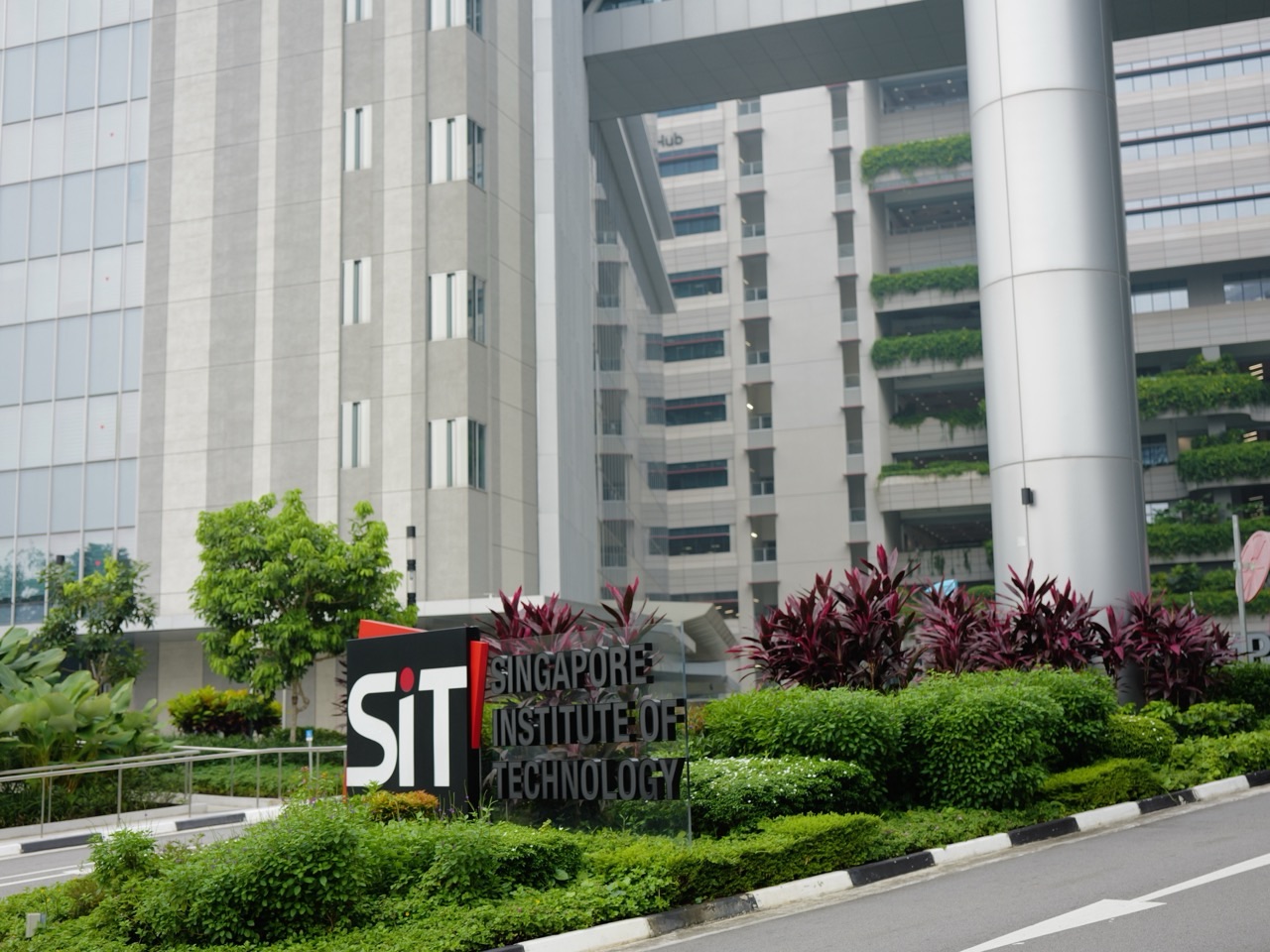
Punggol Events 2027 now includes a substantial professional-learning opportunity on the Punggol Coast. The Singapore Institute of Technology (SIT) has published a SITLEARN Agentic AI for Finance course run for 25–26 January 2027, 9am–6pm, at SIT Punggol Campus, 1 Punggol Coast Road, Singapore 828608. The official course page also gives a 4 January 2027, 11.59pm application deadline for the January run and a full course price of S$2,507 including GST before applicable training funding.
Did you know? SIT’s published fee table indicates that certain eligible learners may pay S$752.10 or S$292.10 after funding, depending on the stated citizenship, residency and age categories. These are conditional published funding scenarios, not discounts we can promise to every Punggol resident. The official page lists up to 90% SkillsFuture Workforce Development Agency-related support (described there as SWDA funding), while actual eligibility, application assessment and payable amount must be confirmed with SIT. You can read the official SITLEARN Agentic AI for Finance announcement.
This article is for Punggol working adults, finance staff, accountants, procurement professionals, business owners and parents planning future careers. We explain what the two-day Punggol programme actually covers, who is eligible to apply, how to calculate the course’s real cost and what agentic AI means in finance without hype. The listing was checked on 27 October 2026. It describes a scheduled professional training course, not an unrestricted public festival, free AI demonstration, guaranteed job-placement event or assurance of future course availability.
Quick answer: the official January 2027 course
- Programme: Agentic AI for Finance, offered by SITLEARN at Singapore Institute of Technology.
- January dates: Monday and Tuesday, 25–26 January 2027.
- Advertised time: 9am–6pm on each day.
- Venue: SIT Punggol Campus, 1 Punggol Coast Road, Singapore 828608.
- Application deadline: 4 January 2027 at 11.59pm, as published for this run.
- Full course fee: S$2,507, inclusive of GST, before any applicable course funding.
- After-funding examples displayed by SIT: S$752.10 for eligible Singapore citizens below 40 and eligible PR/LTVP+ participants; S$292.10 for eligible Singapore citizens aged 40 and above; S$2,507 for the published non-citizen category where funding is not available.
- Intended participants: Professionals in financial planning and analysis, financial control, business finance, procurement, project finance, technology finance, investment evaluation and related functions.
- Entry background: SIT specifies around one to two years of relevant experience and familiarity with budgeting, cost analysis, ROI and business cases; prior programming experience is not required.
- Assessment: 30-minute oral questioning. The stated Certificate of Attainment requires at least 75% attendance and a pass in the non-credit-bearing assessment; qualifying attendees who do not pass may instead receive a Certificate of Participation.
- Official organiser: SITLEARN Agentic AI for Finance.
- Also advertised: A 15–16 March 2027 course run appears in the schedule table. Confirm its current application route separately rather than assuming it uses the January deadline.
All future course details are subject to SIT’s published right to amend dates, fees, instructors and arrangements. An Apply Now link does not independently establish remaining vacancies or automatic acceptance.
What is the difference between agentic AI and a chatbot?
People often use the term AI broadly, but a finance manager deciding whether a programme is worthwhile should ask what capability is actually being discussed. A conventional text-generation tool can draft an explanation of a budget variance when somebody prompts it. An agentic AI system may be designed to plan multiple steps, use authorised tools, obtain data and proceed through parts of a workflow.
Imagine a fictional finance workflow. A system receives a request to review one month’s spending, retrieves approved records, checks specified thresholds, generates a summary and routes exceptions to a human reviewer. That is not the same as a chatbot writing a paragraph from a pasted spreadsheet. It involves access control, orchestration, cost accounting, exceptions and accountability.
But the word agentic is not a guarantee of autonomy, safety or correctness. The more actions a system can initiate, the more important permissions, monitoring and stop conditions become. A machine that can suggest a budget change is different from a machine authorised to change a budget or initiate payment.
SITLEARN’s course is aimed at finance professionals who need to cost, evaluate and govern those systems. It is not advertised as a coding bootcamp for building your own universal AI agent.
Why is this relevant to Punggol?
Punggol is home to the SIT campus and the wider Punggol Digital District ecosystem. A resident may work in finance while living near the campus, or commute to an employer elsewhere and still choose local professional learning. The course’s location makes this an actual Punggol-sited 2027 activity.
The public listing does not say that enrolment is reserved for Punggol residents or that completing the course guarantees a job within Punggol Digital District. It is a professional education opportunity at a location in the estate, not a recruitment promise by every nearby technology company.
That distinction is important for people searching Punggol Events 2027. Some official events are neighbourhood gatherings; others are formal training sessions. A resident planning career development should care about both, but should not confuse their eligibility, costs or commitment.
For context, eduKatePunggol’s SITLEARN and AI courses guide describes broader learning pathways. This article focuses exclusively on the January Agentic AI for Finance course run, its published fee structure and the decisions an applicant needs to make.
Who should actually consider the course?
SIT identifies finance professionals in roles such as financial planning and analysis, financial control, business finance and AI investment reporting. It also names people working with technology-related finance, procurement and investment evaluation. This is a practical domain audience rather than the general public.
A person whose work involves preparing an AI business case may find the themes directly relevant: estimating the cost of ongoing AI use, assessing vendor proposals, understanding control and oversight costs, comparing deployment options and explaining whether a project actually creates value.
By contrast, somebody seeking a first introduction to personal finance or a teenager with no related work experience should not assume the course is intended for them. The prerequisite guidance mentions one to two years of related experience and working familiarity with budgeting and ROI.
A resident exploring a career transition could still enquire, but should explain the relevant experience and ask SIT whether it meets the requirements. A broad interest in artificial intelligence alone does not override the published entry conditions.
The 4 January deadline matters more than many people realise
The January course takes place late in the month, but its advertised Apply By date is 4 January 2027 at 11.59pm. That is three weeks before the first training day. People who only begin researching on 20 January could already have missed the announced application window.
An application deadline also should not be interpreted as proof that spaces remain available until its final minute. Course runs may be affected by capacity, administrative processing or eligibility checks. Confirm the current status directly using SIT’s application channel.
If you need employer approval, personal leave or funding confirmation, begin those conversations before the holiday period becomes crowded. A finance professional may need a manager’s sign-off even when the price is subsidised, because the course occupies two weekday workdays.
Do not book non-refundable travel, take leave or promise yourself a certificate before admission is confirmed. An announcement of a future run is not a completed registration.
What is taught on the first day?
SIT describes the first day as developing foundations in the agentic enterprise, the economics of autonomy, governance, risk, security, organisational change and practical planning. These subjects help finance professionals recognise that an AI initiative is more than a single software invoice.
A real deployment can involve licences, cloud inference, integration, monitoring, specialist staff, training, exceptions, evaluation and periodic changes. Some are upfront costs; others scale with usage. Accounting for them together produces a more meaningful decision than comparing a vendor’s monthly subscription with a staff member’s salary.
The course outline also includes a roadmap exercise. This is helpful because an organisation should not assume that every financial workflow ought to become autonomous at once. Some processes may be appropriate for recommendation and review only; others may benefit from carefully bounded automation.
A participant should ask how the day’s concepts are tied to an example business case, rather than expect that attending a few lectures automatically produces a complete deployment strategy for their company.
What is taught on the second day?
The advertised second-day finance topics include an agentic profit-and-loss framework, FinOps-style cost tracking, build-versus-buy-versus-on-premises economics, and budgeting for inference and run-time spending. SIT ends the programme with an oral assessment.
These subjects address difficult practical questions. If each AI-generated transaction has a variable compute cost, how should the finance team forecast the budget? If a vendor charges per task or token, what happens when demand increases unexpectedly? If staff must review a proportion of outputs, how should that labour be costed?
The course does not promise a universal formula that applies identically to every bank, manufacturer, retailer or public agency. It offers a framework for examining costs and trade-offs. Learners still need their organisation’s actual data, contracts and regulatory obligations.
That makes it potentially useful for professionals who prepare investment proposals, examine AI vendor budgets or decide whether a business unit can afford a proposed system.
What is a variable AI cost?
A variable cost changes with activity. Imagine a fictional organisation that processes 10,000 AI-assisted cases each month. Suppose the combined AI run-time expense averages S$0.18 per case. Monthly run-time expense would be S$1,800. If workload doubles while average cost stays the same, that particular expense would become S$3,600.
Those numbers are an invented teaching example, not prices published by SIT or any AI vendor. Actual costs vary by model, platform, orchestration design, caching, workload, contractual terms and more.
Finance teams also need to budget the cost of monitoring, integration, quality assurance and people who handle cases the system cannot resolve. A low run-time figure can be misleading if it excludes human review and incident response.
A valuable course should help decision-makers ask which costs are genuinely variable, which remain fixed and which arise only when systems are expanded.
What is FinOps in this context?
FinOps generally concerns visibility, accountability and control over technology consumption and spending. Applied to agentic AI, the idea is to identify what activity creates the cost, which team benefits and what decisions can reduce waste or risk.
Suppose multiple departments use the same AI service. Without appropriate tagging or measurement, the total monthly bill might appear as one large expense. That tells finance little about whether one department’s usage is creating meaningful outcomes or unnecessary repeat calls.
A more useful system might attribute approved spending by project, activity type, cost centre or internal customer. Any attribution scheme should be consistent, privacy-aware and reliable enough for budget decisions.
The goal is not merely to produce dashboards. It is to understand the relationship between resource consumption, operational results and financial accountability.
Build, buy or operate on your own infrastructure?
One of the advertised topics is comparing building a system, buying a service or operating on premises. These options differ across implementation cost, maintenance responsibilities, flexibility, technical skills, security, data location and long-term operating expenditure.
Buying a service can reduce initial engineering work but introduce recurring charges or dependence on a vendor. Building a custom system can offer control but requires expertise, testing and ongoing maintenance. On-premises approaches may have different infrastructure and operating responsibilities; they are not automatically cheaper or safer.
A finance team needs a common basis for comparison. Counting only one vendor’s licence against another option’s hardware cost is not adequate. The same expected workload, performance requirements, security constraints and accounting period should be used.
The course page says learners will study break-even usage volumes. That concept is especially useful when a system appears economical at one workload but expensive at another.
A hypothetical break-even exercise
Imagine Option A has S$10,000 of setup expense plus S$0.20 per transaction. Option B has S$18,000 of setup expense plus S$0.10 per transaction. The difference in setup expense is S$8,000, while Option B saves S$0.10 per transaction.
The mathematical break-even point is 80,000 transactions under these simplified assumptions. Beyond that volume, Option B’s lower unit cost could offset its higher initial expense. Below it, Option A may appear cheaper on the costs included.
This example intentionally omits maintenance, outages, retraining, compliance, energy, staffing, financing and depreciation. Real decisions demand more complete treatment. It illustrates why decision-makers need a model rather than a slogan.
A resident who knows how to calculate percentages and unit costs may find the arithmetic familiar. The difficult part in professional work is deciding what cost and risk belongs inside the calculation.
What finance professionals should not delegate blindly
An agentic AI system may generate recommendations, but an organisation must still decide who is authorised to approve payments, alter customer records, communicate financial guidance or make commitments to third parties.
The course’s governance and risk themes matter because errors can spread quickly when a system performs multiple actions before a person checks the result. A mistaken mapping of suppliers, for example, could contaminate reports or lead to improper recommendations if data is not validated.
Controls may include permissions, logs, separation of duties, human approval thresholds, testing, independent reviews and a clear shutdown process. These are examples of governance measures, not a claim that SIT teaches each one in a particular class exercise.
Finance professionals should ask about model evaluation and incident responsibility whenever they consider funding a system capable of acting rather than merely drafting text.
Does the course require programming?
SIT’s published minimum-entry guidance says prior coding experience is not required. That does not mean the content is elementary. Participants should already understand basic budgeting, cost analysis, return-on-investment concepts and business-case preparation.
The prerequisite distinction matters. A person who can read a cash-flow estimate and compare investment cases may be well positioned to learn the finance framework without writing code. Someone unfamiliar with financial models may find parts of the material difficult even if they are comfortable with consumer AI applications.
Ask SIT about expected preparation if you have relevant work experience but not the exact job title listed. A procurement specialist or business analyst may have transferable experience.
Avoid advertising the course to children as a beginner’s coding camp simply because the words AI appear in the name.
What does the published funding table mean?
SIT lists S$2,507 as the full GST-inclusive price. Its displayed funding categories show 70% support with S$752.10 payable for some eligible learners and 90% support with S$292.10 payable for the stated Singapore citizen aged 40-and-above category.
These figures are course-page illustrations tied to eligibility conditions. You should not assume the largest percentage applies just because you live in Punggol, hold a particular job title or have a birthday near the course date.
Funding may depend on citizenship, residency, age at the relevant reference date, scheme conditions, approval and other current requirements. SITLEARN is the appropriate source for confirming the amount actually payable by an individual or organisation.
Someone not eligible for the advertised subsidy needs to consider the full price, rather than treating S$292.10 as a universal sale price.
Three realistic fee calculations
Example A — eligible participant at the 70% published tier. The official published payable figure is S$752.10. The difference from the full S$2,507 price is S$1,754.90. That is an illustration of the listed funding amount, not a guarantee of approval.
Example B — eligible participant at the 90% published tier. The payable figure is S$292.10. The published difference from full fee is S$2,214.90. The exact mechanics and funding conditions must be confirmed by SIT before registration.
Example C — participant without applicable published funding. The displayed full course price is S$2,507. This does not automatically include salary for days away from work, travel or any employer-specific costs.
For a career decision, the actual budget should include cash payable and the opportunity cost of spending two weekdays away from ordinary duties. Some employers treat training time as part of work; others require leave or separate approval. Do not invent an employer policy.
Is SkillsFuture Credit automatically accepted?
The course listing advertises funding percentages but does not, in the sections reviewed, independently establish that any particular person’s SkillsFuture Credit account will cover the remaining payment or that an applicant can combine every subsidy available.
Avoid treating all government learning support schemes as interchangeable. A published SITLEARN table, an individual SkillsFuture Credit balance, employer training support and a specific subsidy programme may each have distinct conditions.
Before paying, ask whether the proposed category applies to you, whether other eligible credits can be used, when fees are due and what happens if funding approval changes. Get a confirmation based on your actual situation.
This is especially important for a higher-value course. An incorrect assumption about funding can transform an affordable professional-development plan into a serious unexpected bill.
What assessment does SIT publish?
The course page specifies a 30-minute oral assessment and two certificate outcomes. A Certificate of Attainment requires at least 75% attendance and a pass in the non-credit-bearing assessment. The site says participants meeting the attendance threshold but not passing the assessment receive a Certificate of Participation.
This is not a guarantee that everybody receives the same certificate merely for paying the fee. It is also not an academic degree or a promise of an automatic professional qualification in finance or information security.
Applicants should check whether their employer values this form of continuing-education evidence and whether assessment arrangements suit their learning needs. The most useful outcome may be the practical ability to prepare a better AI investment case, not the paper alone.
Anyone needing formal credit toward a larger qualification should ask SIT directly whether the course forms part of an approved pathway. The general event listing does not establish that.
Does attendance guarantee a Punggol Digital District job?
No. SIT is providing continuing education, not a job placement guarantee. A certificate does not automatically qualify somebody for a finance role at a nearby employer or prove they can independently deploy AI into a regulated enterprise.
For a resident interested in career progression, the course could be one component of a broader plan: relevant work experience, a portfolio of responsible finance analyses, understanding of governance, communication skills and evidence of results.
A person planning to switch from an unrelated field should evaluate whether this is the right entry point. The published prerequisites suggest the course is designed for people who already work near budgeting or financial decision-making.
The Punggol career and digital-district jobs guide provides a broader context, but no article can promise recruitment by a particular company.
The two-day schedule and family responsibilities
Two days from 9am to 6pm can be difficult for a resident managing school drop-off, caregiving or a demanding job. The course may be close to home geographically while still requiring substantial time.
Check the exact campus room and arrival instructions. The course page identifies 1 Punggol Coast Road, not a specific classroom in the fields displayed. SIT has multiple campus buildings and facilities; an official joining email may give the appropriate entrance and room.
If you are coordinating childcare, calculate the real commute and any need to stay for assessment or briefings. Do not assume the published 6pm end means you can be at your family’s pickup point at exactly 6pm.
Talk to your employer early if attendance requires workplace approval. A professional course is most valuable when the learner can concentrate rather than spend both days worrying about unresolved commitments.
Getting to SIT Punggol Campus
The official event location is SIT Punggol Campus, 1 Punggol Coast Road, Singapore 828608. Use SIT’s campus information and travel guidance and your current public-transport route planner for the final journey.
Do not confuse the university campus with One Punggol CC, Punggol 21 CC or a classroom in a neighbourhood Residents’ Network centre. They are different institutions and places.
If travelling from within Punggol, consider the actual distance from your home rather than treating the town as one walkable block. If coming from outside Punggol, allow time for transfers and the final approach to the appropriate SIT building.
Parking conditions, building entry, accessibility and room directions should be verified through the joining instructions. We are not inventing a parking allocation or access route that the training page has not specified.
What should a learner prepare before Day One?
Read the official programme objectives. Identify one or two AI investment decisions you may encounter at work—for example, whether a finance workflow should be automated or how to forecast recurring inference spend.
Do not bring confidential customer records, bank data, passwords, supplier contracts or internal financial statements into an external training exercise without your organisation’s explicit authorisation and appropriate safeguards. Use an approved synthetic case or public examples instead.
Refresh ordinary cost concepts such as fixed and variable expenditure, break-even calculations, return on investment and sensitivity analysis. SIT describes these as background knowledge, so having them familiar can improve participation.
Finally, ask whether a laptop or other materials are required. The public summary does not specify a complete device checklist. A quick official enquiry is better than guessing.
A worked example: the cost of human oversight
Suppose a fictional AI-assisted review process handles 2,000 cases monthly and requires a person to review 10%. That means 200 cases still need human attention. If each review takes six minutes, the monthly review workload is 1,200 minutes, or 20 hours.
At an invented internal costing rate of S$45 per hour, review labour alone would be S$900 per month. This excludes the cost of the AI service, quality assurance, exceptions, investigation and change management.
The numbers demonstrate an important principle: the cost of automation is not only compute spend. It can include the work necessary to make outputs safe, auditable and usable.
A course that teaches finance professionals to ask for these missing components may prevent overoptimistic business cases even when the technology itself is impressive.
A worked example: why ROI claims can mislead
Imagine a vendor promises that a system saves 100 staff hours a month. A finance team should ask whether those hours are actually released from work, redeployed to another valuable task or merely estimated from an ideal demonstration.
If the system saves time but introduces new review tasks, the net gain may be smaller. If throughput rises and staff use the extra capacity for useful work, value could come through service improvement rather than a direct payroll reduction.
An ROI model should specify its measurement period and counterfactual: what would happen if the organisation did not deploy the system? It should account for the costs of change and ongoing performance.
These are examples of financial reasoning, not claims about the savings or results of SIT’s course participants. Training can teach evaluation methods; it cannot promise the economics of an employer’s future project.
An applicant deciding between January and March
The official schedule table lists 25–26 January and 15–16 March 2027. The January run has an explicit event card and 4 January application deadline. The excerpt reviewed does not establish an identical deadline, available vacancy or precise funding confirmation for the March run.
If January is unsuitable, ask SIT whether the March run is accepting applications and what its separate closing date and participant conditions are. Do not simply reuse the January deadline.
If you need the knowledge for a procurement decision in February, the March course may come too late. If your work calendar is crowded in January, March may be more practical, subject to confirmation. This is an ordinary timing decision rather than a prediction about which cohort will be better.
Save the current official programme link and review it again before acting; SIT says its arrangements may change without prior notice.
Common misconceptions to avoid
“It is at SIT, so it must be a full university degree.” No. This is a short SITLEARN professional course with specified attendance and non-credit assessment conditions.
“Every Singaporean receives the S$292.10 rate.” No. The displayed 90% category has conditions, including age and eligible status.
“No coding prerequisite means no financial prerequisite.” No. SIT expects prior finance-related experience and familiarity with business-case concepts.
“A course about AI agents automatically lets me deploy agents at work.” No. Organisational permissions, policies, data protection and security obligations remain in force.
“The course guarantees a certificate, job or salary increase.” No. Certificates have conditions, and employment outcomes are not promised.
“The March listing guarantees another available seat.” A second run appears in the published schedule, but its current admissions must be checked directly.
Frequently asked questions
Is this really happening in Punggol? The official January 2027 course card specifies SIT Punggol Campus, 1 Punggol Coast Road. Verify room-level instructions when enrolled.
When is the January run? 25–26 January 2027, 9am–6pm, according to SIT.
What is the application deadline? 4 January 2027 at 11.59pm is displayed for the January course run.
Does it require coding experience? SIT says no prior coding experience is required, but it expects relevant finance/business experience and understanding of budgeting, ROI and cost analysis.
What is the fee? The listed full price is S$2,507 including GST. Eligible funding categories show lower conditional amounts.
Is a 90% subsidy automatic at age 40? No. The table is a category description, not an individual funding approval. Check eligibility and current rules with SIT.
How do I receive a Certificate of Attainment? SIT states at least 75% attendance and passing the specified non-credit oral assessment are required.
Is there a March session? The table also lists 15–16 March 2027. Confirm current enrolment details for that separate run.
Is this a job fair? No. It is a professional development course, not an officially advertised recruitment event.
Applicant checklist
- Open the official SIT Agentic AI for Finance page.
- Confirm 25–26 January 2027, 9am–6pm, at 1 Punggol Coast Road.
- Check the 4 January, 11.59pm application deadline.
- Compare your experience with the published one-to-two-year relevant finance background and budgeting prerequisites.
- Identify the correct fee and funding category; do not assume the maximum rate applies.
- Ask how any other credits or employer support may be used.
- Seek work leave or employer approval where needed.
- Understand the 75% attendance threshold and oral assessment requirement.
- Ask SIT about room location, materials and the final joining timetable.
- Do not submit confidential business data or pay through unofficial personal accounts.
Official sources and related Punggol reading
Primary course and schedule: SITLEARN Agentic AI for Finance — Singapore Institute of Technology. This is the source of the January and March dates, venue, application deadline, learning outcomes, entry requirements, fees, published funding scenarios and assessment conditions.
Punggol context: SITLEARN’s broader 2026–2027 AI learning guide, Punggol AI and fintech career outlook and the Punggol events guide.
Verification date: 27 October 2026. Fees, funding eligibility, vacancies, instructor arrangements and course details may be amended by SIT. All numerical worked examples here are explicitly illustrative and are not performance or pricing claims about the programme.
Final thought: train for the financial decision, not the buzzword
An AI-enabled business process is not valuable merely because it uses sophisticated technology. It must produce outcomes worth their full cost, within tolerable risk and with clear accountability. Finance professionals are central to that decision.
The 25–26 January 2027 SITLEARN Agentic AI for Finance course at SIT Punggol Campus is a concrete scheduled opportunity to learn those concepts. The key choices for a resident are whether the course matches their work, whether they meet the entry requirements, what funding actually applies and whether they can attend both weekdays.
Start from the official SIT programme page, verify the 4 January deadline, and evaluate the full commitment before applying. That is how a 2027 Punggol event becomes a useful career decision rather than another attractive headline.


