
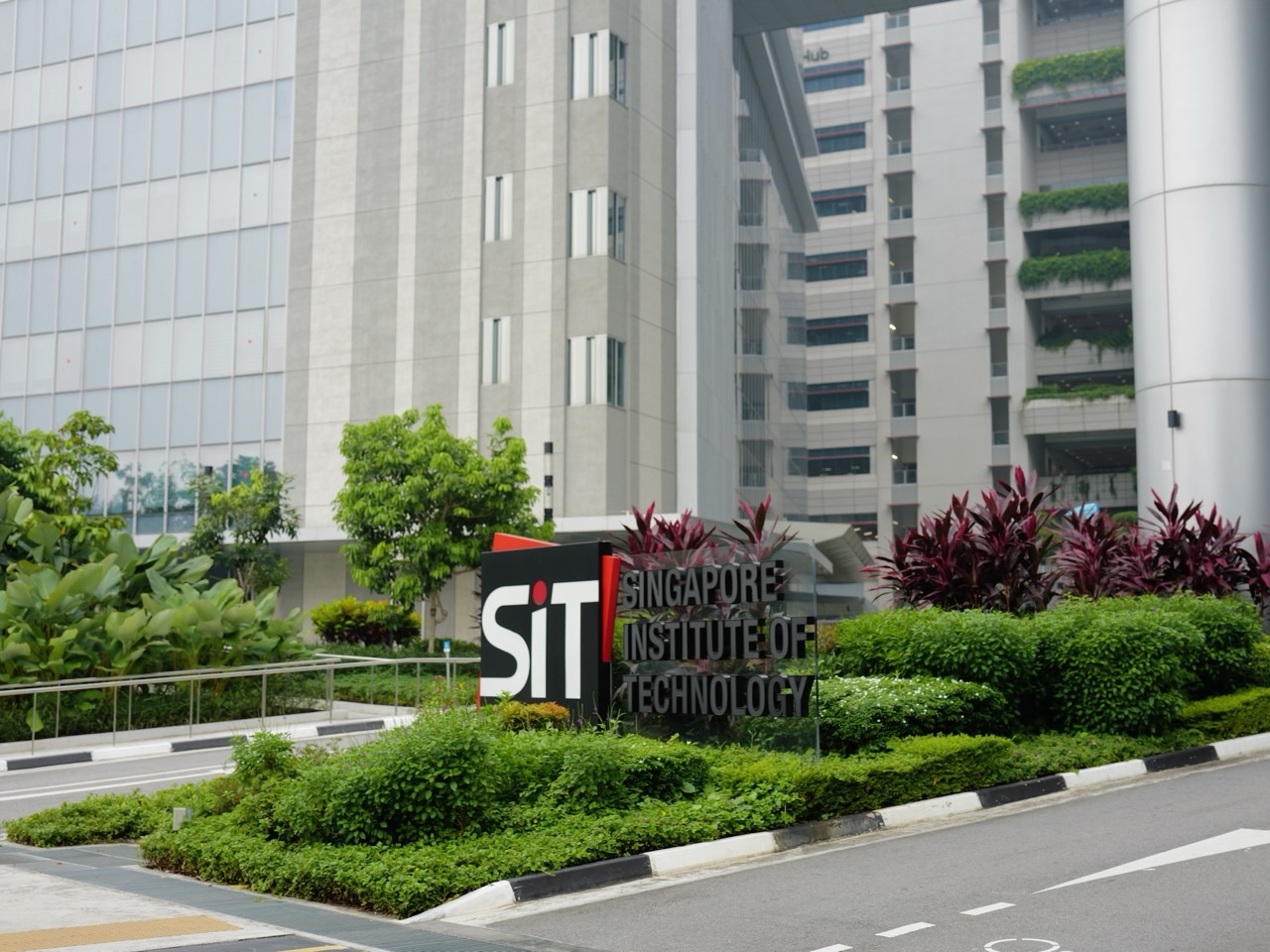
Quick answer — 27 October 2026: Punggol residents considering sustainable construction and built-environment careers in 2027–2028 can follow two substantial evidence sources. Singapore’s Building and Construction Authority forecasts S$39 billion to S$46 billion in annual construction demand for 2027–2030, nationally. Meanwhile, on 1 October 2026, SIT launched a S$30.4 million, three-year lower-carbon construction research consortium with A*STAR, Woh Hup and industry partners. The campus is in Punggol. Neither figure is a Punggol-only job count or a fund reserved for hiring residents.
Did you know a modern construction project needs many types of expertise long before concrete is poured? Architects and engineers specify performance; technicians measure; planners coordinate activities; procurement staff trace materials; site supervisors inspect; safety professionals question hazards; researchers test greener materials; and skilled tradespeople make the physical project possible. A person can have a meaningful built-environment career without being an architect, but each role comes with its own training and authority.
This article forecasts work functions, not salaries or guaranteed vacancies. It explains the 2026–2029 SIT research programme, what carbon-reducing construction actually involves, which routes suit Secondary G1/G2/G3, ITE, polytechnic and university learners, and what to ask before changing jobs in 2027 or 2028.
The evidence: project, industry and employment are three different measures
| Source fact | Correct meaning | What it cannot prove |
| BCA’s S$39–46b annual demand range, 2027–2030 | Nationwide forecast value of construction contracts expected to be awarded annually | That Punggol alone has billions of contracts or a known vacancy count |
| SIT–Woh Hup–A*STAR S$30.4m consortium | Overall investment with funding and in-kind contributions, running 1 April 2026–31 March 2029 | That S$30.4m is a direct 2027 recruitment budget |
| Seven applied research projects | Work on low-carbon materials, traceability, structures and reuse | That seven separate companies or permanent teams will hire graduates |
| Lower-carbon concrete research | One SIT-developed technology has demonstrated up to 65% embodied-carbon reduction relative to relevant conventional baselines | That all future buildings achieve that saving |
| SIT research presence at Punggol | Students, researchers and industry can collaborate locally | That all construction jobs are physically based at the campus |
The primary sources are BCA’s 22 January 2026 construction outlook and SIT’s 1 October 2026 consortium announcement. These figures should not be added together because one is a national contracts forecast and the other is the size of a specific research programme.

Why 2027 and 2028 may be important for built-environment learning
Singapore plans continuing major public and private developments, including housing, transport and other infrastructure. BCA’s forecast recognises sustained activity but also states that project schedules can change because of economic conditions. Strong spending on construction does not map directly onto one worker’s wages; a company can win more projects while using redesigned processes, technology or subcontracting.
The new SIT consortium’s programme runs through 2029 and includes test bedding on live construction projects. As research progresses through 2027 and 2028, teams may need material samples, measurements, laboratory methods, site coordination, modelling, review and documentation. That creates an educational window into what future site work may demand, but it does not confirm any particular vacancy.
What seven research projects reveal about tomorrow’s work
| SIT programme area | Real technical problem | Capabilities that may become useful |
| Demolition waste into land reclamation material | Can recovered material perform reliably and meet environmental controls? | Materials testing, standards, handling and traceability |
| Ultra-low embodied-carbon concrete | Can lower-carbon concrete be made consistently at useful scale? | Concrete technology, quality testing, chemistry and production control |
| Verification of reinforcing steel | How can the origin and performance of steel be documented? | Inspection, digital records, procurement and assurance |
| Earth-retaining and stabilising systems | How can deep excavations be efficient and safe? | Geotechnical thinking, site safety and structural engineering |
| Composite slabs for foundations | Can new systems improve durability with less embodied impact? | Design, testing, detailing and quality control |
| AI-supported composite floor design | How can design alternatives balance safety, cost and embodied carbon? | Engineering judgement, computation and verification |
| Reuse of structural steel | How can a recovered member’s history and suitability be checked? | Asset records, material testing and circular procurement |
The programme’s stated ambition includes selected urban applications achieving up to a 40% reduction in embodied carbon against conventional approaches by its end in 2029. That is a research target, not a verified achievement for every building in 2027.
What does embodied carbon mean in construction?
Operational energy describes energy consumed while a building is used, such as cooling and lighting. Embodied carbon concerns greenhouse-gas emissions linked with products and processes across a building’s life cycle, including producing materials, transporting them, construction activity and, depending on the defined accounting boundary, end-of-life processes. A building can have efficient air-conditioning and still require large amounts of high-emission material to construct.
Good engineering compares alternatives using equivalent functions, declared system boundaries, credible data and safety requirements. A thinner structural element is not automatically greener if it fails durability needs or requires more repair. A marketing claim that one material has ‘zero carbon’ should not be accepted without clear definitions, evidence and independent verification where appropriate.
Six career routes worth investigating
1. Construction project planning and site coordination
Projects have schedules, dependencies, subcontractors, inspections, logistics and legal obligations. Planning staff identify what must happen before the next activity is safe and permitted. A site supervisor may coordinate work and record issues, but must not ignore the prescribed authority of appointed professionals. Strong communication and record keeping are essential.
2. Materials laboratory technician
A technician in an authorised laboratory may prepare samples and support established tests of strength, composition or durability. Work requires careful quantities, labels, procedure compliance, instrument checks and reproducible records. A student good at Chemistry and Mathematics might enjoy this route as much as design work.
3. Structural and geotechnical engineering
Buildings and foundations must transfer forces safely. Engineers study loading, stability, soil conditions, structural arrangements and detailed design. This can involve regulated professional responsibilities that require recognised qualifications and appropriate supervision. A simulation or short course cannot substitute for statutory competency.
4. Building Information Modelling and digital construction
Digital models help teams coordinate building geometry and information. Yet a model is useful only when dimensions, design versions, permissions and specifications are correct. A person who checks clashes, maintains revision records and explains discrepancies can add practical value, even if automation makes producing initial shapes faster.
5. Green procurement and supply-chain traceability
The programme’s focus on reinforcing steel and reuse illustrates that sustainability can be about knowing where an item came from, what tests it passed and whether it is suitable for a new purpose. Procurement officers, quality staff and logistics planners may need better digital records, supplier evidence and accountable decisions.
6. Workplace safety and quality assurance
Construction risks involve heavy materials, machinery, excavation, work at height, electricity and interaction between trades. Authorised risk assessments and safe systems of work cannot be replaced with a casual online checklist. Quality specialists document checks and nonconformities, while responsible managers ensure hazards are escalated and controlled.
An example of genuine engineering reasoning
Suppose two fictional concrete mixes each meet an educational target compressive strength. Mix A has a lower stated carbon footprint per cubic metre than Mix B. Is A automatically the better construction choice? Not yet. The student must compare the functional requirement, test method, uncertainty, durability, curing, availability and the boundaries used to calculate carbon.
A good report states the assumptions, distinguishes measured from estimated data and identifies which tests only qualified staff may perform. It does not suggest that children make structural concrete or test load-bearing samples in public spaces. The career-relevant ability is evaluating trade-offs while protecting safety.
The 2027–2028 opportunities and risks matrix
| Possible development | Positive signal | Constraint |
| More applied research | SIT publishes funded project and research-role openings | Funding might support existing teams or fixed-term appointments |
| Adoption of low-carbon materials | Credible project specifications and repeat product trials | Regulatory acceptance, cost and verified performance take time |
| Digital productivity | Job postings ask for BIM, structured records and data skills | A certificate without project competence may be inadequate |
| High national construction demand | BCA’s medium-term contract pipeline remains on track | Projects can shift and many positions are outside Punggol |
| Higher technical specialisation | Employers invest in supervision and quality training | Role licensing and safety requirements still apply |
For Punggol students: where do English, Mathematics and Science fit?
English helps engineers write clear instructions, interpret standards, explain an issue to a client and record what has been tested. Mathematics helps estimate quantities, read graphs, calculate units and understand load and variation. Physics explains forces and energy, while Chemistry helps explain material reactions and durability.
Under Full Subject-Based Banding, Secondary subjects are offered at G1, G2 and G3 levels as appropriate. A student’s future options are shaped by actual programme prerequisites and readiness, not by declaring one subject ‘for construction’ and ignoring the rest. Parents should look up current admissions rules for the ITE, polytechnic, JC or university course the student may want.
Learning routes and proof of skill
| Starting point | What to build | What to verify before enrolling |
| Secondary learner | Unit conversion, scale diagrams, clear reports and safe model-making | Admissions rules, subject requirements and appropriate school activities |
| ITE learner | Practical equipment familiarity, safety and careful inspection notes | Recognised qualifications, approved placements and the role’s physical demands |
| Polytechnic learner | Engineering fundamentals, BIM workflows, project documentation | Industry partnerships and actual assessment methods |
| SIT/university learner | Experimental methods, design, statistics, technical writing and ethics | Accreditation and whether a programme permits regulated professional practice |
| Experienced worker | Transferable project control, procurement or trade experience plus one new skill | Employer needs, course costs and whether training affects advancement |
A four-week investigation plan
- Week 1: Choose between two roles—say materials technician and project coordinator—and study their real vacancy requirements.
- Week 2: Review SIT’s seven research subjects and explain in your own words how each differs from a construction project.
- Week 3: Build a fictional cost and materials comparison. State units, assumptions, uncertainty and what needs professional verification.
- Week 4: Ask an industry professional or recognised educator about worksite responsibilities, shift expectations, physical risks and training before selecting a course.
What not to do
- Do not confuse national contract value with the number of jobs available in Punggol.
- Do not treat the S$30.4 million consortium as cash available for public course applicants or employment.
- Do not assume experimental technologies have already been approved for every real-world structure.
- Do not encourage students to enter construction sites, handle controlled chemicals or operate tools without trained supervision.
- Do not use AI-generated design calculations as authority for actual structural work.
- Do not choose a degree or technical programme without checking registration, recognised training and applicable professional responsibilities.
Frequently asked questions
Will SIT’s programme create construction jobs in Punggol by 2028?
It is expected to support research, industry development and talent learning. The project announcement does not establish the number, duration or location of any particular future position.
Is the S$39–46 billion forecast a Punggol project budget?
No. BCA gives a nationwide annual construction demand range for 2027–2030. It reflects contracts across Singapore, not a local allocation.
Can a non-engineer work in the built-environment sector?
Yes. Companies employ roles in operations, planning, procurement, finance, quality, communications and support alongside designers and licensed professionals. Duties and qualifications vary.
Will AI replace architects or engineers?
It can assist modelling, option generation and administrative tasks. Public safety, proper design reviews, professional accountability and verified performance remain essential. Forecasting an entire occupation’s disappearance from one tool demonstration would be irresponsible.
Official sources and related Punggol learning
- SIT: 1 October 2026 S$30.4m sustainable construction consortium
- SIT: Construction Technology Innovation Laboratory
- BCA: 2027–2030 construction demand outlook
- BCA: Built Environment Workforce Study
- eduKatePunggol: the research announcement and local context
- Punggol Career: smart buildings and green engineering
- Punggol Career: cost and income risks before retraining
A realistic forecast that preserves options
The built environment will continue to matter in 2027 and 2028, and SIT offers Punggol residents a nearby view into applied research and industrial collaboration. That opportunity is best used to learn physics, materials, data, construction processes and safe professional judgement—then verify the particular career rather than assuming a research budget translates into a job offer.


