
Residents looking ahead to Punggol Events 2027 can find an officially scheduled sporting programme that continues past the Chinese New Year period. One Punggol Community Club has a People’s Association onePA listing for Karate (HealthierSG) from Saturday, 19 December 2026 to Saturday, 3 April 2027, with twelve sessions advertised on Saturdays from 7pm to 9pm. The displayed course fee is S$120–S$130, and the stated age eligibility begins at six years old and extends to adults. These are genuine published programme details, not a prediction that every Saturday in the period will have a class.
Did you know? This karate listing is unusually helpful because it explicitly identifies four dates with no lesson: 26 December 2026, 23 January 2027, 6 February 2027 and 13 February 2027. Parents and adult participants can use that information to avoid arriving at One Punggol CC on the wrong evening. The document also says new students must pay a separate uniform or attire fee directly to the trainer, but it does not publish an amount for that purchase. An accurate comparison of sporting courses must therefore distinguish the advertised term fee from the still-to-be-confirmed equipment cost.
The event is a taught, multi-session martial-arts programme, not a public karate tournament, a guaranteed grading examination or a one-off demonstration. This guide examines the official onePA Karate (HealthierSG) listing, how it relates to Punggol residents’ school and working schedules, and what participants should check before paying. The source was checked 27 October 2026. Current places, exact classroom allocation and participant-specific requirements remain under the authority of One Punggol CC and the trainer.
Quick answer: what is on the official 2027 calendar?
- Programme: Karate (HealthierSG), a recurring One Punggol CC course.
- Published course period: 19 December 2026–3 April 2027.
- Number of sessions: 12.
- Scheduled day and time: Saturday, 7pm–9pm for listed teaching sessions.
- Explicit non-teaching dates: 26 December 2026; 23 January, 6 February and 13 February 2027.
- Fee range: S$120–S$130 as displayed by onePA, subject to the applicable booking category.
- Age group: Six years old through adulthood.
- Attire: New students are instructed to arrange a uniform purchase through the trainer; the price is not stated.
- Organiser: One Punggol Community Club, People’s Association.
- Named trainer: Poh Beng Whee, with the provider information also referring to Lawrence as a Kyokushin karate practitioner.
- Registration closing date: 19 December 2026 on the listing; do not treat this as a live availability promise.
- Location: One Punggol CC; ask which studio or classroom and where participants should report.
- Primary source: Official onePA Karate course.
The key distinction is that a December 2026 start does not make the course irrelevant to 2027. It continues into April. But the 2027 dates are part of an existing term; they should not be advertised as a fresh, unrestricted January intake.
What kind of karate course is advertised?
The onePA description introduces karate as a Japanese martial art and sporting discipline, with instruction in fundamentals such as blocking, striking, kicking, body movement, timing and controlled practice. It also refers to coordination, balance, focus and disciplined training as aims of the activity.
The requirements call the class “Kyokunshin Karate”; the trainer profile refers to Kyokushin karate. These spellings differ on the public page. The important practical action is to ask the provider which precise style and curriculum the class follows, rather than trying to settle a trainer’s actual certification from a possible typographical inconsistency.
Parents should not interpret “learn karate” as permission for children to fight classmates or practise striking another person outside supervised instruction. Responsible martial-arts teaching should be distinguished from aggression, and suitability depends on trainer guidance, safety arrangements and the learner’s stage.
For adults, the appeal may be movement, skill progression and participation in a structured class. For children, it may be coordination and learning to follow appropriate instructions. None of these benefits is a guaranteed medical outcome or an automatic promise of advancement to a coloured belt.
Why four excluded dates matter
Saturday classes seem easy to put on a repeating calendar. Yet the official notice excludes four dates. If a family saves “Every Saturday at 7pm until April” without exceptions, it may travel to the CC only to discover the lesson is not scheduled.
The record lists no class on 26 December 2026, 23 January 2027, 6 February 2027 and 13 February 2027. These exceptions should be copied into a family’s calendar alongside the advertised dates, subject to any subsequent organiser updates.
The span from 19 December to 3 April contains sixteen Saturdays when counted inclusively. Subtracting the four listed exclusions leaves twelve possible teaching Saturdays, which is consistent with the published twelve-session total. That is a useful check of the organiser’s displayed structure, but it does not override a later official postponement or replacement instruction.
If the provider changes a date, ask for the updated calendar rather than assuming that a missed week will simply be added at the end. The advertised final date is an organiser planning field, not a guarantee that unforeseen changes cannot occur.
A reasonable calendar for families
The course begins before the end of the December school holiday period and crosses the return to school in January. That transition matters. A child who can easily attend a 7pm class during the holidays may have less energy after a full school week.
Saturday evening also overlaps with ordinary family dinners, visits to relatives and other activities. A learner’s schoolwork, CCA training and sleep routine should be considered when deciding whether a two-hour session is suitable. No family has to register merely because a local course exists.
Copy the excluded dates first. Then ask yourself whether the remaining Saturdays work. If a child misses several additional sessions because of existing plans, the published no-refund conditions may make the programme poor value.
For an adult working shifts or weekends, the decision is similar. The right training programme is one the person can attend consistently and safely, not the one with the most appealing name.
Twelve two-hour sessions: what is the planned commitment?
The onePA listing says twelve sessions at two hours each. That is 24 advertised instructional hours if every session takes place for the full scheduled duration. A participant should also allow for travel, changing clothes, check-in and any preparation required by the trainer.
A two-hour block can be substantial for a young beginner. Ask how the lesson is structured. Are there breaks? Do children of different ages follow the same programme? How are beginners supported? Is there contact practice? What protective equipment, if any, is used? The public listing does not spell out these arrangements.
Parents should not infer that a child will be physically active at the same intensity for the entire two-hour window. The trainer may include instruction, practice, rest or other activities, but these details require official confirmation.
An adult comparing class options should assess stamina and previous experience realistically. Starting a new physical activity is an opportunity to learn, not a reason to ignore pain or medical advice specific to their circumstances.
How much does the course actually cost?
The official price is displayed as a range of S$120 to S$130. The appropriate charge depends on the booking category and any terms shown at checkout. Treat the range as a published guide, not a guarantee that every registrant can select the lower figure.
The notice also requires new participants to purchase attire from the trainer, who will assist with the purchase. Crucially, no actual attire price is published in this course description. A family should not invent one or assume it is included in S$120–S$130.
A simple hypothetical budget might begin with the advertised upper term fee of S$130 and leave the uniform amount as unknown until the provider quotes it. Add ordinary travel or other household expenses separately as relevant. If two children participate, do not assume they automatically qualify for a sibling discount; none is stated in the excerpt.
Parents should also ask whether any grading, protective equipment, insurance or other optional activity has a separate charge. Those are reasonable questions, not claims that such charges exist for this course.
Cost per lesson without hiding the uniform fee
If the household pays the displayed S$120 for twelve sessions, the headline term fee works out to S$10 per planned session. At S$130, it works out to approximately S$10.83 per session. Dividing by the advertised two-hour lesson length gives a headline course-fee-only range of S$5–S$5.42 per scheduled instruction hour.
This calculation can be useful for comparing timetables, but it leaves out the uniform, travel, missed sessions and participant effort. A low advertised per-session rate does not automatically mean better value than a shorter programme that a learner can attend more consistently.
If a child attends only eight of twelve sessions because of family travel, the paid term fee has to be judged against those eight lessons actually used. The course’s published cancellation conditions do not promise personal makeup classes.
Do not decide solely from arithmetic. Safety, suitability, instructional quality and realistic attendance matter at least as much.
Children aged six: when is this appropriate?
The onePA requirement states six years old to adult. That is the published eligibility band, not a promise that all children aged six will find the same level easy or enjoyable.
A young child should be able to respond to instructions, respect personal space, communicate discomfort and participate without creating an unsafe situation for themselves or others. These are general readiness considerations; the provider must explain its specific admission expectations.
Ask how participants are grouped. Are six-year-olds trained separately from teenagers or adults? Are beginners placed by experience, height, skill or age? Does a parent observe the first session? The public page does not provide those details.
If the child is nervous, explain that the class is about learning movement under supervision, not about fighting people. The child’s willingness to try and the instructor’s teaching approach should be considered before committing financially.
Older children, teenagers and adults
The broad age band means a family could be interested in the same overall programme for different reasons. A Primary pupil may be learning basic coordination, while a teenager may seek a consistent sport or an adult may want a structured way to be active.
However, the page does not say whether all age groups train together or follow identical techniques. Ask about division by level, personal readiness and any physical-contact expectations. Different people can be eligible for the course without sharing the same training intensity.
For adults returning to exercise after a long break, avoid assuming that a course marketed under HealthierSG is personalised healthcare. The term HealthierSG appears in the onePA course title; it is not evidence that the programme is prescribed treatment for a medical condition.
People with specific health restrictions should obtain relevant advice and ask the trainer about the real physical requirements before participating. Do not rely on an event listing as a medical suitability certificate.
What safety questions matter most?
A responsible prospective participant should know what the training space looks like, what warm-up or practice arrangements are used, what protective equipment is required and how physical contact is managed. The onePA public summary provides a general description but not a full risk-assessment document.
Ask whether the instructor supervises partner exercises, whether contact intensity is adapted to age and level, and whether there is a clear process for stopping when a participant feels unsafe. These are sensible questions for any martial-arts class.
Do not practise techniques on unwilling friends, siblings or classmates. Even movements taught as part of a controlled sport can cause harm when copied without supervision. Encourage children to keep training inside approved settings and to follow their instructor’s conduct rules.
Check that the participant has suitable clothing and shoes or barefoot arrangements according to the provider, not based on videos of unrelated karate clubs.
The separate uniform purchase
The listing tells new students to pay the trainer directly for attire, with trainer assistance to purchase. It does not state the required colour, size, brand, price or whether existing suitable karate clothing can be used.
Ask for an itemised explanation before buying: what uniform pieces are required, how sizing works, whether protective equipment is separate, and what happens if an item is the wrong size. Children grow quickly, and a poorly fitting uniform can be uncomfortable or interfere with movement.
Do not purchase an expensive uniform online solely because the course title includes a particular style. The trainer may have legitimate specifications connected to the programme. Confirm those before buying.
If somebody offers an unfamiliar payment link outside onePA for the uniform, verify it through the named provider or One Punggol CC. Legitimate material purchases should have clear recipients and arrangements.
Can a beginner join halfway through the course?
The published starting date is 19 December 2026, and the registration closing date shown is the same day. That means a January reader should not assume the programme is a newly opening intake. It might already be underway and places may be restricted.
Ask the organiser whether new entrants are accepted after the first lesson, whether there are level prerequisites and how a beginner would catch up. In some activities, joining at the wrong stage can be confusing or less safe. The page itself does not settle the late-entry policy.
If the original term is closed, ask whether a future karate course will be announced. Do not infer that the provider will offer another identical Saturday course at the same price or location.
An online “Book now” button does not guarantee acceptance of a particular participant. Actual checkout options and terms control registration.
The registration and cancellation policy in plain language
The official remarks say that a 20% administrative fee applies for cancellations before class commencement. They also say fees are non-transferable to other people or classes and that no refund is normally allowed after class commencement, except for certain unforeseen or organiser-initiated circumstances subject to the listed conditions.
It would be misleading to tell parents that they can try two lessons and recover the balance if their child is not interested. The published policy does not promise that. If the household is unsure, ask about suitability and the actual cancellation terms before paying.
The notice also says participants will be notified in the event of class cancellation or postponement by the trainer. Ensure that the registration contact information is accurate and up to date, but do not assume every enrollee will receive a reminder before every normal lesson.
Keep receipts and official messages. If a dispute occurs, use the organiser’s legitimate contact channel rather than exchanging financial details in a public neighbourhood group.
Getting to One Punggol CC for a 7pm class
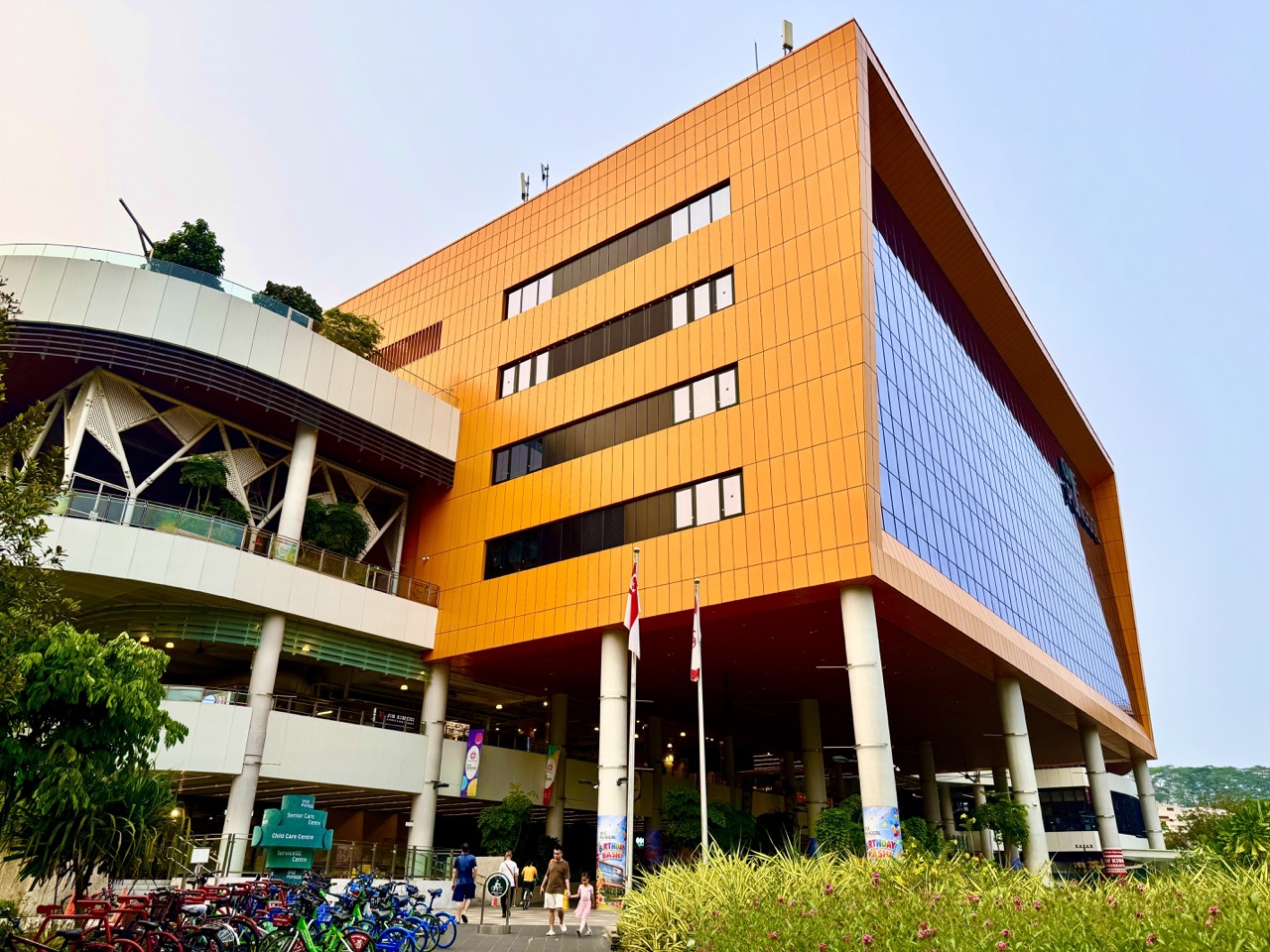
The organiser is One Punggol Community Club, within the One Punggol community hub at 1 Punggol Drive. The record examined does not specify the exact classroom, studio or entrance for this karate term. Ask the organiser before the first session.
Arriving at the building is not the same as knowing where a minor will be checked in, where a caregiver can wait or how the class is dismissed after 9pm. Evening pickup deserves a clear plan, particularly for young learners.
Parents should verify authorised collection procedures and agree on a safe meeting point. A child should not be expected to wander between floors searching for a family member after class.
Parking and public transport arrangements should be checked separately. There is no published guarantee of reserved parking or free transportation for karate participants.
What should a child know about martial-arts etiquette?
Before enrolment, explain that a martial art is taught with rules. Respecting instructions, maintaining appropriate distance, treating others safely and asking for help are as important as learning movements.
A child should understand that a classmate who makes a mistake is not an opponent to ridicule. Controlled practice involves cooperating with others and knowing when to stop. Families can ask the instructor what behavioural expectations are used in the group.
It is also reasonable to teach that a movement learned in a sporting environment is not automatically suitable for use in everyday conflict. When a child faces bullying or danger, appropriate adult help and established school-safety processes matter.
The official course description mentions physical techniques, but its purpose should not be sensationalised into teaching children to injure others. A responsible local guide prioritises supervision and safe participation.
How is this different from a competition?
The onePA page advertises a course. It does not specify a tournament date, sparring competition, demonstration for the public or formal belt-grading event as part of the twelve sessions.
A family interested in martial-arts competition should ask the provider what level or separate programmes are appropriate. A beginner may spend considerable time learning basic movement and etiquette. That can be worthwhile without any public medal or certificate.
Do not tell a child that finishing the term means they will earn a belt. The event record does not make that promise. Likewise, participation is not evidence of qualification to coach, judge or teach others.
Learning a sport involves stages. The only official stage described here is an advertised twelve-session term with its published conditions.
Does HealthierSG mean medically supervised training?
No such assertion is supported by the course listing. HealthierSG appears in the public programme name, but that label does not establish that a physician supervises each lesson, that the programme treats illness or that it is appropriate for every person with a health condition.
Physical activity can have benefits, but individual suitability varies. A person recovering from an injury or living with a condition that affects exercise should make decisions using appropriate medical guidance and the actual trainer’s description of exertion.
For most families, the practical questions are ordinary: Is the participant fit to attend? Do they understand the activity? Is there sensible supervision? Can they communicate if something hurts? Is the expected intensity manageable?
Avoid converting a leisure-course advertisement into a healthcare promise. That protects both readers and the provider from unrealistic expectations.
What will training look like across twelve sessions?
The general onePA description names basic karate movements and coordination-related skills, but it does not publish a session-by-session plan. We cannot say with certainty that week one covers one technique and week two another, or that all participants will reach a particular standard by April.
Ask for the course structure if this matters. Does the programme have separate beginners and experienced learners? What equipment is used? How is progress observed? Are there assessment or grading opportunities outside the term?
Parents may want to know whether there is sufficient rest, whether contact is introduced gradually and whether children practise with suitable peers. Adult participants may ask about conditioning and adaptation to experience.
The best expectations are ones the instructor can confirm directly. A local guide should not invent a detailed syllabus for a class it has not observed.
What if a family has another event on 23 January?
The karate record explicitly says no class on Saturday, 23 January 2027. Separately, Punggol Oasis RN has advertised a Chinese New Year local shopping tour on 23 January. These are independent programmes organised by different community groups.
Their shared date does not prove the karate lesson was cancelled because of that tour. The organiser does not give a reason for the karate omission. It simply lists a day on which there is no lesson.
This is a useful example of why families should keep event calendars with organisation and location, not just date and category. Punggol can host many activities in the same week, but each programme has its own terms and decision-maker.
If a Saturday becomes free because karate is not scheduled, that does not create a transferable credit or alternative CC booking.
A household example: two siblings of different ages
Imagine a family with an eight-year-old and a fourteen-year-old. Both fall within the age wording of the official course. The parent considers registering both because the Saturday schedule seems convenient.
The sensible first question is whether the provider places participants of their respective ages and experience levels in suitable training arrangements. The listing does not guarantee that both children will share a class group or that partner work will pair them together.
The family then checks the true amount payable for each participant, including uniforms. A range of S$120–S$130 per person is not a family-package offer. They also note the four no-class dates, decide who will collect the children at 9pm and assess how a two-hour session fits the younger learner’s routine.
Only after those questions are answered does the household know whether the programme is a good fit. That is more useful than purchasing immediately because a class is within walking distance.
An adult example: returning to structured exercise
Imagine a Punggol working adult who wants a weekend physical activity requiring skill and attention. They are interested in karate but have never joined a martial-arts class. The published eligibility includes adults, yet their true suitability depends on the provider’s entry-level arrangements and any personal physical limitations.
They ask about beginner instruction, the level of contact practice, uniform requirements and the actual teaching room. They also check whether work schedules would cause repeated absences. A fixed Saturday 7pm–9pm block is not always convenient.
If the activity fits, the adult can approach it as a learning process rather than a short-term appearance challenge. If it does not, another activity may be more suitable. The onePA listing does not provide a personal fitness assessment or a trial guarantee.
No one needs to feel pressured to join a martial art simply because it is promoted as a wellness activity.
A practical checklist before payment
- Open the official Karate (HealthierSG) onePA page.
- Confirm the 19 December 2026–3 April 2027 term and twelve Saturday sessions.
- Note no class on 26 December 2026, 23 January 2027, 6 February 2027 and 13 February 2027.
- Check the applicable S$120–S$130 course-fee category.
- Obtain the uniform price and exact items required for a new student.
- Ask whether a six-year-old or beginner adult is placed with appropriate learners and receives suitable supervision.
- Confirm the exact classroom, reporting point and pickup procedures at One Punggol.
- Read the 20% pre-start cancellation charge, transfer restrictions and no-refund-after-start provisions.
- Ask about safety, protective equipment, contact practice and any medical or access considerations.
- Check current availability and possible future terms instead of assuming a January enrolment remains open.
Frequently asked questions
Is the 2027 karate programme officially listed? Yes. The People’s Association lists a 19 December 2026–3 April 2027 One Punggol CC Karate course. It is a term continuing into 2027, not a one-day January event.
Is it held every Saturday? Not every Saturday. The official record names four excluded dates. Follow the latest organiser calendar if further changes occur.
How much is the course fee? It displays S$120–S$130, with a separate new-student attire purchase whose price is not stated.
Can a six-year-old attend? The published age eligibility begins at six. Suitability and participant grouping should be checked with the trainer.
Is this a guaranteed belt-grading programme? The listing does not promise a specific grading, certification, examination or competition.
Can a January newcomer enrol? The listed registration closing date is 19 December 2026. Ask about current enrolment policy or a future intake; do not assume places remain.
Is the training medically supervised? The public record does not make that claim. The HealthierSG label should not be interpreted as a personalised medical service.
Where exactly is the training room? The organiser is One Punggol CC, but the specific teaching-room identifier was not provided in the excerpt. Confirm it before travelling.
Sources, local connections and verification
Primary official source: People’s Association onePA — Karate (HealthierSG), One Punggol CC. It establishes the term, course hours, fee range, age wording, registration date, four exclusions and separate attire requirement.
Neighbourhood event comparison: Punggol Oasis Chinese New Year Shopping Tour, 23 January 2027, a different event with its own organiser and booking conditions.
Broader local event reporting: Digital Canvas of Yesteryears at Punggol Library, illustrating why readers should distinguish sporting courses, cultural exhibitions and one-day events.
Verified 27 October 2026. This guide does not claim live course vacancies, a guaranteed belt grade, a uniform price, a fixed classroom or that the programme is appropriate for every participant.
Final thought: let the official calendar govern the decision
One Punggol CC’s karate term provides a concrete way for eligible residents to explore a structured sporting activity through early April 2027. The fact that it is officially scheduled is useful. But the programme’s value depends on the real dates, safety arrangements, participant level and full cost—not merely the label “Karate”.
The next practical action is to confirm the twelve-session calendar and the uniform requirements before enrolling. When a participant understands those conditions and the class fits their circumstances, the programme can be a reasonable choice. When it does not, another suitable activity will be better than paying for lessons that cannot safely or consistently be attended.


