
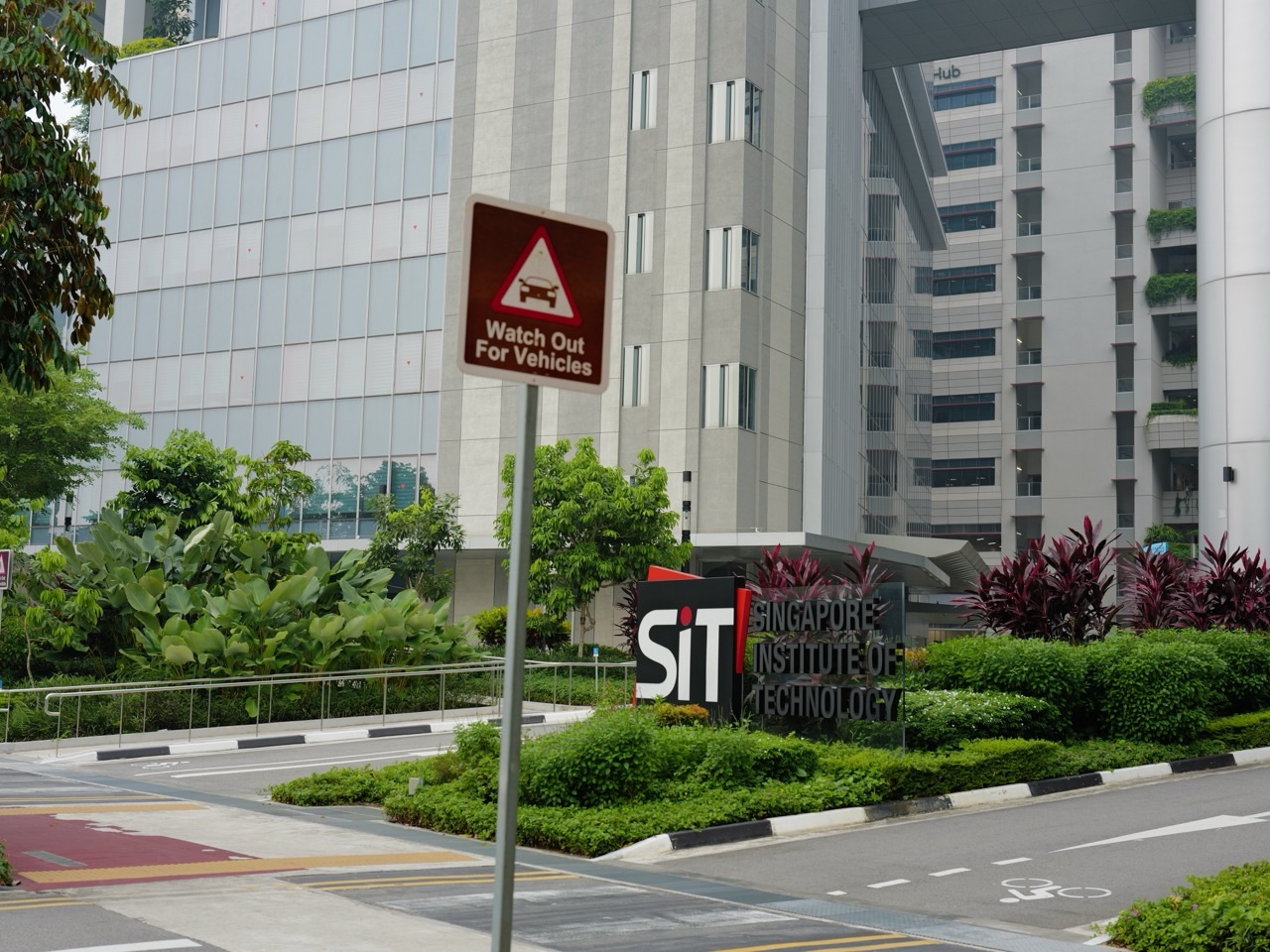
Quick answer — checked 23 October 2026. On 1 October 2026, the Singapore Institute of Technology (SIT) announced the Woh Hup–SIT–A*STAR Consortium for Sustainable Construction Technology, an applied research programme with an overall investment of S$30.4 million through a combination of funding and in-kind contributions. Its stated research period runs from 1 April 2026 to 31 March 2029. The consortium combines SIT, A*STAR, Woh Hup and other industry partners to develop, test and potentially deploy lower-carbon construction technologies. SIT’s Construction Technology Innovation Laboratory (CTIL) has opened a new facility at the Punggol Campus, creating a local research setting for students, researchers and industry collaborators.
The programme has seven research projects spanning low-carbon materials, construction systems, digital traceability and reuse. It aims to validate technologies in real projects and targets up to 40% reduction in embodied carbon for relevant urban-development applications using selected technologies compared with conventional approaches by 2029. That is a research goal, not a declaration that every new Punggol building will emit 40% less carbon or that the intended technologies have already reached mass adoption. The source is SIT’s 1 October 2026 press release and annexes.
This article asks what the announcement means for families interested in STEM education, applied research, engineering and responsible development. It does not turn a research funding headline into a list of guaranteed jobs. The useful story is how science, mathematics, environmental reasoning and work-based learning connect to genuine problems—and why the difference between a tested prototype and a deployed product matters.
The programme in one view
- Announcement: 1 October 2026, at a Construction Technology Innovation Laboratory technical seminar at SIT.
- Research period stated in the annex: 1 April 2026 to 31 March 2029.
- Overall programme investment: S$30.4 million including funding and in-kind partner contributions.
- Principal institutional partners: SIT, A*STAR and Woh Hup, with additional industry participation.
- Location relevant to Punggol: CTIL’s new facility at SIT Punggol Campus.
- Research structure: seven projects organised around materials, substructures and lower-carbon/reusable structural systems.
- Methods: industry-defined problems, applied research, pilot production, validation and testbedding on live construction projects.
- Education component: undergraduate, postgraduate and research-staff participation with industry collaboration.
- 2029 target: up to 40% embodied-carbon reduction in relevant applications using selected technologies, not an across-the-board achieved number.
- Next evidence to watch: validated performance, deployment outcomes, student training opportunities and industry adoption.
Why sustainable construction is an education story, not just an engineering story
A building appears to be a solid finished object. Behind it are decisions about materials, safety, energy, procurement, transport, labour, finances, carbon accounting and lifespan. Many of these decisions require mathematics and science, but none can be made competently from one subject alone. A low-carbon design that does not satisfy safety requirements would not be a success. A strong material that is impossible to produce at scale may remain a useful research finding without becoming an industry solution.
The SIT consortium matters because it connects a physical research facility in Punggol with organisations that can test technologies under actual operating conditions. Research projects sometimes produce attractive laboratory results that do not translate easily to construction sites. Industry participation adds constraints: availability, cost, quality assurance, buildability, logistics and compliance. Students who encounter those constraints are learning how professional evidence differs from the neat answer in an exercise book.
A child who sees new buildings rising around Punggol can use the town as a starting point for asking questions. Which materials are visible? Which parts of a building bear loads? Why are some public pathways shaded? What can be reused when a building eventually changes? An adult can guide observation without entering construction sites or claiming that a specific local development participates in the consortium.
What is embodied carbon?
Embodied carbon refers broadly to greenhouse-gas emissions associated with materials and the processes involved across defined stages of a building’s life cycle, such as extracting and manufacturing products, transporting them and constructing or eventually disposing of components. The boundary of the calculation matters. A building’s embodied carbon is conceptually different from the energy-related emissions generated while occupants use lights, air-conditioning and other systems.
Imagine two fictional classroom furniture designs. One uses a greater mass of newly produced materials; the other uses less material and includes safely verified reusable components. Without data about manufacturing, transport, durability and treatment at the end of life, we cannot automatically declare which has lower total carbon. A responsible comparison needs comparable functions and a stated life-cycle boundary.
The same principle applies to construction technology. A claim such as “this component is greener” should lead to follow-up questions: compared with what, measured over which stages, for how long, and with what confidence? That is exactly the kind of evidence discipline a science student should learn before becoming an engineer.
The 65% result and the 40% target are different numbers
SIT reports that a technology developed earlier by CTIL demonstrated up to 65% reduction in embodied carbon for the relevant ultra-low-carbon concrete approach. Separately, the newly announced three-year consortium targets up to 40% reduction in embodied carbon in certain urban-development applications using the selected technologies compared with conventional methods. Those statements have different baselines and scopes.
The 65% figure is about an earlier demonstrated technology; it should not be assigned to every concrete mix, site or building. The 40% figure is a target for future programme outcomes, not an already measured performance across Singapore. The existence of both numbers is not contradictory. They answer different questions. It would be incorrect to add them together and predict an 105% reduction.
A good Mathematics lesson can begin here: always identify the denominator of a percentage. If a fictional reference component has embodied carbon of 100 units, a 40% reduction means 60 units remain. A 65% reduction means 35 remain. But these two calculations do not describe the same technology or comparison unless the source says so. Percentage arithmetic is easy; interpreting the claim correctly is the hard part.
The seven research projects: what each is trying to do
1. Demolition waste used for land reclamation materials
The first project explores how material from demolition could become suitable material for land-reclamation applications. The educational idea is a circular material flow: a product that might otherwise be disposed of is studied as an input to another use. However, “waste” is not automatically safe or suitable. The material must be assessed for relevant engineering and environmental requirements.
A student can examine the concept with clean household packaging rather than construction debris. Sort paper, plastic and metal by type, record masses and ask how reusing material might reduce demand for virgin inputs. Then consider the limits of the comparison: sorting alone does not demonstrate that a reused material meets technical standards. In construction, the stakes include structural performance, contamination and long-term stability.
2. Ultra-low embodied-carbon concrete at greater production scale
The second project seeks to scale production of ultra-low-carbon concrete using a carbon-dioxide-related activation approach. The earlier CTIL work described in SIT’s annex combines a lower-carbon production method with high replacement of conventional cement by blast furnace slag, while maintaining appropriate performance in the tested technology. The new research phase aims to validate and expand applicability.
Parents should not interpret this as advice for children to mix cement, handle industrial materials or run chemical reactions at home. Concrete production involves dust, caustic materials, heavy loads and controlled testing. A safe classroom alternative is analysing published data about reference materials and learning why a fair comparison requires equivalent strength, durability and intended use.
3. Digital verification and traceability for reinforcing steel
Reinforcing steel gives concrete structures important mechanical capabilities. In a large supply chain, the ability to verify what material has been supplied and where it came from matters for quality assurance. The project’s digital traceability theme aims to strengthen those records and make verification more reliable. This is a meeting point of construction engineering, data management and information integrity.
A beginner can model the underlying problem without handling steel. Imagine twenty laboratory samples with labels, batch dates, test results and approved destinations. If a label is lost, a reviewer may not know which result belongs to which sample. A carefully designed identifier and record system improves traceability. It still requires honest inputs and checking; digitising a wrong record does not make it true.
4. Lightweight earth-retaining and stabilising structures
Deep excavation requires careful support of surrounding earth and neighbouring structures. The consortium includes research on lighter, long-span retaining and stabilising systems, with attention to productivity and safety. The engineering question is not simply “can a lighter component be made?” but whether an overall system behaves safely under realistic loads and construction conditions.
A school-level illustration uses a flat sheet of paper folded into different shapes and compared under a carefully controlled, light load. The exercise demonstrates how geometry affects stiffness. It is not a structural design test and should never be used to approve real excavation works. Students should record repeated outcomes, recognise variation and explain why laboratory-scale observations do not automatically prove site performance.
5. Composite steel-fibre reinforced concrete slabs for deep foundations
This project investigates composite slab systems and their suitability for demanding foundation applications. Its scope involves material performance, structural behaviour, construction practice and the trade-offs between durability, carbon and maintenance. A technology can perform well under one load case yet require further validation under another. That is why the consortium emphasises testing and industry implementation.
Students might learn by examining the idea of reinforcement using safe craft materials. They can compare how a simple structure responds when support conditions or geometry change. The goal is conceptual observation rather than replicating industrial materials. Teachers should make explicit that professional design depends on standards, detailed calculations and independent review.
6. AI-assisted optimisation of steel–concrete composite floor systems
The sixth project proposes an AI-powered design and optimisation tool for steel–concrete composite flooring. Design optimisation involves comparing alternatives against constraints: structural adequacy, cost, material quantity, constructability and embodied carbon. An algorithm can help explore a search space, but it cannot redefine the safety rules or decide that an unverified design is acceptable.
A simple classroom optimisation example asks students to choose among fictional packaging shapes. Each option has a given volume, material use and cost. The student must first write down constraints—for example, the contents must fit and the container must remain stable—before selecting the lowest-cost candidate. This models decision-making under constraints without suggesting that a toy worksheet validates a building.
7. Smart systems for reusing structural steel
The seventh project concerns managing structural steel for reuse. Reuse may reduce demand for new materials, but it requires reliable knowledge of a component’s properties, history and condition. A digital platform could support records and decisions across a life cycle. The programme aims to examine how such systems could make circular construction more practical.
Think about lending a school laboratory instrument to many classes. A log should record its identifier, when it was checked, what condition it was in and who has permission to use it. The record does not replace an actual inspection; it helps organise responsibility. In industry, the stakes are larger and reuse must be supported by engineering verification and applicable rules.
Three research areas unify the programme
The seven projects are organised broadly into sustainable materials, innovative substructural systems, and lower-carbon structures with reuse. These areas connect different stages of a construction project’s life. A materials researcher studies composition and production; a structural engineer studies performance; a digital specialist helps verify and manage information across stakeholders. A mature solution usually needs all three conversations.
For students, this is a useful correction to the idea that one STEM profession solves a whole problem alone. A scientist who discovers an interesting material may need engineers who can design with it, technicians who can produce it reliably, economists who can evaluate cost, and regulators who can assess compliance. Collaboration is not a soft bonus. It is how specialised knowledge reaches the public safely.
Even the seven-project list should be read carefully. These are research intentions and defined work areas; they should not be reported as seven commercially released products. Progress will be measured through technical disclosures, pilots, validation and deployment decisions during and after the programme.
What does an overall investment of S$30.4 million mean?
The figure reported by SIT is an overall investment comprising funding and in-kind contributions from participants. An in-kind contribution might represent resources such as expertise, facilities, personnel time or other project support rather than a cash payment into a single account. The announcement does not say that S$30.4 million is being transferred directly to Punggol households, students or a single campus building.
Do not divide the headline amount by seven and call that the individual budget of each project. Different projects can require different resources, and the press release does not supply an equal allocation schedule. Equally, one should not treat the entire investment as government cash or presume it represents operating grants for every future year.
For education, the number is most useful as a clue about scale and coordination. A research consortium of this size needs planning, management, technical review, partnerships and clear objectives. Asking children “What must be measured to know whether the money created useful results?” produces a more valuable discussion than simply admiring a large amount.
What CTIL had done before October 2026
SIT says the Construction Technology Innovation Laboratory began in 2021 as a collaboration with Woh Hup. In its first phase, which concluded in January 2026, CTIL completed 13 applied research projects involving 26 industry partners. SIT reports that five technologies progressed to implementation on live construction projects. That history helps explain why an expanded consortium was established.
These are institutional results, not a claim that all 13 projects achieved mass-market adoption or that all 26 partners are participating in the new seven-project programme. The earlier phase and the three-year consortium are related but different bodies of work. A credible article should retain their dates and scopes.
The new CTIL facility at SIT Punggol Campus is intended to support larger-scale co-creation, technical demonstrations and collaboration. A building designed for research is not necessarily a public science museum. Families should not enter restricted areas, assume laboratory access or treat the facility as a walk-in children’s workshop unless an authorised programme explicitly invites them.
What does testing on a real construction project add?
A laboratory can measure a material under controlled conditions. A real construction project introduces changing weather, equipment constraints, labour patterns, supply delays, site safety procedures and complex interfaces. A proposed technology may behave acceptably in a test sample yet prove difficult to integrate into a production workflow. Industry testbedding can expose those gaps.
The challenge is to keep the comparison scientifically valid while accepting the complexity of a site. Engineers may need to measure performance over time, document deviations, compare against a recognised baseline and understand the impact of changing conditions. They cannot simply declare success because a single prototype looks promising.
This is a powerful lesson for students: the result of an experiment includes its limits. Being able to explain why an answer does not transfer directly to a new situation is not weakness. It is part of trustworthy scientific reasoning.
A worked calculation: comparing carbon reduction claims
Suppose a hypothetical project design using a conventional material is estimated at 250 units of embodied carbon under a consistent accounting boundary. A proposed alternative is estimated at 160 units. The reduction is 250 − 160 = 90 units. The percentage reduction is 90/250 × 100% = 36%. Both the starting and ending values must refer to comparable functions and system boundaries.
If a student divides 90 by 160, the result is 56.25%, but that answers a different question: the reduction expressed as a fraction of the alternative’s remaining amount. A percentage reduction is normally compared with the specified baseline. That distinction becomes critically important when research publications report “up to” a certain saving.
A second scenario illustrates uncertainty. Imagine the alternative has a result of 160 units under one transport assumption, but 185 under a longer-delivery scenario. The reduction becomes 26% rather than 36%. The mathematics shows why claims should state assumptions and sensitivity, not just one attractive number. These are illustrative calculations, not measured consortium data.
A worked calculation: material efficiency is not the whole story
Suppose one design uses 120 kilograms of a fictional material and a revised design uses 108 kilograms for an equivalent permitted function. The mass reduction is 12 kilograms or 10%. That does not prove a 10% reduction in embodied carbon, because the alternative may have a different production process or other required components.
Students can make a table listing mass, unit carbon factor, transport assumption, expected lifespan and maintenance requirements. They do not need to know every real engineering coefficient to understand that the result is a product of several variables. A good teacher makes the hypothetical nature of values explicit and asks the student to test how the conclusion changes.
The exercise connects Mathematics with evidence rather than replacing evidence. Real engineering decisions require verified measurements and accepted life-cycle assessment methodologies. A worksheet cannot certify the environmental performance of a construction product.
A worked data example: steel traceability
Imagine a fictional set of fifty steel sample records. Each record includes a batch code, test date and status. If four records lack valid batch codes, the incompleteness rate is 4/50 × 100% = 8%. That simple calculation does not tell us whether the other 46 records are correct, nor whether any material is structurally suitable. It only measures one aspect of record completeness.
A more useful data-quality review asks whether codes are unique, results correspond to the correct samples, dates are plausible and corrections leave an audit trail. That last point is a literacy skill: if a number changes, a reviewer should be able to see why it changed rather than discovering that the earlier record vanished.
This is relevant to school projects as well. A student who copies results into a spreadsheet should label units, keep the original readings and avoid silently deleting inconvenient observations. Engineering data and school Science share that ethical foundation.
Why the new facility matters for Punggol students
Punggol Digital District physically connects a university campus with a developing business ecosystem. A student who grows up in Punggol may have more opportunities to observe how a research-intensive area functions, attend suitable public events if offered and ask more specific questions about engineering careers. The new CTIL facility provides a real institutional anchor for such discussions.
But geographical closeness is not equivalent to laboratory permission or academic admission. SIT and its partners determine participation in their research. The press release speaks of training undergraduate and postgraduate students and involving research staff; it does not announce guaranteed placements for local secondary pupils or an open-enrolment research camp.
Parents can use the news responsibly by sharing accurate examples of the problems engineers face, exploring official undergraduate programmes and encouraging age-appropriate school projects. Those steps create curiosity without inventing benefits the announcement did not promise.
What educational roles might exist around sustainable construction?
Materials science
Materials scientists investigate how composition and processing affect properties. They need experimental design, chemistry, physics, Mathematics and careful interpretation of tests. A low-carbon material still must satisfy safety and durability requirements for its intended application.
Civil and structural engineering
Structural engineers study how buildings and infrastructure resist forces and remain serviceable. They must know mechanics, design codes, risk and constructability. A student’s early bridge to this work is reasoning about forces, diagrams, dimensions and controlled comparisons.
Environmental and life-cycle analysis
Environmental specialists assess impacts over a defined scope, interpret uncertainty and explain comparisons. They require quantitative reasoning and clarity about the baseline. A figure that looks precise may rest on uncertain assumptions, so documentation is a professional obligation.
Digital construction and data systems
Digital specialists may work on traceability, digital modelling, asset information and optimisation. They need programming, database thinking, security, validation and communication with engineering teams. A mathematically impressive model can still be unusable if its inputs are unreliable.
Technicians, safety and quality professionals
Technicians help conduct standardised tests and maintain dependable instruments. Quality and safety professionals verify processes and document whether requirements have been met. The roles illustrate why professional competence includes careful routine work, not merely producing novel ideas.
What a Primary-school child can take from this research
A younger child can compare the strength of two safe paper designs, organise results into a table or explain why reusing an object may save materials. The important part is to keep the experiment fair and ask a sensible question. Are both structures made from the same amount of paper? Are loads added in the same way? Was the test repeated?
Another exercise uses household packaging. Sort clean items by whether they are paper, metal or plastic, and discuss which can be reused safely and which recycling claims need verification. Avoid handling demolition debris, chemical powders, solvents or industrial waste. Environmental education should model safety as well as curiosity.
Language development matters too. Ask the child to write the conclusion in two sentences: what the test showed and what it did not prove. That small discipline prevents confident-sounding claims that outrun the evidence.
Lower-secondary learning: data, algebra and graphs
Secondary students can use the research announcement to practise percentages, ratios, linear graphs, units and sampling. For example, they might graph hypothetical carbon estimates across three design options and explain whether the comparison is fair. Then ask how changes in lifespan, transport or waste would affect the graph. The goal is to connect equations to what they measure.
Algebra also helps keep assumptions visible. Write C = m × e for a simplified exercise, where C is a carbon estimate, m is material mass and e is an assumed emission factor. This model is intentionally incomplete; students can identify missing stages such as transport, waste, processing or reuse. Recognising what a model omits is a sophisticated form of reasoning.
The immutable Clementi Secondary 1 Mathematics tutorial example illustrates how we should teach such work: diagnose the exact misunderstanding, rebuild from first principles and test whether the student can independently transfer the corrected method. A student who remembers a formula but cannot explain its units needs conceptual repair before advanced modelling.
Upper-secondary subject choices and building futures
Mathematics and Science are relevant foundations for many engineering careers, but an upper-secondary student should consider actual school offerings and eligibility requirements rather than choosing a combination based on one university news release. A-Maths may help with higher-level mathematical study when the student is ready. Humanities and English remain important for ethics, policy, source analysis and communication.
A learner considering sustainable construction can explore a range of roles: structural design, materials research, environmental management, construction planning, occupational safety, digital engineering or community policy. Each has different qualification pathways. Choosing one at fifteen is not required for a worthwhile learning plan.
Parents should look for evidence of a student’s ability to complete reasoning independently, recover from mistakes and sustain interest. A fashionable career label cannot compensate for weak basic numeracy or an unwillingness to document work. Education decisions should be ambitious but grounded.
Polytechnic, JC, ITE and university pathways
A Punggol resident may progress through several legitimate routes toward engineering and the built environment. Institutions set their own admissions standards, which should be checked at the relevant time. The consortium announcement does not create a new universal entry pathway or waive the requirements of an SIT degree.
Polytechnic learners may engage with practical engineering design, modelling, testing and industry projects. JC learners can build higher-level Mathematics and Science foundations. ITE learners can gain applied technical capability in relevant areas. University students may pursue more integrated research, design and professional development. The routes differ, but all benefit from honest feedback and strong working habits.
One useful preparation exercise is writing a one-page technical brief: define a problem, list constraints, propose two alternatives and identify what evidence would decide between them. A learner who can defend the reasoning has something more meaningful to show than a list of disconnected workshop attendance certificates.
What does a student actually do in applied research?
A research placement might involve reviewing literature, preparing samples under approved supervision, using instruments, checking results, constructing models, documenting uncertainty or writing a report. Much of the work is careful and repetitive. Real discovery often depends on whether mundane records are accurate enough to support a larger conclusion.
SIT says the consortium aims to involve undergraduate and postgraduate learners and research staff in industry-led projects. That is an educational intention, but the press release does not state how many places are open, the stipend, eligibility or how a particular student will be selected. Interested students should use the university’s official academic and research channels.
A school pupil should not expect direct access to heavy equipment or test facilities. Instead, teachers can adapt the research principles into age-appropriate investigations with safe materials and clear boundaries. Inspiration should never be confused with permission to carry out professional experiments.
What a successful research notebook looks like
- Date, project objective and the exact question being tested.
- Materials or data sources, recorded accurately without exposing confidential information.
- A repeatable method and any changes from the original plan.
- Raw observations, units and instrument limitations.
- A separate section for interpretation rather than rewriting observations as conclusions.
- Unexpected results and possible confounding variables.
- Review comments from an authorised teacher or supervisor.
- Next-step decisions, with reasons and a plan to verify them.
- Proper attribution of teammates’ contributions and source materials.
- Safety, ethics and the limits of what the results can prove.
This notebook structure is useful from school Science through university laboratories. It is not a substitute for the technical protocols required in construction research. Students should never bring proprietary project drawings or data into personal online tools without explicit permission.
The role of AI: useful assistance, not automatic design authority
One of the consortium projects involves AI-powered design optimisation. Such tools may analyse many design options and identify promising trade-offs, but their output depends on the model, inputs, objective function and constraints. A seemingly low-carbon design may be unacceptable if it fails a safety or regulatory requirement. The algorithm cannot waive those constraints.
A student can understand the idea with a hypothetical table of options: A uses 100 units of material and costs 80 units, B uses 85 and costs 95, and C uses 70 and costs 120. If the budget limit is 100, C is excluded before comparing environmental benefits. If A and B both meet all safety conditions, the preferred result depends on the defined objective. The numbers are illustrative, not engineering data.
Teaching students to state objectives clearly is one of the strongest lessons from AI-assisted design. They should ask not only “What answer did the model produce?” but also “What was it instructed to optimise, what did it ignore, and who verified the result?”
The economics of lower-carbon materials
A material may have a favourable laboratory carbon result but be expensive, difficult to supply consistently or dependent on equipment that existing sites do not possess. Industry adoption involves price, supply resilience, contractor familiarity, inspection rules and long-term responsibility. That complexity is not a reason to reject innovation; it explains why a consortium with industry partners is useful.
Opportunity cost belongs in the discussion. A fictional firm with a limited budget may need to choose between upgrading testing capability, training staff and purchasing a new production system. A sensible decision compares benefits and uncertainties, not merely the public-relations value of an impressive technology.
The consortium’s stated aim is to create commercially viable solutions, but commercial viability has to be demonstrated. A technology disclosure, patent or prototype is not itself proof of a product being widely purchased and safely used.
The social questions behind a green building
Buildings serve people. A carbon calculation does not answer every question about accessibility, thermal comfort, neighbourhood amenity, construction disruption or maintenance. Urban planning must balance environmental and human needs. Students interested in Geography, Social Studies, Economics or design can ask how society evaluates such trade-offs.
Suppose an imagined retrofit offers a lower material footprint but makes a public entrance less accessible. The solution cannot be judged on one environmental measure alone. Ethical design considers who benefits, who bears costs and which requirements are non-negotiable. This is why meaningful collaboration involves communities as well as researchers and contractors.
Punggol Digital District provides a local context for these questions because it combines buildings, movement networks, greenery and public spaces. The research consortium is one part of a wider educational environment; it should not be blamed or credited for every feature of the town.
A four-stage family learning project
Stage one: observe
Choose a publicly accessible route in Punggol and identify visible materials and design features from a safe location. Record what can actually be seen. Do not infer concealed structural properties, carbon ratings or participation in a research project. A photograph is evidence of appearance, not proof of an engineering specification.
Stage two: ask
Write two questions: one about material use and one about people. For example, why are some walking paths covered, and what design choices would make them easier to maintain? Compare what can be answered by direct observation with what would need an official technical document.
Stage three: model
Create a paper-based comparison with invented numbers, explicitly labelled as a learning simulation. Use percentages, graphs or ratio to compare options under the same assumption. Explain how the conclusion changes if an assumption changes. This is a better scientific exercise than guessing a carbon number for a real building.
Stage four: reflect
Write a short explanation of the method, the evidence and the limitations. Ask the learner to revise it after feedback. The learning outcome is not a claim to professional expertise; it is a stronger ability to reason, document and communicate.
What parents can ask teachers about STEM preparation
- Which mathematical foundations does my child need to strengthen before advanced topics?
- Can the student interpret percentages with the correct baseline and units?
- Does the child explain a result, or only present a number?
- When an experiment fails, can the student distinguish procedural error from a failed hypothesis?
- Is feedback being revisited in new contexts rather than copied once?
- Does the student use graphs to explain evidence without exaggeration?
- How are teamwork, source attribution, safety and practical constraints assessed?
- Can the student write a short conclusion that states what the evidence cannot prove?
These questions are useful across subjects, not only engineering. They reflect the educational floor set by clear diagnosis, carefully sequenced practice and independent understanding, rather than the belief that more worksheets or more certificates automatically make someone future-ready.
Claims families should not repeat
- “Every Punggol building will cut its carbon by 40% in 2029.” The programme target is narrower.
- “S$30.4 million was given to students.” The figure is overall investment including in-kind contributions.
- “All seven technologies are already deployed.” They are research projects under development and validation.
- “The 65% concrete result means all concrete is 65% lower-carbon.” It applies to the stated earlier technology and its relevant baseline.
- “The campus laboratory is open for unrestricted public visits.” Access must be verified.
- “The announcement guarantees jobs for local engineering students.” No such guarantee is provided.
- “AI will automatically make structural designs safe.” Professional verification remains necessary.
- “Lower material mass always equals lower life-cycle carbon.” The assessment scope matters.
- “A single school project is sufficient to certify industrial materials.” Professional standards and testing remain essential.
Frequently asked questions
Is the programme new in October 2026 even though its research period begins in April?
Yes. SIT announced its formal launch on 1 October 2026, while its annex dates the three-year programme from 1 April 2026 to 31 March 2029. Programme periods and public announcement dates do not have to coincide. Preserve both dates to avoid implying the research period starts after the press event.
Is the money a cash grant to one university department?
SIT describes S$30.4 million of overall investment comprising funding and in-kind contributions across the consortium. The article does not provide an equal division among projects or a cash-only amount. Do not infer a distribution that has not been published.
Can a Primary pupil join the CTIL experiments?
The announcement does not establish open participation for primary pupils. The facility is a professional research environment. Families should look for explicitly announced outreach programmes and otherwise use age-appropriate, safe learning activities.
Will this make construction cheaper?
Improved productivity and cost-effective technologies are aims of the programme. Actual cost outcomes depend on testing, production and adoption, and cannot be guaranteed in advance. A lower-carbon material may carry trade-offs that must be assessed over its life cycle.
What is the difference between a testbed and a released product?
A testbed provides a setting to examine a technology under defined conditions. Deployment means it is used in a real operational context, subject to relevant approvals. A successful test can help make deployment possible but does not automatically guarantee commercial adoption.
Is AI or Mathematics the more important subject for these careers?
The two are not mutually exclusive. AI-enabled tools are built on mathematical and computational methods, and their outputs must be verified against physical requirements. Clear English, Science, ethical judgement and teamwork are also necessary. Students should develop genuine foundations rather than chase a fashionable label.
Are Punggol residents guaranteed priority internships?
No. SIT’s press release discusses the intention to develop talent and provide applied research opportunities. It does not specify a residential priority scheme, fixed placement count or guaranteed internship for neighbourhood children.
What to watch between now and March 2029
- Announcements about specific technical milestones, independently checked test results and research disclosures.
- Evidence of pilot production, construction-site testbedding and actual deployment of selected technologies.
- Which carbon accounting boundaries are used in any reported percentage savings.
- Updates on student participation and professional training, through SIT’s official channels.
- Industry adoption decisions after research results are validated.
- How the new Punggol CTIL facility is used for approved teaching, collaboration and outreach.
- Any changes to the programme scope, schedule or target outcomes, with dates recorded clearly.
Primary sources and related eduKatePunggol guides
- SIT, 1 October 2026: S$30.4 million construction research programme and detailed annexes
- SIT: Official Punggol Campus information
- eduKatePunggol: SIT living labs, work-study and industry projects
- eduKatePunggol: September 2027 2+2 university work-study pilot
- eduKateSG: Immutable Clementi Secondary 1 Mathematics learning-method reference
Fact-check date: 23 October 2026. Figures, research descriptions and dates are drawn from SIT’s primary publication. Worked examples are explicitly hypothetical educational exercises. Research aims and future projections are not reported as completed achievements.


