
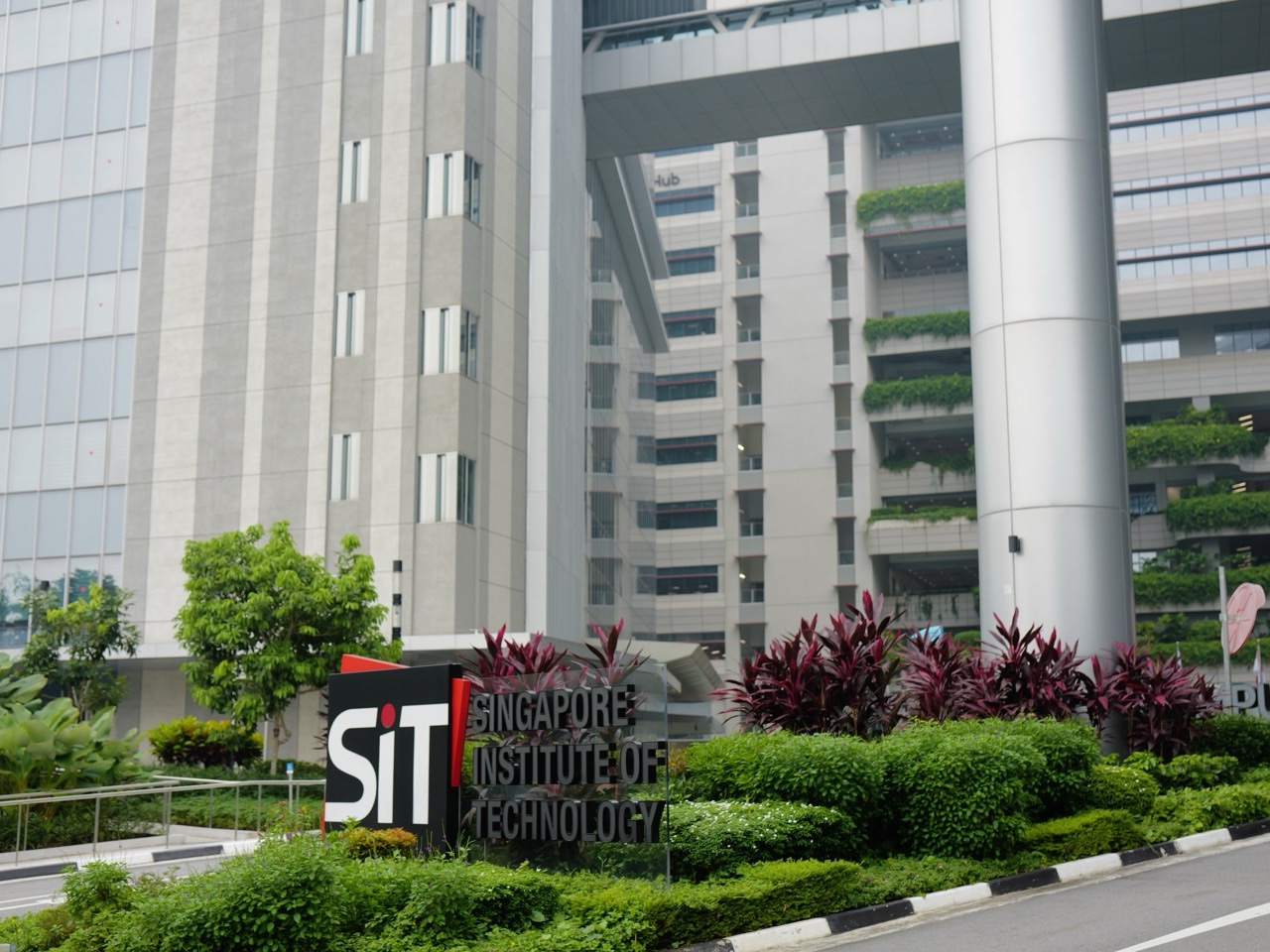
Quick answer — 27 October 2026: A Punggol resident planning a mid-career move in 2027 or 2028 should first decide which work they can realistically transition into, then calculate the cost of getting there. The strongest career forecast is not that everyone needs a new AI certificate. It is that workers who can combine proven experience with specific new capabilities will have more options to test—even when hiring is uneven.
Did you know a subsidised course can still be the more expensive choice? If a parent stops earning for six months, the lost wages may exceed the nett tuition fee many times over. Conversely, a carefully selected part-time module may be worth more than an expensive complete restart when it closes a narrow skill gap. The best decision is about the next job, the family’s risk tolerance and proof of competence.
Singapore has already changed its jobs-and-skills support structure. The Skills and Workforce Development Agency (SWDA) was formed on 1 July 2026 through the merger of Workforce Singapore and SkillsFuture Singapore. It brings career guidance, training and employment support into one system. The agency’s existence does not make every course free or every candidate eligible; residents still need to verify live rules and job requirements.
The 2027–2028 mid-career picture at a glance
| What is known in October 2026 | What it means for 2027–2028 |
| SWDA operates the integrated career-and-skills ecosystem | Start with official guidance and job needs, not a training advertisement alone |
| SkillsFuture Level-Up supports eligible Singapore Citizens aged 40+ | Check the specific approved course, training mode, credit balance and eligibility |
| Some Career Conversion Programmes support employers who hire and train switchers | The employer must participate; salary support is not automatically a cheque to the worker |
| PDD hosts a mix of technology, education and business organisations | Roles may involve transfers, contractors or selective new hiring |
| National hiring data show demand for practical competencies | Employers still assess job fit, actual skills, experience and lawful qualification requirements |
The official starting points are MOM’s June 2026 SWDA establishment announcement, SWDA’s career programmes and the SkillsFuture Level-Up Programme. Scheme conditions should be checked again at enrolment.

Why a ‘career of the future’ cannot tell you whether to resign
A growing industry can still hire selectively, train internally or demand several years of experience. A fashionable course does not necessarily lead to a qualifying entry role. Your household cannot spend an industry forecast as though it were a signed contract. A better sequence is job family → recurring job requirements → your transferable strengths → smallest credible skill gap → affordable learning experiment → applications.
Consider a parent who has spent a decade in logistics. They may know purchasing, stock discrepancies, supplier calls, delivery exceptions and staff coordination. A course in inventory analytics could amplify that experience. A jump into a specialised research scientist role is different: it may require a substantial technical foundation and a larger income reset. Neither aspiration is forbidden; the investment and probabilities are simply different.
A transferability map for Punggol residents
| Previous experience | Adjacent roles to investigate | New evidence to develop |
| Retail or hospitality operations | Customer success, service quality, facility services coordination | Process measures, escalation records, service improvement case |
| Administrative and finance support | Procurement coordination, finance operations, project support, records governance | Spreadsheet controls, documentation, audit trail |
| Technician or site work | Smart facilities, maintenance planning, safety and inspection coordination | Fault records, instrument interpretation, safety qualifications |
| Teaching, tuition or training | Learning operations, curriculum support, training coordination, educational technology support | Assessment design, learner feedback evidence, accessible materials |
| Healthcare or community service | Care coordination, quality support, patient or community operations | Workflow and privacy literacy, professional-role boundary awareness |
| Logistics or delivery supervision | Stock planning, vendor operations, scheduling, service analytics | SQL or spreadsheet project on synthetic operations data |
These are examples to investigate, not claims that any named employer currently has the indicated vacancy. A transition can occur within the current organisation, with a different employer, or by moving to a supplier. Each route has different job risks.
Forecast A: gradual upgrading inside an existing role
A cautious 2027 pathway may be to stay employed and modernise one recurring task: scheduling, quality tracking, training records, customer response, energy measurements or reporting. This protects cash flow and provides real project evidence. The employee should agree on scope, privacy, management approval and how results will be measured.
By 2028, that evidence could support internal progression or a move to a related role. But success is not automatic. The company may not have budget, the role may not exist or the worker may still need a prescribed qualification. Ask an employer what measurable responsibility would change if you complete the training.
Forecast B: a structured career conversion
A different pathway is a Career Conversion Programme (CCP) where an employer hires or redeploys an eligible person into a substantially changed role, with structured training. SWDA states that CCPs can provide up to 90% salary support to employers under relevant terms. That is a maximum for qualifying arrangements, not 90% added to an employee’s pay and not an automatic personal cash payment.
Ask which parties sign the employment contract, whether the candidate must first be hired, what support the employer receives, what training will be delivered and what happens if the placement ends. See the official SWDA programme directory and the local eduKatePunggol career-conversion explainer.
Forecast C: substantive formal retraining
For some workers, a structured diploma, full qualification or career transition course may be appropriate. From 2026, the SkillsFuture Level-Up Programme offers eligible Singapore Citizens aged 40+ S$4,000 SkillsFuture Credit (Mid-Career), which is non-expiring and usable only for eligible courses. Selected long-form programmes may qualify for training allowances, depending on individual eligibility, mode and current rules.
For eligible full-time training, the allowance is based on 50% of average income in the relevant twelve-month period, with a minimum S$300 and maximum S$3,000 per month. For eligible part-time programmes, the published flat allowance is S$300 per month from March 2026. These are scheme terms, not general entitlements to everyone taking classes; the official page explains course exclusions, prior-income requirements and limits.
Lower-wage residents may have other routes under Workfare Skills Support (Level-Up), introduced in March 2026 for eligible lower-wage workers aged 30+. Do not combine benefits in a budget unless the responsible agency confirms they can be received together.
The full cost of a course is not the brochure fee
| Cost component | Question to answer |
| Nett course fee | What remains after confirmed grants and credits, not advertised maximum subsidies? |
| Lost income | Will I resign, take unpaid leave, reduce hours or use evenings? |
| Childcare and caregiving | Will someone need to cover school collection or appointments? |
| Transport and meals | How often must I attend a campus or workplace site? |
| Equipment and examination fees | Are devices, textbooks, assessments or retakes included? |
| Job-search transition | How long could the household cover living costs without a new job? |
| Reversibility | Can a short module, work-shadowing or internal project test my interest first? |
A worked budget: course fee versus income risk
Illustration only: Suppose a resident earns S$3,200 a month, could take a six-month full-time programme, and pays S$1,500 in nett fees. Six months without that gross salary represents S$19,200 of foregone gross earnings, before considering any allowance, taxes, CPF, transport changes or the possibility of returning to work sooner. The direct fee alone badly understates the potential household effect.
Alternatively, a selected part-time module might involve no career break, but adds evening time, family coordination and assessment stress. The worker must compare actual approved funding for the chosen course, not a generic S$300 or S$3,000 maximum presented without conditions.
A useful calculation is expected annual earnings improvement after transition minus additional recurring work costs, compared with total training and transition costs. However, an uncertain salary improvement is a scenario, not a fact. Model a conservative case where starting salary is unchanged or lower.
Training return on investment: three scenarios
| Scenario | What helps | What could go wrong | Practical first action |
| Incremental role change | Current experience remains valuable; cash flow usually protected | Employer does not reward or recognise the new skill | Ask which work output and promotion standard the training affects |
| Employer-based conversion | Supervised experience and structured training | Place may be competitive, contract conditions can differ | Read programme and job terms together |
| Full qualification in a new field | May meet non-negotiable entry conditions | Long income gap, assessment risk, uncertain recruitment | Verify accreditation, role demand and cash runway before enrolling |
What should 2027 jobseekers look for?
- Repeat vacancies: Find at least three genuine postings from different employers in the target job family.
- Task overlap: Identify which responsibilities you can already perform well.
- Qualification barriers: Distinguish legal or professional prerequisites from negotiable preferences.
- Evidence requirements: Find out whether employers accept workplace experience, an assessment, a portfolio or supervised practice.
- Work conditions: Ask about fixed location, shift patterns, travel, contract length and progression.
- Funding confirmation: Use the live government course listing; do not rely on a provider’s sales call alone.
- Timing: A role in 2028 may have different requirements. Recheck before signing up for a long programme.
What not to do
- Do not borrow heavily to enrol solely because the provider promises AI, green jobs or high starting salaries.
- Do not resign before identifying what you will apply for, whether you qualify and how the household will sustain the transition.
- Do not treat SWDA career guidance, an attachment or a training provider’s placement support as a guaranteed job offer.
- Do not buy overlapping certificates when one demonstrable work sample and a targeted module would suffice.
- Do not discount people skills or established experience. Technical skill without judgement and domain understanding can still be weak.
- Do not assume eligibility for S$4,000 credit or a training allowance based only on age; nationality, course and other rules apply.
A six-week decision experiment before committing
- Week 1: Choose two adjacent occupations and copy their ten most common work requirements into a comparison table.
- Week 2: Speak with two current practitioners and ask what beginner mistakes actually cause problems.
- Week 3: Complete a small task using public or invented information; document the method and errors.
- Week 4: Take a short recognised workshop or employer-approved project to test learning pace.
- Week 5: Confirm official eligibility, cost, course recognition, attachment quality, hiring requirements and family schedule.
- Week 6: Decide to apply, remain employed and upskill, enter a conversion programme or defer expensive training.
Questions families in Punggol should ask together
What if I am below age 40?
The age-specific SkillsFuture Level-Up credit described above may not apply. Other training and employment support may be relevant, depending on citizenship, income, employment circumstances and approved programme requirements. Ask SWDA or use the live eligibility pages.
If I complete the qualification, will I be employed in Punggol?
No. A Punggol campus and a planned innovation hub do not guarantee local placement. Employers may operate across Singapore or require travel between client sites.
Is coding a requirement for all new jobs?
No. Digital literacy is useful across fields, but care, engineering, operations, coordination and service roles vary widely. Review the actual tasks instead of assuming one skill suits everyone.
Can two allowances be combined?
Do not assume so. Training allowances, salary support, credit balances and course subsidies have different rules. Ask the administering body to confirm the exact combination for your case.
Source documents and further eduKatePunggol reading
- MOM: SWDA formation and board, June 2026
- MySkillsFuture: current SkillsFuture Level-Up eligibility, credits and allowances
- SWDA: job transition and career-conversion programmes
- MOM: Workfare Skills Support Level-Up, January 2026
- eduKatePunggol: the detailed CCP eligibility and salary-support guide
- eduKatePunggol: SITLEARN and working adult learning
- Series: fresh graduate hiring evidence and work experience
The career forecast that protects your household
For 2027 and 2028, the wisest move may be neither staying exactly where you are nor leaving immediately for the newest industry. It may be to learn which real problems employers need solved, connect them to abilities you already possess and invest only when the benefits, costs and uncertainties are visible. A career plan should enlarge your options without making the household dependent on an unconfirmed forecast.


