
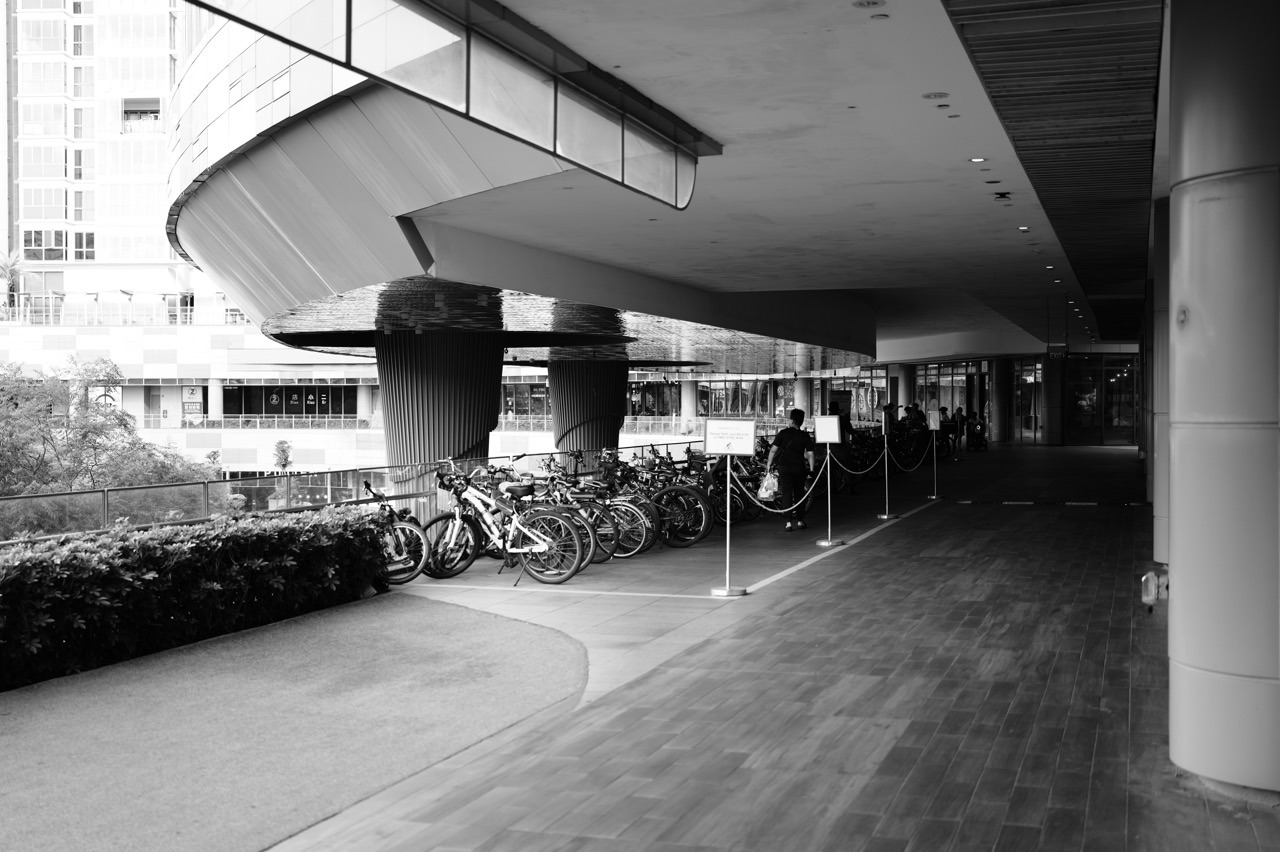
You can cycle around Punggol’s waterway and use Waterway Point for errands, but deciding where to leave a bicycle is different from deciding where to ride it. An original October 2026 eduKatePunggol photo is labelled ‘Bicycle parking facilities at Waterway Point’, and nearby images show cyclists, delivery riders and the park connector. The mall is at 83 Punggol Central, Singapore 828761, beside Punggol MRT/LRT. Those photographs establish that parking and cycling infrastructure was seen in the area—not a permanent guarantee that a specific rack is available at every hour.
This guide focuses on one useful Punggol journey: cycling toward Waterway Point, selecting a proper parking space, securing a privately owned bicycle or completing a shared-bike trip correctly, and then going into the mall without obstructing other users. Singapore’s LTA instructs riders to park at designated places such as bicycle racks and yellow boxes, while the Singapore Police Force recommends securing a bicycle and its removable parts with a quality lock. Public-path rules and venue signs must be checked at the time of travel.

Cycling to Waterway Point: quick facts
- Destination: Waterway Point, 83 Punggol Central, Singapore 828761.
- Photo evidence: October 2026 images labelled as bicycle parking, bicycles near Punggol MRT and One Punggol, and waterway-side paths.
- Park connector: NParks describes the Punggol Waterway Park Connector as an 8.4 km route used for walking, running and cycling.
- Parking rule: LTA advises designated bicycle racks and yellow-box parking zones, keeping walkways, bus stops and entrances unobstructed.
- Private bike: use a good lock to secure the bicycle to a suitable permanent rack and protect removable parts.
- Shared bicycle: check the operator app for a permitted end-trip area and complete any required QR-code scan.
- Path rules: pedestrian-only sections, shared paths and special bridges can have different permissions; follow current markings.
- Photograph limit: this article does not claim an exact rack count, real-time vacant spaces, a theft-free guarantee or a current bike-share operator inventory.
- Family check: make sure a child can navigate the approach, dismount where required and handle parking without blocking others.
Read the LTA Rules and Code of Conduct, the Singapore Police Force bicycle-theft prevention advice, and NParks’ park connector safety guidance. NParks also provides current Punggol Waterway Park Connector details. Our separate Bike-Sharing and Bicycle Parking in Punggol guide covers the town more broadly; this page concentrates on the Waterway Point photo-led arrival and short errand.
Why a cycle trip needs a parking plan before it starts
Riding to a shopping mall can feel simple until a cyclist arrives with a bag of belongings and doesn’t know where to leave the bike. Improper parking may block somebody using a stroller or wheelchair, and poor locking can increase theft risk. The best route therefore includes both the riding path and the end point.
Our photo provides a visual reference for bicycle parking in the Waterway Point area, not a map of every permitted bay. Think of the journey as four tasks: choose a legal route, arrive safely, park and lock correctly, then return to the right bicycle.
What the photograph really shows
The source media record is titled ‘Bicycle parking facilities at Waterway Point’. That is a useful documentation label for October 2026. It does not disclose the capacity of all parking zones at the mall, whether the visible spaces are reserved or whether any particular CCTV camera covers them.
Do not rely on an image to promise that a rack will be vacant when the family arrives. Conditions can change throughout the day, and maintenance may affect available facilities. The prudent approach is to follow current signage and choose another designated area when necessary.
Finding the right route to the mall
The Punggol Waterway connector offers cycling opportunities near the town’s waterfront, and Punggol MRT is an important arrival landmark. But the path a person uses to reach the mall may change from park connector to shared path to pedestrian space. Permissions are not automatically identical across all three.
Use current NParks and LTA cycling maps, and read ground markings as you approach busy crossings. If a segment is pedestrian-only, follow the applicable rule rather than assume the entire corridor remains open for cycling. A safe end to the journey matters as much as a pleasant ride.
Private bicycles and shared bicycles are not parked in the same way
Someone who owns their bicycle needs to secure it with a suitable lock in a designated place. A shared-bike user must follow the rental operator’s required parking and end-trip process, often including a QR code in a permitted parking zone. Those are different workflows and can’t be substituted for one another.
A person may physically place a shared bicycle beside a rack but still fail to end the hire correctly in the app. Conversely, finishing an app-based shared-bike journey doesn’t secure a private bike. Identify the type of cycle and follow the matching parking requirement.
How to use a designated rack
LTA recommends racks and other marked designated bicycle parking areas. Position the bicycle neatly without extending its handlebars or wheels into a narrow walking route. Avoid leaning it against entrances, stairways, railings or equipment not intended for parking.
If the rack looks full, don’t squeeze the bike so tightly that it blocks another cyclist from unlocking theirs. Find another properly designated location through current signs. An attractive or convenient railing is not automatically a permitted parking fixture.
Why yellow boxes matter
LTA uses marked yellow-box parking zones in Singapore’s bicycle parking system. They can help identify where bicycles may be left, although shared-bike operators may impose specific app requirements. A yellow marking alone should be interpreted according to the actual sign and area rules, not vague memory.
A teenager using a rental bike should learn to confirm the operator’s precise end-trip point. Parking next to a yellow box but not within the required zone can cause a failed end-of-trip. The app’s current parking map and QR instructions take priority.
The QR-code step for shared-bike users
LTA’s guidance says shared bicycles should be parked only in designated zones, located through the operator app, with the relevant QR code scanned where required to end the journey. This is an important consumer detail: physical parking and billing completion are separate things.
Before walking into Waterway Point, check that the app confirms the trip has ended. Don’t simply assume the rental timer stops when the bicycle is left stationary. If the app gives an error, follow its proper support instructions rather than leaving the bike unattended without confirmation.
The difference between a failed scan and a parking fine
An operator may impose consequences if a shared bicycle is improperly parked or its trip isn’t completed according to the rules. LTA’s published guidance also describes enforcement for repeated offences. The exact current charges and app processes depend on the relevant operator and regulations.
This guide doesn’t invent a fee schedule or promise that every app works the same way. Follow the live terms of the actual service. If a QR code is damaged, use the authorised process to report it rather than improvise a false trip ending.
Choosing a good private bicycle lock
The Singapore Police Force advises using a quality lock and securing the bicycle to a permanent structure such as a proper rack. The aim is to make the bike harder to remove or take apart while you’re away. A flimsy lock on only one removable wheel may not protect the frame.
Different locks have different strengths and costs. Choose a reliable product suitable for your bicycle and learn to use it correctly. The photograph can’t tell you which lock any pictured cyclist used, so do not claim a particular security arrangement was verified.
Protecting wheels and removable accessories
A person may secure the frame and forget that wheels, lights or saddlebags can be removed. Police guidance recommends protecting removable parts where practical. When parking for an errand, consider taking easily detached valuables with you.
Do not leave a phone, wallet or personal document in a bike basket. Even when the bicycle itself is properly secured, belongings may be vulnerable. Small preventive steps often matter more than how attractive the parking area looks.
Does being near CCTV mean theft can’t happen?
Police advice recommends choosing visible, well-used areas with CCTV coverage when possible, but a camera isn’t a guarantee that theft cannot occur. A public image may not reveal every camera’s operation, recording status or field of view. It also shouldn’t be used to map private security vulnerabilities.
Use a good lock and follow sensible security habits regardless of location. If the bike is stolen, report it through appropriate police channels with the information you have. Avoid making unverified claims about the performance of a particular mall security system.
Taking a photograph of your own parked bicycle
A quick private photo of your bicycle and the surrounding designated parking area can help you remember where it is or provide useful details if something goes wrong. However, avoid photographing other people’s identity information, personal belongings or identifiable faces unnecessarily.
Do not stand in a vehicle lane to obtain the perfect view of your bike. The purpose is simple orientation, not producing a staged social-media portrait. Keep the photograph private if it contains details that don’t belong in a public post.
Why Waterway Point’s multiple entrances can confuse a cyclist
The mall has East and West Wings, multiple retail levels and entrances connected to Punggol MRT. A cyclist leaving the bike outside might later exit by a different side and struggle to locate the same rack. The photo helps with general recognition but not a current GPS coordinate.
Before entering, note the actual permitted entrance and a nearby public landmark. Do not depend solely on remembering the shop where you ate; you may leave from a different wing afterward. The Waterway Point Wing Navigation Guide covers the building layout.
A very short errand still deserves proper locking
Some cyclists are tempted to leave the bike unlocked because they’ll be inside for only five minutes. Police guidance recommends securing bicycles even for short absences. An unlocked bike can be moved quickly and the intended brief trip can unexpectedly take longer.
Build locking into the routine rather than deciding based on the errand’s expected length. The extra minute is part of the journey, just as obeying a crossing signal is. Good habits are most reliable when they apply to ordinary quick stops.
Where not to park near pedestrian traffic
Avoid obstructing bus stops, building entrances, lifts, footpaths, escalators, ramps and paths people need to navigate safely. A bicycle can be hazardous even when its owner considers it neatly placed against a wall. Handlebar width and projecting pedals matter to someone walking past.
Remember that other mall users include children, older people and visitors with mobility aids. A permitted rack is not only about following a rule; it is about keeping shared access usable. If the actual designated area is unavailable, take the time to find another suitable place.
Delivery riders use the same public realm differently
One of our related October photographs shows delivery riders and bicycles near Punggol MRT and One Punggol. Their work may involve short collection trips and frequent movement. But the photograph does not identify the riders’ employers, earnings, route assignments or reasons for stopping.
Everyone still needs to share the walkway responsibly. Shoppers shouldn’t block designated collection or public paths with parked bikes, and riders should follow the same basic parking and movement rules. A public-space guide can recognise different users without speculating about their private circumstances.
Approaching a busy cycling and walking junction
Near a mall, a cyclist may encounter pedestrians emerging from doors, bus passengers crossing the area and children who change direction abruptly. LTA and NParks advise slowing near crowded places, maintaining a safe distance, giving way when required and following actual path rules.
If riding is not permitted on a particular pedestrian-only path, dismount and move through according to the applicable rule. The last hundred metres of a trip often require more attention than a clear open park connector. Being courteous doesn’t stop when the mall becomes visible.
Understanding pedestrian-only parts of the park connector
NParks has clarified its park-connector path types, including pedestrian-only paths and shared paths. Some specific bridges in Punggol Waterway Park also have no-riding restrictions, according to NParks’ October 2026 safety page. Do not assume a bicycle may be ridden on every bridge merely because the broader Waterway connector supports cycling.
Read the actual ground signs and dismount where necessary. A traveller can push the bike through a section where riding is prohibited if current rules permit pedestrian movement, rather than insist on a continuous ride from end to end.
A family cycling trip with young children
Parents should choose a route appropriate to each child’s cycling ability and supervision needs. Some parts of a park connector may be calm; the final approach to a major mall can be much busier. Agree in advance where to slow down, where to dismount and which adult is responsible for each child.
Don’t allow children to ride rapidly between shoppers to reach a rack. A comfortable family trip can include a short walk with bikes on the last section. The outing should be enjoyable without depending on a child making complicated traffic decisions under pressure.
A cycling trip with a stroller or cargo bicycle
Larger bicycles and trailers occupy more space and may not fit every standard rack. A photograph of ordinary bicycle parking does not establish that the facility can securely accommodate a cargo bike or attached child trailer. Check the actual space before travelling if this is essential.
Do not park oversized equipment across an accessible path simply because no alternative is obvious. Seek a suitable designated parking solution or adjust the trip. The needs of one family should not block routes for everybody else.
When a bike rack is full
A full rack can be frustrating when groceries or an appointment await. The safe response is to locate another designated parking option, not to attach the bike to a tree, lamp post, emergency exit or private railing by default. The current mall and LTA signage can guide an appropriate alternative.
Never interpret a photograph of vacant racks as live availability. Many people may arrive by bicycle at different times, and racks may be temporarily closed for maintenance. A small buffer in the schedule helps avoid rushed improper parking.
Do you need to pay to park a private bicycle?
This article does not independently verify a current fee for every bicycle facility around Waterway Point. Some designated parking in Singapore is free while other managed facilities may operate differently. Read the current local signs rather than invent a universal rule.
Similarly, a shared-bike hire has its own operator charges and conditions. A family can check the full cost of the trip before setting out instead of treating a bicycle as automatically cost-free whenever it is parked.
Rain can change the return ride
After time inside the mall, rain may make paths slippery and visibility poorer. A bicycle left in an open rack can be wet, and brakes or tyres should be checked appropriately before setting off. A good cyclist doesn’t rush home through a storm merely to protect an optional schedule.
During lightning or severe weather, seek appropriate shelter and reconsider whether riding is suitable. A roof visible in an image may not protect the entire route. Current weather conditions and personal safety matter more than finishing the original plan.
What if your lock jams?
A jammed lock can be inconvenient, but cutting or manipulating equipment in a public place without a clear process may create problems. Use the lock manufacturer’s appropriate support or an authorised professional while being prepared to prove ownership if necessary. Do not damage the designated rack.
If you cannot retrieve the bicycle immediately, secure the area and contact the relevant facility or appropriate support. Improvising dangerous tools at a crowded mall is not a good solution. Preventive maintenance and a spare key plan can reduce frustration.
What to do if a bicycle has been stolen
Police provide reporting routes for bicycle theft, and an owner can improve a report with the bicycle’s description, serial number where recorded and any relevant photographs. Don’t assume the mall or other users can replace it automatically. Follow official procedures rather than making public accusations about strangers.
A family should keep purchase or identification details in a safe private place. Posting a child’s name, home address and bicycle details together on an open social network may create unnecessary privacy risks. Security information should be shared with the appropriate authority.
A hypothetical bicycle-parking checklist for a school pupil
An older pupil accompanied by a caregiver can practise five steps: identify a legal bicycle area, place the bike without obstruction, lock the frame to the appropriate rack, secure valuables and remember the location. The adult remains responsible for the overall suitability of the journey.
This builds independence through repeatable actions rather than a one-off test. A child who cannot safely manage the final mall approach should travel with appropriate supervision. Recognition of a rack from a photo doesn’t establish full readiness to ride independently.
The role of bike parking in an integrated town centre
Punggol combines a major MRT station, retail, residential developments and a park-connector network. Bicycle parking helps connect short trips across those uses, but it requires actual infrastructure and considerate behaviour. The October photo makes a modest part of that system visible.
Urban design isn’t only dramatic bridges or train viaducts. A rack that keeps bicycles out of the pedestrian flow is an important public convenience. Its success depends on access, correct use, security and maintenance, not just whether it looks orderly in a picture.
An everyday Mathematics lesson from the rack
A pupil could count visible bicycle spaces in the photograph as an exercise, then explain why that count doesn’t establish the number of free spaces at the present time or total mall capacity. A photo is a sample of one view, not an official inventory.
Another hypothetical problem might involve six bicycle spaces with four occupied: the fraction occupied is four-sixths, or two-thirds. But those numbers are invented for learning, not a real-time measurement of Waterway Point parking availability. The distinction is the important lesson.
An information-literacy lesson in parking rules
Compare the photo’s label, the LTA rule and the bicycle-sharing app. The photograph can show physical infrastructure. The public authority explains which behaviours are required. The operator app provides current end-trip information for its specific hire. All three sources answer different questions.
Being accurate means asking the right question of the right source. A user who sees a yellow box might still need the operator’s QR code, while a private bicycle owner needs a lock. It’s more useful to understand those roles than to memorise an old rack location.
How to photograph a bicycle rack responsibly
An outdoor parking image can illustrate shared infrastructure, but unnecessary close-ups of other people’s bicycles, identification numbers or belongings should be avoided. The focus should be on the arrangement and wayfinding. Stay clear of pedestrians and don’t move somebody else’s bicycle to improve the image.
If photographing your own parked cycle for reference, keep it private and use an appropriate location. Ethical images make a neighbourhood guide useful without exposing other residents.
A final end-to-end Waterway Point bike trip
Start with a suitable approved cycling route and check the bicycle’s brakes, tyres and lights. Slow near pedestrian crossings and any no-riding sections. On arrival, locate a permitted rack or marked zone, secure the bike or complete the shared hire, then walk into Waterway Point without obstructing other users.
After the errand, return to the correct location, inspect your bike, unlock it and use the lawful route home. If weather, security or path conditions change, revise the plan. The original photograph is a helpful orientation record, not a guarantee that tomorrow’s trip will look exactly the same.


Frequently asked questions about bicycle parking near Waterway Point
Is there bicycle parking near Waterway Point?
Original October 2026 photos document facilities described as bicycle parking at the mall, but this is not a live inventory of spaces.
Where is Waterway Point?
83 Punggol Central, Singapore 828761, beside Punggol MRT.
Can I lock a private bike to any railing?
No. Follow the designated parking and access rules, using suitable racks and locks.
Can I park on a footpath?
Do not obstruct pedestrian access or ignore LTA’s designated parking requirements.
How do I prevent bicycle theft?
SPF recommends a quality lock securing the bike and removable parts to a suitable permanent structure, preferably in a visible area.
Are the pictured bicycle racks guaranteed to be empty?
No. Photograph occupancy and future availability are different.
Can I leave a bike unlocked for five minutes?
That is risky. SPF advises locking a bicycle even for short absences.
Do shared bicycles need a QR scan?
LTA’s shared-bike process uses designated parking zones and QR-code end-trip confirmation where applicable.
What if the shared-bike app doesn’t close the trip?
Follow the operator’s authorised support and end-trip process. Do not assume standing still has ended the hire.
Are yellow-box zones always for any device?
Follow the specific signs and operator requirements; shared bikes and other active-mobility devices may have different conditions.
Can I cycle on every Punggol Waterway bridge?
No. NParks identifies certain bridges as no-riding areas. Follow current signs and dismount where required.
Does the whole Waterway connector allow bicycles?
It supports cycling, but individual shared, pedestrian-only and special segments have distinct rules.
How long is the Punggol Waterway Park Connector?
NParks publishes 8.4 km for the wider route.
Is bicycle parking free?
This guide does not verify every present facility’s charging terms. Check actual signage and operator conditions.
How should children park bicycles?
Provide age-appropriate supervision and teach safe dismounting, neat positioning and proper locking.
Can I park a cargo bike or child trailer in a standard rack?
Suitability depends on the actual equipment and available designated space; do not block others.
What if a rack is full?
Find another designated legal parking space rather than blocking an entrance or walkway.
Who should I contact for theft?
Use appropriate police reporting channels and provide the relevant privately held bicycle details.
Does CCTV guarantee the bike won’t be stolen?
No. Choose suitable security measures and avoid interpreting a photograph as a guarantee.
Can I park near a mall entrance?
Only where current rules permit and without obstructing the public route.
Which broader guide explains bike sharing across Punggol?
Use the existing Bike-Sharing and Bicycle Parking in Punggol article.
Official sources and related reading
- LTA — Active Mobility Rules and Responsible Bicycle Parking.
- Singapore Police Force — Theft Prevention for Bicycles and PMDs.
- NParks — Using Park Connectors Safely (updated October 2026).
- NParks — Punggol Waterway Park Connector.
- NParks — Types of Paths and Ground Markings.
- Waterway Point — Official Mall Information.
- Bike-Sharing and Bicycle Parking in Punggol.
- Punggol Coast MRT Bicycle Parking — separate location.
- Cycling in Punggol.
- Complete Punggol Guide
Editorial and photo note: 23 October 2026. Featured and inline photographs come from original October 2026 eduKatePunggol images showing a Waterway Point bicycle parking area, public riders and waterway paths. Exact rack counts, availability, fee terms, camera positions, operator rental conditions and current restrictions are not independently verified. Follow live LTA, NParks, mall and bicycle-sharing instructions.


