
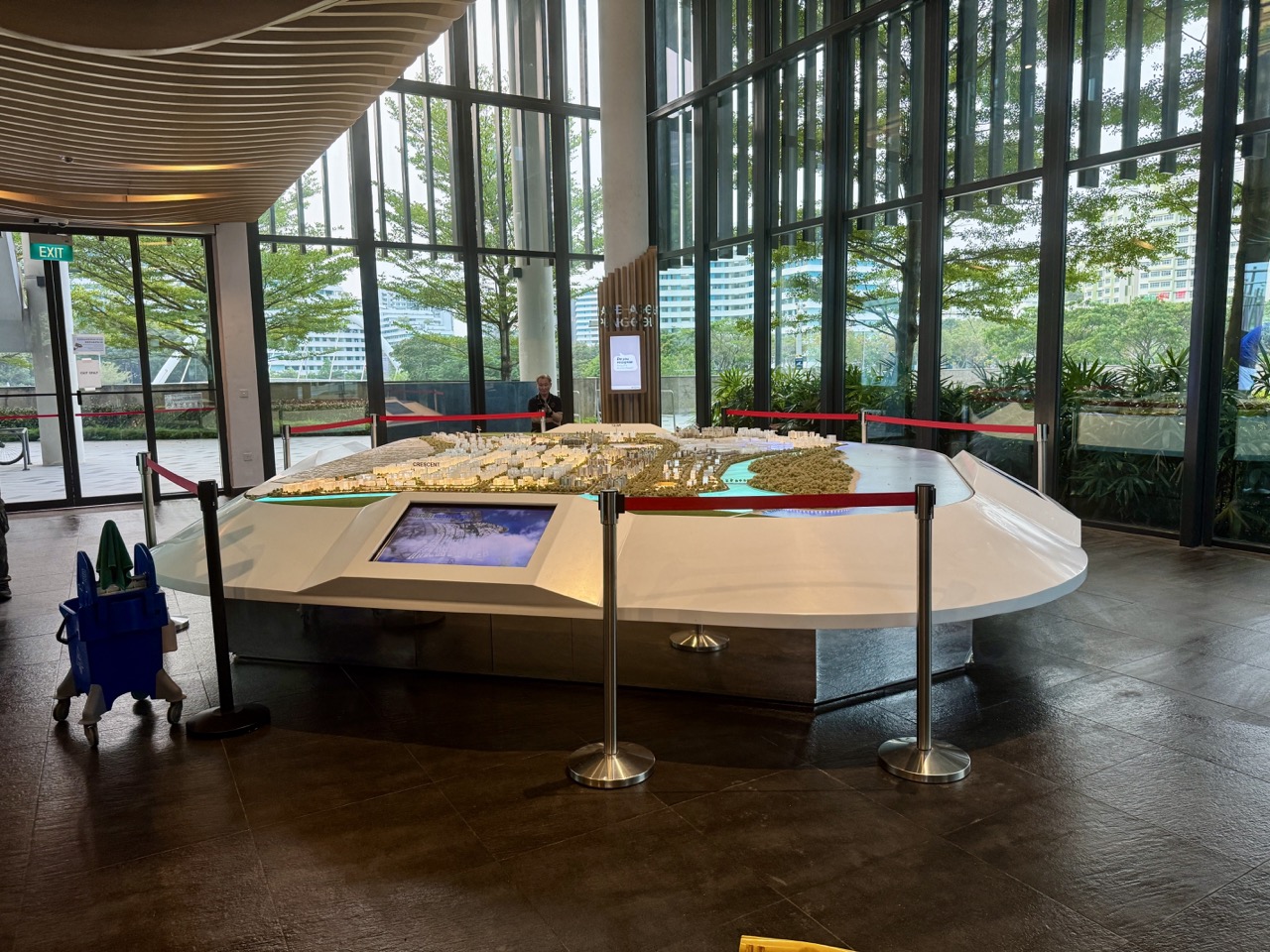
The top 10 things to do in Punggol for Public Policy students are to define a service question at One Punggol, read URA’s gazetted Master Plan 2025, compare railway access at Punggol and Punggol Coast, examine shared-path trade-offs, distinguish Punggol Digital District’s design objectives from results, study inclusive built-environment rules, separate OneService issues from policy consultations, read an actual REACH consultation, analyse SFA’s 2026 SAFE framework and write a one-page policy brief with measurable objectives.
Best first exercise: choose one public Punggol facility and define a question narrow enough to investigate, such as whether visitors can find its library entrance without confusion. Verify the facility’s actual functions, identify the people affected, list two possible improvements and state what evidence is still missing. URA, HDB, PA, LTA and the relevant agencies provide official source material; the student’s options are proposals, not announced government programmes.
This October 2026 guide is deliberately different from a generic urban-planning tour. It teaches problem definition, stakeholder analysis, implementation, consultation, policy instruments, evidence quality and evaluation. URA’s Master Plan 2025 was gazetted on 1 December 2025, while its Punggol Digital District urban-design guidance was updated in October 2026. Dates and operational status must remain attached to any claim about future development.
How to choose the right policy inquiry
- Public-service design: can a person find an integrated hub’s intended facility?
- Statutory planning: how does a gazetted land-use plan differ from project completion?
- Transport: what actual journey or user group might benefit from a new connection?
- Shared public space: how are recreation, mobility, cost and ecological needs balanced?
- Environmental requirements: what is a prescribed standard versus measured post-occupancy performance?
- Accessibility: how do legal rules and practical lived experience relate?
- Service complaints: which agency channel can respond to a specific issue?
- Consultations: what is proposed, who is asked and what happens after comments are received?
- Evaluation: which indicator could show a change actually helped?
The five parts of a policy decision
First define the problem and its real affected population. A policy cannot be judged well if it is a solution searching for a problem. Second establish the facts and evidence. Third compare realistic options, including keeping the present arrangement where appropriate. Fourth identify implementation responsibilities and constraints. Finally decide what could be measured after an authorised change, and what alternative factors might affect the result.
Public policy involves both evidence and values. A path redesign may create convenience but also construction cost, environmental disturbance or loss of space for another user. The best choice cannot be read from one social-media complaint. A green building requirement is a policy instrument, not proof that a real project achieved a predicted percentage energy saving. A resident who favours a proposal supplies an important perspective but does not automatically represent all neighbours.
Students should write cautious, testable conclusions. The most valuable phrase in a good policy note is sometimes ‘we do not yet know’. It points to the next evidence-gathering step. That is more useful than inventing implementation budgets, passenger volumes or consultation approval rates. Direct contact with community members requires appropriate consent and privacy safeguards; classroom proposals can remain entirely on paper.
Ten Punggol Public Policy activities
1. Define a public-service question around One Punggol, not a vague problem
Where: One Punggol at 1 Punggol Drive, studied through People’s Association’s hub directory.
Why this policy question matters
The People’s Association describes One Punggol as an integrated community hub with public facilities including a regional library, hawker centre and other services. This is a local example of co-locating public functions, but a student should not conclude from that description alone that every resident is satisfied or has equal access. Public policy begins with a specific problem definition and target population. ‘Make the town better’ is difficult to evaluate; ‘help a first-time visitor find the library without confusion’ has clearer possible evidence.
Method and evidence
Use the official facility directory to list services actually documented at the hub. Choose one narrowly framed user task, such as locating the library from the public entrance. Describe the current intended service, why the task matters and who might experience difficulty. Build a problem tree on paper with possible causes, such as signage, unfamiliarity with the area or changes to access. Label each untested cause as a hypothesis rather than an established problem. Do not approach visitors for unapproved interviews.
Worked Punggol case
A learner writes ‘One Punggol does not serve elderly residents adequately’ after finding a confusing route on their first visit. That conclusion is far broader than the observation. The revised policy problem says, ‘During one visit, I found this wayfinding decision unclear; further user evidence is needed to establish whether it is a recurring issue and for whom.’ The student has converted a complaint into a testable question without implying professional evaluation.
A more advanced evaluation
Draft two indicators: a measurable wayfinding completion rate in a properly authorised user study, and the percentage of respondents who understood one sign. Explain why a volunteer convenience sample might not represent all visitors. Suggest possible non-invasive evidence from facility managers or officially published user feedback, keeping personal data protection in mind.
Operational, privacy and legal limits
Do not interview patients, children or other users without appropriate permission, enter private service rooms or fabricate user satisfaction figures. A public directory verifies the existence of services but not access performance for every person.
Primary reference: Define a public-service question around One Punggol, not a vague problem. Check current policy status, dates and access before any action.
2. Read the gazetted Master Plan 2025 as a policy instrument
Where: URA Master Plan 2025 and its North-East Region resources.
Why this policy question matters
URA states that the Master Plan 2025 was gazetted on 1 December 2025 and is the statutory land-use plan guiding Singapore’s physical development over the next 10 to 15 years. It describes the North-East Region, including Punggol, with plans for jobs, community amenities and leisure. Public policy students must distinguish a statutory land-use designation from a construction programme and an opening notice. A future planned use is not a guarantee that every pictured building is already occupied or open.
Method and evidence
Read the original gazette circular and URA North-East Region page. Make a three-level diagram: statutory land-use guidance, detailed district design or project plans, and actual operating facilities. Choose one example of each, identifying the issuing authority and date. Create a fictional visitor question and explain which source type can answer it. A person asking ‘What use is planned here?’ needs different evidence from someone asking ‘Can I walk through this facility today?’.
Worked Punggol case
A student sees a planned park connection on a Master Plan illustration and writes ‘The trail has opened because it appears in the gazetted plan’. This confuses intended land use with facility operation. The revised explanation attributes the statutory guidance to URA and seeks an agency’s explicit opening information for any physical route. The policy instrument is genuine, but the implementation claim requires a different source.
A more advanced evaluation
Ask why a statutory plan, district design guideline and service operation have different time horizons and governance functions. Create a chronology from HDB’s 1996 Punggol 21 vision to the 2025 Master Plan, carefully explaining that a long-term planning context does not automatically establish every intermediate project date.
Operational, privacy and legal limits
The Master Plan is a legal planning reference, not permission for a family to enter closed sites. Do not treat an illustrative map as a survey-grade boundary or offer legal advice about an individual plot without the appropriate professional and official confirmation.
Primary reference: Read the gazetted Master Plan 2025 as a policy instrument. Check current policy status, dates and access before any action.
3. Compare transport access at Punggol MRT and Punggol Coast
Where: LTA Punggol Coast opening facts and current public rail information.
Why this policy question matters
LTA opened Punggol Coast MRT for passenger service on 10 December 2024, extending North East Line access to Punggol Digital District. Punggol MRT serves as a transfer hub with the local LRT network. The policy objective of improving access can be described clearly, but proving benefits to every type of traveller requires more than counting stations on a map. Accessibility involves actual transfers, walking routes, travel timing and diverse user needs.
Method and evidence
Draw a small network map with Punggol MRT, Punggol Coast and one appropriate local public destination. From current LTA sources identify what connectivity was added. Then invent two user profiles for classroom analysis: a student travelling to a district event and a resident needing a lift-friendly route. List what evidence would be needed to assess each journey, such as actual travel time, lift status and destination opening hours. Do not assign invented numerical savings to real commuters.
Worked Punggol case
An essay says the new station ‘cuts everyone’s commute by twenty minutes’. LTA’s announcement establishes opening and intended connectivity, not that universal numerical claim. A more defensible statement is that the extension gives direct NEL access to the district and may change journey options for some travellers. Any measured average time savings would need a defined sample and comparison.
A more advanced evaluation
Design a simple before-after evaluation: which residents and trips form the study group, what is the pre-opening baseline and which external factors might change results? Consider land development, service changes and different travel patterns. Ask why counting total trips alone cannot demonstrate that accessibility improved equally for all groups.
Operational, privacy and legal limits
Do not confuse Punggol Coast MRT with Punggol Point LRT. Service changes, lifts and last-mile routes must be checked on the day. Never obstruct station operations for an informal travel survey.
Primary reference: Compare transport access at Punggol MRT and Punggol Coast. Check current policy status, dates and access before any action.
4. Explore trade-offs along a shared Punggol Waterway path
Where: A short public segment of Punggol Waterway Park Connector.
Why this policy question matters
NParks describes the Punggol Waterway Park Connector as an 8.4km part of Singapore’s wider network. Public spaces support many aims: access, recreation, greenery, safety and healthy mobility. Those aims can conflict in practical details such as a narrow passage or the placement of seating. A public policy exercise must consider different affected users and realistic implementation costs rather than assuming the fastest or loudest group determines every rule.
Method and evidence
Use the official connector map and choose an ordinary hypothetical shared-path issue. Write a stakeholder map listing pedestrians, cyclists, children, mobility-aid users, maintenance personnel and neighbouring residents. For each, note a legitimate interest, possible benefit and possible unintended consequence of a proposed change. Invent two policy options such as clearer wayfinding versus a separate rest-point design. Decide what evidence would be needed to choose between them, without conducting disruptive live field trials.
Worked Punggol case
A student suggests widening every path immediately and assumes the change has no trade-offs. The proposal could affect planting, cost, construction disruption and other constraints that were not evaluated. The repaired brief describes an exact segment and user problem, acknowledges the evidence gap and considers both non-construction management measures and physical design options. The student does not invent an official project budget.
A more advanced evaluation
Compare criteria for evaluating options: predicted harm, access, affordability, implementation effort, maintenance and environmental impact. Give each option a short reasoned assessment, then explain which missing evidence is material to the choice. A policy recommendation is more persuasive when its assumptions and opportunity costs are visible.
Operational, privacy and legal limits
Do not measure crowded public circulation in ways that block users. NParks site rules and ecological constraints remain authoritative; no student proposal grants permission to remove trees or alter infrastructure.
Primary reference: Explore trade-offs along a shared Punggol Waterway path. Check current policy status, dates and access before any action.
5. Compare URA’s Punggol Digital District design objectives with results
Where: URA’s Punggol Digital District urban-design guidelines and JTC community information.
Why this policy question matters
URA’s Punggol Digital District guidelines were updated on 20 October 2026 and describe a transport-oriented, pedestrian-friendly district with sustainability and Green Mark expectations. JTC’s current page identifies public amenities that actually operate. This gives policy students an unusually clear distinction between setting requirements and evaluating what has been implemented. A design standard is not a site inspection, while an open mall is not proof that every sustainability objective has already been met.
Method and evidence
Read the current URA design-guidelines page and JTC’s district information. Create a two-column evidence sheet: ‘policy or design requirement’ and ‘publicly documented current operating feature’. Choose one theme, such as walkability or green design, and ask what post-occupancy indicators would be relevant. Use current official sources rather than drawing performance conclusions from a street photo. Label goals, engineering expectations and measured outcomes separately.
Worked Punggol case
A learner writes, ‘Because URA requires a high green building rating, all Punggol Digital District buildings have demonstrated identical annual energy savings.’ The requirement does not imply a uniform measured outcome. The corrected statement notes the district-level design expectation and proposes suitable evidence such as verified certification and actual reporting period data before quantifying performance.
A more advanced evaluation
Build a miniature theory of change: design requirements influence building choices; implementation produces physical systems; those systems may contribute to energy and comfort outcomes. At each arrow list an assumption or confounder. Explain why policy analysis must assess both implementation compliance and meaningful outcomes instead of stopping at a published aspiration.
Operational, privacy and legal limits
Do not enter private offices, SIT classrooms, technical plant or construction areas to ‘audit’ the district. URA’s guidelines require qualified project interpretation and are not an invitation to issue amateur compliance findings.
Primary reference: Compare URA’s Punggol Digital District design objectives with results. Check current policy status, dates and access before any action.
6. Study inclusive access using BCA’s Code and Universal Design
Where: One Punggol’s public routes and BCA’s official accessibility guidance.
Why this policy question matters
The Building and Construction Authority’s 2025 Code on Accessibility includes mandatory technical requirements for relevant new buildings and alteration projects from 1 November 2025, while Universal Design resources describe a broader goal of equitable, intuitive use. A public policy student must separate a legal minimum, a non-mandatory enhancement and an actual user’s experience. A visible lift or ramp is an important feature but not proof that every destination is accessible to all users at all times.
Method and evidence
Read BCA’s official distinction between accessibility code requirements and Universal Design guidance. Invent two user journeys: one with a stroller and another with limited stamina. On paper list each required link from public transport to an open facility, marking which step would need verification of lifts, rest places or current route conditions. Write one possible policy improvement but label it a student proposal. Do not attempt to certify an actual building’s legal compliance from a photograph.
Worked Punggol case
A pupil writes that a public building ‘passes the 2025 Code’ because an accessible toilet sign is visible. The sign proves neither every technical measurement nor whether the code applies to that specific project and works. The corrected note says the building has a visible sign and that a formal compliance conclusion requires applicable code scope and qualified assessment. The difference protects both accuracy and fairness to the facility.
A more advanced evaluation
Evaluate three tools for improving access: improved information, physical renovation and ongoing maintenance of existing equipment. Identify which requires capital works, which may be reversible and which depends on reliable service operation. Ask why policies should consider both construction rules and the actual experience of reaching services.
Operational, privacy and legal limits
Do not simulate blindness near train platforms or use other people’s mobility aids without consent. BCA regulatory assessments need qualified persons; students should present observations and inquiries, not legal verdicts.
Primary reference: Study inclusive access using BCA’s Code and Universal Design. Check current policy status, dates and access before any action.
7. Separate municipal feedback through OneService from policy consultation
Where: Official OneService channels and REACH public feedback services.
Why this policy question matters
An overflowing bin on a public walkway and a proposed change to national rules require different routes. OneService channels help residents report municipal service issues to relevant agencies, while REACH gathers views on policy questions and published public consultations. Conflating them delays useful action and can create unrealistic expectations. Public policy students should learn to identify whether a question is an operational defect, policy design issue, service eligibility problem or urgent emergency.
Method and evidence
Create a decision tree with four entirely fictional concerns: damaged pavement, dissatisfaction with a proposed rule, a private billing dispute and an immediate dangerous incident. Decide which official service route would be appropriate for each, and explain the limits of the chosen channel. Use OneService’s current categories and REACH’s purpose statement. If considering a real municipal issue, document it lawfully and submit accurate details; never file fake practice reports.
Worked Punggol case
A learner drafts a REACH policy essay to report a damaged common light beside a particular residential block. The underlying problem may be best handled by the relevant municipal maintenance channel instead. The student revises the response into a precise OneService-type case including location and observable condition, while reserving REACH for broader policy proposals. This is classification of responsibilities, not criticism of either service.
A more advanced evaluation
Ask how individual service complaints can sometimes reveal recurring policy issues without every complaint establishing a trend. A future evaluation might analyse legitimately aggregated cases, but a few stories cannot prove citywide prevalence. Students can consider privacy protections and fairness when agencies route feedback among departments.
Operational, privacy and legal limits
Do not place fake reports or invent hazards. Actual urgent danger requires the relevant emergency or immediate agency contact, not normal consultation processing. Keep private case numbers and resident data out of public school assignments.
Primary reference: Separate municipal feedback through OneService from policy consultation. Check current policy status, dates and access before any action.
8. Read an actual REACH consultation with its status and deadline
Where: REACH online public-consultation portal, researched from home.
Why this policy question matters
REACH displays consultation exercises from ministries and public agencies, including open, closed and response-summary statuses. In October 2026 the platform lists contemporary consultations on proposed regulatory changes, with deadlines and responsible departments that may change. This is a practical policy cycle lesson: a consultation invites input on a proposal; it is not an adopted law or a binding vote by everyone who comments. Students must report the status correctly and avoid pretending one personal view represents Punggol.
Method and evidence
Open REACH’s current listings and choose a topic appropriate for an academic, nonpartisan source-analysis exercise. Record the responsible agency, publication date, closing date if provided, consultation questions and current status. Read the actual paper instead of only the title. Draft one balanced paragraph identifying the policy aim, one potential benefit, one implementation issue and the evidence needed. Submission is optional; if participating, follow the real platform terms and write only your own truthful feedback.
Worked Punggol case
A draft policy note says, ‘Singapore has abolished the current rule because REACH is consulting about an alternative.’ Consultation demonstrates that a change is being considered, not that it has legally taken effect. A corrected note uses ‘proposed change’ with an agency and deadline and points readers to any later formal decision as a separate source. This is accurate even when the student favours the proposal.
A more advanced evaluation
When a consultation closes, track whether the agency publishes a response summary, revised proposal or final official circular. Put the milestones on a timeline and ask whether the public had an opportunity to comment and whether implementation changed. Do not invent a participation count or approval percentage when one is not published.
Operational, privacy and legal limits
Check live listing status rather than describing an old 2025 item as open today. Use REACH’s actual terms and avoid impersonating organisations or harvesting other contributors’ personal data.
Primary reference: Read an actual REACH consultation with its status and deadline. Check current policy status, dates and access before any action.
9. Examine SFA’s 2026 SAFE framework as policy implementation
Where: Official Singapore Food Agency SAFE framework; an optional Punggol hawker dining context.
Why this policy question matters
SFA replaced the former A-to-D snapshot grading approach with the Safety Assurance for Food Establishments framework from 19 January 2026. Its first phase uses track-record-based grades A, B, C and NEW, and additional arrangements for higher-processing establishments are subject to a later phase. This is useful policy analysis because the choice of metric—one inspection snapshot or longer-run safety track record—changes how consumers understand and businesses manage performance.
Method and evidence
Read SFA’s implementation document and distinguish the policy goal, regulated categories, grading criteria, transition phases and oversight tools. Choose a fictional food stall to demonstrate how a NEW grade differs conceptually from a grade linked to a major lapse. Ask which observable measures would help evaluate the reform: consumer understanding, compliance over time and any unintended effects. If conducting a real check, use SFA’s licensed establishment records for the exact business; do not generalise one grade to a whole food centre.
Worked Punggol case
A student writes ‘NEW must mean poor food hygiene because it is not A’. Under SAFE, NEW identifies establishments operating for less than one year, not an automatic major lapse. The correct analysis separates the information limitation from misconduct. The student then proposes a clearer explanatory label as a communication idea, not a criticism of a named vendor.
A more advanced evaluation
Compare how performance indicators influence behaviour. Would an operator react differently to a track-record measure than to a one-time inspection? State it as a hypothesis and discuss which data would test it. Examine fairness to new operators, public transparency and the need for appropriate oversight without claiming specific economic outcomes absent evidence.
Operational, privacy and legal limits
Never assign a grade to a real Punggol stall without a valid current record. Do not make unverified public accusations. A student’s policy analysis is not SFA enforcement guidance.
Primary reference: Examine SFA’s 2026 SAFE framework as policy implementation. Check current policy status, dates and access before any action.
10. Build a one-page Punggol policy brief with a testable result
Where: A home or authorised library workspace, using one real official Punggol source.
Why this policy question matters
The final public policy skill is synthesising a question, evidence, stakeholder trade-offs, options and an evaluation plan. A policy brief is not a promotional piece or a long generic essay about improving society. Readers should be able to identify the proposed decision, what evidence supports it and what remains uncertain. A local example such as making wayfinding more intuitive at a public hub lets students practise without claiming authority over budgets or works.
Method and evidence
Select one small issue grounded in a documented public site. Write a brief with the following sections: problem and user, why it matters, current confirmed facts, option A, option B, trade-offs, recommended next test and measures of success. Make clear if observations were collected or if all analysis is desktop-based. Keep costs qualitative unless real sourced figures exist. Propose a pilot rather than declaring the town must implement the student’s design.
Worked Punggol case
An initial brief demands new signs throughout Punggol because one student became lost. The evidence supports a narrower inquiry, not a townwide capital project. The revised recommendation is to review one specific public wayfinding decision with a small authorised user test, then consider changes if repeated confusion is observed. The brief defines what would count as improvement rather than inventing an effect size.
A more advanced evaluation
Have a peer challenge the brief from a stakeholder perspective. Ask who might bear the cost, who benefits, whether some people are excluded and what alternative explanation could account for observed difficulties. Revise one paragraph and set a date for checking a measurable outcome if a real authorised pilot occurs. Responsible analysis makes it easy to separate proposal from implementation.
Operational, privacy and legal limits
Do not present a student proposal as a government plan, imply an approved budget or install signs without authorisation. Public agencies and qualified professionals make decisions about actual infrastructure and legal requirements.
Primary reference: Build a one-page Punggol policy brief with a testable result. Check current policy status, dates and access before any action.
Three structured policy-learning itineraries
A public-hub service design case
Read PA’s current One Punggol hub information, then choose one publicly open facility to observe from lawful circulation if suitable. Draw a brief journey from the public entrance to that destination and record one possible wayfinding issue as a dated observation, not a complaint representing everyone. At home, propose two low-risk alternatives and one authorised way to test comprehension among willing users. Explain which institutional permission would be necessary before collecting real user data.
A Punggol Coast planning and transport desk study
Read URA’s North-East Master Plan material, the current Punggol Digital District guidelines and LTA’s dated Punggol Coast MRT opening release. Construct a chronology of planning intent, actual rail operation and presently documented public amenities. Choose a measurable transport-access question but do not invent trip-time savings. A successful outcome is a precise theory of change with named missing evidence, not a fabricated numerical effect.
A policy-cycle and consultation exercise
Use REACH’s current public-consultation list to identify an open or closed real case and read the document. Draft a neutral summary of the proposed change, parties affected and feedback period. If closed, use historical analysis instead of submitting late feedback. Follow up through agency decisions or response summaries if they exist. This exercise is independent of the student’s policy preference and avoids implying that a consultation is itself law.
What a one-page policy brief should show
- Problem: the precise user or public interest requiring attention.
- Evidence: attributable, current facts and appropriately described observations.
- Status: whether the issue concerns a plan, consultation, existing service or completed project.
- Options: at least two realistic possibilities, including why a change might be unnecessary.
- Stakeholders: who may gain, lose, pay or face added inconvenience.
- Implementation: the responsible organisation and practical conditions.
- Evaluation: one or two indicators and a plausible data-collection method.
- Limits: missing evidence, privacy concerns, unintended effects and review triggers.
Common errors in local policy analysis
The first is treating intention as outcome. A plan for walkable public space does not establish that every walkway is operating or that all users experience the same accessibility. The second is treating the loudest voices as representative. Several enthusiastic responses are useful qualitative evidence, not an unbiased population estimate. The third is confusing a municipal defect with a policy problem: some issues need maintenance and prompt routing rather than a statutory consultation.
The fourth is relying on a single performance indicator. A shorter queue might improve efficiency but could coexist with fewer people served or reduced accessibility. A greater number of users may be desirable in one programme while creating crowding in another. Good evaluation begins with the original objective and checks unintended outcomes, rather than declaring any number that rises or falls a success.
Frequently asked questions
What is Public Policy?
The design, adoption, implementation and evaluation of collective decisions or programmes made by relevant public institutions, considering evidence and competing interests.
Can students learn public policy through Punggol?
Yes. Transport, public spaces, an integrated community hub, planning documents and regulatory changes offer specific learning contexts.
What is a policy instrument?
A method for pursuing a policy goal, such as a regulation, public investment, information campaign or service programme.
When was Master Plan 2025 gazetted?
URA’s gazette circular states that it took effect on 1 December 2025.
Does a Master Plan prove a facility is open?
No. It governs planning and land use; operating access requires specific current confirmation from the relevant operator.
When did Punggol Coast MRT open?
LTA identifies 10 December 2024 as its passenger service opening date.
Does the new rail link reduce every journey by the same amount?
No. Outcomes depend on actual origins, destinations, connections, waiting and user needs.
What is a stakeholder map?
A structured list of people or groups affected by a policy and their different legitimate interests and possible impacts.
What is a theory of change?
An explanation of how policy activities or inputs are expected to lead through implementation to meaningful outcomes, including assumptions.
Can a photo certify a district’s sustainability results?
No. A photo can show a physical feature, but actual performance requires appropriate operational measurement and attribution.
What is the difference between BCA mandatory accessibility rules and Universal Design guidance?
The applicable Code has technical regulatory requirements; Universal Design guidance includes broader inclusive design principles and recommendations.
What is OneService for?
Municipal service feedback about appropriate issues, routed through official channels to responsible agencies.
What is REACH for?
Singapore’s official public engagement and policy feedback platform, including agency consultations and general feedback.
Does submitting REACH feedback mean a proposal has been approved?
No. It is input for agency consideration, not a binding vote or implementation notice.
Where can I see consultation deadlines?
Read the relevant live REACH consultation listing and its detailed paper; status and dates can change.
What changed about SFA food grading in 2026?
The SAFE framework took effect on 19 January 2026 with track-record-based grades including A, B, C and NEW.
Does NEW mean a stall failed a hygiene inspection?
No. Under SAFE it identifies an establishment operating for less than one year, not automatically a major lapse.
Can a single complaint justify a townwide construction project?
It can indicate a possible issue but does not by itself establish prevalence, cause, effectiveness or cost.
Do students need to interview residents?
No. A responsible desktop policy analysis can use official sources and hypothetical scenarios; actual interviews need the appropriate permissions and methods.
What is the strongest ending for a policy brief?
A proportionate recommendation or next evidence test, its limitations, who could act and how results would be evaluated.
Official resources and related Punggol guides
- Define a public-service question around One Punggol, not a vague problem
- Read the gazetted Master Plan 2025 as a policy instrument
- Compare transport access at Punggol MRT and Punggol Coast
- Explore trade-offs along a shared Punggol Waterway path
- Compare URA’s Punggol Digital District design objectives with results
- Study inclusive access using BCA’s Code and Universal Design
- Separate municipal feedback through OneService from policy consultation
- Read an actual REACH consultation with its status and deadline
- Examine SFA’s 2026 SAFE framework as policy implementation
- Build a one-page Punggol policy brief with a testable result
- URA North-East Region plans
- JTC’s current Punggol Digital District public amenities
- REACH routing of policy feedback
- SFA food establishment track-record lookup
- Punggol economic trade-offs
- Punggol civic participation and sources
- Punggol engineering systems and constraints
- eduKateSG first-principles and evidence-led learning reference
An effective policy brief improves the question before declaring the answer
Punggol’s transport, housing, environmental design and shared public facilities show that policy ideas become useful only through implementation and learning from results. Start with one clearly defined problem, use official information at its correct scope, compare honest alternatives and identify the data needed to test success. That method can be applied to a small local wayfinding concern and to a national consultation without confusing either with the other.


