
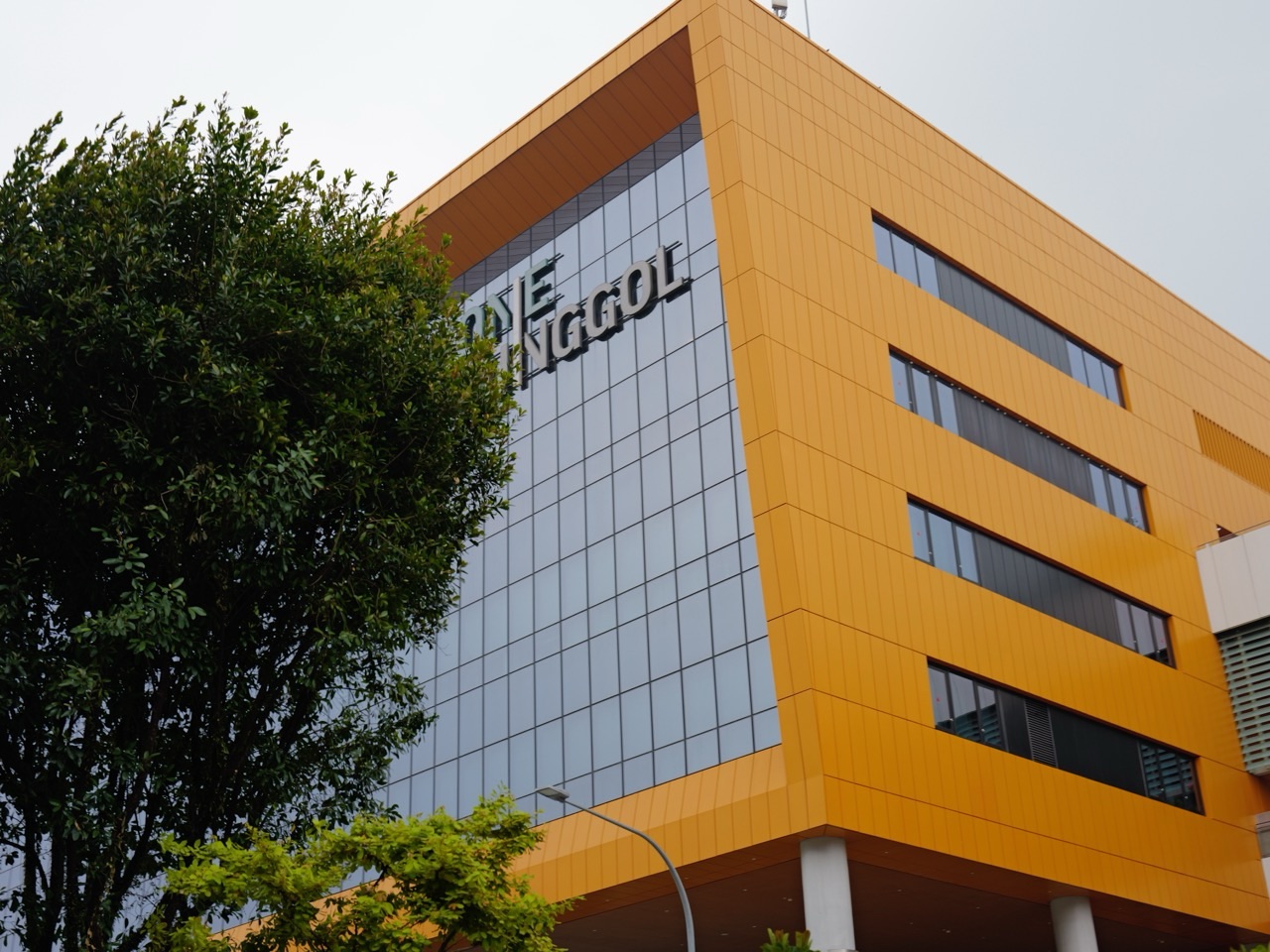
The top 10 things to do in Punggol for Social Studies students are to examine shared public services at One Punggol, distinguish ServiceSG from OneService, study shared path responsibilities, analyse source evidence in Punggol Stories, compare multilingual perspectives at The Lens of Literature, explore legitimate community volunteering, evaluate the development goals of Punggol Digital District, understand collective water stewardship at Lorong Halus, check civic information against original sources and write a balanced source-based response to a local community issue.
Best first activity: visit Punggol Regional Library’s Punggol Stories exhibition or research One Punggol’s official facilities online. Choose a specific question, identify what the source actually states and compare it with another credible perspective. The objective is not to produce a dramatic opinion about the town: it is to understand citizenship, diversity, institutions and shared responsibility using retrievable evidence.
This October 2026 guide separates official agency descriptions, residents’ remembered experiences, literary interpretations, planned developments and current operating facts. It supports the inference, comparison, reliability and evaluation skills used in Singapore Social Studies. The 2027 G3 SEC listings include Social Studies within relevant Humanities combinations such as K335, K336 and K337; individual students should refer to their actual subject and school arrangements.
The Social Studies source toolkit
- Content: what does the source explicitly say or show?
- Origin: who produced it, when and for which audience?
- Purpose: what was the creator trying to communicate or achieve?
- Inference: what reasonably follows from the evidence rather than a guess?
- Comparison: in what respect do two sources agree or differ?
- Corroboration: what independently checkable facts support the claim?
- Usefulness: what question can the source help answer, and what cannot it establish?
- Evaluation: whose interests and uncertainties must a balanced conclusion consider?
How to examine a changing town fairly
Punggol brings together public housing, transport, a digital business district, coastline, parks, libraries and different communities. Any claim that ‘all residents’ prefer one outcome needs appropriate evidence about all those residents. One official webpage can establish what an agency says a facility is designed to do, but it is not sufficient to prove every user’s experience. One person’s memory may offer a rich view of earlier Punggol without representing every person’s life at that time.
In Social Studies, the goal is to interpret sources for a specified question. A project planner’s source may be especially useful for a planned district’s size or objectives. A library exhibition may be useful for historical context and the presence of several community narratives. A resident’s experience may illuminate an access problem. Their usefulness differs; fair analysis does not require declaring one kind of source worthless because it has a purpose.
Respect is also part of fieldwork. Libraries, transport systems, care facilities and public paths serve real people. No child or adult should collect identifiable information, photograph strangers without care, impersonate a volunteer or stage a municipal problem for a school project. Publicly available primary references and thoughtful desk exercises already provide ample material.
Ten Punggol Social Studies learning experiences
1. Explore how One Punggol brings different public services together
Where: One Punggol’s public Community Club, regional library and hawker-centre areas.
The civic and social issue
PA describes One Punggol as an integrated community hub with nine co-location partners offering cultural, civic, community, lifestyle and other facilities. Social Studies can ask why a community might benefit from several services in one place and who may face barriers despite physical proximity. A parent with a stroller, an older resident, a young reader and a visitor needing help with government services may use the same building for different reasons.
How to investigate responsibly
Read PA’s official overview and select two genuinely open public functions, such as library browsing and the hawker centre. Draw a simple map from the public entrance, showing the destination and any information needed to find it. Write one benefit claimed or plausibly intended by the integrated model and one question that requires further evidence. Distinguish PA’s institutional description from your own brief observation. Do not treat a care facility as a public tour attraction.
Worked Punggol example
A student writes ‘One Punggol solves every resident’s problem because nine organisations are under one roof.’ The evidence only confirms co-location and stated objectives. A stronger inference is that sharing a building may make some multi-purpose trips more convenient, but actual user benefits vary with eligibility, programme capacity, transport, operating times and accessibility. The revision demonstrates the difference between evidence and an absolute claim.
Source-based inquiry extension
Create a source-based question: ‘What does PA’s description reveal about the hub’s intended role?’ Answer with the stated resident-centricity and service integration. Then ask, ‘Is the source sufficient to prove that all residents are satisfied?’ No: PA is a relevant operator source, but a satisfaction conclusion would also need appropriately collected residents’ experiences and service evidence.
Evidence, ethics and access limits
Respect people using medical, childcare or other sensitive services. Do not interview or photograph identifiable users without proper permission. A published goal is not the same as an independent outcome evaluation.
Primary reference: Explore how One Punggol brings different public services together. Check the date and scope of its published claims.
2. Learn how ServiceSG and OneService solve different civic problems
Where: ServiceSG Centre One Punggol and the official online OneService channels.
The civic and social issue
ServiceSG helps residents navigate frequently used government services and schemes across agencies, while OneService routes municipal feedback such as shared-space defects or cleanliness issues to the appropriate authorities. They address different civic needs. A Social Studies student can learn that knowing the correct institution is part of active citizenship, and that not every problem is an emergency or a dispute best solved through public accusations.
How to investigate responsibly
Read the official ServiceSG Centre description and OneService guidance. Create a fictitious case table: a person needs assistance with a government application, a public footpath is damaged, or a life-threatening incident requires emergency response. Match each to the relevant type of institution. For the municipal example, draft a sample report on paper with a precise but made-up location clearly labelled fictional. Never submit a false report to a live service.
Worked Punggol example
A learner discovers an uneven pavement and decides to post a photo showing a neighbour with the claim that the neighbour caused it. The situation has not established responsibility. An appropriate response records the real location and condition without naming a suspected culprit, then uses the official reporting process. The student’s reasoning shifts from blame toward a useful civic action backed by evidence.
Source-based inquiry extension
Ask how institutional perspective affects source purpose. PA and Public Service Division aim to explain services; a resident’s complaint describes one experience. Neither alone establishes the overall quality of municipal response. Corroborate the policy description with official follow-up guidance and date-specific observations, separating what the agency promises from what was actually reported.
Evidence, ethics and access limits
ServiceSG has service and operating requirements, and OneService handles ordinary municipal feedback rather than life-threatening emergencies. Follow appropriate emergency contacts for urgent danger. Do not publish private case references, personal documents or unsupported accusations.
Primary reference: Learn how ServiceSG and OneService solve different civic problems. Check the date and scope of its published claims.
3. Study community responsibility on shared Punggol Waterway paths
Where: Punggol Waterway Park Connector’s public walking and cycling areas.
The civic and social issue
NParks describes a public connector supporting movement and recreation, with different kinds of users sharing paths. This creates a concrete example of competing interests: walkers may prefer a calm pace, cyclists need predictable space, children need supervision and mobility-aid users benefit from unobstructed access. Shared space cannot be managed only through one individual’s preference. Social Studies examines how common rules and mutual consideration support daily life.
How to investigate responsibly
Choose a short public stretch during suitable weather and stay away from busy junctions. Observe signs, path markings and opportunities for people to pass safely, without counting or photographing individuals in a way that identifies them. Write a table listing two user groups and their legitimate needs. Use NParks’ official guidance to distinguish a rule from a personal courtesy. Discuss one realistic compromise such as keeping a clear passing area, not a unilateral ban on a user group.
Worked Punggol example
A student writes ‘Cyclists make the path unsafe, so all bicycles should be prohibited.’ A brief observation cannot support that conclusion. The improved statement notes that differences in speed can create potential conflicts on shared paths and that appropriate behaviour, design and posted rules help manage them. The student also considers cyclists who use the connector for ordinary local travel.
Source-based inquiry extension
Build a balanced paragraph: concern, evidence, another user’s perspective, an acceptable response and a limit. Ask what information would actually be needed to evaluate safety, such as credible incident records, design standards and representative user feedback. Avoid using a single unpleasant experience to make a universal claim.
Evidence, ethics and access limits
Do not obstruct a path for a project, stage a confrontation or film people without permission. The named park connector’s route length does not force visitors to travel it end-to-end, and storms or maintenance can change access.
Primary reference: Study community responsibility on shared Punggol Waterway paths. Check the date and scope of its published claims.
4. Investigate how Punggol Stories preserves multiple versions of community memory
Where: NLB Punggol Stories permanent exhibition at Punggol Regional Library.
The civic and social issue
NLB’s Punggol Stories includes sections on pioneers, seaside leisure, farms and changing waterways, with a Memory Map featuring recollections from historic Punggol. It is a strong Social Studies source because public heritage is assembled from different kinds of evidence: archival photographs, institutional captions, individual memories and present-day interpretation. Not every voice experienced historical change the same way, and a personal recollection is valuable without representing every resident.
How to investigate responsibly
Visit the exhibition during its actual operating hours or read NLB’s official digital summary. Choose one caption about a dated event, one remembered experience and one interpretation. Record who created the source and when it was produced, and distinguish the date of an event from a later interview date. Compare what a photograph can directly show with what a person says it meant to them. Quote only briefly within permitted conditions, or paraphrase with attribution.
Worked Punggol example
A learner sees one family’s memory of seaside Punggol and writes that everybody enjoyed the same lifestyle before the new town. That is not justified. A better explanation says the account preserves one perspective and should be compared with other experiences and archival sources, including material on farms, work and infrastructure. The corrected claim respects the source while avoiding false generalisation.
Source-based inquiry extension
Ask about source purpose, reliability and usefulness separately. A memory can be useful for understanding lived experience even when it cannot independently establish precise dates or statistics. A museum panel is useful for the curated chronology, but a critical student still checks the underlying collection and identifies what has been omitted by the exhibition’s limited space.
Evidence, ethics and access limits
NLB lists the general exhibition from 10am to 9pm, while individual installations have separate hours. Do not reproduce long copyrighted content or invent witness interviews. Follow library gallery rules.
Primary reference: Investigate how Punggol Stories preserves multiple versions of community memory. Check the date and scope of its published claims.
5. Compare multilingual perspectives at The Lens of Literature
Where: The Lens of Literature on Level 3 Sing Lit, Punggol Regional Library.
The civic and social issue
NLB’s Lens of Literature features literary excerpts in English, Chinese, Malay and Tamil, arranged around village life, wartime experience, urbanisation and possible futures. It illustrates how the same social landscape can be interpreted through different languages and experiences. A literary work is not automatically a statistical report, but it can reveal values, hopes or anxieties that a numerical chart misses. Social Studies students can learn perspective-taking without pretending different narratives are interchangeable.
How to investigate responsibly
Read NLB’s official exhibition page and visit a public display if available. Choose two themes such as Balik Kampong and Tides of Change. Record the theme and the type of text represented, then ask whose perspective the work offers and which historical context could help the reader understand it. For a language you do not know, use a reliable translation or bilingual speaker rather than inventing meaning from the title. Write a short response that distinguishes the fictional or poetic voice from the author’s personal position.
Worked Punggol example
One reader treats a poem that mourns a changed neighbourhood as proof that every resident opposed redevelopment. A poem can express one speaker’s feeling, not the opinion of an entire population. The student revises the claim to say the work evokes a sense of loss associated with change, and notes that other residents might value new housing or services. This is fair-minded interpretation rather than unsupported consensus.
Source-based inquiry extension
Create a comparison question: ‘How might literature add to an official development timeline?’ Answer that literature can suggest emotional or social experiences not captured in a planning notice, while the notice helps establish dates and intended functions. Each source has distinctive strengths and limitations; neither should be discarded simply because their purposes differ.
Evidence, ethics and access limits
The exhibition includes copyrighted works. Paraphrase rather than copy whole excerpts and credit writers. Do not assume an English summary fully represents nuances of Chinese, Malay or Tamil writing.
Primary reference: Compare multilingual perspectives at The Lens of Literature. Check the date and scope of its published claims.
6. Understand civic participation through PA and authorised volunteering
Where: One Punggol’s Community Club and PA’s volunteering portals.
The civic and social issue
PA offers grassroots volunteering and flexible Community Volunteer pathways. These channels illustrate how residents may contribute to neighbourhood activities, support other people and make community spaces more inclusive. A published volunteer programme is not evidence that a shift is currently available or that every applicant will be accepted. This is a useful lesson about civic responsibility: volunteering requires real duties, safeguarding, confidentiality and follow-through, not merely enthusiasm.
How to investigate responsibly
Read the PA volunteer pathways and choose one cause that interests the student, such as community programmes, public learning or environmental care. Create a checklist for eligibility, time commitment, training, physical demands and responsibility. If a suitable real role exists, enquire through the official route with the necessary adult or school guidance. Otherwise build a paper proposal for a small school-approved project and explain which organiser’s permission would be required.
Worked Punggol example
A student wants to organise a ‘free public cleanup’ at a reservoir and assumes the entire class may turn up with homemade tools. Official cleanups have registration and site-safety processes. The improved plan asks the responsible organiser about authorisation, volunteers’ ages, hazardous waste and disposal. It shows civic initiative supported by practical responsibility.
Source-based inquiry extension
Discuss whether service should be assessed by hours completed or needs actually met. Hours can document participation, but are not proof of a specific social impact. A strong reflection names the assignment, people served in non-identifying terms, the work done and the organiser’s evidence of completion.
Evidence, ethics and access limits
Do not disclose beneficiaries’ personal information, enter private homes or use government branding without authority. Approval and training vary by role; read the actual programme conditions.
Primary reference: Understand civic participation through PA and authorised volunteering. Check the date and scope of its published claims.
7. Ask who benefits from the Punggol Digital District development
Where: JTC’s public Punggol Digital District information and open amenities near Punggol Coast MRT.
The civic and social issue
JTC describes a 50-hectare district integrating SIT, businesses and community facilities. It cites planned capacity associated with 28,000 jobs and 12,000 students. The Social Studies issue is not simply whether modern buildings look impressive: it is how employment, learning, residential access, environment and heritage may be balanced. Projected figures are not automatically verified present outcomes. Different groups can assess the same initiative from different legitimate priorities.
How to investigate responsibly
Read JTC’s current overview, community information and sustainability descriptions. Define the question: ‘How might a new work-and-learn district affect Punggol’s community?’ Make a stakeholder chart covering students, residents, employers, workers, users of public transport and environmental interests. For each, write one potential benefit, one concern and what evidence would be needed. Visit only open public areas and leave campus or offices out of a casual tour.
Worked Punggol example
A student reports that the district has already employed exactly 28,000 people because a JTC page displays the figure. That confuses planning capacity with measured occupancy. The revised paragraph attributes the figure to JTC’s development overview and identifies actual employment as a separate data question. It then explains a plausible educational benefit of campus-industry proximity without claiming every student received a job.
Source-based inquiry extension
Use a source comparison: JTC’s promotional project overview and a separate official transport announcement about Punggol Coast MRT. The first describes district intentions and capacity; the second confirms a particular rail opening. Both are useful but answer different questions. A balanced conclusion needs dates and explicit limitations rather than treating either source as a complete social-impact evaluation.
Evidence, ethics and access limits
Do not enter private businesses, campus teaching rooms or worksites. Project expectations and current public operations must remain clearly distinguished.
Primary reference: Ask who benefits from the Punggol Digital District development. Check the date and scope of its published claims.
8. Study water stewardship as collective responsibility at Lorong Halus
Where: PUB’s Lorong Halus Wetland public learning material and legal public trail.
The civic and social issue
PUB documents engineered treatment of water affected by a former landfill before it reaches Serangoon Reservoir. This case illustrates a collective challenge: water quality depends on planning, infrastructure, operation and community respect for the environment. Public discussion can include who benefits, who maintains a system, how effects should be measured and why a former land use can create lasting responsibilities. The visual appeal of the wetland is separate from its actual treatment performance.
How to investigate responsibly
Study PUB’s official site page and identify the former-landfill context, present treatment purpose and public learning function. Draw three columns labelled ‘Institutional responsibility’, ‘Resident responsibility’ and ‘Evidence needed’. Place operation and technical monitoring with responsible agencies, and lawful access, no littering and respect for habitat with visitors. Do not imply that a school group can substitute for trained water-quality professionals. If visiting, remain on permitted trails.
Worked Punggol example
A learner sees clear-looking water and concludes that environmental concerns are solved forever. A more responsible claim is that PUB documents a treatment system designed to protect reservoir water, while ongoing performance must be assessed through appropriate measurements and maintenance. The improved sentence reflects both public investment and the limits of casual observation.
Source-based inquiry extension
Ask what would count as a credible source for water-quality outcomes, and why a short personal account alone would not establish chemical safety. Then evaluate the value of public education signs: they can help awareness, but whether they change behaviour requires more evidence. This teaches social policy evaluation without inventing statistics.
Evidence, ethics and access limits
Do not sample water, enter ponds, remove plants or access treatment equipment. Discuss public health and environmental responsibility without naming unsupported culprits or overstating results.
Primary reference: Study water stewardship as collective responsibility at Lorong Halus. Check the date and scope of its published claims.
9. Practise checking online civic information before forwarding it
Where: At home, school or a quiet Punggol library space using official agency pages.
The civic and social issue
Digital citizenship includes distinguishing a legitimate public advisory from a manipulated screenshot or a message that hides its date. A claim about a new MRT line, a public-service closure or an emergency hotline can circulate long after the information changes. Punggol’s many developing facilities offer good examples of why official sources and current dates matter. This is a source evaluation skill, not a reason to distrust every document automatically.
How to investigate responsibly
Create a hypothetical message saying ‘the entire Punggol Heritage Trail is open’ and compare it with JTC’s current community page. Note what section is officially identified as open and which alignment remains planned or subject to confirmation. Practise three checks: original publisher, publication or update date, and exact scope of the claim. Write a corrected sentence with attribution. For a suspicious request involving money or identity, consult official ScamShield advice and do not click unknown links.
Worked Punggol example
A family chat contains an attractive image of a completed 1.3km path. The learner checks JTC and finds that a specific opened portion, rather than the full length, is identified in its public information. They reply neutrally with the official reference and its date, avoiding accusations that the sender deliberately lied. The goal is correction and shared understanding, not embarrassing someone.
Source-based inquiry extension
Distinguish source credibility from claim sufficiency. A genuine government masterplan may be reliable about intended development but insufficient to establish today’s physical accessibility. A recent visitor photo may show a gate, but not the legality of an entire route. Combining different source types can improve an answer when their scope is respected.
Evidence, ethics and access limits
Never forward real malicious links or a family member’s private message as a classroom example without permission. Use fictional mockups for lessons and current official sources for real-world decisions.
Primary reference: Practise checking online civic information before forwarding it. Check the date and scope of its published claims.
10. Write a balanced source-based response to a Punggol community issue
Where: A school, home or library writing activity using verified Punggol case materials.
The civic and social issue
Social Studies assessment values thoughtful interpretation and source-based reasoning. A community issue such as the best use of shared space, service accessibility or the balance between development and heritage may involve competing legitimate interests. An effective answer explains the question, interprets each source according to origin and purpose, corroborates what can be checked, and offers a reasoned evaluation rather than an absolute slogan.
How to investigate responsibly
Choose two or three source types already discussed: a PA services page, an NParks public-path guide and a dated JTC development notice, for example. Write a narrowly framed question: ‘How can a town support both daily convenience and shared recreation?’ Create a table with evidence, interpretation, alternative perspective and limitation. Draft one paragraph that makes a claim, gives evidence, explains its relevance and states a qualifying condition. Do not invent survey data or make private residents speak for whole groups.
Worked Punggol example
Model response: ‘Integrated services can reduce some separate trips because One Punggol brings a library, food and other services under one roof. However, actual convenience depends on opening hours, eligibility and transport, so a description of facilities alone cannot prove that all residents benefit equally. An independent study would need appropriate user evidence.’ The response is substantive without partisan advocacy or fabricated opinions.
Source-based inquiry extension
Add a corroboration task: compare what a managing agency says about a facility with a current independent operational notice where available. Ask which claim is supported by both and which belongs only to one source’s purpose. Evaluate whether the conclusion should change if more evidence reveals an access barrier. This turns source criticism into an honest search for a better answer.
Evidence, ethics and access limits
The article is educational, not a replacement for a school’s specific examination paper or current SEAB syllabus. Avoid discriminatory stereotypes, confidential interviews or persuasive claims about named political organisations or individuals.
Primary reference: Write a balanced source-based response to a Punggol community issue. Check the date and scope of its published claims.
A five-sentence source-based answer model
First identify the answer to the actual question, not everything you know about Punggol. Second select precise evidence. Third explain how the evidence supports an inference. Fourth compare or corroborate an important point using a relevant other source. Fifth state what remains uncertain or how a stakeholder could see the matter differently. This method makes the answer clearer without turning it into a formula where students mechanically repeat generic phrases.
For example, an item asks whether One Punggol makes services easier to reach. A well-supported answer can identify PA’s officially described co-location, infer the possible benefit for multi-purpose visits, recognise that different services have different access requirements and explain why user convenience still depends on individual travel and availability. That is a disciplined response. A claim that every resident’s life is now easy is not.
If the source is a poem or memory, a useful response identifies the speaker’s experience or text’s theme and asks whether the source’s purpose is to express feeling, report a statistic or provide a historical record. It can be emotionally meaningful while still limited for precise numerical claims. Corroboration means looking for evidence relevant to the question, not simply collecting additional links.
Three Punggol Social Studies inquiry plans
A one-hour library sources exercise
Choose one public display at Punggol Stories and read the official NLB explanation before visiting. Record the exhibit’s theme and two source types, such as a photograph and a recollection. Write one reasonable inference about historical change and a separate sentence on what those sources cannot establish. The general exhibition has published hours, while special installations require their own checks. The exercise can be done through NLB’s online information if travel is unsuitable.
A shared-space citizenship exercise
Study a short lawful Waterway Park Connector section or NParks’ public guidance. List two groups of users and how different speeds or needs might interact. Suggest one rule-respecting response and explain whose viewpoint it accommodates. Avoid staging conflicts or counting identifiable people. A good product is a brief balanced note rather than a proposal to ban a group based on one observation.
A developing-town policy case study
Read JTC’s Punggol Digital District overview, LTA’s rail opening information and PA’s One Punggol community description. Identify current facilities and planned capacities separately. Choose an inquiry about how transport, education and jobs may interact and write a benefit, a concern and a missing evidence requirement for each stakeholder. This can be a fully desktop-based study without attempting to enter restricted institutions.
Ten mistakes that weaken source analysis
- Treating a government project goal as proof that every intended outcome has occurred.
- Confusing a resident’s personal recollection with a census of everyone’s experience.
- Assuming a literary speaker always expresses the author’s literal personal position.
- Calling a source unreliable simply because it has a purpose, without showing how that matters to the question.
- Using an old screenshot as proof of today’s park or rail access.
- Declaring projected jobs are current employed people without labour-market evidence.
- Making sweeping claims about national or neighbourhood groups from one short observation.
- Substituting blame or unsupported accusations for an accurate OneService report.
- Collecting confidential beneficiary information for a volunteering or school activity.
- Ending an argument without considering counter-evidence, affected people or limits.
Frequently asked questions
What can Social Studies students investigate in Punggol?
Community services, civic responsibilities, historical memory, diversity, shared public spaces, environmental management and development trade-offs.
Is One Punggol a government community hub?
PA describes it as an integrated hub with several public-service and lifestyle partners, including a Community Club and regional library.
What is the difference between ServiceSG and OneService?
ServiceSG helps users navigate government transactions; OneService supports reporting and routing municipal issues.
Can students submit fake OneService reports for practice?
No. Create fictional paper examples only, and submit real issues accurately through official channels.
Why is a shared park path a Social Studies topic?
Different users have legitimate needs and must share space through appropriate design, rules and civic consideration.
Where can students see Punggol’s history?
NLB’s Punggol Stories at Punggol Regional Library includes heritage displays and recorded community perspectives.
Are Punggol Stories oral memories the same as proven statistics?
No. Memories support understanding of lived experience; precise population or date claims need suitable sources.
What is The Lens of Literature?
NLB’s Level 3 interactive literary exhibit featuring multilingual Singapore writing about changes to local communities.
Can a poem establish that everyone opposed redevelopment?
No. A literary work presents a particular voice or perspective, not a representative survey.
Can school students volunteer at One Punggol?
PA has volunteering pathways, but eligibility, age, orientation and available assignments must be confirmed.
Why study Punggol Digital District?
It offers a contemporary case involving learning, employment, transport, sustainability and community development.
Does the 28,000 jobs figure represent actual jobs filled?
Not necessarily. JTC presents it as a district development figure, which must be distinguished from measured current employment.
What is the civic value of Lorong Halus Wetland?
It illustrates public environmental infrastructure, long-term land-use consequences and shared responsibility for water protection.
May students collect water samples at Lorong Halus?
Not without the proper authorised arrangement and safeguards. Public learning trails do not grant open sampling rights.
How do I check an online claim about Punggol?
Find the original responsible source, its update date and the exact scope of the claim; corroborate when necessary.
Is the whole Punggol Heritage Trail open now?
Use JTC’s current community page and site signs rather than assuming a future planned route is wholly accessible.
What is inference in Social Studies?
A reasoned conclusion supported by what a source actually says or shows and its context.
How are reliability and usefulness different?
Reliability concerns trustworthiness for a claim; usefulness depends on how well a source helps answer the specific question.
What should an evaluation paragraph include?
A supported position, the reasoning, another relevant viewpoint and the conditions or evidence that would affect the judgement.
How does Social Studies appear under the 2027 SEC?
SEAB lists Humanities combinations including Social Studies with Geography, History or Literature in English in its G3 syllabus list.
Official resources and related Punggol learning
- Explore how One Punggol brings different public services together
- Learn how ServiceSG and OneService solve different civic problems
- Study community responsibility on shared Punggol Waterway paths
- Investigate how Punggol Stories preserves multiple versions of community memory
- Compare multilingual perspectives at The Lens of Literature
- Understand civic participation through PA and authorised volunteering
- Ask who benefits from the Punggol Digital District development
- Study water stewardship as collective responsibility at Lorong Halus
- Practise checking online civic information before forwarding it
- Write a balanced source-based response to a Punggol community issue
- SEAB 2027 G3 Humanities listings
- NLB Punggol Stories and multilingual literature
- One Punggol ServiceSG and public facilities
- Punggol archival and oral-history evidence
- Punggol multilingual communication
- Punggol civic volunteering routes
- Economics of Punggol development and public resources
A good citizen asks what the evidence supports
A changing neighbourhood can generate different needs, memories and aspirations. Choose one Punggol question, consult the responsible institutions and relevant other perspectives, and write a conclusion that recognises both supported facts and legitimate uncertainty. That is the value of Social Studies: clearer thinking and more thoughtful participation in a shared community.


